Harvard Professor Samantha Power and other experts recommend these bestselling Radicalism books for deep insights and proven impact.
Updated on June 28, 2025·We may earn commissions for purchases made via this page
1 of 7 books have Audiobook versions
We're launchingLaunching on Product Hunt today 🎉We just launchedJust launched on Product Hunt 🎉
Modelpeers, from the BookAuthority teamFrom the BookAuthority team: Modelpeers, a free way to follow AI models and agents like you follow people. We'd love your support.
There's something special about books that both critics and crowds love, especially in a field as charged as Radicalism. These seven best-selling books capture diverse dimensions of radical thought, from political upheaval to social movements, resonating widely because they offer readers proven frameworks and deep historical insights. Radicalism remains crucial today as societies grapple with authority, justice, and transformation, making these works essential for understanding both past and present struggles.
Samantha Power, Harvard Professor and former US Ambassador to the UN, highlights the significance of works like Noam Chomsky's On Anarchism, underscoring how these texts influence contemporary political discourse worldwide. Her endorsement lends a unique credibility, showing how academic rigor and real-world diplomacy intersect in appreciating radical ideas.
While these popular books provide proven frameworks, readers seeking content tailored to their specific Radicalism needs might consider creating a personalized Radicalism book that combines these validated approaches. This way, you get expert-approved knowledge shaped around your interests and goals, making your exploration more relevant and impactful.
Samantha Power, Harvard Professor and former US Ambassador to the UN, highlights this book's global impact on political thought. Her endorsement, calling Chomsky "a global phenomenon," reflects her deep engagement with political philosophy and international affairs. Power’s recognition aligns with how this book resonates widely, especially for those questioning power and authority. Her perspective invites you to explore anarchism not just as theory but as a living tradition influencing contemporary activism.
Noam Chomsky is Institute Professor (emeritus) in the Department of Linguistics and Philosophy at the Massachusetts Institute of Technology and Laureate Professor of Linguistics and Agnese Nelms Haury Chair in the Program in Environment and Social Justice at the University of Arizona. A world-renowned linguist and political activist, he is the author of numerous books, including On Language: Chomsky's Classic Works Language and Responsibility and Reflections on Language; Understanding Power: The Indispensable Chomsky, edited by Peter R. Mitchell and John Schoeffel; American Power and the New Mandarins; For Reasons of State; Problems of Knowledge and Freedom; Objectivity and Liberal Scholarship; Towards a New Cold War: U.S. Foreign Policy from Vietnam to Reagan; The Essential Chomsky (edited by Anthony Arnove); and (with Michel Foucault) The Chomsky-Foucault Debate. He lives in Tucson, Arizona.
Noam Chomsky's decades of linguistic scholarship and political activism led to this incisive collection exploring anarchism as a foundational political philosophy. You’ll encounter essays that challenge entrenched power structures by framing anarchism as an optimistic, collective movement rather than mere chaos. Nathan Schneider’s introduction ties these ideas to recent political moments, like Occupy, grounding anarchism’s relevance today. The book helps you rethink political engagement through historical context and egalitarian ideals, especially by emphasizing collective action over individualism. If you’re interested in political theory that questions authority and imagines new forms of justice, this concise volume offers a focused, thought-provoking perspective.
Gordon S. Wood’s "The Radicalism of the American Revolution" stands out for its expansive view that goes beyond typical narratives of rebellion. This book captures the sweeping transformation of American society from a quasi-feudal system to a democratic one, highlighting the political, social, and economic upheavals that defined the era. Its accessible synthesis has attracted a wide readership interested in the nuanced forces of radicalism and democracy during the Revolution. Anyone looking to deepen their understanding of this pivotal period in Radicalism and American history will find this work both enlightening and thought-provoking.
What if everything you knew about the American Revolution was wrong? Gordon S. Wood, a Pulitzer Prize-winning historian, argues that this was not merely a political revolt but a profound social transformation. His detailed synthesis spans historical, political, cultural, and economic dimensions, showing how a feudal society was reshaped into a democratic one, often in ways that surprised even its architects. You’ll gain insights into the revolution's complexities beyond battles and declarations—exploring how emerging democratic ideals challenged and sometimes frustrated the founding fathers themselves. This book suits anyone keen to understand the deeper currents behind America’s founding, not just the surface events.
This custom AI book on political radicalism is created based on your background and specific goals. By sharing your interests and skill level, you receive a book that focuses on the methods and tactics that matter most to you. Personalization matters here because radicalism is diverse—this book hones in on the approaches that fit your unique perspective and desired impact. It’s designed to guide you through tried-and-true methods that millions have found valuable, tailored precisely to your journey.
TailoredRead AI creates personalized nonfiction books that adapt to your unique background, goals, and interests. Instead of reading generic content, you get a custom book written specifically for your profession, experience level, and learning objectives. Whether you're a beginner looking for fundamentals or an expert seeking advanced insights, TailoredRead crafts a book that speaks directly to you. Learn more.
2026·50-300 pages·Radicalism, Political Radicalism, Activism Techniques, Movement Building, Influence Tactics
This tailored book delves into battle-tested political radicalism methods that deliver tangible results, focusing on your interests and goals. It explores how radical ideas have been applied successfully across various movements, revealing techniques that resonate with your background and desired areas. By combining widely validated knowledge with your specific focus, the book offers a personalized exploration of influence and activism that matches your unique perspective. Through this approach, it examines key tactics used by historic and contemporary radicals to effectively drive change, providing an engaging and insightful journey into political transformation tailored just for you.
Winston James, born in Jamaica and educated at the London School of Economics, brings deep expertise to this exploration of Caribbean migration's role in shaping radical politics in America. His background growing up between Jamaica and Britain, combined with his award-winning scholarship, grounds the book in authentic perspectives. James delves into the political trajectories of key figures like Marcus Garvey and Claudia Jones, revealing how their Caribbean roots informed their activism. This book is a vital resource for anyone seeking to understand the foundational layers of radicalism influenced by diasporic movements.
Winston James, born in Jamaica and grew up in Jamaica and Britain, earned his doctorate at the London School of Economics and Political Science, University of London. Author of several books and winner of the Gordon K. Lewis Memorial Award for Caribbean Scholarship.
1998·442 pages·Radicalism, Migration, Political History, Caribbean Studies, American Politics
When Winston James first examined Caribbean migration's influence on American radicalism, he uncovered a complex web of political and cultural exchange that shaped early 20th-century activism. This book drills down into how immigrants from different Caribbean societies, particularly English-speaking and Hispanic, influenced movements ranging from Afro-American feminism to black communism. You gain detailed insights into key figures like Marcus Garvey and Claudia Jones, and the nuanced distinctions in their approaches rooted in their origins. If you're interested in the intersection of migration, race, and political dissent, this book offers a rich historical perspective that goes beyond typical narratives.
Winner of the Gordon K. Lewis Memorial Award for Caribbean Scholarship
Originally published in 1978, The American as Anarchist offers a fresh lens on radicalism by highlighting a uniquely American tradition of indigenous anarchism. David DeLeon presents a historical and theoretical framework revealing how dissent in the U.S. has been shaped by Protestantism, capitalism, and the very landscape itself. This approach redefines American radicalism not by external political standards but as a culture deeply resistant to authority, benefiting anyone seeking to understand the roots and scope of American political protest. The book’s enduring relevance comes from its challenge to conventional views and its exploration of radicalism as a core American value.
1978·242 pages·Radicalism, American Politics, Political History, Anarchism, Dissent
The counterintuitive approach that changed David DeLeon's perspective challenges the common notion that radicalism had little impact in American society. DeLeon traces a distinct tradition of indigenous anarchism rooted deeply in American values, from Anne Hutchinson's colonial dissent to the New Left of the 1960s. You learn how Protestant beliefs, capitalism, and even the American landscape shaped a unique form of radical protest that diverges sharply from European or Soviet models. This book offers insights into various American radical ideologies, from anarcho-capitalism to syndicalism, helping you understand a revolutionary spirit embedded in U.S. culture rather than through typical communist frameworks. It's best suited for those curious about American political history and dissent beyond conventional narratives.
Lenin and the Revolutionary Party offers a focused study of Lenin's conception of the revolutionary party, framed within the broader sweep of radical political thought and history. Paul Le Blanc presents the historical and international contexts that shaped Lenin’s ideas, giving readers a clear view of their lasting impact on Marxist theory and political activism. This book appeals to anyone interested in radicalism’s practical and theoretical dimensions, especially activists, historians, and scholars who seek to understand the strategic foundations of revolutionary movements. It addresses the need to comprehend Lenin's approach to party organization and its significance in shaping 20th-century radical politics.
1990·161 pages·Radicalism, Political Theory, Marxism, Revolutionary Strategy, Party Organization
After analyzing Lenin's writings and the turbulent political environment of early 20th-century Russia, Paul Le Blanc offers a concentrated exploration of Lenin's revolutionary party concept within Marxist theory. The book situates Lenin's ideas in both their Russian and international contexts, shedding light on how his vision reshaped political activism and theory. You gain insights into the organizational principles Lenin advocated, clarifying debates about party structure and strategy that still resonate today. This work suits political activists, historians, and social theorists seeking a nuanced understanding of revolutionary movements rather than casual readers.
This custom AI book on radical action is created based on your background, skill level, and specific interests in rapid, focused strategies. You share which aspects of radicalism resonate with you and your goals for impact, and the book is crafted to address those directly. By tailoring content to your individual needs, it helps you navigate radical ideas with clear daily steps that fit your life and objectives. This personalized approach ensures your learning experience is relevant and practical, making the complex world of radicalism more accessible and actionable.
TailoredRead AI creates personalized nonfiction books that adapt to your unique background, goals, and interests. Instead of reading generic content, you get a custom book written specifically for your profession, experience level, and learning objectives. Whether you're a beginner looking for fundamentals or an expert seeking advanced insights, TailoredRead crafts a book that speaks directly to you. Learn more.
2026·50-300 pages·Radicalism, Political Theory, Social Movements, Activism Tactics, Daily Planning
This tailored book explores rapid approaches to radicalism, combining widely validated knowledge with your unique interests and goals. It offers a clear, day-by-day guide that unpacks key concepts, historical examples, and practical steps to engage with radical ideas effectively. The content is personalized to match your background, ensuring you focus on what matters most to you. By examining both foundational theories and actionable daily practices, this book reveals how to channel radical thought into meaningful, focused impact within a 30-day framework. This personalized approach makes complex ideas accessible and directly relevant, inviting you to explore radicalism in a way that resonates with your experience and aspirations.
Young Russia stands as a detailed account of the genesis of Russian radicalism during the 1860s, capturing a transformative period in political history. Abbot Gleason’s work appeals to those drawn to the intricate interplay of social forces and ideological shifts that define radical political movements. The book’s scholarly approach, grounded in historical evidence and analysis, offers readers a window into the motivations and conditions that sparked change in Tsarist Russia. This exploration benefits anyone seeking to understand the roots of radicalism and its impact on social and political thought.
1980·437 pages·Radicalism, Russian History, Political Movements, 19th Century, Revolutionary Thought
During the 1860s, Abbot Gleason meticulously traces the origins of Russian radicalism, shedding light on the social and political currents that shaped a pivotal era. You learn how specific intellectual movements and revolutionary ideas coalesced to challenge the established order, with Gleason highlighting key figures and events that fueled this transformation. His background as a historian with a focus on Russian studies underscores the depth of research behind this narrative. If you're intrigued by how radical political ideologies emerge from complex historical contexts, this book offers a detailed exploration of that process, though it’s best suited for those comfortable with dense historical analysis rather than casual reading.
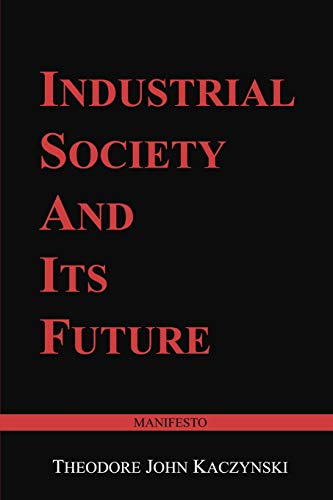
Theodore John Kaczynski, Ph.D., is a mathematician turned critic of modern technology who left academia to live in isolation. His extensive work warns about the destructive force of the techno-industrial system and proposes strategies for societal change. This background grounds his manifesto, which invites you to rethink the costs of technological progress and its effects on freedom and the environment.
Theodore John Kaczynski, Ph.D. (a.k.a. Ted Kaczynski) has focused his life’s work on sounding the alarm about society’s paramount problem: the omnipresent, subjugating, and destructive force of technological progress. His extensive writings articulate a comprehensive critique of the global “techno-industrial system” and forecast its catastrophic consequences for humankind and the biosphere. His recent works focus on realistic strategies for collective action to alter the current trajectory of society, and avoid unmitigated disaster. Dr. Kaczynski was born in 1942 in Evergreen Park, Illinois. An intellectual prodigy, he attended Harvard at age 16, earned his Ph.D. in mathematics from the University of Michigan at 24, and became the youngest professor of mathematics in the history of UC-Berkeley at 25. After two years, Dr. Kaczynski resigned his professorship and moved to a remote wilderness area of western Montana to pursue a life-long ambition of living an autonomous and self-sufficient life off the land, which he did for twenty-five years. Kaczynski has been incarcerated since 1998 in solitary confinement at Federal Prison ADX in Florence, Colorado, after receiving a life sentence for a long-term violent campaign he staged to call world-wide attention to the colossal dangers inherent in technological growth.
2020·125 pages·Radicalism, Terrorism, Technology Critique, Social Theory, Environmentalism
What if everything you thought about technological progress was challenged? Theodore John Kaczynski, a former mathematics prodigy turned recluse, presents a stark critique of the modern techno-industrial system in this manifesto. You’ll gain insight into how he connects technological advancements with societal and environmental decay, illustrated through his own radical break from academic life to wilderness solitude. This book forces you to confront uncomfortable questions about freedom, control, and the trajectory of industrial society. It’s a dense, provocative read best suited for those willing to wrestle with controversial ideas rather than seeking easy answers.
The best Radicalism books and more, in your inbox each week. No account needed.
Conclusion
This collection reveals several clear themes: the historical roots of radicalism across continents, the intricate debates between theory and practice, and the enduring questions about authority and social change. If you prefer proven methods grounded in history, start with Gordon S. Wood’s The Radicalism of the American Revolution and Abbot Gleason’s Young Russia. For validated approaches blending political theory and activism, combine Noam Chomsky’s On Anarchism with Paul Le Blanc’s Lenin and the Revolutionary Party.
Alternatively, you can create a personalized Radicalism book to combine proven methods with your unique needs. These widely-adopted approaches have helped many readers succeed in understanding and engaging with complex radical ideas in meaningful ways.
Frequently Asked Questions
I'm overwhelmed by choice – which book should I start with?
Start with The Radicalism of the American Revolution for a foundational look at radical change in history. It offers a broad perspective that helps frame other works in context.
Are these books too advanced for someone new to Radicalism?
Not at all. While some texts are dense, books like On Anarchism and The American as Anarchist provide accessible entry points into key ideas without requiring prior expertise.
What's the best order to read these books?
Begin with historical accounts like Young Russia or Holding Aloft the Banner of Ethiopia, then explore theory with On Anarchism and Lenin and the Revolutionary Party, finishing with critiques like Industrial Society and Its Future.
Should I start with the newest book or a classic?
Classics such as The Radicalism of the American Revolution remain essential. Newer works can offer fresh perspectives, but grounding in the classics provides crucial context.
Do I really need to read all of these, or can I just pick one?
You can pick based on your interests—political philosophy, history, or social critique. Each book stands alone but reading multiple provides a richer understanding.
Can personalized Radicalism books complement these expert picks?
Yes! While these expert books offer solid foundations, personalized Radicalism books tailor insights to your goals and background, blending popular methods with your unique needs. Consider creating your own for a focused experience.
📚 Love this book list?
Help fellow book lovers discover great books, share this curated list with others!