Bill Gates, Satya Nadella, and Diane Sawyer recommend these best-selling Social Class books that illuminate economic and societal divides.
Updated on June 28, 2025·We may earn commissions for purchases made via this page
6 of 10 books have Audiobook versions
We're launchingLaunching on Product Hunt today 🎉We just launchedJust launched on Product Hunt 🎉
Modelpeers, from the BookAuthority teamFrom the BookAuthority team: Modelpeers, a free way to follow AI models and agents like you follow people. We'd love your support.
There's something special about books that both critics and crowds love, especially when it comes to Social Class. These 10 best-selling titles reveal the complexities behind economic divides, cultural capital, and political power that shape societies worldwide. Understanding social class isn't just academic — it impacts policies, personal lives, and the future of communities.
Experts from diverse backgrounds have lent their voices to these works. Bill Gates, co-founder of Microsoft and philanthropist, praises Evicted for its vivid portrayal of housing insecurity. Satya Nadella, Microsoft CEO, recognizes Capital in the Twenty First Century for its data-driven insights on wealth inequality. Meanwhile, journalist Diane Sawyer highlights Nickel and Dimed, underscoring its eye-opening look at low-wage labor.
While these popular books provide proven frameworks, readers seeking content tailored to their specific Social Class needs might consider creating a personalized Social Class book that combines these validated approaches. This way, you can focus on the aspects most relevant to your interests and goals.
Steve Marmel, a creative professional known for his diverse content work, points to this book as a must-read on social class struggles. He casually notes, "Side note — There’s a fantastic book about this: ‘Nickle and Dimed.’" His recommendation reflects a deep appreciation for Barbara Ehrenreich's undercover exploration of low-wage America, a perspective that resonates widely among those interested in social equity. This endorsement, alongside Jim Edwards' call for everyone to read it, underscores the book's relevance and impact for anyone seeking to grasp the realities behind economic hardship and labor challenges.
Barbara Ehrenreich is a prominent social critic and investigative journalist known for her insightful commentary on social issues. She has authored several influential books, including 'Nickel and Dimed', where she explores the lives of low-wage workers in America. Ehrenreich's work often highlights the struggles of the working poor and critiques the socio-economic systems that perpetuate inequality. Her writing is characterized by a blend of humor and sharp analysis, making complex topics accessible to a broad audience.
What started as Barbara Ehrenreich's decision to experience low-wage labor firsthand turned into a revealing exploration of the challenges faced by millions of Americans living paycheck to paycheck. Through candid accounts of her time as a waitress, hotel maid, and retail clerk, you gain insight into the physical and mental demands of jobs often dismissed as "unskilled." The book exposes how surviving on poverty wages requires juggling multiple jobs and navigating precarious living conditions, illustrating the stark realities behind the promise that any job leads to prosperity. This is a compelling read if you want to understand the true cost of low-wage work and the systemic obstacles workers confront daily.
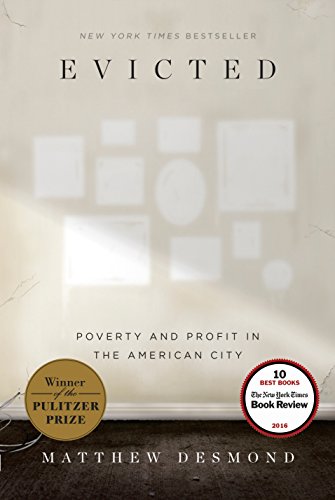
Satya Nadella, the CEO of Microsoft, brings a unique perspective to social class issues through his leadership in one of the world's most influential tech companies. His endorsement of this book highlights its relevance not just to academia but to leaders shaping economic and social policies globally. Nadella's recognition of this work aligns with its widespread acclaim and the urgent conversations around housing insecurity and poverty it sparks. Alongside him, Bill Gates praises the book for its vivid portrayal of poverty, underscoring why this Pulitzer-winning study remains a cornerstone for understanding economic hardship in American cities.
“This book gave me a better sense of what it is like to be very poor in this country than anything else I have read. . . . It is beautifully written, thought-provoking, and unforgettable.” (from Amazon)
Matthew Desmond is a professor of sociology at Princeton University. He is the author of several books, including 'Evicted: Poverty and Profit in the American City,' which won the Pulitzer Prize, National Book Critics Circle Award, and Carnegie Medal.
Unlike most social class books that focus on abstract theory, Matthew Desmond's hands-on sociological research brings you into the lives of eight Milwaukee families facing eviction. You gain a detailed understanding of how housing insecurity intersects with poverty and economic exploitation, illustrated by vivid case studies and legal context in chapters that explore landlord-tenant dynamics and systemic barriers. This book suits you if you're interested in the real human costs behind housing policies or working in social justice, urban planning, or public policy. It offers a grounded perspective on why stable housing matters for broader social outcomes without romanticizing or oversimplifying the issues.
This personalized AI book about social class is created using AI based on your specific interests and background. By sharing what aspects of social class relationships intrigue you most and your current understanding, you receive tailored content that addresses your exact goals. This custom approach makes it easier to grasp complex social dynamics without wading through unrelated material, helping you focus on what truly matters in understanding and navigating social class.
TailoredRead AI creates personalized nonfiction books that adapt to your unique background, goals, and interests. Instead of reading generic content, you get a custom book written specifically for your profession, experience level, and learning objectives. Whether you're a beginner looking for fundamentals or an expert seeking advanced insights, TailoredRead crafts a book that speaks directly to you. Learn more.
2026·50-300 pages·Social Class, Class Structures, Economic Inequality, Cultural Capital, Class Mobility
This tailored book explores practical methods for understanding and influencing social class relationships, crafted specifically to match your background and goals. It covers foundational concepts such as class structures and cultural capital, while also examining interpersonal dynamics and social mobility challenges. By focusing on areas that resonate with your interests, it reveals nuanced perspectives on economic inequality, class power, and social behaviors. This personalized approach ensures you engage deeply with the material that matters most to you, creating a meaningful learning journey that blends widely validated knowledge with your unique context.
Nancy Isenberg is the T. Harry Williams Professor of American History at LSU and an award-winning author with a deep background in American political and social history. Her extensive research into forgotten narratives led her to write this book, which uncovers the overlooked role of poor whites in shaping America’s class structure. Drawing from her acclaimed work on early American figures and her recognition by outlets like Politico and Salon.com, Isenberg brings a scholarly yet accessible voice to this complex topic, inviting you to rethink the foundations of American identity and inequality.
Nancy Isenberg is the author of Fallen Founder: The Life of Aaron Burr, which was a finalist for the LA Times Book Prize in Biography and won the Oklahoma Book Award for best book in Nonfiction. She is the coauthor, with Andrew Burstein, of Madison and Jefferson. She is the T. Harry Williams Professor of American History at LSU, and writes regularly for Salon.com. Isenberg is the winner of the 2016 Walter & Lillian Lowenfels Criticism Award from the Before Columbus Foundation and was #4 on the 2016 Politico 50 list. She lives in Baton Rouge, Louisiana, and Charlottesville, Virginia.
460 pages·Social Class, History, Politics, Race Relations, Cultural Studies
What if everything you knew about American class was wrong? Nancy Isenberg challenges familiar narratives by tracing the story of poor whites—often dismissed as "white trash"—across four centuries. You gain insight into how this marginalized group shaped political movements, from the rise of the Republican Party to the Civil War and New Deal reforms. With chapters exploring topics like eugenics embraced by Theodore Roosevelt and the cultural portrayal of poor whites in reality TV, this book forces you to reconsider assumptions about equality and social mobility in America. If you want a nuanced understanding of class beyond stereotypes, this book offers a dense but rewarding examination.
Satya Nadella, CEO of Microsoft, lends unique weight to this book's relevance in understanding social class through economic history. His leadership in a global tech company offers a perspective on how wealth concentration affects economies and societies worldwide. Nadella’s endorsement aligns with the broad acclaim the book has received for its data-rich analysis of inequality and capital dynamics. Additionally, Adil Najam, Dean of the Pardee School of Global Studies, highlights the book’s powerful messaging, emphasizing the urgent conversations it sparks on inequality and policy change. Together, their insights underline the book's importance for those seeking a deeper grasp of social class economics.
“It seems safe to say that Capital in the Twenty-First Century, the magnum opus of the French economist Thomas Piketty, will be the most important economics book of the year—and maybe of the decade.” (from Amazon)
Thomas Piketty is a French economist who works on wealth and income inequality. He is a professor at the École des hautes études en sciences sociales (EHESS) and at the Paris School of Economics. Piketty is known for his best-selling book, which emphasizes themes of wealth concentration and distribution over the past 250 years. He argues that the rate of capital return in developed countries is persistently greater than the rate of economic growth, leading to increasing wealth inequality. Piketty advocates for redistribution through a progressive global tax on wealth.
When Thomas Piketty first noticed the persistent gap between capital returns and economic growth, he set out to trace its impact over centuries. In this work, you’ll explore detailed data from 20 countries across 250 years, uncovering how wealth concentration fuels deep social inequalities. The book walks through historical patterns and economic theories, challenging the optimistic narrative that growth alone solves inequality. If you want to understand the forces shaping economic class structures and the role of policy in addressing them, this book offers a thorough and data-driven perspective. It’s best suited for those willing to engage with complex economic history rather than casual readers seeking quick fixes.
New York Times Bestseller
Amazon #1 Bestseller
Winner of Financial Times and McKinsey Business Book of the Year Award
Elizabeth Currid-Halkett’s The Sum of Small Things offers a fresh perspective on social class by focusing on the aspirational class, a new elite defined by cultural capital rather than income. The book explores how subtle consumption habits—from organic food choices to educational investments—serve as markers of social status and influence broader societal divides. Princeton University Press published this work, which has resonated with a wide audience interested in understanding contemporary class dynamics and the cultural shifts reshaping social stratification. If you want to grasp how lifestyle decisions reflect and reinforce social hierarchies today, this book is a valuable resource.
2017·272 pages·Social Class, Cultural Capital, Consumer Behavior, Class Dynamics, Economic Inequality
Elizabeth Currid-Halkett examines the shift from the traditional leisure class to what she terms the aspirational class, a group defined more by cultural capital than income. You learn how this new elite shapes society through subtle consumption choices—like organic foods, boutique fitness, and educational investments—that maintain and signal social status in modern America. The book breaks down these behaviors with clear examples, such as preferences for heirloom tomatoes or NPR tote bags, illustrating how these small things add up to significant social divides. If you’re curious about class dynamics today and how culture and consumption intertwine, this book offers a thoughtful framework for understanding these patterns and their broader implications.
This AI-created book on social class is crafted specifically for your unique background and goals. By sharing what aspects of social class interest you most and your current understanding, the book focuses on the concepts and outcomes that matter to you. This personalized approach makes it easier to grasp the complexities of social hierarchies and their effects, giving you a clearer path to learning without wading through unrelated material. It's a custom guide designed to accelerate your comprehension based on your individual needs.
TailoredRead AI creates personalized nonfiction books that adapt to your unique background, goals, and interests. Instead of reading generic content, you get a custom book written specifically for your profession, experience level, and learning objectives. Whether you're a beginner looking for fundamentals or an expert seeking advanced insights, TailoredRead crafts a book that speaks directly to you. Learn more.
2026·50-300 pages·Social Class, Class Dynamics, Economic Inequality, Cultural Capital, Wealth Distribution
This tailored book explores social class concepts through a personalized 30-day journey designed to match your background and interests. It reveals foundational ideas about social hierarchies, cultural capital, and economic divides, while also examining real-world impacts on communities and individuals. The content is tailored to focus on the aspects you find most relevant, allowing you to engage deeply with topics such as class dynamics, wealth distribution, and social mobility. By combining widely validated knowledge with your unique perspective, this book offers a focused path to quickly build your understanding of social class principles and their societal outcomes.
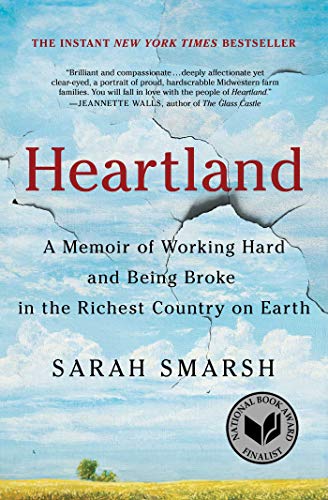
Caitlin Moran, an author and journalist with decades of experience, praises this memoir as "the very best book it could be." Her endorsement reflects how the book resonates deeply with those seeking to grasp the realities of working-class life in America. Moran’s appreciation highlights the memoir’s ability to humanize economic hardship without judgment, making it a compelling read for anyone wanting a vivid, personal perspective on social class in the heartland.
Sarah Smarsh is a journalist who has reported for The New York Times, Harper’s Magazine, The Guardian, and many other publications. Her first book, Heartland: A Memoir of Working Hard and Being Broke in the Richest Country on Earth, was a finalist for the National Book Award. Smarsh is a frequent political commentator and speaker on socioeconomic class. She lives in Kansas.
Sarah Smarsh, a journalist with bylines in The New York Times and Harper’s Magazine, wrote this memoir rooted in her upbringing on a Kansas wheat farm, where multi-generational poverty shaped her family’s experience. You’ll gain a nuanced view of working-class struggles in America, exploring issues like limited healthcare, unsafe jobs, and the elusive American Dream through intimate stories and cultural analysis. The book’s chapters blend personal narrative with sharp social commentary, challenging stereotypes and revealing how economic hardship intertwines with identity. If you want to understand class beyond statistics and headlines, especially from a Midwestern perspective, this memoir offers clarity without judgment.
Rob Henderson grew up in foster homes in Los Angeles and rural California before joining the US Air Force at seventeen. Once described as “self-made” by The New York Times, he earned degrees from Yale and Cambridge and has been published in major outlets like The New York Times and The Wall Street Journal. His memoir draws on this unique background to shed light on the intersections of foster care, family instability, and social class, offering readers a rare insider’s view into challenges often overlooked in discussions about privilege and success.
Rob Henderson grew up in foster homes in Los Angeles and the rural town of Red Bluff, California. He joined the US Air Force at the age of seventeen. Once described as “self-made” by The New York Times, Rob subsequently received a BS from Yale University and a PhD in psychology from St. Catharine’s College, Cambridge. His writing has appeared in The New York Times, The Wall Street Journal, The Boston Globe, and more. His weekly newsletter is sent to more than fifty thousand subscribers. Learn more at RobKHenderson.com.
2024·336 pages·Social Class, Memoir, Family Dynamics, Foster Care, Military Service
What started as Rob Henderson's deeply personal journey from foster care to academic achievement became a striking examination of social class dynamics through his memoir. You learn not only about the hardships of growing up in unstable family environments but also about the concept of “luxury beliefs,” which highlights how privileged ideas can inadvertently harm the less fortunate. Chapters vividly contrast Henderson's life—ranging from military service to elite universities—with those of peers trapped in cycles of violence and incarceration. This book suits you if you want a nuanced, firsthand perspective on how social class shapes opportunity and stability beyond conventional success metrics.
Hanna Batatu’s work stands as a cornerstone in the study of Iraq’s social classes and political upheavals, offering a rare deep dive into the country’s landed and commercial elites as well as its revolutionary factions. Published by Princeton University Press, this voluminous study is widely recognized for its scholarly rigor and depth, making it invaluable for anyone seeking to understand the social foundations of Iraq’s significant historical transformations. The book meticulously maps the relationships between entrenched social classes and the rise of communists, Ba'thists, and Free Officers, providing essential context for social class scholars and political historians alike.
1983·1312 pages·Social Class, Political Movements, Middle East, Iraqi History, Class Conflict
Hanna Batatu's extensive research into Iraq’s pre-revolutionary social structures offers you a detailed examination of the country’s old landed and commercial classes alongside its major political movements, including communists, Ba'thists, and Free Officers. Drawing on decades of study, Batatu unpacks the complex interactions between entrenched elites and revolutionary forces, providing insights into how social class dynamics fueled political upheaval. You’ll find detailed profiles and historical context that reveal the underpinnings of Iraq’s transformative periods, especially valuable if you’re interested in Middle Eastern sociology or political history. This book suits those with patience for deep historical analysis and an interest in how social class shapes revolutionary change.
Nicos Ar Poulantzas was a prominent Marxist theorist of the state, known for his significant contributions to political theory. His work, including "Political Power and Social Classes," has shaped and influenced debate in university circles and made significant in-roads into political discourse. This background positions him uniquely to unpack the complex relations between social classes and political power, offering readers a deep theoretical foundation on how the state operates within capitalist societies.
Nicos Ar Poulantzas was a prominent Marxist theorist of the state, known for his significant contributions to political theory. His work, including 'Political Power and Social Classes', has shaped and influenced debate in university circles and made significant in-roads into political discourse.
1975·367 pages·Social Class, Political Theory, State Power, Marxism, Class Analysis
What if everything you knew about political power and social classes was wrong? Nicos Ar Poulantzas, a Marxist theorist of the state, challenges traditional views by dissecting the interplay between class structures and state authority. This book dives into how social classes influence political power dynamics, providing detailed frameworks that explain state functions beyond surface politics. You’ll gain insight into the structural role of the state in capitalist societies, with chapters that analyze class alliances and state mechanisms. If you’re keen on understanding the foundations of political power through a sociological lens, this book offers a dense but rewarding exploration that’s best suited for those comfortable with theory rather than casual readers.
Senator Bernie Sanders is the longest-serving Independent in U.S. Congress and chairman of the Budget Committee, instrumental in the American Rescue Plan. Alongside John Nichols, a respected progressive journalist, he channels decades of political experience and advocacy into this book. Their shared commitment to economic justice and democracy drives a candid exploration of how capitalism shapes social class and political power in America, offering readers a grounded vision for transformational change.
Bernie Sanders is serving his third term in the U.S. Senate and is the longest-serving Independent member of Congress in American history. He is the chairman of the Budget Committee, where he helped write the $1.9 trillion American Rescue Plan, one of the most significant pieces of legislation in our modern history. In the Senate, Sanders is leading the fight for Medicare for All, for combating climate change, and for making public colleges and universities tuition free. John Nichols is an award-winning progressive author and journalist who serves as the national affairs correspondent for The Nation.
Unlike many analyses of economic inequality that focus solely on data, Senator Bernie Sanders and John Nichols present a direct critique of capitalism's impact on social class and democracy. You’ll gain a clear understanding of how wealth concentration among billionaires shapes political power and environmental policy, illustrated through candid reflections on current American challenges. The book outlines what a political revolution might look like, emphasizing economic rights as human rights and envisioning a society with equitable standards of living. If you’re seeking to grasp the systemic roots of inequality and consider paths toward social change, this book offers a forthright, thought-provoking perspective.
The best Social Class books and more, in your inbox each week. No account needed.
Conclusion
These 10 best-selling Social Class books collectively offer a rich tapestry of perspectives — from personal memoirs like Heartland and Troubled to rigorous economic analyses such as Capital in the Twenty First Century. If you prefer proven methods grounded in real-world experience, start with Nickel and Dimed and Evicted for vivid accounts of economic hardship and housing struggles.
For validated frameworks on social structures and political power, combine Political power and social classes with The Sum of Small Things to grasp cultural and systemic influences. Alternatively, you can create a personalized Social Class book to blend these proven methods with your unique needs.
These widely-adopted approaches have helped many readers succeed in understanding and navigating the complexities of social class. Embracing their insights can deepen your awareness and inform your perspective on societal challenges today.
Frequently Asked Questions
I'm overwhelmed by choice – which book should I start with?
Start with Nickel and Dimed; its accessible firsthand account of low-wage work provides a compelling foundation before exploring more technical analyses.
Are these books too advanced for someone new to Social Class?
Not at all. Memoirs like Heartland and Troubled offer approachable narratives, while economic books like Capital in the Twenty First Century might require more focus but are rewarding.
What's the best order to read these books?
Begin with personal stories for context (Heartland, Evicted), then explore cultural and economic theories (The Sum of Small Things, Political power and social classes).
Do I really need to read all of these, or can I just pick one?
You can pick one based on your interests, but reading multiple offers a wider perspective on social class from lived experience to theory.
Which books focus more on theory vs. practical application?
Political power and social classes and Capital in the Twenty First Century delve into theory, while Nickel and Dimed and Evicted focus on real-world experiences.
Can I get a Social Class book tailored to my specific interests?
Yes! While expert books provide solid foundations, you can create a personalized Social Class book that combines proven methods with your unique goals and focus areas.
📚 Love this book list?
Help fellow book lovers discover great books, share this curated list with others!