7 Best-Selling Social Psychology Books Millions Love
Recommended by Jim Oshaughnessy, Raj Shamani, and Paul Bloom — top experts sharing proven insights on Social Psychology's best sellers
Updated on June 28, 2025·We may earn commissions for purchases made via this page
5 of 7 books have Audiobook versions
We're launchingLaunching on Product Hunt today 🎉We just launchedJust launched on Product Hunt 🎉
Modelpeers, from the BookAuthority teamFrom the BookAuthority team: Modelpeers, a free way to follow AI models and agents like you follow people. We'd love your support.
There's something special about books that both critics and crowds love, especially in Social Psychology, where understanding human behavior shapes so much of our world. Millions have turned to a select group of titles that unpack how we influence, trust, and relate to one another. These books provide time-tested frameworks that continue to resonate in today's complex social landscape.
Experts like Jim Oshaughnessy, founder of OSAM LLC, frequently highlight the practical wisdom of Robert Cialdini's work on influence and persuasion, noting how these insights sharpen decision-making in business and life. Similarly, Raj Shamani, a financial freedom speaker, praises the clarity these books bring to everyday interactions. Paul Bloom, a psychologist specializing in morality, underscores Jonathan Haidt’s exploration of why our moral judgments divide us, reflecting the depth these titles offer.
While these popular books provide proven frameworks, readers seeking content tailored to their specific Social Psychology needs might consider creating a personalized Social Psychology book that combines these validated approaches. This option lets you focus on the aspects most relevant to your goals and background, making your learning journey even more effective.
Jim Oshaughnessy, founder and chairman of OSAM LLC, knows the power of persuasion in business and investing. He shares how this book helped him understand the subtle tactics that sway decisions: "This is a great book that I recommend frequently. Between a yes and a no, there's always a maybe. Here are some of the tricks of the trade people use to try to persuade you." His experience reflects why so many have turned to Cialdini’s work to sharpen their influence skills ethically. Alongside him, Professor Kalkyl praises the book’s elegant explanation of mental biases, reinforcing its relevance for anyone curious about human behavior.
“This is a great book that I recommend frequently. Between a yes and a no, there's always a maybe. Here are some of the tricks of the trade people use to try to persuade you.” (from X)
Robert B. Cialdini, PhD is an award-winning behavioral scientist and author. He is the president and CEO of Influence at Work, focusing on live and virtual keynotes, streaming and online corporate training. In acknowledgement of his outstanding research achievements and contributions in behavioral science, Dr. Cialdini was elected to the American Academy of Arts & Sciences and the National Academy of Sciences. He has over 230 professional and scientific publications. Robert Cialdini is Regents' Professor Emeritus of Psychology and Marketing at Arizona State University. Dr. Cialdini is known as the foundational expert in the science of influence and how to apply it ethically in business and elsewhere, and his Principles of Persuasion have become the cornerstone for any organization serious about increasing their effectiveness in sales, leadership, marketing, management and communication. He is a three-time New York Times bestselling author, with more than 5 million copies sold throughout the world. He is frequently referred to as the “Godfather of Influence.”
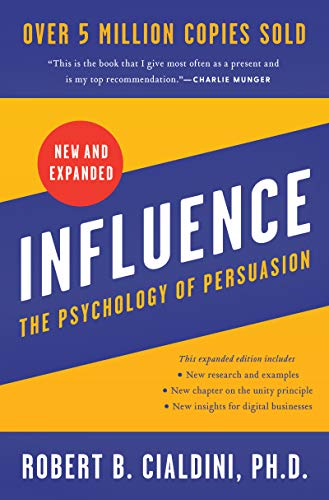
Robert B. Cialdini, PhD, brings decades of rigorous behavioral science research to the complex art of influence in this expanded edition. You explore his Universal Principles of Influence—Reciprocation, Commitment, Social Proof, Liking, Authority, Scarcity, and the new principle of Unity—each unpacked with vivid real-world stories and updated studies. For example, the chapter on Social Proof delves into how people mirror group behaviors even unconsciously. Whether you’re a marketer, leader, or simply curious about everyday persuasion, you’ll gain both the skill to ethically influence others and the savvy to recognize when you’re being influenced.
Jim Oshaughnessy, founder and chairman of OSAM LLC and a respected voice in behavioral finance, highlights how this book deepens understanding of complex social interactions. He points to Gladwell’s exploration of cases like Amanda Knox's trial to illustrate why our judgments about strangers often fail. "Talking to Strangers takes a great look at her case," Oshaughnessy notes, connecting the book’s insights to real-world misunderstandings. This perspective aligns with why many readers have embraced the book for its fresh take on human trust and communication. Similarly, Nilofer Merchant, an author and TED speaker, finds the book offers intriguing analysis, adding to its appeal for anyone eager to rethink how we connect with unfamiliar people.
“@JackBristow9802 Yep. @Gladwell's book "Talking to Strangers: What We Should Know about the People We Don't Know" takes a great look at her case.” (from X)
Malcolm Gladwell is the author of seven New York Times bestsellers: The Tipping Point, Blink, Outliers, What the Dog Saw, David and Goliath, Talking to Strangers, and The Bomber Mafia. He is also the cofounder of Pushkin Industries, an audiobook and podcast production company. He was born in England, grew up in rural Ontario, and now lives in New York.
What if the way you judge strangers is fundamentally flawed? Malcolm Gladwell explores this provocative idea by dissecting real-life cases—from the deceptive tactics of Fidel Castro to misunderstandings in high-profile legal trials. You’ll gain insight into how common assumptions about trust and communication mislead us, with chapters that challenge how you interpret behaviors and intentions. This book suits anyone curious about human interaction beyond surface impressions, especially if you want to sharpen your ability to read unfamiliar people more critically. It’s an engaging journey into the social psychology behind misunderstandings with practical implications for everyday encounters.
This AI-created book on ethical influence is tailored to your background and interests in social psychology. It focuses on the areas and techniques you want to explore, combining proven knowledge with your specific goals. By personalizing the content, it helps you efficiently understand how ethical persuasion works in real life and guides you toward mastering it with clarity. This custom approach makes learning about influence more relevant and engaging for you.
TailoredRead AI creates personalized nonfiction books that adapt to your unique background, goals, and interests. Instead of reading generic content, you get a custom book written specifically for your profession, experience level, and learning objectives. Whether you're a beginner looking for fundamentals or an expert seeking advanced insights, TailoredRead crafts a book that speaks directly to you. Learn more.
This tailored book explores the art and science of ethical influence through the lens of social psychology, focusing on principles that resonate with your unique interests and goals. It examines how persuasion works in everyday interactions and reveals techniques grounded in respected research, all tailored to match your background and objectives. By concentrating on your specific areas of curiosity, it offers a clear pathway to understanding influence without overwhelming you with irrelevant material. This personalized approach ensures you gain focused insights into how ethical persuasion shapes behavior, communication, and decision-making. The book navigates key concepts such as social proof, reciprocity, and moral considerations to help you master influence with integrity.
Raj Shamani, a speaker on financial freedom with extensive global experience, highlights this book as crucial for anyone working with people regularly. He notes its relevance across public relations, sales, and marketing, emphasizing how it deepened his understanding of influence dynamics. "This is an amazing book for anyone that deals with people on a regular basis," he says, connecting its insights directly to practical business contexts. His endorsement aligns with the book's widespread adoption among professionals eager to grasp the subtle forces that shape decisions.
“[8] Influence: Science and Practice by Robert Cialdini
This is an amazing book for anyone that deals with people on a regular basis. It talks about public relations, sales, marketing, and any other business.” (from X)
Robert B. Cialdini is Regents’ Professor of Psychology and Marketing at Arizona State University, where he has also been named W. P. Carey Distinguished Professor of Marketing. He has taught at Stanford University and Harvard’s Kennedy School of Government. He has been elected president of the Society of Personality and Social Psychology. He is the recipient of the Distinguished Scientific Achievement Award of the Society for Consumer Psychology, the Donald T. Campbell Award for Distinguished Contributions to Social Psychology, and the (inaugural) Peitho Award for Distinguished Contributions to the Science of Social Influence. Dr. Cialdini attributes his interest in social influences to the fact that he was raised in an entirely Italian family, in a predominantly Polish neighborhood, in a historically German city (Milwaukee), in an otherwise rural state.
Unlike most social psychology books that focus purely on theory, Robert Cialdini draws from his extensive experience as a salesperson, fundraiser, and marketer to reveal the mechanics behind why people say "yes." You learn to recognize six core principles of influence—reciprocation, consistency, social proof, liking, authority, and scarcity—that shape human behavior in everyday interactions. The book blends compelling experimental research with practical examples, such as how advertisers exploit scarcity or how social proof guides decision-making. If you engage regularly with people in business or communication roles, this book sharpens your insight into persuasion techniques that are often invisible yet powerful.
Hunter Walk, a partner at Homebrew VC with a background leading product at YouTube and Google, brings a nuanced perspective to social psychology. His endorsement speaks volumes because he understands how human behavior shapes product and culture in tech-driven environments. This book's exploration of moral psychology aligns with his focus on understanding diverse user perspectives and societal trends. Likewise, Bridget Phetasy's candid appreciation of the book — emphasizing its raw honesty about human flaws — highlights its relevance in cutting through political noise. Together, their voices affirm this book's role as a key resource for grasping why political and religious divides persist, making it essential reading if you want to understand the psychological forces behind today's polarized world.
Psychologist specializing in human nature and morality
“Jonathan Haidt is one of smartest and most creative psychologists alive, and his newest book, The Righteous Mind, is a tour de force—a brave, brilliant and eloquent exploration of the most important issues of our time. It will challenge the way you think about liberals and conservatives, atheism and religion, good and evil. This is the book that everyone will be talking about.” (from Amazon)
Jonathan Haidt is the Thomas Cooley Professor of Ethical Leadership at New York University’s Stern School of Business. He obtained his Ph.D. in social psychology from the University of Pennsylvania in 1992, and then taught at the University of Virginia for 16 years. He is the author of The Happiness Hypothesis: Finding Modern Truth in Ancient Wisdom, and the co-editor of Flourishing: Positive Psychology and the Life Well-Lived. He lives in New York City.
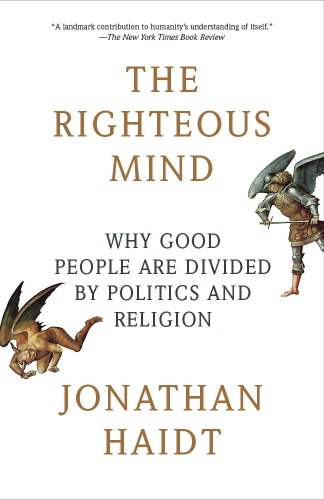
After analyzing decades of moral psychology research, Jonathan Haidt reveals how gut feelings shape our moral judgments more than rational thought. Drawing on his extensive academic background and research at NYU and University of Virginia, he explores the psychological roots behind political and religious divisions, explaining why opposing views often hold valid concerns. You’ll gain concrete frameworks for understanding ideological conflicts and human cooperation, with chapters unpacking moral intuitions across the political spectrum. This book suits anyone seeking to navigate polarized conversations with greater empathy and insight, though those expecting purely logical debates might find its focus on intuition challenging.
Daniel Goleman, Ph.D., spent over a decade covering behavioral and brain sciences for The New York Times before co-directing the Consortium for Research on Emotional Intelligence in Organizations at Rutgers University. His extensive academic and professional background, including teaching at Harvard and authoring multiple influential books on emotional intelligence, positions him uniquely to explore how our brains are wired for connection. This book reflects his deep commitment to revealing how social intelligence shapes personal and collective wellbeing.
Daniel Goleman, Ph.D., covered behavioral and brain sciences for The New York Times for twelve years and is co-director for the Consortium for Research on Emotional Intelligence in Organizations at Rutgers University. He has taught at Harvard, his alma mater, and addresses groups and businesses around the world. He is the author of Emotional Intelligence, Working with Emotional Intelligence, and The Meditative Mind, and is co-author of Primal Leadership and Destructive Emotions.
Drawing from his extensive background as a behavioral and brain sciences journalist, Daniel Goleman examines how deeply our relationships influence our biology and behavior. You’ll gain insights into the neural mechanisms underpinning empathy, charisma, and social bonds, including how emotions literally transfer between people and affect health. This book explores complex topics like the biological impact of social stress, the roots of attraction, and the nuances of mindsight, offering examples from family dynamics to workplace leadership. If you want to understand the science behind why humans are wired for connection and how social intelligence shapes everything from gene expression to group harmony, this book speaks directly to that curiosity.
This AI-created book on social trust is crafted based on your background, skill level, and specific goals in communication. You share which aspects of trust and interaction interest you most, and the book focuses on those to match your experience. It’s designed to give you exactly the insights you need to build stronger, more genuine connections in your daily life.
TailoredRead AI creates personalized nonfiction books that adapt to your unique background, goals, and interests. Instead of reading generic content, you get a custom book written specifically for your profession, experience level, and learning objectives. Whether you're a beginner looking for fundamentals or an expert seeking advanced insights, TailoredRead crafts a book that speaks directly to you. Learn more.
This tailored book explores step-by-step techniques in social psychology designed to build trust and enhance communication skills. It focuses on your interests and background, offering a personalized approach that matches your specific goals. The content examines how trust develops through interactions and reveals practical ways to strengthen connections using evidence-based social psychology principles.
By tailoring insights to your desired focus, this guide delves into the dynamics of trust, nonverbal communication, and effective listening, helping you understand and apply these concepts in real-life scenarios. The book’s personalized nature ensures you engage deeply with topics that matter most to your social growth and communication mastery.
Alice Kemper, an award-winning sales and leadership consultant, recommends this book for its insightful approach to persuasion that aligns with real-world business challenges. Her experience coaching sales leaders underscores why understanding the pre-suasion moment is critical to influencing decisions effectively. Her endorsement highlights the book’s practical relevance for professionals eager to refine their influence strategies. Alongside her, Richard H Thaler, a professor renowned for his work in behavioral economics, also supports this title, adding academic weight to its persuasive techniques and demonstrating its broad acceptance among experts in social psychology.
Robert Cialdini is recognized worldwide for his inspired field research on the psychology of influence. His books, including Influence, have sold more than three million copies in thirty-three languages. Dr. Cialdini is Regents’ Professor Emeritus of Psychology and Marketing at Arizona State University and the president and CEO of Influence at Work, an international company that provides keynotes and influence training on how to use the lessons in Dr. Cialdini’s books ethically and effectively.
When Robert Cialdini first discovered how subtle shifts in attention shape decisions, he crafted Pre-Suasion to reveal this overlooked stage of influence. The book teaches you to prime your audience’s mindset before delivering your message, altering their focus to increase receptiveness. Cialdini draws on decades of research and vivid examples—from advertising to historical propaganda—to explain how redirecting attention can sway beliefs without changing facts. If you're involved in marketing, leadership, or communication, this book equips you with nuanced strategies to enhance persuasion by setting the stage rather than just presenting arguments.
Philip G. Zimbardo, PhD, distinguished professor emeritus at Stanford University and former president of the American Psychological Association, authored this work after decades of research including the Stanford Prison Experiment. His extensive contributions to social psychology and dedication to social action uniquely qualify him to dissect the conditions under which good people turn to evil. This book offers you a deep dive into human behavior shaped by systemic and situational forces, grounded in Zimbardo's authoritative perspective and experience.
Philip G. Zimbardo, PhD, was a professor of psychology emeritus at Stanford University and a former president of the American Psychological Association. Zimbardo became a public face of psychology as host and a co-creator of the Discovering Psychology television series and telecourse and as author of multiple editions of the textbook Psychology and Life. He authored over 500 articles, chapters, textbooks, and trade books on topics such as persuasion, dissonance, shyness, time perspective, deindividuation, cults, and obedience to authority. Zimbardo’s popular books have often been reprinted and translated into multiple languages and include The Lucifer Effect, Shyness, and The Time Paradox. He received numerous awards for his distinguished teaching, creative research, dedication to social action, and career-long contributions to social psychology. Zimbardo founded the nonprofit Heroic Imagination Project (2010–present), which organizes educational programs globally.
Philip Zimbardo, a renowned psychologist and former president of the American Psychological Association, builds on his groundbreaking Stanford Prison Experiment to explore how ordinary people can commit harmful acts under certain conditions. The book examines the complex interplay of situational forces, group dynamics, and systemic pressures that can erode individual morality, using vivid historical examples and psychological theory. You’ll gain insight into the mechanisms behind behaviors ranging from corporate corruption to wartime atrocities, and how social environments shape human actions. This work is suited for anyone interested in understanding the darker aspects of human behavior and the conditions that foster evil, though it may challenge those seeking simple moral distinctions.
The best Social Psychology books and more, in your inbox each week. No account needed.
Conclusion
This collection highlights several clear themes: the enduring power of ethical persuasion, the complexity behind how we judge and trust others, and the nuanced forces shaping morality and behavior. If you prefer proven methods grounded in decades of research, starting with Robert Cialdini’s "Influence" editions offers a solid foundation. For those seeking to understand the moral and social divides shaping today’s world, Jonathan Haidt’s "The Righteous Mind" and Philip Zimbardo’s "The Lucifer Effect" provide invaluable perspectives.
Combining these books can deepen your insight into social dynamics and human behavior, while practical guides like "Talking to Strangers" enhance everyday communication skills. Alternatively, you can create a personalized Social Psychology book to combine proven methods with your unique needs. These widely-adopted approaches have helped many readers succeed in understanding and navigating social interactions with greater confidence.
Frequently Asked Questions
I'm overwhelmed by choice – which book should I start with?
Start with Robert Cialdini's "Influence" or "Influence, New and Expanded." They provide foundational principles of persuasion that underpin many social psychology concepts, making them accessible and practical entry points.
Are these books too advanced for someone new to Social Psychology?
Not at all. Titles like "Influence" and "Talking to Strangers" are written for broad audiences, blending engaging stories with research, so newcomers can grasp key ideas without prior background.
Should I start with the newest book or a classic?
Both have value. Classics like "Influence" establish core theories, while newer books like "Pre-Suasion" offer fresh perspectives on influence techniques. Consider your interest in foundational vs. cutting-edge content.
Do I really need to read all of these, or can I just pick one?
You can pick one to start, depending on your focus. For persuasion, choose Cialdini’s works; for moral psychology, "The Righteous Mind" is ideal. Each offers deep insights on its own.
Which books focus more on theory vs. practical application?
"Influence" and "Pre-Suasion" lean toward practical application with actionable techniques, while "The Righteous Mind" and "The Lucifer Effect" explore theoretical underpinnings of morality and behavior in society.
How can personalized books complement these expert recommendations?
Personalized Social Psychology books let you combine these proven insights with your unique goals and background, focusing on topics most relevant to you. They complement expert picks by tailoring learning to your needs. Learn more here.
📚 Love this book list?
Help fellow book lovers discover great books, share this curated list with others!