20 Social Activism Books That Shape Change and Inspire Action
Recommended by leaders like Oprah Winfrey, Barack Obama, and Brené Brown, these Social Activism books offer expert guidance and powerful stories
Updated on June 28, 2025·We may earn commissions for purchases made via this page
9 of 20 books have Audiobook versions
We're launchingLaunching on Product Hunt today 🎉We just launchedJust launched on Product Hunt 🎉
Modelpeers, from the BookAuthority teamFrom the BookAuthority team: Modelpeers, a free way to follow AI models and agents like you follow people. We'd love your support.
What if the power to reshape society lies not in distant halls of government but within the pages of books? Social activism, at its core, is a relentless pursuit of justice and equity, often fueled by stories and strategies shared through written words. Today’s social movements are built on the shoulders of those who dared to document their journeys and insights, making activism accessible, inspiring, and actionable.
Oprah Winfrey, a celebrated voice in media and philanthropy, found deep resonance in Tarana Burke’s Unbound, a memoir tracing the roots of the Me Too movement. For Oprah, it was a revelation of how personal healing and community organizing intersect. Meanwhile, Barack Obama, 44th president of the United States, highlights Greta Thunberg's No One Is Too Small to Make a Difference as a clarion call for youth engagement in climate activism. Brené Brown, with her research on vulnerability and courage, praises these works for connecting personal stories to broader social justice efforts.
While these expert-curated books provide proven frameworks and powerful narratives, your own activism journey is unique. Those seeking tailored insights on specific social issues or local contexts might consider creating a personalized Social Activism book that builds on these expert foundations and fits your distinct goals and community.
Oprah Winfrey, a celebrated American host and television producer, highlights how Tarana Burke transformed her deepest pain into strength, saying, "She took the thing that caused her the greatest angst and rage, and turned it into power." Oprah’s endorsement reflects her deep engagement with social activism and her recognition of Burke’s impact. This memoir reshaped Oprah’s understanding of empowerment through vulnerability and community. Alongside her, Brené Brown, a researcher and storyteller, calls it "a testimony to liberation and love," emphasizing how this book connects personal healing with wider social justice, making it a vital read for anyone committed to change.
Tarana J. Burke has been working at the intersection of racial justice, arts and culture, anti-violence and gender equity for nearly three decades. Fueled by a commitment to interrupt systemic issues disproportionately impacting marginalized people, like sexual violence, particularly for Black women and girls, Tarana has created and led campaigns that have brought awareness to the harmful legacies surrounding communities of color. Specifically, her work to end sexual violence has not only exposed the ugly truths of sexism and spoke truth to power, it has also increased access to resources and support for survivors and paved a way forward for everyone to find their place in the movement. A proud native of the Bronx, NY, Tarana's passion for community organizing began in the late 1980s; when as a young girl, she joined a youth leadership organization called 21st Century Youth Leadership Movement. Her career took an intentional turn toward supporting survivors of sexual violence while living in Selma, Alabama and working for 21st Century. In 2017, when ‘me too.’ as a hashtag (#metoo) went viral, Tarana emerged as a global leader in the evolving conversation around sexual violence. Her steadfast commitment is what led her to receive numerous accolades including 2017 TIME Person of the Year, 2018 TIME 100 Most Influential People, and the 2019 Sydney Peace Prize.
Drawing from nearly three decades of activism at the crossroads of racial justice and gender equity, Tarana Burke offers a deeply personal memoir that traces the origins of the Me Too movement. You gain insight into how trauma, community organizing, and empathy intertwine as she recounts her journey from silence to empowerment. Chapters detail her work supporting Black and brown girls, revealing how healing oneself is foundational to social change. This book suits those interested in the roots of modern social activism, particularly around sexual violence and intersectionality.
Liz Plank, an author and podcast host deeply engaged with social issues, discovered this book amid her ongoing work addressing social justice and inclusion. She describes it as a support this brilliant book! ❤️ experience that expanded her understanding of disability through the authentic voices collected by Alice Wong. Plank’s endorsement highlights how the book challenges societal norms about disability, enriching your perspective whether you’re an advocate or simply seeking to learn. Alongside her, Kamau Bell, host of United Shades of America, emphasizes the book’s grounding in intersectionality and diversity, urging everyone to absorb the wisdom it offers. Their combined insights make this collection a significant contribution to conversations on disability and social activism.
Alice Wong is a disabled activist, media maker, and research consultant based in San Francisco, California. She is the founder and director of the Disability Visibility Project, an online community dedicated to creating, sharing, and amplifying disability media and culture. Alice is also the host and co-producer of the Disability Visibility podcast and co-partner in a number of collaborations such as #CripTheVote and Access Is Love. From 2013 to 2015, Alice served as a member of the National Council on Disability, an appointment by President Barack Obama. You can follow her on Twitter: @SFdirewolf. For more: disabilityvisibilityproject.com.
Drawing from her extensive activism and media experience, Alice Wong curates a diverse collection of first-person essays that illuminate the multifaceted realities of living with disabilities today. You gain intimate insights into the challenges and joys faced by disabled individuals, from Harriet McBryde Johnson’s philosophical debates on personhood to Keah Brown’s vibrant storytelling. The book challenges common assumptions by weaving together voices from activists, writers, and everyday people, making it a vital read if you want to deepen your understanding of disability culture and its intersection with social justice. It’s especially relevant if you seek to explore perspectives often overlooked in mainstream discussions about accessibility and inclusion.
This personalized AI book about social activism is created based on your unique background, skill level, and the particular causes you want to focus on. By sharing your interests and goals, you receive a book that explores the aspects of activism most relevant to you. This approach helps you engage more deeply with social change topics and develop skills tailored to your personal journey, making your learning experience both efficient and meaningful.
TailoredRead AI creates personalized nonfiction books that adapt to your unique background, goals, and interests. Instead of reading generic content, you get a custom book written specifically for your profession, experience level, and learning objectives. Whether you're a beginner looking for fundamentals or an expert seeking advanced insights, TailoredRead crafts a book that speaks directly to you. Learn more.
2026·50-300 pages·Social Activism, Advocacy Techniques, Community Organizing, Movement Building, Policy Influence
This AI-created book explores social activism in a deeply personalized way, focusing on your specific interests and goals within the field. It covers key themes such as movement building, advocacy techniques, and grassroots organizing, tailoring content to match your background and desired areas of impact. By examining historical and contemporary case studies, it reveals how diverse approaches to social change interconnect and evolve. The book’s tailored approach encourages reflection on your unique role in activism, helping you engage thoughtfully with complex social issues. This personalized guide offers a focused pathway through the vast landscape of activism, making your learning experience both meaningful and actionable.
Ibram X. Kendi, National Book Award-winning author and professor at American University, brings a critical voice to social activism and racial equity. He highlights "Make Change" as "a captivating memoir of change" and "a tactical blueprint" that offers both hope and practical guidance. Kendi's endorsement reflects how Shaun King's firsthand experience leading civil rights movements deepened his understanding of fighting systemic oppression. This book resonated with Kendi as a resource for anyone ready to engage seriously in activism. Alongside Kendi, Rashida Tlaib, a U.S. Congresswoman, praises King's transparency and the courageous steps he encourages readers to take, reinforcing why this book is essential for those committed to creating a more just society.
National Book Award-winning author, American University professor
“A captivating memoir of change. A hope-filled sermon for change. A tactical blueprint for how we can each make change. Make Change is all three and all the more towards an equitable and just world.” (from Amazon)
Shaun King was recently named by Time magazine as one of the twenty-five most important people in the world online. One of the most followed activists and journalists on the planet, Shaun has served as the Senior Justice Writer for the New York Daily News, Writer-in-Residence at Harvard Law School, and the Justice Writer for The Intercept. He has authored an astounding 1,500 articles on the intersection of issues of race and justice and has now traveled to 47 states teaching and organizing. His popular daily podcast, The Breakdown, continues to not only inform hundreds of thousands of listeners, but break ground with engaging action steps. As an activist, Shaun co-founded and helps lead the work of Real Justice and the Grassroots Law Project - two highly effective organizations on the frontlines for deep systemic change in the United States. Above all, Shaun is a husband and proud father of five children from elementary school, middle school, high school, and college. They call Brooklyn, New York home.
What started as Shaun King's personal journey through the front lines of civil rights activism has evolved into a guide for anyone ready to challenge systemic injustice. Drawing on his experiences leading campaigns against police brutality and advocating for justice reform, King offers you insights into sustaining activism in a turbulent political climate. You'll find detailed accounts of his work with the Raise the Age campaign alongside practical reflections on staying motivated and safe while pushing for change. This book suits those deeply committed to social equity, especially if you seek both inspiration and a realistic look at the struggles activists face.
The Washington Post, a leading national newspaper, praises this book as "a valuable discussion of an extraordinary man who deserves our everlasting admiration and gratitude." Their review highlights the profound impact of John Lewis’s life story on understanding social activism today. This perspective is especially compelling given their authority in covering political and civil rights issues. The detailed reporting, historic photographs, and appendices noted by Chapter 16 further enrich the narrative, showing how Lewis’s steadfast hope and belief in justice shaped a nation. If you seek to grasp the heart of American civil rights history, this book offers a powerful guide.
Jon Meacham is a Pulitzer Prize–winning biographer. A contributing writer for The New York Times Book Review and a contributing editor of Time magazine, he is the author of the New York Times bestsellers The Hope of Glory, Destiny and Power: The American Odyssey of George Herbert Walker Bush, Thomas Jefferson: The Art of Power, American Lion: Andrew Jackson in the White House, American Gospel, and Franklin and Winston. Meacham, who holds the Rogers Chair in the American Presidency at Vanderbilt University, lives in Nashville.
What happens when a Pulitzer Prize-winning historian teams up with a civil rights icon? Jon Meacham and John Lewis deliver an intimate portrait tracing Lewis’s journey from a determined boy preaching to chickens to a key figure in America’s fight for justice. You’ll gain insights into the philosophy of nonviolence as both a moral and political tool, deeply rooted in faith and hope. The book explores pivotal moments like the Selma march and Lewis’s mentorship under Martin Luther King Jr., offering lessons on resilience and activism. If you want to understand how personal conviction shapes social change, this book puts you in the midst of history’s ongoing struggle for equality.
Barack Obama, the 44th president of the United States, highlights Greta Thunberg as one of the planet’s most important advocates, underscoring her influence in social activism. His recognition of her voice emphasizes the urgency and clarity she brings to climate issues, illustrating how her speeches have reshaped conversations on environmental responsibility. This endorsement signals the book’s value for anyone eager to grasp the dynamics of modern activism. Complementing this, Kirkus notes Thunberg’s blunt demands for political accountability, reinforcing why her messages resonate globally and why you might find this collection an essential guide to activist communication.
Greta Thunberg was born in 2003. In August 2018 she started a school strike that became a movement called Fridays For Future, which has inspired school strikes for climate action in more than 150 countries involving millions of students. Thunberg has spoken at climate rallies across Europe, and at the United Nations COP24 in Poland and the World Economic Forum in Davos. In September 2019 she spoke in New York City at the UN Climate Action Summit. She has won the prestigious Prix Liberté and been nominated for a Nobel Peace Prize. Thunberg is vegan, and doesn't fly, in order to live a low-carbon life.
When Greta Thunberg began her school strike in 2018, she ignited a global movement captured vividly in this illustrated edition of her speeches. You’ll gain unfiltered insight into her unwavering stance on climate urgency, with chapters showcasing her addresses to the United Nations and mass protests worldwide. This book offers a front-row seat to how a young activist’s voice challenges political inertia and inspires collective action. If you’re seeking to understand the power of grassroots activism and the role of youth in social change, this collection sharpens your perspective without preaching.
This AI-created book on social activism is crafted based on your unique background, skill level, and specific goals. It focuses on the areas of activism that matter most to you, offering a tailored approach that bridges expert knowledge with your personal learning needs. By focusing on rapid progress and immediate impact, this custom book gives you a clear roadmap to take meaningful steps that align with your passions and community context. It's designed to help you cut through the noise and focus on what drives real change.
TailoredRead AI creates personalized nonfiction books that adapt to your unique background, goals, and interests. Instead of reading generic content, you get a custom book written specifically for your profession, experience level, and learning objectives. Whether you're a beginner looking for fundamentals or an expert seeking advanced insights, TailoredRead crafts a book that speaks directly to you. Learn more.
This tailored book explores a focused, step-by-step pathway designed for rapid progress in social activism. It covers practical actions and essential concepts that align precisely with your background and goals, creating a learning journey that matches your specific interests. By synthesizing broad expert knowledge into a personalized format, it reveals how you can achieve meaningful social impact quickly and effectively. The book examines key topics like community engagement, advocacy techniques, and campaign planning, all oriented toward immediate wins in your activism efforts. This personalized approach allows you to move confidently through complex ideas with clarity and purpose, accelerating your ability to effect change.
Kerry Washington, a respected actress and social activist, highlights how Stacey Abrams’s Our Time Is Now offers a compelling blueprint for reshaping democracy. She emphasizes Abrams’s remarkable ability to turn personal political challenges into a source of empowerment for marginalized groups. Washington’s praise captures the book’s call to action, noting how it inspires readers to create inclusive systems where every voice matters. Such endorsement from someone deeply engaged in social change underscores why this book deserves your attention. Following closely, Wendy Clark also recognizes it as an essential education on voter suppression and democracy, reinforcing its relevance for those committed to civic activism.
“Stacey Abrams’s Our Time Is Now outlines a dynamic blueprint for how each of us can reshape the future of our democracy. Her ability to rise above her own political struggles and transform her learned experience into a saving grace for marginalized communities is breathtaking. With each page, she inspires and empowers us to create systems that reflect a world in which all voices are heard and all people believe and feel that they matter.” (from Amazon)
Stacey Abrams is an author, serial entrepreneur, nonprofit CEO and political leader. After eleven years in the Georgia House of Representatives, seven as Minority Leader, Abrams became the 2018 Democratic nominee for Governor of Georgia, where she won more votes than any other Democrat in the state’s history. She has founded multiple organizations devoted to voting rights, training and hiring young people of color, and tackling social issues at both the state and national levels; and she is a lifetime member of the Council on Foreign Relations. Abrams is the 2012 recipient of the John F. Kennedy New Frontier Award and the first black woman to become the gubernatorial nominee for a major party in the United States.
Stacey Abrams’s extensive experience as a political leader and voting rights advocate drives this urgent examination of democracy under threat in America. You’ll gain insight into systemic voter suppression tactics, the importance of identity politics, and strategies for broad civic engagement, including census participation. Chapters blend personal anecdotes with scholarly research, offering concrete proposals to protect voting rights and strengthen democratic participation. This book is especially suited for activists, policymakers, and anyone committed to equitable political representation and social justice reform. It doesn’t shy away from tough realities but provides a clear-eyed roadmap to reclaiming a fairer democracy.
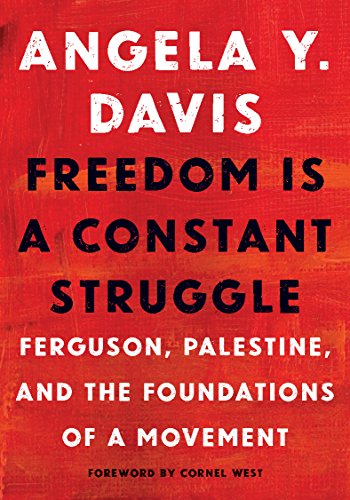
Mumia Abu-Jamal, a journalist and activist known for his incisive commentary on social justice, highlights this book as quintessential Angela Davis: "insightful, curious, observant, and brilliant, asking and answering questions about events in this new century that look surprisingly similar to the last century." His perspective underscores the book’s relevance across time, showing how historical struggles echo into today’s movements. Abu-Jamal’s experience lends weight to this collection’s analysis of systemic oppression and liberation. Alongside him, Judith Butler, a professor at the University of California - Berkeley, praises Davis for offering an urgent, comprehensive understanding of racism and solidarity, emphasizing how the book interweaves history with the promise of ongoing struggle. Their endorsements invite you to engage deeply with these essays if you seek to grasp the foundations and futures of social activism.
“This is vintage Angela: insightful, curious, observant, and brilliant, asking and answering questions about events in this new century that look surprisingly similar to the last century.” (from Amazon)
Angela Y. Davis is a political activist, scholar, author, and speaker. She is an outspoken advocate for the oppressed and exploited, writing on Black liberation, prison abolition, the intersections of race, gender, and class, and international solidarity with Palestine. She is the author of several books, including Women, Race, and Class and Are Prisons Obsolete? She is the subject of the acclaimed documentary Free Angela and All Political Prisoners and is Distinguished Professor Emerita at the University of California, Santa Cruz.
What happens when decades of activism and scholarly insight converge on the persistent struggles against state oppression? Angela Y. Davis, alongside Frank Barat and Cornel West, traces the threads connecting global movements, from Ferguson to Palestine, through essays and speeches that dive deep into black feminism, intersectionality, and prison abolitionism. You’ll encounter analyses of historical liberation efforts and contemporary challenges, such as police violence and systemic incarceration, that sharpen your understanding of social justice. This book suits anyone ready to engage critically with the ongoing fight for human liberation, offering perspectives that challenge and expand your worldview without sugarcoating the complexity involved.
New York Daily News, a respected news publication, highlights the depth of KK Ottesen's work in social activism through her collection of compelling stories from figures like Ralph Nader and Angela Davis. They emphasize how these activists vividly recall their first acts of standing up and speaking out, which enriches your understanding of what drives social change. This perspective helps you see activism not just as public protest but as deeply personal journeys. Alongside, BookPage notes the intimate power of Ottesen’s photographs, which bring you closer to these voices, making their experiences resonate on a more human level.
“KK Ottesen’s Activist: Portraits of Courage has more than three dozen stories of fighters like Ralph Nader, Edward Snowden, and Angela Davis. They talk movingly about the first time they stood up, spoke out, and took sides” (from Amazon)
KK Ottesen is an author and photographer who shares the stories of peoples' lives through first-person narrative interviews and photographic portraits. Through her work, she seeks to break down barriers and stereotypes and allow for the discovery and celebration of common ground. Ottesen is a regular contributor to the Washington Post magazine where her interviews and photographs have appeared for more than a decade; other credits include Esquire, Ms.com, and Washingtonian. Her previous book, Great Americans, explored what it means to be an American through interviews and photographs with everyday individuals who share names with some of the country's most famous and infamous icons. She lives in Washington, DC with her family.
What started as KK Ottesen's effort to capture personal stories evolved into a vivid collection highlighting the sparks that ignite activism. You gain intimate access to over forty activists, from Billie Jean King to Edward Snowden, sharing the moments that propelled their commitment to civil rights and social justice. The book teaches you to recognize the diverse catalysts for action and the enduring beliefs that fuel sustained advocacy. Whether you're newly curious or deeply involved, this collection offers insights into the human side of activism, illustrating how ordinary experiences can lead to extraordinary change.
Marc Lamont Hill, a Temple University professor and host known for his work on race and education, encountered this book while exploring deeper frameworks for educational justice. "This book is a treasure! With rigorous intersectional theory, careful cultural criticism, and brave personal reflection," he writes, highlighting how Bettina Love blends scholarship with revolutionary passion. His perspective underscores the book’s role in expanding how you might envision education—not just as reform but as liberation. Alongside him, Josh Starr, CEO of PDK and former educator, recommends it for its powerful insights on social-emotional learning, reinforcing its relevance for those invested in equitable education.
“This book is a treasure! With rigorous intersectional theory, careful cultural criticism, and brave personal reflection, We Want To Do More Than Survive dares us to dream and struggle toward richer and thicker forms of educational freedom. With the mind of a scholar and the heart of a revolutionary, Bettina Love has penned a book that places her in the tradition of Freire, Giroux, hooks, and Ladson-Billings. This beautiful text also affirms her position as one of the leading education scholars of her generation.” (from Amazon)
Bettina L. Love is an award-winning author and an associate professor of educational theory and practice at the University of Georgia. Her research focuses on how teachers and schools working with parents and communities can build communal, civically engaged, antiracist, antihomophobic, and antisexist educational, equitable classrooms. A sought-after public speaker on a range of topics, including hip-hop education, Black girlhood, queer youth, hip-hop feminism, art-based education to foster youth civic engagement, and issues of diversity, Love has also provided commentary for news outlets including NPR, the Guardian, and the Atlanta Journal-Constitution.
What if everything you knew about education reform was wrong? Bettina Love challenges the survival-focused mindset that dominates schools, arguing that teaching grit and test skills only perpetuates systemic racial oppression. Instead, she pushes for abolitionist teaching—a bold vision where educators confront racial violence and empower students to enact community change. You’ll find rich examples from urban classrooms and historical activism, illustrating how education can foster true freedom rather than mere survival. This book is best suited for those ready to rethink education’s purpose and tackle deep inequalities head-on.
Winner of the 2020 Society of Professors of Education Outstanding Book Award
Jacquelyn Gill, an associate professor at the Climate Change Institute, brings her expertise in social activism to highlight this graphic history by Mikki Kendall. She discovered this book during her work exploring intersections of history and activism and calls it "Mikki’s amazing new book!" Gill appreciates how it connects the struggles of the past with ongoing challenges today, making it essential for understanding women's rights movements. This perspective is echoed by Daniel José Older, who praises the book as "an absolute masterpiece" that deserves a place in every library, emphasizing its urgent relevance.
“An absolute masterpiece: audacious, unbothered, and utterly brilliant. This thoroughly researched and urgently necessary book needs to be in every classroom, every library, every household, everywhere.” (from Amazon)
Mikki Kendall is a writer, historian, and diversity consultant who writes about intersectionality, policing, gender, sexual assault, and other current events. Kendall's nonfiction can be found at Time.com, the Guardian, Washington Post, Ebony, Essence, Salon, XoJane, Bustle, Islamic Monthly, and a host of other outlets. Her media appearances include BBC, NPR, Al Jazeera, WVON, WBEZ, TWIB, and Showtime. Her comics work can be found in the Swords of Sorrow anthology, the Princeless charity anthology, and in the Columbus College of Art and Design anthology of 2016.
Drawing from her extensive background as a writer and historian focused on intersectionality and gender, Mikki Kendall delivers a graphic history that reshapes how you view women's rights movements. You’ll explore pivotal moments and figures from ancient warriors to modern activists, gaining insights into abolition, suffrage, labor, and civil rights through vivid illustrations and engaging storytelling. Chapters highlight lesser-known heroines and connect historical struggles to ongoing fights for bodily autonomy and equality. This book suits those eager to deepen their understanding of social activism’s layered history and the diverse voices that have shaped it.
Walter M. Kimbrough, president of Dillard University and experienced leader in higher education, found resonance in this book during his reflections on social justice and spirituality. He highlights Joan Chittister’s call for "wise and wild voices to lead us back to spiritual sanity," quoting her powerful definition of a prophet as someone who rejects anything "not of God." This perspective helped Kimbrough deepen his understanding of activism rooted in faith, encouraging you to see this book as a guide to courageous engagement. Following him, Shane Claiborne, cofounder of The Simple Way, praises Chittister’s invitation to embrace both compassion and daring action, reinforcing the book’s appeal for those ready to make a bold difference.
“Just finished this great book by Joan Chittister - lots of good quotes. She says the world “waits for some wise and wild voices to lead us back to spiritual sanity... the prophet is the person who says no to everything that is not of God.”” (from X)
Joan Chittister, O.S.B., is an internationally known writer and lecturer and the executive director of Benetvision, a resource and research center for contemporary spirituality in Erie, Pennsylvania. A Benedictine Sister of Erie, Pennsylvania, she served as president of the Leadership Conference of Women Religious, president of the Conference of American Benedictine Prioresses, and was prioress of the Benedictine Sisters of Erie for 12 years. Sister Joan received her doctorate from Pennsylvania State University in speech communications theory. She has received numerous awards for her work on behalf of peace and women in church and in society.
What happens when decades of monastic leadership meet urgent social justice concerns? Joan Chittister, a Benedictine nun deeply engaged in spirituality and activism, offers a stirring call to courage rooted in prophetic tradition. You’ll explore how ancient and modern prophets challenge complacency, learning to recognize and amplify the sacred voices demanding justice and freedom today. Chapters weave scriptural insights with stories of truth-tellers, urging you to confront institutional failures and embrace activism as a spiritual practice. This book suits anyone feeling disillusioned by the status quo and seeking a faith-infused framework for meaningful change.
Karen Hunter, a Pulitzer Prize-winning professor and publisher, highlights this book's profound impact on understanding social justice. She describes it as a powerful book that shaped her view of civil rights activism, emphasizing its relevance during times of social unrest. Hunter’s endorsement reflects the book’s enduring influence in guiding thoughtful activism. Complementing her perspective, Be A King, CEO of The King Center, underscores the book’s critical examination of racism and its call to action, reminding us that there is no vaccine for racism. We must do the work. These voices together illustrate why this book remains a cornerstone for anyone committed to social change.
Dr. Martin Luther King Jr., Vincent Harding, Coretta Scott King(you?)·
About the Author
Dr. Martin Luther King Jr. (1929–1968), Nobel Peace Prize laureate and architect of the nonviolent civil rights movement, was among the twentieth century’s most influential figures. One of the greatest orators in US history, King also authored several books, including Stride Toward Freedom: The Montgomery Story, Where Do We Go from Here: Chaos or Community?, and Why We Can’t Wait. His speeches, sermons, and writings are inspirational and timeless. King was assassinated in Memphis, Tennessee, on April 4, 1968.
During a pivotal moment in 1967, Dr. Martin Luther King Jr. retreated to focus deeply on the future of civil rights, resulting in this insightful manuscript. The book offers a nuanced analysis of race relations and the civil rights movement's progress, outlining specific needs like better jobs, housing, and education. You’ll gain a clear understanding of the social and economic challenges facing America, alongside King’s vision for eradicating poverty using available resources. This work benefits anyone looking to grasp the complexities of social justice and the ongoing struggle for equality, particularly activists and scholars interested in systemic change.
Sheryl Sandberg, former COO of Facebook and founder of LeanIn.Org, brings a unique perspective to social activism with her extensive leadership experience in tech and advocacy. She discovered this book during a period when immigration debates were intensifying, and she was struck by how Jose Antonio Vargas’s narrative transcends legal labels. As she puts it, "Jose Antonio Vargas’s eloquent and emotional book bears witness to a basic truth: we should not be defined by our legal status, but by who we are...His voice is an important voice that needs to be heard by all Americans, whether they are Americans by birth or by choice." Sandberg’s endorsement highlights the book’s ability to reshape conversations around identity and belonging, making it a vital read for anyone engaged in social justice. Following her, Alan Bennett Ilagan also recommends this memoir for its candid storytelling and emotional depth, reinforcing its impact in activism circles.
“Jose Antonio Vargas’s eloquent and emotional book bears witness to a basic truth: we should not be defined by our legal status, but by who we are...His voice is an important voice that needs to be heard by all Americans, whether they are Americans by birth or by choice.” (from Amazon)
Jose Antonio Vargas is a Pulitzer Prize-winning journalist, Emmy-nominated filmmaker, and a leading voice for the human rights of immigrants. He is the founder and CEO of Define American, the nation's leading non-profit media and culture organization that fights injustice and anti-immigrant hate through the power of storytelling. In 2011, the 'New York Times Magazine' published a groundbreaking essay he wrote in which he revealed and chronicled his life in America as an undocumented immigrant. A year later, he appeared on the cover of 'TIME' magazine worldwide with fellow undocumented immigrants as part of a follow-up cover story he wrote. He then produced and directed 'Documented,' a documentary feature film on his undocumented experience. It aired on CNN, streamed on Netflix, and received a 2015 NAACP Image Award nomination for Outstanding Documentary. Also in 2015, MTV aired 'White People,' an Emmy-nominated television special he produced and directed on what it means to be young and white in a demographically-changing America. Among accolades he has received are: The Salem Award from the Salem Award Foundation, the Freedom to Write Award from PEN Center USA, and honorary degrees from Colby College and the John Jay College of Criminal Justice. Passionate about the role of arts in society and promoting equity in education, he serves on the advisory board of TheDream.US, a scholarship fund for undocumented immigrant students. A product of the San Francisco Bay Area, he is a proud graduate of San Francisco State University ('04), where he was named Alumnus of the Year in 2012, and Mountain View High School ('00).
Unlike most social activism books that focus on policy debates, Jose Antonio Vargas draws from deeply personal experience as an undocumented immigrant to explore the psychological and social challenges of living without legal status. You’ll gain insight into the complex realities of identity, belonging, and family through narrative chapters that reveal what it means to be invisible in plain sight. Vargas’s memoir doesn’t just cover immigration politics; it delves into the emotional toll of hiding and the resilience required to claim one’s humanity. This book suits anyone seeking a nuanced understanding of immigration beyond headlines, especially those interested in human rights and social justice narratives.
Ryan Holiday, a seasoned media strategist with deep expertise in cultural movements and marketing, points to this book as a foundational text for understanding the mechanics of social activism. His background in shaping narratives and public perception lends weight to his endorsement, highlighting why Alinsky's tactics remain relevant today. Meanwhile, Michael Coudrey, a CEO specializing in social media for political figures, praises how this work exposes political strategies that help you recognize and counteract opponents’ moves. Together, their insights underscore the book's role in teaching you how to effectively organize and influence within complex systems.
“If you want to know the tactics of the Democrats, you must read this book. If you understand their tactics, you'll be less likely to fall into their traps & better able to defeat them in conversation, in communication, in appearance, in reputation, in policy, & frankly, in life.” (from X)
Saul Alinsky was born in Chicago in 1909 and educated first in the streets of that city and then in its university. Graduate work at the University of Chicago in criminology introduced him to the Al Capone gang, and later to Joliet State Prison, where he studied prison life. He founded what is known today as the Alinsky ideology and Alinsky concepts of mass organization for power. His work in organizing the poor to fight for their rights as citizens has been internationally recognized. In the late 1930s he organized the Back of the Yards area in Chicago. Subsequently, through the Industrial Areas Foundation which he began in 1940, Mr. Alinsky and his staff helped to organize communities not only in Chicago but throughout the country. He later turned his attentions to the middle class, creating a training institute for organizers. He died in 1972.
When Saul Alinsky first put pen to paper, he drew on decades of organizing experience in Chicago's toughest neighborhoods, crafting a guide to influence and mobilize within existing power structures. You learn practical communication tactics and organizing strategies that empower individuals to navigate and reshape political and social systems effectively. The book breaks down complex concepts like building coalitions and leveraging community power, illustrated through Alinsky's own work with the poor and middle class. If you're involved in activism, community organizing, or political strategy, this book offers a candid look at the mechanics behind social change without sugarcoating the challenges involved.
Jeff Jarvis, a media professor and author renowned for analyzing digital culture, highlighted this book's deep dive into the opportunities and missed chances in digital racial justice activism. He shared on Twitter his enthusiasm for how it traces the history behind movements like Black Lives Matter, noting its insightful storytelling. His experience engaging with media and technology gives weight to his recommendation, signaling that this book offers valuable lessons for anyone interested in social activism's digital frontiers. Similarly, Marc Owen Jones praises it as a key text in understanding race and digital technology, reinforcing its relevance to scholars and activists alike.
“@BriannaWu @jack @davewiner @photomatt @samirarora I will recommend to all (as soon as i find a minute to write this post) the brilliant book @Black Software by @cmcilwain, which tells just this story of opportunity and opportunity lost. 2/” (from X)
Charlton D. McIlwain is Vice Provost of Faculty Engagement & Development at New York University, and Professor of Media, Culture, and Communication at NYU's Steinhardt School. He is also the Founder of the Center for Critical Race & Digital Studies, and the co-author of Race Appeal: How Candidates Invoke Race in U.S. Political Campaigns, winner of the 2012 APSA Ralph Bunche Award.
Drawing from decades of academic expertise and leadership in media and race studies, Charlton D. McIlwain traces the deep and often overlooked roots of digital racial justice activism. You discover how African Americans' engagement with computing technology since the 1960s shaped both the internet's evolution and contemporary movements like Black Lives Matter. The book unpacks complex interactions between technology, race, and politics through archival research and personal accounts, highlighting both the empowerment and constraints faced by Black activists online. If you want to understand the historical context behind today's digital activism and its broader social implications, this book offers a detailed and nuanced perspective.
Julianne Moore, an award-winning actress known for her social advocacy, found herself compelled by this book’s message after witnessing the power of grassroots activism firsthand. She shared, "I went to barnesandnoble today buy my copy of Fight Like a Mother. Did you buy your copy yet? Let’s make this book a best seller! Shannon Watts explores the unique power of women to enact change." Moore’s enthusiasm captures how the book reshaped her understanding of activism’s reach. Alongside her, Chris Fralic, venture capitalist and technology historian, praises the book’s compelling backstory and ongoing impact, highlighting its relevance for anyone ready to engage deeply with social change.
“I went to barnesandnoble today buy my copy of #FightLikeAMother Did you buy your copy yet? Let’s make this book a best seller! #ShannonWatts “explores the unique power of women to enact change” - she has also been…” (from X)
Shannon Watts is the founder of Moms Demand Action for Gun Sense in America—the leading force for gun violence prevention, with chapters in all 50 states and a powerful grassroots network of moms that has successfully effected change at the local, state and national level. In 2013, Moms Demand Action partnered with Mayors Against Illegal Guns to form Everytown for Gun Safety, a nationwide movement of millions of Americans working together to end the epidemic of gun violence. She is an active board member of Emerge America, one of the nation's leading organizations for recruiting and training women to run for office. Her writing has appeared in Vogue, Refinery 29, Time, The Washington Post, The Hill, and others. She is a mother of five.
What if everything you knew about grassroots activism was shaped by stories like this? Shannon Watts, a mother turned movement leader, shares how a simple Facebook group grew into Moms Demand Action, mobilizing millions to challenge the gun lobby. Through vivid accounts of local chapter organizing, political lobbying, and voter engagement, you learn how to leverage community power and maternal influence for social change. The book particularly suits those interested in political advocacy and social justice, offering a candid look at the persistence and strategy behind effective activism. It’s less about theoretical ideals and more about tangible steps that anyone—especially parents—can take to impact gun safety laws.
Judith Butler, professor at University of California, Berkeley, brings a profound understanding of feminist theory to her recommendation of this book. She highlights how "Gago offers in this book the most comprehensive transversal analysis and the most compelling case for feminist praxis." Butler’s engagement with the book reflects its capacity to bridge theory and activism, offering you a rigorous yet accessible exploration of feminist politics. Similarly, Silvia Federici, renowned author of Caliban and the Witch, praises the book’s revolutionary approach, describing it as a courageous and creative work that opens new perspectives and urges political action. Their insights invite you to engage deeply with feminist internationalism and its transformative potential.
Verónica Gago is a leader in Argentina's #NiUnaMenos movement (Not One More!), as both a theoretician and an activist. She is a Professor of Social Sciences at the University of Buenos Aires, Professor at the Instituto de Altos Estudios, Universidad Nacional de San Martín, and Assistant Researcher at the National Council of Research (CONICET). Her work is deeply influenced by active participation in the experience of Colectivo Situaciones, who recorded the Argentine social movements around the 2001 debt crisis with remarkable acuity.
What if everything you thought about feminist activism was ripe for a rethink? Verónica Gago, a key figure in Argentina’s #NiUnaMenos movement and a seasoned academic, uses her frontline experience to dissect how feminist mobilizations are reshaping political landscapes globally. You’ll explore the concept of the women’s strike, social reproduction debates, and the intersections of gender, race, and class through a Marxist and feminist lens, gaining insight into how collective action challenges existing power structures. Chapters on financial and gender violence, neo-extractivism, and left populism offer you concrete frameworks to understand current feminist dynamics. This book suits anyone seeking to deepen their grasp of feminist theory’s real-world impact rather than a general overview.
Jeff B Fightin' The Covid One Bootleg At A Time, an attorney and political commentator, highlights this book's thesis on the illiberal campus culture spreading into broader social circles, a perspective he recognized years before. He describes it as a solid examination of youth radicalism shaping today's political and social activism, providing a lens into how ideological movements evolve into powerful social norms. His insight underscores why this book is important for anyone trying to grasp the cultural shifts affecting free speech and political debate. Fellow commentator Bridget Phetasy also praises Soave's analysis of media, cancel culture, and campus hysteria, reinforcing its relevance for understanding modern activist challenges.
“Good book, and a solid thesis that was obvious to me as far back as 2014 when ppl like de Boer were writing abt the deep illiberalism of the campus & how it had spread to the left-leaning cognoscenti, becoming social culture (which is far more powerful than ideological principle)” (from X)
Robby Soave is an associate editor at Reason.com. His commentary on Rolling Stone's reporting on sexual assault at the University of Virginia won him a 2015 Southern California Journalism Award. A columnist for The Daily Beast, his writing has appeared in The New York Times, New York Post, CNN, USA Today, and Newsweek. He was named in Forbes' 2016 '30 Under 30' list for law and policy. He is a regular guest on Fox News, CNN, and syndicated radio programs.
After extensive work as an associate editor at Reason.com and commentary across major outlets, Robby Soave developed a nuanced exploration of millennial activism in the age of Trump. In this book, you get detailed profiles of young radicals from various political backgrounds, examining their motivations and tactics, including campus protests and demands for safe spaces. Soave balances a critical eye with respect for their convictions, offering insights into the challenges free speech faces amid social justice movements. If you're interested in understanding the dynamics behind recent political unrest on campuses and the ideological currents shaping youth activism, this book lays out the complex landscape clearly.
Black Disability Politics stands out in social activism literature by focusing on the critical yet underrecognized role of disability within Black liberation movements. Sami Schalk offers a distinct approach that highlights how Black disability politics differ from mainstream disability rights activism, emphasizing antiracist and feminist foundations. This book is valuable for anyone seeking to deepen their understanding of social activism through the lens of disability and race, providing historical context and contemporary insights. It addresses the need for inclusive public health initiatives and broadens the scope of social justice conversations by centering marginalized disabled Black voices.
Sami Schalk's work as a scholar of disability and race led her to illuminate an often overlooked intersection: how disability has shaped Black activism from the 1970s onward. You’ll gain a nuanced understanding of Black disability politics, distinct from mainstream disability rights, by exploring archival material from the Black Panther Party and interviews with contemporary activists. The book explains how health initiatives grounded in the experiences of marginalized disabled Black individuals challenge both racism and ableism simultaneously. If you want to comprehend how disability justice intertwines with racial justice and feminist frameworks, this book offers a focused lens that broadens traditional activism narratives.
David Ayer, a respected film director known for his gritty storytelling, highlights this book’s importance for understanding social activism's strategic roots. He found it "Amazing book and very needed 🙏🏼," reflecting how Ricks’s military lens reshaped his view of the Civil Rights Movement’s discipline and organization. Ayer's appreciation signals how the book challenges conventional narratives, showing you how sustained confrontation and tactical planning propelled change. This perspective might surprise you and deepen your grasp of activism's complexities.
Thomas E. Ricks is the author of multiple bestselling books, including First Principles, The Generals, and Fiasco, which was a #1 New York Times bestseller and a finalist for the Pulitzer Prize. A member of two Pulitzer Prize–winning teams in his years at The Washington Post and The Wall Street Journal, he has been called “the dean of military correspondents.” He lives in Maine and Texas.
Thomas E. Ricks, a Pulitzer Prize-winning war correspondent, turns his keen military insight to the Civil Rights Movement, revealing how it operated with the precision of a military campaign rather than mere idealism. You learn how leadership, discipline, and strategic organization shaped the successes of activists like Martin Luther King Jr., James Lawson, and Diane Nash, transforming nonviolence into a powerful form of resistance. The book offers detailed narratives of key events from Montgomery to Memphis, unpacking the complex interplay of public confrontation and legal battles. If you're seeking to understand the tactical foundations behind social justice efforts, this book offers a nuanced, grounded perspective that goes beyond traditional accounts.
The best Social Activism books and more, in your inbox each week. No account needed.
Conclusion
This collection of 20 books weaves together the diverse threads of social activism—from grassroots organizing and intersectional justice to faith-driven advocacy and digital empowerment. A clear theme emerges: effective social change blends personal courage with strategic action, grounded in both historical context and contemporary challenges.
If you’re confronting voter suppression or political disenfranchisement, Stacey Abrams's Our Time Is Now offers a detailed roadmap. For those focused on educational reform, Bettina Love’s We Want to Do More Than Survive challenges conventional approaches and inspires bold change. Combining historical perspectives like John Lewis’s story in His Truth Is Marching On with tactical guides such as Saul Alinsky's Rules for Radicals can accelerate your understanding and impact.
Alternatively, you can create a personalized Social Activism book to bridge the gap between broad principles and your specific situation. These books can help you accelerate your learning journey, deepen your commitment, and sharpen your approach to meaningful activism.
Frequently Asked Questions
I'm overwhelmed by choice – which book should I start with?
Start with a book that aligns with your immediate interests. For example, if you're drawn to civil rights history, His Truth Is Marching On offers an inspiring entry point. If climate activism speaks to you, Greta Thunberg's No One Is Too Small to Make a Difference is a compelling choice.
Are these books too advanced for someone new to Social Activism?
Not at all. Many books, like Activist by KK Ottesen, present personal stories that are accessible and engaging for beginners. Others, such as Rules for Radicals, provide practical guidance that can support newcomers learning organizing basics.
What's the best order to read these books?
There's no single order. Consider starting with memoirs or first-person narratives to build empathy and understanding, then move to strategy-focused titles like Make Change or Rules for Radicals for tactical insights.
Should I start with the newest book or a classic?
Both have value. Classics like Where Do We Go from Here by Martin Luther King Jr. lay foundational ideas, while recent works like Black Software explore current digital activism. Pairing both offers a richer perspective.
Which books focus more on theory vs. practical application?
Books like Feminist International delve into theoretical frameworks, while Fight Like a Mother emphasizes grassroots organizing and real-world action steps. Depending on your goals, you can balance theory and practice across the list.
How can I get personalized insights that match my specific activism goals?
While these expert books provide broad and trusted knowledge, personalized reading plans can tailor content to your unique background and objectives. Consider creating a personalized Social Activism book that combines expert wisdom with your specific needs for efficient learning.
📚 Love this book list?
Help fellow book lovers discover great books, share this curated list with others!