10 Software Architecture Books That Separate Experts from Amateurs
Insights from Marty Cagan, Don Robins, and Andrew Fawcett reveal top Software Architecture Books for mastering scalable, resilient, and strategic systems
Updated on June 23, 2025·We may earn commissions for purchases made via this page
10 of 10 books have Kindle versions
We're launchingLaunching on Product Hunt today 🎉We just launchedJust launched on Product Hunt 🎉
Modelpeers, from the BookAuthority teamFrom the BookAuthority team: Modelpeers, a free way to follow AI models and agents like you follow people. We'd love your support.
What if the blueprint of your software could not only meet today’s demands but adapt to tomorrow’s challenges? Software architecture is no longer just about code structure—it’s the backbone of innovation, resilience, and scalable growth in a world increasingly dependent on digital solutions. Experts like Marty Cagan, a partner at Silicon Valley Product Group, emphasize that mastering architecture means understanding both technical detail and organizational dynamics.
Marty turned to books such as The Art of Scalability to navigate complex growth challenges at tech giants. Similarly, Don Robins, a Salesforce MVP, found Salesforce Platform Enterprise Architecture pivotal in architecting scalable enterprise apps. These experts’ journeys show how the right literature can reshape your approach and elevate your systems.
While these expert-curated books provide proven frameworks, readers seeking content tailored to their specific background, skill level, and goals might consider creating a personalized Software Architecture book that builds on these insights and fits your unique needs.
Don Robins, a Salesforce MVP and Certified Instructor, turned to this book during his work architecting complex enterprise solutions. He highlights how Andrew Fawcett's deep experience as a VP at Salesforce lends unmatched authority to this guide. Don says, "Andrew Fawcett's book on Salesforce Platform Enterprise Architecture is a must-read for developers a..." The book reshaped his approach to using Apex and Lightning Web Components, helping him build more scalable and maintainable apps on the Salesforce platform.
“Andrew Fawcett's book on Salesforce Platform Enterprise Architecture is a must-read for developers and architects. It offers a deep dive into architecting and implementing enterprise-scale applications using current platform features and best practices. Andrew's experience as a CTO and his work with Apex and Salesforce provide valuable insights. The book covers topics like Salesforce Developer Experience, key platform features, traditional software development patterns, governor limits, and DevOps. It offers a comprehensive understanding of the Salesforce platform and provides an architectural approach for success in building scalable and maintainable systems.”
Andrew Fawcett has over 30 years of experience holding several software development-related roles with a focus around enterprise-level product architecture. He is experienced in managing all aspects of the software development life cycle across various technology platforms, frameworks, industry design patterns, and methodologies. He is currently a VP, Product Management, and a Salesforce Certified Platform Developer II at Salesforce. He is responsible for several key platform features and emergent products for Salesforce. He is an avid blogger, open source contributor and project owner, and an experienced speaker. He loves watching movies, Formula 1 motor racing, and building Lego!
What if everything you knew about enterprise-grade Salesforce applications was incomplete? Andrew Fawcett, a VP of Product Management at Salesforce with over 30 years in software development, challenges conventional wisdom through this fourth edition. You learn advanced architectural patterns like domain-driven programming and separation of concerns, alongside hands-on use of Lightning Web Components and Apex security features. The book also walks you through integrating Java and Node.js on Heroku, expanding beyond traditional Apex development. If you are a Salesforce developer aiming to build scalable, packaged apps for complex enterprise environments, this book equips you with the precise skills and insights needed to elevate your projects.
Marty Cagan, Partner at Silicon Valley Product Group, knows firsthand the pressures of scaling technology organizations. During intense periods of growth, he turned to this book for guidance on building resilient companies, not just websites. He says, "This book is much more than you may think it is. Scale is not just about designing Web sites that don’t crash when lots of users show up. It is about designing your company so that it doesn’t crash when your business needs to grow." The insights from Abbott and Fisher reshaped his approach to managing scale, highlighting organizational and process challenges alongside architecture.
“This book is much more than you may think it is. Scale is not just about designing Web sites that don’t crash when lots of users show up. It is about designing your company so that it doesn’t crash when your business needs to grow. These guys have been there on the front lines of some of the most successful Internet companies of our time, and they share the good, the bad, and the ugly about how to not just survive, but thrive.”
Martin L. Abbott is a founding partner at the growth and scalability advisory firm AKF Partners. He was formerly chief operations officer at Quigo, an advertising technology startup sold to AOL, where he was responsible for product strategy, product management, technology development, and client services. Marty spent nearly six years at eBay, most recently as senior vice president of technology, chief technology officer, and member of the executive staff. Prior to his time at eBay, Marty held domestic and international engineering, management, and executive positions at Gateway and Motorola. He has served on the boards of directors of several private and public companies. Marty has a B.S. in computer science from the United States Military Academy, has an M.S. in computer engineering from the University of Florida, is a graduate of the Harvard Business School Executive Education Program, and has a Doctor of Management from Case Western Reserve University.
When Martin L. Abbott and Michael T. Fisher first challenged the common notion that scalability is purely a technical issue, they revealed that organizational structure and processes are equally pivotal. The book teaches you to evaluate and enhance your company's architecture, people, and workflows to support rapid growth, drawing on real-world case studies from giants like eBay and Apple. You gain frameworks for structuring agile teams, managing hyper-growth processes, and understanding emerging technologies such as cloud and NoSQL. This deep dive is suited for anyone involved in scaling technology products or organizations, from engineers to executives, willing to confront the complexities beyond code.
This custom AI book on software architecture is crafted based on your background and skill level. You share the specific areas of architecture you want to focus on along with your project goals, and the book is created to address exactly what you need. Tailoring this book makes sense because software architecture challenges vary widely across domains and experience, so a one-size-fits-all guide often misses key details. With AI creating this book, it fits your context precisely, helping you navigate complex design decisions more effectively.
TailoredRead AI creates personalized nonfiction books that adapt to your unique background, goals, and interests. Instead of reading generic content, you get a custom book written specifically for your profession, experience level, and learning objectives. Whether you're a beginner looking for fundamentals or an expert seeking advanced insights, TailoredRead crafts a book that speaks directly to you. Learn more.
This tailored software architecture book provides a personalized framework that sharpens your understanding of architectural design, patterns, and best practices aligned with your experience level and project goals. It focuses on balancing scalability, resilience, and maintainability while addressing your specific industry challenges and technology stack. The book guides you through decision-making processes, trade-off analyses, and practical implementation strategies that fit your unique context. By cutting through generic advice, it offers targeted insights on modular design, cloud integration, and evolving architecture paradigms. This personalized approach ensures you develop a practical blueprint for building robust software systems that meet your exact needs.
Len Bass brings over 50 years of software expertise, including 25 years at Carnegie Mellon's Software Engineering Institute, to this book that explores the evolving challenges of software architecture. Alongside Paul Clements and Rick Kazman, he draws on deep industry and academic experience to present methods for designing and managing architecture that meets modern demands such as cloud computing and DevOps. Their combined backgrounds ensure this book serves as a thoughtful guide to understanding architecture's critical role in software success.
Len Bass, an award-winning author and lecturer, has more than 50 years of advanced software experience, including 25 years at Carnegie Mellon University’s (CMU) Software Engineering Institute (SEI). He now teaches DevOps as an adjunct faculty member at CMU. Dr. Paul Clements, VP of Customer Success with BigLever Software, helps organizations gain value from Product Line Engineering (PLE). As senior member of technical staff at SEI, he led advanced projects in PLE and software architecture. Rick Kazman is Professor, University of Hawaii, and Visiting Researcher at SEI. His interests include software architecture, visualization, design, analysis, and economics. He co-created influential architecture analysis methods and tools, including SAAM, ATAM, CBAM, Dali, and Titan.
What changed the conversation in software architecture for Len Bass, Paul Clements, and Rick Kazman was realizing how architecture acts as a living blueprint that must evolve with rapidly growing system requirements and emerging technologies. You learn to apply disciplined methods for designing and analyzing architectures that handle qualities like performance, security, and modifiability in dynamic environments including cloud and DevOps. The book guides you through managing architecture debt and scaling systems thoughtfully, with practical examples such as using ATAM for architecture evaluation and integrating energy management considerations. If you're involved in software development projects looking to build reusable, adaptable architectures that align with business goals, this book will sharpen your approach without overcomplicating it.
Michael Nygard is a renowned author and software architect known for his expertise in designing and deploying production-ready software. His extensive industry experience and focus on building resilient systems that endure real-world challenges make this book a valuable guide for developers and engineers aiming to create stable, scalable software. Drawing from his deep knowledge, Nygard offers practical insights on handling system failures and modern architectural topics like microservices and chaos engineering.
Michael Nygard is a renowned author and software architect known for his expertise in designing and deploying production-ready software. He has extensive experience in the software industry and has contributed significantly to the field through his writings and teachings. His work focuses on creating resilient systems that can withstand real-world challenges, making him a respected figure among software developers and engineers.
When Michael Nygard realized how costly software failures can be, he wrote this book to share his deep expertise in creating resilient systems. You’ll learn concrete techniques for designing software that withstands outages, chaos engineering principles, and strategies for zero-downtime upgrades, all grounded in real-world case studies like flash mobs and Reddit-driven traffic storms. The book targets software developers and architects eager to reduce production headaches and costly downtime. Its chapters on cloud-native architecture and microservices make it especially relevant if you’re building modern distributed systems.
Sam Newman is an author, speaker, and independent consultant with deep expertise in cloud, continuous delivery, and microservices. After 12 years at ThoughtWorks and experience at multiple startups, he now helps organizations deliver software faster and more reliably through training and consulting. His extensive background informs this book, which offers practical insights into building and scaling microservices architectures that align tightly with organizational needs.
Sam Newman is an author, speaker, and independent consultant interested in cloud, continuous delivery, and microservices. After spending time at multiple startups and 12 years at ThoughtWorks, he now helps clients deliver software faster and more reliably through training and consulting. Sam is an experienced speaker who has spoken at conferences across the world and is the author of Building Microservices and Monolith to Microservices, both from O'Reilly. He is also chair of the O'Reilly Infrastructure & Ops Superstream Series.
Sam Newman's decades of experience at startups and ThoughtWorks shape this detailed exploration of microservices architecture. You’ll learn how to design, deploy, and manage fine-grained distributed systems that enable faster, more reliable software delivery. The book breaks down complex topics like container orchestration, service integration, and monitoring with clear examples, such as how to align system design with organizational goals in chapter 4. If you’re involved in software architecture, development, or operations and want to move beyond monolithic apps, this book offers solid guidance without unnecessary jargon or hype.
This AI-created book on software architecture is tailored specifically to your experience level and learning objectives. By focusing on a structured 30-day plan, it addresses the challenge of quickly improving architecture skills through daily, manageable actions. Since software architecture encompasses diverse principles and evolving practices, having a personalized guide helps you concentrate on what matters most for your goals and current expertise. This approach ensures you develop relevant skills efficiently without sifting through extraneous information.
TailoredRead AI creates personalized nonfiction books that adapt to your unique background, goals, and interests. Instead of reading generic content, you get a custom book written specifically for your profession, experience level, and learning objectives. Whether you're a beginner looking for fundamentals or an expert seeking advanced insights, TailoredRead crafts a book that speaks directly to you. Learn more.
This personalized book offers a step-by-step 30-day plan designed to rapidly enhance your software architecture skills through targeted daily tasks. It provides a tailored framework that focuses on core architectural principles, best practices for scalable and resilient systems, and practical implementation strategies relevant to your background and goals. The book cuts through generic advice by honing in on rapid, actionable steps aligned with your current expertise and desired outcomes. Readers gain insights into architectural trade-offs, design patterns, and system evaluation methods, all within a structured timeline that encourages consistent progress and skill integration tailored to your specific context.
Vaughn Vernon is a champion of simplifying software architecture and development, emphasizing reactive methods and Domain-Driven Design. He uniquely bridges business and technical worlds to help organizations unlock value through purposeful architecture. This book reflects his expertise in guiding architectural decisions that prioritize strategic goals and innovation, making it a valuable resource for those seeking to navigate complex architecture choices with clarity.
Vaughn Vernon is a champion of simplifying software architecture and development, with an emphasis on reactive methods. He has a unique ability to teach and lead with Domain-Driven Design using lightweight tools to unveil unimagined value. He helps organizations achieve competitive advantages using enduring tools such as architectures, patterns, and approaches, and through partnerships between business stakeholders and software developers.
Unlike most software architecture books that dive straight into technology, Vaughn Vernon and Tomasz Jaskuła focus on aligning architecture decisions with business strategy to drive innovation and value. You’ll learn how to evaluate when to use monoliths, microservices, or hybrid approaches based on purpose rather than trends, with practical insights on modular design and gradual system evolution. Chapter examples guide you through transforming tangled legacy systems into maintainable architectures, helping you balance technical choices with real-world business needs. This book suits software engineers, architects, and business leaders who want to collaborate effectively and avoid costly architectural mistakes.
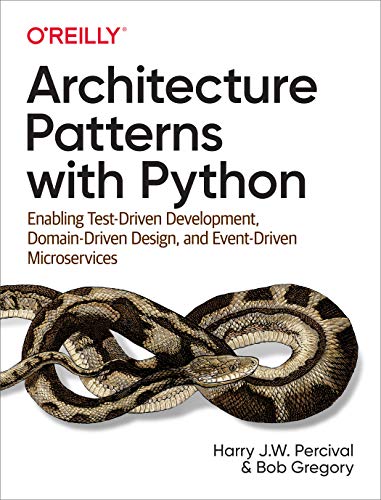
Harry Percival is a software architect with a unique background in Economics and Philosophy from Cambridge University, who transitioned from management consulting to become a passionate advocate for Test-Driven Development. Alongside Bob Gregory, a UK-based architect experienced in event-driven systems and domain-driven design, they developed this book to guide Python developers through complex architectural patterns with practical, idiomatic examples. Their combined expertise makes this work a valuable resource for anyone aiming to deepen their understanding of scalable Python software design.
Harry Percival is a software architect with a background in Economics and Philosophy from Cambridge University. After a stint as a management consultant, he embraced his passion for programming and became an advocate for Test-Driven Development (TDD), sharing his knowledge through talks and workshops. Bob Gregory is a UK-based software architect with over a decade of experience in building event-driven systems using domain-driven design.
Drawing from their extensive experience in software architecture, Harry Percival and Bob Gregory crafted this book to address the challenges Python developers face when implementing high-level design patterns. You’ll explore how to apply test-driven development alongside domain-driven design and event-driven microservices through clear Python examples, such as using dependency inversion and repository patterns to manage complexity. The authors break down concepts like CQRS and message buses in ways that resonate with Python’s idiomatic style, making these architectural strategies accessible. If you’re involved in growing Python projects needing scalable, maintainable designs, this book offers concrete frameworks to elevate your approach.
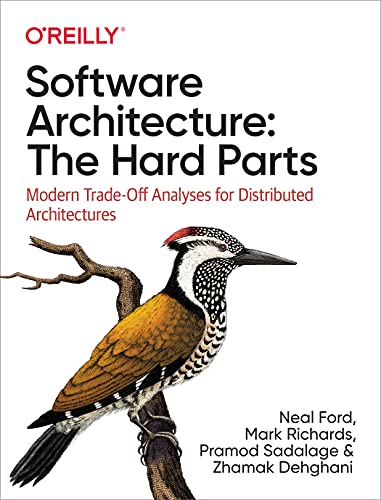
Neal Ford is a director and software architect at ThoughtWorks, known for blending Agile techniques with architectural innovation. His deep involvement in software development and delivery, combined with extensive speaking and writing experience, informs this book’s approach to the toughest challenges in distributed architectures. Drawing on this expertise, the book helps you navigate complex trade-offs and make better architectural decisions in real-world scenarios.
Neal Ford, Mark Richards, Pramod Sadalage, Zhamak Dehghani(you?)·
About the Author
Neal Ford is a director, software architect, and meme wrangler at ThoughtWorks, a software company and a community of passionate, purpose-led individuals who think disruptively to deliver technology to address the toughest challenges, all while seeking to revolutionize the IT industry and create positive social change. He's an internationally recognized expert on software development and delivery, especially in the intersection of Agile engineering techniques and software architecture. Neal has authored seven books (and counting), a number of magazine articles, and dozens of video presentations and spoken at hundreds of developers conferences worldwide. His topics include software architecture, continuous delivery, functional programming, cutting-edge software innovations, and a business-focused book and video on improving technical presentations.
When Neal Ford and his co-authors tackle the complex decisions in distributed systems, you’re invited to rethink what it means to design software architecture beyond simple best practices. This book dives into the trade-offs architects face daily, like determining service granularity or managing distributed transactions, using a compelling narrative about a fictional Sysops Squad to illustrate these challenges. You’ll gain insights into decoupling services, optimizing performance, and balancing scalability with elasticity, all framed around the messy realities rather than ideal solutions. If you’re involved in designing or evolving distributed architectures, this book gives you a sharper lens to evaluate your choices and document them thoughtfully.
Robert C. Martin, known as Uncle Bob, has been a programmer since 1970 and is founder of Uncle Bob Consulting, LLC. With a prolific career including editing the C++ Report and chairing the Agile Alliance, Martin brings unmatched expertise to this book. His decades of experience in diverse software environments shaped a practical guide that helps you apply critical architectural rules, improving the quality and longevity of your software systems.
Robert C. Martin (“Uncle Bob”) has been a programmer since 1970. He is founder of Uncle Bob Consulting, LLC, and cofounder with his son Micah Martin of The Clean Coders LLC. Martin has published dozens of articles in various trade journals and is a regular speaker at international conferences and trade shows. He has authored and edited many books, including: Designing Object Oriented C++ Applications Using the Booch Method, Patterns Languages of Program Design 3, More C++ Gems, Extreme Programming in Practice, Agile Software Development: Principles, Patterns, and Practices, UML for Java Programmers, Clean Code, and The Clean Coder. A leader in the industry of software development, Martin served for three years as editor-in-chief of the C++ Report, and he served as the first chairman of the Agile Alliance.
When Robert C. Martin first realized the persistent challenges developers face with software structure, he drew on decades of programming and teaching experience to compose this guide. You learn how to apply universal rules of software architecture to enhance developer productivity and system longevity, mastering principles that address function, separation of concerns, and data management. For example, the book explains how to define boundaries and layers effectively in various application types, from web to embedded systems. If you’re involved in designing or executing software architectures, this book offers clear guidance on making critical choices that influence your project's success.
Saurabh Shrivastava is a technology leader with over 18 years in IT and currently leads global solutions architecture initiatives at Amazon Web Services. His deep involvement in cloud platform automation and strategic partnerships informs this book, offering you practical insights into designing modern, secure, and cost-effective architectures. This background ensures the content addresses real challenges faced by solutions architects today, making it a valuable resource for advancing your career in cloud architecture.
Saurabh Shrivastava is a technology leader, author, inventor, and public speaker with over 18 years of experience in the IT industry. He currently works at Amazon Web Services (AWS) as a Global Solutions Architect Leader and enables global consulting partners and enterprise customers on their journey to the cloud. Saurabh led the AWS global technical partnerships, set his team's vision and execution model, and nurtured multiple new strategic initiatives. He holds a patent in the area of cloud platform automation and has authored various blogs and whitepapers across diverse technologies.
Drawing from extensive experience at Amazon Web Services, Saurabh Shrivastava and his co-authors crafted this handbook to address the evolving challenges faced by solutions architects. You’ll learn how to design architectures that balance performance, security, and cost efficiency, with detailed chapters on cloud-native patterns, machine learning integration, and operational excellence. For example, the book dives into modernizing legacy systems and leveraging generative AI within architectural designs. This guide suits software developers and DevOps engineers aiming to transition into solutions architecture or deepen their expertise in contemporary cloud environments.
The best Software Architecture books and more, in your inbox each week. No account needed.
Conclusion
This collection reveals a few clear threads: successful software architecture balances technical precision with strategic business alignment, anticipates growth challenges beyond code, and embraces evolving paradigms like microservices and cloud-native design. If you're steering a startup through early design decisions, Strategic Monoliths and Microservices offers nuanced guidance. Facing rapid scaling? Combine The Art of Scalability with Release It! to address both organizational and system resilience.
For Python developers tackling architectural complexity, Architecture Patterns with Python translates theory into practical patterns. Cloud architects will find Solutions Architect's Handbook invaluable for modern design principles infused with AI insights.
Once you've absorbed these expert insights, create a personalized Software Architecture book to bridge the gap between general principles and your specific situation. This approach ensures your learning stays relevant and actionable, empowering you to build software systems that truly stand the test of time.
Frequently Asked Questions
I'm overwhelmed by choice – which book should I start with?
Start with Software Architecture in Practice for a solid foundation in architectural principles and analysis. It offers practical methods that apply across many projects, helping you build a strong base before diving into specialized topics.
Are these books too advanced for someone new to Software Architecture?
Not at all. Books like Clean Architecture break down complex ideas into approachable principles, making them accessible to newcomers while still offering depth for experienced practitioners.
What's the best order to read these books?
Begin with foundational texts like Software Architecture in Practice and Clean Architecture. Then explore focused topics such as microservices with Building Microservices and strategic decisions with Strategic Monoliths and Microservices. Finally, dive into scaling and resilience with The Art of Scalability and Release It!.
Do I really need to read all of these, or can I just pick one?
You can pick based on your immediate needs. However, the books complement each other—combining strategic, practical, and technical perspectives—to give a more complete understanding of software architecture.
Which books focus more on theory vs. practical application?
Software Architecture in Practice leans toward theory and frameworks, while Release It! and Building Microservices provide hands-on techniques and real-world examples for practical implementation.
Can I get targeted insights without reading multiple full books?
Yes. While these expert books offer deep insights, you can also create a personalized Software Architecture book tailored to your experience level, interests, and goals—delivering focused, actionable guidance without the need to read multiple full texts.
📚 Love this book list?
Help fellow book lovers discover great books, share this curated list with others!