Congratulations! 🎉
Your book made it to BookAuthority's Best Sports Science Books of All Time!
10 Sports Science Books That Separate Experts from Amateurs
Jo Pavey, Ben Greenfield, and Kate Courtney recommend these Sports Science books to elevate your athletic performance and training insights





Sports science spans many kinds of books, and this list separates them by subject and reader. Broad performance guides include The Complete Guide to Sports Nutrition for anyone fueling training and Peak for coaches, trainers and serious athletes. Up to Speed focuses on research about women athletes. Cyclists can choose between The Cyclist's Training Bible for structured season planning and The Midlife Cyclist for riders over forty. Science of Sports Training addresses how to plan and control training across sports. Narrower titles cover resistance-exercise mechanics, tennis conditioning, injury rehabilitation for practitioners and karate biomechanics. creating a personalized Sports Science book
1. The Complete Guide to Sports Nutrition
“Full of science-backed advice, so detailed and informative and will benefit every sports person” (from Amazon)

This handbook covers nutrition for endurance, strength, performance and recovery. It explains how to calculate energy, carbohydrate and protein needs and covers hydration, supplements and RED-S. It also includes advice for masters, young and plant-based athletes. Jo Pavey recommends The Complete Guide to Sports Nutrition (9th Edition) (Complete Guides).
2. Up to Speed
Recommended by Christie Aschwanden
New York Times Bestselling Author of Good to Go
“More women are playing sports than ever before, and yet our understanding of how they can best excel remains woefully inadequate. Christine Yu’s book convincingly argues that it’s time for exercise and sports research to include women.” (from Amazon)

Up to Speed examines how sports science has often relied on studies of men. It also looks at newer research on how women can improve performance, reduce injury and stay healthy. The book follows women athletes from adolescence through pregnancy, menopause and beyond. Alex Hutchinson recommends Up to Speed: The Groundbreaking Science of Women Athletes.
The Sports Science Blueprint

This personalized book on sports science delivers a tailored approach that integrates your unique training background, nutritional needs, and athletic goals. It provides a personalized framework focusing on optimizing performance through evidence-based strategies in physiology, biomechanics, and recovery. By cutting through generic advice, it fits your specific context to enhance endurance, strength, and injury prevention. The content emphasizes practical implementation of sports science principles, including customized nutrition plans, targeted training periodization, and mindset techniques that align with your sport and level. Whether you aim to improve stamina or accelerate recovery, this tailored guide addresses key factors to elevate your athletic performance effectively and sustainably.
3. Peak
Recommended by Ben Greenfield in
Biohacker, Author, and Co-Founder of Kion
“This is the best book on athleticperformance, recovery & mindset I’ve read in quite some times” (from X)

Peak presents an integrated approach to health, nutrition, training, recovery and mindset for high performance. It addresses sleep, digestion, the athlete microbiome and blood glucose control. The book emphasizes fundamentals and consistency over fads.
4. The Cyclist's Training Bible

When Joe Friel first discovered the nuances of cycling training metrics, he challenged the typical one-size-fits-all approach to endurance coaching. This book breaks down complex concepts like Training Stress Score and power meter data into precise methods you can apply to customize your training plan. You’ll learn how to evaluate your strengths and weaknesses through targeted field tests and strategically plan your season with detailed daily, monthly, and yearly frameworks. Whether your goal is to improve climbing power or sharpen sprint speed, Friel’s experience coaching Olympians and national champions shines through practical chapters that help you maximize every ride. It’s an insightful manual best suited for cyclists serious about measurable performance gains, rather than casual riders.
5. The Midlife Cyclist
Recommended by Carlton Kirby
Eurosport Commentator
“Phil's book can help you be as good today as you always said you were” (from Amazon)
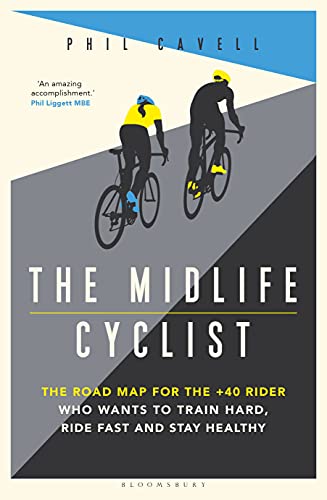
The Midlife Cyclist is a practical guide for mature riders who want to train hard, stay healthy and avoid injury. It uses case studies and expert contributions to examine the physical effects of hard training with age. It also looks at bike specifications, riding technique and the psychological advantages of being an older rider.
30-Day Sports Science Reset

This personalized book provides a focused 30-day plan integrating training, nutrition, and recovery strategies designed to yield measurable athletic gains. It offers a tailored framework that cuts through generic advice by focusing on daily actionable steps aligned with your specific sport, fitness level, and goals. The content emphasizes a balanced approach, combining periodized workouts, scientifically informed nutrition protocols, and recovery methods to optimize performance improvements while minimizing injury risk. By concentrating on measurable progress within a defined timeframe, it fits your unique context and accelerates adaptation, allowing you to implement sports science principles efficiently and effectively for rapid physical advancement.
6. Science of Sports Training
Recommended by The New Yorker
“Three items from Tom Kurz, athlete, instructor, coach, and graduate of the University School of Physical Education in Warsaw, Poland: a videotape Secrets of Stretching, and two books: Stretching Scientifically and Science of Sports Training. Tom presents a uniquely Eastern European look at this practical subject matter. The video chiefly focuses on the exercises and techniques necessary to achieve a dramatic full split position, while the books emphasize the technical aspect of stretching and sports training, with considerable emphasis on strength training and periodization... Substantial application to the interests of a serious student of the strength sports.” (from Amazon)

Science of Sports Training explains how to sequence exercises within a workout, a weekly cycle and longer periods. It also sets out the physiological basis for these arrangements. It covers changing training loads and building plans from a single session to several years. Examples come from track and field, swimming, boxing, wrestling, gymnastics and ball games.
7. The Physics of Resistance Exercise
Recommended by Alexander Cortes Phd Fitness Nutrition Fat Loss in
Personal trainer and fitness strategist
“Single sets to failure can definitely build muscle Multiple sets can build more muscle though Your exercise selection must be optimal though Id strongly recommend adopting the exercises from this book” (from X)

The Physics of Resistance Exercise looks at why standard resistance exercises often lead to injuries or muscle-development plateaus after the early months of training. It also discusses the drawbacks of high-volume training for many lifters.
8. Complete Conditioning for Tennis
Recommended by Chris Evert
Former World #1 Tennis Player, Broadcaster
“This is a great resource for players of all levels. The DVD serves as a very practical and user-friendly companion piece to an excellent book.” (from Amazon)

Complete Conditioning for Tennis offers exercises, drills and programs to assess fitness, improve footwork, increase speed and flexibility, and build stamina. It also covers mental focus and the prevention of common injuries. A companion DVD demonstrates drills on court and in the gym. Chris Evert recommends Complete Conditioning for Tennis (Complete Conditioning for Sports Series).
9. Sports Injury Prevention and Rehabilitation
Recommended by Kirill Micallef Stafrace
Vice President, European Federation of Sports Medicine Associations
“A genuine new approach to the prevention and management of sports injuries that combines evidence based medicine with the practicalities of the day to day necessities of dealing with the ever expanding and exciting new field of practice that is Sports and Exercise Medicine. Highly recommended to all SEM practitioners from whatever profession.” (from Amazon)

This book integrates sports medicine and physical therapy with training and conditioning science. Its focus is on returning athletes to performance, not just to play. Topics include medical screening, the science of pain, the psychology of injury, core stability, tissue retraining and end-stage rehabilitation testing.
10. Karate Science

Karate Science: Dynamic Movement explains the mechanics of the human body through karate technique. It also draws examples from aikido, taekwondo and judo. The book covers the biomechanics and dynamics of core movement and analyzes the fundamentals of Shotokan karate with many illustrations.
Enjoying these picks?
The best Sports Science books and more, in your inbox each week. No account needed.
Conclusion
If you want one practical place to start, The Complete Guide to Sports Nutrition covers fueling, hydration and recovery for a wide range of athletes. Coaches who plan programs may prefer Science of Sports Training or Peak. Clinicians should look at Sports Injury Prevention and Rehabilitation. Readers interested in women's sport should begin with Up to Speed. Cyclists, tennis players, lifters and karateka can go straight to the sport-specific titles. create a personalized Sports Science book
Frequently Asked Questions
I'm overwhelmed by choice – which book should I start with?
Start with "The Complete Guide to Sports Nutrition" for foundational science-backed nutrition advice, then explore "Peak" to integrate mindset and recovery strategies. These set a strong base before diving into specialized training or injury prevention books.
Are these books too advanced for someone new to Sports Science?
Not at all. Many books like "Up to Speed" and "Science of Sports Training" explain concepts clearly and are suitable for beginners who want solid scientific grounding to support their athletic goals.
What’s the best order to read these books?
Begin with nutrition and overall performance books such as "The Complete Guide to Sports Nutrition" and "Peak." Then move on to training-specific guides like "The Cyclist's Training Bible" and "Science of Sports Training." Finally, deepen knowledge with injury prevention and biomechanics texts.
Do any of these books contradict each other?
The books complement rather than contradict. For example, "Up to Speed" highlights female athlete specifics, enriching general principles found in other titles. Differences in approach often reflect the diversity of sports and athlete needs rather than disagreement.
Which book gives the most actionable advice I can use right away?
"The Cyclist’s Training Bible" and "Complete Conditioning for Tennis" offer detailed, practical plans and drills you can apply immediately, especially if you focus on endurance cycling or tennis conditioning.
How can personalized Sports Science books complement these expert recommendations?
Personalized books build on expert insights by tailoring content to your specific sport, skill level, and goals. They help you focus on what matters most to you without reading multiple full books. Learn more by creating your custom Sports Science book.
Help fellow book lovers discover great books, share this curated list with others!
Related Articles You May Like
Explore more curated book recommendations