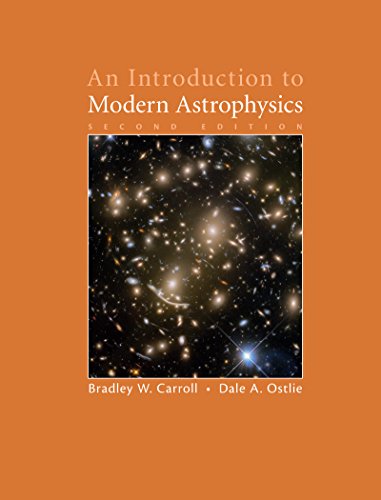
"An Introduction to Modern Astrophysics" by Bradley W. Carroll, Dale A. Ostlie made it to BookAuthority's Best Stellar Astronomy Audiobooks of All Time!
7 Stellar Astronomy Books That Illuminate Cosmic Mysteries
Recommended by Chris Lintott, astrophysics professor at Oxford, these Stellar Astronomy Books offer expert insight and deep understanding.
Updated on June 24, 2025·We may earn commissions for purchases made via this page
1 of 7 books have Audiobook versions
We're launchingLaunching on Product Hunt today 🎉We just launchedJust launched on Product Hunt 🎉
Modelpeers, from the BookAuthority teamFrom the BookAuthority team: Modelpeers, a free way to follow AI models and agents like you follow people. We'd love your support.
What if the stories of stars could reveal the very origins of the universe? That’s exactly what some of the most insightful Stellar Astronomy books explore, mapping cosmic history from the first glimmers of light to the complex lives of celestial giants. As telescopes peer deeper, understanding these ancient beacons offers clues not just to distant galaxies but to our own cosmic roots.
Experts like Chris Lintott, professor of astrophysics at the University of Oxford, have championed works such as Emma Chapman's First Light, which charts the dawn of stars with a clarity that reshaped how scientists view the early cosmos. Meanwhile, Anna Frebel’s research into ancient stars invites readers into stellar archaeology, piecing together the universe's formative years through chemical fingerprints.
While these expert-curated books provide proven frameworks, readers seeking content tailored to their specific background, interests, and goals might consider creating a personalized Stellar Astronomy book that builds on these insights, blending authoritative science with your unique learning path.
Chris Lintott, professor of astrophysics at the University of Oxford, endorses this book as a vibrant exploration at science's edge, describing it as "a dispatch from the frontiers of science, from a brain fizzing with ideas and energy." Lintott’s expertise in astrophysics adds weight to his praise, especially given his extensive work in public science communication. His recommendation reflects how Emma Chapman's insights reshaped his view of the cosmic dawn, particularly through her detailed account of the earliest stars. Adding to this, The Washington Post highlights Chapman's infectious enthusiasm and clear guidance, capturing the wonder of a universe transitioning from darkness to light.
Emma Chapman is a Royal Society research fellow and fellow of the Royal Astronomical Society, based at the University of Nottingham. She is among the world's leading researchers in search of the first stars to exist in our Universe, 13 billion years ago, and she is involved in both the Low Frequency Array (LOFAR) in the Netherlands and the forthcoming Square Kilometre Array (SKA) in Australia, a telescope that will eventually consist of a million antennas pointing skywards in the desert. Emma has been the recipient of multiple commendations and prizes, the most recent of which was both the 2018 Royal Society Dorothy Hodgkin Research Fellowship and STFC Ernest Rutherford Fellowship, two of the most prestigious science fellowships in the UK. She won the Institute of Physics Jocelyn Bell Burnell Prize in 2014, and was runner-up for the UK L'Oreal Women in Science award in 2017. In 2018 she was also the recipient of the Royal Society Athena Medal. Emma is a respected public commentator on astrophysical matters, contributing to the Guardian, appearing on BBC radio and regularly speaking at public events.
The breakthrough moment came when Emma Chapman, a Royal Society research fellow, transformed our understanding of the Universe's earliest stars. In this book, you’ll uncover how the first luminous giants ignited after the cosmic dark ages, a period previously shrouded in mystery. Chapman guides you through the "Epoch of Reionisation," explaining how these colossal stars, hundreds of times larger than the Sun, shaped cosmic evolution and seeded elements essential for life. With detailed insights into upcoming telescopes like the Square Kilometre Array, you gain a glimpse into how modern astronomy is poised to illuminate these ancient cosmic origins. This book suits anyone intrigued by the dawn of stars and the evolving cosmos, though it demands a readiness to engage with sophisticated astrophysical concepts.
Anna Frebel is a tenured Professor in the Astrophysics Division at MIT, specializing in stellar archaeology and near-field cosmology. Her expertise on ancient 13-billion-year-old stars and their chemical fingerprints drives this book, providing a firsthand account of how astronomers uncover the universe's earliest history. Frebel's award-winning research and engaging storytelling make this work a unique window into stellar astronomy and the origins of the cosmos.
Anna Frebel is a tenured Professor in the Astrophysics Division of the Physics Department at the Massachusetts Institute of Technology (MIT). Originally from Germany, she received her PhD from the Australian National University's Mt. Stromlo Observatory in 2007. Following postdoctoral work at the University of Texas at Austin and the Harvard-Smithsonian Center for Astrophysics, Frebel joined the MIT faculty in 2012. She is a world leading expert in the fields of stellar archaeology and near-field cosmology which concerns the study of ancient 13 billion year old stars to understand the physical and chemical conditions of the early universe, the origin of the elements, and the formation of the Milky Way galaxy. For her research into the oldest stars in the universe and the early evolution of the chemical elements she received awards such as the 2007 Charlene Heisler Prize (Astronomical Society of Australia), the 2009 Ludwig-Biermann Young Astronomer Award (German Astronomical Society) and the 2010 Annie Jump Cannon Award (American Astronomical Society). In 2013 she received a CAREER Award from the National Science Foundation, in 2016 she was named one of ScienceNews Magazine's 10 scientists to watch. Besides physics and astronomy, Frebel also teaches professional career development and provides leadership training in particular for graduate students and postdocs across all fields of science. Frebel also enjoys communicating science to the public, through regular public talks, media appearances, and lately through her popular science book.
Anna Frebel's decades of research in stellar archaeology led to this insightful narrative that invites you into the fascinating quest to find the universe's oldest stars. Through vivid descriptions of telescope expeditions and chemical fingerprint analyses, you learn how ancient stars reveal the cosmic origins of elements and the formation of our galaxy. Chapters detail the process of "excavating" star fields and interpreting supernova remnants, offering a rare glimpse into cutting-edge astrophysics. This book suits anyone curious about how astronomers piece together the universe's earliest history through stellar relics.
This personalized AI book about stellar evolution is created after you share your background and specific interests within stellar astronomy. The AI crafts a detailed guide that focuses on the star formation and development topics you want to explore most. By tailoring the content to your goals and knowledge level, this book offers a clear and focused pathway through complex concepts, making your learning more effective and engaging.
TailoredRead AI creates personalized nonfiction books that adapt to your unique background, goals, and interests. Instead of reading generic content, you get a custom book written specifically for your profession, experience level, and learning objectives. Whether you're a beginner looking for fundamentals or an expert seeking advanced insights, TailoredRead crafts a book that speaks directly to you. Learn more.
2026·50-300 pages·Stellar Astronomy, Star Formation, Stellar Evolution, Astrophysics Basics, Nucleosynthesis
This tailored book explores the intricate processes of star formation and evolution, focusing closely on your specific interests within stellar astronomy. It covers everything from the birth of stars in nebulae to their diverse life cycles and ultimate fates, all while matching your background and learning goals. By weaving together the collective knowledge from expert research, this personalized guide reveals core astrophysical concepts and the latest discoveries, making complex ideas accessible and engaging. Whether you aim to deepen your understanding of stellar dynamics or unravel nucleosynthesis, this book offers a focused journey that addresses your unique curiosities and educational needs.
The Wall Street Journal, a leading authority in science and culture reporting, highlights this book for its unique approach to stellar astronomy. Their endorsement stems from appreciating how Lisa Harvey-Smith transforms stars, magnetic fields, and nebulae into vivid, almost human-like characters, a perspective that reshaped their understanding of cosmic phenomena. They describe it as "a sparkling work of narrative nonfiction" that makes complex science approachable and memorable, helping readers grasp the universe's vastness while feeling connected to its mysterious personalities.
“A sparkling work of narrative nonfiction... Dr. Harvey-Smith casts deep-space phenomena such as stars, magnetic fields and nebulae not as remote and impersonal entities but as 'temperamental personalities' with human-like quirks, frailties and emotional relationships... Having hard science presented in the form of lively character sketches is a godsend for those who may find the details of conventional nonfiction hard to retain. Readers will finish this narrative feeling both better-informed and in awe of the vast forces at work.”
Lisa Harvey-Smith is an award-winning astronomer and former Australian government ambassador for women in science, technology, engineering, and mathematics (STEM). She is the author of The Secret Life of Stars: Astrophysics for Everyone and Universal Guide to the Night Sky. Follow her on Instagram @lisa.harveysmith.
Lisa Harvey-Smith, an award-winning astronomer and advocate for women in STEM, invites you to explore the universe's most extraordinary stars with accessible clarity and vibrant detail. This book uncovers the mysteries behind phenomena like pulsars, blue stragglers, and supernovae, transforming complex astrophysical concepts into engaging narratives that reveal stars as dynamic characters rather than distant objects. You'll gain insights into the lifecycle and peculiarities of these celestial bodies, supported by Eirian Chapman's evocative illustrations that bring each star's story to life. This book suits anyone eager to deepen their understanding of stellar astronomy beyond the basics, especially those who appreciate science presented with personality and a touch of wonder.
Bradley W. Carroll, with a Ph.D. in Astrophysics and over thirty years teaching experience, brings a rare combination of deep expertise and educational skill to this textbook. His tenure as Physics Department chair and recognition with teaching awards underscore his commitment to clear scientific communication. This background informs a book designed to equip you with a thorough understanding of astrophysics fundamentals, blending theory, practical exercises, and the latest discoveries to prepare you for advanced study or research.
Bradley W. Carroll received his B.A. in Mathematics and a Secondary Teaching Credential from the University of California, Irvine, his M.S. in Physics from the University of Colorado, Boulder, and his Ph.D. in Astrophysics from the University of Colorado, Boulder. He then accepted a postdoc with Hugh Van Horn at the University of Rochester and, four years later, accepted a position in the Physics Department at Weber State University, where he served as the Physics Department chair for ten years. He retired in 2015 after thirty years at Weber State University, Utah. During this time, he was awarded the Lowe Innovative Teaching Award and named a WSU Brady Presidential Distinguished Professor. He is an emeritus member of the American Astronomical Society.
Drawing from decades of academic and teaching experience, Bradley W. Carroll and Dale A. Ostlie crafted this extensive volume to guide you through the full spectrum of modern astrophysics. You’ll engage with topics from solar system dynamics and stellar structures to galactic phenomena and cosmological principles, gaining a solid grasp of both fundamental theories and recent scientific discoveries. The book’s inclusion of worked examples, end-of-chapter problems, and computational exercises means you develop practical skills alongside conceptual understanding, especially if you have a background in physics and calculus. It’s tailored primarily for astronomy and physics majors aiming to deepen their technical expertise rather than casual stargazers.
Andrew King is a distinguished professor of astrophysics whose research on black holes has earned him prestigious awards like the Royal Society Wolfson Research Merit Award and the Eddington Medal. His deep expertise shapes this book, providing you with an authoritative guide to how stars live, die, and influence the cosmos. King’s background at the University of Leicester and the University of Amsterdam uniquely qualifies him to explain stellar phenomena with clarity and precision.
Andrew King is an astronomer interested in black holes and how they shape the galaxies they inhabit. He is Professor of Astrophysics at the University of Leicester, UK, and a long-term Visitor at the University of Amsterdam. His work has been recognised by a Royal Society Wolfson Research Merit Award, a Senior Fellowship of the Particle Physics and Astronomy Research Council, and the Eddington Medal of the Royal Astronomical Society for investigations of outstanding merit in theoretical astrophysics.
Andrew King, a professor of astrophysics and expert in black holes, wrote this concise book to illuminate the life cycles of stars through the lens of physics. You'll explore how stars fuse hydrogen into helium, the factors driving their evolution, and the dramatic end states like black holes and pulsars. The book also explains how stars serve as tools for measuring cosmic phenomena such as the universe’s expansion. Ideal if you want to grasp stellar processes from formation to death, including how star remnants seed new planetary systems.
This custom AI book on stellar evolution is created based on your background, interests, and specific goals in astronomy. By sharing what aspects of cosmic origins and star life cycles you want to explore, this book focuses on exactly what you need to learn. Using AI, it delivers a personalized pathway through complex material, making the vast universe of stellar astronomy accessible and engaging at your pace and skill level.
TailoredRead AI creates personalized nonfiction books that adapt to your unique background, goals, and interests. Instead of reading generic content, you get a custom book written specifically for your profession, experience level, and learning objectives. Whether you're a beginner looking for fundamentals or an expert seeking advanced insights, TailoredRead crafts a book that speaks directly to you. Learn more.
2026·50-300 pages·Stellar Astronomy, Cosmic Origins, Star Formation, Stellar Evolution, Nucleosynthesis
This tailored book explores the fascinating origins of the cosmos and the dynamic life cycles of stars through a personalized learning journey. It reveals how stars form, evolve, and influence the universe, focusing specifically on your interests and background to deepen your understanding effectively. The content synthesizes complex astronomical concepts into accessible explanations, providing a clear pathway that matches your goals and skill level. By tailoring the material to your unique needs, the book fosters accelerated learning and engagement with stellar phenomena. Its approach bridges expert knowledge with your personal learning objectives, making the vast subject of stellar astronomy approachable and compelling.
Subrahmanyan Chandrasekhar, a Nobel laureate known for defining the Chandrasekhar Limit on white dwarf masses, crafted this work to clarify the physical principles governing stellar interiors. His deep expertise in astrophysics and dedication to rigorous mathematical treatment make this book a cornerstone for anyone serious about stellar astronomy. Chandrasekhar’s legacy shines through his clear exposition of fundamental and modern theories, providing a solid foundation for understanding star behavior and evolution.
Subrahmanyan Chandrasekhar (1910–1995) was a renowned Indian astrophysicist who received the Nobel Prize in Physics in 1983 for his work on the later evolutionary stages of massive stars. He authored several influential books and was a prominent reviewer in his field during the 1970s and 1980s. His name is associated with the Chandrasekhar Limit, which defines the maximum mass of a stable white dwarf star. Chandrasekhar's contributions to astrophysics have left a lasting legacy.
What happens when a Nobel Prize-winning astrophysicist dives into the fundamentals of stellar dynamics? Subrahmanyan Chandrasekhar, whose groundbreaking work on massive stars earned him the 1983 Nobel Prize in Physics, takes you through the intricate dance between energy loss, mass, and radius in stars. This book meticulously covers thermodynamics, radiative equilibrium, and the physics of white dwarfs, with detailed chapters on classical laws and modern quantum mechanics. If you’re looking to deepen your understanding of stellar structure through rigorous mathematics and physics, this book lays out the essential theories and data with precision. It's best suited for those comfortable with advanced science, seeking to grasp the mechanics behind star stability and evolution.
Donald D. Clayton is recognized for his authoritative contributions to astrophysics, making his book a definitive reference in stellar astronomy. As an experienced author and educator, Clayton crafted this text to bridge complex astrophysical theory with practical understanding of nucleosynthesis and stellar evolution. His expertise offers you a deep dive into the mechanisms that power stars and create elements, positioning this book as a vital resource for serious students and researchers alike.
Donald D. Clayton is the author of Principles Of Stellar Evolution and Nucleosynthesis, a standard work on the subject and a popular textbook for students in astronomy and astrophysics.
What makes Donald D. Clayton's book a cornerstone in stellar astronomy is its blend of rigorous astrophysics with nucleosynthesis processes, crafted by an author deeply immersed in the field. Clayton's experience as an astrophysicist and educator shines through as you explore detailed explanations of how stars evolve and forge elements, supported by quantitative models and nuclear reaction chains. You’ll find chapters that dissect stellar lifecycles, from main sequence to supernova stages, offering insights valuable for both students seeking foundational knowledge and researchers requiring precise reference. While dense, this text rewards persistent readers aiming to understand the inner workings of stars at a fundamental level.
The best Stellar Astronomy books and more, in your inbox each week. No account needed.
Conclusion
This collection of seven books reveals a clear thread: stellar astronomy is as much about understanding the universe’s past as it is about decoding its present forces. From the cosmic dawn in First Light to the precise physics in An Introduction to the Study of Stellar Structure, each title offers a unique key to unlocking stellar mysteries.
If you're grappling with the foundations of star formation, starting with Stars and The Secret Life of Stars can ground you in essential concepts and captivating phenomena. For those ready to tackle rigorous astrophysics, combining An Introduction to Modern Astrophysics with Principles of Stellar Evolution and Nucleosynthesis provides a challenging yet rewarding learning experience.
Alternatively, you can create a personalized Stellar Astronomy book to bridge the gap between general principles and your specific situation. These books can help you accelerate your learning journey and deepen your cosmic understanding.
Frequently Asked Questions
I'm overwhelmed by choice – which book should I start with?
Start with The Secret Life of Stars for an engaging overview that brings star phenomena to life. It’s approachable and helps build a solid foundation before diving into more technical books.
Are these books too advanced for someone new to Stellar Astronomy?
Not all. Titles like Stars and The Secret Life of Stars are accessible to beginners, while others like An Introduction to Modern Astrophysics are better suited for readers with some physics background.
What's the best order to read these books?
Begin with engaging narratives like First Light and Searching for the Oldest Stars, then progress to more technical works such as An Introduction to the Study of Stellar Structure for deeper understanding.
Should I start with the newest book or a classic?
Newer books like First Light reflect the latest research and discoveries, but classics like Clayton's Principles of Stellar Evolution and Nucleosynthesis remain foundational for grasping core concepts.
Do these books assume I already have experience in Stellar Astronomy?
Some do, especially the more technical ones. However, several titles offer clear introductions suitable for curious readers without prior experience.
How can I get book content tailored to my specific interests and skill level?
While these expert books offer solid knowledge, you can complement them by creating a personalized Stellar Astronomy book tailored to your background and goals, blending expert insight with your unique needs.
📚 Love this book list?
Help fellow book lovers discover great books, share this curated list with others!