18 Terrorism Books That Define Expert Insight and Strategy
Recommended by Col. Morris Davis, Walter Shaub, and Tim Weiner, these books offer authoritative perspectives on terrorism.
Updated on June 28, 2025·We may earn commissions for purchases made via this page
17 of 18 books have Kindle versions
We're launchingLaunching on Product Hunt today 🎉We just launchedJust launched on Product Hunt 🎉
Modelpeers, from the BookAuthority teamFrom the BookAuthority team: Modelpeers, a free way to follow AI models and agents like you follow people. We'd love your support.
What if the story behind terrorism wasn't just about acts of violence but about the complex interplay of politics, ideology, and human choices? Understanding terrorism today means grappling with its evolving nature across continents and decades. This subject remains urgent as the ripples of 9/11 still shape policies and societies worldwide.
Voices such as Col. Morris Davis, former Guantanamo Chief Prosecutor, provide firsthand perspectives on how counterterrorism measures have reshaped America’s democracy. Walter Shaub, who led the US Office of Government Ethics, highlights the moral dimensions in governance affected by terrorism policy. And Pulitzer winner Tim Weiner offers deep insights into intelligence failures and successes, helping us decode the tangled web of global terror.
While these expert-curated books provide proven frameworks and rich historical context, those seeking tailored insights based on their background or focus areas might consider creating a personalized Terrorism book to deepen understanding in specific regions, ideologies, or counterterrorism strategies.
Col. Morris Davis, former Guantanamo Chief Prosecutor and national security expert, found Spencer Ackerman's book indispensable for understanding the complex legacy of the War on Terror. Attending a focused Guantanamo conference at UPenn, he appreciated hearing Ackerman discuss how post-9/11 policies reshaped American society and politics. Davis’s firsthand experience with national security lends weight to his perspective, highlighting the book's detailed examination of indefinite detention and surveillance. His endorsement underscores why you should consider this book if you want to grasp how these security measures paved the way for political shifts culminating in the Trump era. Additionally, Walter Shaub, former Director of the Office of Government Ethics, also engages with Ackerman’s insights, signaling its relevance to ethics and governance discussions.
Former Guantanamo Chief Prosecutor, National Security Specialist
“Good trip to UPenn for the close Guantanamo conference. Great to hear Spencer Ackerman talk about his book “Reign of Terror: How the 9/11 Era Destabilized America and Produced Trump.” Thanks to the organizers. Stay tuned for the conference report in January.” (from X)
Spencer Ackerman is a national security journalist known for his insightful analysis of the War on Terror and its implications on American society. His work has been recognized for its depth and clarity, making significant contributions to the discourse surrounding national security and democracy.
Spencer Ackerman, a seasoned national security journalist, draws from years of investigative reporting to explore how the War on Terror reshaped America politically and culturally. You’ll gain a nuanced understanding of how policies like drone strikes, surveillance, and indefinite detention contributed to increased authoritarianism and societal divisions. Ackerman meticulously connects events from post-9/11 security measures to the rise of political figures like Donald Trump, especially highlighting missed opportunities during the Obama administration. This book suits anyone wanting to grasp the complex intersections of terrorism policy, civil liberties, and American political shifts over the past two decades.
Best for understanding terror financing disruption
Kindle version available
Alan Dershowitz, a leading civil rights attorney, highlights how this book reshaped his understanding of terrorism by exposing the critical role of financial networks. After encountering "Harpoon," he emphasized, "Money drives terrorism. If funding is cut, terrorism is reduced. A groundbreaking look at how spies, soldiers, statesmen, and lawyers waged a relentless campaign to dry up the financial streams that funded terrorism against Israel and the United States." This perspective reveals why cutting off money supplies is as vital as battlefield action. Alongside him, Tamir Pardo, former Mossad director, praises the book's thrilling account of the intelligence task force pioneering this financial warfare, underscoring its relevance for anyone studying modern counterterrorism.
“Money drives terrorism. If funding is cut, terrorism is reduced. A groundbreaking look at how spies, soldiers, statesmen, and lawyers waged a relentless campaign to dry up the financial streams that funded terrorism against Israel and the United States. A great read about a compelling issue.” (from Amazon)
Nitsana Darshan-Leitner is an Israeli attorney, human rights activist and the founder of Shurat HaDin Israeli Law Center. She has been leading the legal fight against terror financing, the anti-Israel boycott campaigns (BDS) and combating the multitude of lawfare tactics utilized against the Jewish State by its enemies. As the president of the Israel based civil rights organization, Shurat HaDin–Israel Law Center, she has represented hundreds of terror victims in legal actions against terror organizations and their supporters. Ms. Darshan-Leitner has successfully recovered more than two hundred million dollars in compensation on their behalf. In recent years, Ms. Darshan-Leitner initiated a legal campaign to deprive terrorists of social media resources such as Facebook, Twitter, and YouTube, which they use to incite violence against Jews and promote terror attacks. In her efforts to combat anti-Semitism and anti-Israeli activities, Ms. Darshan-Leitner assisted in blocking the Gaza Flotilla, terminated efforts to indict IDF soldiers for war crimes, and filed legal actions against those who boycott Israeli academics and companies in violation of the law.
While working as an attorney deeply involved in counterterrorism legal battles, Nitsana Darshan-Leitner noticed how little attention was paid to the financial underpinnings of terrorism. In "Harpoon," she teams with journalist Samuel M. Katz to expose the covert Israeli operation targeting terror funding, revealing the strategic disruption of money pipelines that fuel groups like Hamas and ISIS. You gain insight into unconventional warfare tactics combining intelligence, legal action, and military efforts, illustrated through detailed accounts of Mossad’s groundbreaking campaign. This book suits anyone keen to understand the intersection of finance, law, and counterterrorism beyond battlefield narratives.
This AI-created book on terrorism studies is tailored based on your background, skill level, and specific interests in terrorism tactics, history, and countermeasures. You share what aspects you want to focus on and your goals, and the book is crafted to cover precisely those areas. This personalized approach ensures you get a focused, relevant learning experience that aligns with your expertise and objectives, helping you navigate the complexities of terrorism with clarity and depth.
TailoredRead AI creates personalized nonfiction books that adapt to your unique background, goals, and interests. Instead of reading generic content, you get a custom book written specifically for your profession, experience level, and learning objectives. Whether you're a beginner looking for fundamentals or an expert seeking advanced insights, TailoredRead crafts a book that speaks directly to you. Learn more.
2026·50-300 pages·Terrorism, Terrorism History, Terrorist Tactics, Counterterrorism, Political Ideology
This tailored book offers an in-depth exploration of terrorism, crafted specifically to match your background, interests, and goals. It examines the historical evolution of terrorism, diverse tactics employed by groups, and the complex political and ideological forces driving these movements. Through a personalized lens, it reveals counterterrorism efforts and challenges, focusing on areas you find most relevant. By integrating established knowledge with your unique focus, this book creates a tailored pathway to deepen understanding and critical thinking about terrorism's multifaceted nature. The tailored approach ensures the content aligns with your expertise and objectives, making your learning experience both engaging and relevant.
Benjamin Netanyahu’s Fighting Terrorism offers a distinct examination of terrorism’s evolving nature, particularly its emergence as an international threat fueled by Islamic militancy. Drawing on his experience as a political leader in Israel, Netanyahu outlines the challenges posed to advanced technological societies and proposes strategic defenses democracies can adopt. This book stands out for its focused analysis on the shift from domestic to global terrorism and is essential for anyone seeking to understand the complexities of modern terror and how nations might respond effectively.
164 pages·Terrorism, War on Terror, International Terrorism, Islamic Militancy, Counterterrorism
Unlike most terrorism books that focus solely on historical events, Benjamin Netanyahu brings a unique perspective shaped by his extensive political career and leadership in Israel's Likud Party. You’ll gain insight into the evolution of terrorism from domestic threats to the rise of international Islamic militancy, highlighted by examples that reveal how technological societies are challenged differently. Netanyahu doesn’t just analyze terror tactics; he offers a framework for democracies to defend themselves effectively, making this a focused read for anyone interested in security policy and counterterrorism strategies. The book’s concise chapters distill complex issues into accessible discussions, especially regarding how new threats differ fundamentally from past ones.
Joseph Lieberman, former U.S. Senator and seasoned security expert, brings a wealth of experience in national defense and counterterrorism to his recommendation of this book. Having witnessed the evolving global threats firsthand, Lieberman underscores how General Flynn blends personal memoir with a strategic blueprint to confront radical Islam and its powerful backers. He emphasizes the book's value for policymakers and security professionals alike, noting it offers insights critical for America’s future security. Alongside Lieberman, Newt Gingrich highlights the book’s role as a clear-eyed introduction to the ongoing conflict and a critique of leadership failures, reinforcing why you should consider this perspective if you seek a deeper grasp of modern terrorism dynamics.
“The Field of Fight is a book worth reading by anyone concerned about the future security of America. It is both an engaging personal memoir by a great American soldier and military intelligence officer, General Mike Flynn, and a strategic plan by General Flynn of how to win the global war against radical Islam and its big power supporters. The leaders of the next American administration would benefit from reading The Field of Fight.” (from Amazon)
Lieutenant General (Ret.) Michael T. Flynn, Michael Ledeen(you?)·
About the Author
Lieutenant General (Ret.) Michael T. Flynn is a subject matter expert in Diplomacy, Statecraft, Foreign Policy, Strategy Formulation, Defense, Intelligence, and other areas of national and international security. He served more than 33 years in the Army, Joint, and Special Operations Forces, with multiple overseas combat tours. He is the author of 7 books, two are best sellers. He holds three master’s degrees, an honorary doctorate and currently serves as the Chairman of America’s Future, which is among the nation’s oldest non-profits. His military career culminated as the Director of the Defense Intelligence Agency and the nation’s highest serving military intelligence officer. Additionally, he served the 45th President of the United States, President Donald J. Trump, as the nation’s 25th National Security Advisor.
Drawing from his extensive 33-year career in Army intelligence and leadership as Director of the Defense Intelligence Agency, Lieutenant General Michael T. Flynn offers a blunt, insider perspective on the ongoing global conflict with radical Islamist groups. You’ll gain a detailed understanding of the strategic failures that allowed groups like ISIS to flourish and why government secrecy has hindered effective responses. Flynn outlines concrete reasons behind past setbacks and what must be done to decisively counter these threats, including the roles of Iran and other state actors. This book suits anyone wanting a military intelligence viewpoint on modern terrorism and the geopolitical complexities shaping it.
Will Mcavoy, an authoritative voice on terrorism, highlights this book as the definitive account of pre-9/11 counterintelligence efforts, praising its detailed portrayal of John O’Neill’s critical role. "It should be noted here that Wright's 'The Looming Tower' is probably the best book on the subject of the pre-9/11 counter-intelligence investigations into al-Qaeda," he notes, underscoring its depth. This perspective invites you to understand the meticulous investigative work behind the scenes and how systemic lapses shaped history. Alongside Peter Bergen, who calls it "deeply researched" and "immaculately crafted," the book stands as a crucial resource for anyone keen on the complexities of terrorism and intelligence failures.
“It should be noted here that Wright's "The Looming Tower" is probably the best book on the subject of the pre-9/11 counter-intelligence investigations into al-Qaeda, and in that book O'Neill plays a major role. It was one of the major sources for this thread.” (from X)
Lawrence Wright is an acclaimed author and journalist, known for his in-depth investigative work. He won the Pulitzer Prize for his reporting on the 9/11 attacks and has written extensively on terrorism and the Middle East. His book, The Looming Tower, is recognized as a definitive history of al-Qaeda and the events leading up to September 11, 2001.
Lawrence Wright, a Pulitzer Prize-winning journalist renowned for his investigative rigor, delivers a meticulous chronicle of how al-Qaeda evolved into a formidable terrorist network. You gain detailed insights into the ideological origins and operational failures that paved the way for 9/11, including FBI counterterrorism efforts led by John O’Neill. The book's narrative spans decades, blending biographical sketches with geopolitical analysis, revealing how individual actors and systemic lapses intertwined. If you seek a nuanced understanding of terrorism's roots and intelligence complexities, this book offers a precise, well-documented framework without sensationalism.
This AI-created book on terrorism prevention is tailored to your skill level and specific goals. By sharing your background and the areas you want to focus on, you receive a book that matches your interests and helps you navigate complex counterterrorism topics efficiently. This personalization ensures you get clear, actionable steps designed to rapidly enhance your understanding and application of prevention and response techniques.
TailoredRead AI creates personalized nonfiction books that adapt to your unique background, goals, and interests. Instead of reading generic content, you get a custom book written specifically for your profession, experience level, and learning objectives. Whether you're a beginner looking for fundamentals or an expert seeking advanced insights, TailoredRead crafts a book that speaks directly to you. Learn more.
This tailored book explores actionable plans for terrorism prevention and response, designed to match your background and specific goals. It examines essential counterterrorism techniques through a clear, step-by-step framework that focuses on the practical application of expert knowledge. By addressing your personal interests and skill level, it offers a customized pathway through complex topics such as threat assessment, rapid response, and crisis management. The book reveals how to rapidly build effective counterterrorism responses, blending essential theory with targeted practice. This personalized approach ensures a focused learning experience that helps you grasp critical concepts and methods relevant to your unique context and objectives.
John Horgan, author of The End of Science and director of the Center for Science Writings at Stevens Institute of Technology, highlights this book as a "truly comprehensive and wonderfully accessible terrorism course all contained in a single text." His expertise in analyzing complex scientific and social phenomena brings weight to his endorsement. He found that this collection broadened his understanding of terrorism’s multifaceted nature, offering clarity on topics often clouded by jargon. If you want a well-structured yet approachable guide that bridges theory and practice, Horgan’s experience suggests this book is a solid choice.
James J.F. Forest, Ph.D., is Professor and Director of the Security Studies program at the University of Massachusetts Lowell. He is also a Senior Fellow with the U.S. Joint Special Operations University, and a Visiting Professor at the Fletcher School of Law and Diplomacy at Tufts University. He has served in all three positions simultaneously since 2010. Dr. Forest was previously the Director of Terrorism Studies at the U.S. Military Academy, West Point, and he has taught courses and seminars for a broad range of civilian, law enforcement, and military audiences in several countries for nearly two decades. He has also published 20 books and dozens of journal articles, served as an expert witness for terrorism-related court cases, and testified before members of Congress.
2019·458 pages·Terrorism, Counterterrorism, National Security, Threat Assessment, Terrorist Organizations
James J. F. Forest brings decades of academic and practical experience in terrorism studies to this extensive collection of lectures. You gain detailed insights into terrorism's history, underlying causes, and the complex frameworks analysts use to assess threats, with chapters unpacking specific terrorist organizations and their evolving tactics. This book suits students and security professionals seeking a structured, classroom-tested foundation in counterterrorism and national security. Its methodical approach lets you grasp both theoretical concepts and applied analysis without fluff, providing a solid base for understanding terrorism's multifaceted nature.
David Asman, a Fox Business Network host known for his sharp analyses, highlights this book as ". . . one of the most extraordinary spy stories in history . . ." His appreciation stems from the rare access to Hamas's inner workings and the personal risks the author took to expose their operations. This endorsement underscores the book’s value for anyone seeking a deeper understanding of terrorism beyond the surface. Complementing this, Joel Rosenberg, an established Middle East expert, calls it a must-read with the potential for a major Hollywood adaptation, emphasizing its gripping narrative and real-world impact.
Mosab Hassan Yousef, born in Ramallah, in the Palestinian West Bank in 1978, is the son of Sheikh Hassan Yousef, a founding leader of Hamas. Yousef was an integral part of the movement, imprisoned several times by the Israeli intelligence service. After embracing the teachings of Jesus, he sought political asylum in America.
What started as Mosab Hassan Yousef's personal journey from being the son of a Hamas leader to embracing a radically different worldview became a revealing account of political intrigue and moral conflict. You gain an insider’s perspective on Hamas as Yousef details his covert work with Israeli intelligence and the heavy toll of betraying his family and cause. The book explores the complex layers of Middle Eastern terrorism beyond headlines, showing how ideology, faith, and personal choices collide. If you want a nuanced understanding of terrorism’s human side and the difficult decisions behind espionage, this book offers a rare window into those realities.
Publisher's Weekly, a respected voice in book criticism, highlights this work for its brisk yet insightful historical survey and thoughtful reflections on why young men turn to violence for ideological causes. Their review, "A brief, fast-paced historical overview leads to probing and provocative ruminations on the multifarious factors that draw young men toward violence in the service of an ideology ... The authors’ nuanced perspective on a complex phenomenon will appeal to readers interested in what lies beyond the headlines," underscores how this book challenges simplistic fears with clear analysis. Their perspective invites you to reconsider terrorism beyond headlines, making it a vital read for those wanting depth and context. Kirkus Reviews also notes its appeal to those focused on geopolitics, reinforcing its place as a thoughtful resource in understanding terrorism's evolving threats.
“A brief, fast-paced historical overview leads to probing and provocative ruminations on the multifarious factors that draw young men toward violence in the service of an ideology ... The authors’ nuanced perspective on a complex phenomenon will appeal to readers interested in what lies beyond the headlines.” (from Amazon)
Walter Laqueur served as the director of the Institute of Contemporary History in London and concurrently the chairman of the International Research Council of CSIS in Washington for 30 years. He was also a professor at Georgetown University and the author of more than twenty-five books on Europe, Russia, and the Middle East. He has had articles published in The New York Times, The Washington Post, and countless other newspapers worldwide. His books include The Last Days of Europe and After the Fall.
Walter Laqueur, a seasoned historian and former director of the Institute of Contemporary History, teams up with counterterrorism expert Christopher Wall to dissect the persistent rise of terrorism beyond media stereotypes. This book unpacks the historical roots of terror campaigns from 19th-century assassinations to modern jihadist and right-wing extremism, revealing terrorism as a strategic tool rather than irrational violence. You’ll gain insight into how poor governance, conflicts like Iraq and Syria, and ideological motives intertwine to fuel groups like ISIS and al-Qaeda. If you seek to understand terrorism’s complex logic and its evolving landscape, this book offers a clear-eyed, nuanced examination that steers you away from fear-driven narratives.
Dr. Maha Hilal is an expert on institutionalized Islamophobia with a PhD in Justice, Law, and Society. As co-founder of Justice for Muslims Collective, she brings deep research and advocacy experience to this book. Her work has appeared in major outlets like Al Jazeera and Vox, grounding her analysis in both scholarship and activism. This book represents her commitment to exposing the enduring consequences of 9/11-era policies and the systemic challenges faced by Muslim Americans.
Dr. Maha Hilal is an expert on institutionalized Islamophobia and has spent her career researching, writing on, and advocating and organizing against it. She is co-founder of Justice for Muslims Collective. Dr. Hilal holds a PhD in Justice, Law, and Society from American University and has received many awards, including the Department of State's Critical Language Scholarship, the Kathryn Davis Fellowship for Peace, and a Reebok Human Rights Fellowship. Her writings have been published in Al Jazeera, The Daily Beast, Vox, and US News, among others.
After analyzing decades of policy and lived experiences, Dr. Maha Hilal reveals how the War on Terror has institutionalized Islamophobia in the United States. You gain a nuanced understanding of the legal frameworks and societal attitudes that have shaped Muslim American lives since 9/11, including how state violence and collective scapegoating manifest in law and daily life. The book dissects the complex roles both government and community figures play in perpetuating or challenging these dynamics, with chapters dedicated to the evolution of policy and personal narratives of oppression. It’s a crucial read if you want to grasp the intersection of terrorism policy and civil rights from a perspective often overlooked.
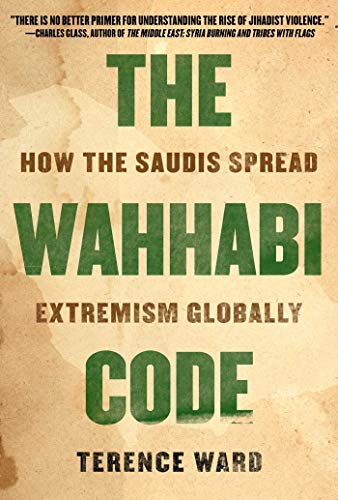
Lexi Alexander, a filmmaker and commentator with deep engagement in Middle Eastern affairs, highlights this book as essential reading. She calls it "an excellent book people should read," underscoring its importance in understanding how Saudi Arabia's official sectarian ideology fuels global terror groups. Alexander's perspective, rooted in cultural insight and current geopolitical tensions, adds weight to the book's message, revealing the complex layers behind extremism. Following her, Markos Kounalakis, a seasoned foreign affairs columnist, praises the book's clarity on religious extremism's nuances, noting its necessity for anyone studying America's complex relationship with Saudi Arabia. Together, their endorsements frame this work as a crucial resource for comprehending terrorism's ideological and political dimensions.
“The Wahhabi Code: How Saudis Spread Extremism Globally is an excellent book people should read. Here is a great review of it by @JordanElgrably” (from X)
Terence Ward is a Colorado-born writer, documentarist, and cross-cultural consultant who grew up in Saudi Arabia, Iran, and Egypt. After graduating from UC Berkeley, he worked for a decade with Middle East Industrial Relations Counselors (MEIRC) consulting with clients across the Gulf. The author of Searching for Hassan and The Guardian of Mercy, he serves as international trustee for the World Conference of Religions for Peace (RfP). He is a member of the noted Middle Eastern Institute (ISMEO) in Rome and divides his time between Florence and New York.
What happens when decades of firsthand experience in the Middle East meet a deep dive into the roots of modern extremism? Terence Ward, having grown up and worked extensively in Saudi Arabia, Iran, and Egypt, unpacks how Saudi Arabia's promotion of Wahhabism fuels global terrorism. You’ll gain insight into the mechanisms behind funding mosques and schools that spread extremist ideology, with concrete examples of groups influenced like ISIS and al-Qaeda. This book suits anyone seeking to understand the complex geopolitical and religious forces shaping today’s terrorism landscape, particularly those interested in Middle Eastern history and security studies.
Publisher's Weekly, a respected authority in book criticism, highlights this work as "timely and informative," praising Paola Caridi's deep understanding of Middle East conflicts. Their recommendation comes from a place of extensive expertise in political and terrorism literature, recognizing how this book provides clarity amid complex narratives. This perspective complements Kirkus Reviews' observation of the book as a balanced historical survey, not a polemic, which helps you approach the Israel-Palestine conflict with fresh eyes. Together, these reviews invite you to explore a nuanced account that challenges oversimplified views and enriches your grasp of Hamas's role in regional dynamics.
Journalist and historian Paola Caridi has lived in the Middle East since 2001. She contributed to the founding of the press agency Lettera22 and has worked with L'Espresso, Sole 24 Ore, La Stampa, and FamigliaCristiana. Hamas: From Resistance To Government, her second book, was published in Italy in 2009 and in Palestine in March 2010.
What if everything you thought about Hamas was incomplete? Paola Caridi, an Italian journalist and historian with two decades living in the Middle East, takes you beyond headlines to understand how Hamas evolved from a resistance movement into a governing force. You’ll gain insight into the socio-political conditions that shaped Gaza's trajectory, detailed through firsthand interviews and historical context, including chapters on events like Operation Cast Lead and the Cairo Revolution. This book suits anyone seeking to grasp the complexities behind one of the most contentious players in Middle East politics, balancing the nuances of resistance and governance without sensationalism.
Kyle Orton, a specialist in Syria and jihadism research, found this book during his deep dive into the complexities of Middle Eastern conflicts. He describes "ISIS: Inside the Army of Terror is brilliantly easy to read . . . concise yet thorough, it will surprise and shatter the beliefs of many." This perspective underscores how the book challenged his assumptions about ISIS’s rise and operations. Such insight from an expert navigating the chaos of conflict zones highlights why you should consider this book if you want a grounded, detailed understanding of ISIS. Additionally, Daniel Finkelstein from The Times praises it as an invaluable resource for those grappling with Iraq and Syria’s turbulent landscape, reinforcing the book's authority and depth.
“Weiss and Hassan give a concise yet detailed account of the rise of the terror movement, anybody who wants to work out where they stand on Iraq and Syria will find this book invaluable” (from Amazon)
Michael Weiss is a senior editor at The Daily Beast, a CNN contributor, and the editor-in-chief of The Interpreter. He has written for Foreign Policy, The Guardian, Foreign Affairs, Politico, and a host of other publications. Hassan Hassan is a resident fellow at the Tahrir Institute for Middle East Policy and associate fellow at Chatham House. He is also a columnist for The National in Abu Dhabi. His writing has frequently appeared in The Guardian, Foreign Policy, Foreign Affairs and the New York Times.
Drawing from extensive journalistic experience and regional expertise, Michael Weiss and Hassan Hassan dissect the rise of ISIS from its insurgent roots to a formidable international terror network. You gain a vivid understanding of ISIS's leadership dynamics, recruitment strategies, and financial operations, including their exploitation of illicit oil revenues and social media propaganda. The book offers detailed insights into key figures like Abu Bakr al-Baghdadi and the complex interplay of regional powers such as Iran, Russia, and Syria in fueling this conflict. If you want to grasp how ISIS evolved into a global threat and the geopolitical chessboard around it, this book lays it out clearly, though it’s more analytical than narrative-driven.
Lawrence Wright, author of The Looming Tower and a respected voice on terrorism, highlights this book as foundational for understanding modern conflicts. Discovering it amid his investigation into Al-Qaeda, he calls it "The classic work from the dean of terrorism studies. No one who cares about the struggle of our time should miss this book." His endorsement reflects how Hoffman's analysis reshaped his own view of terrorism's evolving threats, making it crucial for anyone grappling with today's security challenges.
1998·278 pages·Terrorism, History, Strategy, Political Violence, Terrorist Groups
Drawing from decades of experience as a terrorism scholar, Professor Bruce Hoffman offers a meticulous exploration of terrorism's evolving landscape. You gain insight into how terrorist motivations and methods have shifted from the French Revolution through modern times, with detailed case studies like the PLO's rise and the Tokyo subway attack. The book challenges your assumptions about terrorism's scope and unpredictability, particularly in how fringe groups might employ weapons of mass destruction. If you seek a deep understanding of terrorism’s history and present complexities, this book equips you with the analytical tools to grasp ongoing global security challenges.
Benjamin Netanyahu, Israeli Prime Minister, brings a unique and authoritative voice to the discussion of terrorism in the Middle East. His endorsement stems from direct experience with the conflict and an appreciation for Dershowitz's legal and strategic clarity. Netanyahu highlights how the book's detailed examination of Hamas's terror tunnels exposes the severity of threats Israel faces and the justification for its defensive measures. His perspective encourages you to see this not just as a regional dispute but a pivotal example of defending democracy against terrorism.
“The recent operation in Gaza demonstrated once again the lengths to which Hamas terrorists will go to murder innocent Israeli civilians. Not satisfied with suicide bombings and rocket attacks on Israeli cities, Hamas built an extensive network of terror tunnels for the purpose of dispatching death squads into Israel. In Terror Tunnels, Alan Dershowitz has focused his internationally recognized expertise and clarity of vision on addressing this evolving terrorist tactic. Dershowitz’s conclusion is unequivocal: Israel has both the right and the obligation to defend itself against subterranean terrorist attacks.” (from Amazon)
Professor Alan M. Dershowitz of Harvard Law School is a renowned civil liberties lawyer and defender of individual rights. He has advised presidents, United Nations officials, and more. Dershowitz is the author of 30 non-fiction works and two novels, with over a million books sold worldwide.
Alan M. Dershowitz, a Harvard Law professor known for his legal expertise and defense of civil liberties, wrote this book to address the complexities of Israel’s conflict with Hamas. You gain insight into the strategic use of terror tunnels by Hamas, as Dershowitz explains why Israel’s military actions are framed as a just war to protect its citizens and democratic values worldwide. The book covers contentious topics such as the BDS movement, accusations of war crimes, and anti-Semitism, offering a legal and moral perspective grounded in Dershowitz’s personal experience, including his time inside a Hamas tunnel. This book suits anyone seeking a deep understanding of Israel’s defense strategy and the broader fight against terrorism in the Middle East.
Alexander Thurston is a visiting assistant professor of political science and comparative religion at Miami University, bringing specialized knowledge on Islamic movements in Nigeria. His prior work on Salafism informs this focused study of Boko Haram, offering readers an expert lens on one of Africa's deadliest jihadist groups. Thurston's academic rigor and regional understanding provide the foundation for a detailed narrative that connects religious ideology with political violence and regional instability.
Alexander Thurston is visiting assistant professor of political science and comparative religion at Miami University, and the author of Salafism in Nigeria: Islam, Preaching, and Politics.
Alexander Thurston's deep expertise in political science and comparative religion shines through in this detailed exploration of Boko Haram. His academic background and fieldwork in West Africa allow you to grasp the group's ideological shifts and violent tactics from early 2000s origins to its ISIS affiliation. You’ll gain insight into Boko Haram's complex relationships with local communities, governments, and other Islamic movements, as well as the political dynamics fueling its insurgency. Chapters analyzing the 2014 Chibok kidnapping and the group's evolving strategies provide concrete examples of how terrorism adapts to regional pressures. This book suits those seeking a nuanced understanding of jihadism in Africa beyond headlines.
Marcandré Argentino, a PhD candidate and research fellow specializing in security studies, highlights how this book provided crucial background for researching ideologically motivated violent extremists (IMVE). He notes the statistical analysis Perliger presents as particularly useful and appreciates its accessibility beyond academic circles. "American Zealot provided great background that is quite useful to researching IMVE actors," Argentino shares, underscoring how this resource clarified complex trends in right-wing domestic terrorism and informed his work. This perspective makes the book a compelling choice for anyone seeking a rigorous yet approachable examination of far-right violence.
PhD Candidate, Research Fellow in security studies
“6/ @APerliger American Zealot provided great background that is quite useful to researching IMVE actors. Statistical analysis that was presented in the book was also very useful. Would reccomend and it is accessible to non-academics.” (from X)
Dr. Arie Perliger is a Professor and the director of the graduate program in security studies at the School of Criminology and Justice Studies at the University of Massachusetts, Lowell. His many publications on political violence include Jewish Terrorism in Israel (Columbia, 2009). In the past 18 years, Dr. Perliger was engaged in an extensive study of issues related to terrorism and political violence, security policy and politics, politics and extremism of the Far Right in Israel, Europe, and the US, Middle Eastern Politics and the applicability of Social Network Analysis to the study of political violence. His studies appeared in seven books and monographs, and in numerous articles and book chapters and were cited in more than 1300 academic texts. Dr. Perliger was also engaged in training practitioners from various agencies such as the FBI, CIA, and ICE. Additionally, he provided professional briefings to high-rank officials from the government and military such as The Secretary of the Army, Army Chief of Staff, and SOCOM, AFRICOM, NORTHCOM and JSOC commanders. Dr. Perliger is also engaged in informing the public via contributions to various media platforms. His articles/interviews appeared, among others, in the NY Times, BBC and Newsweek.
2020·232 pages·Terrorism, Right-Wing Extremism, Domestic Violence, Political Violence, Security Studies
Arie Perliger, a seasoned professor and security studies expert, draws on nearly three decades of research to unpack the complexities of right-wing domestic terrorism in America. You’ll gain a detailed understanding of the historical roots and evolving tactics of far-right groups, illuminated by a dataset of over 5,000 attacks from 1990 to 2017. The book walks you through the ideological spectrum from white supremacists to antigovernment militias, offering insights into their organizational structures and rhetoric. If you want to grasp the nuances behind recent violent trends and consider policy responses, this book provides a thorough, data-driven perspective without unnecessary jargon or alarmism.
Richard Davis, former White House policy director and professor at Arizona State University, brings unparalleled expertise to this detailed study of Hamas and its violent strategies. His leadership roles in conflict resolution institutes and deep academic background shape this book's authoritative analysis. Driven by a commitment to untangling complex Middle Eastern conflicts, Davis offers readers a rare perspective on how insurgent groups balance violence with political objectives.
Richard Davis (a former policy director at The White House) is the CEO and Managing Senior Fellow of Artis International and a Founding Fellow of the Centre for the Resolution of Intractable Conflict in Harris Manchester College and the Department of Politics and International Relations at the University of Oxford. He is also a Professor of Practice in the School of Politics and Global Studies at Arizona State University.
Richard Davis, a former White House policy director and distinguished academic, unpacks the complex dynamics of Hamas’s use of violence within the Palestinian-Israeli conflict. You’ll gain a nuanced understanding of how Hamas balances its strategic goals with popular support, examining factors like leadership personalities, tactical innovations, and external pressures such as Israeli targeted killings and regional conflicts. The book’s empirical approach, supported by newly assembled datasets and field interviews, offers insight into when and why Hamas chooses violence or restraint. This detailed examination benefits those interested in Middle Eastern politics, terrorism studies, and conflict resolution, providing specific frameworks to analyze insurgent behavior beyond just Hamas.
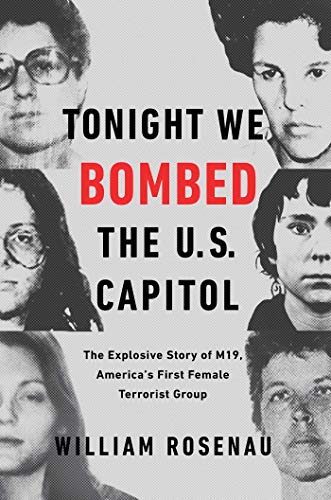
Katie Pavlich, a well-known political commentator with extensive knowledge of American security issues, found Tonight We Bombed the U.S. Capitol a compelling read that sheds light on a unique chapter in domestic terrorism. She remarks, "Interesting book on amazon," highlighting how this exploration of M19's female-led insurgency changed her understanding of extremism in the U.S. Her experience underscores why this book is essential for anyone seeking to grasp the complexities of homegrown political violence and the overlooked role of women in such movements.
William Rosenau, PhD, is a senior research scientist at CNA, a nonprofit research and analysis organization, and a fellow in the International Security program at New America. His articles have been published in The New York Times, The Wall Street Journal, and The Atlantic. He has appeared on CNN, BBC World News, and elsewhere. He lives in Washington, DC.
2020·320 pages·Terrorism, Extremism, Political Violence, Domestic Terrorism, Counterterrorism
William Rosenau draws on his deep expertise in intelligence and counterterrorism to reveal the untold story of M19, America's first female-led domestic terrorist group. This book explores how six women, driven by radical political ideals and opposition to Reagan-era policies, orchestrated bold acts of violence and disruption, including bombings and prison breaks. You'll gain insight into the group's motivations, tactics, and legacy through detailed FBI documents and original photographs, shedding light on a chapter of terrorism history often overlooked. If you're interested in the intersections of gender, extremism, and American political dissent, this narrative offers a focused, nuanced perspective.
The best Terrorism books and more, in your inbox each week. No account needed.
Conclusion
These 18 books collectively reveal terrorism’s multifaceted nature—from financial networks and ideological roots to the human stories behind the headlines. If you’re grappling with policy or security challenges, starting with Reign of Terror or The Field of Fight can ground you in modern state responses. For those drawn to regional conflicts, Son of Hamas and Boko Haram offer rare insider views. Seeking to understand ideological shifts? The Wahhabi Code and The Future of Terrorism provide clear analysis.
For rapid application of these lessons, pairing strategic overviews like Fighting Terrorism with operational case studies such as Terror Tunnels can be effective. Alternatively, you can create a personalized Terrorism book that bridges general principles with your specific context.
These carefully selected works can accelerate your journey through the complex world of terrorism studies, equipping you with knowledge to engage thoughtfully and act wisely.
Frequently Asked Questions
I'm overwhelmed by choice – which book should I start with?
Start with "Reign of Terror" for a broad, insightful look at terrorism's impact on US policy, or "The Looming Tower" to understand al-Qaeda’s origins. These books offer foundational context before diving into more specialized topics.
Are these books too advanced for someone new to Terrorism?
Not at all. Titles like "The Terrorism Lectures, 3rd ed." are designed for students and newcomers, providing clear frameworks, while others offer accessible narratives suitable for various knowledge levels.
What's the best order to read these books?
Begin with historical overviews like "Inside Terrorism" and "The Looming Tower." Then explore region-specific insights such as "Son of Hamas" or "Boko Haram," followed by strategy-focused works like "Fighting Terrorism."
Can I skip around or do I need to read them cover to cover?
Feel free to skip around based on your interests. Some books are thematic and narrative-driven, while others serve as reference texts. Choose what fits your learning goals and context.
Are any of these books outdated given how fast Terrorism changes?
While terrorism evolves, many books like "The Future of Terrorism" and "ISIS" analyze recent developments and trends, offering perspectives that remain highly relevant to understanding modern threats.
How can I get content tailored to my specific interests in Terrorism?
Expert books provide solid foundations, but personalized content can bridge general knowledge with your unique needs. You can create a personalized Terrorism book that adapts core insights to your background and goals.
📚 Love this book list?
Help fellow book lovers discover great books, share this curated list with others!