10 Trial Practice Books That Separate Experts from Amateurs
Recommended by trial legends Michael Tigar, Mark Lanier, and Morris Dees, these Trial Practice Books sharpen your jury selection and courtroom skills.
Updated on June 23, 2025·We may earn commissions for purchases made via this page
We're launchingLaunching on Product Hunt today 🎉We just launchedJust launched on Product Hunt 🎉
Modelpeers, from the BookAuthority teamFrom the BookAuthority team: Modelpeers, a free way to follow AI models and agents like you follow people. We'd love your support.
What if I told you that the difference between winning and losing a trial often hinges on how well you handle jury selection and courtroom presence? Trial practice isn't just about knowing the law; it's about mastering subtle human dynamics, storytelling, and strategy under pressure. Today, trial advocacy demands more than rote knowledge—it requires adaptable skills and psychological insight.
Trial experts like Michael Tigar, known for his seminal works on trial law, emphasize learning from real courtroom experiences. Tigar praises On the Jury Trial for its candid, practical wisdom, blending decades of trial and judicial perspectives. Meanwhile, Mark Lanier, founder of a major trial firm, highlights the same book's clear guidance on advancing courtroom mastery. Morris Dees, renowned for his trial work and founding the Southern Poverty Law Center, endorses Mastering Voir Dire and Jury Selection for transforming jury selection into a science backed by social psychology.
These expert-curated books offer proven frameworks, but if you want something tailored to your experience, case type, or specific trial challenges, consider creating a personalized Trial Practice book. This approach builds on expert insights while fitting your unique courtroom needs and goals.
Michael Tigar, author of key trial law texts, recommends this book for its authentic insights into courtroom realities. After decades of advocacy, he finds its practical wisdom indispensable, calling it "Real-world, real-life insights. A book that every lawyer should read." His endorsement speaks to the book's ability to bridge theory with the unpredictable nature of trials. Similarly, Mark Lanier praises the collaboration between a seasoned trial lawyer and a judge, noting it as an "easy-to-read guide that will help any lawyer achieve courtroom mastery."
Thomas M. Melsheimer has tried cases for more than thirty years. He has been named 'Trial Lawyer of the Year' by the Texas Chapters of the American Board of Trial Advocates and by the Dallas Bar Association. Before being elected to the 192nd District Court in Dallas County in 2006, Judge Craig Smith was an accomplished Texas trial lawyer for more than twenty-five years. As a judge, he was recognized as Trial Judge of the Year by the Dallas Chapter of the American Board of Trial Advocates.
When Thomas M. Melsheimer and Craig Smith first combined their extensive trial experience—Melsheimer’s 30-plus years trying cases and Smith’s shift from top trial lawyer to respected judge—they crafted a resource that goes beyond generic courtroom advice. You’ll gain detailed insights into voir dire techniques, opening and closing strategies, witness preparation, and how to effectively use exhibits, all illustrated with concrete examples and clear dos and don'ts. This book functions like a seasoned mentor’s guide, offering you a candid, behind-the-scenes look at trial dynamics that can sharpen your advocacy skills. If you’re aiming to elevate your courtroom performance with practical, tested methods, this book fits that purpose well.
Morris Dees, founder and chief trial attorney, endorses this book as the definitive guide in jury selection. After years of courtroom battles, Dees found that "Mastering Voir Dire is by far the most complete and effective jury selection guide available," highlighting its blend of real trial examples with solid research. This book reshaped his approach, offering practical methods that enhance juror questioning and selection, ultimately improving trial outcomes.
“Mastering Voir Dire is by far the most complete and effective jury selection guide available. It has simple, short examples from real trials tied to hard core research and common sense. Thanks for Mastering Voir Dire.”
Dr. Jeffrey T. Frederick, Director, Jury Research Services Division of the National Legal Research Group, Inc., has been involved in jury selection and jury research since 1975. He received his MS (1979) and Ph.D. (1980) in Social Psychology from North Carolina State University. He has assisted the Department of Justice, Office of Independent Counsel, United States Attorneys' Offices, and state prosecutors, as well as criminal defense attorneys in both civilian courts and courts-martial. Dr. Frederick has written extensively on jury trials and trial advocacy, including three key books in the area and numerous articles. He is a frequent speaker on juries and jury issues and teaches U.S. Tort Law at the Law School of the Universidad de Navarra in Spain.
When Jeffery T. Frederick first challenged traditional jury selection methods, he brought decades of social psychology expertise into play to reshape how lawyers approach voir dire. You gain precise skills for crafting voir dire questions that reveal juror biases and strategies for reading nonverbal cues that often betray hidden attitudes. The book also tackles complex issues like handling stealth jurors and adapting techniques to courts-martial, illustrated with real-case questionnaires from high-profile trials such as Exxon Valdez and Scott Peterson. If you’re a trial attorney or legal consultant aiming to sharpen your jury selection edge, this book delivers detailed, experience-backed insights worth your time.
This custom AI book on trial mastery is created based on your background, trial experience, and specific courtroom challenges. You share which trial aspects you want to focus on—jury selection, examination, storytelling—and your goals. The book is then tailored to deliver targeted guidance and strategies that fit your exact needs, avoiding generic advice and helping you sharpen skills relevant to your practice.
TailoredRead AI creates personalized nonfiction books that adapt to your unique background, goals, and interests. Instead of reading generic content, you get a custom book written specifically for your profession, experience level, and learning objectives. Whether you're a beginner looking for fundamentals or an expert seeking advanced insights, TailoredRead crafts a book that speaks directly to you. Learn more.
This tailored book provides a personalized framework for mastering trial practice by focusing on your unique case types, skill level, and trial objectives. It addresses core areas such as jury selection, courtroom storytelling, witness preparation, and cross-examination techniques, cutting through irrelevant advice to fit your specific trial context. By integrating strategic insights with practical applications, it offers a tailored approach to enhance your courtroom presence and decision-making. The content emphasizes adaptation of proven trial principles to your particular situations, enabling efficient learning and focused skill development that complements foundational trial advocacy literature.
Ronald Clark is a Distinguished Practitioner in Residence at Seattle University School of Law, specializing in pretrial and trial advocacy, while Thomas O’Toole brings over a decade of nationwide litigation experience and a Ph.D. in litigation psychology. Their combined expertise led to this book, designed to clarify the complexities of jury selection. They draw on academic insight and practical courtroom experience to help you understand juror evaluation, voir dire motions, and the subtle dynamics that influence jury behavior. Their backgrounds uniquely position them to guide you through the nuts and bolts of jury selection with clarity and authority.
Ronald Clark is a Distinguished Practitioner in Residence at Seattle University School of Law where he teaches Pretrial Advocacy, Trial Advocacy and Essential Lawyering Skills. Thomas O’Toole has practiced across the nation for over ten years in nearly every field of litigation. He received his Ph.D. in litigation psychology and communication at the University of Kansas and is the founder of Sound Jury Consulting.
When Ronald Clark and Thomas O'Toole combined their extensive legal and psychological expertise, they crafted a detailed guide that demystifies jury selection for both novices and seasoned lawyers. You’ll find guidance on preparing for voir dire, formulating motions, and reading juror cues, supported by real examples like transcripts of jury selections across civil and criminal cases. This book doesn’t just sketch the process; it equips you to identify hidden biases and strategically engage jurors. If you're honing your trial skills or seeking a refresher on jury dynamics, this handbook offers concrete tools without unnecessary complexity.
David Ball, PhD., a nationally known jury consultant and trial skills trainer, combines his unique expertise in theater, film, and law to reshape trial advocacy. His extensive work directing and producing on Broadway and teaching at institutions like Duke University informs this book’s innovative approach. Ball wrote this to help attorneys use theatrical techniques to communicate more naturally and persuasively in court, making complex legal arguments resonate with jurors through storytelling and presentation skills.
David Ball, PhD., a nationally known jury consultant and trial skills trainer, is a leading authority on adapting audience persuasion techniques from theater and film to in-court use. Trained in communications, theater, and film, his credits as a director, producer, and playwright include the Guthrie Theater, Broadway and off-Broadway, Carnegie Mellon University, and Duke University, where he chaired Drama. He has taught law students at Duke, the universities of North Carolina, Minnesota, and Pittsburgh, and Campbell University as Adjunct Professor of Law. He writes for a variety of law publications, and his NITA book Theater Tips and Strategies for Jury Trials is a national best-seller.
What if everything you knew about courtroom persuasion was wrong? David Ball challenges traditional trial methods by applying theater and film techniques to jury trials, drawing from his extensive background in drama and communications. You learn how to engage jurors effectively through voice, body language, and storytelling, with practical insights on voir dire, openings, closings, and witness preparation. For example, Ball explains how to capture jurors’ attention from the start, much like an impactful movie opening, and how to coach witnesses to testify with clarity and credibility. This book suits trial lawyers seeking to enhance courtroom presence and persuasion beyond legal arguments alone.
Thomas A. Mauet is a distinguished author and trial attorney known for his expertise in legal education. He has authored several influential texts in trial advocacy, valued for their clarity and practical insights. His extensive courtroom experience and teaching background uniquely qualify him to break down complex trial concepts into accessible lessons, making this book a vital resource for those stepping into or refining their trial practice skills.
Thomas A. Mauet is a distinguished author and trial attorney known for his expertise in legal education. He has authored several influential texts in the field of trial advocacy, providing invaluable insights for law students and practitioners alike. His work is widely recognized for its clarity and practical approach to complex legal concepts.
When Thomas A. Mauet, a seasoned trial attorney and educator, developed this book, he drew from decades of courtroom experience to demystify trial advocacy. You’ll find detailed guidance on crafting opening statements, jury selection, and handling objections, supported by case examples spanning personal injury, commercial, and criminal trials. This book breaks down the trial process into manageable parts, making it especially useful if you’re new to trial practice or seeking to sharpen foundational skills. Its structured approach helps you grasp both the strategy and psychology behind effective trial advocacy without unnecessary complexity.
This AI-created book on trial advocacy is crafted based on your background and goals for rapid skill development. You share your current experience, the specific trial areas you want to improve, and your target outcomes, and the book is created to guide you through daily practice steps tailored to your needs. This approach makes sense because trial advocacy demands practice and focus on what matters most to you, not generic advice. With this personalized book, you get a practical plan that fits your situation and helps you elevate your courtroom skills efficiently.
TailoredRead AI creates personalized nonfiction books that adapt to your unique background, goals, and interests. Instead of reading generic content, you get a custom book written specifically for your profession, experience level, and learning objectives. Whether you're a beginner looking for fundamentals or an expert seeking advanced insights, TailoredRead crafts a book that speaks directly to you. Learn more.
This personalized book provides a tailored framework for rapid skill development in trial practice, focusing on daily actionable tasks designed to enhance advocacy effectiveness within 30 days. It emphasizes practical techniques for jury selection, opening statements, witness examination, and courtroom presence, fitting your specific trial context and goals. The book cuts through generic advice, delivering a focused regimen that addresses your unique challenges and skill level. It applies targeted strategies to quickly build confidence and proficiency in trial advocacy, ensuring efficient progression through consistent practice and reflection tailored to your experience, case types, and individual needs.
Shane Read brings a rare blend of expertise to this book, combining his award-winning authorship with extensive experience as a trial lawyer and respected litigation instructor. A Yale and University of Texas School of Law graduate, Read has shaped trial advocates nationwide through teaching and practice. His dedication to elevating courtroom skills led him to compile insights from some of the most successful American litigators, creating a resource that bridges real-world trial challenges with actionable lessons for attorneys at every level.
Shane Read is a bestselling and multiple award-winning author of litigation textbooks. His previous textbook, Winning at Deposition, won the highest honor available for a legal publication: the Association for Continuing Legal Education's top honor for Professional Excellence. He is the only author to win this prestigious award twice. In addition, he is an accomplished trial lawyer and highly acclaimed teacher of litigation skills. He is an adjunct professor at SMU’s School of Law, a keynote speaker for the National Institute of Trial Advocacy’s Southern Regional Trial Seminar, and teaches lawyers throughout the United States. He is a graduate of both Yale and the University of Texas School of Law. He began his career at Akin Gump and since 1998 has worked on civil and criminal cases as an Assistant United States Attorney in Dallas, Texas.
When Shane Read recognized that many trial lawyers lacked access to detailed, practical insights from the nation's top litigators, he crafted this collection to fill that gap. You’ll explore real courtroom dynamics through profiles of renowned attorneys like Mark Lanier and Alan Dershowitz, learning their strategies for opening statements, cross-examinations, and appellate arguments. The book’s structure—divided into key trial phases with transcript analyses and checklist summaries—offers you concrete tools to refine your litigation skills. Whether you’re an aspiring litigator or a seasoned attorney seeking to sharpen your advocacy, this book presents a unique opportunity to learn directly from the most successful courtroom practitioners.
Author of multiple award-winning litigation textbooks
Recipient of Association for Continuing Legal Education's top honor for Professional Excellence (twice)
Thomas A. Mauet is a respected law educator and author, widely known for his expertise in trial techniques and advocacy. His extensive experience in legal education inspired this book, which breaks down courtroom procedures with clarity and practical insight. Mauet’s approach offers law students and new attorneys a solid foundation in trial practice, bridging theory and real-world application through detailed examples and helpful preparation tools.
Thomas A. Mauet is a renowned author and educator in the field of law, known for his expertise in trial techniques and advocacy. He has authored several influential textbooks that are widely used in law schools across the United States. His clear writing style and practical approach to legal education have made him a respected figure among students and professionals alike.
When Thomas A. Mauet recognized the complexity and nuances of courtroom advocacy, he crafted this book to demystify the trial process for aspiring lawyers. You’ll encounter detailed guidance on jury selection, opening statements, and cross-examinations, supported by vivid examples from tort, criminal, and commercial cases. The inclusion of practical tools like tear-away checklists and companion video lectures transforms theoretical knowledge into usable courtroom skills. This book suits law students and novice trial attorneys who want a clear, structured path through the rigors of trial advocacy without wading through unnecessary jargon.
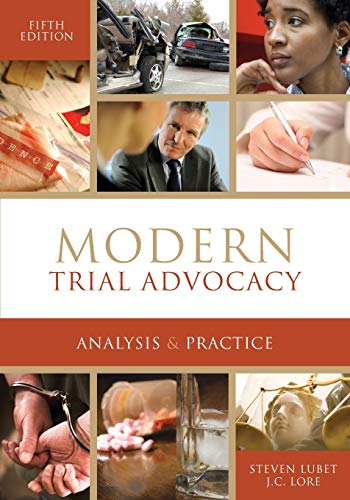
Steven Lubet is a renowned legal educator and author, known for his expertise in trial advocacy and legal ethics. As a professor at Northwestern University School of Law, he has significantly shaped legal education. His deep experience underpins this book, which merges foundational advocacy principles with contemporary updates, including remote trial practices, offering you a resource grounded in both scholarship and practical relevance.
Steven Lubet is a renowned legal educator and author, known for his expertise in trial advocacy and legal ethics. He has authored several influential texts in the field and has been a professor at Northwestern University School of Law, where he has significantly contributed to legal education.
When Steven Lubet first challenged the traditional methods of trial advocacy, he brought decades of legal education expertise to reshape how advocates prepare and present cases. You gain detailed insights into trial theory combined with practical tools like checklists, updated research on juror behavior, and techniques for cross-examination especially when discovery is limited. The book's recent edition addresses the evolving landscape of remote trials, making it relevant for today's litigation environment. If you are an aspiring or practicing litigator seeking a nuanced understanding of advocacy dynamics, this text offers a methodical approach without oversimplifying the craft.
Steven Lubet is a renowned legal scholar and author, known for his expertise in trial advocacy and legal education. He has authored several influential books in the field and is a professor at Northwestern University School of Law. His work focuses on improving trial skills and understanding the complexities of legal procedures.
Steven Lubet is a renowned legal scholar and author, known for his expertise in trial advocacy and legal education. He has authored several influential books in the field and is a professor at Northwestern University School of Law. His work focuses on improving trial skills and understanding the complexities of legal procedures.
Steven Lubet's decades of expertise in legal education reshape your understanding of trial advocacy by blending theory with practical application. This book teaches you how to craft persuasive narratives by integrating themes, story framing, and cognitive inference to influence juries effectively. It goes beyond typical guides by addressing witness credibility and even explores courtroom technology, showing how electronic visuals can bolster your case. If your goal is to deepen your trial skills through a more analytical and realistic lens, this book offers a structured path, though it demands serious commitment and may not suit those seeking a quick overview.
Robert R. Rose III brings decades of legal expertise to this manual, having served as a public defender, chief deputy district attorney, and instructor at law institutes. His career across varied legal roles in Wyoming informs this guide, which aims to equip you with the skills needed to take charge in criminal trials and represent clients confidently in challenging courtroom situations.
Robert R. Rose III was born and raised in Casper, Wyoming. After receiving his J.D. at Oral Roberts University in Tulsa, Oklahoma, he started his legal career in 1982 as the first full-time Assistant State Public Defender in Gillette, Wyoming. In early 1987 he joined his father, Robert R. Rose, Jr., in private practice in Cheyenne, Wyoming, as a branch office of Spence, Moriarity & Schuster. In 2009 he joined the Metier Law Firm in Fort Collins, Colorado, as Director of Litigation. After subsequent positions with the Wyoming State Public Defender’s office and Fremont County Attorney’s Office, he became the Chief Deputy District Attorney for Laramie County, in Cheyenne, from which position he retired in late 2016. Since August 2018 he has been a consultant with the Wyoming State Public Defender’s office, as well as operating his own trial consulting business. Additionally, Bob is an instructor at the annual WTLA Robert R. Rose, Jr. Voir Dire Competition and is on the faculty of the University of Wyoming College of Law Summer Trial Institute. Bob remains active training trial lawyers. He and his wife, Ann, live in Cheyenne.
When Robert R. Rose III first realized the intense challenges criminal defense lawyers face in court, he crafted this manual to guide attorneys through the realities of courtroom combat. Drawing from decades of experience as a public defender and chief deputy district attorney, Rose teaches you how to harness your fear, build trust with jurors, and candidly address case weaknesses to tell your client’s story effectively. The book covers practical courtroom strategies, including jury engagement and narrative construction, making it especially useful for defense lawyers aiming to improve trial outcomes. If you're seeking a hands-on courtroom guide grounded in real-world practice, this manual offers concrete insights without fluff.
The best Trial Practice books and more, in your inbox each week. No account needed.
Conclusion
Reviewing these 10 books reveals three clear themes: the critical nature of jury selection, the power of persuasive courtroom storytelling, and the ongoing evolution of trial advocacy techniques. Each book contributes unique strategies—from psychological jury evaluation to theatrical courtroom presence—that collectively elevate your trial practice.
If you face difficulty engaging jurors or crafting compelling narratives, start with Mastering Voir Dire and Jury Selection and Theater Tips and Strategies for Jury Trials. For rapid skill-building, combining Trial Techniques and Trials with Modern Trial Advocacy offers a robust foundation and modern perspectives. Criminal defense lawyers will find Trial Practice Manual for Criminal Defense Lawyers particularly valuable.
Once you've absorbed these expert insights, create a personalized Trial Practice book to bridge the gap between general principles and your specific courtroom situations. Tailored knowledge accelerates your path from theory to confident advocacy.
Frequently Asked Questions
I'm overwhelmed by choice – which book should I start with?
Start with On the Jury Trial for a broad, practical overview of courtroom advocacy. It offers tested strategies from experienced trial lawyers and judges, making it a solid foundation before diving into more specialized topics.
Are these books too advanced for someone new to Trial Practice?
Not at all. Books like Trial Techniques and Trials + Website companion and Jury Selection Handbook are designed to guide beginners step-by-step, while others deepen your skills as you progress.
What's the best order to read these books?
Begin with foundational texts like Trial Techniques and Trials then explore jury selection with Mastering Voir Dire and Jury Selection. Follow with books on courtroom presence like Theater Tips and Strategies for Jury Trials to round out your skills.
Do I really need to read all of these, or can I just pick one?
You can pick based on your immediate needs, but reading multiple offers a richer perspective. For example, pairing jury selection insights with advocacy techniques strengthens your overall trial effectiveness.
Which books focus more on theory vs. practical application?
Modern Trial Advocacy Analysis & Practice leans toward theory with analytical depth, while Turning Points at Trial offers practical lessons through real litigators' experiences.
How can I get trial practice advice tailored to my specific cases and skill level?
While these expert books provide valuable frameworks, personalized Trial Practice books adapt content to your background and goals. Create your custom book here for focused, actionable insights that fit your courtroom challenges.
📚 Love this book list?
Help fellow book lovers discover great books, share this curated list with others!