Congratulations! 🎉
"Urban Acupuncture" by Jaime Lerner made it to BookAuthority's Best Urban and Land Planning Audiobooks of All Time!
10 Urban and Land Planning Books That Shape City Futures
Curated by Jeff Speck, Richard Florida, Bill Gurley: Essential Urban and Land Planning Books



What if the future of cities depended not just on grand master plans but on pinpoint, human-centered interventions? Urban and land planning is evolving rapidly as experts rethink how cities breathe, grow, and thrive in the 21st century. Today’s challenges—from congestion to sustainability—demand fresh perspectives that blend data, design, and deep community understanding.
Voices like Jeff Speck, who champions walkable cities, found inspiration in Jaime Lerner’s concept of "urban acupuncture," where small, targeted changes ripple into broad urban revitalization. Richard Florida emphasizes the scientific links between city design and public health, urging planners to ground their work in evidence. Meanwhile, Bill Gurley, a leading investor, highlights the economic impact of seemingly mundane policies like parking regulations, spotlighting the hidden costs shaping urban life.
These expert-curated books provide you with proven frameworks and transformative ideas. Yet, if you seek insights tailored specifically to your city’s unique demographics, challenges, or your role—be it policymaker, planner, or citizen—you might consider creating a personalized Urban and Land Planning book that builds on these foundations and aligns directly with your goals.
1. Urban Acupuncture
Recommended by Jeff Speck
Author of Walkable City, urban design expert
“An architect, planner, and politician of great skill, Jaime Lerner has another talent, on clear display in this lively book: a deep and hard-won understanding that architecture, planning, and politics do not alone make our cities great.” (from Amazon)

Drawing from decades as an architect, planner, and three-term mayor of Curitiba, Jaime Lerner shares how small, targeted urban interventions can revitalize entire communities. You’ll explore concepts like the Bus Rapid Transit system and pedestrian zones that reimagine city life without massive budgets. Lerner illustrates these “pinpricks” of urbanism with global case studies, such as Seoul’s Cheonggyecheon River restoration, demonstrating how focused changes ripple outward. This book suits anyone involved in urban design or civic leadership seeking concrete ideas for creating sustainable, livable neighborhoods through thoughtful, localized projects.
2. Smart Cities, Smart Future
Recommended by Dale Meyerrose
Retired DPS Major General, US Air Force
“The authors go beyond the usual paradigms of smart cities, offering a persuasive discussion on the need to focus on people before technology. Even if you don’t live in a city, you’ll find this book compelling, informative, and entertaining. A must for the libraries of people who care about our cities and citizens of tomorrow.” (from Amazon)

The counterintuitive approach that changed Mike Barlow and Cornelia Lévy-Bencheton’s perspective drives this exploration of smart cities, focusing less on technology and more on people’s lives. You’ll learn how smart cities function as interconnected systems, embracing concepts like interoperability, adaptability, and continuous improvement. Through detailed case studies across continents and a glossary of key terms, this book equips you to understand and engage with the rapidly evolving urban landscape. If you’re involved in urban planning, technology, or policy, expect to gain insights that challenge conventional tech-centric views and highlight human-centered design.
Urban Renewal Blueprint

This tailored book explores the multifaceted process of urban revitalization, focusing on step-by-step guidance designed to fit your unique background and objectives. It examines how targeted interventions can breathe new life into communities, emphasizing practical elements such as community engagement, placemaking, and sustainable design. By aligning expert knowledge with your specific interests, this personalized guide reveals how to navigate the complexities of urban renewal projects effectively. It covers the integration of social, economic, and environmental factors to help you understand and address challenges in diverse urban contexts. With this customized approach, you gain focused insights that match your goals and ensure impactful outcomes.
3. Smart Cities
Recommended by Andrew Zolli
Futurist and author on innovation
“Today, it's not the height of the skyscrapers, but the depth of the code that drives the modern city. Anthony Townsend brilliantly frames the new forces shaping tomorrow's metropolises. Read Smart Cities and you’ll never look at a skyline or walk down a city block the same way again.” (from Amazon)

Unlike most urban and land planning books that focus solely on physical infrastructure, Anthony M. Townsend explores how digital technologies reshape cities' social and functional landscapes. Drawing from his experience founding a strategic foresight studio, Townsend examines real-world examples like Chicago's GPS-enabled plow trackers and Zaragoza’s integrated citizen card system to reveal how information networks transform urban life. You’ll gain insights into the interplay between technology, governance, and community innovation, including grassroots sensor projects in New York. This book suits anyone interested in the intersection of technology and city design, especially planners, technologists, and civic leaders navigating our increasingly connected urban future.
4. Planning Support Methods

Richard E. Klosterman and his co-authors bring decades of academic and practical experience in urban planning to this volume, which dives into essential methods for analyzing and projecting urban and regional growth. You’ll encounter detailed approaches to demographic and economic analysis alongside land suitability assessments, complete with tools like Excel workbooks to apply these concepts directly. The book is tailored for both practicing planners and students eager to master planning support techniques, focusing more on method application than theory alone. For instance, chapters on land use evaluation and regional economics offer grounded frameworks rather than abstract models, making it a solid reference for anyone involved in urban development decisions.
5. The High Cost of Free Parking
Recommended by Bill Gurley
General Partner at Benchmark

Donald Shoup’s decades of research as a UCLA urban planning professor led him to challenge conventional parking policies that shape American cities. He reveals how mandated free parking fuels car dependency, sprawling development, and environmental strain, while distorting urban design and local economies. You’ll learn why charging market rates for curb parking and eliminating off-street parking requirements can ease congestion and support vibrant neighborhoods, illustrated with detailed economic and environmental analysis. This book suits urban planners, policymakers, and anyone curious about how parking shapes city life and sustainability.
Smart City Sprint

This tailored book explores rapid implementation plans for technology-driven urban development, focusing on your unique context and objectives. It covers the essentials of smart city initiatives, integrating urban planning with cutting-edge technologies to create actionable pathways. The book examines key themes such as data analytics, infrastructure design, governance models, and community engagement, all aligned with your background and interests. By tailoring content specifically to your goals, it reveals how to navigate complex urban challenges efficiently and effectively. Whether you’re a planner, policymaker, or technologist, this personalized guide offers a focused journey through the multifaceted realm of smart cities, matching expert knowledge to your specific aims.
6. Building Smart Cities
Recommended by John Stanmeyer
American photojournalist, National Geographic
“Carol Stimmel has penned a book not just to be read by city planners, engineers, or technology experts. This narrative is for all of us ― the artist, a student, the farmer, a banker. ‘Using design thinking, a human-centered approach to innovation, urban designers can create new products and processes that are well grounded in empathy.’These are weighted words of truth as we move forward, seeking balance in an often unbalanced world, Ms. Stimmel's voice resonates in deeply human prose and debate, relevant to our humanity today, the past and most succinctly, our collective future.” (from Amazon)

Carol L. Stimmel, with over 25 years in emerging technology markets and a background in sustainability research, wrote this book to bridge technology and human needs in urban environments. You’ll learn how information and communication technologies, combined with data analytics and design thinking, can create cities that are both efficient and livable. The book breaks down complex concepts like ideation and prototyping smart city projects, emphasizing a human-centered approach to urban development. If you’re involved in city planning, technology deployment, or sustainable urban growth, this book offers a thoughtful framework to align innovation with cultural and economic realities.
7. Smart City in India
Recommended by Chetan Vaidya
Former Director, School of Planning and Architecture, New Delhi
“The volume titled Smart City in India: Urban Laboratory, Paradigm or Trajectory? authored by Dr Binti Singh and Prof Manoj Parmar is a comprehensive and persuasive presentation of the smart city narrative currently operational in India. It is empirically rich in primary data from second tier smart cities like Lucknow, Jaipur and Varanasi, compiles secondary research from several sources and presents updated data up to the Ease of Living city rankings of 2018. The authors explain that planning and designing of smart cities in India necessitates an inclusive collaboration among residents, designers, and policy-makers. This volume opens new discussions, highlights human and sociological dimensions, and reimaginations in urban design and planning while offering workable solutions and views the smart city mission in India as an opportunity for every selected city to chart its own destiny based on its context.” (from Amazon)

This book challenges the common notion that smart cities are simply about technology upgrades by grounding its analysis in ethnographic research across Indian urban centers like Lucknow and Jaipur. Binti Singh and Manoj Parmar explore how the Smart City Mission intersects with core urban infrastructures—water, housing, mobility—and emphasize the social fabric that shapes these developments. You'll gain insight into the complex balance between preserving a city's heritage and embracing new urban forms, along with the sociological dimensions often overlooked in urban policy. If you’re involved in planning, policy, or urban studies, this book offers a nuanced perspective on inclusivity and context-sensitive design rather than a one-size-fits-all blueprint.
8. Changing Places
Recommended by Richard Florida
University professor and urban studies expert
“The places we live have a huge effect on our health and well-being. This is something health professionals, urban planners, and policymakers neglect but absolutely must take into account. Changing Places presents a new, more scientifically grounded and health-focused kind of urban planning―a playbook for building healthier communities.” (from Amazon)

John MacDonald, Charles Branas, and Robert Stokes bring a unique blend of criminology, epidemiology, and public policy expertise to this exploration of urban design's impact on health and safety. You’ll learn how specific changes to neighborhoods—whether through street layouts, transit options, or green spaces—can measurably influence well-being and reduce crime. The authors argue that stronger collaboration between scientists and planners is crucial for creating evidence-based interventions that are both practical and scalable. This book suits anyone interested in how tangible shifts in urban environments can improve community health rather than relying on assumptions or anecdotal evidence.
9. Triumph of the City
Recommended by Andrew M. Mwenda
Political commentator and journalist
“@murungiasinani Please read a truly great book, The Triumph of the City, by Edward Glazer. He presents research that found that narrowing roads reduces traffic jams while enlarging them increases jams. Reality, my grand son, is often different from our common sense assumptions!” (from X)
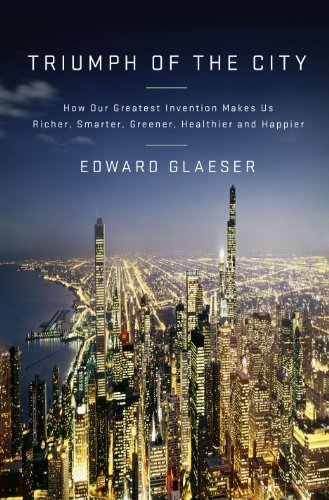
When Edward L. Glaeser, a Harvard economist renowned for his work on cities and housing, penned this book, he challenged prevailing stereotypes about urban life. You’ll learn how cities, often dismissed as dirty and unhealthy, actually foster wealth, innovation, and sustainability. The book unpacks complex topics like why New Yorkers live longer than people elsewhere and how urban density reduces energy consumption. If you’re interested in economics, urban design, or social policy, this book offers data-driven insights that question common assumptions and highlight the surprising benefits cities provide.
10. Saving America's Cities
Recommended by Richard Florida
University professor and urban studies expert
“@JakeAnbinder This is an amazing book. By an incredible historian!” (from X)

Lizabeth Cohen, a Harvard professor and acclaimed historian, traces the complex urban renewal efforts led by Edward J. Logue in postwar America, revealing the evolving tension between public programs and private interests. You gain insight into how policies shaped cities like New Haven, Boston, and New York, with vivid accounts of successes and setbacks, including neighborhood demolitions and innovative new town developments. This book offers a nuanced exploration of urban planning history that challenges simplistic narratives, showing how idealism and pragmatism collided in shaping today’s cities. If you're interested in the intersection of policy, history, and urban transformation, this book arms you with a deeper understanding of the forces shaping American cities.
Enjoying these picks?
The best Urban and Land Planning books and more, in your inbox each week. No account needed.
Conclusion
Across these ten books, a few clear themes emerge: first, the power of small, deliberate actions to ignite urban renewal; second, the indispensable role of technology balanced with human needs; and third, the critical importance of evidence and history in shaping sustainable, equitable cities. Whether you grapple with integrating smart city tech or addressing social equity in urban renewal, these works offer essential perspectives.
If you’re facing the challenge of urban revitalization, start with Jaime Lerner’s "Urban Acupuncture" and Donald Shoup’s insights on parking. For rapid tech adaptation, combine "Smart Cities" by Townsend with Stimmel’s design thinking approach in "Building Smart Cities." History buffs and policy advocates will find Lizabeth Cohen’s "Saving America’s Cities" indispensable.
Alternatively, you can create a personalized Urban and Land Planning book to bridge general principles with your specific situation and accelerate your learning journey toward building better cities.
Frequently Asked Questions
I'm overwhelmed by choice – which book should I start with?
Start with "Urban Acupuncture" by Jaime Lerner for inspiring, actionable ideas on how small changes can revitalize neighborhoods. It offers a clear introduction without overwhelming technical jargon.
Are these books too advanced for someone new to Urban and Land Planning?
Not at all. Titles like "The High Cost of Free Parking" and "Triumph of the City" provide accessible insights grounded in real-world examples, making them great entry points for beginners.
What's the best order to read these books?
Begin with broad context books like "Triumph of the City," then explore targeted topics such as smart city design or parking policies. This approach builds a solid foundational understanding.
Should I start with the newest book or a classic?
Balance both. Classics like Lerner’s "Urban Acupuncture" remain highly relevant, while newer books like "Smart City in India" offer fresh perspectives on emerging urban challenges.
Which book gives the most actionable advice I can use right away?
"Urban Acupuncture" and "The High Cost of Free Parking" provide practical strategies planners and policymakers can implement immediately to improve urban environments.
Can I get insights tailored to my city's unique challenges?
Yes! While these expert books offer broad frameworks, you can create a personalized Urban and Land Planning book that adapts expert knowledge to your city’s specific context and goals, saving time and enhancing relevance.
Help fellow book lovers discover great books, share this curated list with others!
Related Articles You May Like
Explore more curated book recommendations