16 US 19th Century History Books That Shape Understanding
Recommended by Bill Clinton, Satya Nadella, and Brad Meltzer, these US 19th Century History books reveal America’s turbulent past and leadership.
Updated on June 28, 2025·We may earn commissions for purchases made via this page
6 of 16 books have Audiobook versions
We're launchingLaunching on Product Hunt today 🎉We just launchedJust launched on Product Hunt 🎉
Modelpeers, from the BookAuthority teamFrom the BookAuthority team: Modelpeers, a free way to follow AI models and agents like you follow people. We'd love your support.
What if the turmoil of 19th-century America still echoes in today’s headlines? The Civil War, Reconstruction, and the forging of constitutional rights weren’t just distant events—they shaped the core of modern America. Understanding this era is crucial to grasping today’s social and political landscape. Experts like Bill Clinton, reflecting on leadership during national strife, and Satya Nadella, who values innovation's historical roots, recognize the power of these narratives.
Brad Meltzer, known for revealing how stories shape change, praises the intimate portrayal of Lincoln and Douglass’s friendship in "The President and the Freedom Fighter," showing how race and leadership intertwined during America’s darkest hours. Admiral James Stavridis emphasizes this book’s relevance to modern social justice debates, underscoring the lasting impact of 19th-century struggles.
While these expert-curated books provide proven frameworks, readers seeking content tailored to their specific interests, such as political strategy or economic history, might consider creating a personalized US 19th Century History book that builds on these insights, matching your background and goals for a deeper connection with the past.
Brad Meltzer, an author known for exploring how stories shape change, discovered this book while reflecting on America's racial history. He praised it as "This compelling account of Lincoln and Douglass’s friendship is the story of America itself and shows how intertwined race is with our history." Meltzer’s perspective highlights how the book deepens understanding of race and leadership during critical times. Likewise, Admiral James Stavridis, former NATO Supreme Allied Commander, emphasizes its relevance to current social justice discussions, making it a must-read for anyone looking to grasp the roots of America’s complex racial narrative.
Author and storyteller focusing on change through stories
“This compelling account of Lincoln and Douglass’s friendship is the story of America itself and shows how intertwined race is with our history.” (from Amazon)
Brian Kilmeade is the coauthor of George Washington's Secret Six, Thomas Jefferson and the Tripoli Pirates, Andrew Jackson and the Miracle of New Orleans, and Sam Houston and the Alamo Avengers, all New York Times bestsellers. Kilmeade cohosts Fox News Channel's morning show Fox & Friends and hosts the daily national radio show The Brian Kilmeade Show and the Fox Nation series What Made America Great. He lives on Long Island. This is his seventh book.
Brian Kilmeade's deep dive into the intertwined lives of Abraham Lincoln and Frederick Douglass reveals how two unlikely allies shaped America's destiny amid its darkest hours. Drawing from their contrasting backgrounds and shared commitment to justice, the book dissects their evolving friendship against the turbulent backdrop of the Civil War and abolitionist movement. You'll gain insight into the political nuances Lincoln faced balancing unity and emancipation, while understanding Douglass's relentless push for immediate freedom and constitutional reform. This narrative suits those eager to explore the human complexities behind historic change, especially anyone interested in race relations and leadership amidst national crisis.
Mehdi Hasan, host of MSNBC's Mehdi Hasan Show, engaged deeply with Harvard law professor Noah Feldman on his exploration of Lincoln’s constitutional legacy. Hasan's experience interviewing Feldman highlights the book’s relevance in understanding the tensions between law and leadership during America’s defining crisis. He remarked on how the discussion reshaped his view of presidential power and constitutional limits. This conversation underscores why those fascinated by 19th century US history should consider Feldman's detailed analysis. Jack Goldsmith, a Harvard Law professor, also praised the book for its critical reconstruction of Lincoln’s constitutional reasoning, emphasizing its contemporary significance.
“I had a fascinating conversation on the @MehdiHasanShow tonight with Harvard law professor @NoahRFeldman about his new book, 'The Broken Constitution,' & I also pressed him on his endorsement of Amy Coney Barrett last year & whether he regrets it. Watch:” (from X)
Noah Feldman is the Felix Frankfurter Professor of Law at Harvard University, where he is also founding director of the Julis-Rabinowitz Program on Jewish and Israeli Law. A leading public intellectual, he is a contributing writer for Bloomberg View and the author of numerous books, including The Broken Constitution, Divided by God, and The Fall and Rise of the Islamic State.
After extensive research into constitutional law and history, Harvard law professor Noah Feldman explores how Abraham Lincoln redefined the American constitutional order during the Civil War. Feldman delves deeply into Lincoln's unprecedented decisions—like suspending habeas corpus and challenging states' rights—to reveal how these actions transformed the Constitution from a fragile compromise into a symbol of national ideals. You’ll gain insight into Lincoln’s constitutional reasoning, the political debates of the era, and the complex balance between liberty and authority. This book is ideal if you want to understand the legal and political foundations of the United States during its most turbulent period, especially through the lens of constitutional innovation.
This AI-created book on US 19th century history is crafted based on your specific interests and current understanding of the period. By sharing what aspects fascinate you and your learning goals, you receive a book tailored precisely to your needs. This approach helps you navigate complex historical topics efficiently, focusing on the themes and events most relevant to you without unnecessary detours. It’s a smart way to deepen your grasp of this transformative era in American history.
TailoredRead AI creates personalized nonfiction books that adapt to your unique background, goals, and interests. Instead of reading generic content, you get a custom book written specifically for your profession, experience level, and learning objectives. Whether you're a beginner looking for fundamentals or an expert seeking advanced insights, TailoredRead crafts a book that speaks directly to you. Learn more.
2026·50-300 pages·US 19th Century History, Civil War, Reconstruction, Constitutional History, Political Movements
This tailored book explores US 19th century history with a focus on your background and interests, creating an engaging learning experience that connects you deeply with the era’s pivotal events. It examines political shifts, social changes, and key figures such as Lincoln and Douglass, offering a personalized pathway that matches your specific goals and prior knowledge. By synthesizing expert knowledge into a format designed for you, it reveals the complexities of the Civil War, Reconstruction, and constitutional transformations in a way that fits your pace and focus. This personalized approach makes mastering this transformative century both accessible and compelling.
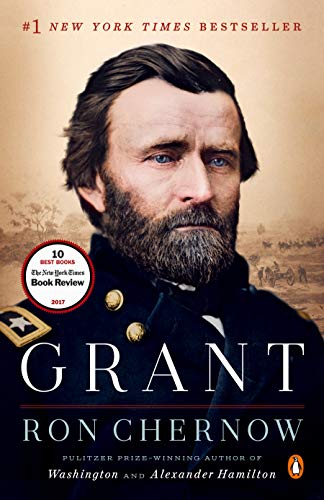
Bill Clinton, the 42nd President of the United States and founder of the Clinton Foundation, highlights the timely importance of Ron Chernow’s biography of Ulysses S. Grant. Clinton praises the book for its remarkable detail and ability to engage both casual readers and scholars alike, emphasizing how it brings overdue recognition to Grant’s pivotal contributions during and after the Civil War. "If we still believe in forming a more perfect union, his steady and courageous example is more valuable than ever," Clinton notes, underscoring the book’s relevance to ongoing struggles for justice. This endorsement invites you to explore the complex legacy of one of America’s most misunderstood leaders. Also noteworthy is Gerald Butts' succinct praise, reinforcing the book's broad appeal among thoughtful historians.
42nd President of the United States, Clinton Foundation founder
“This is a good time for Ron Chernow’s fine biography of Ulysses S. Grant to appear . . . As history, it is remarkable, full of fascinating details sure to make it interesting both to those with the most cursory knowledge of Grant’s life and to those who have read his memoirs or any of several previous biographies . . . For all its scholarly and literary strengths, this book’s greatest service is to remind us of Grant’s significant achievements at the end of the war and after, which have too long been overlooked and are too important today to be left in the dark . . . As Americans continue the struggle to defend justice and equality in our tumultuous and divisive era, we need to know what Grant did when our country’s very existence hung in the balance. If we still believe in forming a more perfect union, his steady and courageous example is more valuable than ever.” (from Amazon)
Ron Chernow is the prizewinning author of six previous books and the recipient of the 2015 National Humanities Medal. His first book, The House of Morgan, won the National Book Award, Washington: A Life won the Pulitzer Prize for Biography, and Alexander Hamilton—the inspiration for the Broadway musical—won the George Washington Book Prize. A past president of PEN America, Chernow has been the recipient of eight honorary doctorates. He resides in Brooklyn, New York.
Ron Chernow's biography of Ulysses S. Grant reexamines a figure often misunderstood, offering a nuanced portrayal shaped by meticulous research and literary skill. You’ll gain insight into Grant’s rise from early setbacks, his strategic military leadership during the Civil War, and his presidency marked by both dedication to justice and entanglements in scandals. The book also explores Grant’s efforts against the Ku Klux Klan and his post-presidential collaboration with Mark Twain, providing a full-spectrum view of his life. This depth benefits anyone seeking a richer understanding of a pivotal 19th-century American leader beyond common stereotypes.
Lawrence Wright, author of The Looming Tower, brings a critical eye shaped by his deep historical expertise to his review of this book. He calls it "a masterwork of history" that vividly animates the personalities wrestling for America's future during the Civil War’s last year. Wright's appreciation for how Gwynne balances sweeping narrative with intimate detail transformed his understanding of that tumultuous period, highlighting the book’s ability to deepen historical insight. This recommendation alone signals why you should consider this rich, character-driven account. Additionally, Hampton Sides praises the fresh perspective Gwynne offers, reinforcing the book’s relevance for those seeking a nuanced Civil War history.
Author of The Looming Tower: Al-Qaeda and the Road to 9/11
“This brilliantly told account of the final year of the Civil War brings to life the vivid personalities who struggled for control of America’s destiny. At once sweeping and intimate, Hymns of the Republic is a masterwork of history.” (from Amazon)
S.C. Gwynne is the author of His Majesty’s Airship, Hymns of the Republic, and the New York Times bestsellers Rebel Yell and Empire of the Summer Moon, which was a finalist for the Pulitzer Prize and the National Book Critics Circle Award. He spent most of his career as a journalist, including stints with Time as bureau chief, national correspondent, and senior editor, and with Texas Monthly as executive editor. He lives in Austin, Texas, with his wife.
After analyzing the final year of the Civil War, S.C. Gwynne offers an engrossing narrative that balances sweeping military campaigns with intimate portraits of key figures like Robert E. Lee, Ulysses S. Grant, and Clara Barton. You’ll gain nuanced insights into pivotal moments such as Sherman’s March to the Sea and the role of 180,000 black Union soldiers, challenging traditional heroic narratives. Chapters detailing the 1864 election and guerrilla warfare in Missouri provide unexpected angles that deepen your understanding of the conflict's complexity. This book suits you if you want a richly detailed, character-driven history that brings the war’s last turbulent year vividly to life without mythologizing its leaders.
Phillip Carter, a RAND Corporation researcher and adjunct professor at Georgetown Law, encountered this book while examining the ongoing challenges of civil rights and citizenship in America. Reflecting on the unfinished nature of equal citizenship, he describes it as, “A poignant end to Eric Foner’s brilliant new book ‘The Second Founding,’ a short history of the 13th, 14th & 15th Amendments.” This book helped clarify how constitutional changes during Reconstruction still resonate in today's political struggles. Its concise and thoughtful exploration offers you a powerful lens to understand the long arc of American equality. Also, David Blight praises its superb research and writing, while John Fabian Witt calls it lucid and succinct, reinforcing its value for those seeking clarity on this complex era.
““Rights can be gained, and rights can be taken away. A century and a half after the end of slavery, the project of equal citizenship remains unfinished.” A poignant end to Eric Foner’s brilliant new book “The Second Founding,” a short history of the 13th, 14th & 15th Amendments.” (from X)
Eric Foner is DeWitt Clinton Professor of History at Columbia University, where he earned his B.A. and Ph.D. In his teaching and scholarship, Foner focuses on the Civil War and Reconstruction, slavery, and nineteenth-century America. His 'Reconstruction: America’s Unfinished Revolution, 1863–1877,' won the Bancroft, Parkman, and Los Angeles Times Book prizes and remains the standard history of the period. In 2006 Foner received the Presidential Award for Outstanding Teaching at Columbia University. He has served as president of the Organization of American Historians, the American Historical Association, and the Society of American Historians. He is currently writing a book on Lincoln and slavery.
Eric Foner, a distinguished historian at Columbia University, draws on decades of expertise to explore the constitutional transformations during and after the Civil War. You’ll gain a detailed understanding of the 13th, 14th, and 15th Amendments and how they reshaped American law to enshrine equality, birthright citizenship, and voting rights. The book examines pivotal moments such as African-American political activism and the Republican Party’s role, alongside the Supreme Court’s later rollback that led to Jim Crow laws. If you want to grasp how Reconstruction’s legal legacy continues to influence debates over rights today, this book offers a focused, insightful narrative without glossing over complexities.
This AI-created book on the American Civil War is crafted based on your background and interests. You share your knowledge level and the specific Civil War topics you want to explore, and the book is written to focus precisely on those areas. This personalized approach helps you navigate complex historical events with content that matches your goals, providing a unique and engaging way to deepen your understanding of this transformative period.
TailoredRead AI creates personalized nonfiction books that adapt to your unique background, goals, and interests. Instead of reading generic content, you get a custom book written specifically for your profession, experience level, and learning objectives. Whether you're a beginner looking for fundamentals or an expert seeking advanced insights, TailoredRead crafts a book that speaks directly to you. Learn more.
2026·50-300 pages·US 19th Century History, Civil War, Military Strategy, Political Leadership, Social Impact
This tailored book explores the complexities of the American Civil War with a focus that matches your specific interests and background. It delves into exclusive perspectives on pivotal events and key leaders, revealing layers of history often overlooked in broader narratives. Through a personalized lens, it examines political, military, and social dimensions, connecting critical moments to the broader national upheaval. The content is crafted to engage your curiosity, making intricate historical dynamics accessible and compelling. By tailoring the exploration to your goals, the book offers a unique pathway to understand the Civil War’s enduring influence, inviting you to uncover insights that resonate with your personal learning journey.
Adam Gopnik, a staff writer at The New Yorker known for his deep explorations of history, found this book's focus on Congress during the Civil War both illuminating and broadly relevant. He describes it as popular history of a high order that challenges traditional views and enriches understanding of the era's political complexity. Gopnik’s appreciation for Bordewich’s detailed narrative highlights why this book reshapes how you might see the Civil War’s power struggles. Alongside BookPage, which calls it compelling and vivid, these perspectives underscore the book’s significance for anyone serious about 19th-century American politics.
“Although the subject of the book is specific, its implications are universal... This is popular history of a high order—Bordewich has a terrific eye and ear for the details of his chosen time—and it thoroughly reflects the larger revisionism of our day.” (from Amazon)
Fergus M. Bordewich is an award-winning author and historian known for his insightful works on American history, particularly the Civil War era. His extensive research and engaging writing style have earned him recognition in the field, making him a prominent voice in historical literature.
Fergus M. Bordewich, an award-winning historian focused on the Civil War era, reexamines the conflict by highlighting Congress's decisive role rather than focusing solely on Lincoln. You explore how Republican reformers like Thaddeus Stevens and Pitt Fessenden reshaped the nation’s financial system, pushed emancipation, and laid groundwork for Reconstruction. Chapters detailing legislative battles reveal the political strategies that influenced the war’s outcome and the future of American governance. If you're interested in the interplay of politics and war, this book offers a nuanced perspective that challenges conventional narratives.
Tom Bevan, co-founder and president of RealClearPolitics, praised this book as a "great read" during his morning commentary, highlighting its insightful look at Ulysses S. Grant. With his extensive experience in political analysis, Bevan’s endorsement reflects the book’s detailed examination of a critical moment in US history. His recognition of Bret Baier’s work underscores the book’s relevance for those seeking to understand the complexities of the post-Civil War era. Additionally, John Delaney, a former Congressman and entrepreneur, acknowledged Baier's growing portfolio, reinforcing the book’s value to anyone interested in American political history.
Bret Baier is the chief political anchor for Fox News Channel and the anchor and executive editor of Special Report with Bret Baier. He previously served as Chief White House Correspondent for Fox News Channel and as the network’s National Security Correspondent based at the Pentagon, reporting on military and national security affairs. A recipient of the National Press Foundation’s Sol Taishoff Award for Excellence in Broadcast Journalism, Baier is the author of the New York Times bestsellers Three Days at the Brink: FDR’s Daring Gamble to Win WWII; Three Days in Moscow: Ronald Reagan and the Fall of the Soviet Empire; Three Days in January: Dwight Eisenhower’s Final Mission; and Special Heart: A Journey of Faith, Hope, Courage and Love. He lives with his family in Washington, DC.
Bret Baier, with his extensive background as Fox News Channel's chief political anchor and a seasoned national security correspondent, brings a nuanced perspective to this portrait of Ulysses S. Grant. The book guides you through Grant's military leadership during the Civil War, his presidency grappling with Reconstruction, and the 1876 electoral crisis, unpacking complex political maneuvers like the formation of the electoral commission. You gain insight into how Grant’s efforts shaped the fragile post-war union and the precarious progress of civil rights. This narrative suits anyone interested in the intersection of military history, political strategy, and the turbulent era of 19th-century American governance.
James McPherson, acclaimed Civil War historian and author of Embattled Rebel, found this book to be a source of fresh insights that surpass much of the existing literature on the conflict. His extensive expertise lends weight to his praise, underscoring how the narrative reshapes understanding of the war's military dimensions. McPherson highlights how the authors' vivid portrayal of leadership and battlefield dynamics changed his perception of the Civil War's complexity. His endorsement signals to you the depth and originality you can expect, making this work a vital addition to your exploration of US 19th century history. Additionally, Lawrence Freedman, a respected professor of war studies, emphasizes the book's clarity in explaining key strategic decisions and army structures, reinforcing its value for anyone eager to grasp the war's military intricacies.
“A genuinely fresh set of insights about the Civil War. Murray and Hsieh have crafted a military narrative that goes well beyond anything else in the literature.” (from Amazon)
Williamson Murray is a prominent military historian known for his extensive research and writings on military history, particularly the Civil War. He has authored and edited numerous books and articles, contributing significantly to the understanding of military strategy and history.
What started as an exploration of how industrial and revolutionary forces shaped warfare, this book by Williamson Murray and Wayne Wei-siang Hsieh reveals the complex military landscape of the Civil War. You learn not only about battlefield tactics and leadership but also the cultural and organizational differences between armies that influenced outcomes. Their detailed portraits of figures like Lincoln and Grant bring human judgment into focus, alongside the technological and strategic shifts of the era. This book benefits anyone seeking a nuanced understanding of military history beyond battles—especially those interested in how society, technology, and leadership intersected during this pivotal conflict.
Glenn Kirschner, a respected legal analyst and former federal prosecutor, highlights the value of diverse perspectives in leadership, praising this book's depiction of Lincoln's ability to integrate rivals into a strong team. He notes, “Not immune to advice” is a beautiful thing. In fact, a team of rivals produces the best, most informed decisions, IMO. Kirschner's experience navigating complex legal challenges gives weight to his appreciation for Lincoln’s collaborative approach. This perspective invites you to reconsider leadership not as dominance but as thoughtful coalition-building. Alongside Kirschner, Adam Townsend acknowledges the book's engaging narrative, sparking discussion about historical interpretation and its implications for understanding political leadership.
““Not immune to advice” is a beautiful thing. In fact, a team of rivals produces the best, most informed decisions, IMO. It’s also one heck of a book - Team of Rivals - by Doris Kearns Goodwin” (from X)
Doris Kearns Goodwin’s work for President Johnson inspired her career as a presidential historian. Her first book was Lyndon Johnson and the American Dream. She followed up with the Pulitzer Prize–winning No Ordinary Time: Franklin and Eleanor Roosevelt: The Homefront in World War II. She earned the Lincoln Prize for Team of Rivals, in part the basis for Steven Spielberg’s film Lincoln, and the Carnegie Medal for The Bully Pulpit, about the friendship between Theodore Roosevelt and William Howard Taft. Her bestselling Leadership: In Turbulent Times was the inspiration for the History Channel docuseries on Abraham Lincoln, Theodore Roosevelt, and Franklin Roosevelt, which she executive produced. Her most recent book, An Unfinished Love Story: A Personal History of the 1960s, provides a front-row seat to the pivotal people—JFK, LBJ, RFK, and MLK—and events of this momentous decade.
Doris Kearns Goodwin challenges the conventional wisdom that political leadership is purely about power by exploring Abraham Lincoln's unique ability to unite fierce rivals into a cohesive cabinet. You’ll gain insight into Lincoln’s emotional intelligence and strategic patience, especially in chapters detailing his relationships with Seward and Chase. This book reveals how Lincoln’s empathy and political savvy preserved the Union amid the chaos of civil war. If you’re interested in leadership dynamics within historical contexts or the complexities of 19th-century American politics, this deep dive offers a nuanced portrait that goes beyond typical biographies.
Colson Whitehead, Pulitzer Prize-winning author, encountered this book amid his deep exploration of America's complex history. He notes, "Baptist has a fleet, persuasive take on the materialist underpinnings of the 'peculiar institution.'" This perspective reshaped Whitehead’s understanding of how slavery was not a side note but a foundational economic force shaping the nation. His endorsement signals how the book challenges traditional narratives, making it essential for anyone serious about grasping 19th-century American history. Alongside him, Alicia Garza, co-creator of Black Lives Matter, underscores the book's relevance for understanding slavery's lasting impact on today's institutions.
Edward E. Baptist is an associate professor of history at Cornell University. Author of the award-winning Creating an Old South, he grew up in Durham, North Carolina. He lives in Ithaca, New York.
Edward E. Baptist, a Cornell history professor, challenges the common portrayal of slavery as merely a pre-modern remnant disconnected from America's rise. His book reveals how the brutal expansion of slavery fueled the nation’s economic transformation into a capitalist powerhouse. Through detailed slave narratives and economic data, you gain a clearer understanding of how forced labor was deeply entwined with the growth of American capitalism. Readers interested in the economic and social roots of 19th-century America will find this a sobering, insightful examination that reshapes how you view the era’s legacy.
Dennis Showalter, author of Instrument of War: The German Army, 1914-18, brings decades of expertise in military history to his recommendation of this biography. After encountering Brian Holden Reid’s work, he noted its fresh perspective on Sherman’s recognition of war's brutal realities and strategic depth. "Comprehensively researched and convincingly presented, this work by a leading British scholar of the Civil War brings a fresh perspective to a complex subject," Showalter said, highlighting its near-definitive status. His appreciation for the book’s nuanced portrayal of Sherman’s intellect and psychology encourages you to explore the layered complexities behind one of the Civil War’s most controversial figures. Alongside Richard Kohn, who praises the book’s myth-busting approach and insightful context, these voices emphasize why this biography is an important read for understanding US 19th century military history.
Author of Instrument of War: The German Army, 1914-18
“Comprehensively researched and convincingly presented, this work by a leading British scholar of the Civil War brings a fresh perspective to a complex subject. Combining a powerful intellect with a capacity to learn from experience, Sherman understood with stark clarity war's central feature: inherent destructiveness, physical and psychological. In demonstrating his response, Holden Reid comes as close to a definitive military biography of Sherman as we are likely to see.” (from Amazon)
Brian Holden Reid is Professor of American History and Military Institutions at King's College London. He is the author of Robert E. Lee: Icon of a Nation, The Civil War and the Wars of the Nineteenth Century, and America's Civil War: The Operational Battlefield, 1861-1863, among other books. In 2019, he was awarded the Samuel Eliot Morison Prize from the Society for Military History for his contributions to the field.
The breakthrough moment came when Brian Holden Reid traced William Tecumseh Sherman's evolution beyond his battlefield reputation to reveal the man shaped by family, depression, and strategic insight. You’ll learn how Sherman's friendships with key figures like Grant and Halleck influenced his military approach, and how his leadership transformed during the Civil War’s toughest campaigns, especially the March to the Sea. Reid’s detailed chapters on Sherman's postwar role at Fort Leavenworth shed light on his lasting impact on military education. If you seek a nuanced understanding of Sherman's intellect and legacy, this book offers a thorough exploration, though it demands patience for its dense scholarship.
Satya Nadella, CEO of Microsoft, brings a unique perspective to US 19th century history through his leadership in technology and innovation. His endorsement signals the book's relevance to understanding the foundations of economic growth that shaped modern America, especially given his focus on productivity and transformative change. This connection underscores why someone guiding one of the world's largest tech firms values Robert J. Gordon's analysis on the limits and legacy of past growth. Alongside Bill Gates, whose philanthropic and business acumen further affirm the book's insight into economic progress, their recommendations anchor this work as a critical resource for anyone seeking to comprehend the forces that built the American standard of living.
“@RossSchumann Read “The Rise and Fall of American Growth”. It’s a history book. No politics. It will clear it up for you. Wishing you the best. Also, read dark money to learn more about origin of current economic orthodoxy.” (from X)
Robert J. Gordon is a professor in social sciences at Northwestern University. His books include Productivity Growth, Inflation, and Unemployment and Macroeconomics. Gordon was included in the 2016 Bloomberg list of the nation's most influential thinkers.
Robert J. Gordon, a seasoned economist and Northwestern University professor, offers a detailed exploration of how America's standard of living surged following the Civil War through innovations like electric lighting and motor vehicles. This book unpacks the economic and social factors behind this growth and argues that such transformative progress is unlikely to repeat due to challenges like rising inequality and demographic shifts. You'll gain a nuanced understanding of the interplay between technological advances and economic growth, with insights into productivity trends and societal impacts. If you want to grasp why past prosperity shaped modern America and why future growth may stall, this book speaks directly to those concerns.
Gary W. Gallagher is the John L. Nau III Professor in the History of the American Civil War Emeritus at the University of Virginia. His extensive scholarship, including over forty books on the Civil War and its memory, informs this collection of essays. His expertise offers readers a richly detailed exploration of the war’s origins, conduct, and lasting impact, making this work a valuable resource for those seeking a deeper, more reflective understanding of the Great American Crisis.
Gary W. Gallagher is the John L. Nau III Professor in the History of the American Civil War Emeritus at the University of Virginia. He is the author or editor of more than forty books on the Civil War and its memory.
The breakthrough moment came when Gary W. Gallagher, drawing from decades as a distinguished Civil War historian, compiled seventy-three essays that challenge and enrich the conventional narratives of the American Civil War. You gain a nuanced view that contrasts contemporary memory with historical evidence, exploring topics from military strategies to cultural interpretations, such as reevaluations of Gettysburg and Robert E. Lee’s leadership. This book suits anyone eager to deepen their understanding beyond textbook versions, especially those interested in how history and memory collide and evolve over time. It’s a thoughtful collection that invites you to engage critically with familiar stories and lesser-known perspectives alike.
Laura F. Edwards, the Peabody Family Professor of History at Duke University, brings deep scholarly insight to this examination of the Civil War and Reconstruction's legal legacy. With award-winning works on legal culture and inequality in the South, Edwards offers a compelling study of how individual rights expanded and reshaped the nation’s legal order. Her background ensures a thorough and authoritative perspective for anyone interested in the complexities of 19th-century American law.
Laura F. Edwards is the Peabody Family Professor of History at Duke University, North Carolina. Her book The People and Their Peace: Legal Culture and the Transformation of Inequality in the Post-Revolutionary South was awarded the American Historical Association's 2009 Littleton–Griswold Prize for the best book in law and society and the Southern Historical Association's Charles Sydnor Prize for the best book in Southern history.
Drawing from her extensive expertise as a history professor at Duke University, Laura F. Edwards examines how the Civil War and Reconstruction reshaped the American legal system, particularly through the expansion of individual rights. You’ll gain detailed insights into the transformation of federal policies on slavery and race, especially the Reconstruction amendments, and how these legal changes redefined citizens' relationship to justice and government. Edwards challenges you to consider the limits of rights-based reforms, especially regarding collective social goals, offering a nuanced view of legal history's impact on 19th-century America. This book suits those seeking a rigorous exploration of law's evolution amid societal upheaval rather than a general historical narrative.
Awarded American Historical Association's Littleton–Griswold Prize
Received Southern Historical Association's Charles Sydnor Prize
Nick Gillespie, editor at large for Reason magazine and a respected voice in libertarian circles, highlighted this book through a detailed podcast interview with Damon Root. Gillespie’s deep engagement with the book underscores its relevance for those interested in American history and individual rights. He shared, "Here's a great new Reason interview podcast I did with Damon Root about his new book A Glorious Liberty... If you care about history, individualism, and libertarian ideas, take a listen." This recommendation points to the book's ability to challenge and enrich your understanding of 19th-century constitutional debates and abolitionist thought.
“Here's a great new Reason interview podcast I did with Damon Root about his new book A Glorious Liberty: Frederick Douglass and the Fight for an Antislavery Constitution. If you care about history, individualism, and libertarian ideas, take a listen” (from X)
Damon Root is an award-winning legal affairs journalist. He is the author of A Glorious Liberty: Frederick Douglass and the Fight for an Antislavery Constitution (2020) and Overruled: The Long War for Control of the U.S. Supreme Court (2014). His work has been cited by the Texas Supreme Court and in the writings of U.S. Supreme Court Justice John Paul Stevens.
Damon Root, an award-winning legal affairs journalist, draws from his deep understanding of constitutional law and 19th-century American history to explore Frederick Douglass's pivotal role in shaping the fight for an antislavery Constitution. You’ll gain insight into Douglass’s powerful arguments for inalienable rights and his vision of "no war but an Abolition war," illuminating the moral and legal battles during and after the Civil War. The book thoroughly examines Douglass’s advocacy for political tools like the ballot and jury box against Jim Crow laws, offering a nuanced view of constitutional debates that remain relevant today. If you’re interested in the intersection of legal history and civil rights, this book offers concrete perspectives grounded in historical detail.
Clyde Wilson, distinguished professor emeritus of history at the University of South Carolina, brings decades of expertise in US 19th century history to his recommendation of this book. He candidly shares that despite reviewing hundreds of books, he has rarely urged readers so strongly, saying, "I have never used the comment 'you ought to get this book.' I am using it now." His endorsement reflects how Isaac C. Bishop’s detailed exploration reshaped his understanding of Southern history and the Civil War, making this a compelling choice if you want to see the conflict through a different lens.
Distinguished professor emeritus, University of South Carolina
“I have written probably 200 or more book reviews in my lifetime. I have never used the comment "you ought to get this book." I am using it now.” (from Amazon)
Isaac C. Bishop is a lifelong New-Englander who became interested in southern culture. His quest to uncover the true history of the U.S. South and the Civil War led to the writing of 'Defending Dixie’s Land'. Bishop's research challenges preconceived notions about the Civil War and southern history, providing insights into the motivations behind secession and the realities of life for minorities in both the North and South.
Isaac C. Bishop’s background as a lifelong New-Englander fascinated by southern culture propelled him on a multi-year investigation into the true history of the U.S. South and the Civil War. You’ll find a detailed examination of the political and social forces behind secession, including why the cotton states and upper South separated from the Union. The book challenges popular narratives by exploring complex topics like minority experiences, southern slaves' perspectives, and Abraham Lincoln’s motives. If you’re ready to question conventional history and explore lesser-known viewpoints, this book offers a provocative, well-researched account worth your attention.
The best US 19th Century History books and more, in your inbox each week. No account needed.
Conclusion
This collection reveals three clear themes: leadership under crisis, the evolution of constitutional rights, and the economic forces intertwined with slavery and growth. If you’re grappling with understanding political leadership, start with "Team of Rivals" and "Grant" to see how Lincoln and his contemporaries navigated unprecedented challenges. For rapid insights into legal and political transformations, combine "The Broken Constitution" and "The Second Founding".
If economic history fascinates you, "The Half Has Never Been Told" alongside "The Rise and Fall of American Growth" offers powerful perspectives on how slavery and innovation shaped America’s wealth. Alternatively, you can create a personalized US 19th Century History book to bridge the gap between general principles and your specific situation.
These books can help you accelerate your learning journey, equipping you with nuanced understanding and fresh perspectives on the century that defined the United States.
Frequently Asked Questions
I'm overwhelmed by choice – which book should I start with?
If leadership intrigues you, begin with Doris Kearns Goodwin’s "Team of Rivals" for a deep dive into Lincoln’s political skill. For constitutional insights, Noah Feldman’s "The Broken Constitution" offers a clear lens. Starting here grounds you in key themes for understanding the broader 19th-century landscape.
Are these books too advanced for someone new to US 19th Century History?
Not at all. Many books like "The President and the Freedom Fighter" and "Hymns of the Republic" provide accessible narratives that welcome newcomers while still offering depth for seasoned readers.
What’s the best order to read these books?
A good approach is to start with broad biographies such as "Grant" or "Team of Rivals," then move to thematic works like "The Second Founding" and "The Half Has Never Been Told" to explore legal and economic history in detail.
Do I really need to read all of these, or can I just pick one?
You can definitely pick based on your interests. Each book stands strong on its own, whether you want military history, constitutional law, or social change. Together, they offer a fuller picture but single books are valuable studies.
Which books focus more on theory vs. practical application?
"The Broken Constitution" and "The Second Founding" lean toward legal theory and constitutional analysis. Conversely, "Congress at War" and "To Rescue the Republic" explore practical political strategies in turbulent times.
Can I get tailored insights instead of reading all these books?
Yes! While these expert-recommended books offer solid foundations, personalized US 19th Century History books tailor insights to your specific interests and goals, bridging expert knowledge with your unique needs. Explore more here.
📚 Love this book list?
Help fellow book lovers discover great books, share this curated list with others!