20 US Cold War History Books That Reveal America's Global Strategy
Recommended by John Lewis Gaddis, Mika Brzezinski, and Asha Rangappa, these US Cold War History books offer expert insights and strategic perspectives.
Updated on June 25, 2025·We may earn commissions for purchases made via this page
18 of 20 books have Kindle versions
We're launchingLaunching on Product Hunt today 🎉We just launchedJust launched on Product Hunt 🎉
Modelpeers, from the BookAuthority teamFrom the BookAuthority team: Modelpeers, a free way to follow AI models and agents like you follow people. We'd love your support.
What if you could trace the Cold War's complex history through the eyes of those who shaped it? This era, marked by tension and near catastrophe, still shapes global politics today. Understanding it matters more than ever as new geopolitical challenges emerge.
John Lewis Gaddis, the Pulitzer Prize-winning historian, has praised The Peacemaker for redefining our grasp of Reagan’s role, while Mika Brzezinski highlights Saving Freedom for capturing Truman's pivotal leadership. Meanwhile, former FBI agent Asha Rangappa underscores The Folly and the Glory as essential for grasping the shadow battles behind the scenes.
These expert-curated books offer proven frameworks to navigate Cold War history, yet if you seek content tailored to your unique interests—be it espionage tradecraft, diplomacy, or military strategy—you might consider creating a personalized US Cold War History book that builds on these insights.
John Lewis Gaddis, Pulitzer Prize-winning historian widely regarded as a leading authority on US Cold War history, highly recommends this book for its thorough research and fresh insights. He notes that "William Inboden’s The Peacemaker makes the strongest case yet for Reagan as a successful grand strategist," reflecting how this work reshaped his understanding of America’s role in ending the Cold War. Acclaimed historian Paul Kennedy also praises its compelling narrative and rich sources, underscoring its place as a key text for anyone seeking to grasp the nuances of Reagan’s presidency and Cold War diplomacy.
“William Inboden’s The Peacemaker makes the strongest case yet for Reagan as a successful grand strategist. Clearly written, thoroughly researched, full of fresh information, this comprehensive account will shape all future studies of the role the United States played in ending the Cold War.”
William Inboden is executive director of the Clements Center for National Security and associate professor of Public Policy and History at the LBJ School of Public Affairs, both at the University of Texas at Austin. Prior to academia, he worked for fifteen years as a policymaker in Washington, DC, and overseas, including senior positions with the State Department and the National Security Council in the George W. Bush administration. A graduate of Stanford University, he earned his doctorate at Yale. He is a life member of the Council on Foreign Relations and his commentary has appeared in numerous outlets, including the Wall Street Journal, the New York Times, the Washington Post, the Los Angeles Times, Foreign Affairs, Foreign Policy, The Weekly Standard, World, NPR, CNN, Sky News, and the BBC.
Drawing from his extensive experience as a policymaker and academic, William Inboden crafts a detailed narrative of Ronald Reagan's Cold War strategy that is both richly informed and deeply analytical. You gain insight into Reagan's complex approach, balancing aggressive arms competition with cautious diplomacy, while managing global crises from terrorism to proxy wars. The book reveals how Reagan's team, despite internal rivalries, shaped a new path toward ending Soviet dominance through multifaceted policies. For those intrigued by presidential decision-making and Cold War diplomacy, this work offers a nuanced understanding of the era's geopolitical chess game.
Winner of Society of Presidential Descendants Book Award
Mika Brzezinski, co-host of Morning Joe and a prominent political commentator, praises Joe Scarborough’s book during a moment when understanding bipartisan leadership feels urgent. She enthusiastically shares, "So proud of Joe — His great book is now out in paperback!!!!" Her endorsement reflects the book’s relevance to current political divides and its illumination of how Truman united a fractured nation. Following her, Eugene Robinson, a Pulitzer Prize–winning columnist, highlights how this detailed narrative captures the essence of a pivotal era, providing lessons on leadership and democracy that resonate today.
Joe Scarborough is a New York Times bestselling author, a Washington Post columnist, the creator of Morning Joe, and a former United States congressman. He has been named to the “Time 100” list of the world’s most influential people.
Joe Scarborough, a former congressman and seasoned political commentator, explores the critical pivot in U.S. foreign policy under Harry Truman, revealing how an unprepared president orchestrated a bipartisan coalition to confront Soviet expansionism. You’ll gain insight into the domestic political battles and global stakes behind the Truman Doctrine, with detailed accounts of key moments like the 1947 address to Congress and the strategic defense of Greece and Turkey. The book suits anyone interested in Cold War dynamics, presidential leadership, and the origins of America’s postwar international role, providing a clear view of how Truman’s decisions shaped decades of Western freedom and global order.
This personalized AI book about US Cold War history is created from your background, skill level, and specific interests within this complex era. You share the topics and goals that matter most to you, and the book focuses precisely on those areas, offering a tailored pathway through rich historical content. By concentrating on your unique learning needs, it helps you navigate the Cold War with clarity and depth, making the vast expert knowledge more accessible and relevant.
TailoredRead AI creates personalized nonfiction books that adapt to your unique background, goals, and interests. Instead of reading generic content, you get a custom book written specifically for your profession, experience level, and learning objectives. Whether you're a beginner looking for fundamentals or an expert seeking advanced insights, TailoredRead crafts a book that speaks directly to you. Learn more.
2026·50-300 pages·US Cold War History, Cold War History, US-Soviet Relations, Diplomacy, Espionage
This tailored exploration of US Cold War history offers a meticulous journey through the era's pivotal events, figures, and global dynamics. The book is crafted to match your background and specific interests, whether they lie in diplomacy, espionage, military conflicts, or political leadership. It delves into the complexities of US-Soviet relations, revealing the nuanced interactions that shaped decades of tension and cooperation.
By focusing on your unique goals, this personalized guide facilitates a deeper understanding of Cold War strategies and outcomes. It weaves together expert knowledge with your particular areas of curiosity, ensuring a compelling and focused learning experience that illuminates the intricate fabric of this defining period in modern history.
Patrick Radden Keefe, a New York Times bestselling author known for his deep dives into American history and espionage, found this book transformative in understanding the Cold War's covert battles. After grappling with the complexities of American foreign policy, he praises it as "a sweeping, vivid, beautifully observed book" that reveals the flawed humanity behind CIA operations and the unintended consequences that still echo today. His recommendation underscores the book’s ability to distill sprawling geopolitical tensions into compelling personal narratives. Alongside him, Evan Thomas, author of Ike's Bluff, highlights its entertaining yet insightful portrayal of four Cold War spies, enriching your grasp of this turbulent era.
“In this sweeping, vivid, beautifully observed book, Scott Anderson unearths the devastating secret history of how the United States lost the plot during the Cold War. By focusing on the twisty, colorful lives of four legendary spies, Anderson distills the larger geopolitical saga into an intimate story of flawed but talented men, of the 'disease of empires,' and of the inescapable moral hazard of American idealism and power. It's a hell of a book, with themes about the unintended consequences of espionage and interventionism that still resonate, powerfully, today.”
Scott Anderson is the author of two novels and four works of nonfiction, including Lawrence in Arabia, an international bestseller which was a finalist for the National Book Critics Circle Award and a New York Times Notable Book. A veteran war correspondent, he is a contributing writer for The New York Times Magazine.
Scott Anderson, a seasoned war correspondent and bestselling author known for Lawrence in Arabia, delves into the covert world of early Cold War espionage with sharp narrative skill. You gain an intimate look at four CIA agents—each navigating complex geopolitical landscapes and internal agency struggles—that reveals how American intelligence efforts were often undermined by political missteps and rigid ideology. The book offers detailed portraits of figures like Frank Wisner and Edward Lansdale, illustrating how their missions shaped, and sometimes fractured, U.S. foreign policy. This is a revealing read if you want to understand the human and strategic dimensions behind Cold War intelligence operations and their lasting impact on America’s global standing.
Asha Rangappa, a former FBI special agent and Yale faculty member, brings crucial insight to US Cold War history and highlights this book's urgency. She shared, "This is a great book -- I will be discussing it with Tim Weiner on October 5!" Her deep understanding of intelligence work helps frame the book’s exploration of espionage and political warfare. Alongside her, David Corn, the DC bureau chief of Mother Jones, praises the narrative's wit and historical depth, emphasizing how it reveals the ongoing threat to American democracy. Their endorsements underscore the book’s value for anyone seeking to grasp the shadowy contest between the US and Russia.
Tim Weiner has won the Pulitzer Prize and the National Book Award for his reporting and writing on national security and intelligence. He covered the CIA, the war in Afghanistan, and crises and conflicts in fourteen nations for The New York Times. Weiner has taught history and writing at Princeton and Columbia. The Folly and the Glory is his sixth book.
2020·336 pages·US Cold War History, Espionage, Political Warfare, Russian Influence, CIA Operations
The breakthrough moment came when Pulitzer Prize winner Tim Weiner drew from decades of national security reporting to unravel the complex dance of political warfare between the US and Russia from 1945 through 2020. You’ll gain sharp insights into espionage tactics, covert operations, and the evolving strategies behind election interference, with vivid chapters detailing CIA and KGB maneuvers and Putin’s modern influence campaigns. This isn’t just history; it’s a cautionary tale about the vulnerabilities of American democracy that invites you to understand the stakes and the shadow conflicts shaping today’s world. If you seek an unflinching look at power struggles that transcend traditional warfare, this book will engage you thoroughly.
Dame Stella Rimington, the former Director of MI5, highlights the gripping narratives of CIA espionage on the perilous front lines of the Cold War, calling the book "intriguing true stories of the techniques of CIA spying on the dangerous front line of the Cold War." Her deep understanding of intelligence work lends weight to this recommendation, emphasizing the book’s detailed account of spycraft. Similarly, Jason Matthews, a New York Times-bestselling author, praises the insider perspective on CIA operations in Moscow, noting how the authors walk readers through the high-stakes environment overshadowed by KGB surveillance. Their insights bring to life the inventive methods that defined this critical period.
Antonio (Tony) Mendez (1940–2019) was a highly decorated CIA officer and recipient of the Intelligence Star for Valor for the ARGO operation. He was the author of Master of Disguise. Jonna Mendez is a former Chief of Disguise with over twenty-five years of experience as a CIA officer. She is the author of the In True Face. Together, Antonio and Jonna Mendez are New York Times–bestselling coauthors of Spy Dust and Argo.
Antonio and Jonna Mendez bring firsthand CIA experience to illuminate the covert operations that defined Cold War espionage in Moscow. Drawing from their decades undercover, they detail the inventive tactics and disguises that outwitted the KGB, revealing how Hollywood-inspired strategies became survival tools. You’ll learn about identity swaps, evasion techniques, and spy gadgets that shifted intelligence odds during tense geopolitical standoffs. This book suits anyone interested in the gritty reality behind spycraft, especially those curious about the personal risks and tactical ingenuity involved in espionage during this fraught era.
This AI-created book on Cold War history is tailored to your background and learning goals. It focuses on the specific moments and strategies you want to explore, making your study both relevant and efficient. By personalizing the content, this book helps you navigate complex events with clarity, ensuring a clear grasp of critical US Cold War topics in just 30 days.
TailoredRead AI creates personalized nonfiction books that adapt to your unique background, goals, and interests. Instead of reading generic content, you get a custom book written specifically for your profession, experience level, and learning objectives. Whether you're a beginner looking for fundamentals or an expert seeking advanced insights, TailoredRead crafts a book that speaks directly to you. Learn more.
2026·50-300 pages·US Cold War History, Cold War Strategy, Diplomacy, Nuclear Brinkmanship, Espionage
This tailored book offers a focused 30-day journey designed to rapidly deepen your understanding of critical US Cold War moments and tactics. It explores the pivotal events, diplomatic maneuvers, and strategic decisions that shaped the global standoff, all while aligning with your personal interests and background. Through a carefully crafted narrative that matches your specific goals, this personalized guide reveals the complexities of Cold War strategy and diplomacy in an accessible way.
By concentrating on your desired topics and skill level, this book provides a clear pathway through the intricate history of US Cold War policies and actions. It examines key moments and tactical shifts, enabling you to grasp essential knowledge efficiently without wading through unrelated material.
Michael McFaul, professor and expert on US foreign policy, turned to this book amid his deep engagement with Cold War history. He shared, "I literally just ordered today Benn Steil's The Marshall Plan, which I've been told by people I trust is the best new book on this subject." This endorsement carries weight given McFaul’s extensive work on US-Russia relations. His recommendation highlights how Steil’s thorough research reshaped his understanding of the early Cold War’s diplomatic landscape. Similarly, historian Paul Kennedy praises its balanced insight, pointing to the book’s final chapter as a standout moment that deepens comprehension of this pivotal era.
Benn Steil is senior fellow and director of international economics at the Council on Foreign Relations. He is the author of The Marshall Plan: Dawn of the Cold War. His previous book, the prize-winning Battle of Bretton Woods: John Maynard Keynes, Harry Dexter White, and the Making of a New World Order, was called “a triumph of economic and diplomatic history” by the Financial Times, “a superb history” by The Wall Street Journal, and “the gold standard on its subject” by The New York Times. He lives in New York with his wife and two boys.
Benn Steil, a senior fellow at the Council on Foreign Relations, crafted this detailed narrative after years of studying post-World War II diplomacy and economics. You’ll gain an in-depth understanding of how the Marshall Plan shaped Western Europe’s recovery, the birth of NATO, and the early Cold War tensions, enriched with insights from diverse archives. Chapters vividly detail key episodes like the Berlin blockade and the Prague coup, revealing the interplay of politics and economics that defined the era. If you're interested in how American foreign policy forged the modern Western alliance, this book offers a precise, well-rounded exploration, though its density suits readers ready for a thorough historical analysis rather than a casual overview.
New York Historical Society Barbara and David Zalaznick Book Prize winner
American Academy of Diplomacy Douglas Dillon Award winner
Tom Holland, a respected historian known for his deep dives into historical narratives, highlights how this book reshaped his understanding of Cold War dangers. He calls it "a gripping and frankly terrifying book on the US-Soviet nuclear confrontation," underscoring its vivid portrayal of 1983's perilous moments. Holland's expertise in ancient and modern history brings a sharp lens to the book's revelations about nuclear brinkmanship. Echoing this view, Anthony Scaramucci, former White House Communications Director, stresses how close the world came to war, reinforcing the book's impact on understanding Cold War crises.
Taylor Downing is an award-winning television producer and the author of several vivid and fast-paced history books, including Cold War, Spies in the Sky, and Churchill's War Lab. He has also written for the Observer, the Sunday Times, the Daily Telegraph, History Today, and Military History Monthly. Downing lives in London.
2018·400 pages·US Cold War History, Nuclear Tensions, Intelligence Failures, Military Strategy, Diplomacy
Taylor Downing, a seasoned television producer and author with a focus on historical narratives, crafted this book after uncovering a trove of newly released documents about 1983—a year when nuclear tensions between the US and Soviet Union peaked dangerously. You’ll gain a vivid understanding of the high-stakes brinkmanship, including detailed accounts of President Reagan's defense escalations and the Soviet paranoia under Yuri Andropov. The book guides you through events like the Korean airliner shootdown and the NATO war games that nearly triggered disaster, illustrating how intelligence failures and misjudgments pushed the world close to catastrophe. If you’re fascinated by Cold War history and want a nuanced look at how close nuclear war truly came, this book offers a gripping, deeply researched perspective.
John Sipher, a former CIA clandestine service officer with extensive experience in intelligence and national security, highlights this book’s importance for understanding Cold War tensions. He praises it with "@michaeldobbs Great book," emphasizing how Dobbs’ detailed recounting of the Cuban missile crisis offers critical insights into nuclear brinkmanship. Sipher’s unique perspective on intelligence operations enriches his endorsement, underscoring how this work deepened his appreciation of Cold War diplomacy. Additionally, David Priess, a former CIA analyst and political commentator, echoes this sentiment, calling Dobbs’ work a source of "great thought nuggets for the current crisis."
Michael Dobbs was born in Belfast, Ireland, and educated at the University of York, with fellowships at Princeton and Harvard. He is a reporter for The Washington Post, where he spent much of his career as a foreign correspondent covering the collapse of communism. His Down with Big Brother: The Fall of the Soviet Empire was a finalist for a 1997 PEN award. He lives in Bethesda, Maryland.
Michael Dobbs, a seasoned Washington Post foreign correspondent with deep experience covering communism's collapse, meticulously reconstructs October 1962’s Cuban missile crisis by tapping into newly accessible US, Soviet, and Cuban archives. You gain a detailed, hour-by-hour understanding of the brinkmanship between Kennedy, Khrushchev, and Castro, including lesser-known incidents like the Soviet plan to attack Guantánamo and an American spy plane’s accidental overflight. The book vividly portrays the tense decision-making inside the White House and Kremlin, making it invaluable if you want to grasp Cold War diplomacy and nuclear brinkmanship with a sharp focus on political and military strategy. This is best suited for readers who want a nuanced, narrative-driven exploration rather than broad Cold War overviews.
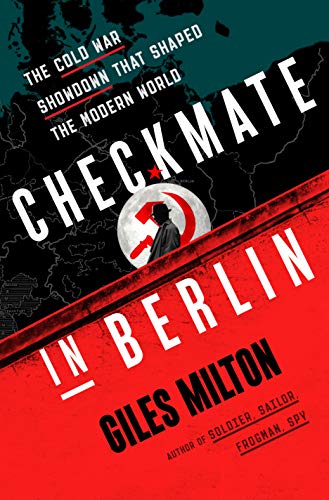
Andrew Adonis, Labour peer and former Transport Secretary with deep expertise in European political history, highlights how this book captures the fierce determination of Ernie Bevin in resisting Soviet expansion after WWII. His recommendation underscores the book’s detailed account of the early Cold War’s critical moments, particularly the defence of West Berlin. "Today’s book by Giles Milton. The determination of Ernie Bevin, Labour’s great postwar Foreign Secretary, to prevent Stalin advancing into west Germany and then Western Europe was the critical backdrop to the successful defence of West Berlin after 1945." This perspective enriches your understanding of how individual leaders shaped global events during this volatile period.
“Today’s book by Giles Milton. The determination of Ernie Bevin, Labour’s great postwar Foreign Secretary, to prevent Stalin advancing into west Germany and then Western Europe was the critical backdrop to the successful defence of West Berlin after 1945” (from X)
Giles Milton is the million-copy, internationally bestselling author of a dozen works of narrative history. His books have been translated into twenty-five languages. One of Milton’s previous books, Nathaniel’s Nutmeg, is currently being developed into a major screen project. Milton is the writer and narrator of the acclaimed narrative podcast series Cover Up: Ministry of Secrets, produced by Sony. He lives in London and Burgundy.
Giles Milton challenges the conventional wisdom that the early Cold War period was a mere aftermath of WWII by vividly reconstructing Berlin's chaotic landscape from 1945 to 1949. Drawing on his narrative history expertise, Milton explores how fractured alliances among the British, American, French, and Soviet powers set the stage for decades of geopolitical tension. You’ll gain insight into the personal rivalries and political maneuvers that turned Berlin into a crucible for espionage, black-market schemes, and ideological conflict, with chapters detailing events like the monumental Berlin Airlift. This book suits those interested in understanding how the Cold War's first battle reshaped Europe and global politics, though readers seeking a broader Cold War overview might find it narrowly focused on Berlin’s immediate postwar years.
Blake Hounshell, editor in chief of POLITICO Magazine and a respected voice in politics and foreign policy, found fresh relevance in this book while observing contemporary US-Iran relations. He highlights how Trump officials drew on Reagan-era strategies detailed here, saying, "Interesting story by Mike Giglio on how Trump officials are reading a years-old book on Reagan's anti-Soviet strategy to develop their Iran policy." This perspective sheds light on the enduring influence of Reagan's covert tactics and the book’s value in understanding US Cold War history.
“Interesting story by Mike Giglio on how Trump officials are reading a years-old book on Reagan's anti-Soviet strategy to develop their Iran policy” (from X)
Peter Schweizer is a best-selling author and investigative journalist whose works have appeared on the New York Times bestseller list eight times. He founded the Government Accountability Institute and has served as a consultant to the Office of Presidential Speechwriting in the White House for President George W. Bush. His books include 'Blood Money', 'Red Handed', and 'Clinton Cash'. He holds an M.Phil. from Oxford University and a B.A. from George Washington University.
Peter Schweizer, an investigative journalist with eight New York Times bestsellers and White House speechwriting experience, explores the Reagan administration's covert efforts to undermine the Soviet Union in this book. You gain insight into how strategic economic pressure and secret policies accelerated the USSR's collapse, going beyond typical Cold War narratives. For instance, Schweizer details specific campaigns that strained Soviet resources, revealing lesser-known facets of Reagan-era foreign policy. This book suits you if you're eager to understand the nuanced tactics behind Cold War diplomacy rather than surface-level events, though casual readers might find its focus too specialized.
Neil Hauer, a respected journalist covering Russia and the Caucasus, emphasizes Michael McFaul's unique position as a diplomat and scholar in US Cold War history. Hauer's deep expertise in the region lends weight to his assessment, highlighting McFaul's resistance to simplistic narratives despite decades of conflicting evidence. He remarks, "There is basically nothing better I can say about Michael McFaul, a man completely immune to evidence even when it spends 20 years slapping him in the face," illustrating how this book challenged and enriched his understanding of US-Russia relations.
“There is basically nothing better I can say about Michael McFaul, a man completely immune to evidence even when it spends 20 years slapping him in the face, that David Klion didn't say in his brilliant book review here:” (from X)
Michael McFaul is Professor of Political Science, Director and Senior Fellow at the Freeman Spogli Institute for International Studies, and the Peter and Helen Bing Senior Fellow at the Hoover Institution. He joined the Stanford faculty in 1995. He is also an analyst for NBC News and a contributing columnist to The Washington Post. Dr. McFaul served for five years in the Obama administration, first as Special Assistant to the President and Senior Director for Russian and Eurasian Affairs at the National Security Council at the White House (2009-2012), and then as U.S. Ambassador to the Russian Federation (2012-2014). Dr. McFaul was born and raised in Montana. He received his B.A. in International Relations and Slavic Languages and his M.A. in Soviet and East European Studies from Stanford University in 1986. As a Rhodes Scholar, he completed his D. Phil. in International Relations at Oxford University in 1991.
US Cold War History, Diplomacy, US-Russia Relations, International Relations, Geopolitics
Drawing from his extensive diplomatic career and academic expertise, Michael McFaul offers a firsthand account of the complex relationship between the US and Russia. You gain insight into the nuances of diplomacy and geopolitical strategy shaped by his roles as U.S. Ambassador to Russia and senior national security official. The book delves into key moments and policies that defined the transition from Cold War tensions to the more volatile dynamics of recent years, illustrating these with detailed personal experiences and government interactions. This narrative suits those seeking a deep understanding of modern US-Russia relations through the lens of someone who shaped and witnessed pivotal events.
Michael Mcfaul, a Stanford professor and former US ambassador, brings rare authority to the topic of Cold War history. His endorsement carries weight given his deep involvement in US-Russian relations, and he notes this book’s personal connection: "Great book (from my former student)." Mcfaul’s recommendation highlights how Nicholas Thompson’s narrative helped him appreciate the intricate personal and ideological battles between Nitze and Kennan, two figures who shaped decades of US strategy during the Cold War.
Nicholas Thompson is an editor at Wired magazine, a fellow at the New America Foundation, and a regular contributor to CNN. He has written articles for The New York Times, The Washington Post and numerous other publications. A grandson of Paul Nitze’s, he lives in New York City with his wife and son.
Drawing from his unique family history and journalistic expertise, Nicholas Thompson crafts a vivid dual biography of Paul Nitze and George Kennan, two pivotal figures whose opposing Cold War strategies shaped American foreign policy for decades. You gain insight into Nitze’s hawkish advocacy for nuclear preparedness and arms buildup juxtaposed with Kennan’s diplomatic vision of containment and patient Soviet decline, revealing how personal friendship persisted amid ideological conflict. Chapters explore their formative roles from World War II through Cold War crises, unpacking the political and moral complexities behind their decisions. This book suits anyone eager to understand the nuanced forces behind U.S. Cold War strategy through the lens of two influential yet contrasting policymakers.
Katrina Vandenheuvel, editor and publisher of The Nation magazine, brings deep expertise in US Cold War history, making her recommendation especially meaningful. She highlights this book as "a brilliant, must read book", emphasizing Archie Brown’s award-winning scholarship recognized by the Pushkin House Book Prize. Her endorsement underscores how Brown’s nuanced portrayal of Gorbachev, Reagan, and Thatcher reshaped her understanding of the Cold War’s end, revealing unexpected diplomatic threads and leadership dynamics that changed the course of history.
Archie Brown is Emeritus Professor of Politics at the University of Oxford and an Emeritus Fellow of St Antony's College, Oxford. He is recognized as one of the world's leading authorities on late-Soviet Russia and has authored several influential books on the subject.
Archie Brown's decades as a politics professor at Oxford give him a unique vantage on the Cold War's final chapter. He challenges the common belief that Western economic and military might alone ended the standoff, instead spotlighting the pivotal roles of leaders Gorbachev, Reagan, and Thatcher. Through detailed exploration of their values, evolving perceptions, and mutual influences, you gain insight into the personal dynamics that reshaped East-West relations. Brown's analysis of Thatcher’s unexpected role as a mediator adds depth beyond typical Cold War narratives. If you're interested in the human decisions behind global shifts, this book delivers nuanced perspectives rather than simplistic conclusions.
David Ayer, acclaimed filmmaker known for his gritty storytelling, shared how "Stealth Boat" stands among his top reads on naval history. His recommendation highlights the book as a foundational dive into submarine operations during the Cold War, offering perspectives that connect broader military strategies with personal narratives. Ayer’s appreciation stems from how the book enriched his understanding of the submarine program, influencing his view of Cold War naval engagements and the men behind them.
Gannon McHale brings firsthand experience from his years serving aboard the USS Sturgeon during the late 1960s, offering an insider’s perspective on the U.S. Navy’s Fast Attack Submarine operations amid Cold War tensions. You’ll gain a vivid understanding of the personal and strategic challenges faced by submariners, as McHale recounts life beneath the sea and the broader military context of that era. The narrative explores themes of duty, friendship, and resilience, especially against the backdrop of a divided America grappling with the Vietnam War. If you seek a memoir that blends military history with personal growth during a pivotal period in US Cold War History, this book provides a unique vantage point.
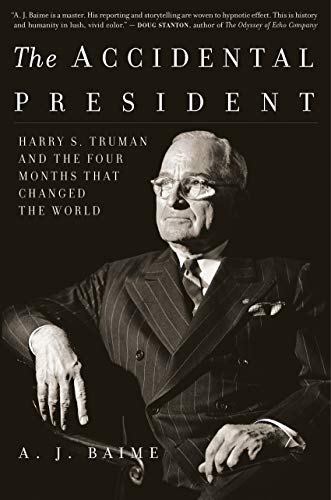
A.J. Baime is a New York Times bestselling author known for his deep dives into American history, including multiple acclaimed works on presidential and wartime subjects. His journalistic rigor and narrative skill bring fresh perspective to Harry S. Truman's crucial initial months in office, spotlighting how an ordinary man faced extraordinary global challenges. Baime's background as a Wall Street Journal contributor and author of several historical bestsellers uniquely qualifies him to guide you through this transformative period in US Cold War history.
A.J. Baime is the New York Times bestselling author of The Accidental President: Harry S. Truman and the Four Months that Changed the World (2017), The Arsenal of Democracy: FDR, Detroit, and an Epic Quest to Arm an America at War (2014), Go Like Hell: Ford, Ferrari, and Their Battle for Speed and Glory at Le Mans (2009), and Dewey Defeats Truman: The 1948 Election and the Battle for America's Soul (2019). Baime is a longtime regular contributor to the Wall Street Journal, and his articles have also appeared in the New York Times, the Washington Post, and numerous other publications.
A.J. Baime's extensive experience as a historian and journalist shines through in this gripping account of Harry S. Truman's first four months as president. Rather than a broad overview, Baime zooms in on the intense decisions Truman faced—from managing the end of World War II to navigating early Cold War tensions. You get a clear sense of the stakes in moments like the Potsdam Conference and the atomic bomb decision, revealing how an unassuming Midwesterner stepped up amid global chaos. If you're drawn to leadership under pressure or pivotal moments in US Cold War history, this narrative offers detailed insights into Truman's unexpected rise and critical choices.
Mark Stille brings nearly 40 years of naval intelligence experience and academic rigor to this focused examination of US Navy frigates during the Cold War. His background includes service on the Naval War College faculty and operational tours on US Navy ships, grounding the book in both practical knowledge and scholarly insight. This expertise drives a clear exploration of frigate roles and technological shifts, making the book a valuable resource for those interested in maritime military history.
Mark Stille is the author of numerous Osprey titles focusing on naval history in the Pacific. He recently concluded a nearly 40-year career in the intelligence community, including tours on the faculty of the Naval War College, on the Joint Staff and on US Navy ships. He received his BA in History from the University of Maryland and also holds an MA from the Naval War College.
Mark Stille's decades-long naval intelligence career and academic background uniquely position him to explore the often-overlooked role of US Navy frigates during the Cold War. In this concise study, you’ll gain insight into the evolution of frigate design, from World War II destroyer escorts to versatile warships capable of anti-submarine warfare and frontline missions. The book covers specific events like the USS Harold E. Holt’s hostile boarding in the SS Mayaguez incident and the USS Stark’s resilience under attack, shedding light on the practical challenges and technological adaptations of these vessels. If you’re interested in naval history or Cold War military strategy, this book offers focused knowledge on a critical but underappreciated class of warship.
James D. Hornfischer was a writer, literary agent, and editor with a remarkable track record of bestselling works on U.S. Navy history during World War II. His deep expertise and multiple awards, including the Samuel Eliot Morison Award for Naval Literature, uniquely position him to illuminate the Navy's pivotal role in the early Cold War. This book reflects his commitment to combining rich narrative with precise historical detail, making it an authoritative source for understanding naval developments from 1945 to 1960.
James D. Hornfischer was a writer, literary agent, and book editor. He was the New York Times bestselling author of Neptune’s Inferno, The Last Stand of the Tin Can Soldiers, Ship of Ghosts, and The Fleet at Flood Tide, all widely acclaimed accounts of the U.S. Navy in the Pacific during World War II. His books have received numerous awards, including the Samuel Eliot Morison Award for Naval Literature and the Naval Historical Foundation Distinguished Service Award. James D. Hornfischer died in 2021.
Drawing from his extensive experience chronicling naval history, James D. Hornfischer delivers a gripping look at the U.S. Navy's transformation during the early Cold War years. You explore pivotal moments like the controversial atomic bomb tests at Bikini Island, the Korean War naval battles, and the pioneering undersea voyages of the USS Nautilus. This book unpacks technological innovations such as sonar and missile-equipped cruisers while revealing the Navy's strategic shift amid growing global tensions. If you want a detailed narrative that combines military history with human drama, this book offers insights into the Navy's critical role in shaping Cold War dynamics.
Best for counterintelligence and military espionage
Kindle version available
Aden Magee, a retired U.S. Army officer and former commander of a specialized counterintelligence unit in West Germany, leverages his direct experience to illuminate the largely forgotten story of US and Soviet military liaison missions during the Cold War. His extensive background consulting for the Department of Defense, Homeland Security, and FBI grounds this book in authoritative knowledge, making it a rare and valuable resource for those wanting to uncover the nuanced intelligence and counterintelligence efforts that shaped the era.
Aden Magee operated as the commander of a highly specialized Counterintelligence (CI) element in West Germany during the culminating decade of the Cold War, which enabled him to pull together an unprecedented story with broad historical context. He is a retired U.S. Army officer, CI Agent, and veteran of foreign wars. He has worked as a consultant to senior executives in the Department of Defense (DoD), the Department of Homeland Security (DHS), and the Federal Bureau of Investigation (FBI) since his retirement from the Army in 2005. He is a published author with over 45,000 books sold. He is widely published in reputed intelligence and security journals.
Aden Magee brings a rare insider's perspective to Cold War counterintelligence, drawing from his time commanding a specialized unit in West Germany. You gain detailed insights into the strategic intelligence maneuvers between the US and Soviet military liaison missions from 1947 to 1990, presented through a narrative that balances historical breadth with little-known operational details. The book unpacks complex topics such as the evolving roles of these missions and the intricate interplay of espionage and diplomacy, with chapters focusing on key episodes like the "Strategic Wilderness of Mirrors" and the final decade’s counterintelligence battles. If you're keen to understand Cold War intelligence beyond the usual spy tales, this book equips you with deep historical context and firsthand operational knowledge.
Hourly History publishes concise, straightforward history books that take no longer than one hour to read. They aim to provide readers with a clear understanding of historical events in a brief format. This background ensures the book offers a clear and focused perspective on the Cuban Missile Crisis, making complex Cold War tensions accessible for readers seeking a precise historical overview.
Hourly History publishes concise, straightforward history books that take no longer than one hour to read. They aim to provide readers with a clear understanding of historical events in a brief format.
What started as an effort by Hourly History to distill complex events into an accessible format became a focused exploration of the Cuban Missile Crisis. You'll gain a chronological understanding of how nuclear tensions escalated between the U.S. and Soviet Union, including detailed accounts of key moments like the American missile deployment in Turkey and Khrushchev's secret missile transport to Cuba. The book breaks down strategic decisions during the blockade and the brinkmanship that nearly led to nuclear war. If you want a succinct yet coherent narrative that clarifies this critical Cold War episode, this book suits your need for clarity and concise historical insight.
Michael R. Beschloss is a renowned presidential historian and author, known for his insightful analysis of American history and politics. He has written several bestselling books, including 'Presidential Courage' and 'The Conquerors'. His expertise in the field has made him a sought-after commentator on presidential history and a frequent contributor to major media outlets. This background equips him uniquely to explore the nuanced and high-stakes negotiations that ended the Cold War, offering readers a richly detailed account of pivotal moments in US-Soviet relations.
Michael R. Beschloss is a renowned presidential historian and author, known for his insightful analysis of American history and politics. He has written several bestselling books, including 'Presidential Courage' and 'The Conquerors'. His expertise in the field has made him a sought-after commentator on presidential history and a frequent contributor to major media outlets.
Michael R. Beschloss, a presidential historian with deep expertise in American politics, co-authored this detailed account that reveals the inner workings of the United States and Soviet leadership during the critical years from 1989 to 1991. You gain insight into how pivotal decisions were negotiated at the highest levels of government, exposing the strategic thinking and personal dynamics that shaped the Cold War's conclusion. Chapters unpack key moments like the fall of the Berlin Wall and arms reduction talks, offering a precise look at diplomacy beyond public rhetoric. This book suits anyone wanting to understand the complexity of international relations during this era, especially students and historians of Cold War politics.
The best US Cold War History books and more, in your inbox each week. No account needed.
Conclusion
This collection reveals three clear themes: the pivotal leadership decisions that steered global diplomacy, the covert espionage shaping unseen battles, and the technological and military innovations that maintained balance amid tension. Facing modern geopolitical challenges? Start with The Peacemaker and The Folly and the Glory to understand strategic leadership and political warfare.
For rapid immersion in intelligence operations, The Moscow Rules paired with The Quiet Americans offers rich detail on spycraft. Alternatively, you can create a personalized US Cold War History book to bridge general principles with your specific focus.
These books can accelerate your understanding of a defining era, empowering you with knowledge that resonates well beyond history lessons.
Frequently Asked Questions
I'm overwhelmed by choice – which book should I start with?
Start with The Peacemaker for a comprehensive view of Reagan’s Cold War strategy, praised by John Lewis Gaddis. It offers a solid foundation before diving into more specialized topics like espionage or diplomacy.
Are these books too advanced for someone new to US Cold War History?
Many titles, such as Saving Freedom and The Cuban Missile Crisis, are accessible for newcomers, blending narrative storytelling with solid historical facts. They provide engaging entry points without requiring prior expertise.
What’s the best order to read these books?
Begin with broad overviews like The Peacemaker and Saving Freedom, then explore focused accounts like The Moscow Rules for espionage or 1983 for nuclear brinkmanship. This progression builds both context and detail.
Can I skip around or do I need to read them cover to cover?
You can definitely skip around. Each book covers distinct aspects—political leadership, spycraft, military history—so select titles that match your current interests or questions about the Cold War.
Are there any books here that contradict each other?
Some books present contrasting perspectives, like The Hawk and the Dove, which compares differing Cold War strategies. These differences reflect the era’s complexity and offer richer insight when viewed together.
How can personalized books complement these expert recommendations?
Absolutely! While these expert books provide deep insights, personalized US Cold War History books tailor content to your interests and goals, making complex history more relevant and actionable for you. Learn more here.
📚 Love this book list?
Help fellow book lovers discover great books, share this curated list with others!