Recommended by Neil deGrasse Tyson, Michael A. Strauss, and Mitchell Begelman to help you master Astrophysics basics
Updated on June 27, 2025·We may earn commissions for purchases made via this page
We're launchingLaunching on Product Hunt today 🎉We just launchedJust launched on Product Hunt 🎉
Modelpeers, from the BookAuthority teamFrom the BookAuthority team: Modelpeers, a free way to follow AI models and agents like you follow people. We'd love your support.
Starting out in astrophysics can feel like stepping into a vast, mysterious universe — overwhelming yet captivating. The beauty is that anyone curious about the cosmos can begin to understand it, thanks to clear, approachable resources that build your knowledge progressively. Today, astrophysics isn’t just for specialists; it’s accessible, inviting exploration from foundational concepts all the way to cosmic phenomena.
Experts who have shaped how we learn about the universe offer invaluable guidance. Take Neil deGrasse Tyson, director of the Hayden Planetarium, whose work alongside Princeton professors Michael A. Strauss and J. Richard Gott opens cosmic mysteries with clarity and wit. Meanwhile, astrophysicist Mitchell Begelman brings the enigmatic world of black holes within reach through vivid storytelling and recent discoveries.
While these beginner-friendly books provide excellent foundations, readers seeking content tailored to their specific learning pace and goals might consider creating a personalized Astrophysics book that meets you exactly where you are. This personalized approach can help you build confidence and deepen understanding without feeling overwhelmed.
The New Scientist, a respected science publication, highlights the book's ability to engage you with "riveting questions fielded by three top astrophysicists in engaging style, with great illustrations and just a handful of equations." Their endorsement matters because they recognize how this collaborative effort from Neil deGrasse Tyson and Princeton professors Strauss and Gott makes astrophysics approachable without dumbing it down. This recommendation is especially relevant if you’ve felt intimidated by cosmic concepts before. Following that, The Washington Post notes the authors’ success in communicating vast cosmic ideas accessibly, reinforcing why this book is a solid starting point for your astrophysics journey.
“Riveting questions fielded by three top astrophysicists in engaging style, with great illustrations and just a handful of equations. They may just have produced the best book about the universe in the universe.”
Neil deGrasse Tyson, Michael A. Strauss, J. Richard Gott(you?)·
About the Author
Neil deGrasse Tyson is director of the Hayden Planetarium at the American Museum of Natural History. He is the author of many books, including Space Chronicles: Facing the Ultimate Frontier, and the host of the Emmy Award–winning documentary Cosmos: A Spacetime Odyssey. Michael A. Strauss is professor of astrophysics at Princeton University. J. Richard Gott is professor of astrophysics at Princeton University. His books include The Cosmic Web: Mysterious Architecture of the Universe (Princeton).
Neil deGrasse Tyson, director of the Hayden Planetarium, teams up with Princeton astrophysics professors Michael A. Strauss and J. Richard Gott to create an inviting tour of the cosmos. This book unpacks complex astrophysical concepts from planets and stars to black holes and the expanding universe, with chapters that clarify why Pluto lost its planetary status and explore the possibility of extraterrestrial life. You gain a solid grasp of cosmic phenomena through clear explanations and vivid illustrations, making it approachable even if you’re new to the topic. If you want a thorough yet accessible introduction to how the universe works, this book lays a strong foundation without overwhelming you.
Mitchell Begelman is a Professor of Distinction in Astrophysical and Planetary Sciences and fellow of JILA at the University of Colorado–Boulder. His extensive accolades include the Guggenheim Fellowship and the American Institute of Physics Science Writing Award, underscoring his expertise and ability to communicate complex topics clearly. Alongside Martin Rees, Begelman crafted this book to demystify black holes, blending theoretical insights with striking images and recent discoveries to create a resource that welcomes newcomers to the field of astrophysics.
Mitchell Begelman is Professor of Distinction in Astrophysical and Planetary Sciences and a fellow of JILA, at the University of Colorado–Boulder. He has won several awards, including the Guggenheim Fellowship, Sloan Research Fellowship, the American Astronomical Society Warner Prize, and the American Institute of Physics Science Writing Award (with Martin Rees, for the first edition of Gravity's Fatal Attraction). He is also the author of Turn Right at Orion: Travels through the Cosmos.
Mitchell Begelman, a distinguished astrophysicist and award-winning science writer, teams up with Martin Rees to make the enigmatic world of black holes accessible without relying on complex mathematics. You’ll explore how these cosmic phenomena were discovered and understand their role in shaping the universe, guided by vivid illustrations and recent discoveries like gravitational waves and event horizon imaging. The book balances theory and observation, making it an ideal introduction for anyone curious about astronomy or physics. If you’re looking for a clear, engaging entry point into astrophysics that respects your intelligence without overwhelming you, this is a solid choice.
This personalized AI book about astrophysics basics is created after you share your background and novice level in the subject. It focuses on your specific goals and desired topics, crafting a learning experience that fits your pace and eases complexity. With AI helping to tailor the content, you get a clear, approachable guide that makes the vast universe easier to understand and explore.
TailoredRead AI creates personalized nonfiction books that adapt to your unique background, goals, and interests. Instead of reading generic content, you get a custom book written specifically for your profession, experience level, and learning objectives. Whether you're a beginner looking for fundamentals or an expert seeking advanced insights, TailoredRead crafts a book that speaks directly to you. Learn more.
2026·50-300 pages·Astrophysics, Astrophysics Basics, Celestial Mechanics, Star Formation, Cosmic Scales
This tailored astrophysics book offers a progressive introduction designed specifically for beginners eager to explore the cosmos confidently. It focuses on foundational principles, building your understanding step-by-step while matching your background and comfort level. The content gently unfolds complex concepts like celestial mechanics, star formation, and cosmic scales, removing common overwhelm with targeted explanations that align with your learning pace. This personalized approach helps you develop a solid grasp of core astrophysics topics, encouraging curiosity and exploration without unnecessary complexity. By concentrating on your interests and specific goals, it transforms the vastness of astrophysics into an engaging, accessible journey toward becoming a confident cosmic explorer.
Bradley W. Carroll holds a Ph.D. in Astrophysics and served as Physics Department chair at Weber State University for a decade, bringing a rich teaching background to this book. His extensive experience in education and research informs the approachable yet thorough treatment of astrophysics topics here, making the complex universe accessible to students beginning their journey in this field.
Bradley W. Carroll received his B.A. in Mathematics and a Secondary Teaching Credential from the University of California, Irvine, his M.S. in Physics from the University of Colorado, Boulder, and his Ph.D. in Astrophysics from the University of Colorado, Boulder. He then accepted a postdoc with Hugh Van Horn at the University of Rochester and, four years later, accepted a position in the Physics Department at Weber State University, where he served as the Physics Department chair for ten years. He retired in 2015 after thirty years at Weber State University, Utah. During this time, he was awarded the Lowe Innovative Teaching Award and named a WSU Brady Presidential Distinguished Professor. He is an emeritus member of the American Astronomical Society.
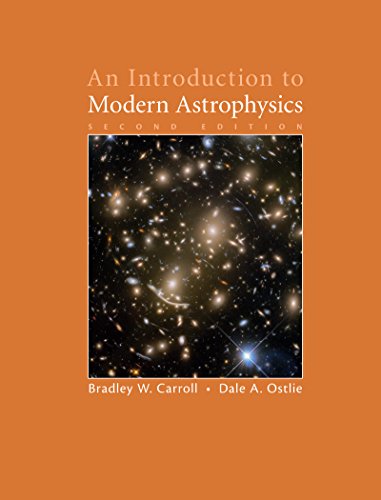
The clear pathway this book provides for first-time learners makes it a standout in astrophysics education. Bradley W. Carroll, with decades of teaching and research experience including a Ph.D. in Astrophysics and leadership roles at Weber State University, crafted this text to build foundational understanding from solar systems to cosmology. You will find detailed explanations alongside worked examples and computational exercises that illuminate complex concepts like stellar formation and galactic dynamics. Perfect if you have some calculus and introductory physics background, this book guides you through major astrophysics areas without overwhelming you, focusing on core principles and current advances.
Barbara Ryden is a Professor of Astrophysics and Astronomy with extensive research experience in stellar and galactic astronomy. She has written several well-regarded astrophysics textbooks and brings a clear, approachable teaching style to this work. Driven by a commitment to making astrophysics accessible, she co-authored this book to guide new students through the vast landscape of astronomy and physics with clarity and rigor. Her expertise ensures that you get a solid foundation without unnecessary complexity.
Barbara Ryden is a Professor of Astrophysics and Astronomy with extensive research in stellar and galactic astronomy. She has authored several acclaimed astrophysics textbooks.
Unlike most astrophysics books that focus heavily on advanced mathematics, this text transforms complex cosmic phenomena into approachable, well-structured lessons perfect for newcomers. Barbara Ryden and Bradley Peterson guide you through everything from solar system dynamics to the frontiers of exoplanet research, with chapters that provide clear explanations alongside quantitative problems to solidify your grasp. The book’s coverage extends smoothly into stellar and galactic astronomy before touching on cosmology, helping you build a broad yet solid foundation. If you're aiming to understand astrophysics without getting overwhelmed, this book’s clarity and pacing make it a sensible starting point.
Wolfram Schmidt, head of IT and senior researcher at Hamburg Observatory, brings extensive expertise in astrophysical turbulence and computational cosmology to this book. His background working with the Max Planck Institute and teaching high-performance computing informs a clear, beginner-friendly approach that connects fundamental Python skills directly to astrophysical problems. This practical guide reflects his commitment to equipping newcomers with the computational tools needed to engage deeply with astronomical research.
Wolfram Schmidt is Head of IT and senior researcher at the Hamburg Observatory. He holds a Dipl.-Ing. in Physics and an M.Phil. in Astrophysics and received his Dr. rer. nat. from the Technical University of Munich and the Max Planck Institute for Astrophysics, Garching. He completed his Habilitation with a thesis on the numerical modeling of astrophysical turbulence. Dr. Schmidt has worked on numerical simulations of a variety of astrophysical systems, ranging from thermonuclear supernovae through star-forming clouds to cosmological structure formation. Currently he is conducting research projects in the areas of computational cosmology and magnetohydrodynamic turbulence with international collaborators. In addition to his research activities, he teaches high-performance computing at Hamburg University and acts as a consultant to the Northern Supercomputing Alliance (HLRN).
2021·260 pages·Astrophysics, Programming, Numerical Methods, Data Analysis, Python
After analyzing key computational challenges in astronomy, Wolfram Schmidt and Marcel Völschow crafted this guide to bridge Python programming with astrophysical problem solving. You’ll learn how fundamental programming concepts apply directly to phenomena like Kepler’s laws, gravitational forces, and differential equations central to astrophysics. The book walks you through defining functions, numerical methods, and data analysis with concrete examples, including astronomical image processing and neural networks. It suits students and beginners eager to develop hands-on skills that enable independent research in astronomy, offering a clear path from basic calculations to advanced data interpretation.
This AI-created book on astrophysics basics is crafted based on your background and what you want to focus on. By sharing your current knowledge and goals, you get a book tailored to introduce you to essential concepts at a pace that suits you. It helps you build confidence step-by-step without feeling overwhelmed, making astrophysics accessible and engaging from the start.
TailoredRead AI creates personalized nonfiction books that adapt to your unique background, goals, and interests. Instead of reading generic content, you get a custom book written specifically for your profession, experience level, and learning objectives. Whether you're a beginner looking for fundamentals or an expert seeking advanced insights, TailoredRead crafts a book that speaks directly to you. Learn more.
This tailored book explores essential astrophysics concepts and the math that underpins them, designed to match your background and learning pace. It offers a progressive introduction that gently builds your confidence by focusing on foundational ideas without overwhelming detail. The content unfolds in a way that addresses your specific goals, making the complex cosmos approachable and engaging. Through this personalized lens, you gain a clear understanding of key astrophysical principles, from celestial mechanics to basic cosmology, structured to fit your comfort level and curiosity. This approach transforms the learning experience into a journey that feels both manageable and rewarding, tailored specifically for your needs.
Stephen A Zeilik is a respected figure in astronomy and astrophysics education, known for his advanced undergraduate texts that emphasize physics. His deep understanding of the subject and experience in teaching complex concepts clearly shape this book, making it an accessible yet rigorous resource for students ready to engage seriously with astrophysics. This text reflects his commitment to clarity and structured learning, providing readers with a strong foundation built on physics principles applied to astronomical phenomena.
Stephen A Zeilik is a renowned author in the field of astronomy and astrophysics, known for his advanced undergraduate texts with a strong emphasis on physics.
Michael Zeilik's decades of expertise in astronomy and astrophysics led to this text designed to bridge physics with celestial phenomena for advanced undergraduates. You gain a structured understanding of core astrophysical concepts, reinforced by "Concept Applications" and focused problems that solidify your grasp of each chapter’s key equations. The book's clear physics prelude and reorganized stellar evolution sections guide you through complex topics without overwhelming, making it suitable if you're comfortable with algebra and trigonometry but eager to deepen your astrophysics knowledge. It’s a solid reference if you want a physics-based approach, though not aimed at absolute beginners without math background.
Jean Dufay, a French astronomer renowned for his work on the earth's ozone layer and stellar classification, penned this book to bridge introductory astronomy and advanced astrophysics. Translated by Owen Gingerich, former Harvard professor of astronomy and history of science, the book reflects Dufay's deep expertise and ability to teach complex star phenomena accessibly. It is designed to guide those with some astronomy background into the nuances of observational astrophysics, drawing on Dufay's decades of experience directing observatories and researching stellar properties.
Jean Dufay (1896–1967) was a French astronomer who computed the altitude of the earth's ozone layer and served as Honorary Director of the Lyon and Haute-Provence observatories. His work contributed significantly to the field of astrophysics, providing insights into stellar properties and classification. Owen Gingerich, the translator, is a former Research Professor of Astronomy and the History of Science at Harvard University.
This book takes a thoughtful middle ground between beginner guides and complex astrophysics tomes, offering you an accessible path into the study of stars. Jean Dufay, a seasoned French astronomer, brings his extensive experience, including directing observatories and researching stellar classifications, to explain stellar photometry, spectroscopy, and classification methods with clarity. You'll find chapters on Hertzsprung-Russell diagrams and theories about stellar atmospheres that unpack difficult concepts without losing scientific rigor. Ideal if you have some astronomy knowledge and want to deepen your grasp of observational techniques and star properties, this book doesn't overwhelm but opens the door to serious astrophysics.
Astrophysics Simplified stands out by making the universe approachable for newcomers. This book guides you through the origins of physics from Aristotle’s philosophical beginnings to the insights of modern physicists, blending classical physics, relativity, and quantum theories with minimal but meaningful mathematics. It’s designed to break down barriers that often intimidate beginners, offering a clear, chronological framework to understand astrophysics. Madhur Sorout’s approach helps you build a solid foundation, making this an inviting starting point for anyone curious about the cosmos and the laws that govern it.
Astrophysics Simplified offers an accessible path into the complex world of astrophysics by tracing its evolution from ancient philosophy through to contemporary physics giants like Stephen Hawking. Madhur Sorout strips away much of the intimidating jargon, focusing instead on key concepts such as classical physics, relativity, and quantum mechanics, incorporating essential equations to reveal the underlying mathematical beauty without overwhelming you. The book is crafted specifically for those who want a foundational understanding without diving deep into technicalities, making it ideal for curious minds seeking clarity rather than specialists. If you want a structured yet approachable overview that bridges history, theory, and modern astrophysics, this is a solid choice.
The best Astrophysics books and more, in your inbox each week. No account needed.
Conclusion
The 8 books featured here share a commitment to making astrophysics approachable without sacrificing depth. Whether you’re drawn to cosmic overviews like "Welcome to the Universe" or want to focus on black holes with "Gravity's Fatal Attraction," each book builds your knowledge step-by-step.
If you’re just starting, "Astrophysics Simplified" offers a gentle introduction to core theories. For a more physics-grounded path, "An Introduction to Modern Astrophysics" or "Introductory Astronomy and Astrophysics" will take you deeper. Progression through these selections prepares you well for more advanced study or research.
Alternatively, you can create a personalized Astrophysics book tailored precisely to your interests and pace, ensuring your learning journey suits your goals perfectly. Remember, building a strong foundation early sets you up for success in this endlessly fascinating field.
Frequently Asked Questions
I'm overwhelmed by choice – which book should I start with?
Start with "Welcome to the Universe" by Neil deGrasse Tyson and colleagues. It offers a broad, accessible cosmic tour that builds your foundation without heavy math or jargon.
Are these books too advanced for someone new to Astrophysics?
Not at all. Titles like "Astrophysics Simplified" and "Foundations of Astrophysics" are designed to gently introduce complex concepts, perfect for beginners with no prior background.
What's the best order to read these books?
Begin with broad introductions like "Welcome to the Universe," then explore focused topics such as black holes with "Gravity's Fatal Attraction," followed by more detailed texts like "An Introduction to Modern Astrophysics."
Should I start with the newest book or a classic?
A mix works best. Newer books include recent discoveries, but classics like Jean Dufay's "Introduction to Astrophysics" remain valuable for foundational understanding.
Do I really need any background knowledge before starting?
No prior knowledge is required for several books here. "Astrophysics Simplified" and "Foundations of Astrophysics" build concepts from the ground up, welcoming all curious minds.
Can personalized astrophysics books really complement expert recommendations?
Yes! While these expert books provide excellent foundations, personalized books let you focus on your interests and learning pace, making complex topics more manageable. Explore more here.
📚 Love this book list?
Help fellow book lovers discover great books, share this curated list with others!