8 Adolescent Medicine Books That Define Expert Care
Recommended by Gregory Fritz, Jenni Schaefer, and Elizabeth Kolbert—leading voices in adolescent health and psychiatry
Updated on June 24, 2025·We may earn commissions for purchases made via this page
6 of 8 books have Kindle versions
We're launchingLaunching on Product Hunt today 🎉We just launchedJust launched on Product Hunt 🎉
Modelpeers, from the BookAuthority teamFrom the BookAuthority team: Modelpeers, a free way to follow AI models and agents like you follow people. We'd love your support.
What if understanding adolescents' minds and bodies was less a mystery and more a mastery? Adolescent Medicine sits at a pivotal crossroads where biology, psychology, and social challenges converge. Its significance has surged as experts increasingly spotlight teenage health complexities—from brain development quirks to mental health hurdles. Now more than ever, clinicians and caregivers need trusted resources to navigate this nuanced terrain.
Gregory Fritz, a professor of psychiatry, credits Interviewing Children and Adolescents for easing the challenge of engaging young patients with clarity and compassion. Author Jenni Schaefer, drawing on her personal and professional journey with eating disorders, endorses Treating Eating Disorders in Adolescents as a beacon for both families and clinicians. Pulitzer Prize-winning Elizabeth Kolbert leans on The Teenage Brain to decode adolescent behavior through hard science, echoing the praise of Jean Emans and Carol Ford, who bring frontline adolescent medicine expertise.
While these expert-curated books provide proven frameworks, readers seeking content tailored to their specific clinical background, focus areas, or learning goals might consider creating a personalized Adolescent Medicine book that builds on these insights. Tailored approaches help bridge broad expertise with your unique professional needs, accelerating your journey in adolescent health care.
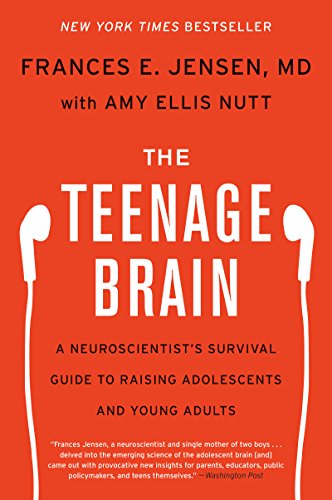
Elizabeth Kolbert, Pulitzer Prize–winning author, turned to this book during moments of parental frustration to understand the teenage brain's mysteries. She notes, "At moments of extreme exasperation, parents may think that there’s something wrong with their teenagers’ brains. Which, according to recent books on adolescence, there is…. Jensen offers a parenting guide laced with the latest MRI studies…. Packed with charts and statistics." This grounded insight helped her appreciate adolescent behavior through the lens of neuroscience. Similarly, Jean Emans, Chief of Adolescent Medicine at Boston Children's Hospital, praises how the book distills complex brain science into accessible chapters, making it invaluable for those interacting with teens.
“At moments of extreme exasperation, parents may think that there’s something wrong with their teenagers’ brains. Which, according to recent books on adolescence, there is…. Jensen offers a parenting guide laced with the latest MRI studies…. Packed with charts and statistics.”
Frances E. Jensen, MD, is Professor and Chair of the Department of Neurology at the Perelman School of Medicine, University of Pennsylvania. Dr. Jensen has researched brain development from the neonatal period through adulthood. She was Professor of Neurology at Harvard Medical School, Director of Translational Neuroscience and Director of Epilepsy Research at Boston Children’s Hospital, and Senior Neurologist at Boston Children’s and Brigham and Women’s Hospitals. She lectures widely about the teen brain at science museums, TEDMED, and high schools.
When Dr. Frances E. Jensen, a neurologist and mother, examined the adolescent brain, she uncovered surprising truths that challenge long-held beliefs. You learn how teenage brains excel in learning yet remain vulnerable to addiction, how stress can leave lasting effects, and why multi-tasking undermines focus. The book breaks down complex neuroscience into relatable insights, like why girls’ brains mature earlier and how marijuana impacts memory and IQ. If you’re a parent, educator, or clinician seeking a clearer understanding of adolescent development grounded in rigorous science, this book offers guidance rooted in real brain biology rather than myths.
Gregory Fritz, a professor of psychiatry with deep expertise in child and adolescent mental health, appreciates this book’s role in easing clinicians into complex diagnostic interviews. Facing the challenge of accurately assessing young patients, he found that "this extremely accessible text is designed to help beginning clinicians enter the daunting world of child and adolescent mental health interviewing and assessment." The authors’ practical approach and clear examples transformed his understanding of applying DSM-5 criteria in real clinical settings.
“This extremely accessible text is designed to help beginning clinicians enter the daunting world of child and adolescent mental health interviewing and assessment. Two seasoned psychiatrists share their considerable experience with various types of interviewing approaches, multiple levels of child development, and the practical use of DSM-5. Their clear, jargon-free prose includes actual clinical interviews that bring the material vividly to life.”
James Morrison, MD, is Affiliate Professor of Psychiatry at Oregon Health and Science University in Portland. He has extensive experience in both the private and public sectors. With his acclaimed practical books--including DSM-5 Made Easy; Diagnosis Made Easier, Second Edition; The First Interview, Fourth Edition; Interviewing Children and Adolescents, Second Edition; When Psychological Problems Mask Medical Disorders, Second Edition; and The Mental Health Clinician's Workbook--Dr. Morrison has guided hundreds of thousands of mental health professionals and students through the complexities of clinical evaluation and diagnosis.
James Morrison, a seasoned psychiatrist and affiliate professor with extensive clinical experience, teamed up with Kathryn Flegel to create a practical guide that addresses the challenges of assessing young patients. You’ll find detailed methods for conducting interviews tailored to different developmental stages, including creative techniques like play and drawing to engage children effectively. The book walks you through DSM-5 diagnostic criteria with clarity, supported by annotated transcripts and vivid case vignettes that illustrate real-world application. If you’re involved in child or adolescent mental health, this book offers concrete tools to improve your diagnostic accuracy and communication skills.
This personalized AI book about adolescent medicine is created after you share your clinical background, skill level, and the specific adolescent health topics you want to focus on. You also tell us your goals, and the book is written to address exactly what you need to learn. This custom AI book helps bridge broad expert knowledge with the unique challenges you face, making your learning experience more relevant and efficient.
TailoredRead AI creates personalized nonfiction books that adapt to your unique background, goals, and interests. Instead of reading generic content, you get a custom book written specifically for your profession, experience level, and learning objectives. Whether you're a beginner looking for fundamentals or an expert seeking advanced insights, TailoredRead crafts a book that speaks directly to you. Learn more.
This tailored book explores adolescent medicine through a comprehensive lens, focusing on the unique challenges and solutions encountered in adolescent health care. It examines biological, psychological, and social factors influencing adolescent well-being, integrating current expert knowledge into an accessible format that matches your background and interests. By concentrating on topics relevant to your specific goals, it reveals practical approaches to managing mental health, developmental issues, and preventive care for teenagers. This personalized resource offers a clear pathway to deepen your understanding and refine your clinical or caregiving skills, making complex adolescent health topics approachable and directly applicable to your context.
Jenni Schaefer, author of Life Without Ed and Almost Anorexic, relies on her personal experience and professional insight to recommend this book as a rare, hopeful resource for adolescent eating disorders. She emphasizes how the Integrative Modalities Therapy approach resonated deeply during her own struggles, providing a thorough and compassionate framework. "It isn’t often that I see a resource as thorough, spot-on, and hopeful as the Integrative Modalities Therapy (IMT) books," Schaefer said, underscoring the book’s impact on both families and clinicians navigating complex recovery journeys.
“It isn’t often that I see a resource as thorough, spot-on, and hopeful as the Integrative Modalities Therapy (IMT) books. Without a doubt, this is what my family and I needed when I was struggling at a young age. I highly recommend IMT and will continue to do so for years to come!”
Tara L. Deliberto, PhD, is an assistant professor at Weill Cornell Medicine, the medical college of Cornell University. Deliberto opened and directed New York–Presbyterian Hospital’s Eating Disorders Partial Hospitalization Program, where she now trains doctoral students in the treatment of eating disorders. Through Weill Cornell Medicine, she maintains a private Integrative Modalities Therapy (IMT) practice in New York, NY. Deliberto also maintains a leadership position at the Academy for Eating Disorders, as well as an editorial position at Eating Disorders: The Journal of Treatment and Prevention.
Tara L. Deliberto and Dina Hirsch bring their clinical expertise in adolescent eating disorders to craft a flexible treatment model called Integrative Modalities Therapy (IMT). This book guides you through tailoring evidence-based techniques like family-based treatment, cognitive behavioral therapy, and acceptance and commitment therapy to the unique needs of each adolescent patient. You’ll find detailed discussion on managing family dynamics, meal planning, and emotional challenges, supported by handouts and checklists designed for both clinicians and families. It’s a resource most beneficial if you work in inpatient or outpatient settings treating anorexia, bulimia, or binge eating in teens, offering practical frameworks rather than theoretical overviews.
Feder D. Joshua is a recognized expert in child and adolescent psychiatry, whose work emphasizes practical medication management for young patients. His expertise shapes this concise guide, designed to offer clinicians straightforward facts and clinical pearls to support effective psychiatric prescribing. This book reflects his commitment to equipping healthcare professionals with accessible, clinically relevant information tailored to child and adolescent populations.
Feder D Joshua, Tien Elizabeth, Puzantian Talia(you?)·
About the Author
Feder D. Joshua is a recognized expert in child and adolescent psychiatry, providing valuable insights into medication management for young patients. His work focuses on practical applications and clinical guidance, making him a trusted resource for healthcare professionals in the field.
The Child Medication Fact Book for Psychiatric Practice offers a focused and practical reference for clinicians navigating the complexities of prescribing for young patients. Feder D. Joshua, an expert in child and adolescent psychiatry, brings clarity to pharmacokinetics, cost considerations, and off-label uses through concise, single-page fact sheets on over 70 common medications. You’ll find quick-scan tables and informed consent guidelines that help streamline decision-making in a busy clinical setting. This book suits psychiatrists, pediatricians, and mental health practitioners seeking reliable, up-to-date medication information specific to child and adolescent care without wading through heavy text.
Mina K. Dulcan, M.D., Margaret C. Osterman Professor of Child Psychiatry and Chief of Child and Adolescent Psychiatry at Northwestern University Feinberg School of Medicine, draws on her extensive leadership at a major children's hospital to inform this guide. Her firsthand experience in clinical and academic settings shapes a resource designed to keep you aligned with the latest DSM-5 standards and practical treatment options in pediatric mental health. This book reflects her commitment to equipping practitioners and allied professionals with concise, relevant knowledge tailored specifically for child and adolescent psychiatry.
Mina K. Dulcan, Rachel R. Ballard, Poonam Jha, Julie M. Sadhu(you?)·
About the Author
Mina K. Dulcan, M.D., is Margaret C. Osterman Professor of Child Psychiatry and Head of the Department of Child and Adolescent Psychiatry at the Ann & Robert H. Lurie Children's Hospital of Chicago; and Professor of Psychiatry and Behavioral Sciences and Pediatrics and Chief of Child and Adolescent Psychiatry at Northwestern University Feinberg School of Medicine in Chicago, Illinois.
Drawing from decades of clinical leadership and academic expertise, Mina K. Dulcan and her coauthors offer a focused resource on child and adolescent psychiatric care that balances up-to-date DSM-5 diagnostic criteria with practical treatment discussions. You’ll find reorganized chapters that streamline complex disorders into accessible segments, complete with quick-reference tables and a dedicated section on pharmacological treatments. This guide goes beyond clinical detail by also addressing resources for parents and professionals in education and juvenile justice, making it a versatile tool for a wide audience. If you’re involved in pediatric mental health or adjacent fields, this book equips you with the current language and approaches needed to navigate evolving standards thoughtfully.
This personalized AI book about adolescent anxiety is created after you share your background, experience with CBT or mindfulness, and specific interests within anxiety management. You also tell us your goals, and the book is written to focus on those areas with practical, teen-appropriate techniques. By tailoring the content to your needs, this AI-created book helps you navigate the complex world of teen anxiety with relevant tools and a clear 30-day plan, making learning both efficient and meaningful.
TailoredRead AI creates personalized nonfiction books that adapt to your unique background, goals, and interests. Instead of reading generic content, you get a custom book written specifically for your profession, experience level, and learning objectives. Whether you're a beginner looking for fundamentals or an expert seeking advanced insights, TailoredRead crafts a book that speaks directly to you. Learn more.
This personalized book explores focused cognitive behavioral therapy (CBT) and mindfulness techniques specifically designed for adolescent anxiety management. It covers the core concepts of anxiety in teens, practical CBT tools, and mindfulness practices to help reduce stress and build emotional resilience. Tailored to match your background and interests, the book addresses your specific goals by guiding you through a 30-day structured plan that promotes gradual anxiety relief. The content balances evidence-based approaches with an understanding of adolescent developmental stages, revealing how these techniques can be applied effectively in real-world situations. With this tailored guide, you gain a clear, focused pathway to help teens manage anxiety with confidence and care.
Regine Galanti, PhD, a licensed clinical psychologist and founder of Long Island Behavioral Psychology, specializes in cognitive behavioral therapy and anxiety disorders in youth. She wrote this book to share evidence-based CBT and mindfulness techniques tailored specifically for teens. Her clinical expertise informs practical strategies that help young people confront fears and manage anxiety symptoms effectively, aiming to improve their quality of life and emotional health.
Regine Galanti, PhD, is a licensed clinical psychologist and the founder of Long Island Behavioral Psychology in Long Island, New York. She specializes in cognitive behavioral therapy (CBT) and has expertise in obsessive-compulsive disorder, anxiety, parenting, and behavior problems. She applies short-term, evidence-based strategies to help young people change their thoughts and behaviors. Specifically, she uses exposure and related behavioral therapy techniques to help those living with anxiety face their fears so they can live happier, healthier lives.
When Regine Galanti, PhD, crafted this guide, she drew from her extensive experience treating anxiety in young people using cognitive behavioral therapy (CBT). You learn practical skills to identify and alter thought patterns fueling anxiety, alongside mindfulness exercises to manage stress in the moment. The book includes quizzes to help you understand your triggers, plus over 30 CBT tools and mindfulness practices tailored for teens. If anxiety often feels overwhelming or keeps you from fully engaging with school, friends, or activities, this book offers concrete ways to regain control and reduce avoidance behaviors.
Anita Thapar is a leading expert in child and adolescent psychiatry at Cardiff University’s Institute of Psychological Medicine and Clinical Neurosciences. Her extensive research in neuropsychiatric genetics and genomics underpins the depth of this textbook, reflecting a commitment to bridging cutting-edge science with clinical practice. This authoritative background drives the book’s comprehensive coverage, making it a trusted resource for professionals navigating the complexities of child and adolescent mental health.
Anita Thapar, Daniel S. Pine, James F. Leckman, Stephen Scott, Margaret J. Snowling, Eric A. Taylor(you?)·
About the Author
Anita Thapar is a leading expert in child and adolescent psychiatry, affiliated with Cardiff University, where she works at the Institute of Psychological Medicine and Clinical Neurosciences. She has contributed significantly to the field through her research and publications, focusing on neuropsychiatric genetics and genomics.
The authoritative expertise behind this book comes from its distinguished editors and contributors who bring together science and clinical practice in a single volume. You gain an in-depth understanding of child and adolescent psychiatry, including updated knowledge on DSM-5 classification, systems neuroscience, and resilience, making it an essential tool for both trainees and practicing clinicians. For example, the new chapters on relationship-based treatments and infant mental health highlight evolving approaches in the field. If you are involved in child mental health or developmental psychopathology, this book offers a thorough appraisal to support your daily clinical work and research.
Dr. Anthony J. Mancini, head of dermatology at Ann & Robert H. Lurie Children’s Hospital and professor at Northwestern University Feinberg School of Medicine, authored this guide drawing on his extensive clinical and research background. With nearly 200 publications and leadership in pediatric dermatology societies, Dr. Mancini offers a precise reference designed for effective diagnosis and management of pediatric skin diseases, reflecting his commitment to advancing care for young patients.
Dr. Anthony J. Mancini MD FAAP FAAD, Dr. Daniel P. Krowchuk MD FAAP(you?)·
About the Author
Anthony J. Mancini, MD, FAAP, FAAD, is the head of the division of dermatology at Ann & Robert H. Lurie Children’s Hospital of Chicago and professor of pediatrics and dermatology at Northwestern University Feinberg School of Medicine. He is a recognized clinician, researcher, writer and editor in the fields of Dermatology, Pediatrics and Pediatric Dermatology, and has nearly 200 publications to his name. Dr. Mancini is a Fellow of the American Academy of Pediatrics and the American Academy of Dermatology, and the 2015-2016 President of the Society for Pediatric Dermatology.
Dr. Anthony J. Mancini, a leading pediatric dermatologist and professor at Northwestern University, brings decades of clinical experience to this guide focused on pediatric and adolescent skin conditions. You’ll learn to identify and treat over 100 disorders, from common issues like acne and dermatitis to rare diseases such as Stevens-Johnson Syndrome. The book’s detailed chapters walk you through etiology, diagnosis, treatment, and prognosis, supported by more than 300 vivid images that sharpen your diagnostic eye. This guide is tailored for medical professionals who need quick yet thorough insights, especially those working with children and teens in clinical settings.
The best Adolescent Medicine books and more, in your inbox each week. No account needed.
Conclusion
These eight books collectively map the rich, complex landscape of Adolescent Medicine. They underscore the importance of understanding the developing brain, nuanced psychiatric care, effective therapeutic communication, and the delicate management of disorders prevalent in youth. If you’re grappling with clinical interviewing challenges, start with Interviewing Children and Adolescents for practical tools. For rapid application in mental health treatment, combine Treating Eating Disorders in Adolescents with Anxiety Relief for Teens to cover distinct but related domains.
Clinicians seeking a solid foundation in psychiatric principles will find Concise Guide to Child and Adolescent Psychiatry and Rutter’s Child and Adolescent Psychiatry invaluable for both reference and study. Meanwhile, The Child Medication Fact Book and Pediatric Dermatology provide critical, focused expertise on pharmacology and dermatological conditions, key to holistic adolescent care.
Alternatively, you can create a personalized Adolescent Medicine book to bridge the gap between general principles and your specific situation. These carefully selected works can help you accelerate your learning journey and deepen your impact in adolescent health.
Frequently Asked Questions
I'm overwhelmed by choice – which book should I start with?
Start with Interviewing Children and Adolescents if you want practical tools for engaging and assessing young patients. It lays a solid foundation for clinical communication, easing you into the field effectively.
Are these books too advanced for someone new to Adolescent Medicine?
Not at all. Many, like Anxiety Relief for Teens and The Teenage Brain, explain complex topics in accessible ways, making them suitable for newcomers eager to learn.
What’s the best order to read these books?
Begin with clinical communication and assessment books, then move to specialized topics like eating disorders or psychiatry. This progression builds understanding logically and practically.
Do I really need to read all of these, or can I just pick one?
While each book offers unique insights, a combination gives the most rounded perspective. Tailoring your reading to your focus area maximizes relevance and impact.
Which books focus more on theory vs. practical application?
The Teenage Brain offers scientific theory on adolescent development, whereas Treating Eating Disorders in Adolescents and Anxiety Relief for Teens provide hands-on treatment strategies.
How can I get content tailored to my specific clinical needs?
These expert books provide excellent foundations. For personalized guidance that fits your unique background and goals, consider creating a personalized Adolescent Medicine book to bridge general knowledge with your practice.
📚 Love this book list?
Help fellow book lovers discover great books, share this curated list with others!