10 AI Coding Books That Separate Experts from Amateurs
Endorsed by Kirk Borne, Sebastian Ruder, and Pratham Prasoon — Elevate your AI Coding skills
Updated on June 24, 2025·We may earn commissions for purchases made via this page
10 of 10 books have Kindle versions
We're launchingLaunching on Product Hunt today 🎉We just launchedJust launched on Product Hunt 🎉
Modelpeers, from the BookAuthority teamFrom the BookAuthority team: Modelpeers, a free way to follow AI models and agents like you follow people. We'd love your support.
What if you could unlock AI's power without a PhD? The field of AI coding is exploding, reshaping industries and creating new opportunities for developers. Yet, navigating the overwhelming amount of material can be daunting. Today, AI coding is not just for theorists — it’s a practical skill that lets you build intelligent systems that impact real-world challenges.
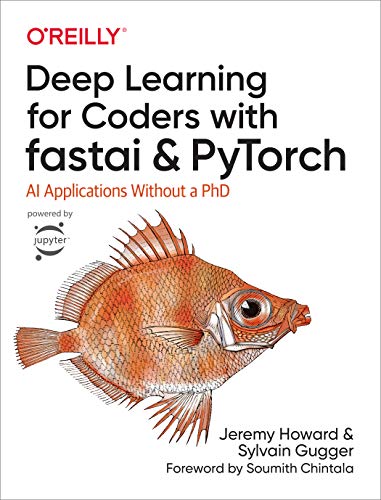
Several leaders have highlighted key books that bridge the gap between theory and hands-on coding. Kirk Borne, Principal Data Scientist at Booz Allen, points to "Deep Learning for Coders with fastai and PyTorch" as a gateway to mastering cutting-edge tools used in top AI research labs. Sebastian Ruder, a scientist at Google DeepMind, praises the same for its approachable explanations and practical notebooks. Meanwhile, Pratham Prasoon, a self-taught AI programmer, credits "Machine Learning with PyTorch and Scikit-Learn" for empowering his journey in advanced model building.
While these expert-curated books provide proven frameworks, readers seeking content tailored to their specific background, skill level, and goals might consider creating a personalized AI Coding book that builds on these insights. Tailoring your learning path ensures you focus on what matters most to your projects and career.
Kirk Borne, Principal Data Scientist at Booz Allen and PhD Astrophysicist, highlights the importance of PyTorch as the leading deep learning package showcased at AI conferences and points readers to this book for hands-on learning. His endorsement reflects his extensive experience in data science and astrophysics, underscoring the book’s practical relevance for professionals seeking to advance their AI expertise. Alongside him, Sebastian Ruder, a scientist at Google DeepMind, praises the book's interactive approach, noting how it balances deep technical concepts with an accessible, conversational style that benefits both beginners and seasoned practitioners.
“Jeremy and Sylvain take you on an interactive--in the most literal sense as each line of code can be run in a notebook--journey through the loss valleys and performance peaks of deep learning. Peppered with thoughtful anecdotes and practical intuitions from years of developing and teaching machine learning, the book strikes the rare balance of communicating deeply technical concepts in a conversational and light-hearted way. In a faithful translation of fast.ai's award-winning online teaching philosophy, the book provides you with state-of-the-art practical tools and the real-world examples to put them to use. Whether you're a beginner or a veteran, this book will fast-track your deep learning journey and take you to new heights--and depths.”
Jeremy Howard is an entrepreneur, business strategist, developer, and educator. He is a founding researcher at fast.ai, a research institute dedicated to making deep learning more accessible. He is also a Distinguished Research Scientist at the University of San Francisco, a faculty member at Singularity University, and a Young Global Leader with the World Economic Forum. Jeremy’s most recent startup, Enlitic, was the first company to apply deep learning to medicine, and has been selected one of the world’s top 50 smartest companies by MIT Tech Review two years running. He was previously the President and Chief Scientist of the data science platform Kaggle, where he was the top ranked participant in international machine learning competitions 2 years running. He was the founding CEO of two successful Australian startups (FastMail, and Optimal Decisions Group–purchased by Lexis-Nexis). Before that, he spent 8 years in management consulting, at McKinsey & Co, and AT Kearney. Jeremy has invested in, mentored, and advised many startups, and contributed to many open source projects.
Jeremy Howard, a distinguished research scientist and entrepreneur behind the fastai library, crafted this book to open deep learning to programmers without advanced math degrees. You’ll learn to train models in vision, NLP, and tabular data using fastai and PyTorch, progressing from practical coding to understanding underlying algorithms. The book includes chapters on deploying models as web apps and discussing ethical considerations, making it ideal for developers aiming to apply AI in real projects. If you're comfortable with Python and want to move beyond theoretical AI, this book gives you the tools and insights to bridge that gap effectively.
Pratham Prasoon, a self-taught programmer working on modular blockchains and machine learning, found this book indispensable during a research internship, praising its clear and concise explanations of both deep and classical machine learning techniques. "This book was a lifesaver," he says, highlighting its suitability for those with some programming background ready to advance. Alongside him, Santiago, a machine learning writer, notes the book's substantial content spread over 530 pages, underscoring its thorough approach and practical value for anyone serious about AI coding.
“Last but not least, we have Machine Learning with PyTorch and Scikit-Learn. This book was a lifesaver during my research internship! You'll learn about deep and classical machine learning with great to-the-point theory explanations. Suitable for slightly more advanced readers.” (from X)
Sebastian Raschka, Yuxi (Hayden) Liu, Vahid Mirjalili(you?)·
About the Author
Sebastian Raschka is an Assistant Professor of Statistics at the University of Wisconsin-Madison focusing on machine learning and deep learning research. As Lead AI Educator at Grid AI, Sebastian plans to continue following his passion for helping people get into machine learning and artificial intelligence. Yuxi (Hayden) Liu is a Software Engineer, Machine Learning at Google. He is developing and improving machine learning models and systems for ads optimization on the largest search engine in the world. Vahid Mirjalili is a deep learning researcher focusing on CV applications. Vahid received a Ph.D. degree in both Mechanical Engineering and Computer Science from Michigan State University.
The methods Sebastian Raschka and his co-authors developed while deeply engaged in academia and industry create a solid foundation for mastering machine learning and deep learning with Python. This book guides you through both classical algorithms using Scikit-Learn and advanced neural models with PyTorch, including chapters on transformers, GANs, and graph neural networks that clarify complex concepts without overwhelming you. You'll gain hands-on skills for building and tuning models on diverse data types, from images to text, supported by clear explanations and practical examples like sentiment analysis and ensemble learning. If you have Python experience and want to elevate your AI coding skills with a resource that balances theory and practice, this book suits you well.
This personalized AI book about AI coding mastery is created based on your background, skill level, and the specific AI topics you want to explore. By sharing your goals and interests, the book is crafted to focus on what matters most to your learning journey. This AI-created guide helps you cut through generalized content, offering a path that matches your unique needs and accelerates your understanding and application of AI coding.
TailoredRead AI creates personalized nonfiction books that adapt to your unique background, goals, and interests. Instead of reading generic content, you get a custom book written specifically for your profession, experience level, and learning objectives. Whether you're a beginner looking for fundamentals or an expert seeking advanced insights, TailoredRead crafts a book that speaks directly to you. Learn more.
2026·50-300 pages·AI Coding, AI Fundamentals, Programming Basics, Machine Learning, Deep Learning
This tailored book explores AI coding mastery by focusing on your unique background, skill level, and goals. It covers essential AI programming concepts, practical coding techniques, and advanced algorithms that align with your interests, ensuring an engaging and efficient learning experience. By tailoring content specifically to you, it bridges the gap between broad expert knowledge and your personal learning journey, helping you navigate complex AI topics with clarity. This personalized approach reveals how to master AI coding through a step-by-step path that suits your pace and challenges, making sophisticated ideas accessible and relevant.
Mehran Sahami, a Stanford University professor known for his work in computer science education, recommends this book for its unique blend of programming fundamentals and AI tool integration. He highlights how it masterfully blends the basics of programming with the effective use of AI tools to produce code. Sahami notes this approach transformed how he thinks about teaching coding in an AI-enhanced environment. Following close behind, Austin Henley from Microsoft praises the book for accelerating the learning curve with Copilot far beyond expectations, underscoring its value for anyone adapting to AI-assisted coding.
Dr. Leo Porter is a Teaching Professor in the Computer Science and Engineering Department at UC San Diego. He is best known for his research on the impact of Peer Instruction in computing courses, the use of clicker data to predict student outcomes, and the development of the Basic Data Structures Concept Inventory. He co-teaches the popular Coursera Specialization 'Object-Oriented Java Programming: Data Structures and Beyond' with over 300,000 enrolled learners and the first course in the edX MicroMasters in Data Science, 'Python for Data Science', with over 200,000 enrolled learners. He has received six Best Paper Awards, SIGCSEs 50th Year Anniversary Top Ten Symposium Papers of All Time Award, an Outstanding Teaching Award from Warren College, and the Academic Senate Distinguished Teaching Award at UC San Diego. He is a Distinguished Member of the ACM and previously served as Secretary of the ACM SIGCSE Board.
The methods Dr. Leo Porter and Dr. Daniel Zingaro developed while teaching computer science at leading universities reshape how beginners approach programming in an AI-first world. This book walks you through using AI tools like GitHub Copilot and ChatGPT to write Python code even if you've never programmed before, showing you exactly how to craft prompts that guide the AI to generate functional applications. You'll pick up Python essentials while learning to debug and test your AI-assisted code, with practical chapters like "Debugging and better understanding your code" and "Making some games" illustrating key skills. If you're ready to bypass traditional hurdles and leverage AI as a programming partner, this book offers a clear path — though seasoned coders might find some basics familiar.
Andreas Mueller, Principal Research Software Development Engineer at Microsoft and core developer of scikit-learn, appreciates this book for its broad coverage of AI topics, from classification and search algorithms to A/B testing. He highlights how it balances standard tools with lesser-known libraries, providing a rich set of examples that serve as a strong foundation for practitioners. Mueller's endorsement reflects how the book helped him grasp a wide spectrum of AI concepts, making it a valuable resource for those looking to deepen their understanding beyond basics.
Principal Research SDE at Microsoft, Scikit-learn Core Developer
“I've been impressed by the wide overview of the book, which really spans the gamut of what AI means, from classification to search algorithms and A/B testing. The book focuses on some standard tools but also branches out to surface some lesser-known libraries that can come in handy. While 468 pages can only give a taste of each topic, the book is jam-packed with examples and serves as a good starting point with plenty of references.”
Ben Auffarth is a full-stack data scientist with more than 15 years of work experience. With a background and Ph.D. in computational and cognitive neuroscience, he has designed and conducted wet lab experiments on cell cultures, analyzed experiments with terabytes of data, run brain models on IBM supercomputers with up to 64k cores, built production systems processing hundreds of thousands of transactions per day, and trained neural networks on millions of text documents. He resides in West London with his family, where you might find him in a playground with his young son. He co-founded and is the former president of Data Science Speakers, London.
Ben Auffarth, a seasoned full-stack data scientist with a Ph.D. in computational and cognitive neuroscience, draws on his extensive experience from brain modeling on IBM supercomputers to production-scale AI systems in this book. You’ll move beyond basics to implement AI algorithms with Python, mastering everything from heuristic searches and genetic algorithms to deep learning for text, images, and audio. The chapters on probabilistic models, reinforcement learning, and deploying models as microservices provide concrete skills you can apply directly. This book suits Python developers and machine learning engineers ready to tackle complex AI challenges rather than beginners seeking gentle introductions.
Pratham Prasoon, an 18-year-old self-taught programmer working on modular blockchains by day and exploring machine learning by night, recommends this book for those starting their AI coding journey. He highlights its clear explanations and practical focus, especially for developers familiar with Python who want to build neural networks. As he puts it, "This is one of my favorites. The AI and Machine Learning for Coders book is great if you want to start building neural networks but only know a bit of Python." This book helped him bridge the gap between theory and hands-on AI application.
Self-taught programmer, blockchain and ML enthusiast
“This is one of my favorites. The AI and Machine Learning for Coders book is great if you want to start building neural networks but only know a bit of Python. I really like the explanations and emphasis on building practical applications with TensorFlow.” (from X)
Laurence Moroney leads AI Advocacy at Google. His goal is to educate the world of software developers in how to build AI systems with machine learning. He's a frequent contributor to the TensorFlow YouTube channel, a recognized global keynote speaker, and the author of numerous programming books, including several bestselling science fiction novels. Based in Washington state, he enjoys coffee and has a passion for teaching AI and ML concepts to coders without requiring advanced math skills.
Laurence Moroney, who leads AI Advocacy at Google, wrote this book to lower the barrier for coders eager to enter AI without drowning in complex math. You learn how to build machine learning models using TensorFlow with concrete examples that cover computer vision, natural language processing, and deploying models on mobile and cloud platforms. The book’s practical, code-first approach means you get hands-on experience rather than abstract theory, making it ideal if you want to create real AI applications from the ground up. Chapters on embedding models in Android and iOS are especially useful for developers targeting mobile environments.
This AI-created book on AI coding is written based on your programming background, skill level, and specific learning goals. By sharing which AI topics you want to focus on and your experience, you receive a book crafted to fit your unique needs. This personalized approach makes it easier to navigate complex AI coding concepts and accelerates your progress by focusing on what matters most to you.
TailoredRead AI creates personalized nonfiction books that adapt to your unique background, goals, and interests. Instead of reading generic content, you get a custom book written specifically for your profession, experience level, and learning objectives. Whether you're a beginner looking for fundamentals or an expert seeking advanced insights, TailoredRead crafts a book that speaks directly to you. Learn more.
2026·50-300 pages·AI Coding, Machine Learning, Model Building, Data Preparation, Algorithm Tuning
This tailored book explores a focused, one-month journey to boost your AI coding skills, crafted to match your background and goals. It covers essential AI programming concepts while diving into practical coding exercises that reinforce your learning. By emphasizing your specific interests, this book reveals pathways through complex topics like model building, data processing, and algorithm tuning, creating a personalized learning experience. With a balance of foundational knowledge and targeted challenges, it equips you to grasp AI concepts efficiently and apply them confidently in your projects. This personalized approach ensures your learning is relevant and engaging, tailored to accelerate your skills within a focused timeframe.
Andrew Hinton is a prolific author specializing in Artificial Intelligence with a strong computer science background and a passion for clarity. His AI Fundamentals series reflects his commitment to breaking down complex AI topics for a wide audience, from managers to programmers. Driven by the rapid evolution of AI, Hinton designed this trilogy to equip professionals with foundational knowledge, essential mathematics, and practical coding skills necessary to innovate confidently in the AI era.
Andrew Hinton is a prolific author specializing in Artificial Intelligence (AI). With a background in computer science and a passion for making complex concepts accessible, Andrew has dedicated his career to educating others about the rapidly evolving world of AI. His debut series, AI Fundamentals, is a comprehensive guide for those seeking to understand and apply AI in various professional settings. Andrew's work caters to a broad audience, from managers to coders, breaking down AI basics, essential math, machine learning, and generative AI clearly and engagingly. His ability to demystify the complexities of AI has made him a trusted voice in the tech industry. Andrew's work imparts knowledge and empowers his readers to navigate and innovate in an AI-driven world.
2024·478 pages·AI Basics, AI Coding, Mathematics, Machine Learning, Business Strategy
What happens when an expert in computer science dedicates himself to making AI accessible? Andrew Hinton’s "AI Mastery Trilogy" offers a layered journey that starts with foundational AI concepts for managers, moves through the essential math underpinning AI technologies, and culminates in practical coding techniques for modern programmers. You’ll grasp everything from business implications of AI to the nitty-gritty of linear algebra and game theory, plus ethical considerations in AI development. This collection suits anyone aiming to understand AI’s full spectrum—whether you’re leading teams, diving into algorithms, or developing AI applications. The trilogy’s structure ensures you build a solid base before moving into more technical terrain.
Andrew Hinton is a seasoned expert in artificial intelligence and machine learning, known for his clear and engaging writing style. With extensive experience in the tech industry, he has dedicated his career to educating others about the transformative power of AI and ML. Hinton's work focuses on making complex topics accessible to both beginners and experienced coders, ensuring that readers can effectively integrate these technologies into their projects. His insights into ethical considerations in AI development further enhance his reputation as a thought leader in the field.
Andrew Hinton is a seasoned expert in artificial intelligence and machine learning, known for his clear and engaging writing style. With extensive experience in the tech industry, he has dedicated his career to educating others about the transformative power of AI and ML. Hinton's work focuses on making complex topics accessible to both beginners and experienced coders, ensuring that readers can effectively integrate these technologies into their projects. His insights into ethical considerations in AI development further enhance his reputation as a thought leader in the field.
Andrew Hinton, a seasoned AI and machine learning expert, wrote this book to bridge the gap between complex AI concepts and practical coding applications. You’ll gain a solid grasp of AI and ML fundamentals, including supervised and unsupervised learning, neural networks, and natural language processing, alongside ethical considerations critical for responsible development. The text walks you through selecting appropriate tools and preprocessing data, illustrated with real-world case studies to anchor your understanding. If you’re a programmer eager to apply AI techniques effectively and ethically, this book offers a focused, accessible path without overcomplicating the subject matter.
George Slaughter, News Editor at the Katy Times, recognizes the transformative power of this book in how it reshapes your approach to AI tools. After witnessing the growing impact of AI in journalism, George highlights how Ernesto Verdugo presents AI not as a replacement but as a means to expand human creativity and problem-solving. "Ernesto Verdugo's book, The AI Whisper's Code, is a game-changer in the world of AI. He beautifully present AI as a tool to enhance human capabilities rather than replace them," George shares, emphasizing how the book helped him see AI’s potential beyond automation. Alongside George, Pete Garcia, President of the US-Mexico Chamber of Commerce, praises the author as "a master storyteller" whose creative approach makes AI accessible. Their insights underscore the book’s role as both a guide and inspiration for anyone ready to embrace AI’s future.
“Ernesto Verdugo's book, The AI Whisper's Code, is a game-changer in the world of AI. He beautifully present AI as a tool to enhance human capabilities rather than replace them. Through captivating storytelling and insights, Ernesto dispel fears and inspire readers to embrace AI's potential. This book is a must-read for anyone seeking to understand and navigate the AI landscape. Get ready to unlock a world of possibilities!”
Ernesto Verdugo is a renowned Change Catalyst known for creating impactful results in record time. He was one of the first people to have access to Chat GPT and has since made it his mission to master generative AI and share his knowledge with the world. He is the author of the first ever book on Generative Fantasy Education, a term he coined. His writing style is thought-provoking, entertaining, and inspires individuals to think differently and take action. As a sought-after speaker and trainer, Ernesto has impacted the lives of tens of thousands of individuals from over 120 nationalities in 61 countries, empowering them with a competitive edge based on his unique understanding of the world.
Ernesto Verdugo's background as a Change Catalyst who quickly embraced Chat GPT technology drives this book's unique perspective on AI. The AI Whisperer's Code teaches you how to harness AI not just for automation but to amplify creativity and solve complex problems, with practical chapters on crafting effective prompts and identifying AI's most profitable applications. If you want to move beyond technical jargon and learn how to integrate AI into your daily workflow for real competitive advantage, this book is tailored for you. Its mix of storytelling and methodical guidance demystifies AI's potential and helps you become a confident 'AI Whisperer'.
Alberto Artasanchez brings over two and a half decades of experience in data science and AI consulting to this detailed guide on artificial intelligence with Python. His expertise, certified by multiple AWS specialties and enriched by work with Fortune 500 companies and startups alike, informs the book’s practical focus and broad coverage. Driven by a passion for scalable machine learning platforms and data lakes, Artasanchez offers you a resource that bridges fundamental AI theory with applied development, making complex topics accessible for Python developers ready to build intelligent applications.
Alberto Artasanchez is a data scientist with over 25 years of consulting experience with Fortune 500 companies as well as startups. He has an extensive background in artificial intelligence and advanced algorithms. Mr. Artasanchez holds 8 AWS certifications including the Big Data Specialty and the Machine Learning Specialty certifications. He is an AWS Ambassador and publishes frequently in a variety of data science blogs. He is often tapped as a speaker on topics ranging from Data Science, Big Data and Analytics, underwriting optimization and fraud detection. He has a strong and extensive track record designing and building end-to-end machine learning platforms at scale. He graduated with a Master of Science degree from Wayne State University and a Bachelor of Art degree from Kalamazoo College. He is particularly interested in using Artificial Intelligence to build Data Lakes at scale. He is married to his lovely wife Karen and is addicted to CrossFit.
Alberto Artasanchez leverages over 25 years of data science and AI consulting experience to guide you through building intelligent applications using Python. The book methodically introduces fundamental AI concepts before diving into advanced topics like recurrent neural networks, cloud-based AI, and chatbots, supported by practical examples such as machine learning pipelines and feature engineering. You’ll gain hands-on familiarity with Python 3.x and learn to apply AI algorithms to diverse real-world problems, including time series analysis. This book suits Python developers with some machine learning background eager to deepen their practical AI coding skills and explore emerging technologies in AI development.
Best for new coders needing clear code explanations
Kindle version available
Steven D’Ascoli, an adjunct professor and financial analyst with degrees from Columbia and NYU, combines his diverse expertise to write this book. His background in computer science and his role in creating AI communities in government uniquely qualify him to bridge gaps for learners new to AI and Python. This book reflects his commitment to clarity, explaining every line of code so you can truly understand and apply AI concepts.
Steven D’Ascoli is an adjunct professor at St. John’s University and has taught management information systems at the City University of New York. He is a CPA and holds a CCNA certification. D’Ascoli is a financial analyst for a major U.S. organization and studied computer science at Columbia University, earning a bachelor's degree. He also holds a master's degree in computer programming from NYU. As a member of DataKind, he focuses on using data science for humanitarian purposes and created the first community of practice for artificial intelligence in a large U.S. government agency.
The breakthrough moment came when Steven D’Ascoli, combining his expertise as a CPA, financial analyst, and adjunct professor, realized many deep learning books skip explaining crucial lines of code. This book walks you through every line in Python, making complex AI concepts accessible by connecting code to practical projects like audio recognition, stock prediction, and crime statistics analysis. You’ll learn not only how to read code but also how to write your own, even if you’re new to Python or AI. It’s especially suited for learners who’ve struggled with incomplete explanations and want a truly foundational grasp of AI coding.
The best AI Coding books and more, in your inbox each week. No account needed.
Conclusion
This collection of 10 AI coding books reveals several clear themes. First, practical application is paramount — hands-on exercises and real code examples are vital to mastering AI development. Second, ethical and creative considerations appear increasingly important, ensuring AI serves human needs responsibly. Third, blending foundational knowledge with the latest AI tools accelerates your coding proficiency.
If you're just starting, "Learn AI-assisted Python Programming" offers a gentle yet powerful introduction to using AI tools as coding partners. For developers ready to build complex models, combining "Deep Learning for Coders with fastai and PyTorch" with "Machine Learning with PyTorch and Scikit-Learn" provides a solid foundation. Meanwhile, "The AI Whisperer's Code" inspires creative applications of AI beyond technical coding.
Alternatively, you can create a personalized AI Coding book to bridge the gap between general principles and your specific situation. These books can help you accelerate your learning journey and confidently tackle AI development challenges.
Frequently Asked Questions
I'm overwhelmed by choice – which book should I start with?
Start with "Learn AI-assisted Python Programming" if you're new to coding with AI tools, or "Deep Learning for Coders with fastai and PyTorch" if you have some Python experience and want practical deep learning skills.
Are these books too advanced for someone new to AI Coding?
Not at all. Books like "Learn AI-assisted Python Programming" and "Artificial Intelligence and Deep Learning with Python" are designed to guide beginners through foundational concepts with clear code explanations.
What's the best order to read these books?
Begin with beginner-friendly titles, then progress to more advanced books like "Machine Learning with PyTorch and Scikit-Learn" and "Artificial Intelligence with Python Cookbook" to deepen both theory and practice.
Should I start with the newest book or a classic?
Focus on relevance over age. Newer books like "The AI Whisperer's Code" cover emergent AI creativity, while classics like "Deep Learning for Coders with fastai and PyTorch" offer tried-and-true methods.
Do I really need to read all of these, or can I just pick one?
You can pick based on your goals. Each book offers unique strengths—from practical coding to ethical AI. Choosing a few targeted titles often yields better results than trying to read all.
How can I get AI coding knowledge tailored exactly to my needs?
Expert books provide solid foundations, but personalized learning blends those insights with your background and goals. You can create a personalized AI Coding book that fits your exact situation and learning objectives.
📚 Love this book list?
Help fellow book lovers discover great books, share this curated list with others!