20 Artificial Intelligence Books That Define Expert Knowledge
Bill Gates, Satya Nadella, and 18 experts recommend these Artificial Intelligence Books for deep insights and practical mastery.
Updated on June 28, 2025·We may earn commissions for purchases made via this page
We're launchingLaunching on Product Hunt today 🎉We just launchedJust launched on Product Hunt 🎉
Modelpeers, from the BookAuthority teamFrom the BookAuthority team: Modelpeers, a free way to follow AI models and agents like you follow people. We'd love your support.
What if I told you that mastering Artificial Intelligence isn't just about coding but understanding its quirks, risks, and societal impact? AI is reshaping everything from business to ethics, making these perspectives vital. Visionaries like Bill Gates, who highlights caution and promise in AI's future, and Satya Nadella, who urges leaders to rethink strategy in an AI-driven world, bring invaluable insights. Their endorsements underscore why this curated selection of books offers a rare blend of technical depth and thoughtful analysis. While these expert-curated books provide proven frameworks, readers seeking content tailored to their specific background, goals, and AI interests might consider creating a personalized Artificial Intelligence book that builds on these insights.
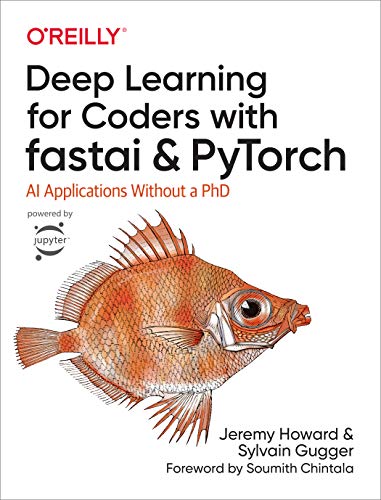
Kirk Borne, principal data scientist and astrophysicist, highlights this book as a top resource for PyTorch and deep learning, emphasizing its practical courses and tutorials. His authority in data science provides strong weight to this recommendation, showing how the book serves as a gateway to mastering AI coding frameworks used at leading conferences. Borne's endorsement reflects how the book's accessible approach can help you navigate deep learning without a PhD, making complex topics practical. Alongside, Sebastian Ruder from Google DeepMind praises its interactive style and balance of theory with hands-on practice, reinforcing why this book is a must for anyone serious about advancing their AI skills.
“The top #DeepLearning package seen at #AI conferences is #PyTorch — see free online courses & tutorials here:
——————
#Python #DataScientists #BigData #DataScience #MachineLearning #NeuralNetworks
———
+Learn more in this book:” (from X)
Jeremy Howard is an entrepreneur, business strategist, developer, and educator. He is a founding researcher at fast.ai, a research institute dedicated to making deep learning more accessible. He is also a Distinguished Research Scientist at the University of San Francisco, a faculty member at Singularity University, and a Young Global Leader with the World Economic Forum. Jeremy’s most recent startup, Enlitic, was the first company to apply deep learning to medicine, and has been selected one of the world’s top 50 smartest companies by MIT Tech Review two years running. He was previously the President and Chief Scientist of the data science platform Kaggle, where he was the top ranked participant in international machine learning competitions 2 years running. He was the founding CEO of two successful Australian startups (FastMail, and Optimal Decisions Group–purchased by Lexis-Nexis). Before that, he spent 8 years in management consulting, at McKinsey & Co, and AT Kearney. Jeremy has invested in, mentored, and advised many startups, and contributed to many open source projects.
Jeremy Howard and Sylvain Gugger, co-creators of the fastai library, bring a unique approach to deep learning that breaks down barriers for programmers without advanced math backgrounds. This book walks you through training models in computer vision, natural language processing, and collaborative filtering using fastai and PyTorch, gradually introducing the underlying theory in an accessible way. You'll learn not just to use deep learning tools but also to understand model mechanics, improve performance, and deploy applications, with chapters covering practical implementations and ethical considerations. If you're comfortable with Python and want to move beyond theory into hands-on AI development, this book equips you with the skills to do so.
Samuel West, a poet and cultural commentator with broad interests, found himself repeatedly laughing at the neural net experiments shared by Janelle Shane, calling her the "mistress of the medium." His enthusiasm for the book, which includes quirky examples like paint color algorithms and AI-generated pickup lines, highlights how humor and insight can coexist in explaining AI. As he puts it, "Nothing makes me laugh as much as these." This candid reaction reveals the book’s unique ability to demystify complex technology through wit, making it a compelling choice if you want to understand AI’s oddities without losing the fun. Robert Went, an economist and policy board member, also praises the book for being very funny while teaching a lot, reinforcing its appeal to those seeking both education and amusement.
“Nothing makes me laugh as much as these. Neural net recipes by the mistress of the medium, @JanelleCShane. Her book about AI weirdness, "You Look Like a Thing and I Love You" was a Christmas favourite (also contains paint colour algorithms and pick up lines, hence the title)” (from X)
Janelle Shane has a PhD in electrical engineering and a master's in physics. At aiweirdness.com, she writes about artificial intelligence and the hilarious and sometimes unsettling ways that algorithms get human things wrong. She has been featured on the main TED stage, and in the New York Times, The Atlantic, WIRED, PopularScience, All Things Considered, Science Friday, Marketplace, and more. She was named one of Fast Company’s 100 Most Creative People in Business, and an Adweek Young Influential. She is almost certainly not a robot.
2021·272 pages·Artificial Intelligence, Machine Learning, Technology, Algorithms, AI Failures
Unlike most artificial intelligence books that emphasize technical complexity or future speculation, Janelle Shane offers a playful yet insightful exploration of how AI actually functions and often misfires. Drawing on her background in electrical engineering and physics, she presents curious experiments like AI-generated paint colors and quirky chatbot pickup lines, revealing the quirks and limitations behind machine learning systems. You’ll gain a clearer understanding of the everyday AI tools shaping our world, from simple algorithms to more complex networks, while appreciating their unpredictable behavior. This book suits anyone curious about the realities beneath AI hype and those who enjoy a blend of humor and technical insight.
This custom AI book on artificial intelligence mastery is created based on your background, skill level, and specific AI interests. The AI crafts this tailored learning experience to focus precisely on the techniques and concepts you want to master, blending expert knowledge with your unique goals. Instead of a generic overview, you get a personalized guide that makes complex AI topics approachable and relevant to your ambitions.
TailoredRead AI creates personalized nonfiction books that adapt to your unique background, goals, and interests. Instead of reading generic content, you get a custom book written specifically for your profession, experience level, and learning objectives. Whether you're a beginner looking for fundamentals or an expert seeking advanced insights, TailoredRead crafts a book that speaks directly to you. Learn more.
This personalized AI Mastery Blueprint explores the vast landscape of artificial intelligence techniques and concepts tailored to your background and goals. It examines foundational AI principles and advances through specialized topics, providing a structured yet adaptable journey that matches your interests and expertise. This tailored book delves into machine learning algorithms, neural networks, natural language processing, and ethical considerations, focusing on areas you find most relevant. By concentrating on your unique learning objectives, it reveals how complex AI knowledge connects and applies specifically to your ambitions, making deep understanding accessible and engaging.
Tony Robbins, a renowned business and life coach, brings a unique perspective to evaluating artificial intelligence literature, given his deep understanding of human potential and transformative technologies. His endorsement of this book highlights its significance not just for technologists but for anyone interested in the profound shifts AI will bring to society and personal empowerment. Following closely is Bill Gates, co-founder of Microsoft, whose insight into technology’s future lends further weight to Kurzweil’s vision, emphasizing the accuracy and impact of these predictions. Together, their recommendations underscore the book’s authoritative exploration of the merging of human intelligence with AI and its implications for the future.
Ray Kurzweil is a world class inventor, thinker, and futurist, with a thirty-five-year track record of accurate predictions. He has been a leading developer in artificial intelligence for 61 years – longer than any other living person. He was the principal inventor of the first CCD flat-bed scanner, omni-font optical character recognition, print-to-speech reading machine for the blind, text-to-speech synthesizer, music synthesizer capable of recreating the grand piano and other orchestral instruments, and commercially marketed large-vocabulary speech recognition software. Ray received a GRAMMY® Award for outstanding achievement in music technology; he is the recipient of the National Medal of Technology and was inducted into the National Inventors Hall of Fame. He has written five best-selling books including The Singularity Is Near and How to Create a Mind. He is a Principal Researcher and AI Visionary at Google.
Ray Kurzweil’s decades of pioneering work in artificial intelligence and technology shine through in this follow-up to his influential book The Singularity Is Near. You’ll explore how exponential growth in AI, nanotechnology, and biotechnology could radically transform human life, from extending longevity to merging our minds with cloud computing. The book offers detailed discussions on topics like nanobots rebuilding matter atom by atom and the ethical implications of AI impacting employment. If you want to understand the technological forces shaping the next few decades and how they might affect society and individual well-being, this book delivers a thorough and thought-provoking perspective.
Sean Carroll, a physicist at Caltech and the Santa Fe Institute, brings a deep understanding of complex scientific ideas to his recommendation of this book. He highlights how Melanie Mitchell illuminates the paradox of computers performing astonishing intelligent feats while lacking basic common sense, providing an "enlightening tour" of AI's current workings and shortcomings. This perspective reshaped his thinking about AI's real capabilities versus popular expectations, making it a crucial read for anyone wanting a thoughtful grasp of artificial intelligence. Joining him, David Shaywitz, a physician and venture capitalist, praises the book's fascinating insights, underscoring its value for those engaged with AI's evolving landscape.
“Computers are capable of feats of astonishing intelligence, while at the same time lacking any semblance of common sense. Melanie Mitchell takes us through an enlightening tour of how artificial intelligence currently works, and how it falls short of true human understanding.” (from Amazon)
Melanie Mitchell has a Ph.D. in computer science from the University of Michigan, where she studied with the cognitive scientist and writer Douglas Hofstadter; together, they created the Copycat program, which makes creative analogies in an idealized world. The author or editor of several books (such as Complexity: A Guided Tour) and numerous scholarly papers, Mitchell is currently professor of computer science at Portland State University and external professor at the Santa Fe Institute.
After analyzing decades of AI research and contemporary breakthroughs, Melanie Mitchell offers a grounded perspective that cuts through hype and confusion. Drawing from her background in computer science and collaboration with cognitive scientist Douglas Hofstadter, she explains how current AI systems function, their limitations, and the gap between machine performance and true human understanding. You’ll gain insight into key AI models like neural networks, the challenges of general intelligence, and the ethical questions AI raises. This book suits anyone seeking a clear, nuanced view of where AI stands today and what it realistically promises for the future.
Satya Nadella, CEO of Microsoft, brings a unique perspective to this book, having led one of the world’s foremost technology companies through its own AI transformation. He highlights how Iansiti and Lakhani reveal the requirements to rethink a firm entirely as AI-first, sharing that "Iansiti and Lakhani have written an important book that explains what's required to rethink the firm and become an AI-first company." Nadella’s endorsement reflects his experience steering Microsoft through digital reinvention, emphasizing the book’s practical value for those grappling with AI's impact. This aligns with Clayton Christensen's view of the shifting disruption landscape, underscoring why this book is crucial for leaders navigating AI-driven change.
“Iansiti and Lakhani have written an important book that explains what's required to rethink the firm and become an AI-first company. Anyone interested in the impact of AI should read this book.” (from Amazon)
Marco Iansiti is a Professor at Harvard Business School and a leading expert in the field of technology and business strategy. He has published extensively on the impact of digital technologies on business and has consulted for numerous organizations on how to leverage technology for competitive advantage. His work focuses on the intersection of technology and management, particularly in the context of artificial intelligence and digital transformation.
When Marco Iansiti and Karim R. Lakhani explored how AI reshapes business, they uncovered that traditional company constraints no longer apply in AI-driven firms. You learn to rethink strategy and operations through data, analytics, and algorithmic decision-making, with examples from firms like Amazon and Airbnb illustrating these shifts. The book breaks down how AI enables scale, scope, and learning beyond conventional limits, providing frameworks to navigate competition between digital and traditional companies. Leaders and strategists aiming to adapt to AI’s economic impact will find concrete insights on transforming their organizations for this new era.
This AI-created book on AI skillbuilding is tailored to your background and goals, crafted to speed your learning journey. By focusing on the areas you want to master, it guides you through practical steps and concepts designed for quick, effective progress. Customizing the content to your interests makes tackling complex AI topics less daunting and more engaging, ensuring you gain meaningful skills suited exactly to your needs.
TailoredRead AI creates personalized nonfiction books that adapt to your unique background, goals, and interests. Instead of reading generic content, you get a custom book written specifically for your profession, experience level, and learning objectives. Whether you're a beginner looking for fundamentals or an expert seeking advanced insights, TailoredRead crafts a book that speaks directly to you. Learn more.
2026·50-300 pages·Artificial Intelligence, Machine Learning, AI Fundamentals, Python Programming, Model Training
This tailored book explores the journey of developing AI skills through a focused, step-by-step process designed for rapid mastery. It covers fundamental AI concepts, practical coding exercises, and real-world applications while matching your unique background and specific goals. By concentrating on your interests, it reveals pathways through complex AI topics with clarity and precision, making advanced ideas accessible and actionable. This personalized approach ensures you engage deeply with the essential AI knowledge you need, fostering confidence and competence as you progress through the material.
Kirk Borne, Principal Data Scientist at Booz Allen and a top influencer in data science, shared his enthusiasm for this book, highlighting its visual and interactive approach to deep learning. He described it as "🌟📘📊📈Awesome new book >> #DeepLearning Illustrated — A Visual, Interactive Guide to Artificial Intelligence," emphasizing how it captures the current capabilities and future potential of neural networks. His endorsement underscores the book’s value for professionals eager to grasp AI's practical and theoretical aspects. Alongside him, Adam Gabriel, an AI expert at IBM Watson, also praised the book, amplifying its reputation among experts interested in cutting-edge machine learning techniques.
“🌟📘📊📈Awesome new book >> #DeepLearning Illustrated — A Visual, Interactive Guide to Artificial Intelligence by Jon Krohn Learns #BigData #Analytics #DataScience #AI #MachineLearning #Algorithms #NeuralNetworks” (from X)
Jon Krohn is the chief data scientist at untapt, a machine learning startup in New York. He leads a flourishing Deep Learning Study Group, presents the acclaimed Deep Learning with TensorFlow LiveLessons in Safari, and teaches his Deep Learning curriculum at the NYC Data Science Academy. Jon holds a doctorate in neuroscience from Oxford University and has been publishing on machine learning in leading academic journals since 2010.
Jon Krohn's extensive neuroscience and machine learning background shines through in this visually rich guide that demystifies deep learning for you. You’ll explore core concepts like artificial neurons, convolutional and recurrent networks, GANs, and reinforcement learning, all supported by clear analogies and hands-on Python code using Keras and PyTorch. The book balances theory with practical examples, from image recognition to natural language processing, making it especially useful if you want to build or understand AI models without getting lost in technical jargon. If you're aiming to gain a solid foundation in deep learning techniques applicable across industries, this book is a solid companion, though it's best suited for those comfortable with basic programming concepts.
Daniel Kahneman, Nobel Laureate and professor of psychology at Princeton, highlights this book as the most important he has read in recent times, emphasizing its lucid explanation of the threats posed by artificial super-intelligence alongside a novel solution that offers hope. His endorsement reflects deep engagement with AI’s challenges and its potential impacts on human control. This perspective sets a high bar for anyone interested in the ethical and technical dimensions of AI development. Alongside Kahneman, Sam Harris praises Stuart Russell as the most sensible voice on AI risk, recommending this accessible guide as essential for understanding what might be the most consequential technological development in human history.
“This is the most important book I have read in quite some time. It lucidly explains how the coming age of artificial super-intelligence threatens human control. Crucially, it also introduces a novel solution and a reason for hope.” (from Amazon)
Stuart Russell is a professor of Computer Science and holder of the Smith-Zadeh Chair in Engineering at the University of California, Berkeley. He has served as the Vice-Chair of the World Economic Forum's Council on AI and Robotics and as an advisor to the United Nations on arms control. He is a Fellow of the American Association for Artificial Intelligence, the Association for Computing Machinery, and the American Association for the Advancement of Science. He is the author (with Peter Norvig) of the definitive and universally acclaimed textbook on AI, Artificial Intelligence: A Modern Approach.
When Stuart Russell challenges the conventional wisdom that superhuman AI is inevitably threatening, he draws from decades as a leading AI researcher and professor at UC Berkeley. In this book, you’ll explore how intelligent machines might be designed to align with human values by embracing uncertainty about our preferences, a concept Russell develops with clarity and wit across chapters that cover AI’s potential, risks, and ethical dilemmas. You’ll gain insight into the AI control problem, understand the limitations of current approaches, and consider frameworks for building machines that remain deferential to humans. This book suits anyone curious about the future of AI, especially technologists and policymakers concerned with its safe development.
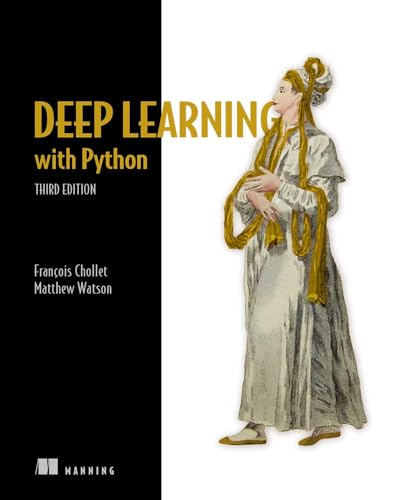
François Chollet, a Google software engineer and creator of the Keras library, brings his deep learning expertise to this guide. His work on TensorFlow and research in computer vision inform the book’s pragmatic approach, making it a valuable resource for those wanting to apply AI techniques using Python. Chollet’s background ensures you’re learning from someone who not only builds tools but also advances AI research at top conferences.
François Chollet is a software engineer at Google and creator of Keras. He works on deep learning and has contributed to the TensorFlow framework. His research focuses on computer vision and machine learning applications. Chollet's papers have been published at major conferences, including CVPR and NIPS.
François Chollet’s deep involvement in AI and as the creator of Keras shapes this book into a practical guide that demystifies deep learning with Python. You’ll move beyond theory to hands-on skills, exploring neural networks, computer vision, natural language processing, and generative models through clear examples and accessible code. The book assumes you know some Python but introduces Keras and TensorFlow from scratch, making it ideal if you want to build real-world AI applications. It’s especially helpful if you’re keen on mastering the interplay between theory and practice, with chapters like image classification and text generation illustrating core concepts. If you’re looking for quick hacks or beginner-level Python, this might feel intense, but for anyone serious about deep learning, it delivers solid grounding and relevant tools.
Satya Nadella, CEO of Microsoft, has shaped global technology for decades and brings a unique perspective on AI's impact. After exploring this book, he shared, "Kai-Fu Lee's smart analysis on human-AI coexistence is clear-eyed and a must-read. We must look deep within ourselves for the values and wisdom to guide AI's development." Nadella’s emphasis on the ethical dimension reflects how this book challenges you to consider both technology’s promise and the responsibilities it demands. This insight from a leading tech executive highlights why you should examine Lee's nuanced view on AI’s future. Also noteworthy is Chris Anderson, head of TED, who finds the book both illuminating and inspiring, underscoring its broad relevance.
“Kai-Fu Lee's smart analysis on human-AI coexistence is clear-eyed and a must-read. We must look deep within ourselves for the values and wisdom to guide AI's development.” (from Amazon)
Dr. Kai-Fu Lee is the chairman and CEO of Sinovation Ventures, a leading technology-savvy investment firm focusing on developing the next generation of Chinese high-tech companies. Before founding Sinovation in 2009, Lee was the President of Google China. Previously he held executive positions at Microsoft, SGI, and Apple. Dr. Lee received his Bachelor’s degree in Computer Science from Columbia University, his Ph.D. from Carnegie Mellon University, and honorary doctorate degrees from the City University of Hong Kong and Carnegie Mellon. He is a Fellow of the Institute of Electrical and Electronics Engineers (IEEE). Selected as one of the 100 most influential people in the world by Time Magazine in 2013, he has authored ten U.S. patents and over a hundred journal and conference papers. He has written eight top-selling books in Chinese, and has more than 50 million followers on social media.
What happens when a seasoned tech executive with deep roots in both Silicon Valley and China examines the future of AI? Kai-Fu Lee, drawing from decades as Google China’s president and a leading investor, maps out how AI will reshape economies and jobs on both sides of the Pacific. You’ll gain precise insights into which professions face disruption, how AI could augment human work, and the social responsibilities tied to this surge in technology. For example, Lee discusses the limits of universal basic income and proposes alternatives grounded in real-world policy. This book suits anyone intrigued by AI’s geopolitical and economic impact, especially professionals navigating tech innovation or policy planning.
K Ken Nakamura, a science enthusiast with a passion for physics and math, emphasizes the importance of this book for everyone, especially the younger generation, suggesting the first half should be mandatory reading in high school. He shares, "I read this great book by @tegmark Highly recommended for all future generation, for everyone should think about AI." His endorsement comes from a deep appreciation of the book’s balanced exploration of AI’s future. Similarly, Debra Ruh, CEO and advocate for disability inclusion, finds it essential for anyone curious about the intersection of humans and AI, reinforcing its broad relevance.
“I read this great book by @tegmark Highly recommended for all future generation, for everyone should think about AI. Thus in my opinion, since everyone should know about AI, the first half of the book should be required reading in high school.” (from X)
Max Tegmark is an MIT professor who has authored more than 200 technical papers on topics from cosmology to artificial intelligence. As president of the Future of Life Institute, he worked with Elon Musk to launch the first-ever grants program for AI safety research. He has been featured in dozens of science documentaries. His passion for ideas, adventure, and entrepreneurship is infectious.
Max Tegmark, an MIT professor deeply embedded in AI research and cosmology, wrote this book to explore the profound ways artificial intelligence could reshape society and human identity. You’ll discover insights on how automation might affect jobs, ethical dilemmas around autonomous weapons, and the challenges of designing AI systems that are reliable and aligned with human values. The book tackles big questions about AI’s impact on crime, justice, and even consciousness, offering frameworks to think critically about these issues. If you’re looking to understand AI beyond the hype and want to engage thoughtfully with its future implications, this book is a solid choice.
Fareed Zakaria, author of Ten Lessons for a Post-Pandemic World, brings a wealth of insight into global affairs and technology, making his endorsement particularly meaningful for anyone interested in AI. After encountering this book, he described it as "Absolutely masterful," highlighting how it deepened his understanding of AI's complex role in shaping society. His experience navigating post-pandemic challenges adds weight to his recommendation. Alongside him, Kirkus Reviews points out that this book is "Good reading for those seeking to navigate the alt-reality world," emphasizing its relevance in today's misinformation-laden digital landscape.
Henry A Kissinger, Eric Schmidt, Daniel Huttenlocher(you?)·
About the Author
Henry A. Kissinger served as the 56th Secretary of State from September 1973 until January 1977. He also served as the Assistant to the President for National Security Affairs from January 1969 until November 1975. He received the Nobel Peace Prize in 1973, the Presidential Medal of Freedom in 1977, and the Medal of Liberty in 1986. Until his passing in 2023, he was Chairman of Kissinger Associates, Inc., an international consulting firm.
What happens when a former Secretary of State teams up with a tech visionary and an academic leader to examine Artificial Intelligence? Henry Kissinger, Eric Schmidt, and Daniel Huttenlocher combine their vast experience to explore how AI reshapes knowledge, politics, and society itself. You’ll gain insights into the challenges of controlling AI, its impact on jobs and misinformation, and the ethical questions it raises. The book’s chapters guide you through AI’s influence on everything from military drones to creative professions, making it suitable if you want a thoughtful, multidisciplinary perspective on AI’s role in human futures.
Terrence Sejnowski, director of the Computational Neurobiology Laboratory at the Salk Institute, brings a weighty perspective to this book, highlighting its role in navigating the rapidly evolving landscape of deep learning. He appreciates how James Stone breaks down complex neural network concepts into approachable ideas, guiding you from foundational principles to advanced applications. Sejnowski's endorsement reflects a deep trust in Stone’s ability to make this transformative technology accessible. Alongside him, Barak Pearlmutter from the National University of Ireland Maynooth praises the book's engaging style and clarity, noting how it cuts through typical jargon to reveal the essential principles and intuition behind machine learning systems, encouraging you to innovate with confidence.
Director, Computational Neurobiology Laboratory, Salk Institute
“Artificial Intelligence Engines will introduce you to the rapidly growing field of deep learning networks: how to build them, how to use them; and how to think about them. James Stone will guide you from the basics to the outer reaches of a technology that is changing the world.” (from Amazon)
James V. Stone is a recognized expert in artificial intelligence and deep learning, with extensive experience in teaching and research. He has authored several influential works in the field, contributing to the understanding of neural networks and their applications. His background includes a strong foundation in mathematics and computer science, making him a leading voice in the development of AI technologies.
What started as James V. Stone's deep fascination with brain-inspired computing evolved into a clear-eyed tutorial on the mathematics behind deep learning. You’ll gain a solid grasp of key neural network algorithms, from perceptrons to generative adversarial networks, with intuitive explanations paired with rigorous math. Stone doesn’t just teach you the theories; he offers hands-on code examples and detailed appendices that demystify topics like Bayes’ theorem, making it ideal for anyone eager to understand how AI engines function at their core. If you want to build a robust foundation in deep learning’s mechanics rather than surface-level buzzwords, this book fits the bill perfectly.
Sonja Mel, a tech enthusiast known for her deep dives into consciousness and AI, highlights this book as essential for anyone curious about how we process our world. Her perspective as an internet personality who engages broadly with technology underlines why this book resonates beyond academia. Meanwhile, Tobias S, a designer with a Spotify background, credits this book as a repeated reference while developing his own projects, emphasizing its practical influence. Together, their endorsements spotlight the book’s blend of scientific insight and real-world impact, making it a noteworthy read for those serious about artificial intelligence.
“This book in the photo is How to Create a Mind - Ray Kurzweil.. I just finished it a few days ago 🤯, if you’re interested in consciousness, how we process our world, AI it’s a must read. Your first gift on audible is free, here!!! -” (from X)
Ray Kurzweil is a world-class inventor, thinker, and futurist, with a thirty-five-year track record of accurate predictions. He has been a leading developer in artificial intelligence for 61 years – longer than any other living person. He was the principal inventor of the first CCD flat-bed scanner, omni-font optical character recognition, print-to-speech reading machine for the blind, text-to-speech synthesizer, music synthesizer capable of recreating the grand piano and other orchestral instruments, and commercially marketed large-vocabulary speech recognition software. Ray received a Grammy Award for outstanding achievement in music technology; he is the recipient of the National Medal of Technology and was inducted into the National Inventors Hall of Fame. He has written five best-selling books including The Singularity Is Near and How To Create A Mind, both New York Times best sellers, and Danielle: Chronicles of a Superheroine, winner of multiple young adult fiction awards. His forthcoming book, The Singularity Is Nearer, will be released June 25, 2024. He is a Principal Researcher and AI Visionary at Google.
After decades pioneering artificial intelligence, Ray Kurzweil developed this book to unpack the inner workings of human thought through reverse-engineering the brain. You’ll explore how the mind emerges from neural patterns and what that means for creating smarter machines, with chapters dissecting emotional intelligence and consciousness. This isn’t just theoretical; Kurzweil delves into the implications of merging human and machine intelligence, challenging you to rethink what intelligence really entails. If you’re curious about the intersection of neuroscience and AI, this book offers a detailed roadmap for understanding and innovating beyond traditional algorithms.
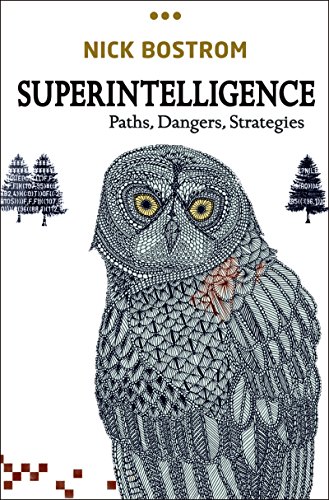
Bill Gates, co-founder of Microsoft and a leading voice in technology philanthropy, encountered this book as AI began reshaping global tech landscapes. He shares, "I highly recommend this book," highlighting how it deepened his understanding of AI's potential and risks. Gates's endorsement underscores the book’s relevance for anyone seeking a serious perspective on AI’s future. Joining him, Elon Musk, CEO of Tesla and SpaceX, also acknowledges the critical nature of Bostrom’s work, emphasizing its importance in conversations about AI safety and control.
Nick Bostrom is a Swedish-born philosopher and polymath with a background in theoretical physics, computational neuroscience, logic, and artificial intelligence, as well as philosophy. He is Professor at Oxford University, where he leads the Future of Humanity Institute as its founding director. Bostrom's widely influential work has illuminated the links between our present actions and long-term global outcomes, thereby casting a new light on the human condition. He is the author of over 200 publications, including 'Anthropic Bias' and 'Global Catastrophic Risks'. His writings have been translated into 28 languages, and he has been listed on Foreign Policy's Top 100 Global Thinkers list twice.
What happens when expertise in philosophy and artificial intelligence converge? Nick Bostrom, a professor at Oxford and head of the Future of Humanity Institute, explores this by examining the risks and potential outcomes of machines surpassing human intelligence. You’ll gain a detailed understanding of concepts like the intelligence explosion and the AI control problem, learning how the trajectory of superintelligent systems could shape humanity’s future. This book is suited for those grappling with ethical, strategic, and technical challenges posed by advanced AI, offering a sober analysis rather than sweeping predictions.
Kirill Eremenko, CEO of SuperDataScience and a leading authority in AI education, discovered this book as a key resource during his deep dive into AI and data science. He praises it as "packed with hands-on cutting-edge AI technology and many real-world practical applications," highlighting how it sharpened his approach to building intelligent software. His endorsement signals that this book provides you with practical tools and insights necessary to keep pace in the evolving AI landscape.
“Packed with hands-on cutting-edge AI technology and many real-world practical applications, Hadelin's book is a must-have for AI and Data Science practitioners aiming to be on top of their game.” (from Amazon)
Hadelin de Ponteves is the co-founder and CEO at BlueLife AI, which leverages the power of cutting edge Artificial Intelligence to empower businesses to make massive profits by optimizing processes, maximizing efficiency and increasing profitability. Hadelin is also an online entrepreneur who has created 50+ top-rated educational e-courses to the world on topics such as Machine Learning, Deep Learning, Artificial Intelligence and Blockchain, which have reached over 700,000 subscribers in 204 countries.
Drawing from his extensive experience teaching AI through popular online courses, Hadelin de Ponteves offers an energetic and approachable introduction to artificial intelligence using Python. The book guides you through foundational AI concepts like reinforcement learning and deep learning, gradually building your skills with five hands-on projects including a virtual self-driving car and AI for classic video games. You'll learn practical coding techniques with Python, TensorFlow, and PyTorch, plus how to apply AI in real business contexts such as sales and logistics. This book suits anyone with basic math who wants to actively develop AI software rather than just read theory.
Erik Brynjolfsson, a professor and economist renowned for his work on the economic implications of technology, highlights Toby Walsh as a rare voice combining deep technical knowledge with sharp social insight. He discovered this book while examining how AI reshapes labor markets and was struck by Walsh's engaging writing and balanced perspective, calling it essential for understanding the future of intelligent machines. Brynjolfsson’s endorsement underscores why this book offers more than hype—it provides clear-eyed insights that challenge you to think critically about AI's expanding role. Alongside him, Sebastian Thrun, CEO of Kitty Hawk Corporation and AI pioneer, praises it as a whirlwind tour of AI's history and future, reinforcing its value for anyone curious about the technology shaping our world.
“Toby Walsh is one of those rare individuals who combine a deep knowledge of AI technology, a serious interest in its economic and social implications, and a verve for lively and engaging writing. If you want real insights about the coming future of machines that think better and faster than humans in more and more domains, then you need to read this book.” (from Amazon)
Toby Walsh is one of the world's leading experts in artificial intelligence (AI). Professor Walsh's research focuses on how computers can interact with humans to optimize decision-making for the common good. He is also a passionate advocate for limits to ensure AI is used to improve, not take, lives. In 2015, Professor Walsh was one of the people behind an open letter calling for a ban on autonomous weapons or 'killer robots' that was signed by more than 3000 AI researchers and high-profile scientists, entrepreneurs, and intellectuals. He was subsequently invited by Human Rights Watch to talk at the United Nations in both New York and Geneva. Professor Walsh is a Fellow of the Australia Academy of Science and of the Association for the Advancement of Artificial Intelligence, and was recently awarded the 2016 NSW Premier's Prize for Excellence in Engineering and Information and Communications Technologies. Walsh has been interviewed several hundred times, appearing on NPR (US), BBC (UK), CCTV (China), CNN (US), RT (Russia), and in publications including the Guardian, New York Times, Washington Post, and New Scientist. He also regularly writes for outlets like American Scientist, New Scientist, and Conversation.
Unlike most artificial intelligence books that focus heavily on technical details or futuristic hype, Toby Walsh offers a grounded perspective based on his extensive research and advocacy in the field. He methodically explores current AI capabilities, the social and economic impacts of automation, and the ethical dilemmas posed by autonomous weapons, drawing from his experience engaging with policymakers and scientists globally. You'll find clear discussions in chapters covering AI's effect on employment and the myth of technological singularity, helping you grasp what AI realistically means for society's future. This book suits anyone seeking an informed, balanced understanding rather than speculative predictions, especially those interested in the intersection of technology and public policy.
NSW Premier's Prize for Excellence in Engineering and Information and Communications Technologies
Elon Musk, CEO of SpaceX, Tesla, and Neuralink, brings an unparalleled perspective on the future of technology and AI. His endorsement of James Barrat's book signals its weight in the debate over AI’s impact on humanity. Musk’s work at the forefront of innovation makes his recommendation especially significant, underscoring the book’s examination of AI's potential to surpass human intelligence and the existential risks involved. Alongside Musk, Sam Harris, a neuroscientist and philosopher known for probing AI ethics, also supports this work, highlighting its careful exploration of AI’s complexities and dangers. Together, their endorsements amplify the urgency and credibility of Barrat’s analysis.
“IMHO “Our Final Invention” is one of the best books ever written on the dangers of AI. I had the pleasure of meeting James for the first time back in 2015, just after I read his book. James is also an accomplished documentary filmmaker.” (from X)
James Barrat is a documentary filmmaker who’s written and produced films for National Geographic, Discovery, PBS, and many other broadcasters in the United States and Europe. He lives near Washington, DC with his wife and two children.
What if everything you thought about Artificial Intelligence was challenged? James Barrat, a documentary filmmaker with years of experience creating content for National Geographic and PBS, explores the urgent risks of AI surpassing human intelligence. You’ll gain insight into the AI control problem, the concept of superintelligence, and the potential consequences of an AI-driven future. The book walks through profiles of tech pioneers and AI systems, offering a sober look at the existential questions AI raises. If you want to understand both the promise and peril of AI’s rapid advancement, this book is a direct and thought-provoking read.
Luca Zavarella, Head of Data & AI at iCubed and Microsoft MVP, brings a wealth of expertise in data science and AI to his endorsement of this book. During his exploration of generative AI tools, he found this guide invaluable for translating complex concepts into practical steps that enhance productivity and innovation. As he puts it, "This book is like a roadmap that will take you from the ABC's of Generative AI to practical applications that can revolutionize the way we work, study, and even market products!" His experience highlights how this book can serve as a bridge for professionals eager to harness ChatGPT and OpenAI models effectively in real-world projects.
Head of Data & AI at iCubed, Microsoft MVP, Author
“This book is like a roadmap that will take you from the ABC's of Generative AI to practical applications that can revolutionize the way we work, study, and even market products! Key Highlights: Start your AI journey with a rock-solid foundation. No jargon, just clear and simple explanations! Enhance your daily life with ChatGPT! Imagine having a virtual assistant for tasks ranging from drafting emails to whipping up delicious recipes. Calling all developers and marketers! Gain insight into how ChatGPT can help with code generation, documentation, A/B testing, SEO, and more. Your toolbox is about to get a major upgrade. Go beyond the basics with enterprise-level applications. Discover how ChatGPT can redefine mission-critical tasks like contract analysis and call center metrics, all powered by Microsoft's Azure OpenAI. Don't just take my word for it; this book provides practical Python scripts and user interfaces, making it a hands-on guide for anyone who wants actionable insights. Fair warning: If you're an AI whiz looking for a deep technical dive, this might not be for you. But if you're new to the subject or interested in application-oriented learning, this is a great resource. Don't miss out on unlocking the full potential of generative AI and ChatGPT!” (from Amazon)
Valentina Alto graduated in 2021 in data science. Since 2020, she has been working at Microsoft as an Azure solution specialist, and since 2022, she has been focusing on data and AI workloads within the manufacturing and pharmaceutical industry. She has been working closely with system integrators on customer projects to deploy cloud architecture with a focus on modern data platforms, data mesh frameworks, IoT and real-time analytics, Azure Machine Learning, Azure Cognitive Services (including Azure OpenAI Service), and Power BI for dashboarding. Since commencing her academic journey, she has been writing tech articles on statistics, machine learning, deep learning, and AI in various publications and has authored a book on the fundamentals of machine learning with Python.
When Valentina Alto first discovered the transformative potential of OpenAI's language models, she crafted this book to bridge the gap between theory and practical application in generative AI. You’ll learn how ChatGPT’s architecture works and how to enhance your productivity by designing effective prompts tailored to your needs—whether you’re a marketer, developer, or researcher. The book walks you through embedding OpenAI models into real projects using Python and frameworks like LangChain, with enterprise scenarios hosted on Azure. If you want to understand and leverage generative AI beyond surface-level use, this guide offers clear insights and hands-on examples without overwhelming technical jargon.
Rishal Hurbans is a technologist and AI group founder with a rich background in business and philosophy. His interest in helping people and businesses be more productive fueled this book, which translates complex AI algorithms into accessible lessons and practical exercises. Hurbans' unique mix of expertise makes this guide approachable for developers who want to grasp AI fundamentals without heavy math, offering a bridge between theory and application.
Rishal Hurbans is a technologist, startup and AI group founder, and international speaker. He has a passion for business mechanics, artificial intelligence, and philosophy. Rishal has founded various digital products to help people and businesses be more productive and focus on what’s important. More about Rishal at https://rhurbans.com
What started as Rishal Hurbans' passion for both AI and business mechanics became a clear, approachable guide to core AI algorithms designed for developers with modest math skills. You gain a hands-on grasp of key AI concepts such as intelligent search, evolutionary algorithms, and reinforcement learning, supported by approachable coding challenges like drone optimization and maze puzzles. This book breaks down complex topics like neural networks into simple language and vivid illustrations, making it accessible without sacrificing depth. It's especially useful if you're a software developer eager to understand and apply AI methods without getting lost in heavy theory or math.
Andreas Mueller, Principal Research SDE at Microsoft and a core developer of Scikit-learn, appreciates this book's broad coverage of AI topics, from classification to search algorithms and A/B testing. He notes how it highlights both standard tools and lesser-known libraries, offering a comprehensive yet approachable introduction. His experience with practical machine learning tools lends weight to his recommendation, suggesting this book is a solid foundation for those wanting to explore AI's many facets with plenty of examples and references.
Principal Research SDE at Microsoft, Scikit-learn Core Developer
“I've been impressed by the wide overview of the book, which really spans the gamut of what AI means, from classification to search algorithms and A/B testing. The book focuses on some standard tools but also branches out to surface some lesser-known libraries that can come in handy. While 468 pages can only give a taste of each topic, the book is jam-packed with examples and serves as a good starting point with plenty of references.” (from Amazon)
Ben Auffarth is a full-stack data scientist with more than 15 years of work experience. With a background and Ph.D. in computational and cognitive neuroscience, he has designed and conducted wet lab experiments on cell cultures, analyzed experiments with terabytes of data, run brain models on IBM supercomputers with up to 64k cores, built production systems processing hundreds of thousands of transactions per day, and trained neural networks on millions of text documents. He resides in West London with his family, where you might find him in a playground with his young son. He co-founded and is the former president of Data Science Speakers, London.
Ben Auffarth brings a wealth of experience in computational neuroscience and data science to this practical guide on AI with Python. You’ll work through recipes that tackle everything from heuristic search and genetic algorithms to deep learning models for text, images, and audio, gaining hands-on skills in tools like TensorFlow and PyTorch. The book doesn’t just teach you how to write algorithms; it also explores deploying models and addresses algorithmic bias and real-world applications in healthcare and insurance. If you’re comfortable with Python basics and want to deepen your AI toolkit with a broad range of techniques, this book offers a well-rounded, example-rich path forward.
The best Artificial Intelligence books and more, in your inbox each week. No account needed.
Conclusion
This collection reveals three clear themes: the balance of technical mastery and ethical reflection, the importance of strategic adaptation in business, and the societal implications of AI’s rise. If you’re a developer, starting with Deep Learning for Coders with fastai and PyTorch grounds you in practical skills. Business leaders will find Competing in the Age of AI invaluable for strategic shifts. For broader societal context, Life 3.0 and Human Compatible provide compelling views. Alternatively, you can create a personalized Artificial Intelligence book to bridge the gap between general principles and your specific situation. These books can help you accelerate your learning journey, equipping you for the AI-driven future.
Frequently Asked Questions
I'm overwhelmed by choice – which book should I start with?
Start with 'Deep Learning for Coders with fastai and PyTorch' for practical skills, or 'Artificial Intelligence: A Guide for Thinking Humans' for a clear understanding of AI’s core concepts.
Are these books too advanced for someone new to Artificial Intelligence?
Not at all. Books like 'AI Crash Course' and 'You Look Like a Thing and I Love You' are friendly introductions that balance humor and clarity for beginners.
What's the best order to read these books?
Begin with foundational texts like 'Deep Learning Illustrated', then explore specialized topics such as AI ethics in 'Human Compatible', and finally dive into strategic views like 'Competing in the Age of AI'.
Which books focus more on theory vs. practical application?
'Artificial Intelligence Engines' and 'Superintelligence' delve into theory and risks, while 'Artificial Intelligence with Python Cookbook' and 'AI Crash Course' emphasize hands-on coding and projects.
Are any of these books outdated given how fast Artificial Intelligence changes?
While AI evolves rapidly, books like 'Modern Generative AI with ChatGPT and OpenAI Models' provide up-to-date insights, and classics like 'Superintelligence' remain relevant for understanding foundational risks.
How can I get AI knowledge tailored to my goals and experience?
These expert books offer solid foundations, but to apply AI concepts to your unique needs, consider creating a personalized Artificial Intelligence book that adapts expert insights to your background and objectives.
📚 Love this book list?
Help fellow book lovers discover great books, share this curated list with others!