18 Best-Selling Artificial Intelligence Books Millions Trust
Recommended by Bill Gates, Satya Nadella, Elon Musk — top experts guiding your AI reading journey
Updated on June 24, 2025·We may earn commissions for purchases made via this page
We're launchingLaunching on Product Hunt today 🎉We just launchedJust launched on Product Hunt 🎉
Modelpeers, from the BookAuthority teamFrom the BookAuthority team: Modelpeers, a free way to follow AI models and agents like you follow people. We'd love your support.
There's something special about books that both experts and millions of readers trust to understand Artificial Intelligence. Today, AI is reshaping every corner of society—from industry to ethics, from technology to governance—making these books more relevant than ever. Whether you're curious about AI's future risks or its practical applications, these titles encapsulate proven insights and popular wisdom.
Bill Gates, co-founder of Microsoft, has repeatedly highlighted works like Superintelligence and The Singularity Is Nearer for their profound analysis of AI's risks and promises. Meanwhile, Satya Nadella, Microsoft’s CEO, emphasizes Competing in the Age of AI for its sharp leadership strategies in AI-driven business. Elon Musk, known for his forward-thinking ventures, underscores the importance of understanding AI safety through books like Our Final Invention.
While these popular books provide frameworks validated by experts and readers alike, those seeking a tailored learning experience can consider creating a personalized Artificial Intelligence book that combines these proven approaches with your unique background, interests, and goals. This way, you can dive deeper into what matters most to you.
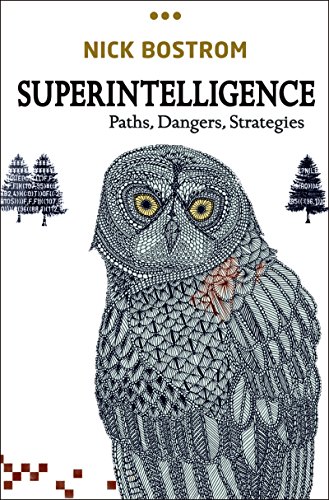
Bill Gates, co-founder of Microsoft and a leading voice in technology, recommends this book as a must-read for anyone interested in the future of artificial intelligence. He states, "I highly recommend this book," highlighting its alignment with widespread expert concern and reader interest. Gates appreciates how Bostrom's analysis helped him better grasp the risks and strategic decisions involved in developing superintelligent machines. Similarly, Nils Nilsson, a pioneer in AI from Stanford, urges every intelligent person to engage with the book’s ideas, underscoring its value to those thinking seriously about AI's trajectory.
Nick Bostrom is a Swedish-born philosopher and polymath with a background in theoretical physics, computational neuroscience, logic, and artificial intelligence, as well as philosophy. He is Professor at Oxford University, where he leads the Future of Humanity Institute as its founding director. Bostrom's widely influential work has illuminated the links between our present actions and long-term global outcomes, thereby casting a new light on the human condition. He is the author of over 200 publications, including 'Anthropic Bias' and 'Global Catastrophic Risks'. His writings have been translated into 28 languages, and he has been listed on Foreign Policy's Top 100 Global Thinkers list twice.
Drawing from his extensive background in philosophy, theoretical physics, and artificial intelligence, Nick Bostrom explores what happens when machines surpass human intelligence. You’ll gain insight into the potential paths toward superintelligence, the risks involved, and the strategic decisions humanity faces. The book offers detailed discussions on topics like the intelligence explosion and control challenges, providing frameworks to think critically about AI’s future. If you want to understand the profound implications of AI development and the ethical questions it raises, this book lays out the intellectual terrain with clarity and depth.
K Ken Nakamura, a science aficionado known for his expertise in physics and math, praises this book for its broad accessibility and relevance, especially highlighting its importance for younger generations. He suggests the first half should be required reading in high school, reflecting how it reshaped his view on AI’s place in society. His endorsement aligns with widespread reader acclaim, underscoring the book’s role in educating about AI’s profound implications. Similarly, Debra Ruh, CEO and advocate for accessibility, calls it a must-read for those intrigued by the intersection of AI and humanity, affirming its value across diverse perspectives.
“I read this great book by @tegmark Highly recommended for all future generation, for everyone should think about AI. Thus in my opinion, since everyone should know about AI, the first half of the book should be required reading in high school.” (from X)
Max Tegmark is an MIT professor who has authored more than 200 technical papers on topics from cosmology to artificial intelligence. As president of the Future of Life Institute, he worked with Elon Musk to launch the first-ever grants program for AI safety research. He has been featured in dozens of science documentaries. His passion for ideas, adventure, and entrepreneurship is infectious.
What if everything you knew about the future of technology was wrong? Max Tegmark, an MIT professor deeply involved in AI safety research, explores how artificial intelligence could reshape society, jobs, and even human identity itself. You’ll gain insights into ethical dilemmas like autonomous weapons, the impact of automation on income and purpose, and how to design AI systems that align with human values. Chapters dissect scenarios ranging from AI-driven prosperity to existential risks, providing a nuanced view that challenges simplistic fears or hype. If you’re curious about AI’s potential consequences and want to engage thoughtfully with its promises and perils, this book offers a grounded, wide-ranging perspective.
This AI-created book on artificial intelligence applications is designed based on your background and specific goals. You share which AI topics and skills you want to focus on, and the book is crafted to match your interests precisely. Personalizing the content helps you concentrate on the most relevant methods and insights for your journey into AI mastery, avoiding unnecessary information and accelerating your understanding.
TailoredRead AI creates personalized nonfiction books that adapt to your unique background, goals, and interests. Instead of reading generic content, you get a custom book written specifically for your profession, experience level, and learning objectives. Whether you're a beginner looking for fundamentals or an expert seeking advanced insights, TailoredRead crafts a book that speaks directly to you. Learn more.
2026·50-300 pages·Artificial Intelligence, AI Applications, Machine Learning, Deep Learning, Neural Networks
This tailored AI Mastery Blueprint explores the dynamic landscape of artificial intelligence applications, focusing on battle-tested approaches refined through widespread reader validation. It examines key AI concepts and practical uses, combining foundational knowledge with personalized insights that resonate with your unique background and goals. By addressing the specific areas you want to develop, this book reveals techniques and methods that have proven valuable to millions, making your learning journey both focused and efficient. The tailored content ensures that you engage deeply with topics that matter most, fostering a comprehensive understanding of AI mastery shaped around your interests.
Sean Carroll, a physicist at Caltech and host of the Mindscape Podcast, highlights how this book reveals the paradox of AI: computers exhibit remarkable intelligence yet lack common sense. His appreciation stems from the book's clear explanation of AI’s current capabilities and limitations, aligning with popular reader interest in understanding what AI truly entails. Carroll notes, "Melanie Mitchell takes us through an enlightening tour of how artificial intelligence currently works, and how it falls short of true human understanding." Alongside him, David Shaywitz, a physician and Silicon Valley venture capitalist, praises the book as a fascinating and highly recommended exploration of AI’s evolving landscape.
“Computers are capable of feats of astonishing intelligence, while at the same time lacking any semblance of common sense. Melanie Mitchell takes us through an enlightening tour of how artificial intelligence currently works, and how it falls short of true human understanding.”
Melanie Mitchell has a Ph.D. in computer science from the University of Michigan, where she studied with the cognitive scientist and writer Douglas Hofstadter; together, they created the Copycat program, which makes creative analogies in an idealized world. The author or editor of several books (such as Complexity: A Guided Tour) and numerous scholarly papers, Mitchell is currently professor of computer science at Portland State University and external professor at the Santa Fe Institute.
What makes this book intriguing is how Melanie Mitchell, a computer scientist with a Ph.D. from the University of Michigan and co-creator of the Copycat program, unpacks artificial intelligence beyond the hype. She offers clear explanations of how AI systems like neural networks and natural language processors actually function, and where they fall short of human understanding. You’ll gain insight into key AI models, the history of AI development, and the nuanced challenges ahead, including whether machines can truly think or just simulate intelligence. This book suits anyone curious about what AI really does today and the realistic prospects for its future.
Caroline Mccarthy, Vice President at Truex and TED Resident with deep AI industry insight, highlights this book as her top recommendation for 2019 and beyond. She points to its crucial exploration of AI's geopolitical stakes, especially the US-China rivalry shaping technology's future. Caroline's endorsement reflects how the book clarifies complex AI power struggles and corporate control, helping those interested in AI policy understand the forces shaping our digital destiny. She emphasizes it as an essential primer for anyone serious about AI's global impact.
“If your 2020 resolutions involve more reading, the book I recommended to the most people in 2019 -- and continue to do so -- is Amy Webb's THE BIG NINE. An essential primer on AI and the US-China tech rivalry. (It is a must for the entire Yang Gang btw.)” (from X)
Amy Webb is a professor of strategic forecasting at the NYU Stern School of Business and a leading expert on the future of technology. She has authored several books and is known for her insights into artificial intelligence and its implications for society. Webb's work focuses on the intersection of technology, policy, and the economy, making her a prominent voice in discussions about the future of AI and its impact on humanity.
Amy Webb, a professor of strategic forecasting at NYU Stern, wrote this book to expose how a handful of tech giants wield AI in ways that could shape humanity's future without public oversight. You learn to recognize the invisible power dynamics embedded in AI systems developed by companies like Amazon, Google, and Tencent, and the risks of ceding control to these 'Big Nine' players. The book walks you through the ethical dilemmas and unintended consequences of AI driven by profit motives rather than human values, especially the emerging US-China tech rivalry. This is a crucial read if you're concerned about AI governance, corporate influence, or the societal impact of intelligent machines.
Fareed Zakaria, author of 'Ten Lessons for a Post-Pandemic World,' highlights this book's significance for anyone seeking to understand AI’s transformative societal effects. After witnessing the rapid spread of misinformation and AI’s growing role in geopolitics, Zakaria calls it "Absolutely masterful," reflecting how it reshaped his views on AI’s influence beyond technology. This aligns with widespread reader interest in how AI alters knowledge and power structures. Additionally, Kirkus Reviews notes it’s "Good reading for those seeking to navigate the alt-reality world," underscoring its relevance in today's complex information environment.
Henry A Kissinger, Eric Schmidt, Daniel Huttenlocher·
About the Author
Henry A. Kissinger served as the 56th Secretary of State from September 1973 until January 1977. He also served as the Assistant to the President for National Security Affairs from January 1969 until November 1975. He received the Nobel Peace Prize in 1973, the Presidential Medal of Freedom in 1977, and the Medal of Liberty in 1986. Until his passing in 2023, he was Chairman of Kissinger Associates, Inc., an international consulting firm.
Unlike most AI books that focus solely on technical advances, this one brings together Henry Kissinger's vast diplomatic experience with Eric Schmidt's technology leadership and Daniel Huttenlocher's academic insights to examine how AI reshapes society, governance, and knowledge itself. You gain a nuanced understanding of AI's impact beyond algorithms — from misinformation challenges to ethical dilemmas and geopolitical shifts. Specific chapters explore AI's role in medicine, military, and culture, helping you grasp why control and accountability lag behind capability. If you want to see AI through a multidisciplinary lens that connects technology to human values, this book offers a thoughtful framework, though it’s less about coding and more about context and consequences.
This AI-created book on AI competence is crafted based on your background, skill level, and specific interests in artificial intelligence. By sharing what you want to focus on and your goals, you get a tailored book that matches your pace and priorities perfectly. This personalization makes it easier to navigate AI's vast and complex topics without overwhelm. Rather than a one-size-fits-all approach, your custom book zeroes in on what matters most to you for fast and effective learning.
TailoredRead AI creates personalized nonfiction books that adapt to your unique background, goals, and interests. Instead of reading generic content, you get a custom book written specifically for your profession, experience level, and learning objectives. Whether you're a beginner looking for fundamentals or an expert seeking advanced insights, TailoredRead crafts a book that speaks directly to you. Learn more.
2026·50-300 pages·Artificial Intelligence, Machine Learning, AI Fundamentals, Neural Networks, Deep Learning
This tailored book explores a carefully designed thirty-day plan to accelerate your AI knowledge and skills. It combines widely validated concepts with your unique interests, matching your background and specific goals to deliver focused content that feels relevant and engaging. The book examines foundational AI principles and progressively introduces more advanced topics, all paced to foster rapid competence. By concentrating on areas you find most compelling, it reveals a personalized path through the complex AI landscape, empowering you to build confidence and practical understanding within a month. This tailored approach transforms the learning journey into an efficient, enjoyable experience geared specifically for you.
Satya Nadella, CEO of Microsoft, brings a unique perspective to artificial intelligence with decades steering a tech giant through digital transformation. After observing how AI reshapes industries, he recommends this book for its clear explanation of what it takes to become an AI-first company, aligning closely with widespread reader enthusiasm. He states, "Iansiti and Lakhani have written an important book that explains what's required to rethink the firm and become an AI-first company." His endorsement underscores the book’s practical value for leaders. Following him, Clayton Christensen, a Harvard Business School professor, highlights the book's relevance amid shifting disruption, calling it "compelling and mandatory reading for leaders hoping to survive in the new world of business."
“Iansiti and Lakhani have written an important book that explains what's required to rethink the firm and become an AI-first company. Anyone interested in the impact of AI should read this book.”
Marco Iansiti is a Professor at Harvard Business School and a leading expert in the field of technology and business strategy. He has published extensively on the impact of digital technologies on business and has consulted for numerous organizations on how to leverage technology for competitive advantage. His work focuses on the intersection of technology and management, particularly in the context of artificial intelligence and digital transformation.
The methods Marco Iansiti and Karim R. Lakhani developed while researching hundreds of AI-driven companies reveal how data and algorithms are reshaping business at a fundamental level. You learn to rethink organizational strategy and operations through a new lens where traditional limits on scale and scope no longer apply, as shown by examples from Airbnb to Microsoft. This book demystifies how AI-centric firms build competitive advantage by enabling more accurate predictions and continuous learning. If you're leading or advising companies facing digital transformation, it offers a clear framework to understand and navigate this evolving landscape. However, if you're seeking technical AI development details, this book focuses more on strategy and leadership than coding.
Daniel Kahneman, Nobel laureate and professor of psychology, highlights how this book stands out by clearly explaining the threat of artificial super-intelligence to human control while offering a hopeful solution. He calls it "the most important book I have read in quite some time." His endorsement reflects the widespread acclaim from experts and readers alike. Similarly, Sam Harris praises Russell as the most sensible voice on AI risk, describing the book as "a brilliant and utterly accessible guide" to one of humanity’s biggest technological crossroads. Their recommendations underscore the book’s value in understanding and navigating AI’s future.
“This is the most important book I have read in quite some time. It lucidly explains how the coming age of artificial super-intelligence threatens human control. Crucially, it also introduces a novel solution and a reason for hope.”
Stuart Russell is a professor of Computer Science and holder of the Smith-Zadeh Chair in Engineering at the University of California, Berkeley. He has served as the Vice-Chair of the World Economic Forum's Council on AI and Robotics and as an advisor to the United Nations on arms control. He is a Fellow of the American Association for Artificial Intelligence, the Association for Computing Machinery, and the American Association for the Advancement of Science. He is the author (with Peter Norvig) of the definitive and universally acclaimed textbook on AI, Artificial Intelligence: A Modern Approach.
When Stuart Russell, a leading AI researcher at UC Berkeley, reexamines artificial intelligence, he challenges the assumption that smarter machines inevitably threaten human control. You’ll explore how current AI systems can be misguided by unclear human intentions and why this matters as AI capabilities grow. The book dives into designing AI to be uncertain about human preferences—making machines more deferential and aligned with our goals. Chapters detail both the promise of AI in accelerating science and the pitfalls, such as autonomous weapons and misuse. This is a must-read if you want to understand how AI might coexist with humanity rather than dominate it.
Leilani Münter, an environmentalist and documentary filmmaker, highlights "Our Final Invention" as one of the best books on AI dangers, sharing how meeting James Barrat shortly after reading it deepened her understanding of AI's risks. Her perspective aligns with many readers who recognize the urgency of addressing AI's unchecked growth. This sentiment is echoed by Michael Vassar, former Singularity Institute president, who calls it a compelling account of humanity's critical challenge. Together, their endorsements underscore the book's impact on experts grappling with AI's future.
“@opineno @jrbarrat IMHO “Our Final Invention” is one of the best books ever written on the dangers of AI. I had the pleasure of meeting James for the first time back in 2015, just after I read his book. James is also an accomplished documentary filmmaker.” (from X)
James Barrat is a documentary filmmaker who’s written and produced films for National Geographic, Discovery, PBS, and many other broadcasters in the United States and Europe. He lives near Washington, DC with his wife and two children.
What happens when a documentary filmmaker turns his lens to the existential risks of artificial intelligence? James Barrat takes you through a cautionary tale that explores AI's rapid evolution toward surpassing human intelligence and the potential threats this poses. You gain insight into the AI control problem, the drive for strong AI, and the future scenarios that could unfold as machines become autonomous. Barrat profiles industry leaders and AI systems, highlighting the urgency of thoughtful oversight. This book suits anyone concerned with AI's societal impact—whether you're a technologist, policymaker, or curious thinker ready to confront the implications.
Spratt, a technology veteran and angel investor with decades in computing, points to Gary Marcus's work as a beacon for genuine AI progress. Their recommendation, "if you’re interested in real AI progress, go no further than Gary," highlights how this book reshaped their understanding of AI's current state. This endorsement aligns with widespread recognition of the book’s realistic approach to AI’s challenges and what comes next in the field.
Gary Marcus is a scientist, best-selling author, and entrepreneur. He is the founder and CEO of Robust.AI and was founder and CEO of Geometric Intelligence, a machine-learning company acquired by Uber in 2016. He is the author of five books, including Kluge, The Birth of the Mind, and the New York Times best seller Guitar Zero. Ernest Davis is a professor of computer science at the Courant Institute of Mathematical Science, New York University. One of the world's leading scientists on commonsense reasoning for artificial intelligence, he is the author of four books, including Representations of Commonsense Knowledge and Verses for the Information Age.
What happens when two seasoned AI researchers challenge the hype surrounding artificial intelligence? Gary Marcus and Ernest Davis draw on decades of experience to argue that the impressive feats of AI today, like winning Jeopardy!, fall short of true intelligence. They delve into why current systems struggle outside closed environments and propose a shift toward endowing machines with common sense and deeper understanding. You’ll find detailed discussions on bridging the gap between narrow AI and genuine human-like cognition, making this a thoughtful read if you want a clear-eyed view of AI’s future potential and limitations.
Bill Gates, co-founder and former CEO of Microsoft, whose deep involvement in technology makes his opinion vital in the AI field, praises Ray Kurzweil as "the best person I know at predicting the future of artificial intelligence." Gates' endorsement aligns with the widespread admiration from both experts and readers for Kurzweil's insightful projections. This book helped Gates deepen his understanding of AI's trajectory, offering a clear perspective on the challenges and opportunities ahead. Also worth noting is Nesnáím Faistické Kolaboranty, who highlights the book's engaging discussion on life-extension biotechnology and its cultural impact, showing the breadth of topics Kurzweil covers.
Ray Kurzweil is a world class inventor, thinker, and futurist, with a thirty-five-year track record of accurate predictions. He has been a leading developer in artificial intelligence for 61 years – longer than any other living person. He was the principal inventor of the first CCD flat-bed scanner, omni-font optical character recognition, print-to-speech reading machine for the blind, text-to-speech synthesizer, music synthesizer capable of recreating the grand piano and other orchestral instruments, and commercially marketed large-vocabulary speech recognition software. Ray received a GRAMMY® Award for outstanding achievement in music technology; he is the recipient of the National Medal of Technology and was inducted into the National Inventors Hall of Fame. He has written five best-selling books including The Singularity Is Near and How to Create a Mind. He is a Principal Researcher and AI Visionary at Google.
What keeps drawing experts and readers alike to Ray Kurzweil’s latest work is his deep dive into how technology will reshape human life in profound ways. Kurzweil, a pioneer with decades of accurate AI predictions, explores tangible advancements such as nanobots rebuilding matter atom by atom, brain-cloud intelligence integration, and radical life extension. The book doesn’t shy from difficult questions, tackling AI’s impact on jobs and ethical dilemmas like "After Life" technology, which blends data and DNA to digitally resurrect individuals. You’ll find chapters grounding these ideas in real scientific progress and thoughtful projections, making it a solid read if you want a clear-eyed look at what’s on the horizon for AI and humanity.
Principles of Artificial Intelligence stands out for its unique focus on the fundamental computational concepts that form the backbone of AI systems. Nils J. Nilsson developed this text from his extensive teaching experience at Stanford University and University of Massachusetts, ensuring it bridges the gap between abstract theory and practical AI applications. The book’s structure emphasizes general ideas like data structures and control strategies, helping you understand the mechanics behind technologies such as robotics and intelligent data retrieval. It’s a clear choice for those wanting a solid foundation in artificial intelligence principles, offering lasting value for students and practitioners alike.
Nils J. Nilsson, a pioneering figure in AI and computer science education, crafted this book to bridge theory and practical applications in artificial intelligence. You’ll explore foundational concepts like data structures and control strategies that power systems such as natural language processing and robotics, without getting lost in specific applications. This approach benefits those looking to understand the computational underpinnings of AI, especially students and professionals aiming to build or analyze intelligent systems. Chapters systematically dissect operations on data and control mechanisms, offering clarity on how AI programs function under the hood. If you want to grasp AI’s core principles rather than just its surface uses, this book delivers exactly that.
Eric Horvitz, Microsoft Research leader and president of the AAAI, praises this book as a "tour de force" guiding readers through the complex early decades of AI’s development. His endorsement carries weight given his role in shaping AI research. Horvitz found the book invaluable for understanding the historical challenges and breakthroughs that define the field today. This perspective aligns closely with the book’s widespread acclaim from experts like Prabhakar Raghavan, who appreciates its broad coverage from game playing to natural language processing, making it accessible to both scholars and enthusiasts alike.
“Nils's book is a tour de force that serves as a valuable hiker's guide through the twists and turns of the historical trails of the first several decades of the quest for artificial intelligence.”
Nils J. Nilsson, Kumagai Professor of Engineering (Emeritus) in the Department of Computer Science at Stanford University, California, received his PhD degree in Electrical Engineering from Stanford in 1958. He has published five textbooks on artificial intelligence. Professor Nilsson is a past-president and Fellow of the American Association for Artificial Intelligence and is also a Fellow of the American Association for the Advancement of Science. He is a recipient of several awards including the IEEE Neural-Network Pioneer award and the AAAI Distinguished Service award.
Nils J. Nilsson's decades of pioneering work in artificial intelligence culminate in this detailed historical account that traces the evolution of AI from early philosophical ideas to modern engineering feats. You gain an understanding of AI's foundational concepts, including game playing, computer vision, and natural language processing, supported by clear diagrams and chapter notes that link to seminal research. This book suits anyone curious about how AI technologies behind everyday tools like speech recognition and health-care robots actually function. While it offers a thorough chronology and technical insights, it’s best suited for those willing to engage with a deep dive into AI’s intellectual roots rather than quick practical applications.
Manas Joshi is a recognized authority in artificial intelligence with extensive experience in technology and education. His focus on making complex AI concepts accessible led to this guide, which takes you from basic algorithms to advanced applications. Joshi’s expertise and approachable style provide a roadmap for students and professionals eager to navigate the rapidly evolving world of artificial intelligence.
Manas Joshi is a recognized authority in the field of artificial intelligence, with extensive experience in technology and education. His work focuses on making complex AI concepts accessible to a broad audience, helping both students and professionals navigate the rapidly evolving landscape of artificial intelligence.
What started as Manas Joshi's mission to demystify artificial intelligence has become a clear guide through AI's evolving landscape. Drawing on his experience in technology and education, Joshi walks you through foundational algorithms like neural networks and decision trees, unpacking their mechanics and real-world relevance. The book’s case studies illustrate AI’s impact across industries, while chapters on emerging trends prepare you to anticipate future shifts. Whether you’re a student or a professional, this concise 80-page journey sharpens your understanding and equips you to engage confidently with AI’s rapid advances.
The Artificial Intelligence and Generative AI Bible offers a rare blend of breadth and depth, guiding you from the building blocks of AI through to cutting-edge generative models and their ethical implications. Its five-in-one format breaks down complex topics like GANs and NLP into manageable sections, making it easier for you to navigate this fast-moving field. The book's appeal lies in its practical approach, presenting 27 applications across industries that illuminate AI's transformative potential. If you're aiming to understand AI's current landscape and prepare for its future, this guide provides a solid roadmap to those goals.
What started as an effort to simplify the overwhelming world of artificial intelligence became a detailed guide that demystifies both foundational and advanced AI concepts. Alger Fraley takes you through everything from the basics of AI and deep learning to the intricacies of NLP, GANs, and ethical considerations, offering clear explanations and practical insights. For example, the book dedicates chapters to ethical AI practices and explores the future of human-AI collaboration through prompts and generative models. If you're eager to build a solid understanding of AI's scope and applications, this guide provides a structured path, though those seeking highly technical deep dives might want supplementary resources.
What makes this book unique in artificial intelligence is its blend of foundational theory and practical Python application, guiding you from core concepts to building real AI systems. Its structured approach, featuring tutorials and code examples, helps you develop skills applicable across industries like finance and healthcare. This resource addresses the need for accessible, implementable AI knowledge, making it a solid choice for anyone eager to master machine learning and AI development.
Unlike most artificial intelligence books that focus solely on theory, Gloria Gibson's guide bridges foundational concepts with hands-on Python programming to build intelligent systems. You’ll explore supervised and unsupervised learning, dive into neural networks, and even develop chatbots, all illustrated with practical examples and fully functional code. The book breaks down complex topics like deep learning frameworks and ethical AI considerations, making it accessible whether you're just starting or deepening your expertise. If you want to move beyond abstract ideas and actually create AI applications across industries like healthcare or finance, this book delivers a clear pathway.
Sonja Mel, a tech and gaming influencer deeply engaged with consciousness and AI topics, recently highlighted this book as essential for anyone curious about how we process the world and artificial intelligence. She shared, "This book in the photo is How to Create a Mind - Ray Kurzweil.. I just finished it a few days ago 🤯, if you’re interested in consciousness, how we process our world, AI it’s a must read." Her enthusiasm aligns with widespread reader interest in this exploration of mind and machine. Similarly, Tobias S, a designer and founder with a background at Spotify, has found this title so insightful that he read it twice while developing his project, underscoring its impact among creatives and technologists alike.
“This book in the photo is How to Create a Mind - Ray Kurzweil.. I just finished it a few days ago 🤯, if you’re interested in consciousness, how we process our world, AI it’s a must read.” (from X)
Ray Kurzweil is a world-class inventor, thinker, and futurist, with a thirty-five-year track record of accurate predictions. He has been a leading developer in artificial intelligence for 61 years – longer than any other living person. He was the principal inventor of the first CCD flat-bed scanner, omni-font optical character recognition, print-to-speech reading machine for the blind, text-to-speech synthesizer, music synthesizer capable of recreating the grand piano and other orchestral instruments, and commercially marketed large-vocabulary speech recognition software. Ray received a Grammy Award for outstanding achievement in music technology; he is the recipient of the National Medal of Technology and was inducted into the National Inventors Hall of Fame. He has written five best-selling books including The Singularity Is Near and How To Create A Mind, both New York Times best sellers, and Danielle: Chronicles of a Superheroine, winner of multiple young adult fiction awards. His forthcoming book, The Singularity Is Nearer, will be released June 25, 2024. He is a Principal Researcher and AI Visionary at Google.
Drawing from his extensive background as a pioneering inventor and AI visionary, Ray Kurzweil challenges the conventional wisdom about how the mind operates by reverse-engineering the brain’s pattern recognition processes. You’ll explore detailed theories on how the brain functions, the emergence of consciousness, and the potential to replicate these mechanisms in machines, especially in chapters outlining the neocortex’s role. This book is particularly suited to anyone intrigued by the intersection of neuroscience and artificial intelligence, eager to grasp how human thought might inform future AI development. It doesn’t shy away from complex ideas but remains accessible enough to make you reconsider what intelligence truly means.
Teaching with AI stands out for its practical approach to the profound changes artificial intelligence brings to education. This book guides educators through adopting AI tools, addressing challenges like academic honesty, and emphasizes the importance of critical thinking and information literacy in the AI era. It offers a clear-eyed view of how AI is reshaping work and learning, making it a valuable compass for anyone aiming to understand and leverage AI's impact on human learning.
José Antonio Bowen's extensive experience in education and innovation led him to explore how AI is reshaping teaching and learning. In this book, you’ll learn specific strategies for integrating AI tools into classrooms, managing challenges like academic integrity, and fostering critical thinking skills in students. The text provides insights into adapting traditional education methods to a world where AI influences creativity and authorship. If you’re an educator or involved in learning design, this guide offers a grounded perspective on navigating the evolving landscape of AI-powered education.
Huawei Technologies Co., Ltd., established in 1987, stands as a major global provider of ICT infrastructure and smart devices, serving over three billion people internationally. Driven by a mission to foster a fully connected intelligent world, Huawei leverages its vast experience across networking, cloud computing, and AI to present this book. The text reflects their unique position at the forefront of AI innovation, offering insights into their MindSpore AI development framework and enterprise intelligence platforms. This background positions the book as a credible resource for understanding AI's practical and technological frontiers.
Huawei Technologies Co., Ltd. Founded in 1987, Huawei is a leading global provider of information and communications technology (ICT) infrastructure and smart devices. We have approximately 197,000 employees and we operate in over 170 countries and regions, serving more than three billion people around the world. Huawei’s mission is to bring digital to every person, home and organization for a fully connected, intelligent world. To this end, we will: drive ubiquitous connectivity and promote equal access to networks to lay the foundation for the intelligent world; provide the ultimate computing power to deliver ubiquitous cloud and intelligence; build powerful digital platforms to help all industries and organizations become more agile, efficient, and dynamic; redefine user experience with AI, offering consumers more personalized and intelligent experiences across all scenarios, including home, travel, office, entertainment, and fitness & health.
Huawei Technologies, a global leader in ICT infrastructure, developed this book to map out the current landscape and significant advances in artificial intelligence technology. You’ll find it breaks down complex AI topics like machine learning, deep learning frameworks, and Huawei’s own MindSpore AI platform into approachable language, supported by clear examples and analysis. The book also covers practical AI applications across cloud computing, smart devices, and enterprise intelligence, making it particularly relevant if you're aiming to understand both foundational theories and cutting-edge industry implementations. While it assumes some technical curiosity, anyone seeking to grasp how AI is evolving in real-world technology environments will find this a useful guide.
The best Artificial Intelligence books and more, in your inbox each week. No account needed.
Conclusion
These 18 books reveal clear themes: a focus on AI's ethical and societal implications, deep dives into technical foundations, and practical strategies for leadership in an AI-driven world. If you prefer proven methods of understanding AI’s impact, Life 3.0 and Human Compatible offer thoughtful perspectives. For validated approaches to AI business transformation, combine Competing in the Age of AI with The Big Nine.
If you want to grasp AI’s history and fundamentals, The Quest for Artificial Intelligence and Principles of Artificial Intelligence serve as solid starting points. For those intrigued by AI’s future and risks, Superintelligence and Our Final Invention provide compelling insights.
Alternatively, you can create a personalized Artificial Intelligence book to combine these proven methods with your specific interests and learning style. These widely-adopted approaches have helped many readers navigate the complex world of AI with confidence.
Frequently Asked Questions
I'm overwhelmed by choice – which book should I start with?
Start with Artificial Intelligence by Melanie Mitchell for a clear, accessible overview of AI today. It balances technical insight with real-world examples, making it ideal for grounding your understanding before exploring specialized topics.
Are these books too advanced for someone new to Artificial Intelligence?
Not at all. Many books like The AI Expedition and Essentials of Artificial Intelligence are designed to introduce foundational concepts. They make complex ideas approachable, so beginners can build solid knowledge without feeling lost.
What's the best order to read these books?
Begin with accessible introductions like Artificial Intelligence and The AI Expedition. Then explore ethical and societal impacts with Life 3.0 and The Big Nine. For strategic insights, read Competing in the Age of AI and Superintelligence next.
Are any of these books outdated given how fast Artificial Intelligence changes?
While AI evolves rapidly, many of these books focus on enduring principles, ethical questions, and strategic frameworks that remain relevant. Newer titles like The Artificial Intelligence and Generative AI Bible provide updates on cutting-edge developments.
Can I skip around or do I need to read them cover to cover?
You can definitely skip around. These books cover different angles—some technical, others ethical or strategic—so choose chapters or titles that align with your current interests or goals without reading everything sequentially.
How can personalized AI books complement these expert recommendations?
Personalized AI books build on expert insights by tailoring content to your background, skill level, and specific interests. They help you focus on what matters most to you, making learning more efficient and relevant. Explore creating your custom AI book to combine proven approaches with your unique needs.
📚 Love this book list?
Help fellow book lovers discover great books, share this curated list with others!