20 Banking Books That Experts Trust to Decode Finance
Recommended by Benjamin Watson, Charles P. Pierce, and Jim Bruene, these books offer unmatched insights into Banking
Updated on June 24, 2025·We may earn commissions for purchases made via this page
19 of 20 books have Kindle versions
We're launchingLaunching on Product Hunt today 🎉We just launchedJust launched on Product Hunt 🎉
Modelpeers, from the BookAuthority teamFrom the BookAuthority team: Modelpeers, a free way to follow AI models and agents like you follow people. We'd love your support.
What if the way banks functioned reshaped not only your finances but the very fabric of society? Banking isn't just about money; it's a powerful force influencing racial equity, technological innovation, and global economics. In today's rapidly evolving financial landscape, understanding banking's complexities is more urgent than ever.
Figures like Benjamin Watson, who highlights racial justice through banking, and Charles P. Pierce, captivated by the darker underbelly of global finance, bring diverse perspectives that enrich our grasp of this sector. Meanwhile, fintech futurists like Spiros Margaris unpack how technology is rewriting banking's future.
These 20 books, trusted by such authorities, offer proven frameworks and deep insights. Yet, if you seek knowledge tailored to your background, skill level, and goals, consider creating a personalized Banking book crafted to deepen your unique understanding and accelerate your journey.
Benjamin Watson, former NFL player and father of seven, highlights the strategic clarity this book offers on black banks' role in economic empowerment. He calls it a powerful, intentional, strategic action that reshaped his understanding of financial justice. This perspective is reinforced by TechCrunch, which urges anyone involved in finance or invested in social equity to read this deep dive into how financial institutions perpetuate racial disparities. Together, their insights underscore the book’s importance for anyone examining banking beyond the usual narratives.
“Powerful, intentional, strategic action. Well done. I highly recommend this book if interested in understanding the importance of black banks.” (from X)
Mehrsa Baradaran is Professor of Law at UCI Law and a celebrated authority on banking law. In addition to the prizewinning The Color of Money, she is author of How the Other Half Banks. She has advised US senators and representatives on policy and spoken at national and international forums including the World Bank.
After analyzing decades of banking policies, Mehrsa Baradaran found that black banks, long viewed as a solution to racial wealth disparities, actually operate within a system that limits their growth and effectiveness. She traces how historical factors like segregation and discriminatory credit policies have trapped black communities in economic cycles that these banks alone cannot break. You’ll gain a nuanced understanding of how banking institutions intersect with racial inequality, complemented by detailed case studies on housing and credit access. This book is crucial if you want to grasp why traditional banking reforms have fallen short and what more realistic approaches might look like.
Published by Belknap Press: An Imprint of Harvard University Press
Moorad Choudhry brings decades of experience from top financial institutions to this authoritative text. As a non-executive director and advisor in prominent banks, his insights reflect both practical and regulatory perspectives. His extensive fellowship credentials and career dating back to 1989 at the London Stock Exchange lend this book a depth that connects theory with current industry realities, making it a valuable guide for anyone involved in banking today.
Moorad Choudhry, Neal Ardley, Sharon Bowles, Henrique Fragelli, Oldrich Masek, Jason Oakley, Helen Sachdev(you?)·
About the Author
Moorad Choudhry is a non-executive director at Recognise Bank Limited, in London, a non-executive director at the Loughborough Building Society, and an independent non-executive advisor on the Risk Committee at Nubank, in Sao Paulo. He was born in Bangladesh and lives in Surrey, England. Moorad is a Fellow of the Chartered Institute for Securities & Investment, a Fellow of the London Institute of Banking and Finance, a Fellow of the Global Association of Risk Professionals, a Fellow of the Institute of Directors and a Liveryman of The Worshipful Company of International Bankers. He began his career at the London Stock Exchange in 1989.
Drawing from Moorad Choudhry's extensive career in commercial and investment banking, this book unpacks the core principles that underpin responsible and sustainable banking. You’ll explore foundational topics like sound lending policies, capital management, and liquidity risk, alongside newer challenges such as the effects of COVID-19 on banking operations and risk strategies. Detailed chapters on asset-liability management, market risk, and foreign exchange risk provide you with practical frameworks to optimize balance sheets. This book suits banking professionals, regulators, and students aiming to deepen their understanding of modern banking’s evolving landscape.
This custom AI book on banking principles is created after you share your current knowledge, background, and areas you want to focus on. With your specific goals in mind, the book concentrates on the banking topics that matter most to you, avoiding unnecessary details. AI crafts this book to provide a clear and direct learning path through banking’s complexities, tailored to your experience and ambitions.
TailoredRead AI creates personalized nonfiction books that adapt to your unique background, goals, and interests. Instead of reading generic content, you get a custom book written specifically for your profession, experience level, and learning objectives. Whether you're a beginner looking for fundamentals or an expert seeking advanced insights, TailoredRead crafts a book that speaks directly to you. Learn more.
This tailored book explores banking principles through a lens aligned with your unique background and goals. It covers foundational concepts such as financial instruments, regulatory frameworks, and risk management, while also examining emerging trends like digital banking innovations and community finance. By focusing on your specific interests, it reveals how banking functions within broader economic and social contexts. This personalized approach ensures you engage deeply with the material most relevant to your needs, making complex banking topics accessible and practical. The book’s tailored content bridges expert knowledge with your learning objectives, creating a customized pathway through the intricate world of banking.
Charles P. Pierce, an accomplished author and political analyst, shared how he was drawn into David Enrich’s detailed saga of Deutsche Bank’s shadowy dealings, calling it "an amazing saga." His appreciation comes from a deep understanding of the political and financial intersections that this book uncovers. Alongside him, David Corn, Washington bureau chief of Mother Jones, praises the book as a gripping blend of financial journalism and crime reporting, highlighting its compelling narrative. Their endorsements spotlight how this book reshaped their perspective on the risks and recklessness embedded in global banking, especially through Deutsche’s ties to controversial figures like Donald Trump.
David Enrich is the Business Investigations Editor at the New York Times and the bestselling author of Dark Towers and Servants of the Damned. The winner of numerous journalism awards, he previously was an editor and reporter at the Wall Street Journal. His first book, The Spider Network: How a Math Genius and Gang of Scheming Bankers Pulled Off One of the Greatest Scams in History, was short-listed for the Financial Times Business Book of the Year award. Enrich grew up in Lexington, Massachusetts, and graduated from Claremont McKenna College in California. He currently lives in New York with his wife and two sons.
When David Enrich began unfolding Deutsche Bank's tangled history, he exposed a financial institution far from the sanitized image most expect. His investigative lens reveals how Deutsche’s aggressive chase for Wall Street profits compromised ethics, enabling market manipulation, sanction violations, and high-risk loans to controversial figures including Donald Trump. You’ll gain insight into the complex interplay between global finance, political influence, and regulatory failure, learning from detailed accounts such as the bank’s troubling role during the Nazi era and its dealings with Russian oligarchs. This book suits anyone determined to understand the darker forces shaping modern banking and its impact on international power dynamics.
Best for studying black women's financial leadership
Kindle version available
Tiffany Gill, author of Beauty Shop Politics and expert on African American women's activism, highlights how this book "recovers the important and active role black women have played in the development of modern American capitalism." Her deep understanding of Black women's history enriches her endorsement, emphasizing the book's impact on scholarship and its inspiration for future generations. Publisher's Weekly also notes its appeal to scholars interested in finance and women's history, underscoring the book's cross-disciplinary relevance.
“Recovering the important and active role black women have played in the development of modern American capitalism, Shennette Garrett-Scott’s Banking on Freedom is a paradigm-shifting work that stands to make a monumental contribution to the field and is certain to inspire future generations of scholars.”
Shennette Garrett-Scott is associate professor of history and African American studies at the University of Mississippi. She is the author of Banking on Freedom: Black Women in U.S. Finance Before the New Deal.
Shennette Garrett-Scott explores a pivotal but often overlooked chapter in U.S. financial history, focusing on the St. Luke Bank led entirely by Black women during a period of intense racial and gender barriers. As an associate professor of history and African American studies, Garrett-Scott uses the bank’s story to reveal how Black women forged economic power amid systemic sexism and white supremacy. You gain insights into how the bank’s leaders, including Maggie Lena Walker, strategically balanced activism and business to serve working-class Black women, confronting both social oppression and aggressive state oversight. This book suits anyone interested in the intersections of race, gender, and finance, especially those wanting to understand capitalism through a nuanced social lens.
Best for insights on digital banking transformation
Kindle version available
Spiros Margaris, a leading venture capitalist and fintech futurist, praises this book as a standout contribution from Brett King, underscoring its relevance in financial services transformation. He highlights how it helped him deepen his understanding of the shifting banking landscape amid rapid technological change. The endorsement from Karaniya Dharmasaputra, CEO of Bareksa and respected financial leader, further confirms its value for those tracking banking innovation. Together, their insights frame this book as an essential exploration of where banking is headed and how technology will embed banking into everyday life.
Brett King is an international bestselling author, a renowned commentator and globally respected speaker on the future of business. He has spoken in over 50 countries, to more than a million people, on how technology is disrupting business, changing behavior and influencing society. He advised the Obama White House, the FED and the National Economic Council on the future of banking in the United States, and advises governments and regulators around the world. He appears regularly on US TV networks like CNBC, where he contributes on Future Tech and FinTech. King hosts Breaking Banks, the world's leading dedicated radio show and podcast on technology impact in banking and financial services (150-plus countries, 6.5 million listeners). He is also the founder of the neo-bank Moven, a globally recognized mobile start-up, which has raised over US$42 million to date, with the world's first mobile, downloadable bank account. Named 'King of the Disruptors' by Banking Exchange magazine, King was voted American Banker's 'Innovator of the Year,' 'The world's #1 Financial Services Influencer' by The Financial Brand, and was nominated by Bank Innovation as one of the top 10 'coolest brands in banking.' He was shortlisted for the 2015 Advance Global Australian of the Year Award for being one of the most influential Australians living offshore.
When Brett King realized the traditional banking model was crumbling under technological pressure, he laid out a vision in Bank 4.0 that transcends typical finance books. You’ll explore how banks are evolving from physical branches to being seamlessly integrated into everyday tech like smart assistants and augmented reality. King breaks down complex shifts—such as the rise of blockchain, AI, and fintech disruptors reshaping value and identity—through clear examples like selfie-pay and self-driving cars. This book suits anyone keen on understanding how banking will embed into your daily life and what skills institutions must adopt to survive in this emerging era.
Winner of Best Book by a Foreign Author 2019 Business Book Award PwC Russia
This AI-created book on fintech innovation is crafted based on your background, skill level, and specific interests within financial technology. You share the fintech topics you want to focus on and your goals, and the book is created to cover exactly what you need to understand. This personalized approach makes learning about complex fintech trends more efficient and relevant to your unique perspective.
TailoredRead AI creates personalized nonfiction books that adapt to your unique background, goals, and interests. Instead of reading generic content, you get a custom book written specifically for your profession, experience level, and learning objectives. Whether you're a beginner looking for fundamentals or an expert seeking advanced insights, TailoredRead crafts a book that speaks directly to you. Learn more.
2026·50-300 pages·Banking, Fintech Fundamentals, Digital Payments, Blockchain Technology, AI in Finance
This tailored book explores the dynamic world of fintech disruption by focusing on your unique background and goals. It examines emerging technologies reshaping banking, such as blockchain, digital payments, and AI-driven financial services, delivering insights that match your specific interests. By concentrating on fintech's impact on traditional finance and innovation pathways, it offers a clear and engaging learning journey. The personalized content ensures you grasp complex concepts relevant to your experience, helping you navigate the rapidly evolving financial landscape with confidence.
Ghela Boskovich, founder of FemTechGlobal, brings a keen eye to community banking's battle against fintech disruption. Amidst growing concerns over the dominance of big banks and evolving technology, she found "Bankruption is a road map for community institutions that want to go the distance." Her experience navigating female-led fintech initiatives gave her a unique lens on this book's mix of data and expert insights, shifting her perspective on how local banks can hold their ground. Alongside her, Jim Bruene, founder of Finovate, praises John Waupsh's blend of sharp analysis and humor, noting how the book's data-driven approach stands out in serious fintech discussions.
“Bankruption is a road map for community institutions that want to go the distance. But be prepared for a wild ride, as Waupsh takes us on a gonzo journalism journey through banking, technology, and the wisdom gleaned from industry experts who join him for this crusade to keep home-town community institutions thriving. It's a survival guide to navigating the challenges of remaining relevant, avoiding being eaten by the Big 5 banks, and preparing for a future where technology reinvents money movement.”
John Waupsh is a renowned speaker at top fintech and banking conferences. With one hand in community banking and the other in fintech, he is well-regarded for balancing straight-talk consultation with research-backed ideation. Waupsh has pioneered integrated financial technology and financial marketing solutions, including Kasasa®, a national brand of financial products offered exclusively at hundreds of community financial institutions around the United States. His work has helped Kasasa grab three Finovate “Best of Show” titles, recognition in Fast Company’s “10 Most Innovative Companies in Finance,” standing in the FinTech Top 100, as well as several MarCom Awards.
John Waupsh challenges the common narrative that community banks are doomed in the fintech era by blending deep industry experience with a decade of innovation at Kasasa. You gain clear insight into the myths undermining community banking and practical strategies to reclaim relevance against fintech and global competitors. For example, the book dissects why traditional relationship banking still matters while offering data-backed tactics to compete with megabanks and non-bank disruptors. If you're working within or alongside community banks, this book gives a grounded understanding of how to adapt and thrive in a shifting financial landscape.
Gbemi Oo, a respected media personality and CEO, shared her enthusiasm at the launch of Jim Ovia’s book, calling it "definitely a must read for all - entrepreneur or not." Her endorsement reflects the book’s broad appeal beyond banking insiders, highlighting its candid recounting of Ovia’s journey from humble beginnings to industry titan. This perspective resonated with her own entrepreneurial experiences, offering lessons in perseverance and strategic growth. Additionally, Ola Brown (Orekunrin), founder of Flying Doctors Nigeria, praised the book for showcasing how Ovia reshaped his destiny, underscoring its value for anyone interested in Nigeria’s business landscape.
“At the launch of Mr Jim Ovia’s book “Africa Rise and Shine”. It’s definitely a must read for all - entrepreneur or not. It’s a candid account of how he started & grew his business…” (from X)
Jim Ovia is the founder and chairman of Zenith Bank, one of the largest commercial banks in Africa. He holds a bachelor’s degree from Southern University Louisiana, an MBA from the University of Louisiana at Monroe, and an OPM from Harvard Business School. Jim is a philanthropist and chairman of the Jim Ovia Foundation. To date, over 1,500 students have been provided with university scholarships. The Jim Ovia Foundation also established the James Hope College at Agbor, his place of birth. In recognition of his achievements, particularly in support of the Nigerian economy, Jim Ovia was conferred with the national award of Commander of the Order of the Niger (CON) in 2011.
What happens when deep banking expertise meets entrepreneurial grit? Jim Ovia, founder of Zenith Bank, recounts the twists and turns behind building one of Africa’s largest banks. You gain inside knowledge on navigating Nigeria’s complex financial landscape, from overcoming regulatory hurdles to making tough business choices that shaped Zenith’s success. The book blends personal biography with business strategy, like chapters detailing how educational experiences fueled Ovia’s vision and perseverance. If you're curious about real-world banking challenges in emerging markets or the mindset behind a $16 billion enterprise, this offers grounded insights though it’s less a technical manual and more a story of resilience and leadership.
Best for analyzing Indian banking non-performing assets
Kindle version available
Shankar Sharma, a seasoned investor and financial analyst, highlights Vivek Kaul’s incisive exploration of India's banking crisis, praising the depth of insight revealed in their past interview and the thoughtful questions that framed it. He describes the book as a must-read for those wanting to understand the complex NPA issue. Following him, Nitin Bhatia, a respected financial educator, emphasizes the book's value for anyone serious about grasping the NPA challenge. Together, their endorsements underscore the book’s role as a crucial resource for finance professionals and enthusiasts alike.
“I consider Vivek Kaul a great thinker and all of it comes through in this interview around his book Bad Money. Will read it! I recall an interview I did with him several years back for DNA paper. It was the best interview I have ever given. Questions were spot on.” (from X)
Vivek Kaul has worked in senior positions at the Daily News and Analysis (DNA) and The Economic Times. He is the author of four books, including the bestselling Easy Money trilogy on the history of money and banking and how that caused the financial crisis that started in 2008 and is still on. India's Big Government: The Intrusive State and How It Is Hurting Us, his fourth book, was published in January 2017. Kaul is a regular columnist for Mint, BBC, Dainik Jagran, Firstpost, Bangalore Mirror and the Deccan Herald. He has also appeared as an economics commentator on BBC, Mirror Now, CNBC Awaaz and NDTV India. He is a regular guest on 'The Seen and the Unseen', one of India's most popular podcasts. He speaks regularly on economics and finance and has lectured at IIM Bangalore, IIM Indore, IIM Kozhikode, IIM Visakhapatnam, NMIMS and the Symbiosis Institute of Media and Communication, among others. Kaul lives in Mumbai and loves to read crime fiction in his free time.
What if everything you knew about the Indian banking crisis was incomplete? Vivek Kaul, drawing from his extensive experience as an economics commentator and author, takes you inside the tangled web of non-performing assets that threaten India’s financial stability. You learn not just the scale of bad loans but the historical context, the key players behind the defaults, and the subtle shifts between public and private sector banking. Chapters dissect infamous cases like Vijay Mallya’s and analyze government rescue efforts, offering a granular view that benefits anyone wanting to grasp the intricate challenges facing Indian banks.
Best for post-crisis banking regulation understanding
Kindle version available
William Blair, a respected authority in banking, emphasizes how this book stands out by addressing contemporary challenges like sustainability and fintech within banking regulation. He notes, 'Professor Alexander’s Principles of Banking Regulation is a truly contemporary book, and will lead the field, highlighting issues such as sustainability, environmental protection and fintech, where finance surely can and must take a lead.' This perspective reflects how the book broadened his understanding of the evolving regulatory landscape. Additionally, Charles Goodhart from the London School of Economics praises its comprehensive take on post-crisis reforms across major economies, reinforcing the book’s relevance to banking professionals navigating complex regulatory environments.
“'Professor Alexander’s Principles of Banking Regulation is a truly contemporary book, and will lead the field, highlighting issues such as sustainability, environmental protection and fintech, where finance surely can and must take a lead.'”
Kern Alexander is Professor of Banking and Financial Market Regulation at the University of Zurich and Academic Programme Director in Financial Regulation for the Cambridge Judge Business School's Centre for Compliance and Trust. He has taught international economics and law, banking and financial regulation and corporate law at the Universities of Cambridge, Queen Mary University of London, and University of Zurich. He is a financial regulation and governance expert who has authored numerous books and articles and has advised the British Parliament, the European Parliament, UK Treasury and Serious Fraud Office on bank governance, regulatory and legal compliance issues.
Kern Alexander's decades of experience in banking and financial regulation come through in this detailed examination of post-crisis regulatory reforms. You gain insights into complex developments like Basel IV, Brexit's impact, and bank resolution strategies, all framed through law, economics, and policy lenses. The book breaks down how these regulations affect governance, risk management, and strategy, making it especially useful if you're involved in bank compliance or policymaking. For example, the chapter on structural regulation clarifies evolving rules that shape bank operations across Europe and the UK. If your work touches on financial regulation, this book offers a solid foundation without overcomplicating the subject.
Best for Federal Reserve crisis management insights
Kindle version available
Kenneth P. Vogel, a New York Times reporter specializing in economics, points to this book as a key resource for understanding the Federal Reserve's expanding influence. He highlights how Jeanna Smialek reveals the Fed’s growing power amid societal shifts like the pandemic and rising calls for fairness. "The @federalreserve has become even more powerful & wide-reaching, @jeannasmialek reveals in her new book 'Limitless'," he notes, underscoring how this work reshaped his perspective on central banking’s role today.
“The @federalreserve has become even more powerful & wide-reaching, @jeannasmialek reveals in her new book “Limitless.” She discussed the reasons—including Covid & changing societal expectations around accountability, fairness & diversity—on Fresh Air.” (from X)
Jeanna Smialek is an economics reporter for The New York Times, where she covers the Federal Reserve and economic policy. With a background in journalism and a keen understanding of financial systems, she brings clarity to complex economic topics. Her insightful writing has garnered attention for making intricate subjects accessible to a broader audience.
2023·384 pages·Monetary Policy, Banking, Federal Reserve, Economic Policy, Financial Crisis
Jeanna Smialek, a seasoned economics reporter for The New York Times, offers an illuminating look into the Federal Reserve's evolving role amid modern crises. You’ll gain insight into the Fed’s shift toward greater transparency and activism, exploring key figures like Jerome Powell and Lael Brainard as they navigate economic turbulence from the pandemic to rising inequality. The book details how monetary policy debates shape both Wall Street and Main Street, with chapters revealing the tension between traditional secrecy and contemporary demands for accountability. If you want a nuanced understanding of how this pivotal institution influences your financial world, this book delivers a thorough, engaging narrative.
Spiros Margaris, a leading fintech influencer and venture capitalist known for his deep industry insight, highlights this book as a great resource. His recommendation underscores the relevance of Paolo Sironi's expertise in banking and platform economies, especially as financial services face rapid evolution and competition from bigtech. Margaris appreciates how the book helped clarify the shift toward outcome-driven banking and the strategic role of platform models in the future of finance.
Paolo Sironi is the global research leader in banking and financial markets at IBM, Institute for Business Value. He is one of the most respected fintech voices worldwide, providing business expertise and strategic thinking to a network of executives among financial institutions, start-ups and regulators. He is a former quantitative risk manager and start-up entrepreneur. Paolo’s literature explores the biological underpinnings of financial markets, and how technology and business innovation can bolster the global economy’s immune system in today’s volatile times.
2021·272 pages·Banking, Finance, Platform Economies, Banking-as-a-Service, Digital Transformation
Drawing from his extensive experience as a global research leader at IBM and a former quantitative risk manager, Paolo Sironi explores how platform economies are reshaping banking. You’ll learn how the industry is shifting from selling products to delivering client outcomes, emphasizing new digital strategies like Contextual and Conscious Banking. The book offers insights into adopting exponential technologies and architectural resilience to counter bigtech competition and foster antifragility in financial ecosystems. Chapters delve into transforming Banking-as-a-Service and Banking-as-a-Platform models, making this a thoughtful guide for anyone navigating or leading change in financial services.
Joanna Peñabickley, former Chief Creative Officer at IBM and head of design for Amazon's Internet of Things, brings a unique perspective to banking and inclusion. She highlights this book as a key read for understanding financial exclusion and systemic inequities. "If you are looking for a great book this weekend I highly recommend: How the Other Half Banks: Exclusion, Exploitation, and the Threat to Democracy". The book reshaped her view on how banking policies affect democracy and pointed toward innovative public solutions like post office banking to address inequality.
“If you are looking for a great book this weekend I highly recommend: How the Other Half Banks: Exclusion, Exploitation, and the Threat to Democracy” (from X)
Mehrsa Baradaran is Professor of Law at UCI Law and a celebrated authority on banking law. In addition to the prizewinning The Color of Money, she is author of How the Other Half Banks. She has advised US senators and representatives on policy and spoken at national and international forums including the World Bank.
2015·336 pages·Banking, Finance, Economic Inequality, Regulation, Public Policy
Drawing from her expertise as a law professor specializing in banking, Mehrsa Baradaran scrutinizes the stark divide in America's financial system where the wealthy enjoy traditional banking services while many are pushed toward predatory lenders. You learn how deregulation since the 1970s dismantled the social contract banks once held and how this fragmentation perpetuates inequality. Baradaran offers a historical lens on the post office's former banking role and argues for its revival as a public solution to financial exclusion. This book suits anyone interested in banking policy, financial justice, or systemic reforms addressing economic disparity.
Best for Indian banking crisis and policy analysis
Kindle version available
Latha Venkatesh, Executive Editor at CNBC TV18 News with deep expertise in markets and macroeconomics, highlights this book amid crucial debates on banking ownership. She recounts a discussion with former RBI governor Subbarao, emphasizing his warning that "now‘s not a good time to let corporates own banks," reflecting the book's timely exploration of Indian banking challenges. Venkatesh’s recommendation underscores how the book deepened her understanding of systemic issues and policy implications shaping the sector today.
Executive Editor at CNBC TV18 News, markets and macroeconomics expert
“Now‘s not a good time to let corporates own banks says former RBI guv Subbarao as he and Tamal Bandopadhyay chat with me on Tamal’s book: Pandemonium- The great Indian Banking Tragedy” (from X)
Tamal Bandyopadhyay is an award-winning national business columnist and bestselling author with over 25 years of experience in Indian banking. He is widely recognized for his column 'Banker’s Trust', which has earned him the Ramnath Goenka Award for Excellence in Journalism. Tamal has worked with several national business dailies and was a founding member of Mint newspaper. He has also served as a Senior Adviser to Jana Small Finance Bank Ltd and has contributed to notable publications. His insights into banking and finance have made him one of the most influential voices in India, as recognized by LinkedIn in 2019.
Tamal Bandyopadhyay challenges the conventional wisdom that Indian banking's troubles are merely cyclical or isolated. Drawing on over 25 years of firsthand experience as a national business columnist and adviser to banks, he dissects systemic failures and policy missteps shaping India's financial landscape. You’ll gain insights into the transformation of microfinance into universal banking, the pitfalls of corporate ownership of banks, and regulatory dynamics, particularly through detailed chapters on Bandhan Bank and Jana Small Finance Bank. This book suits anyone keen on understanding Indian banking beyond headlines, especially policy makers, finance professionals, and informed observers.
Ramnath Goenka Award for Excellence in Journalism
Author of five books
Named one of India’s most influential voices by LinkedIn
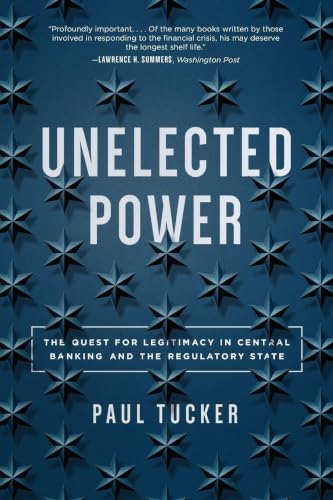
Lawrence H. Summers, former U.S. Treasury Secretary and Harvard professor, highlights this book as a key resource for understanding the vital need for accountability among unelected officials. His experience overseeing economic policy at the highest levels lends weight to his endorsement. Summers points to Paul Tucker’s deep insights on how central bankers and regulators operate behind the scenes, shaping policy without direct electoral mandate. He notes the book’s clear-eyed approach to reconciling technical independence with democratic legitimacy, calling it essential reading for anyone grappling with modern governance challenges.
Paul Tucker is a fellow at the Harvard Kennedy School and chair of the Systemic Risk Council. For more than thirty years, he was a central banker and regulator at the Bank of England and the Bank for International Settlements. He lives in London.
Drawing from three decades as a central banker and regulator, Paul Tucker explores the complex role of unelected officials in modern economic governance. You’ll gain insight into how central bankers, regulators, and technocrats wield significant influence without direct electoral mandate, and what mechanisms ensure their accountability and legitimacy within constitutional democracies. The book delves into real-world examples from the UK, US, EU, and beyond, offering a nuanced analysis of balancing political insulation with democratic oversight. This depth makes it particularly relevant for policymakers, legal scholars, and anyone interested in the intersection of economics and governance.
Matthew Krantz, personal finance and management editor at Investor's Business Daily, along with Robert R. Johnson, PhD, CFA, CAIA and professor at Creighton University, bring unmatched expertise to this book. Their combined academic and editorial backgrounds inform a guide designed to demystify investment banking, making complex topics accessible for newcomers and students. Their hands-on experience in finance education ensures you receive practical knowledge grounded in real-world applications.
Matt Krantz is the personal finance and management editor at Investor's Business Daily. Matt's recent books include Online Investing For Dummies and Fundamental Analysis For Dummies. Robert R. Johnson, PhD, CFA, CAIA, is a Professor of Finance at Creighton University, where he teaches in the Master of Security Analysis and Portfolio Management Program.
Drawing from their combined expertise in finance and education, Matthew Krantz and Robert R. Johnson deliver a clear, approachable guide to the complex world of investment banking. You’ll gain insight into key operations like venture capital, mergers and acquisitions, equity underwriting, and debt instruments, alongside risk management strategies covering market, credit, and legal risks. The book’s new chapters on cryptocurrencies and high-profile IPOs such as Uber and Airbnb provide relevant updates to the industry’s evolving landscape. If you're stepping into investment banking or seeking to understand its core mechanisms, this book offers a straightforward foundation without unnecessary jargon.
Best for advanced investment banking valuation skills
Kindle version available
Joshua Rosenbaum, Managing Director and Head of the Industrials & Diversified Services Group at RBC Capital Markets, brings a wealth of real-world experience to this guide. His leadership role in major M&A and capital markets transactions, combined with his Harvard MBA credentials, informs a text that serves as both a primer and advanced manual. This book reflects his commitment to clear, accessible instruction on valuation and deal execution, making it a practical tool for anyone serious about investment banking.
Joshua Rosenbaum is a Managing Director and Head of the Industrials & Diversified Services Group at RBC Capital Markets, where he also serves on the Management Committee for the U.S. Investment Bank. He originates, structures, and advises on M&A, corporate finance, and capital markets transactions. Previously, he worked at UBS Investment Bank and the International Finance Corporation, the direct investment division of the World Bank. He received his AB from Harvard and his MBA with Baker Scholar honors from Harvard Business School. He is also the co-author of The Little Book of Investing Like the Pros.
Drawing from Joshua Rosenbaum's extensive career as a Managing Director at RBC Capital Markets, this book demystifies the core techniques of investment banking with a focus on valuation, LBOs, M&A, and IPOs. You’ll gain a clear understanding of how to conduct comparable company analysis, discounted cash flow modeling, and precedent transaction reviews, supported by six downloadable financial models to practice with. The text is structured to build your expertise systematically, making complex deal-making concepts accessible whether you’re a student or a seasoned professional. While it demands attention to detail, the book rewards you with the practical skills needed for high-stakes financial analysis and deal execution.
Best for insider view of central banking operations
Kindle version available
Joseph J Wang spent five years as a senior trader on the Federal Reserve's Open Markets Desk, placing him at the core of the global dollar system. Holding degrees in economics, law, and financial economics from Northwestern, Columbia, and Oxford, Wang draws on his unique vantage point to demystify how the Fed truly operates. This book reflects his firsthand experience, offering readers a clear window into the sometimes opaque world of central banking and monetary policy.
Joseph J Wang spent five years studying the plumbing of the financial system as a senior trader on the open markets desk. The Desk sits at the center of the dollar system as its ultimate and infinite provider of dollars. He holds a B.A. in Economics from Northwestern University, a J.D. from Columbia Law School, and an MSc. in Financial Economics from Oxford University.
2021·225 pages·Banking, Finance, Monetary Policy, Central Banking, Financial Markets
After five years as a senior trader on the Federal Reserve's Open Markets Desk, Joseph J Wang offers a rare insider's perspective on central banking. You’ll learn how the Fed’s market operations function daily—from quantitative easing to emergency liquidity maneuvers—and how these actions ripple through the global financial system. The book breaks down complex mechanisms like money creation and the global dollar system, making them accessible without oversimplifying. If you're aiming to grasp the real workings behind monetary policy and financial crises, this book delivers clear, experience-driven insights that go beyond textbook theory.
Sanjay Bakshi, a finance professor and investment expert, found this book invaluable for its firsthand account of bank failures and regulatory challenges. He shared, "A while back, I read this book written by someone who witnessed dozens of bank failures. A very fascinating book. Learnt a lot by reading it." Bakshi’s endorsement highlights how Bovenzi’s insider perspective deepened his understanding of the FDIC’s quiet but powerful role during financial turmoil, offering lessons that resonate beyond academia and into practical banking decisions.
“@rohitchauhan A while back, I read this book written by someone who witnessed dozens of bank failures. A very fascinating book. Learnt a lot by reading it.” (from X)
John F. Bovenzi draws from over two decades of senior leadership within the FDIC to reveal how this quiet agency wields enormous influence over U.S. financial markets. You get a close-up view of the bank failures, bailouts, and regulatory battles that shaped the modern banking landscape, including insights into the internal dynamics between regulatory bodies and the pressures faced during crises. Chapter 4, for example, walks you through the FDIC’s decision-making in the Savings and Loan crisis, highlighting how government authority and public funds are deployed under stress. This book benefits anyone intrigued by the intersection of finance, regulation, and government intervention — especially professionals seeking a nuanced understanding of crisis management in banking.
Best for real estate investors using banking strategies
Kindle version not available
Darren Mitchell is a seasoned real estate investor and financial educator, known for his expertise in wealth-building strategies. With years of experience in the industry, he has helped countless individuals understand the principles of infinite banking and how to leverage them for financial success. His insights are grounded in practical applications, making complex financial concepts accessible to a broad audience.
Darren Mitchell is a seasoned real estate investor and financial educator, known for his expertise in wealth-building strategies. With years of experience in the industry, he has helped countless individuals understand the principles of infinite banking and how to leverage them for financial success. His insights are grounded in practical applications, making complex financial concepts accessible to a broad audience.
2021·Banking, Wealth Building, Real Estate, Investment Strategy, Financial Planning
Darren Mitchell is a seasoned real estate investor and financial educator who wrote this book to demystify how wealthy individuals use infinite banking to control and grow their money. You’ll learn how to apply the infinite banking concept specifically within real estate investing, with strategies on leveraging cash flow and compounding wealth through whole life insurance policies. The book breaks down financial mechanisms that often seem complex, making them accessible for investors looking to optimize their capital management. If you’re serious about integrating innovative banking strategies into your real estate portfolio, this book offers clear insights, though it’s best suited for those already familiar with basic investment principles.
Frederic S. Mishkin, Alfred Lerner Professor of Banking and Financial Institutions at Columbia Business School and former Federal Reserve governor, brings unmatched expertise to this work. His extensive career, spanning influential roles in academia and central banking, informs a nuanced perspective on monetary policy and financial systems. Mishkin's firsthand experience with the Federal Reserve and global financial reform shapes the book’s insightful analysis, making it a reliable resource for understanding today's banking landscape.
Frederic S. Mishkin is the Alfred Lerner Professor of Banking and Financial Institutions at the Graduate School of Business, Columbia University. He is also a Research Associate at the National Bureau of Economic Research, co-director of the US Monetary Policy Forum, a member of the Squam Lake Working Group on Financial Reform, and past president of the Eastern Economics Association. Since receiving his PhD from the Massachusetts Institute of Technology in 1976, he has taught at the University of Chicago, Northwestern University, Princeton University, and Columbia. He has also received an honorary professorship from the People's (Renmin) University of China. From 1994 to 1997, he was Executive Vice President and Director of Research at the Federal Reserve Bank of New York and an associate economist of the Federal Open Market Committee of the Federal Reserve System. From September 2006 to August 2008, he was a member (governor) of the Board of Governors of the Federal Reserve System. Professor Mishkin's research focuses on monetary policy and its impact on financial markets and the aggregate economy. He is the author of more than 20 books, including Macroeconomics: Policy and Practice, 2nd Edition (Pearson, 2015); Financial Markets and Institutions, 9th Edition (Pearson, 2018); Monetary Policy Strategy (MIT Press, 2007); The Next Great Globalization: How Disadvantaged Nations Can Harness Their Financial Systems to Get Rich (Princeton University Press, 2006); Inflation Targeting: Lessons from the International Experience (Princeton University Press, 1999); Money, Interest Rates, and Inflation (Edward Elgar, 1993); and A Rational Expectations Approach to Macroeconometrics: Testing Policy Ineffectiveness and Efficient Markets Models (University of Chicago Press, 1983). In addition, he has published more than 200 articles in such journals as American Economic Review, Journal of Political Economy, Econometrica, Quarterly Journal of Economics, Journal of Finance, and Journal of Monetary Economics.
What happens when deep Federal Reserve experience meets the complexities of financial markets? Frederic Mishkin, with decades spent shaping monetary policy and teaching at top universities, delivers a clear framework to understand money, banking, and financial markets. You’ll grasp how monetary policy influences the economy, the nuances of banking regulation, and the global integration of financial systems. Chapters like those on the internationalization of finance and the mechanics of the Federal Reserve offer concrete insights. This book suits you if you want a rigorous yet accessible guide that connects economic theory with today’s financial realities.
The best Banking books and more, in your inbox each week. No account needed.
Conclusion
This curated collection reveals banking as a multifaceted world—shaped by history, technology, regulation, and social justice. Whether you're tackling systemic inequality, mastering risk management, or navigating fintech disruption, these books provide foundational insights.
If you're grappling with regulatory challenges, start with 'Principles of Banking Regulation' and 'Inside the FDIC.' For rapid adaptation to digital banking, combine 'Bank 4.0' with 'Banks and Fintech on Platform Economies.' Those seeking nuanced views on racial and social issues will find 'The Color of Money' and 'Banking on Freedom' illuminating.
Alternatively, you can create a personalized Banking book to bridge general principles with your specific context. These books can help you accelerate your learning journey and confidently engage with banking's evolving landscape.
Frequently Asked Questions
I'm overwhelmed by choice – which book should I start with?
Start with a book that matches your current focus. For banking fundamentals, 'The Principles of Banking' grounds you in key concepts. If social justice interests you, 'The Color of Money' offers a compelling entry point. Choosing a book aligned with your goals will make the learning journey more manageable and rewarding.
Are these books too advanced for someone new to Banking?
Not at all. Titles like 'Investment Banking For Dummies' are designed for beginners, while others provide deeper dives for seasoned readers. This range ensures you can progress at your own pace, building from foundational knowledge to complex insights.
What's the best order to read these books?
Consider starting with broad overviews such as 'Economics of Money, Banking and Financial Markets' to set the stage. Then explore specialized topics like regulation, fintech innovation, or social impact. Tailor the sequence to your interests for maximum benefit.
Should I start with the newest book or a classic?
Both have value. Newer books like 'Limitless' capture recent developments and crises, while classics provide enduring principles. A balanced mix helps you understand both current trends and foundational concepts.
How do I know if a book is actually worth my time?
Look for endorsements from credible experts featured here—figures like Benjamin Watson and Charles P. Pierce have vetted these works. Additionally, books offering detailed case studies and practical frameworks often deliver the most actionable insights.
Can I get a book tailored specifically to my banking interests and experience?
Yes! While these expert-recommended books cover broad topics, personalized books can focus on your unique background and goals. They bridge expert insights with your specific needs. Explore creating a personalized Banking book to get targeted guidance in just minutes.
📚 Love this book list?
Help fellow book lovers discover great books, share this curated list with others!