20 Capitalism Books That Separate Thought Leaders from Amateurs
Insights from Satya Nadella, Bill Gates, and Paul Krugman highlight critical capitalism books for deeper economic understanding
Updated on June 28, 2025·We may earn commissions for purchases made via this page
19 of 20 books have Kindle versions
We're launchingLaunching on Product Hunt today 🎉We just launchedJust launched on Product Hunt 🎉
Modelpeers, from the BookAuthority teamFrom the BookAuthority team: Modelpeers, a free way to follow AI models and agents like you follow people. We'd love your support.
What if the economic system that shapes so much of our lives is far more complex—and contested—than most realize? Capitalism, often seen as the engine of prosperity, is simultaneously praised, critiqued, and reimagined across decades and continents. Today, understanding capitalism's many faces is more urgent than ever as societies wrestle with inequality, climate change, and technological disruption.
Leaders like Satya Nadella, CEO of Microsoft, have drawn from deep economic histories, endorsing works such as Thomas Piketty's analysis of wealth inequality. Meanwhile, Bill Gates highlights thoughtful critiques like Paul Collier’s call for ethical capitalism reform. These voices reflect a diverse, expert-driven dialogue, showing how these books inform not only policy but also business leadership and social responsibility.
While these expert-curated books provide proven frameworks, readers seeking content tailored to their specific economic background, industry focus, or learning goals might consider creating a personalized Capitalism book that builds on these insights with customized depth and practical application.
Steven Pinker, a cognitive psychologist known for his extensive work on human nature and society, highlights Johan Norberg's ability to present capitalism with clarity and grace, emphasizing openness to ideas as essential for well-being. Pinker's endorsement reflects his deep understanding of social and economic systems, making this recommendation particularly influential. The book's nuanced approach also resonated with Margaret Heffernan, a CEO and author, who found Norberg's insights on human curiosity and imagination inspiring. These endorsements suggest the book offers a thoughtful and hopeful perspective for anyone interested in the future of global markets and economic policy.
Johan Norberg is a historian, lecturer, and commentator. He is a senior fellow at the Cato Institute in Washington DC and his books have been translated into twenty-five languages. His books include the international bestseller Progress and Open, which was an Economist book of the year. Norberg regularly writes for publications such as The Wall Street Journal, Reason, and HuffPost.
Drawing from his extensive experience as a historian and senior fellow at the Cato Institute, Johan Norberg argues for the critical role of free markets in fostering prosperity and innovation. He challenges the prevailing narrative that capitalism primarily benefits a select few, instead illustrating how global capitalism has lifted millions out of poverty and spurred technological progress. Through incisive analysis, including discussions on trade, inequality, and social exclusion, you gain a nuanced understanding of capitalism's complex impact on today’s world economy. This book suits anyone seeking a thoughtful defense of market economies amid growing skepticism and geopolitical shifts.
Satya Nadella, CEO of Microsoft, brings a unique perspective to capitalism, combining leadership of a global tech giant with an understanding of economic forces shaping innovation and growth. His endorsement lends significant credibility, suggesting this book's insights resonate beyond academia into the business world. Adil Najam, dean at Boston University's Pardee School of Global Studies, highlights the book's powerful messaging and real-world relevance, underscoring its importance in conversations about inequality and economic reform. Together their recommendations point to a work that connects deep economic history with contemporary challenges in capitalism.
“It seems safe to say that Capital in the Twenty-First Century, the magnum opus of the French economist Thomas Piketty, will be the most important economics book of the year—and maybe of the decade.” (from Amazon)
Thomas Piketty is a French economist who works on wealth and income inequality. He is a professor at the École des hautes études en sciences sociales (EHESS) and at the Paris School of Economics. Piketty is known for his best-selling book, which emphasizes themes of wealth concentration and distribution over the past 250 years. He argues that the rate of capital return in developed countries is persistently greater than the rate of economic growth, leading to increasing wealth inequality. Piketty advocates for redistribution through a progressive global tax on wealth.
After analyzing extensive historical data across multiple countries, Thomas Piketty developed a detailed examination of wealth accumulation and inequality trends over centuries. You learn how returns on capital consistently outpace economic growth, leading to widening disparities that challenge democratic values. The book dives deep into economic structures and political responses shaping inequality, with chapters exploring wealth concentration since the eighteenth century. If you seek a rigorous understanding of capitalism's evolving dynamics and the forces driving economic inequality, this book offers a solid foundation, though its dense analysis demands focused attention.
New York Times Bestseller
Amazon #1 Bestseller
Financial Times and McKinsey Business Book of the Year Award
This AI-created book on capitalism economics is tailored to your background, skill level, and specific interests. By sharing your goals and topics of focus, you receive a book that matches your learning needs and guides you through complex economic concepts with clarity. This personalized approach helps you explore how capitalism functions in real-world contexts, ensuring your study is relevant and engaging.
TailoredRead AI creates personalized nonfiction books that adapt to your unique background, goals, and interests. Instead of reading generic content, you get a custom book written specifically for your profession, experience level, and learning objectives. Whether you're a beginner looking for fundamentals or an expert seeking advanced insights, TailoredRead crafts a book that speaks directly to you. Learn more.
2026·50-300 pages·Capitalism, Capitalism Principles, Economic Systems, Market Dynamics, Wealth Distribution
This tailored book explores the core principles and real-world impacts of capitalism with a focus shaped by your unique background and interests. It examines capitalism’s evolution, economic mechanisms, and social consequences, providing a personalized pathway through complex ideas adapted to your specific goals. By synthesizing diverse perspectives and in-depth analysis, it reveals how capitalism operates in different contexts, from global markets to local economies. The approach is designed to deepen your understanding by connecting foundational theories to contemporary challenges and opportunities, all aligned with your personal learning priorities. This personalized guide ensures you engage deeply with the nuances of capitalism in a way that matches your experience and ambitions.
Yancey Strickler, cofounder and former CEO of Kickstarter, discovered this book during a pivotal moment seeking new ways to evolve society's economic systems. He explains, "Capitalism as we know it has gotten us this far, but to take the next steps forward as a society and species we need new ways of seeing and acting on our world. That's exactly what Rebecca Henderson's book helps us do." His endorsement highlights how the book reshaped his thinking about capitalism's future, emphasizing its timely call to reimagine the system for broader prosperity. Following him, Doug McMillon, Walmart's CEO, also praises Henderson's provocative exploration of business's role in tackling urgent social and environmental challenges, reinforcing why this book deserves your attention.
“Capitalism as we know it has gotten us this far, but to take the next steps forward as a society and species we need new ways of seeing and acting on our world. That's exactly what Rebecca Henderson's book helps us do. This is a smart, timely, and much-needed reimagining of what capitalism can be.” (from Amazon)
Rebecca Henderson is a professor at Harvard Business School, known for her work on innovation and business strategy. She has published extensively on the intersection of business and social issues, advocating for a reimagined capitalism that prioritizes stakeholder value and sustainability.
Rebecca Henderson, a Harvard Business School professor, challenges the entrenched idea that business exists solely to maximize shareholder profit. Instead, she presents a thoughtful critique of free market capitalism's environmental and social costs, grounding her insights in economics, psychology, and organizational behavior. You’ll explore how companies can evolve toward models that harmonize profit with social justice and ecological sustainability, supported by case studies of pioneering firms and discussions on government and financial reforms. If you want a nuanced understanding of capitalism’s moral challenges and practical alternatives, this book offers a clear-eyed, well-researched pathway.
Jamie Dimon, CEO of JPMorgan Chase, offers a powerful endorsement of Ken Langone's memoir, emphasizing its authentic portrayal of capitalism in action. He describes the book as "Insightful and inspirational. Ken reminds us of a very important lesson—that capitalism does work. An authentic, up-by-the-bootstraps story by a shining example of the American dream." Dimon's perspective carries weight, given his leadership in global finance, and he credits the book with reaffirming faith in free enterprise during challenging times. This endorsement signals to you that Langone’s story isn’t just personal—it’s a lens on economic opportunity that resonates broadly. Additionally, Eric Cressey, noted sports performance expert, highlights the book’s cross-industry lessons, making it relevant beyond traditional business circles.
“Insightful and inspirational. Ken reminds us of a very important lesson—that capitalism does work. An authentic, up-by-the-bootstraps story by a shining example of the American dream.” (from Amazon)
Ken Langone is an iconoclastic entrepreneur and co-founder of Home Depot, with a net worth beyond his wildest dreams. He has served as a director of the New York Stock Exchange and is a world-class philanthropist, donating $200 million to NYU's Langone Health. In his memoir, he shares his journey from a poor boy in Long Island to one of America's most successful businessmen, defending the American Dream and emphasizing the importance of free enterprise.
Ken Langone’s memoir emerges from decades as a foundational figure in American business, co-founding Home Depot and serving on the New York Stock Exchange. In this book, you get a candid look at his rise from humble beginnings on Long Island to billionaire entrepreneur, revealing the gritty realities behind major deals and the legal battles that shaped his career. Langone goes beyond autobiography, making a case for free enterprise as the engine of opportunity, illustrating how hard work and perseverance can unlock the American Dream. This is a practical read for anyone wanting insight into valuation, deal-making, and the personal grit behind headline successes.
Lina Alhathloul Yemencantwait, coauthor and human rights advocate, discovered this book during her work advocating for digital rights and freedom. She calls it her best read of 2021, urging others to engage with its insights or at least watch interviews by the author. Her recommendation highlights how the book deepened her understanding of the digital economy's threats to human autonomy. This perspective shows why anyone interested in the intersection of capitalism and technology should consider this work. Alongside her, Mohamed A. Elerian, Chief Economic Adviser to Allianz, also pointed to its relevance for understanding economic shifts caused by surveillance technologies.
“Hi friends ! Please read @shoshanazuboff’s book THE AGE OF SURVEILLANCE CAPITALISM, it’s my best read of 2021. If you don’t have time, please watch this interview at least :” (from X)
Shoshana Zuboff is the Charles Edward Wilson Professor Emeritus at Harvard Business School. She is the Co-Director of the International Research Fellowship on Surveillance Capitalism or Democracy at the Harvard Kennedy School’s Carr Center for Human Rights Policy. Zuboff’s work has been recognized with the Axel Springer Award, the EPIC Lifetime Achievement Award, and the Global Privacy Assembly Giovanni Buttarelli Award.
Drawing from her extensive academic career at Harvard Business School and deep involvement in human rights policy, Shoshana Zuboff meticulously explores the rise of "surveillance capitalism," a new economic order where corporations predict and manipulate behavior for profit. You learn how this unprecedented form of power operates through "behavioral futures markets" and impacts democracy, privacy, and individual autonomy. Chapters detail the mechanisms of behavioral modification and the digital architecture that threatens personal freedom. This book is particularly suited for those concerned with the ethical and societal consequences of technology-driven capitalism and the future of democratic governance.
This AI-created book on capitalism adoption is designed around your economic background, current understanding, and specific goals. By sharing which aspects of capitalism you want to focus on and your skill level, you receive a tailored guide that concentrates directly on your priorities. This approach ensures that complex economic concepts are presented in a way that resonates with your experience, helping you take meaningful steps toward practical economic change.
TailoredRead AI creates personalized nonfiction books that adapt to your unique background, goals, and interests. Instead of reading generic content, you get a custom book written specifically for your profession, experience level, and learning objectives. Whether you're a beginner looking for fundamentals or an expert seeking advanced insights, TailoredRead crafts a book that speaks directly to you. Learn more.
2026·50-300 pages·Capitalism, Economic Change, Market Dynamics, Business Adaptation, Financial Strategy
This tailored book explores the dynamic landscape of modern capitalism with a focus on actionable steps tailored to your interests and background. It examines how contemporary economic shifts reshape markets, business practices, and societal impact, offering a personalized pathway to grasp and apply these concepts effectively. The content reveals practical approaches to adopting capitalism strategies over a 90-day timeline, blending foundational knowledge with forward-looking insights that match your specific goals. By focusing on your unique perspective, this book facilitates deeper understanding and sharper application of economic change in real-world contexts, making complex ideas accessible and relevant to your individual journey.
Mark Suster, an American entrepreneur and managing partner at Upfront Ventures, found his understanding of U.S. history profoundly reshaped by this book. He describes it as "enlightening", highlighting how it narrates American history through the prism of capitalism, a perspective that deepened his appreciation for economic forces shaping the nation. His recommendation carries weight given his extensive experience in venture capital and entrepreneurship, suggesting this book offers valuable insights for anyone curious about the intersection of business and history. Alongside him, Samir Arora praises the accessible chapters and engaging storytelling, reinforcing the book's appeal to those who want a business-focused view of America's past.
“@zachcoelius I highly recommend Americana. It’s enlightening. And tells US history through capitalism. And then this book - Splendid Exchange - does a great job of the same though globally. Changed so much about my understanding of the world” (from X)
Bhu Srinivasan is an accomplished media entrepreneur whose career has spanned digital media, pop culture, technology, publishing, and financial content. Srinivasan arrived in the U.S. with his family at the age of eight, and as a child lived in the South, the Rust Belt, Southern California, and the Pacific Northwest. He lives in New Canaan, CT with his wife and four children.
Bhu Srinivasan, a media entrepreneur shaped by diverse American regions, examines 400 years of U.S. capitalism through the inventions and industries that defined its history. You’ll explore how innovations like the telegraph and railroads, as well as brands such as KFC, connect with broader economic trends and cultural shifts. The book offers specific insights into the evolution of American enterprise, from Andrew Carnegie’s rise to the roots of Silicon Valley startups. If you want to understand American history through the lens of business and innovation, this narrative will expand your perspective; however, those seeking a purely political or social analysis might find it less central.
The New York Times Book Review, a leading authority in literary criticism, highlights this book as "[a] sweeping treatise on inequality in America... a rallying call." Their perspective carries weight, given their role in shaping public discourse on economics and politics. This endorsement reflects the book's capacity to deepen your understanding of America's economic challenges and inspire action. Complementing this, Publisher's Weekly finds it "arresting" and "thought-provoking," emphasizing its urgent call to reverse income inequality's growing trend. Together, these insights suggest this book offers a compelling lens through which to examine capitalism's current state.
Robert B. Reich is Chancellor’s Professor of Public Policy at the University of California, Berkeley, and senior fellow at the Blum Center for Developing Economies. He has served in three national administrations and has written fourteen books, including The Work of Nations, which has been translated into twenty-two languages, and the best sellers Supercapitalism and Locked in the Cabinet. His articles have appeared in The New Yorker, The Atlantic, The New York Times, The Washington Post, and The Wall Street Journal. He is co-creator of the award-winning 2013 film Inequality for All. He is also chair of the national governing board of Common Cause. He lives in Berkeley.
After decades as a public policy professor and government official, Robert B. Reich lays bare the widening economic divide in America, exposing how power and money have reshaped capitalism to favor the few. You’ll gain a clear understanding of how myths like merit-based pay and free markets mask systemic inequalities, supported by detailed chapters dissecting corporate influence and wage stagnation. This book suits anyone interested in the intersection of economics and democracy, particularly those looking to grasp why the middle class is shrinking and what policy shifts could restore balance. Reich’s pragmatic tone encourages civic engagement without sugarcoating the challenges ahead.
Colson Whitehead, a Pulitzer Prize-winning author, praised this book for its persuasive exploration of the economic foundations of slavery, calling it a "fleet, persuasive take on the materialist underpinnings of the 'peculiar institution.'" His deep understanding of American history lends weight to his endorsement, highlighting how this book reshaped his perspective on the economic forces behind slavery and capitalism. Whitehead's recommendation signals to you that this work offers not just historical facts but a challenging reconsideration of America's economic past. Alongside him, Alicia Garza, co-creator of Black Lives Matter, underscores the book’s relevance today, noting it explains how the legacy of slavery continues to influence current institutions.
Edward E. Baptist is an associate professor of history at Cornell University. Author of the award-winning Creating an Old South, he grew up in Durham, North Carolina. He lives in Ithaca, New York.
Edward E. Baptist, a history professor at Cornell University, wrote this book to challenge conventional narratives about American economic development by exposing how deeply slavery was woven into the rise of capitalism. You gain a detailed understanding of how the expansion of slavery fueled the transformation of the U.S. economy, illustrated through personal slave accounts and plantation records that reveal the human cost behind economic growth. The book particularly benefits those seeking to grasp the intersection of economic history and social injustice, offering insights into the roots of modern American capitalism. Chapter analyses and the use of intimate narratives make the systemic connections clear without abstraction.
Declan Ganley, a seasoned entrepreneur and CEO at Rivada Networks, highlights how Thomas Philippon, a NYU Stern Business School professor, incisively captures the dynamics of American markets losing their competitive edge. Ganley points to Philippon's analysis as a crucial examination of corporate power concentration that reshaped his understanding of market failures. His review, "NYU Stern Business School Professor @ThomasPHI2 nails all of this in his book 'The Great Reversal'", underscores the book's influence on his perspective about economic inequality and market regulation. This insight makes the book a valuable read if you want to grasp the complex forces reshaping capitalism today. Additionally, historian and economist Adam Tooze acknowledges the book's relevance by connecting its findings to real-world issues like overpriced broadband, reinforcing its practical importance.
Thomas Philippon is the Max L. Heine Professor of Finance at the Stern School of Business, New York University. He was named one of the top 25 economists under 45 by the IMF and won the Bernácer Prize for Best European Economist. He currently serves as an academic advisor to the Financial Stability Board and to the Hong Kong Institute for Monetary and Financial Research. He was previously an advisor to the New York Federal Reserve Bank and a board member of the French prudential regulatory authority.
2019·368 pages·Capitalism, Economics, Market Concentration, Antitrust, Corporate Power
Thomas Philippon challenges the common narrative that capitalism's flaws stem from globalization or inherent market failures, instead spotlighting the growing concentration of corporate power in America. Drawing on extensive research, he reveals how dominant firms suppress competition through lobbying, inflating prices and hampering investment and innovation. You'll find detailed analyses like the comparison of U.S. cell-phone pricing with Europe's, where competitive markets yield lower costs. This book is especially suited for those interested in economic policy, market structures, and the forces shaping inequality. If you want to understand why American markets have tilted away from free competition and what that means for growth, this book offers a compelling exploration without oversimplifying the issues.
The Sunday Times (UK), a leading UK newspaper with deep expertise in economic affairs, described this book as "a lively, accessible and provocative book." Their assessment reflects how Ha-Joon Chang's critique of free-market economics challenged their understanding of capitalism's foundations during a time of global economic uncertainty. This fresh perspective invites you to reconsider the narratives you've accepted about markets and wealth. Supporting this, The Independent (UK) also praises the book as a "myth-busting and nicely-written collection of essays," reinforcing why this work remains influential for those questioning mainstream economic thought.
Ha-Joon Chang is Assistant Director of Development Studies in the Faculty of Economics and Politics at the University of Cambridge. He is a prominent economist known for his critical views on free-market ideologies. His previous works include the bestselling 'Bad Samaritans: The Myth of Free Trade and the Secret History of Capitalism' and 'Kicking Away the Ladder', which received the 2003 Myrdal Prize. Chang's insights challenge conventional economic theories and advocate for a balanced approach to capitalism that includes state intervention.
Ha-Joon Chang, an economics professor at the University of Cambridge, takes a critical eye to the assumptions underpinning free-market capitalism. Rather than accept prevailing orthodoxies, he exposes myths such as the idea of a truly free market and the belief that making the rich richer benefits everyone. You’ll find chapters that challenge common wisdom—like how the washing machine changed society more than the internet—and a final vision for reshaping capitalism toward more humane goals. This book suits anyone looking to understand the economic forces shaping our world beyond textbook theory, especially those skeptical of neoliberal narratives.
Leonardo DiCaprio, renowned actor and environmentalist, endorses this book due to his deep commitment to climate advocacy. His extensive work in environmental causes lends weight to his choice, signaling this book’s critical relevance for understanding capitalism’s clash with climate challenges. DiCaprio’s support highlights the book’s authority in connecting economic systems with environmental outcomes. Additionally, Robert Kennedy praises Klein’s incisive political insight, likening her impact to Jared Diamond’s in history, which reinforces the book’s stature as a significant intellectual contribution.
Naomi Klein is an award-winning journalist, columnist, and author of the New York Times and international bestsellers The Shock Doctrine, No Logo, This Changes Everything, and No Is Not Enough. A Senior Correspondent for The Intercept, reporter for Rolling Stone, and contributor for both The Nation and The Guardian, Klein is the inaugural Gloria Steinem Endowed Chair in Media, Culture, and Feminist Studies at Rutgers University. She is co-founder of the climate justice organization The Leap. Klein's books have been published in over 35 languages and have received multiple awards, including the 2014 Hilary Weston Writers’ Trust Prize for Nonfiction.
What if everything you thought about capitalism's role in climate change was mistaken? Naomi Klein, an award-winning journalist and climate justice advocate, argues that the free market ideology itself is at odds with addressing the climate crisis. You’ll explore how entrenched economic systems perpetuate environmental destruction and why transformative political and economic restructuring is necessary, with detailed case studies on disaster capitalism and community-led regenerative economies. This book is best suited for anyone ready to critically examine capitalism’s impact on the environment and consider bold alternatives to the status quo.
2014 Hilary Weston Writers’ Trust Prize for Nonfiction
Bill Gates, co-founder of Microsoft and a leading philanthropist with deep insight into global economic challenges, recommends this book for its realistic and ethical examination of capitalism’s fractures. His perspective underscores the importance of pragmatic solutions to the divides threatening Western societies today. Alongside him, Trevor Ncube, a seasoned media executive, praises the book’s integration of values and practical reasoning, highlighting its intellectual depth. Their endorsements emphasize the book’s credibility and its value for anyone seeking to understand and address capitalism’s evolving anxieties.
Paul Collier is the Professor of Economics and Public Policy at the Blavatnik School of Government. He is the author of The Bottom Billion, which won the Lionel Gelber Prize and the Arthur Ross Prize awarded by the Council on Foreign Relations, The Plundered Planet, Exodus and Refuge (with Alexander Betts). Collier has served as Director of the Research Department of the World Bank, and consults with the German and many other governments around the world.
2018·256 pages·Capitalism, Economics, Social Ethics, Political Reform, Economic Inequality
After analyzing the growing social and economic fractures in Western societies, Paul Collier developed a thoughtful critique of capitalism’s current failures and practical proposals to mend them. Drawing from his experience bridging divides—from working-class Sheffield to elite Oxford and Africa—he challenges the neglect of ethical obligations that once upheld social democracy. You’ll gain a nuanced understanding of how cultural, economic, and political rifts undermine cohesion, and explore ideas like restoring a sense of belonging and patriotism as foundations for reform. This book suits anyone grappling with capitalism’s tensions or seeking realistic pathways toward a fairer economic order.
The Spectator, a respected UK publication known for its analysis of economics and society, highlights the book as "[a] reminder that capitalism can take kindlier forms: microfinance pioneer Yunus explains how he believes social enterprise can redeem what he regards as the failed promise of free markets." Their perspective underscores the transformative potential Yunus sees in social business, challenging traditional capitalist models. This insight can reshape how you think about profit and purpose. Similarly, The Independent points out the book’s passionate call for creating ventures that blend financial success with social good, offering a thoughtful critique that adds depth to the conversation around capitalism's future.
“[A] reminder that capitalism can take kindlier forms: microfinance pioneer Yunus explains how he believes social enterprise can redeem what he regards as the failed promise of free markets.” (from Amazon)
Muhammad Yunus was born in Chittagong, Bangladesh, educated at Dhaka University, was awarded a Fulbright scholarship to study economics at Vanderbilt University, and became head of the economics department at Chittagong University in 1972. He is the founder and managing director of Grameen Bank. Yunus and Grameen Bank are winners of the 2006 Nobel Peace Prize. Karl Weber is a writer based in Irvington, New York. He co-authored Yunus’s best-selling book, Creating a World Without Poverty.
What happens when economics expertise meets social activism? Muhammad Yunus, a Nobel Peace Prize winner known for pioneering microcredit, brings fresh perspective to capitalism with his concept of social business. This book guides you through how profit-driven ventures can be structured to solve human problems sustainably, with examples from around the world showing social businesses in action. You’ll explore practical frameworks for designing enterprises that balance financial viability with social impact, and understand the policy shifts needed to support these models. If you’re interested in economics that serves broader humanity, this book offers clear insights and real-world applications.
Peter Boghossian, a philosopher known for his work on critical thinking, highlighted this book during his exploration of capitalism's evolving landscape. He praised it as a "brilliant and desperately needed book," emphasizing its timely critique of corporate America's entanglement with social justice issues. Boghossian's endorsement underlines how this work challenged his views on stakeholder capitalism and offers readers a fresh lens to understand current economic and cultural dynamics.
Vivek Ramaswamy is a New York Times bestselling author and entrepreneur who has founded multiple successful enterprises. A first-generation American, he is the founder and Executive Chairman of Roivant Sciences, a new type of biopharmaceutical company focused on the application of technology to drug development. He founded Roivant in 2014 and led the largest biotech IPOs of 2015 and 2016, eventually culminating in successful clinical trials in multiple disease areas that led to FDA-approved products. Mr. Ramaswamy was born and raised in southwest Ohio. He graduated summa cum laude in biology from Harvard in 2007 and began his career as a biotech investor at a prominent hedge fund. Mr. Ramaswamy continued to work as an investor while earning his law degree at Yale, where he was a recipient of the Paul and Daisy Soros Fellowship for New Americans. Mr. Ramaswamy was featured on the cover of Forbes magazine in 2015 for his work in drug development. In 2020 he emerged as a prominent national commentator on stakeholder capitalism, free speech, and woke culture. He has authored numerous articles and op-eds, which have appeared in the Wall Street Journal, National Review, Newsweek, and Harvard Business Review. Mr. Ramaswamy serves on the board of directors of the Philanthropy Roundtable and the Foundation for Research on Equal Opportunity.
2021·368 pages·Capitalism, Business, Corporate Governance, Social Justice, Stakeholder Capitalism
When Vivek Ramaswamy noticed the growing influence of politics within corporate America, he set out to expose the consequences of "stakeholder capitalism"—a trend that promises social progress but often masks economic and cultural manipulation. Drawing from his experience as a biotech entrepreneur and hedge fund partner, Ramaswamy reveals how corporations exploit social causes to divide consumers and dilute individual identity. You’ll gain insights into the inner workings of corporate boardrooms, Ivy League institutions, and nonprofit networks that perpetuate this phenomenon. This book suits those curious about the intersection of business, culture, and political influence, especially if you want to understand the forces reshaping American capitalism today.
Roy Sebag, founder of Goldmoney and Mene, brings deep expertise in economic philosophy and monetary systems, lending weight to his recommendation of this classic work. He highlights its detailed depiction of capitalism’s cooperative system where gold and silver function as money, emphasizing its enduring relevance. "I strongly recommend you brush up on some economic history," he notes, pointing to the book’s rich exploration of market cooperation. Sebag’s endorsement invites you to reconsider economic foundations through Smith’s original lens.
“@CSir2017 @Goldmoney Dear Christopher, I strongly recommend you brush up on some economic history. The first book I implore you to read is called "The Wealth of Nations". In the book, a system of cooperation is described in great detail (capitalism) where the money being employed is Gold and Silver.” (from X)
Adam Smith (1723-90) was a Scottish moral philosopher, pioneer of political economy, and a key figure in the Scottish Enlightenment. He is best known for two classic works: The Theory of Moral Sentiments (1759) and An Inquiry into the Nature and Causes of the Wealth of Nations (1776). The latter is considered his magnum opus and the first modern work of economics. Smith studied social philosophy at the University of Glasgow and at Balliol College, Oxford. He laid the foundations of classical free market economic theory, expounding how rational self-interest and competition can lead to economic prosperity. Smith's work remains influential in economics today.
Drawing from his background as a Scottish moral philosopher and pioneer of political economy, Adam Smith crafted this foundational text to analyze how individual self-interest can drive collective economic prosperity. You explore detailed observations of 18th-century economic and political structures, gaining insight into concepts like free markets, the division of labor, and the invisible hand. This book is ideal if you want to understand the roots of modern capitalism and the rationale behind market-driven economies. It may challenge those expecting a simple economic manual, as it blends philosophy with historical context and economic theory.
Donald J. Trump, the 45th President of the United States and a businessman with extensive experience in capitalism, praises Andrew Puzder's book for its sharp insights. Trump highlights Puzder's track record of success and describes the book as a notable contribution to understanding pro-business momentum in America. His endorsement points to the book’s value in framing the economic revival under the Trump administration, making it a compelling read if you want to grasp the political and economic shifts shaping modern capitalism.
“Great book just out by very successful businessman @AndyPuzder. Always known as somebody who knows how to win, “Capitalist Comeback” will be a big hit!” (from X)
Andrew Puzder is the former chief executive of CKE Restaurants, where he helped turn Hardee’s and Carl’s Jr. into the fast food powerhouses that they are today. Starting as the owner’s personal attorney in 1991, Puzder helped pull the company out of serious financial difficulties. Under his leadership, CKE has expanded to 3,700 restaurants globally.
2018·384 pages·Capitalism, Donald Trump, Political Economy, Economic Policy, Business Leadership
Andrew Puzder, bringing decades of executive experience as former CEO of Carl's Jr. and Hardee's, challenges the negative perceptions surrounding capitalism by tracing its historical and political battles in America. You gain insight into how profit motives have driven economic growth and the political forces that have opposed them, especially under progressive movements and labor unions. The book digs into the Trump administration’s pro-business policies, illustrating how these shifts might revive economic prosperity. If you want to understand the intersection of politics and capitalism through the lens of a seasoned businessman who rose from minimum wage to industry leader, this book offers a clear narrative and context-rich examples, including Puzder’s own thwarted cabinet nomination.
Dan Sullivan, a respected strategic planner and consultant, brings a broad perspective to his recommendation of this book. His expertise in guiding leaders through complex decisions highlights why Friedman's analysis of capitalism and freedom remains relevant for anyone interested in economic policy. Sullivan's endorsement signals that this work offers foundational insights valued by those shaping strategic futures, making it a significant read for professionals seeking to ground their understanding of economic systems.
Milton Friedman is a senior research fellow at the Hoover Institution, Stanford University, and the Paul Snowden Distinguished Service Professor Emeritus of Economics at the University of Chicago. In 1976 he was awarded the Nobel Prize in economics. He has written a number of books, including two with his wife, Rose D. Friedman—the bestselling Free to Choose and Two Lucky People: Memoirs, the latter published by the University of Chicago Press.
Milton Friedman's decades of economic research culminate in this influential exploration of how competitive capitalism underpins both economic and political freedom. You delve into arguments about the role government should play, examining chapters that challenge the balance between state intervention and individual liberty. For example, his analysis of monetary policy and education vouchers offers concrete insights you can debate or apply. This book suits anyone eager to understand capitalism's philosophical foundations and policy implications, though it may feel dense if you're looking for casual reading or purely contemporary case studies.
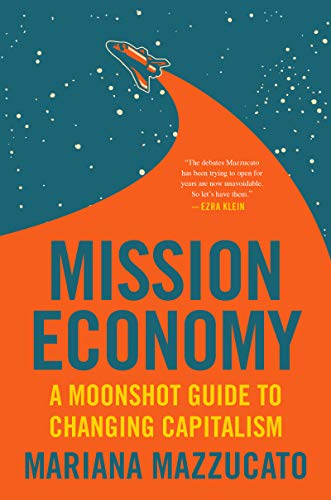
Ditmir Bushati, former Albanian Minister of Foreign Affairs, highlights the significance of this book in redefining government's role in the economy. His engagement with the text during his political career brought new perspectives on public purpose and wealth creation. He remarks, "Fascinating book by @MazzucatoM on rethinking the capacities and role of government within our economy and society, recovering a sense of public purpose." This insight underscores why you should consider this book if you want to explore innovative ways to reshape capitalism for broader social impact.
“Fascinating book by @MazzucatoM on rethinking the capacities and role of government within our economy and society, recovering a sense of public purpose. As part of progressive politics we need to talk more about wealth creation instead of just redistribution of wealth.” (from X)
Mariana Mazzucato (PhD) is Professor in the Economics of Innovation and Public Value at University College London (UCL), where she is Founding Director of the Institute for Innovation & Public Purpose (IIPP). She is the winner of international prizes including the 2018 Leontief Prize for Advancing the Frontiers of Economic Thought and the 2020 John von Neumann Award. Her award-winning books include The Entrepreneurial State: Debunking Public vs. Private Sector Myths (2013) and The Value of Everything: Making and Taking in the Global Economy (2018). She advises global policy makers and is Chair of the World Health Organization’s Council on the Economics of Health for All and a member of the UN’s High-level Advisory Board (HLAB) on Economic and Social Affairs.
2021·272 pages·Economy, Capitalism, Public Policy, Innovation, Government Role
Mariana Mazzucato, a leading economist focused on innovation and public value, challenges conventional economic thought by urging a collaborative, mission-driven approach to capitalism. Through detailed analysis, she shows how mobilizing collective resources, much like the Apollo moon mission, can address complex issues such as climate change, inequality, and health crises. You’ll explore frameworks for restructuring government and corporate roles to foster shared risk and reward, making capitalism more inclusive and sustainable. Chapters tackle topics from redefining public purpose to creating new models of corporate governance, offering insights for policymakers and citizens alike who want a tangible path toward systemic change.
Longlisted for 2021 Porchlight Business Book Awards
Alberto Garzón, an economist and human rights advocate, shared his appreciation for this book, noting its quality and insight. His endorsement underscores the book's relevance for those grappling with capitalism's complexities, especially as it relates to societal and economic challenges. Garzón's perspective as a policymaker lends weight to the book's analysis of capitalism's future, encouraging you to consider its balanced view on economic systems and inequality.
Branko Milanovic is a leading economist known for his extensive research on income inequality and global economic trends.
2019·304 pages·Capitalism, Economics, Globalization, Income Inequality, Political Economy
Branko Milanovic challenges the conventional wisdom that capitalism is a monolithic system by exploring its global dominance and diverse models in this thoughtful analysis. You’ll gain insights into why capitalism has outlasted other systems, alongside a critical look at its moral and economic trade-offs, such as inequality and instability. Chapters dissect liberal versus political capitalism, with case studies including Western economies and China, while also tackling contentious ideas like migration as an economic solution. If you want a nuanced understanding of capitalism’s current state and future challenges, this book equips you with both historical context and forward-looking perspectives.
Robin Sloan, a novelist known for blending storytelling with real-world craft, stumbled onto this book while exploring the economics behind his California olive oil business. He noted how the book reshaped his understanding of labor relations, pointing out that producers likely sourced olives from numerous peasants rather than a single wage-paying landowner. "You should check out this book, it's great!" Sloan’s insight reflects how the book challenges common assumptions about capitalism’s origins, offering you a nuanced lens that connects history with present-day economic realities.
“@p2p_editor (Not incidentally, our olive oil maker probably purchased olives from many landholding peasants rather than one landholding farmer who paid landless laborers a wage to harvest them. You should check out this book, it's great!)” (from X)
2017·224 pages·Capitalism, Economic History, Political Theory, Imperialism, Globalization
What happens when a historian with a keen eye on social relations examines capitalism? Ellen Meiksins Wood reveals that capitalism is not an inevitable outcome of human nature but a product of specific historical transformations in feudal Europe. You’ll explore how changes in social interactions and the environment crafted this economic system, with updated chapters on imperialism, globalization, and ecological crises. The book challenges simplistic views by distinguishing capitalism from other forms of commerce, making it essential for anyone curious about the roots and implications of modern economic structures.
The best Capitalism books and more, in your inbox each week. No account needed.
Conclusion
This collection paints capitalism as a system fraught with contradictions and opportunities. Themes of inequality, sustainability, and cultural impact weave through many volumes, urging readers to grapple with capitalism’s future rather than accept it as a fixed reality.
If you’re interested in understanding capitalism’s moral and economic dilemmas, start with works like Rebecca Henderson’s Reimagining Capitalism in a World on Fire and Robert Reich’s Saving Capitalism. For those looking to ground their perspective historically, Adam Smith’s The Wealth of Nations and Bhu Srinivasan’s Americana provide foundational context. Combining these can accelerate your grasp on both theory and practice.
Alternatively, you can create a personalized Capitalism book to bridge the gap between general principles and your specific situation. These books can help you accelerate your learning journey and deepen your understanding of one of the world’s most influential economic systems.
Frequently Asked Questions
I'm overwhelmed by choice – which book should I start with?
Start with Capital in the Twenty First Century by Thomas Piketty for a foundational understanding of wealth inequality, or The Capitalist Manifesto by Johan Norberg for a clear defense of markets. These provide solid ground before exploring more specialized topics.
Are these books too advanced for someone new to Capitalism?
Not at all. Several books like I Love Capitalism! by Ken Langone offer accessible narratives, while others provide detailed analysis for deeper study. You can pick based on your comfort level and interests.
Should I start with the newest book or a classic?
Both approaches work. Classics like Adam Smith’s The Wealth of Nations offer timeless insights, while newer titles such as Reimagining Capitalism in a World on Fire address current challenges. Mixing both gives a balanced view.
Do I need to read all of these books, or can I pick just one?
You can pick books that align with your interests, whether it's economic history, ethics, or corporate influence. Each book stands on its own but reading several enriches your understanding of capitalism’s complexities.
Which books focus more on theory vs. practical application?
Capitalism and Freedom by Milton Friedman and The Wealth of Nations focus on theory and philosophy. For practical approaches, Building Social Business by Muhammad Yunus and Mission Economy by Mariana Mazzucato offer frameworks for change.
How can personalized Capitalism books complement these expert recommendations?
Personalized books tailor expert insights to your background and goals, making complex ideas more relevant and actionable. They bridge broad theories with your unique context, enhancing learning efficiency. Explore options to create your own Capitalism book.
📚 Love this book list?
Help fellow book lovers discover great books, share this curated list with others!