10 Caribbean History Books That Reveal Untold Stories
Recommended by Jesse Singal, Nomiki Konst Cancelrent, Jonathan Myerson Katz: Unlock Caribbean History's complexities with these expert picks
Updated on June 29, 2025·We may earn commissions for purchases made via this page
9 of 10 books have Kindle versions
We're launchingLaunching on Product Hunt today 🎉We just launchedJust launched on Product Hunt 🎉
Modelpeers, from the BookAuthority teamFrom the BookAuthority team: Modelpeers, a free way to follow AI models and agents like you follow people. We'd love your support.
What if the history you thought you knew about the Caribbean barely scratches the surface? Caribbean history is a mosaic of revolutions, colonial legacies, and cultural resilience that still shape global politics and identities today. Understanding these layers is more urgent than ever as the region grapples with economic, social, and political challenges rooted in its past.
Jesse Singal, a noted author and podcast cohost, praises Ada Ferrer’s Cuba for reshaping his understanding of Cuba’s intricate ties with the United States. Meanwhile, Nomiki Konst Cancelrent, a political commentator, highlights Nelson Denis’s War Against All Puerto Ricans as an essential lens on American imperialism’s impact in the Caribbean. Historian Jonathan Myerson Katz echoes this, emphasizing the depth Denis brings to Puerto Rican nationalism’s story. Their endorsements reflect the powerful insights these books offer, guiding you through the complexities of Caribbean history with credibility and clarity.
While these expert-curated books provide proven frameworks and rich narratives, your journey can go further. Readers seeking tailored insights—whether focusing on specific islands, periods, or themes—might consider creating a personalized Caribbean History book that builds on these foundational works and fits your unique interests and goals.
Jesse Singal, an author and podcast cohost with deep expertise in cultural and historical topics, discovered this book amid his exploration of Caribbean history. He calls it "truly fantastic," highlighting how it reshaped his understanding of Cuba's layered past and its entanglement with the United States. His appreciation stems from the book's ability to reveal surprising insights about both nations, helping you grasp the nuanced political and social history that often goes overlooked. Alongside him, Alan Cooper, a pioneering software founder, praises Ada Ferrer’s work for exposing long-standing political truths, making this book a vital read if you want a clear-eyed picture of Cuba and its enduring influence on American affairs.
Ada Ferrer is Julius Silver Professor of History and Latin American and Caribbean Studies at New York University, where she has taught since 1995. She is the author of Insurgent Cuba: Race, Nation, and Revolution, 1868–1898, winner of the Berkshire Book Prize for the best first book by a woman in any field of history, and Freedom’s Mirror: Cuba and Haiti in the Age of Revolution, which won the Frederick Douglass Book Prize from the Gilder Lehrman Center at Yale University as well as multiple prizes from the American Historical Association. Born in Cuba and raised in the United States, she has been traveling to and conducting research on the island since 1990.
Ada Ferrer, a distinguished historian and professor at NYU, offers a sweeping narrative that reshapes how you understand Cuba's history and its complex ties with the United States. Drawing on over thirty years of research and personal experience traveling to Cuba, she traces the island's journey from pre-Columbian times through revolutionary upheavals to modern-day political shifts. You'll gain insight into the intertwined political and social dynamics that have defined both nations, with detailed accounts of key events like the Cold War severance and contemporary policy shifts. This book suits anyone seeking a nuanced grasp of Caribbean history and its broader impact on American affairs.
Winner of the Pulitzer Prize in History
Winner of the Los Angeles Times Book Prize in History
Nomiki Konst Cancelrent, a political commentator and host, highlights this book as an excellent introduction to Puerto Rican history, remarking, "@BenSpielberg Here’s an amazing book that’s a great starter by Nelson Denis." Her endorsement reflects her deep engagement with Caribbean political struggles and underscores how Denis’s narrative reshaped her understanding of U.S. colonial impacts. Alongside her, historian Jonathan Myerson Katz simply calls it a "Great book," signaling its value in historical discourse. Their combined perspectives make this work a compelling choice if you aim to grasp the complexities of Puerto Rico’s nationalist movements and American imperialism.
Nelson A. Denis was the editorial director of El Diario/La Prensa, the largest Spanish-language newspaper in NYC, and won the Best Editorial Writing award from the National Association of Hispanic Journalists. A graduate of Harvard University and Yale Law School, Denis served as a New York State Assemblyman (1997-2001) and has written for the New York Daily News, Newsday, and Harvard Political Review. Denis also wrote and directed the feature film Vote For Me!, which premiered in the Tribeca Film Festival. In April 2015, Nation Books published his non-fiction book War Against All Puerto Ricans, about the Puerto Rican Nationalist revolution of 1950. It topped the list of best-selling books in Puerto Rico for the year 2015-2016.
Nelson A. Denis approaches Puerto Rico's turbulent mid-20th-century history through the lens of Pedro Albizu Campos, whose personal journey intertwines with the island's colonial struggles. You gain a vivid understanding of the 1950 Nationalist uprising, including the unprecedented U.S. military bombardment of its own territory. Denis draws from diverse sources—FBI files, eyewitness testimonies, and congressional records—to illustrate the oppressive mechanisms of colonial rule and the resilience of Puerto Rican nationalism. This book suits those seeking a nuanced perspective on American imperialism and Caribbean resistance, offering detailed accounts rather than broad generalizations.
This AI-created book on Caribbean history is tailored to your background, skill level, and specific interests. By sharing what aspects of Caribbean history you want to focus on and your learning goals, you receive a book that matches your needs precisely. This personalization ensures you explore the themes and events that matter most to you, making the rich and complex history of the Caribbean accessible and engaging. It's a unique way to deepen your understanding without wading through irrelevant details.
TailoredRead AI creates personalized nonfiction books that adapt to your unique background, goals, and interests. Instead of reading generic content, you get a custom book written specifically for your profession, experience level, and learning objectives. Whether you're a beginner looking for fundamentals or an expert seeking advanced insights, TailoredRead crafts a book that speaks directly to you. Learn more.
2026·50-300 pages·Caribbean History, Colonialism, Revolutions, Cultural Identity, Economic Development
This personalized book explores Caribbean history by focusing on your unique interests and background, providing a tailored journey through the region's rich past. It covers key themes such as colonialism, revolutions, cultural identities, and economic developments, adapting to your specific areas of curiosity. By bridging expert knowledge with your personal learning goals, the book reveals the complex interactions that have shaped the Caribbean from indigenous times through modern challenges. You gain a focused, engaging narrative that matches your knowledge level and desired depth, making intricate historical events accessible and relevant. This tailored approach helps you connect with the material deeply and meaningfully, enhancing your understanding of the Caribbean's diverse heritage.
Patrick Markee, a journalist with The New York Times known for his deep dives into Caribbean history, discovered this book while exploring the enduring tensions between Haiti and the Dominican Republic. He calls it "a complex exploration of the cultural divide between Haiti and the Dominican Republic. Wucker weaves together five centuries of tragic conflict with a subtle picture of the island today." His perspective highlights how this book deepened his understanding of the island’s layered history and cultural complexities. This makes it a compelling choice if you want to unpack the roots of Hispaniola’s struggles. Kirkus Reviews also praises its rich texture and powerful cultural analysis, underscoring its value for anyone looking to grasp the nuances of Caribbean history.
“A complex exploration of the cultural divide between Haiti and the Dominican Republic. Wucker weaves together five centuries of tragic conflict with a subtle picture of the island today.” (from Amazon)
Michele Wucker is the author of Lockout: Why America Keeps Getting Immigration Wrong When Our Prosperity Depends on Getting It Right and Why the Cocks Fight: Dominicans, Haitians, and the Struggle for Hispaniola. Wucker has been recognized as a 2009 Young Global Leader of the World Economic Forum and a 2007 Guggenheim Fellow. She has held positions including president of the New York City-based World Policy Institute; vice president of studies at The Chicago Council on Global Affairs; and Latin America bureau chief at International Financing Review. She has written for The New York Times, CNN, Washington Post, Wall Street Journal, and World Policy Journal, among others. She lives in Chicago.
What happens when an expert on global policy turns her attention to a shared island's fraught history? Michele Wucker, with a background that includes leadership at the World Policy Institute and extensive Latin America reporting, unpacks the complex relationship between the Dominican Republic and Haiti. You’ll gain insight into five centuries of conflict shaped by culture, politics, and external influence, notably the United States, as she traces the roots of ongoing tensions. The book dives into chapters detailing colonial legacies and modern social dynamics, making it particularly useful if you want to understand how history informs present-day Caribbean relations. If you’re seeking nuanced context rather than simplistic narratives, this book will deepen your grasp of Hispaniola’s divided identity.
Madison Smartt Bell, author of All Souls' Rising, brings a profound perspective to Caribbean history, making his recommendation of this book significant for those deeply invested in the region’s past. He describes Laurent Dubois as "an impeccable scholar and a master storyteller," highlighting the book’s blend of rigorous research and compelling narrative. Bell’s admiration reflects the way Dubois’s work reshaped his understanding of Haiti’s turbulent history, encouraging you to see beyond stereotypes and appreciate the nation’s complex legacy. Following Bell, Tracy Kidder, author of Mountains Beyond Mountains, underscores the importance of Haiti’s history for grasping the country’s future, emphasizing its tragic nobility and essential lessons for anyone engaged with the Caribbean.
Laurent Dubois is the author of Avengers of the New World: The Story of the Haitian Revolution, a Los Angeles Times Best Book of 2004. The Marcello Lotti Professor of Romance Studies and History at Duke University, Dubois has written on Haiti for the Los Angeles Times, The Nation, and the New Yorker Web site, among other publications, and is the codirector of the Haiti Lab at the Franklin Humanities Institute. He lives in Durham, North Carolina.
Drawing from his deep expertise as a historian and professor at Duke University, Laurent Dubois unpacks Haiti’s present struggles by tracing them back to its revolutionary beginnings and complex aftermath. You’ll gain insight into the lasting impact of the 1804 slave revolt, the crushing debt imposed by France, and repeated foreign interventions, including the U.S. occupation. Dubois also explores the internal political debates and cultural resilience that continue to shape Haiti’s quest for democracy. This book suits anyone wanting to understand Haiti beyond headlines, especially those interested in colonial history, postcolonial challenges, and Caribbean politics.
Vincent Brown, a distinguished historian at Harvard University focusing on the Atlantic world, discovered this book while exploring the complex legacies of slavery and revolution. He describes it as "a remarkable book addressing a fundamental paradox in the history of the Atlantic World: plantation slavery retrenched and intensified even as antislavery politics scored its first great triumph." Brown's deep engagement with Ferrer's work reveals how it reshaped his understanding of the revolutionary era by illuminating the simultaneous forces of liberation and oppression. His expertise and appreciation highlight why this book is essential for anyone delving into Caribbean history and its transformative struggles.
Harvard University historian specializing in Atlantic world
“This remarkable book addresses a fundamental paradox in the history of the Atlantic World: plantation slavery retrenched and intensified even as antislavery politics scored its first great triumph. The Haitian revolution offered the world a beacon of freedom, but it also stimulated an economic, political, and philosophical reaction, exemplified in the consolidation of slavery on an unprecedented scale in neighboring Cuba. With precision and passion, Ferrer shows how liberation and bondage made and unmade one another. Exhaustively researched and beautifully written, this is a masterwork of analytical storytelling.” (from Amazon)
Ada Ferrer is Julius Silver Professor of History and Latin American and Caribbean Studies at New York University, where she has taught since 1995. She is the author of Insurgent Cuba: Race, Nation, and Revolution, 1868–1898, which won the 2000 Berkshire Book Prize for the best first book by a woman in any field of history, and Freedom’s Mirror: Cuba and Haiti in the Age of Revolution, which won the Frederick Douglass Prize from the Gilder Lehrman Center at Yale University, as well as multiple prizes from the American Historical Association. Her writing has appeared in The New Yorker, The Washington Post, The Hill, the American Historical Review, and she has held fellowships from the Guggenheim Foundation, the Cullman Center for Scholars and Writers and the New York Public Library, the American Council of Learned Societies, the National Endowment for the Humanities, and more. Born in Cuba and raised in the US, she has been traveling to and conducting research on the island regularly since 1990.
2014·392 pages·Caribbean History, Slavery, Revolution, Colonialism, Economic History
The counterintuitive approach that changed Ada Ferrer's perspective reveals how the Haitian Revolution's groundbreaking emancipation paradoxically led to the deepening of slavery in nearby Cuba. Through detailed archival research and a comparative narrative, you learn how the fear of a similar uprising pushed Cuban planters to reinforce their slave economy just as Haiti was forming an independent state. This dual story sheds light on the complex interplay between liberation and oppression in the Caribbean, offering insights into colonial power dynamics and economic dependencies. If you're interested in the nuanced history of slavery and revolution, this book challenges simple narratives and is best suited for readers ready to grapple with difficult contradictions.
This personalized AI book about Caribbean history is created based on your existing knowledge, interests, and learning goals. By sharing what aspects of Caribbean history intrigue you most—whether colonialism, revolutions, or cultural movements—you receive a book crafted to focus on those areas. This approach makes absorbing the region's rich and complex past more manageable and engaging, especially within your preferred timeframe. Using AI, it guides you through a customized historical journey that suits your pace and depth preferences.
TailoredRead AI creates personalized nonfiction books that adapt to your unique background, goals, and interests. Instead of reading generic content, you get a custom book written specifically for your profession, experience level, and learning objectives. Whether you're a beginner looking for fundamentals or an expert seeking advanced insights, TailoredRead crafts a book that speaks directly to you. Learn more.
This tailored book offers a focused, accelerated exploration of Caribbean history designed to match your background and interests. It reveals the region’s complex colonial past, revolutionary movements, cultural transformations, and enduring legacies through a personalized lens. By tailoring content to your goals, it navigates key themes such as indigenous societies, slavery, independence struggles, and modern political dynamics.
The book’s approach balances breadth with depth, creating a pathway that emphasizes your specific areas of curiosity for effective understanding. This personalized synthesis connects expert scholarship with your unique learning journey, making Caribbean history accessible and engaging within a concise, three-month study program.
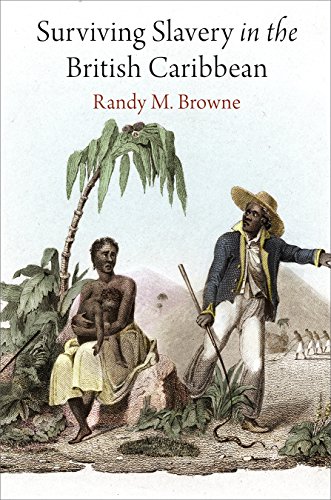
Randy M. Browne is an award-winning historian specializing in Atlantic slavery and the Caribbean. His book, Surviving Slavery in the British Caribbean, draws on richly detailed legal records from Berbice to illuminate the daily struggles of enslaved people striving to survive brutal conditions. Browne's academic work, recognized with the Elsa Goveia Book Prize, offers readers an intimate and unflinching look at Caribbean slavery's social and cultural realities, grounded firmly in historical scholarship.
Randy M. Browne is an award-winning historian of Atlantic slavery and the Caribbean. His first book, Surviving Slavery in the British Caribbean (University of Pennsylvania Press, 2017), won the biennial Elsa Goveia Book Prize from the Association of Caribbean Historians. His work has also been published in the William and Mary Quarterly, the New West Indian Guide, and Slavery & Abolition. Browne is Professor of History at Xavier University in Cincinnati, Ohio.
Randy M. Browne's expertise as an award-winning historian shines through in this examination of survival under slavery in the British Caribbean. Focusing on Berbice, a well-documented 19th-century colony, Browne moves beyond mortality statistics to reveal the lived experiences of enslaved Africans and their descendants. You explore how enslaved individuals navigated brutal conditions, legal systems, and complex social dynamics to stay alive—not merely to resist or escape. Detailed accounts include field laborers invoking legal reforms and women challenging abuse, providing nuanced insights into enslaved people's resilience and strategies within the brutal system.
The New Yorker, an American magazine known for its cultural authority, highlights Eric Williams' remarkable ability to maintain perspective amid harsh truths about greed and cruelty in Caribbean history. Their review praises his practical discussion of the region's current state as among the best, reflecting Williams' balanced yet critical approach. This endorsement underscores why you should consider this book if you want to grasp the Caribbean’s complex history. Similarly, The Observer calls it the first comprehensive history of the region, emphasizing its captivating nature, further confirming its importance for anyone delving into Caribbean studies.
“Mr. Williams is forced to write about so much greed and cruelty that it is remarkable that he keeps his temper and his perspective. He succeeds, and his practical discussion of the current state of the Caribbean is among the best of its kind. He writes better than many historians and almost all politicians.” (from Amazon)
Eric E. Williams was the first Prime Minister of Trinidad and Tobago. Williams’ controversial book on the abolition and emancipation of British West Indian slavery, Capitalism and Slavery (1944), reframed the historiography of the British trans-Atlantic slave trade, and established the contribution of Caribbean slavery to the development of Britain. Major publications include: The Negro in the Caribbean, History of the People of Trinidad and Tobago, British Historians and the West Indies, From Columbus to Castro: The History of the Caribbean, 1492-1969.
After analyzing the complex history of colonialism and its aftermath, Eric Williams offers a detailed narrative that connects the diverse islands of the Caribbean through their shared struggles and cultures. Drawing from his experience as Trinidad and Tobago's first Prime Minister and his prior works on slavery and economic history, Williams explores the political, social, and economic forces shaping the region from 1492 to 1969. You’ll gain insight into how colonial powers influenced language, culture, and identity across nations like Jamaica, Haiti, and Barbados, with chapters dissecting events such as emancipation and revolutionary movements. This book suits anyone seeking an in-depth understanding of Caribbean societies beyond surface-level history.
Ben Horowitz, General Partner at Andreessen Horowitz, brings considerable insight from his experience in leading complex organizations and evaluating historical context. His endorsement underscores this book’s value for anyone serious about understanding Caribbean history’s pivotal moments. Horowitz’s background in navigating strategic challenges aligns with the book’s exploration of Toussaint L'Ouverture’s leadership during turbulent revolutionary times, highlighting why this work remains a cornerstone for those studying colonial resistance and independence movements.
C. L. R. James was a Trinidadian historian, journalist, and Marxist theorist. He is best known for his work on the Haitian Revolution and Afro-nationalism. His seminal book, 'The Black Jacobins', explores the complexities of the Haitian Revolution and its implications for colonialism and independence movements in Africa and the Caribbean. James's writings reflect his deep engagement with issues of race, class, and the struggle for liberation.
C. L. R. James's decades of historical research and political activism culminate in this detailed examination of the Haitian Revolution, focusing on Toussaint L'Ouverture's leadership. You’ll gain insight into the dynamics of colonialism, race, and class struggles that shaped the Caribbean’s fight for independence. The book walks you through key events like the Saint-Domingue expedition, revealing how revolutionary ideals intertwined with harsh realities. If you want a vivid narrative that connects Caribbean history with broader themes of liberation and colonial resistance, this book offers a deep dive that’s both illuminating and thought-provoking.
The Wall Street Journal, a leading global financial newspaper, highlights this book as a rousing, colorful and deeply researched account of Port Royal's last wild years and sudden death. Their expertise in economic and historical analysis lends weight to their praise, reflecting how the book reshaped their view on the complexities of colonial trade and disaster impact. This perspective is reinforced by Publisher's Weekly, which appreciates Hughes's vivid portrayal of Jamaica’s gritty and chaotic past, making it clear why this narrative stands out for those seeking a rich, nuanced dive into Caribbean colonial history.
Ben Hughes is the author of a number of books of history, including Conquer or Die: Wellington’s Veterans and the Liberation of the New World and The Siege of Fort William Henry: A Year on the Northwest Frontier (Westholme 2011). He is a lecturer and teacher trainer. He received his degree from Leeds University and has lived and worked in England and Colombia and currently resides in Santiago, Chile.
What if everything you thought about the heyday of Port Royal was incomplete? Ben Hughes, drawing on extensive research across continents, reshapes your understanding of late seventeenth-century Jamaica by weaving together the brutal realities of slavery, pirate havens, and imperial ambitions. You’ll gain detailed insights into the slave rebellions that birthed free black communities, the intricate geopolitical raids, and a vivid depiction of the 1692 earthquake’s devastating impact. This isn’t just a recount of events; it’s a layered narrative that exposes both the opulence and the corruption fueling England’s Caribbean empire. If you're drawn to the gritty interplay of social, economic, and natural forces shaping Caribbean history, this book will deepen your grasp.
Aviva Chomsky, a professor of history and social justice at Salem State University, brings her extensive expertise on the Cuban Revolution and social justice movements to this book. Her critical perspective on U.S. foreign policy and Latin American history informs a nuanced exploration of the revolution’s complexities, offering readers a deeply informed look at one of the most significant political events in Caribbean history.
Aviva Chomsky is a professor of history and social justice at Salem State University. She has written extensively on the history of the Cuban Revolution and its implications for social justice movements. Chomsky's work often focuses on the intersections of history, politics, and social movements, providing a critical perspective on U.S. foreign policy and its impact on Latin America.
Unlike most Caribbean history books that focus narrowly on political events, Aviva Chomsky’s work blends social, economic, and political analysis to offer a multi-dimensional understanding of the Cuban Revolution's trajectory over five decades. You’ll gain insight into how Cuban society evolved under Raul Castro, with chapters updated to incorporate the latest scholarship and a balanced view that contrasts U.S. and Cuban perspectives. The inclusion of timelines and glossaries makes complex historical debates accessible, especially when unpacking myths that have clouded one of the 20th century’s pivotal political shifts. This book suits those wanting a nuanced grasp of revolutionary impacts rather than a simple chronological account.
The best Caribbean History books and more, in your inbox each week. No account needed.
Conclusion
These 10 books collectively explore the Caribbean’s turbulent history—from colonial conquests and slave revolts to nationalist movements and revolutions. A clear theme emerges: the region’s history is marked by struggles for autonomy, identity, and justice, often against overwhelming odds.
If you're new to Caribbean history, starting with Ada Ferrer’s Cuba or Nelson Denis’s War Against All Puerto Ricans provides a grounded understanding of key colonial and postcolonial dynamics. For deeper dives into revolutionary eras, The Black Jacobins; and Laurent Dubois’s Haiti offer vivid narratives that connect historical events to contemporary realities. Combining these readings with Freedom’s Mirror sharpens your grasp of the paradoxical forces shaping emancipation and slavery.
Alternatively, you can create a personalized Caribbean History book to bridge the gap between general principles and your specific situation. These books can accelerate your learning journey, providing context and inspiration for understanding one of the world’s most complex and fascinating regions.
Frequently Asked Questions
I'm overwhelmed by choice – which book should I start with?
Start with Ada Ferrer's Cuba for a detailed look at Cuba-US relations, or Nelson Denis’s War Against All Puerto Ricans for insight into colonial struggles. These provide accessible yet rich introductions that set the stage for deeper exploration.
Are these books too advanced for someone new to Caribbean History?
Not at all. Many, like Why the Cocks Fight and A History of the Cuban Revolution, are written to engage readers with varying backgrounds, blending narrative with analysis that’s approachable and enlightening.
What’s the best order to read these books?
Begin with broader histories like From Columbus to Castro, then focus on specific themes or countries such as Haiti or Freedom’s Mirror. This progression helps build context before diving into detailed studies.
Do I really need to read all of these, or can I just pick one?
You can pick based on your interests. For example, choose The Black Jacobins; for revolutionary leadership or Surviving Slavery in the British Caribbean to understand slavery's human impact. Each offers valuable perspectives on different facets.
Are there any books here that contradict each other?
Some books present differing viewpoints, especially regarding colonial impacts and revolutionary outcomes. This diversity reflects the complexity of Caribbean history and encourages critical thinking rather than simple conclusions.
How can I get Caribbean History insights tailored to my specific interests?
While these expert books offer deep insights, personalized Caribbean History books can match your unique interests and goals, bridging expert knowledge with your context. Learn more by creating your tailored book here.
📚 Love this book list?
Help fellow book lovers discover great books, share this curated list with others!