20 Colonialism Books That Separate Experts from Amateurs
Recommended by Russell Brand, Kimberlé Crenshaw, and Ibram X. Kendi, these Colonialism books offer profound perspectives on history and power.
Updated on June 25, 2025·We may earn commissions for purchases made via this page
5 of 20 books have Audiobook versions
We're launchingLaunching on Product Hunt today 🎉We just launchedJust launched on Product Hunt 🎉
Modelpeers, from the BookAuthority teamFrom the BookAuthority team: Modelpeers, a free way to follow AI models and agents like you follow people. We'd love your support.
What if the stories you've heard about colonialism only scratched the surface? These 20 books take you beneath the headlines, challenging easy narratives about empire, race, and power. Colonialism isn't a distant history — its legacies ripple through today's politics and social struggles worldwide. Understanding these forces requires more than casual reading; it means engaging with voices like Frantz Fanon, Kehinde Andrews, and Rashid Khalidi, who illuminate how colonialism shapes identity, conflict, and resistance.
Experts like Russell Brand, known for his cultural critiques, point to Kehinde Andrews's The New Age of Empire as essential for grasping the Black Lives Matter movement's historical roots. Kimberlé Crenshaw, pioneering critical race theory, endorses the same book for its uncompromising analysis of racism's colonial underpinnings. Meanwhile, historians like Pankaj Mishra and Angela Davis praise The Wretched of the Earth for its profound exploration of revolutionary psychology and anti-colonial struggle.
While these expert-curated books provide proven frameworks, readers seeking content tailored to their specific interests — whether it's African decolonization, settler colonialism, or constitutional impacts — might consider creating a personalized Colonialism book that builds on these insights. This approach helps bridge broad scholarship with your unique learning goals and background.
Pankaj Mishra, acclaimed author of The Age of Anger, highlights The Wretched of the Earth as a profound diagnosis of the post-colonial condition rather than a call for violence. His extensive expertise in geopolitics and cultural critique makes his endorsement especially meaningful for those interested in understanding colonial legacies. Mishra’s reflection reveals how Fanon’s work challenges simplistic narratives and deepens awareness of revolutionary struggles. Additionally, Angela Davis, a notable activist and scholar, regards Fanon as the most compelling theorist of racism and colonialism in this century, underscoring the book’s enduring influence on movements for justice and equality.
“Certainly, writers of the sixties inspired by The Wretched of the Earth saw in the book not an incitement to kill white people but a chillingly acute diagnosis of the post-colonial condition...”
Frantz Fanon, Richard Philcox, Jean-Paul Sartre, Cornel West, Homi K. Bhabha(you?)·
About the Author
Frantz Fanon was born in Martinique in 1925. He served in the French Army during World War II, and later studied medicine and psychiatry in France, where he published his first book, Black Skin, White Masks in 1952. He joined the Algerian Nationalist Movement in the mid-1950s, and published The Wretched of the Earth shortly before dying of leukemia in December 1961.
Frantz Fanon's The Wretched of the Earth emerged from his experiences as a psychiatrist and anti-colonial activist deeply involved in Algeria's liberation struggle. The book explores the psychological effects of colonialism and the dynamics of revolutionary violence, offering sharp analyses of race, power, and liberation movements. You gain insight into how colonial oppression fractures societies and individuals, while also learning about the role of culture and consciousness in resistance. This edition’s critical essays by Sartre and Bhabha, plus Cornel West's introduction, enrich your understanding of its lasting impact on civil rights and decolonization efforts globally. It's a challenging but essential read if you want to grasp the complexities of colonial legacy and revolutionary thought.
Russell Brand, English comedian and actor, found this book essential for understanding the historical roots behind the Black Lives Matter movement and its future potential. He highlights how Kehinde Andrews "puts the Black Lives Matter movement into its historical and global context" and credits the book for pushing beyond surface-level discussions. Brand's engagement with the book reflects a desire to grasp the systemic forces shaping racial justice today. Similarly, Kimberlé Crenshaw, a law professor at Columbia and UCLA, calls it "an uncompromising account of the roots of racism today," emphasizing its critical perspective. Together, their endorsements underline the book's relevance for anyone serious about confronting ongoing racial and colonial power structures.
“Kehinde is a leader and a teacher who puts the Black Lives Matter movement into its historical and global context, and explains persuasively how it could shape our future. If you want to go beyond gestures and slogans and to the truth, this is the book to get you there.”
Kehinde Andrews is Professor of Black Studies at Birmingham City University, where he founded, and is currently director of, the Centre for Critical Social Research. At BCU he was also one of the team who founded the first undergraduate degree in Black Studies. Andrews regularly writes for the Guardian, the Independent, Ebony Magazine, and CNN. He has been featured on Good Morning Britain, Newsnight, Channel 4 News, BBC News Channel, and Under the Skin with Russell Brand. Andrews's first book, Resisting Racism: Race, Inequality and the Black Supplementary School Movement, was published in 2013 and he co-edited the first collection of British Black Studies, Blackness in Britain, in 2016. His latest book was Back to Black: Retelling Black Radicalism for the 21st Century published by Zed books in 2018. He lives in Birmingham.
2021·288 pages·Colonialism, Racism, Imperialism, Racial Capitalism, Global Politics
After analyzing the enduring effects of colonialism and racism in modern institutions, Kehinde Andrews developed a compelling critique of how imperial power persists today. You learn how systems like the IMF and World Bank function as new tools of Western dominance, alongside concepts like racial capitalism and patriarchy that underpin global inequalities. Chapters tracing genocide, slavery, and neocolonial ties between China and Africa provide concrete historical context and challenge oversimplified narratives. This book suits anyone seeking a deeper understanding of how colonial legacies shape current global politics and racial dynamics, especially those interested in critical race theory and postcolonial studies.
This AI-created book on colonial history is designed around your specific interests, background, and knowledge level. By sharing what aspects of colonialism fascinate you most and your goals, you'll receive a book that focuses precisely on the topics you want to explore. This tailored approach helps navigate the complex histories and theories of colonialism in a way that feels relevant and enlightening for your learning journey.
TailoredRead AI creates personalized nonfiction books that adapt to your unique background, goals, and interests. Instead of reading generic content, you get a custom book written specifically for your profession, experience level, and learning objectives. Whether you're a beginner looking for fundamentals or an expert seeking advanced insights, TailoredRead crafts a book that speaks directly to you. Learn more.
This tailored book explores the origins and multifaceted impact of colonialism, crafted specifically to match your background and interests. It examines the historical evolution of colonial powers, the socio-political forces driving expansion, and the lasting effects on indigenous societies and global structures. By focusing on your particular areas of curiosity, the book synthesizes complex narratives and themes, from economic exploitation to cultural resistance, in a way that resonates with your learning goals. This personalized approach ensures you engage deeply with colonial history and theory, gaining nuanced insights that align with your unique perspective and objectives.
Funmi Iyanda, a respected visionary at Oya Media, praises this book with heartfelt enthusiasm, calling it a "truly important book" and thanking Max Siollun for his work. Her endorsement reflects deep respect for how the book challenges colonial myths and sheds light on Nigeria’s complex history under British rule. This recommendation is especially compelling coming from someone immersed in African media and culture, highlighting the book’s relevance to contemporary audiences. Similarly, Olivette Otele from Times Higher Education describes it as a "nuanced, informative and timely book," emphasizing its thoughtful exploration of colonialism's legacy in Nigeria.
Max Siollun is a Nigerian author and historian known for his insightful works on Nigeria's history and politics. He has written extensively on the impact of colonialism and military rule in Nigeria, providing a critical perspective on the country's past and its implications for the present. His previous works include 'The Forgotten Era: Nigeria Before British Rule' and 'Oil, Politics and Violence: Nigeria’s Military Coup Culture (1966-1976). Siollun's research and writings have earned him recognition as a leading voice in Nigerian historical discourse.
The breakthrough moment came when Max Siollun challenged traditional narratives by exposing how British colonialism inflicted deep and lasting damage on Nigeria. Siollun, a Nigerian historian with a strong background in the country’s political upheavals, unpacks how colonial rule wasn’t a benign civilizing mission but a forceful imposition marked by violence and cultural disruption. You’ll learn how ethnic and religious divisions were exploited to maintain control and how colonial legal and social structures reshaped Nigerian society in ways that still resonate today. This book suits anyone seeking a clear-eyed understanding of colonialism’s true impact on Nigeria’s history and present-day challenges.
Ibn Warraq, author of Why the West is Best, regards Bruce Gilley's work as a vital corrective against the tide of Western self-criticism, highlighting its rigorous documentation and use of colonized voices like Ahmadu Bello and Chinua Achebe. He calls it "one of the most important works of history of the last fifty years," emphasizing its challenge to prevailing narratives that blame colonialism for all Third World woes. This perspective helped reshape his understanding of colonial legacies. Similarly, Nigel Biggar, Professor Emeritus at Oxford, praises Gilley's bold and intelligent writing, encouraging open-minded readers to engage with this provocative account that disrupts dominant postcolonial discourse.
“Bruce Gilley's The Case for Colonialism is, I believe, one of the most important works of history of the last fifty years. In an age of Western self-flagellation, and the loss of civilizational self-confidence, when every ill in the Third World is blamed on Western colonialism, Gilley's courageous work is a welcome corrective. Of course, it is superbly documented, and the bibliography alone should provide much material for further studies, but Gilley also provides enough evidence and arguments for the case for colonialism. What is most compelling is that Gilley has used the memoirs of the colonized themselves, figures such as Ahmadu Bello, and Chinua Achebe, and Indian economic historians such as Tirthankar Roy, to make the case that it was 'improving the lives of subject peoples through a transfer of liberal norms and impersonal governance institutions were the goals...For most colonized peoples, especially women and marginalized groups, European rule was an opportunity more than a threat.' One hopes that Bruce Gilley's works will put the record straight after years of Western self-loathing, and that other scholars will no longer be afraid to speak the truth about the positive legacies of Western colonialism.”
Bruce Gilley is a professor of political science at Portland State University and a member of the board of the National Association of Scholars. His previous books on colonialism are The Last Imperialist and In Defense of German Colonialism.
2023·326 pages·Colonialism, History, Political Science, Postcolonial Studies, Governance
Bruce Gilley, a political science professor at Portland State University, wrote this book to challenge widespread assumptions about Western colonialism. Drawing from extensive research and colonial-era memoirs, including voices like Ahmadu Bello and Chinua Achebe, Gilley argues that colonialism often brought liberal norms and governance improvements that benefited many colonized peoples, especially marginalized groups. You’ll gain a nuanced understanding of colonial legacies beyond typical critiques, exploring empirical evidence that disputes anti-colonial narratives. This book suits you if you want to explore contested history with detailed documentation and a perspective that provokes reconsideration of familiar views.
The Daily Telegraph, a leading UK newspaper, highlights this book as "a thoughtful, compelling text" that challenges prevailing narratives on the British Empire. Their review reflects the book's ability to balance recognition of colonial injustices with acknowledgment of reform efforts, encouraging you to wrestle with the moral complexities. The Sunday Times further praises its intellectual rigor, noting how it confronts uncomfortable truths without offering simplistic judgments. Together, these insights suggest this work will deepen your understanding and provoke reflection on colonialism's contested legacy.
Nigel Biggar is Regius Professor Emeritus of Moral and Pastoral Theology at the University of Oxford, where he directs the McDonald Centre for Theology, Ethics, and Public Life. He holds a B.A. in Modern History from Oxford University and an M.A. and Ph.D. in Christian Theology & Ethics from the University of Chicago. Before assuming his professorship at Oxford, he occupied chairs in at the University of Leeds and at Trinity College, Dublin. He was appointed C.B.E. in the 2021 Queen’s Birthday Honours List. His most recent publications include What’s Wrong with Rights? (Oxford, 2020), Between Kin and Cosmopolis: An Ethic of the Nation (James Clarke/Wipf & Stock, 2014), and In Defence of War (Oxford, 2013).
2023·480 pages·Colonialism, History, Ethics, British Empire, Slavery
Nigel Biggar, a seasoned Oxford scholar in moral and pastoral theology, challenges prevailing views on the British Empire by exploring its complex legacy beyond simplistic condemnations. You’ll encounter rigorous examination of contentious topics—such as the Empire’s relationship with slavery, economic motives, and racial policies—across eight detailed chapters that balance documented injustices with instances of reform and modernization. For example, Biggar highlights the Empire’s role in abolishing the slave trade and establishing legal institutions, inviting you to reconsider assumptions about colonial history’s moral dimensions. This book suits anyone eager to navigate the nuanced moral debates surrounding colonialism without retreating into either uncritical praise or outright dismissal.
This AI-created book on decolonial theory is written based on your background, interests, and goals. You share which aspects of anti-colonial resistance and theory you want to focus on, your current understanding, and specific learning objectives. Then, the book is crafted to match exactly what you need to engage deeply with complex decolonial ideas and movements. This tailored approach makes navigating challenging concepts more accessible and relevant to your unique perspective.
TailoredRead AI creates personalized nonfiction books that adapt to your unique background, goals, and interests. Instead of reading generic content, you get a custom book written specifically for your profession, experience level, and learning objectives. Whether you're a beginner looking for fundamentals or an expert seeking advanced insights, TailoredRead crafts a book that speaks directly to you. Learn more.
2026·50-300 pages·Colonialism, Decolonial Theory, Anti Colonialism, Resistance Movements, Indigenous Knowledge
This tailored book explores anti-colonial resistance and decolonial theory through a personalized lens, focusing on your unique interests and goals. It examines the historical roots and contemporary expressions of decolonial movements, weaving together diverse perspectives to offer a rich understanding tailored to your background. By concentrating on themes such as indigenous epistemologies, power dynamics, and global resistance strategies, the book reveals the complexity and urgency of decolonization today. This personalized approach ensures the content matches your knowledge level and learning objectives, allowing you to engage deeply with the political, social, and cultural dimensions of decolonial thought and practice.
Publisher's Weekly, a key authority in book publishing and reviews, highlights this book's focus on one of colonialism's most horrific episodes, the Belgian king's ruthless exploitation of the Congo. Their review praises the vivid account of Edmund Morel’s discovery of atrocities and the international reform movement that followed. This recommendation brings a powerful lens to colonial history, revealing how corrupt power and courageous activism collided. Library Journal echoes this, noting Hochschild's deeply researched narrative as quietly devastating, while Booklist appreciates the inclusion of African and black American perspectives often overlooked in history books. Together, these experts underscore the book's profound impact on understanding colonialism's human cost.
“Hochschild's superb, engrossing chronicle focuses on one of the great, horrifying and nearly forgotten crimes of the century: greedy Belgian King Leopold II's rape of the Congo, the vast colony he seized as his private fiefdom in 1885. Until 1909, he used his mercenary army to force slaves into mines and rubber plantations, burn villages, mete out sadistic punishments, including dismemberment, and commit mass murder. The hero of Hochschild's highly personal, even gossipy narrative is Liverpool shipping agent Edmund Morel, who, having stumbled on evidence of Leopold's atrocities, became an investigative journalist and launched an international Congo reform movement with support from Mark Twain, Booker T. Washington and Arthur Conan Doyle. Other pivotal figures include Joseph Conrad, whose disgust with Leopold's 'civilizing mission' led to Heart of Darkness; and black American journalist George Washington Williams, who wrote the first systematic indictment of Leopold's colonial regime in 1890. Hochschild documents the machinations of Leopold, who won over President Chester A. Arthur and bribed a U.S. senator to derail Congo protest resolutions. He also draws provocative parallels between Leopold's predatory one-man rule and the strongarm tactics of Mobuto Sese Seko, who ruled the successor state of Zaire. But most of all it is a story of the bestiality of one challenged by the heroism of many in an increasingly democratic world. 30 illustrations. Agent: Georges Borchardt. First serial rights to American Scholar. Author tour.”
Adam Hochschild was born in New York City in 1942. His first book, Half the Way Home: a Memoir of Father and Son, was published in 1986. Michiko Kakutani of The New York Times called it 'an extraordinarily moving portrait of the complexities and confusions of familial love . . . firmly grounded in the specifics of a particular time and place, conjuring them up with Proustian detail and affection.' It was followed by The Mirror at Midnight: a South African Journey, and The Unquiet Ghost: Russians Remember Stalin. His 1997 collection, Finding the Trapdoor: Essays, Portraits, Travels, won the PEN/Spielvogel-Diamonstein Award for the Art of the Essay. King Leopold's Ghost: a Story of Greed, Terror and Heroism in Colonial Africa was a finalist for the 1998 National Book Critics Circle Award. It also won a J. Anthony Lukas award in the United States, and the Duff Cooper Prize in England. His books have been translated into twelve languages and four of them have been named Notable Books of the Year by The New York Times Book Review. His Bury the Chains: Prophets and Rebels in the Fight to Free an Empire’s Slaves, was a finalist for the 2005 National Book Award in Nonfiction and won the Los Angeles Times Book Prize for History. His last two books have also each won Canada’s Lionel Gelber Prize for the best book on international affairs and the Gold Medal of the California Book Awards. In 2005, he received a Lannan Literary Award for Nonfiction. Hochschild has written for The New Yorker, Harper's, The New York Review of Books, Granta, The New York Times Magazine, and many other newspapers and magazines. His articles have won prizes from the Overseas Press Club, the Society of Professional Journalists and elsewhere. He was a co-founder of Mother Jones magazine and has been a commentator on National Public Radio's 'All Things Considered.' Hochschild teaches narrative writing at the Graduate School of Journalism at the University of California at Berkeley, and spent half a year as a Fulbright Lecturer in India. He lives in San Francisco with his wife, sociologist and author Arlie Russell Hochschild. They have two sons and two granddaughters.
Adam Hochschild's decades of historical research led to this vivid account of King Leopold II's brutal exploitation of the Congo in the late 19th century. You encounter detailed narratives of forced labor, mercenary violence, and political corruption, alongside the courageous activism that sparked the first international human rights movement. For example, the book highlights Edmund Morel’s investigative journalism and the involvement of figures like Mark Twain and Joseph Conrad. If you want to understand colonialism’s darkest impact through a richly documented case study, this book offers a clear, unflinching perspective. It is best suited for readers ready to confront uncomfortable truths rather than those seeking a sanitized history.
Arjun Appadurai, a leading anthropologist and cultural theorist, highlights this book’s unique challenge to conventional Marxist views by emphasizing cultural and epistemological forms of colonial power. He points out that Mignolo and Walsh advocate for embracing Indigenous worldviews as a powerful alternative to the Western modernity imposed through colonialism. This perspective shifted his understanding of resistance, underlining the necessity of a decolonial outlook to truly confront global structures. Alongside him, Gloria Wekker, a scholar on colonialism and race, praises the book’s expansive geopolitical analysis and its refreshing dismantling of the theory-practice divide, inviting readers to actively engage with decolonial thought and action.
“The fable of modernity was the unifying arc of this aggressive universalism, and Mignolo’s principal argument is that any variety of Marxist argument that focuses primarily on capitalism, class, and material exploitation misses the forms of power that came through this cultural and epistemological domination. To resist and replace it with another epistemological worldview, Walsh and Mignolo recommend decoloniality, an outlook that embraces Indigenous modes of thinking and rejects those Western expressions of modernity imposed on much of the world through colonialism and empire.”
Walter D. Mignolo is William H. Wannamaker Professor of Romance Studies in Trinity College of Arts and Sciences and Professor of Literature at Duke University. He is the author and editor of several books, including The Darker Side of Western Modernity: Global Futures, Decolonial Options, also published by Duke University Press. Catherine E. Walsh is Senior Professor in the Area of Humanities and Cultural Studies at the Universidad Andina Simón Bolívar in Ecuador and the author and editor of numerous books, most recently, Pedagogías decoloniales: Prácticas insurgentes de resistir, (re)existir y (re)vivir, Tomo II.
2018·304 pages·Colonialism, Decoloniality, Power Structures, Western Modernity, Global Capitalism
What happens when two seasoned academics deeply versed in colonial studies join forces? Walter D. Mignolo and Catherine E. Walsh challenge the usual narratives by dissecting the colonial matrix of power and its ongoing influence in modern times. You’ll explore how they connect theory with lived experiences, illustrating decoloniality as both a way of thinking and a mode of resistance. Chapters delve into the ‘how, what, why, with whom, and what for’ of decolonial praxis, showing you how Western modernity and global capitalism have shaped—and continue to shape—worldviews. This book suits anyone grappling with the legacy of colonialism, especially those interested in breaking free from its pervasive structures.
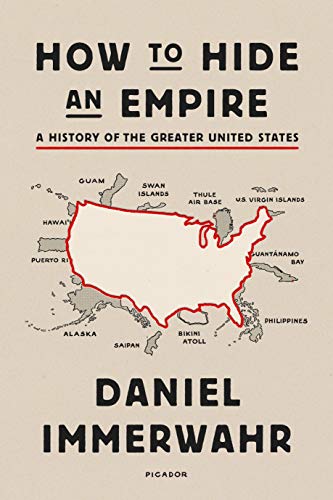
Mike Gravel, former senator known for his deep engagement in political transparency and history, recommends this book with enthusiasm, saying "@dimmerwahr It's a great book!" Gravel's perspective as a seasoned political figure lends weight to his endorsement, reflecting how the book reshaped his understanding of America's hidden colonial past. The narrative's revelation of U.S. territories beyond the mainland challenged his views on empire and influence. Alongside Gravel, Asad Abukhalil, a professor with expertise in political dynamics, praises the work for illuminating the painful history of Puerto Rico, highlighting the book's ability to expose underrepresented colonial histories that continue to resonate today.
Daniel Immerwahr is associate professor of history at Northwestern University and author of Thinking Small: The United State and the Lure of Community Development, which won the Organization of American Historians’ Merle Curti Prize. He has written for N+1, Slate, Dissent, and other publications.
After examining overlooked U.S. territories, Daniel Immerwahr developed a revealing narrative that challenges conventional views of American empire. Drawing on episodes from the Guano Islands to Puerto Rico, he exposes the complex realities of U.S. colonial governance, including medical experiments and independence movements often ignored in mainstream history. You learn how the U.S. shifted from direct colonial control to global influence using technology and culture, reshaping the concept of empire. This book suits anyone interested in American history beyond the mainland, political power dynamics, and the hidden legacies of colonialism.
Named one of the ten best books of the year by the Chicago Tribune
Ch Fawad Hussain, Federal Minister for Science & Technology in Pakistan, highlights the devastating human cost revealed in this book, noting the famine in greater Syria during 1915-18 that claimed five million lives. His deep engagement with the region's history underscores the book's significance in understanding colonial legacies. He remarks, "Reading this fantastic book..." which helped him grasp the broader historical context behind ongoing conflicts. This critical perspective is echoed by Chris Hedges, who calls Khalidi's research meticulous and unflinching in exposing the calculated displacement of Palestinians. Together, their insights frame the book as essential for anyone seeking an informed view of settler colonialism in Palestine.
Federal Minister for Science & Technology, Pakistan
“Reading this fantastic book..... Btw 1915-18 five M people died in greater Syria (that includes present Syria, Lebanon and Jordon) because of femine caused by Locust” (from X)
Rashid Khalidi is the author of Palestinian Identity, Brokers of Deceit, and The Iron Cage, among others. His writing has appeared in the New York Times, Boston Globe, Los Angeles Times, Chicago Tribune, and many other journals. He is the Edward Said Professor of Modern Arab Studies at Columbia University in New York and editor of the Journal of Palestine Studies.
Rashid Khalidi's decades of scholarship on the Middle East culminate in this detailed chronicle of the Palestinian experience under settler colonialism. You gain a nuanced understanding of key historical moments, from the 1917 Balfour Declaration to Israel's 1982 Lebanon invasion, all framed through family archives and political analysis. The book challenges popular narratives by exposing the colonial strategies that shaped the conflict, while acknowledging complexities within Palestinian leadership. If you want a clear-eyed historical perspective that contextualizes current tensions, this book offers depth without oversimplification.
Eddie Marsan, a vocal advocate for social justice, highlights how Empireland exposes uncomfortable truths about British identity and imperial history. He notes, "Empireland is a fantastic book by Sathnam. When people face evidence challenging their identity, they often react defensively; this book exposes that dynamic sharply." Marsan’s perspective as a socially engaged commentator lends weight to his recommendation, showing how the book challenges deeply held national narratives. Similarly, David Baddiel calls it "an amazing education," underscoring its value for anyone wanting to grasp the complexities of Britain’s past and present.
“Empireland is a fantastic book by Sathnam. When people face evidence challenging their identity, they often react defensively; this book exposes that dynamic sharply.” (from X)
Sathnam Sanghera was born to Punjabi parents in the West Midlands in 1976. He entered the education system unable to speak English but, after attending Wolverhampton Grammar School, graduated from Christ’s College, Cambridge with a first class degree in English Language and Literature. He has been shortlisted for the Costa Book Awards twice, for his memoir The Boy With The Topknot and his novel Marriage Material, the former being adapted by BBC Drama in 2017 and named Mind Book of the Year in 2009. His third book, Empireland: How Imperialism Has Been Shaped Modern Britain became an instant Sunday Times bestseller on release in 2021, and was named a Book of the Year at the 2022 British Books Awards. Empireland also inspired Empire State of Mind, the acclaimed two-part documentary for Channel 4 for which he earned a Best Presenter shortlisting at the 2022 Grierson Awards, and Stolen History: The Truth about the British Empire and How it Shaped Us, which went to No 1 on several children’s books charts when it was released in 2023. He has been awarded two honorary doctorates and won numerous awards for his journalism, including Young Journalist of the Year at the British Press Awards in 2002, Media Commentator of the year in the 2015 Comment Awards and the Edgar Wallace Trophy for Writing of the Highest Quality at the 2017 London Press Club Awards. He was elected a fellow of the Royal Society of Literature in 2016, and elected a Fellow of the Royal Historical Society in recognition of his contribution to historical scholarship in 2023.
Sathnam Sanghera challenges the conventional wisdom that British imperialism is a distant relic, revealing instead how deeply it shapes modern Britain’s identity, politics, and social fabric. Drawing on history and contemporary examples, he unpacks how the British Empire’s legacy influences everything from national attitudes to the NHS and responses to crises like COVID-19. You’ll gain insight into the contradictions of British exceptionalism and the roots of systemic racism, with chapters that dissect how imperial history is intertwined with current social divisions. This book suits anyone seeking to understand Britain beyond surface narratives, especially those interested in history’s impact on present-day society.
Nomiki Konst Cancelrent, a political host and analyst with deep insights into colonialism, found this book to be an excellent introduction to Puerto Rico's complex history. She tweeted, "@BenSpielberg Here’s an amazing book that’s a great starter by Nelson Denis," highlighting its accessibility and depth. Her perspective as an engaged commentator on American colonial legacies enriches the book’s relevance today. Jonathan Myerson Katz, a noted historian, also praised it simply as a "Great book," affirming its scholarly value and compelling narrative.
Author of Spanglish: The Making of a New American Language
“A patient, calibrated, fully-researched study of the mendacious, hypocritical way the United States treats its Caribbean colony, castrating its leadership, bombarding its villages, experimenting biologically with its population. Puerto Rico is, in a word, el calabozo. Denis knows the truth first-hand and refuses to sugarcoat it.”
Nelson A. Denis was the editorial director of El Diario/La Prensa, the largest Spanish-language newspaper in NYC, and won the Best Editorial Writing award from the National Association of Hispanic Journalists. A graduate of Harvard University and Yale Law School, Denis served as a New York State Assemblyman (1997-2001) and has written for the New York Daily News, Newsday, and Harvard Political Review. Denis also wrote and directed the feature film Vote For Me!, which premiered in the Tribeca Film Festival. In April 2015, Nation Books published his non-fiction book War Against All Puerto Ricans, about the Puerto Rican Nationalist revolution of 1950. It topped the list of best-selling books in Puerto Rico for the year 2015-2016.
Nelson A. Denis’s decades of experience as a journalist and politician fuel this detailed recounting of Puerto Rico’s 1950 nationalist uprising against U.S. colonial rule. Through the life of Pedro Albizu Campos, the first Puerto Rican Harvard Law graduate and nationalist leader, you gain insight into the violent suppression tactics including military bombardments on American soil. The book blends oral histories, FBI files, and eyewitness testimony to trace the broader context of U.S. colonialism in Puerto Rico from 1898 onward. If you want a nuanced understanding of colonial power dynamics and their enduring impact, this book provides a vivid, unflinching perspective on a neglected chapter of American history.
Topped Puerto Rico best-sellers 2015-2016
Published by Nation Books
Author won National Association of Hispanic Journalists award
Simon Sebag-Montefiore, a British historian and television presenter known for his expertise in empire history, highlights this book's unsettling revisionism and macabre narrative. He points out how it reshaped his understanding of the Mau Mau conflict by portraying the rebels more sympathetically and revealing the harsh realities of British colonial aggression. His recommendation speaks to the book's ability to challenge long-held views and deepen comprehension of colonial violence. Alongside him, Thomas Pakenham, author of Scramble for Africa, praises its vivid account as a key contribution to African colonial history.
David Anderson is lecturer in African studies at Oxford University. He was formerly director of the Center for African Studies at the University of London. He lives in England.
What if everything you knew about the Mau Mau Uprising was wrong? David Anderson, an Oxford lecturer in African studies, challenges traditional narratives by presenting the Gikuyu rebels as complex figures rather than mere insurgents, while casting the British colonial government as the primary aggressor. You learn to critically assess colonial histories through detailed accounts of the 1952-1960 conflict, including the political roles of Churchill and MacMillan. This book suits you if you're interested in East African history, colonial warfare, and the nuanced dynamics of decolonization, offering sharp insights that move beyond simplistic portrayals.
Charles P. Pierce, a seasoned political commentator, highlights Chris Hayes’s courage in confronting difficult truths, noting how Hayes held his own employers accountable during the Weinstein scandal coverage. This speaks to Hayes’s integrity and deep commitment to justice, qualities that permeate his exploration of America's racial divides. Pierce’s recommendation underscores the book’s raw honesty and its fresh perspective on policing and democracy. Complementing this, Peter Baker praises the book’s blend of history and data, illustrating how Hayes weaves complex social issues into a compelling narrative that reshapes understanding of law and order in America.
“In case you missed it, Chris Hayes took his own bosses to task over their reaction to the Weinstein case and Ronan Farrow’s book. This took a great deal of integrity but, luckily, Chris has that to spare.” (from X)
Chris Hayes is the Emmy Award–winning host of All In with Chris Hayes on MSNBC, the New York Times best-selling author of Twilight of the Elites, and an editor-at-large at The Nation. He lives in Brooklyn, New York, with his wife and children.
2017·256 pages·Colonialism, Policing, Race Relations, Criminal Justice, Social Inequality
When Chris Hayes delves into the persistent racial divides in America, he challenges the usual narratives with sharp historical and social analysis. Drawing on his experience as a journalist covering flashpoints like Ferguson and West Baltimore, Hayes reveals how policing in marginalized communities often resembles occupation rather than protection. You’ll encounter nuanced discussions on policies like the "broken windows" theory and their real impact on society, gaining insight into how fear shapes public and personal choices. This book suits anyone looking to understand the complex intersection of law enforcement, race, and democracy in modern America.
The Daily Telegraph, a respected UK newspaper with deep expertise in historical narratives, highlights how Crowley’s book reclaims Portugal’s role in forging the first global empire. This recommendation comes from their appreciation of Crowley’s vivid storytelling of sea battles and land campaigns, which reshaped their understanding of maritime colonialism. They note, "Readers of Crowley’s previous books will not be disappointed by this exciting tale of sea battles, land campaigns and shipwrecks..." Meanwhile, The Christian Science Monitor praises the book’s nuanced and fair interpretations, reinforcing its value for those seeking balanced perspectives on colonial history.
“Readers of Crowley’s previous books will not be disappointed by this exciting tale of sea battles, land campaigns and shipwrecks. Crowley makes a good case for reclaiming Portugal’s significance as forger of the first global empire.”
Roger Crowley read English at Cambridge University and taught English in Istanbul. He has traveled extensively throughout the Mediterranean basin over many years and has a wide-ranging interest in its past and culture, as well as in seafaring and eyewitness history. He is also the author of 1453: The Holy War for Constantinople and the Clash of Islam and the West, Empires of the Sea: The Siege of Malta, the Battle of Lepanto, and the Contest for the Center of the World, and City of Fortune: How Venice Ruled the Seas. He lives in Gloucestershire, England.
When Roger Crowley first traced the daring voyages of Portuguese explorers, he uncovered a story of unexpected naval mastery that reshaped global power. Crowley draws from letters and eyewitness accounts to reveal how a modest country leveraged superior navigation and ruthless ambition to dominate the spice trade and disrupt established empires. You’ll gain insight into the personalities behind the empire—like Vasco da Gama and Afonso de Albuquerque—and understand the complex interplay of conquest, commerce, and cultural conflict that fueled Portugal’s rise. This book suits anyone intrigued by maritime history, imperial strategy, or the origins of globalization, though those seeking a balanced view of colonial impact will appreciate Crowley’s nuanced narrative.
Richard Falk, United Nations Special Rapporteur on Human Rights in the Occupied Palestinian Territories, brings a wealth of expertise to his recommendation of this book. After years observing the complex dynamics of the Israel-Palestine conflict, Falk describes Halper's work as 'the finest work of advocacy scholarship I have ever read,' highlighting its blend of political insight and moral clarity. This book offered Falk a realistic hope amid stark realities, reshaping how he sees pathways to peace. Similarly, Ilan Pappe, professor and historian, calls it 'a powerful and convincing case' that challenges conventional approaches and introduces fresh ideas for resolving one of the most enduring conflicts of our time.
“'With informed lucidity, political sophistication and moral integrity Halper depicts the path from here to there. What is most unexpected, given present realities, is that this manages to be a book of realistic hope, the finest work of advocacy scholarship I have ever read'”
Jeff Halper is the head of ICAHD, the Israeli Committee against House Demolitions. He is an Israeli anthropologist and a founding member of the One Democratic State Campaign. Halper has authored several works, including 'Between Redemption and Revival' and 'War Against the People'. He served on the United Nations Committee on the Exercise of the Inalienable Rights of the Palestinian People and was nominated for the Nobel Peace Prize in 2006.
What if everything you knew about the Israel-Palestine conflict was wrong? Jeff Halper, an Israeli anthropologist and head of ICAHD, argues that viewing Zionism through the lens of settler colonialism reveals a deeper understanding of the ongoing displacement and marginalization of Palestinians. You’ll explore Halper’s 10-point program for a one democratic state—a radical reimagining of political coexistence that moves beyond traditional two-state solutions. This book is suited for those committed to human rights and democratic ideals, offering a framework to rethink entrenched conflicts and envision shared futures. The detailed analysis of Zionist structures challenges you to reconsider common narratives with fresh perspectives.
Salil Tripathi, an accomplished author and journalist focusing on South Asian affairs, highlights this book as a must-read that exposes the harsh realities of British rule in India. His recommendation, "Brilliant…A searing indictment of the Raj and its impact on India…Required reading for all Anglophiles in former British colonies," reflects the book’s power to challenge long-held myths. Tripathi credits the book’s detailed economic and political analysis for reshaping his understanding of imperialism. Alongside him, Tariq Ramadan, a professor at Oxford, also praises the author's speech and work, underscoring its influence in academic and public discourse.
“Brilliant…A searing indictment of the Raj and its impact on India…Required reading for all Anglophiles in former British colonies, and needs to be a textbook in Britain.”
Shashi Tharoor is an Indian politician, author, and former diplomat. He has served as a Member of Parliament and held various ministerial positions, including Minister of State for External Affairs. Tharoor is a prolific writer and has authored several books on Indian history, politics, and culture, gaining recognition for his insightful analysis and eloquent prose.
2017·288 pages·Colonialism, India History, Economic Exploitation, British Raj, Deindustrialization
After analyzing the economic and political fallout of British rule in India, Shashi Tharoor reveals how colonialism was less about civilizing and more about exploitation. You gain a detailed understanding of how India's economy was systematically dismantled, particularly through the destruction of its textile industry and the diversion of food during famines. Tharoor challenges the notion that British infrastructure and governance were altruistic gifts, showing instead how they primarily served imperial interests. This book benefits those seeking to grasp colonialism's real impact on India beyond nationalist rhetoric, offering precise historical evidence and critical reassessment of imperial legacies.
Clive Lewis Mp, Labour MP and Shadow Treasury Minister known for his insights into sustainable economics and social justice, highlights how Priyamvada Gopal's work bridges history and contemporary issues of empire. His engagement with the book underscores its role in connecting past colonial resistance to ongoing political debates. He remarks, "@PriyamvadaGopal Always. We should catch up. I’d love to hear more about your most recent book. Feels like your article is part of linking the past and present of this very immediate issue." Alongside him, Chanda Prescodweinstein, a professor blending physics with historical inquiry, endorses the book as timely and necessary, reflecting its broad relevance across disciplines.
Labour MP for Norwich South, Shadow Treasury Minister
“@PriyamvadaGopal Always. We should catch up. I’d love to hear more about your most recent book. Feels like your article is part of linking the past and present of this very immediate issue.” (from X)
2019·626 pages·Colonialism, History, Political Theory, Empire Studies, Anticolonial Movements
Priyamvada Gopal challenges the conventional wisdom that colonial subjects were merely passive victims by revealing how their resistance actively reshaped British views on empire and freedom. Drawing from extensive research across rebellions in the West Indies, East Africa, Egypt, and India, she illustrates how insurgent actions influenced dissent within Britain itself, especially through anticolonial campaigners based in London. You’ll gain insight into the complex interplay between colonial uprisings and evolving British political thought, examining chapters that highlight specific rebellions and their impact on metropolitan debates. This book suits anyone seeking to deepen their understanding of colonialism’s reciprocal dynamics and its lasting effects on ideas of liberty.
C. L. R. James was a Trinidadian historian, journalist, and Marxist theorist deeply engaged with issues of race, class, and liberation struggles. His expertise on the Haitian Revolution and Afro-nationalism underpins this seminal work, which explores the complexities of the San Domingo Revolution and its wider implications for colonialism and independence movements in Africa and the Caribbean. James's background uniquely qualifies him to unpack these historical events with authority and nuance, making this book a vital resource for understanding colonialism's enduring impact.
C. L. R. James was a Trinidadian historian, journalist, and Marxist theorist. He is best known for his work on the Haitian Revolution and Afro-nationalism. His seminal book, 'The Black Jacobins', explores the complexities of the Haitian Revolution and its implications for colonialism and independence movements in Africa and the Caribbean. James's writings reflect his deep engagement with issues of race, class, and the struggle for liberation.
C. L. R. James, a Trinidadian historian and Marxist theorist, brings a profound understanding of race and class struggles to his examination of the Haitian Revolution. In this book, you will uncover the intricate political and social forces that shaped Toussaint L'Ouverture's leadership and the broader San Domingo Revolution, with detailed analysis of how colonial oppression sparked a transformative uprising. Chapters delve into military strategy and revolutionary ideology, offering insights relevant to colonial history and liberation movements. This work is particularly suited for those who want to grasp the complex dynamics of anti-colonial resistance and the roots of Afro-nationalism.
Elizabeth Banks, an accomplished actor and director with a keen interest in global political history, highlights how this book "stands out in how clearly the author demonstrates both the vibrancy of post-imperial possibilities and the process by which this openness to transnational possibilities disappeared into a single state-centred vision." Her perspective illuminates the complex journey of Algeria's revolution and its international role, reshaping her understanding of Cold War and African history. Alongside her, Robert Vitalis, author of Oilcraft, praises Byrne's approach to overcoming archival gaps and myths around Third World movements, encouraging a closer look at this pivotal work.
“[S]tands out in how clearly the author demonstrates both the vibrancy of post-imperial possibilities and the process by which this openness to transnational possibilities disappeared into a single state-centred vision....[O]ffers insights to African, Cold War and International historians, as well as scholars of internationalism.”
Jeffrey James Byrne is Assistant Professor of History at the University of British Columbia. He is a historian of international relations in the postcolonial world and has published extensively on the history of the Third World, decolonization, Africa, the Middle East, development, and related subjects. Educated at Yale University and the London School of Economics, he currently holds the position of Associate Professor of History at the University of British Columbia.
Unlike most colonialism books that focus narrowly on imperial powers, Jeffrey James Byrne unpacks Algeria's revolutionary struggle as a pivotal force reshaping global politics. Drawing on deep archival research, he traces how the Algerian National Liberation Front evolved from anti-colonial fighters into architects of a Third World vision challenging Cold War binaries. You’ll gain insight into the intersections of Marxism, pan-Africanism, and international diplomacy as Algeria became a hub for liberation movements, while also understanding how these ideals shifted toward state-centered governance. This book benefits anyone interested in decolonization’s global impact, especially scholars of international history and political science.
Nupur J Sharma, editor at OpIndia.com and a prominent voice in Indian political discourse, highlights this book amid her deep engagement with India's colonial past. She points to how this work sparked new reflections during her exploration of colonial narratives, describing it as a "fantastic book" that intertwines intellectual history with constitutional developments. Her recommendation underlines the book’s role in reshaping understanding of coloniality and Bharat’s indigeneity, marking it as a significant contribution to the discourse around India’s civilizational and constitutional journey.
“Partners in crime finally met and hatched more plans to be set in motion.. someday.. sometime. In the meantime, please do buy his fantastic book!” (from X)
J. Sai Deepak is an engineer-turned-litigator, practising as an arguing counsel primarily before the Supreme Court of India and the High Court of Delhi. A mechanical engineer from Anna University, he graduated with a bachelor's degree in law from IIT Kharagpur's Law School in 2009, and has carved a niche for himself as a litigator in civil commercial and constitutional matters. Over the years, he has been part of several landmark matters, such as the ones relating to the Sabarimala Ayyappa Temple, the Sri Padmanabhaswamy Temple and Basmati Geographical Indications. In 2019, he was awarded the Young Alumni Achiever's Award by his alma mater IIT Kharagpur. Apart from delivering lectures on constitutional issues, he is a prolific writer for leading newspapers and magazines.
What if everything you thought about India's colonial history was incomplete? J Sai Deepak, an engineer-turned-constitutional litigator, challenges prevailing narratives by tracing the deep religious and racial roots of European colonial consciousness and its impact on Bharat as the inheritor of Indic civilization. You’ll explore how key concepts like secularism and humanism, often seen as universal, actually emerged from Christian political theology and reshaped India's constitutional fabric. The book’s detailed examination of the Government of India Act of 1919, alongside international developments like the League of Nations’ founding, offers you a nuanced understanding of coloniality beyond simple conquest. If you seek to grasp the intellectual and civilizational forces behind India’s colonial experience, this book will sharpen your perspective.
The best Colonialism books and more, in your inbox each week. No account needed.
Conclusion
This collection reveals colonialism's multifaceted legacy: from brutal exploitation and resistance to enduring political and cultural consequences. If you're grappling with understanding systemic racism today, starting with The New Age of Empire and Empireland offers context linking past and present. For historians and activists, The Wretched of the Earth and INSURGENT EMPIRE deepen awareness of revolutionary dynamics.
Those interested in regional histories will find What Britain Did to Nigeria and Histories Of The Hanged indispensable for African colonial conflict, while The Hundred Years' War on Palestine and Decolonizing Israel, Liberating Palestine challenge views on settler colonialism. For nuanced moral debates, Colonialism by Nigel Biggar invites reflection on empire's complex ethics.
Alternatively, you can create a personalized Colonialism book to bridge the gap between general principles and your specific situation. These books can help you accelerate your learning journey by connecting expert knowledge with your unique questions and goals.
Frequently Asked Questions
I'm overwhelmed by choice – which book should I start with?
Start with The New Age of Empire by Kehinde Andrews. It offers a clear, contemporary analysis of colonial legacies and their impact on movements like Black Lives Matter, making complex ideas accessible and relevant.
Are these books too advanced for someone new to Colonialism?
No, many books like Empireland and What Britain Did to Nigeria balance scholarly rigor with readable narratives, making them suitable for newcomers interested in understanding colonial history deeply.
Should I start with the newest book or a classic?
Both have value. Classics like The Wretched of the Earth provide foundational theory, while newer works such as How to Hide an Empire reveal recent research and fresh perspectives on colonialism's ongoing effects.
Do any of these books contradict each other?
Yes, for example, The Case for Colonialism offers a controversial defense of colonial legacies, contrasting with critical works like Inglorious Empire. Exploring these differences sharpens your critical thinking about colonial history.
Can I skip around or do I need to read them cover to cover?
You can skip around. Many books are structured with thematic chapters, allowing you to focus on topics that interest you most without reading sequentially.
How can personalized Colonialism books complement these expert recommendations?
Personalized books tailor expert insights to your background, interests, and goals, helping you apply broad colonialism theories to your unique context. They bridge the gap between comprehensive scholarship and your specific learning needs. Explore creating your own Colonialism book for focused guidance.
📚 Love this book list?
Help fellow book lovers discover great books, share this curated list with others!