What if I told you the oceans hold stories that reach far beyond waves and weather? Maritime history offers a window into human ambition, survival, and innovation stretching back centuries. From daring explorers braving polar ice to the gritty realities of naval warfare, these tales shape our understanding of civilization’s connection to the sea.
Experts like Ken McGoogan, author of Dead Reckoning, and Roy MacGregor, renowned Canadian historian, have spent years deciphering these narratives. McGoogan praises Michael Palin’s Erebus for its skillful blend of historical research and personal experience, while MacGregor highlights Palin’s vivid character portrayals that breathe life into naval mysteries. Their insights guide us toward books that reveal maritime history’s depth and complexity.
While these expert-curated books provide proven frameworks for understanding maritime history, readers seeking content tailored to their specific interests, experience levels, or learning goals might consider creating a personalized Maritime History book that builds on these insights. This approach can help you focus on the aspects of maritime history that resonate most deeply with you.
The Los Angeles Times, a major US newspaper known for its insightful cultural coverage, praises this book as "White-knuckle reading . . . A marvelous tale, with generous portions of history, adventure, intrigue, heroism, and high technology interwoven . . . Gary Kinder has the skill to put it all together, and luckily for us, we get to read it." This endorsement highlights how the book blends technical details of deep-sea salvage with human stories, making it a gripping read for anyone interested in maritime history. Similarly, The Philadelphia Inquirer calls it "Moving and riveting," reflecting its broad appeal. These perspectives suggest the book will deepen your appreciation for the risks and innovations tied to ocean exploration.
“White-knuckle reading . . . A marvelous tale, with generous portions of history, adventure, intrigue, heroism, and high technology interwoven . . . Gary Kinder has the skill to put it all together, and luckily for us, we get to read it.” (from Amazon)
This isn't another maritime history book promising dry facts; Gary Kinder draws you into a vivid narrative about the 1857 sinking of the SS Central America, carrying tons of gold. His meticulous research reveals both the human drama and the technological breakthroughs that enabled deep-sea salvage operations, especially in chapters detailing the underwater exploration methods. You get to understand not just the shipwreck itself but also the broader historical and entrepreneurial context of 19th-century America. If you're curious about how maritime disasters intersect with innovation and economic history, this will hold your attention from start to finish.
Ken McGoogan, author of Dead Reckoning and an authority on Northwest Passage history, discovered this book amidst his deep study of polar exploration narratives. He praises Michael Palin’s ability to skillfully blend personal experience with historical research, noting, "At this late date, and against all odds, Michael Palin has found an original way to enter and explore the Royal Navy narrative of polar exploration." This perspective helped Ken appreciate the layered storytelling and controversial interpretations Palin offers, making this volume a landmark for those passionate about maritime history. Fellow expert Roy MacGregor echoes this sentiment, highlighting Palin’s compelling character portrayals and engaging narrative style, reinforcing why this book remains a must-consider for enthusiasts of naval adventure and mystery.
“At this late date, and against all odds, Michael Palin has found an original way to enter and explore the Royal Navy narrative of polar exploration. Palin is a superb stylist, low-key and conversational, who skillfully incorporates personal experience. He turns up obscure facts, reanimates essential moments, and never shies away from taking controversial positions. This beautifully produced volume—colour plates, outstanding maps—is a landmark achievement.” (from Amazon)
Michael Palin has written and starred in numerous television programs and films, from Monty Python to A Fish Called Wanda. He is also an acclaimed author, documentary filmmaker, and explorer. A former president of the Royal Geographical Society, his journeys have taken him to the North and South Poles, the Sahara Desert, the Himalayas, and Brazil. He lives in London, England.
When Michael Palin first realized how HMS Erebus's story intertwined heroic exploration with tragic mystery, he set out to capture both the ship’s daring journeys and the harsh realities faced by its crews. You’ll gain insight into 19th-century naval expeditions, from the bomb vessel’s role in polar discovery to the fatal quest for the Northwest Passage, enriched by Palin’s travels to key locations like Tasmania and the Canadian Arctic. Detailed chapters on James Clark Ross’s Antarctic success and Sir John Franklin’s doomed voyage reveal both leadership contrasts and the unpredictable Arctic environment. This book suits anyone fascinated by maritime exploration’s human drama and historical depth, though casual readers seeking light narrative might find it dense.
This AI-created book on maritime history is tailored to your unique background and interests. By sharing your specific goals and preferred topics within maritime history, you receive a book crafted to engage with the aspects of sea history you care about most. This personalized approach helps you navigate complex historical narratives efficiently, turning broad expert knowledge into a focused learning experience designed just for you.
TailoredRead AI creates personalized nonfiction books that adapt to your unique background, goals, and interests. Instead of reading generic content, you get a custom book written specifically for your profession, experience level, and learning objectives. Whether you're a beginner looking for fundamentals or an expert seeking advanced insights, TailoredRead crafts a book that speaks directly to you. Learn more.
This tailored book on maritime history offers an immersive journey designed to align perfectly with your individual interests and goals. It explores the vast tapestry of seafaring tales, naval conflicts, exploration milestones, and maritime cultures, all while focusing on the areas that intrigue you most. By blending established expert knowledge with your unique background, this personalized guide reveals captivating narratives and critical developments in maritime history that resonate with your learning objectives. Whether you seek to understand naval warfare, colonial expansions, or oceanic exploration, this book crafts a focused pathway that enriches your grasp of humanity’s enduring relationship with the sea.
Pete Goss, a maritime expert known for his extensive sailing achievements, discovered this book during his serious offshore voyages. He shares, "If you buy no other book for your voyage, buy this one," underscoring its unmatched practical value. This endorsement highlights how the book reshaped his approach to heavy weather sailing, offering clear strategies that can make a critical difference when conditions worsen. Coupled with praise from Yachting Monthly, which calls it "essential reading for every sailor," this book emerges as a trusted guide for anyone venturing into challenging seas.
Martin Thomas is the former Commodore of the Ocean Cruising Club, and is currently the Vice-Commodore of the Royal London Yacht Club. He was previously the Watch Officer on board the sail training schooner Sir Winston Churchill. A distinguished surgeon, he has written on topics of emergencies at sea and medical treatment for yachtsmen. After many years spent in the Royal Navy, Peter Bruce continues to spend much time at sea either racing, cruising or researching his pilotage books, based from his home in Lymington. He has achieved a string of victories in his own yachts, making him one of the top Corinthian skippers in the world. He has twice been in Britain's winning Admiral's Cup Team and has taken part with distinction in most of the Fastnet races since his first in 1961.
Martin Thomas, with deep roots as a former Commodore of the Ocean Cruising Club and a medical expert in maritime emergencies, teamed up with seasoned yachtsman Peter Bruce to deliver decades of frontline sailing expertise in this edition. You’ll gain precise knowledge on handling extreme weather at sea, including navigating storms, lightning strike prevention, and managing modern challenges like foiling boats and high latitude voyages. The book’s updated expert advice and real accounts from respected sailors provide clear guidance on preparing your vessel and crew for offshore adventures. If you plan to sail beyond sight of land, this book offers straightforward tactics and essential insights to help you face heavy weather confidently—but it’s less relevant if you only sail in calm, coastal waters.
The Daily Telegraph, a respected UK newspaper with extensive experience in historical coverage, highlights this book as an exciting tale of sea battles and empire-building, noting it reasserts Portugal’s crucial role in forging the first global empire. Their praise reflects the depth Crowley brings to maritime history, offering more than just adventure but a nuanced understanding of Portugal’s ambitions and human costs. This perspective encourages you to reconsider Portugal’s maritime legacy beyond common narratives. Similarly, The Christian Science Monitor calls Crowley’s interpretations nuanced and fair, reinforcing the book's balanced approach to complex historical events.
“Readers of Crowley’s previous books will not be disappointed by this exciting tale of sea battles, land campaigns and shipwrecks. . . . Crowley makes a good case for reclaiming Portugal’s significance as forger of the first global empire.” (from Amazon)
Roger Crowley read English at Cambridge University and taught English in Istanbul. He has traveled extensively throughout the Mediterranean basin over many years and has a wide-ranging interest in its past and culture, as well as in seafaring and eyewitness history. He is also the author of 1453: The Holy War for Constantinople and the Clash of Islam and the West, Empires of the Sea: The Siege of Malta, the Battle of Lepanto, and the Contest for the Center of the World, and City of Fortune: How Venice Ruled the Seas. He lives in Gloucestershire, England.
After analyzing detailed chronicles and eyewitness accounts, Roger Crowley developed a vivid narrative tracing Portugal's astonishing rise from a modest kingdom to the architect of the first global maritime empire. You’ll explore pivotal moments like Vasco da Gama’s voyage to India and Afonso de Albuquerque’s military campaigns, gaining insights into the blend of navigation skill, ambition, and religious zeal that fueled Portugal’s dominance. This book is particularly suited for those intrigued by the intersection of naval exploration, imperial conquest, and early globalization. If you want a richly detailed account that dives into personalities and strategic maneuvers shaping maritime history, this delivers without romanticizing or oversimplifying the human cost.
Robert Ballard, explorer-at-large for the National Geographic Society and renowned for discovering the Titanic wreck, praises James Delgado as the finest maritime historian alive today. He highlights how "War at Sea" showcases Delgado's expansive knowledge of naval history beneath the ocean's surface and lauds it as a captivating read for anyone interested in naval history or storytelling. Ballard’s endorsement carries weight given his firsthand experience with shipwreck exploration, underscoring how this book deepened his appreciation for the human stories locked beneath the sea. Alongside Ballard, bestselling novelist Clive Cussler also acknowledges Delgado's unmatched expertise in marine archaeology, reinforcing why this book is essential for maritime history enthusiasts.
“There is no finer maritime historian alive today than James Delgado. His new book War at Sea is a stunning example of his broad knowledge of all times historical beneath the sea. I strongly recommend it to anyone who is not only interested in naval history but enjoys a good story as well. A must-read!” (from Amazon)
James P. Delgado is a maritime archaeologist, explorer, and author. His shipwreck investigations include the RMS Titanic, USS Monitor, USS Arizona (BB-39), Sub Marine Explorer, the buried Gold Rush ships of San Francisco, and Kublai Khan's legendary lost fleet.
James P. Delgado’s decades as a maritime archaeologist and explorer shine through in this chronological journey across three millennia of naval warfare. You’ll explore the stories behind shipwrecks from ancient triremes to nuclear submarines, gaining insights into how underwater discoveries rewrite our understanding of maritime battles and their human costs. The book offers vivid accounts of famous battles like Trafalgar and Midway alongside lesser-known wrecks, enriched by Delgado’s personal dives and investigations. If you’re fascinated by naval history or archaeology, this book immerses you in the tangible remnants of war beneath the sea, though it may be less suited for casual history readers seeking light narratives.
This AI-created book on maritime history is crafted based on your unique background, skill level, and specific interests in the subject. You share which aspects of maritime history fascinate you most and your learning goals, then the book is tailored to guide you through those topics efficiently. Because maritime history spans vast eras and themes, this personalized approach helps you focus on content that truly matters to you, making your exploration both targeted and meaningful.
TailoredRead AI creates personalized nonfiction books that adapt to your unique background, goals, and interests. Instead of reading generic content, you get a custom book written specifically for your profession, experience level, and learning objectives. Whether you're a beginner looking for fundamentals or an expert seeking advanced insights, TailoredRead crafts a book that speaks directly to you. Learn more.
This tailored maritime history book offers a deeply engaging exploration designed to align precisely with your background and goals. It focuses on your interests by delivering a step-by-step guide to rapidly mastering key historical events, figures, and maritime themes. The book covers essential eras, pioneering voyages, naval innovations, and cultural impacts, providing a rich synthesis of the collective knowledge on maritime history. By guiding you through a personalized pathway, it reveals connections between global developments and the sea’s enduring influence. This approach ensures you gain a clear, focused understanding that matches your experience and desired learning outcomes, making your journey into maritime history both efficient and rewarding.
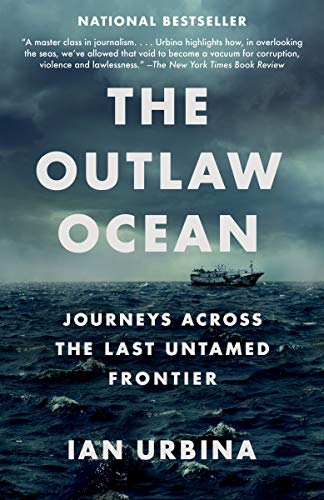
Captain Paul Watson, founder and president of Sea Shepherd, has spent decades confronting oceanic environmental threats firsthand. His recommendation of Ian Urbina's book comes with urgent conviction: "@ian_urbina 's best selling book The Outlaw Ocean is getting rave reviews. Hope some of the world's politicians will read it and understand just how precarious biodiversity is. Underscores what I have been saying for years. 'If the Ocean dies, we all die!'" This endorsement from a leading maritime conservationist underscores the book's impact and relevance for those invested in ocean protection. Additionally, The Washington Post praises Urbina's storytelling for revealing complex truths through vivid reportage, making this book essential for anyone serious about maritime history and law enforcement.
“@ian_urbina 's best selling book The Outlaw Ocean is getting rave reviews. Hope some of the world's politicians will read it and understand just how precarious biodiversity is.
Underscores what I have been saying for years.
"If the Ocean dies, we all die!"” (from X)
Ian Urbina is an investigative reporter for The New York Times. He won a Pulitzer Prize for Breaking News and a George Polk Award for Foreign Reporting. Several of his stories have been adapted into major feature films and his reporting for a New York Times Magazine article called The Secret Life Of Passwords was nominated for an Emmy Award. He has degrees in history and cultural anthropology from Georgetown University and the University of Chicago. Before joining the Times, he was a Fulbright Fellow in Cuba and he also wrote about the Middle East and Africa for various outlets including the Los Angeles Times, Harper’s and Vanity Fair. He lives in Washington D.C. with his family.
After five years of immersive reporting, Ian Urbina, a Pulitzer Prize-winning investigative journalist, exposes a hidden maritime world where lawlessness thrives beyond the reach of any nation. You gain a vivid understanding of crimes ranging from illegal fishing to human trafficking, illuminated through firsthand accounts of those who live and work on these untamed seas. Chapters delve into the complex interplay of environmental exploitation and economic reliance on these shadowy activities, bringing clarity to a globe-spanning problem rarely seen on land. If you're drawn to maritime history that reveals the ocean's darker dimensions, this book offers a compelling, unvarnished look at the human and ecological consequences.
Norman Friedman is a renowned defense analyst and historian whose expertise lies at the crossroads of naval policy, strategy, and technology. With over forty published books and multiple prestigious awards, including the Commodore Dudley W. Knox medal and the Samuel Eliot Morrison award, his deep knowledge makes this book a definitive examination of British submarine innovation during the world wars. Friedman's background uniquely qualifies him to unpack the complex evolution of submarine design and combat roles, offering readers an authoritative and richly detailed account grounded in decades of research.
Norman Friedman is a prominent defense analyst and historian specializing in the intersection between policy, strategy, and technology, mainly in a naval context. He has published more than forty books and is the recipient of numerous awards, including the Commodore Dudley W. Knox medal by the Naval Historical Foundation, the Samuel Eliot Morrison award by the Naval Order of the United States, the Westminster Prize awarded by the Royal United Service Institute, and the Anderson Medal of the British Society for Nautical Research. He has twice received the John Lyman Award from the North American Society for Oceanic History. He lives in New York.
After analyzing extensive naval archives and original submarine plans, Norman Friedman PhD. developed a detailed exploration of British submarine innovation through the two World Wars. You learn how the Royal Navy’s submarine fleet evolved into the largest and most technologically advanced of its time, with chapters dedicated to specific designs and combat roles rarely discussed elsewhere. This book suits you if you’re drawn to naval engineering, military strategy, or maritime history, especially with an interest in underappreciated wartime contributions. The richly illustrated volume also offers insight into the strategic thinking that shaped submarine deployment, making it valuable beyond just technical enthusiasts.
Bill Gates, co-founder of Microsoft and a noted business thinker, recognizes the significance of understanding global trade mechanisms. His endorsement signals that this book offers valuable insights into the infrastructure underpinning modern commerce. Gates' experience leading a global tech enterprise provides him with a unique perspective on how container shipping revolutionized supply chains and industrial geography. Alongside him, Hunter Walk, a partner at Homebrew VC with deep product leadership roots at YouTube and Google, highlights the innovative and practical impact this history reveals, making it relevant for anyone studying economic transformations.
“The Box by Marc Levinson - Never thought I’d read a 400-page book about shipping containers, but I did. And it was super interesting. How a simple invention changed cities, manufacturing and the global economy.” (from X)
Marc Levinson is an economist in Washington, DC. He was formerly a senior fellow at the Council on Foreign Relations, an economist at a leading investment bank, and finance and economics editor at The Economist.
Marc Levinson's decades as an economist and editor at The Economist shape this detailed look into container shipping's rise. You gain insights into how a simple innovation reshaped global trade, slashing transportation costs and transforming port cities like New York and Oakland. The book breaks down complex negotiations with labor leaders and explains how Vietnam War logistics validated containerization. If you want to understand global economic geography or the forces behind modern manufacturing hubs, this book offers rich, data-driven context without fluff.
Financial Times Best Business Book 2013
Shortlisted for Financial Times/Goldman Sachs Business Book Award 2006
Winner of 2007 Anderson Medal, Society for Nautical Research
Andrew Lambert, an accomplished author on naval history, recognized this book during his deep research into maritime warfare. He highlights it as a "powerfully argued re-appraisal establishing Command of the Sea as the critical issue that shaped and defined the Second World War." Lambert's extensive expertise in naval conflicts adds weight to this perspective, encouraging you to consider the broader strategic implications beyond individual battles. Alongside him, Joseph Maiolo praises the book's depth and crafting, calling it one of the few maritime histories truly deserving the label ‘definitive.’ Together, their endorsements underscore why this work is essential for anyone serious about understanding World War II's naval dimension.
Evan Mawdsley is a historian and was formerly professor of international history at Glasgow University. He is the author of World War II: A New History and a Sunday Telegraph Book of the Year, December 1941.
Drawing from decades as a professor of international history, Evan Mawdsley offers a sweeping account of naval warfare during World War II, emphasizing how control over sea lanes shaped the entire conflict. You’ll gain detailed insights into key battles, shipping logistics, and strategic decisions across the Atlantic and Pacific theaters, with chapters dedicated to pivotal moments like the U-boat campaigns and island-hopping operations. This book suits you if you want to understand not just isolated sea battles but the broader maritime strategies that influenced the war’s outcome, especially from an international perspective that includes Britain, America, Germany, and Japan.
Gregory Waselkov, author of A Conquering Spirit and a leading voice in Gulf Coast history, discovered this book while researching the South's maritime past. He praises how John Sledge "skillfully pilots readers past the familiar beaches and hurricanes of the South's backdoor to the Atlantic," revealing five centuries of rich maritime history and diverse seafaring characters. Waselkov’s deep expertise in regional history makes his endorsement especially persuasive for anyone seeking to understand the Gulf’s complex maritime legacy. Alongside him, Lincoln Paine, author of The Sea and Civilization, highlights the book’s inclusive overview from Native American sailors to modern fishing, underscoring its place in maritime history literature.
“In his paean to the Gulf of Mexico, John Sledge skillfully pilots readers past the familiar beaches and hurricanes of the South's backdoor to the Atlantic. Along the way he reveals 500 years of audacious history afloat on its often roiling waters, with a cast of seagoing characters as diverse as the watery biome beneath their hulls.” (from Amazon)
John S. Sledge is senior architectural historian for the Mobile Historic Development Commission and a member of the National Book Critics Circle. He holds a bachelor's degree in history and Spanish from Auburn University and a master's in historic preservation from Middle Tennessee State University. Sledge is the author of six previous books, including Southern Bound: A Gulf Coast Journalist on Books, Writers, and Literary Pilgrimages of the Heart; The Mobile River; and These Rugged Days: Alabama in the Civil War.
2019·280 pages·Maritime History, World History, Navigation, Shipbuilding, Port Cities
John S. Sledge, an experienced architectural historian with a deep connection to the Gulf Coast, takes you on a journey through five centuries of maritime activity in the Gulf of Mexico. His narrative captures the interplay of diverse cultures, notable historical figures, and transformative events such as the only naval defeat of armored steamships by wooden vessels and early ocean mapping efforts. You’ll gain insights into the evolving maritime technologies, bustling port cities like New Orleans and Havana, and the environmental and political challenges shaping the region. If your interest lies in understanding the Gulf’s layered human and nautical history beyond surface-level stories, this book offers a richly textured perspective.
Nick Fraser, a respected expert affiliated with National Museums Scotland, highlights this book's unique ability to bring a Victorian expedition vividly into the present. His experience with maritime history gives weight to his praise of Macdougall’s storytelling, which captures the thrill and significance of the H.M.S. Challenger voyage. Fraser notes, "An epic Victorian-age expedition made relevant to the world today by Macdougall’s masterful prose. The excitement of discovery is infectiously brought to life in this delightful read. A landmark book about a landmark voyage." This reflection underscores why the book resonates not just as history but as a foundational narrative for oceanographic science, inviting you to explore the roots of modern marine discovery.
“An epic Victorian-age expedition made relevant to the world today by Macdougall’s masterful prose. The excitement of discovery is infectiously brought to life in this delightful read. A landmark book about a landmark voyage.” (from Amazon)
Doug Macdougall is emeritus professor of earth sciences at the Scripps Institution of Oceanography at the University of California, San Diego. He is the author of several books, including Nature’s Clocks: How Scientists Measure the Age of Almost Everything and Why Geology Matters: Decoding the Past, Anticipating the Future.
Doug Macdougall, emeritus professor of earth sciences at Scripps Institution of Oceanography, brings a rigorous scientific lens to the story of H.M.S. Challenger’s pioneering expedition. You’ll gain insight into how Victorian-era naturalists like Henry Moseley cataloged oceanic life and how John Murray’s work shaped modern oceanography. The book walks you through detailed observations of deep-sea soundings, biological sampling, and weather recordings, weaving these with tales of adventure and scientific perseverance. If you’re intrigued by the origins of ocean science or the interplay between exploration and discovery, this book offers a vivid, informative journey that’s as much about the birth of a discipline as it is about maritime adventure.
Yoshifumi Tanaka is Professor of International Law specializing in the Law of the Sea at the University of Copenhagen. He has authored several important works in maritime delimitation and ocean governance. His authoritative knowledge shapes this book, which offers updated perspectives on evolving issues like marine biodiversity and climate change impacts, making it a valuable resource for understanding the complexities of international maritime law.
Yoshifumi Tanaka is Professor of International Law with Specific Focus on the Law of the Sea at the Faculty of Law, University of Copenhagen. He is the single author of four books: Predictability and Flexibility in the Law of Maritime Delimitation (2006), A Dual Approach to Ocean Governance (2008), The International Law of the Sea (Cambridge, 2012; 2nd edition, 2015) and The Peaceful Settlement of International Disputes (Cambridge, 2018). He has published widely in the fields of the law of the sea, international environmental law and peaceful settlement of international disputes.
Drawing from his extensive academic career focused on international maritime law, Yoshifumi Tanaka offers a detailed exploration of the legal frameworks governing the world's oceans. The book presents two distinct paradigms: the division of oceans among nations and the concept of shared global oceans, providing a nuanced understanding of maritime boundaries and governance. You gain insights into pressing contemporary challenges, such as marine biodiversity protection, plastic pollution, Arctic territorial claims, and climate change impacts, all backed by illustrative examples and tables. This edition suits those looking to deepen their grasp of international law as it applies to maritime issues and environmental concerns.
The Times Literary Supplement, a renowned literary publication, highlights this book's academic rigor and fascinating depth, noting how it effortlessly draws readers into maritime lore for hours. Their praise underscores the meticulous research and detailed illustrations that make this companion indispensable for anyone serious about maritime history. The Daily Telegraph echoes this sentiment, describing it as a book where "you can be lost for hours," emphasizing its engaging nature. Such expert recognition signals this book's unique ability to captivate while educating, making it a trusted resource for expanding your maritime understanding.
“Neatly illustrated and meticulously researched, The Oxford Companion to Ships and the Sea is a reference work of uniformly high academic quality...As a thief of a sailor's time, it probably has few modern equals. Risk consulting it...and, before you realize what has happened, the fascinating text will have led you into areas of maritime lore you never even know existed; several hours will have passed, the fire will have gone out and one's spouse will long since have gone to bed” (from Amazon)
I. C. B. Dear is a prominent editor and scholar known for his contributions to maritime literature and reference works. He has edited several acclaimed publications, including the Oxford Companion to Ships and the Sea, which has been a vital resource for maritime enthusiasts and professionals alike. His expertise in naval history and maritime studies has made him a respected figure in the field.
The Oxford Companion to Ships and the Sea draws on the vast expertise of I. C. B. Dear, a respected scholar in maritime literature, to offer an encyclopedic exploration of everything related to the sea and its vessels. Inside, you’ll find detailed entries covering naval battles, shipbuilding techniques, marine archaeology, and even oceanography, enriched by contributions from specialists like Dr. Martin Angel. This book excels at connecting historical events with technical insights, such as the intricate coverage of the Titanic and the Mary Rose, making it invaluable for enthusiasts and professionals seeking a deep, well-rounded understanding. Whether you want to grasp the evolution of ship design or the cultural lore of the sea, this companion lays out a wealth of knowledge with clarity and precision.
Paul Graham, co-founder of Y Combinator with extensive experience in leadership and innovation, highlights this book's value for those interested in maritime history and exploration. His endorsement signals the book’s relevance beyond sailing enthusiasts, appealing to anyone who appreciates pioneering spirit and detailed firsthand accounts. Given Graham’s background in supporting ambitious ventures, his recognition underscores the book’s enduring influence as a record of determination and skill in solo circumnavigation.
Joshua Slocum was a pioneering sailor and the first person to sail solo around the world. His remarkable journey aboard the sloop Spray from 1895 to 1898 covered over 46,000 miles and showcased his exceptional skills and courage. Slocum's narrative style captures the essence of adventure and exploration, making his work a classic in maritime literature.
When Joshua Slocum set out to sail alone around the world in the late 19th century, he not only charted a daring route but also created a vivid memoir that offers deep insights into solo navigation and maritime self-reliance. You’ll gain a firsthand look at the challenges and triumphs of long-distance solo sailing, from managing the sloop Spray to handling unforeseen perils on open seas, all enriched with detailed illustrations. This book suits anyone intrigued by historical expeditions, sailing techniques, or the spirit of adventure travel. It’s particularly useful if you want to understand the mindset and skills needed for solitary maritime voyages without romanticizing the dangers involved.
The best Maritime History books and more, in your inbox each week. No account needed.
Conclusion
The 14 books featured here weave together themes of exploration, conflict, innovation, and law—each shedding light on different facets of maritime history. If you're intrigued by the human drama behind shipwrecks and salvage, start with Ship of Gold in the Deep Blue Sea. For a strategic view of naval warfare, War at Sea and The War for the Seas provide rich detail. Planning to sail yourself? Heavy Weather Sailing offers practical wisdom from seasoned mariners.
For rapid immersion into ocean law and governance, combine The International Law of the Sea with The Outlaw Ocean to understand both policy frameworks and on-the-water realities. Alternatively, if you want to explore specific eras or regions, books like Conquerors and The Gulf of Mexico will deepen your historical context.
To bridge the gap between these broad perspectives and your personal interests, you can create a personalized Maritime History book. This tailored approach helps you accelerate your learning journey by focusing on what matters most to you within maritime history.
Frequently Asked Questions
I'm overwhelmed by choice – which book should I start with?
Start with Ship of Gold in the Deep Blue Sea if you enjoy dramatic narratives about shipwrecks and salvage. It's engaging and offers a broad glimpse into maritime history's human and technological sides.
Are these books too advanced for someone new to Maritime History?
Not at all. Many titles, like Erebus and Sailing Alone Around the World, balance rich detail with accessible storytelling, making them suitable for newcomers interested in maritime adventures and history.
What's the best order to read these books?
Begin with narrative-driven books to build interest, such as Erebus and Conquerors. Then explore more technical or thematic works like Heavy Weather Sailing and The International Law of the Sea for deeper understanding.
Do I really need to read all of these, or can I just pick one?
You can definitely pick a few that match your interests. For example, choose War at Sea for naval warfare or The Box for economic history. Each offers valuable insights on its own.
Which books focus more on theory vs. practical application?
Heavy Weather Sailing leans toward practical sailing advice, while The International Law of the Sea is more theoretical, focusing on maritime legal frameworks. Others mix narrative with insight.
Can I get tailored insights for my specific Maritime History interests?
Yes! While these expert books cover broad maritime topics, you can create a personalized Maritime History book that bridges expert knowledge with your unique goals and focus areas, enhancing relevance and learning efficiency.
📚 Love this book list?
Help fellow book lovers discover great books, share this curated list with others!