10 Computer Virus Books That Separate Experts from Amateurs
Top recommendations on Computer Virus Books from Sebastian Porst, Patrick Engbretson, and Richard Bejtlich guide your malware expertise
Updated on June 23, 2025·We may earn commissions for purchases made via this page
9 of 10 books have Kindle versions
We're launchingLaunching on Product Hunt today 🎉We just launchedJust launched on Product Hunt 🎉
Modelpeers, from the BookAuthority teamFrom the BookAuthority team: Modelpeers, a free way to follow AI models and agents like you follow people. We'd love your support.
What if the key to mastering computer viruses isn't just technical knowledge, but knowing which books truly unlock their secrets? Computer viruses continue to evolve, challenging even seasoned cybersecurity professionals. Understanding their behavior and defense mechanisms has never been more urgent.
Experts like Sebastian Porst, a Google software engineer, and Patrick Engbretson, an Information Assurance professor, have turned to specific, practical resources to deepen their malware analysis skills. Their endorsements come from real-world experience dissecting threats and teaching others.
While these expert-curated books provide proven frameworks, readers seeking content tailored to their specific background, skill level, and goals might consider creating a personalized Computer Virus book that builds on these insights for a more targeted learning journey.
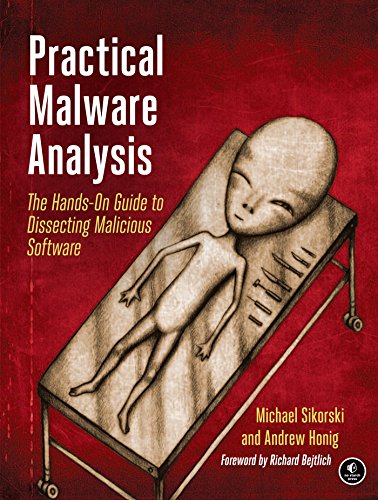
Sebastian Porst, a software engineer at Google, turned to this book to deepen his malware analysis skills amid evolving cyber threats. He calls it "a great introduction to malware analysis. All chapters contain detailed technical explanations and hands-on lab exercises to get you immediate exposure to real malware." This practical approach helped him understand complex malware behaviors and refine his debugging techniques. Similarly, Patrick Engbretson, an Information Assurance professor, recommends it as the go-to resource for anyone breaking into malware analysis, highlighting its thorough yet accessible style.
“A great introduction to malware analysis. All chapters contain detailed technical explanations and hands-on lab exercises to get you immediate exposure to real malware.”
Michael Sikorski is a malware analyst, researcher, and security consultant at Mandiant. His previous employers include the National Security Agency and MIT Lincoln Laboratory. Mike frequently teaches malware analysis to a variety of audiences including the FBI and Black Hat. Andrew Honig is an Information Assurance Expert for the Department of Defense. He teaches courses on software analysis, reverse engineering, and Windows system programming. Andy is publicly credited with several zero-day exploits in VMware's virtualization products.
Unlike most cybersecurity books that skim the surface, this one digs deep into malware analysis with a clear focus on hands-on skills. Michael Sikorski and Andrew Honig, both seasoned experts with backgrounds at Mandiant, NSA, and the Department of Defense, guide you through practical techniques like setting up safe analysis environments, using tools such as IDA Pro and OllyDbg, and unpacking obfuscated malware. You'll learn to dissect malware samples, understand Windows internals relevant to threats, and counter tricks like anti-debugging. If you're aiming to strengthen your ability to analyze and neutralize malware threats, this book delivers a thorough foundation without unnecessary jargon or fluff.
James Aquilina, Managing Director and Deputy General Counsel at Stroz Friedberg, LLC, brings a rare insider perspective to malware forensics. After years navigating complex live malware investigations, he recommends this book as the first to thoroughly explain how to conduct live forensic analysis on malicious code. "First book to detail how to perform 'live forensic' techniques on malicious code," he notes, highlighting how it reshaped his understanding of evidence preservation during active incidents. Similarly, Cameron Malin, a seasoned behavioral profiler, praises the authors' real-world experience prosecuting federal malware cases, which sharpens the book's practical insights.
Eoghan Casey BS MA, Cameron H. Malin JD CISSP, James M. Aquilina(you?)·
About the Author
Eoghan Casey is an internationally recognized expert in data breach investigations and information security forensics. He is founding partner of CASEITE.com, and co-manages the Risk Prevention and Response business unit at DFLabs. Over the past decade, he has consulted with many attorneys, agencies, and police departments in the United States, South America, and Europe on a wide range of digital investigations, including fraud, violent crimes, identity theft, and on-line criminal activity. Eoghan has helped organizations investigate and manage security breaches, including network intrusions with international scope. He has delivered expert testimony in civil and criminal cases, and has submitted expert reports and prepared trial exhibits for computer forensic and cyber-crime cases. In addition to his casework and writing the foundational book Digital Evidence and Computer Crime, Eoghan has worked as R&D Team Lead in the Defense Cyber Crime Institute (DCCI) at the Department of Defense Cyber Crime Center (DC3) helping enhance their operational capabilities and develop new techniques and tools. He also teaches graduate students at Johns Hopkins University Information Security Institute and created the Mobile Device Forensics course taught worldwide through the SANS Institute. He has delivered keynotes and taught workshops around the globe on various topics related to data breach investigation, digital forensics and cyber security. Eoghan has performed thousands of forensic acquisitions and examinations, including Windows and UNIX systems, Enterprise servers, smart phones, cell phones, network logs, backup tapes, and database systems. He also has information security experience, as an Information Security Officer at Yale University and in subsequent consulting work. He has performed vulnerability assessments, deployed and maintained intrusion detection systems, firewalls and public key infrastructures, and developed policies, procedures, and educational programs for a variety of organizations. Eoghan has authored advanced technical books in his areas of expertise that are used by practitioners and universities around the world, and he is Editor-in-Chief of Elsevier's International Journal of Digital Investigation.
What started as a need to address the challenges of investigating live malware incidents became a detailed manual for examining malicious code without shutting down compromised systems. Drawing from their extensive legal and technical backgrounds, the authors guide you through forensic techniques specifically tailored for Windows and Linux environments, including runtime behavioral analysis and static code examination. You'll learn to use tools that monitor file, registry, and network activity, and how to preserve volatile memory for evidence. This book suits system administrators, forensic examiners, attorneys, and security pros who want a firm grasp of malware incident response and the legal context that shapes it.
This AI-created book on computer virus analysis is tailored to your skill level and interests. You share your background and specific goals in virus study and defense, and this book is created to cover exactly the techniques and topics you want to master. Because computer viruses vary widely in complexity and impact, a personalized approach helps focus on what matters most in your situation. This ensures you get practical, relevant insights rather than generic information.
TailoredRead AI creates personalized nonfiction books that adapt to your unique background, goals, and interests. Instead of reading generic content, you get a custom book written specifically for your profession, experience level, and learning objectives. Whether you're a beginner looking for fundamentals or an expert seeking advanced insights, TailoredRead crafts a book that speaks directly to you. Learn more.
This personalized book offers a comprehensive exploration of computer virus analysis and defense techniques, tailored to your individual background and goals. It provides detailed coverage of virus behavior, detection methods, and protection strategies, presenting a personalized framework that fits your specific context. The book addresses foundational principles such as virus classification and propagation, alongside advanced topics including polymorphic virus analysis and runtime defensive tactics. By cutting through irrelevant advice, it enables focused learning on areas like forensic investigation, malware dissection, and system hardening relevant to your skill level. This tailored approach enhances your ability to understand and counter evolving computer virus threats effectively.
Monnappa K A, an information security investigator at Cisco Systems, leverages his extensive experience investigating advanced cyber attacks to write this book. As a member of the Black Hat review board and creator of cybersecurity tools like Limon Linux sandbox, his expertise shapes a resource that teaches malware analysis and memory forensics through practical examples. His work training professionals worldwide at conferences such as Black Hat and FIRST informs the book’s focus on equipping you with real skills to combat evolving malware threats.
Monnappa K A works for Cisco Systems as an information security investigator focusing on threat intelligence and the investigation of advanced cyber attacks. He is a member of the Black Hat review board, the creator of Limon Linux sandbox, the winner of the Volatility plugin contest 2016, and the co-founder of the Cysinfo cybersecurity research community. He has presented and conducted training sessions at various security conferences including Black Hat, FIRST, OPCDE, and DSCI. He regularly conducts training at the Black Hat Security Conference in USA, Asia, and Europe.
Unlike most cybersecurity books that focus on theory, Monnappa K A draws from his role at Cisco Systems to guide you through hands-on malware analysis and memory forensics with real-world malware samples and infected memory images. You'll learn how to safely set up a lab environment, extract malware metadata, reverse-engineer code using tools like IDA Pro and x64dbg, and investigate malware behaviors such as code injection and hooking. Chapters detail practical techniques to decode encryption algorithms and hunt malware, making this an insightful read for security investigators and analysts aiming to enhance their incident response skills. If you're comfortable with basic programming, this book offers a clear path to mastering malware investigation techniques.
Cameron H. Malin, a behavioral profiler with more than 20 years investigating cyber adversaries and founder of the FBI's Cyber Behavioral Analysis Center, brings unparalleled expertise to this field guide. His background in both law enforcement and digital forensics underpins the book’s practical approach to analyzing malware on Windows systems, making it a vital resource for forensic professionals seeking grounded, experience-based methods.
Cameron H. Malin JD CISSP, Eoghan Casey BS MA, James M. Aquilina(you?)·
About the Author
Cameron H. Malin is a Behavioral Profiler with over 20 years of experience investigating, analyzing and profiling cyber adversaries across the spectrum of criminal to national security. He is the founder of the FBI Behavioral Analysis Unit’s (BAU) Cyber Behavioral Analysis Center (CBAC) and the longest serving FBI Cyber Profiler. He is a co-author of the authoritative cyber deception book, Deception in the Digital Age: Exploiting and Defending Human Targets Through Computer-Mediated Communications (published by Academic Press, an imprint of Elsevier, Inc.) and co-author of the Malware Forensics book series: Malware Forensics: Investigating and Analyzing Malicious Code, Malware Forensics Field Guide for Windows Systems, and Malware Forensics Field Guide for Linux Systems (all published by Syngress, an imprint of Elsevier, Inc.). Cameron is the creator of Digital Behavioral Criminalistics – a combined application of numerous forensic disciplines―digital forensics, criminalistics, and behavioral sciences―to meaningfully uncovering offender thoughts and actions in digital artifacts―as well as the Cyber Pathway to Intended Violence (CPIV)―a model for assessing violent offenders who have engaged computer systems, devices, and/or online resources before, during, and/or after a premeditated, violent act. These important emerging topics were published in his book chapter Digital Behavioral Criminalistics to Elucidate the Cyber Pathway to Intended Violence in the International Handbook of Threat Assessment, 2nd Edition (Oxford University Press, 2021). Prior to working for the FBI, Cameron was an Assistant State Attorney (ASA) and Special Assistant United States Attorney in Miami, Florida, where he specialized in computer crime prosecutions.
Unlike most computer forensics books that focus heavily on theory, this guide dives into the practical tools and checklists needed to analyze malware on Windows systems. Drawing from Cameron H. Malin's extensive FBI experience in cyber behavioral profiling, the book equips you with skills to collect volatile data, analyze memory dumps, and uncover malware artifacts crucial for investigations. Its chapters cover everything from live response techniques to legal considerations, making it especially useful if you work in digital forensics or cybersecurity incident response. You’ll find clear case studies and expert tips that help demystify complex analysis steps, though it’s geared more toward professionals than casual readers.
Dylan Barker is a recognized expert in malware analysis and cybersecurity, with extensive experience in incident response and threat detection. His background includes hands-on work with various malware analysis tools and methodologies, making him uniquely qualified to guide you through understanding and mitigating malware threats. This book draws directly from his expertise, offering practical techniques to analyze adversarial software and improve your defense strategies.
Dylan Barker is a recognized expert in malware analysis and cybersecurity, with extensive experience in incident response and threat detection. He has authored several works in the field, focusing on practical techniques for analyzing and mitigating malware threats. His background includes hands-on experience with various malware analysis tools and methodologies, making him a valuable resource for both beginners and seasoned professionals in cybersecurity.
What if everything you knew about malware analysis was wrong? Dylan Barker argues that many analysts overlook the crucial triage phase where quick, accurate decisions can prevent widespread damage. Drawing from his extensive hands-on experience with incident response and threat detection, Barker walks you through both static and dynamic analysis, emphasizing how to attribute malware to threat actors effectively. You’ll also gain practical skills in using tools like NSA's Ghidra for reverse engineering, and learn to automate tasks to speed up responses. This book suits both newcomers eager to understand malware's inner workings and professionals aiming to refine their analytical workflow.
This AI-created book on malware mastery is tailored to your current skills and specific goals. It breaks down complex malware analysis and incident response into manageable daily actions crafted just for you. By focusing on the precise topics and challenges you want to tackle, it provides a learning experience that makes sense for your background and ambitions. This personalized approach helps you gain practical expertise efficiently, avoiding generic or overwhelming advice.
TailoredRead AI creates personalized nonfiction books that adapt to your unique background, goals, and interests. Instead of reading generic content, you get a custom book written specifically for your profession, experience level, and learning objectives. Whether you're a beginner looking for fundamentals or an expert seeking advanced insights, TailoredRead crafts a book that speaks directly to you. Learn more.
This personalized book offers a focused 30-day plan designed to develop malware analysis skills alongside incident response tactics. It provides a tailored approach that breaks down daily actionable steps, enabling readers to build expertise progressively without unnecessary detours. The content delves into practical techniques such as static and dynamic analysis, memory forensics, and triage workflows, all adjusted to your specific experience level and goals. By cutting through generic advice, it fits your unique context whether you're new to malware or aiming to sharpen incident response efficiency. The book equips you with a personalized framework to handle real-world malware challenges with confidence and precision.
Alexey Kleymenov started his cybersecurity career in university and now brings over 14 years of experience as a malware analyst and software developer. His deep expertise in reverse engineering and threat intelligence led him to write this book, designed to teach you efficient malware analysis across multiple platforms. His hands-on background with IT, OT, and IoT malware investigations uniquely positions this guide to help you understand and counteract complex malicious software effectively.
Alexey Kleymenov started working in the information security industry in his second year at university and now has more than 14 years of practical experience at several international cybersecurity companies. He is a malware analyst and software developer who is passionate about reverse engineering, automation, and research. Alexey has taken part in numerous investigations analyzing all types of malicious samples, has developed various systems to perform threat intelligence activities in the IT, OT, and IoT sectors, and has authored several patents. Alexey is a member of the (ISC)² organization and holds the CISSP certification. Finally, he is a founder of the RE and More project, teaching people all over the world how to perform malware analysis in the most efficient way.
What if everything you knew about malware analysis was wrong? Alexey Kleymenov, drawing from over 14 years in cybersecurity and hands-on malware investigation, challenges conventional views by revealing universal patterns behind malicious software. You’ll learn to dissect malware across Windows, Linux, macOS, and mobile platforms, mastering static and dynamic analysis alongside memory forensics and decryption. The book dives into complex areas like anti-reverse-engineering tactics and attack vectors for IT, OT, and IoT environments, equipping you to assess threats and design effective defenses. This is best suited for malware researchers, forensic analysts, and security pros looking to deepen practical reverse-engineering skills, though even beginners with programming background will find it accessible.
A. M. Perry is a recognized expert in cyber security who has devoted years to educating the public about online risks. Driven by a commitment to help those unfamiliar with technology, Perry’s book breaks down complex topics like scams, viruses, and the cloud into clear, approachable advice. This guide offers valuable insight for anyone wanting to feel safer and more confident in today’s digital environment.
A. M. Perry is a recognized expert in cyber security, focusing on online safety and technology. With years of experience in the field, Perry has dedicated their career to educating the public about the risks associated with the internet and how to protect oneself from scams and fraud. Their work aims to empower individuals, especially those unfamiliar with technology, to navigate the digital world safely.
When A. M. Perry realized how many people struggled to understand online threats, they crafted this guide to demystify scams, SPAM, viruses, and cloud technology for everyday users. You’ll learn how to recognize common scams, understand what the cloud really means, and protect your computer from viruses that could jeopardize your data. The book’s straightforward explanations and relatable anecdotes make it especially helpful if you’re new to technology or worried about online security. It also touches on why internet safety matters as much as physical safety, offering you practical context for navigating the digital world confidently. Although aimed at newcomers, even seasoned users may find fresh perspectives from the community-driven insights.
Peter Szor is security architect for Symantec Security Response, with over two decades designing antivirus technologies for Norton AntiVirus. Drawing from his extensive background, including creating his own antivirus program and speaking at major security conferences, Szor offers authoritative insight into computer virus research and defense. His work guides you through virus analysis, spread mechanisms, and defense strategies, making this a valuable resource for anyone engaged in cybersecurity.
Peter Szor is security architect for Symantec Security Response, where he has been designing and building antivirus technologies for the Norton AntiVirus product line since 1999. From 1990 to 1995, Szor wrote and maintained his own antivirus program, Pasteur. A renowned computer virus and security researcher, Szor speaks frequently at the Virus Bulletin, EICAR, ICSA, and RSA conferences, as well as the USENIX Security Symposium. He currently serves on the advisory board of Virus Bulletin magazine, and is a founding member of the AVED (AntiVirus Emergency Discussion) network.
When Peter Szor first realized the complexity and persistence of computer viruses, he drew on decades of hands-on experience to craft this detailed exploration of antivirus research. You’ll learn not only how viruses operate and spread but also how to classify and analyze them effectively, with insights drawn from his work on Norton AntiVirus. Chapters cover virus behavior, protection strategies, and threat analysis, offering you a deep dive into the technical and strategic sides of defense. This book suits security professionals and serious students aiming to understand and combat malware at a technical level.
Best for technical readers exploring virus evolution
Kindle version not available
Mark Ludwig is a renowned computer virus expert with over two decades of experience in cybersecurity. His extensive background and multiple books on the subject provide a strong foundation for this work, which aims to demystify the complexities of computer viruses. His expertise makes this book a valuable resource for anyone seeking to understand how viruses operate and evolve in the modern digital landscape.
Mark Ludwig is a renowned computer virus expert with over two decades of experience in cybersecurity. He has authored several books on computer viruses and is a sought-after speaker at cybersecurity conferences worldwide.
Mark Ludwig's decades of hands-on experience in cybersecurity reshape how you understand computer viruses in this detailed exploration. You gain insight into virus evolution from simple 44-byte codes to complex 32-bit Windows and Unix threats, including stealth and polymorphic techniques that challenge antivirus defenses. The book delves into cutting-edge concepts like genetic viruses and their potential roles in future digital warfare, expanding your perspective beyond traditional malware. It also covers virus payloads extensively, explaining not just destructive effects but strategic compromises and even beneficial uses. If you want a deep technical grasp of virus behavior and the broader implications for cybersecurity, this book will meet your needs, though it's best suited for those with some prior technical background.
Solis Tech is a recognized expert in technology and human-computer interaction, with extensive experience in understanding how malware affects computer systems and user interactions. Their work focuses on educating users about tech threats and improving user experience through better understanding of human-computer dynamics. This background uniquely positions Solis Tech to bridge the gap between technical malware aspects and the human factors influencing computer security, offering readers a practical perspective on navigating malware risks.
Solis Tech is a recognized expert in technology and human-computer interaction, with extensive experience in understanding how malware affects computer systems and user interactions. Their work focuses on educating users about tech threats and improving user experience through better understanding of human-computer dynamics.
Unlike most computer virus books that focus solely on technical malware details, Solis Tech draws from their background in human-computer interaction to explore how malware impacts user behavior and system dynamics. You’ll find straightforward explanations on detecting malware threats combined with insights into how users interact with compromised systems, making it clear how vulnerabilities arise. The book covers foundational concepts such as identifying suspicious activities and understanding social operating aspects of computers, especially in the context of malware attacks. Whether you’re a cybersecurity novice or someone interested in the interplay between technology and human factors, this concise guide offers a focused introduction without overwhelming jargon or fluff.
The best Computer Virus books and more, in your inbox each week. No account needed.
Conclusion
These 10 books reveal clear themes: practical malware analysis, forensic investigation, and understanding the human and technical sides of computer viruses. They cover everything from dissecting malicious code to preserving digital evidence and appreciating virus evolution.
If you're tackling malware for the first time, start with "Practical Malware Analysis" combined with "Malware Forensics" for a solid foundation. Security pros aiming to refine workflows should add "Malware Analysis Techniques" and "Mastering Malware Analysis" for deeper insights.
Once you've absorbed these expert insights, create a personalized Computer Virus book to bridge the gap between general principles and your specific situation. Taking this step ensures your knowledge keeps pace with evolving threats.
Frequently Asked Questions
I'm overwhelmed by choice – which book should I start with?
Start with "Practical Malware Analysis" for hands-on skills and "Malware Forensics" to understand incident investigation. These books offer balanced practical and forensic perspectives ideal for beginners and intermediates.
Are these books too advanced for someone new to Computer Virus?
Not at all. Several books, like "Learning Malware Analysis" and "Online Safety," are designed for newcomers, gradually building your skills with clear explanations and real-world examples.
What's the best order to read these books?
Begin with practical analysis books, then move to forensic guides. For example, read "Practical Malware Analysis" before tackling "Malware Forensics Field Guide for Windows Systems" and finish with strategic overviews like "Art of Computer Virus Research and Defense."
Should I start with the newest book or a classic?
Both have value. Classics like Peter Szor’s "Art of Computer Virus Research and Defense" provide foundational knowledge, while newer titles such as "Malware Analysis Techniques" offer fresh methods and updated tools.
Which books focus more on theory vs. practical application?
"Malware Forensics" and "Art of Computer Virus Research and Defense" lean toward theory and strategy. "Practical Malware Analysis" and "Malware Analysis Techniques" emphasize hands-on skills and workflows.
Can I get a personalized study plan instead of reading all these books?
Yes! While these expert books cover broad knowledge, personalized books tailor content to your experience and goals. They complement expert insights perfectly. Explore custom Computer Virus books for focused learning.
📚 Love this book list?
Help fellow book lovers discover great books, share this curated list with others!