18 Data Science Books That Accelerate Your Expertise
Recommended by Kirk Borne, Spyros Makridakis, and Joannes Vermorel — essential Data Science Books to boost your skills
Updated on June 24, 2025·We may earn commissions for purchases made via this page
0 of 18 books have Audiobook versions
We're launchingLaunching on Product Hunt today 🎉We just launchedJust launched on Product Hunt 🎉
Modelpeers, from the BookAuthority teamFrom the BookAuthority team: Modelpeers, a free way to follow AI models and agents like you follow people. We'd love your support.
What if mastering Data Science was less about sifting through countless resources and more about focusing on what truly moves the needle? Data science isn't just a buzzword—it's reshaping industries from healthcare to finance, demanding precision and insight. But with so many books promising the keys to success, how do you choose the ones that genuinely deliver?
Kirk Borne, Principal Data Scientist at Booz Allen, often shares how tools like the "Python Data Science Handbook" reshaped his approach to practical coding challenges. Meanwhile, Spyros Makridakis, a forecasting expert, praises "Data Science for Supply Chain Forecasting" for its actionable machine learning models that cut through complexity. And Joannes Vermorel, CEO of Lokad, highlights the importance of accessible yet powerful forecasting techniques that this book offers. Their real-world experience underscores the value of curated knowledge.
While these expert-curated books provide proven frameworks, readers seeking content tailored to their specific background, skill level, and learning goals might consider creating a personalized Data Science book that builds on these insights for a uniquely effective learning journey.
Spyros Makridakis, founder of the Makridakis Open Forecasting Center, brings unmatched authority in forecasting and highlights this book's practical impact in data science applied to supply chains. He points out how the book teaches powerful machine learning models through straightforward, do-it-yourself methods, making complex techniques accessible without extra help. This approach reshaped his view on implementing forecasting models in practice. Similarly, Joannes Vermorel, founder and CEO of Lokad, endorses the book for supply chain managers, noting it delivers near state-of-the-art forecasts efficiently and challenges the limitations of vendors offering only a few models.
“The objective of Data Science for Supply Chain Forecasting is to show practitioners how to apply the statistical and ML models described in the book in simple and actionable 'do-it-yourself' ways by showing, first, how powerful the ML methods are, and second, how to implement them with minimal outside help, beyond the 'do-it-yourself' descriptions provided in the book.”
Nicolas Vandeput is a supply chain data scientist specializing in demand forecasting and inventory optimization. He founded his consultancy company SupChains in 2016, delivering models and training courses worldwide. He co-founded SKU Science—a demand forecasting platform—in 2018. Passionate about education, Nicolas is an avid learner enjoying teaching at universities. He currently teaches forecasting and inventory optimization to master students in CentraleSupelec, Paris, France.
Nicolas Vandeput brings his deep expertise as a supply chain data scientist to this book, which moves beyond coding tricks to emphasize a scientific mindset essential for demand forecasting. You’ll learn how to implement and experiment with a range of forecasting models—from traditional statistical methods to neural networks—through practical Python and Excel examples. The book also covers vital concepts like overfitting, feature optimization, and the forecasting process itself, making it a solid fit for supply chain practitioners and analysts eager to refine their forecasting skills. While it’s technical, the hands-on approach ensures you can apply these techniques directly in your work environment.
Kirk Borne, Principal Data Scientist at Booz Allen and a respected voice in data science, highlights this Python handbook as a vital resource for data practitioners. Sharing it as a must-see free series, he underscores how it equips data scientists with tools to handle coding challenges effectively. His endorsement reflects his deep involvement in big data and machine learning, emphasizing the practical value of this book. Meanwhile, Adam Gabriel Top Influencer, a seasoned AI and machine learning engineer, echoes this recommendation, reinforcing the book’s importance for those eager to deepen their Python data science skills.
“✨🎉🌟Must see this >> Free Python Data Science coding book series for Data Scientists via DataScienceCtrl. #BigData #MachineLearning #AI #DeepLearning #BeDataBrilliant #DataLiteracy” (from X)
Jake VanderPlas is a software engineer at Google Research, working on tools that support data-intensive research. He creates and develops Python tools for use in data-intensive science, including packages like Scikit-Learn, SciPy, AstroPy, Altair, JAX, and many others. He participates in the broader data science community, developing and presenting talks and tutorials on scientific computing topics at various conferences in the data science world.
Drawing from his deep experience as a Google Research software engineer and contributor to major Python scientific libraries, Jake VanderPlas provides an integrated guide to the essential tools powering data science workflows. You’ll find detailed guidance on using IPython and Jupyter for interactive computing, manipulating data with NumPy’s ndarrays and Pandas’ DataFrames, visualizing datasets through Matplotlib, and implementing machine learning algorithms via Scikit-Learn. Chapters focus on practical techniques like cleaning data, transforming formats, and building predictive models, making this a solid reference if you’re comfortable with Python and want to tackle real data science tasks efficiently. The book suits data practitioners who want a unified resource rather than scattered tutorials, though beginners without coding experience might find it dense.
This AI-created book on data science is written based on your background, skill level, and specific goals. You tell us which areas you want to focus on and your current experience, and the book matches its content to your needs. Because data science covers a vast and complex territory, having a custom guide helps you learn efficiently and stay motivated by concentrating on what matters most to you.
TailoredRead AI creates personalized nonfiction books that adapt to your unique background, goals, and interests. Instead of reading generic content, you get a custom book written specifically for your profession, experience level, and learning objectives. Whether you're a beginner looking for fundamentals or an expert seeking advanced insights, TailoredRead crafts a book that speaks directly to you. Learn more.
This tailored book explores the full spectrum of data science, from foundational concepts to advanced techniques, crafted specifically to your background and goals. It examines key areas such as statistical analysis, machine learning, data visualization, and practical programming skills, all synthesized to match your interests and experience level. By focusing on your unique learning objectives, the book guides you through complex topics at a pace and depth that suits you, making challenging material accessible and engaging. This personalized approach ensures you build a deep, applicable understanding of data science, helping you confidently advance in this dynamic field.
Tim @Realscientists, a staff scientist and communicator known for bridging complex science with clear explanation, highlights this book as an excellent introduction for those new to programming and data analysis. He notes, "If you are interested in learning programming, there are lots of great tutorials. For data analysis, R and the R 4 data science book is a great way to go." This endorsement reflects the book's practical approach to teaching R and data manipulation. Similarly, Kareem Carr Data Scientist, a Harvard Stats PhD student, recommends it for beginners eager to engage hands-on without getting lost in theory, emphasizing its accessible style and free ebook availability.
“If you are interested in learning programming, there are lots of great tutorials. For data analysis, R and the R 4 data science book is a great way to go and for general R syntax, there is the swirl learning package /20” (from X)
Hadley Wickham is Chief Scientist at RStudio and a member of the R Foundation. He builds tools (both computational and cognitive) that make data science easier, faster, and more fun. His work includes packages for data science (ggplot2, dplyr, tidyr), data ingest (readr, readxl, haven), and principled software development (roxygen2, testthat, devtools). He is also a writer, educator, and frequent speaker promoting the use of R for data science. Learn more on his homepage, http://hadley.nz.
Hadley Wickham, Chief Scientist at RStudio and a pivotal figure in the R community, brings his deep expertise to this accessible guide for aspiring data scientists. The book teaches you how to leverage R and the tidyverse to import, clean, transform, visualize, and model data, moving seamlessly from raw datasets to insights. It demystifies key tasks like handling spreadsheets, databases, and web data, with chapters that gradually build your fluency in R programming and data manipulation. Whether you’re starting without programming experience or looking to deepen your practical skills, this book offers clear examples and exercises that help you apply methods directly to your own projects.
Thorsten Heller, CEO at Greenbird IT and recognized expert in energy data transformation, highlights this book as "The best book to start your data science journey." His endorsement carries weight given his leadership in data-driven energy solutions. This book helped him bridge the gap between theory and practice by showing how to build key data science algorithms from scratch, deepening his understanding beyond surface-level tool use.
Joel Grus is a research engineer at the Allen Institute for Artificial Intelligence. Previously he worked as a software engineer at Google and a data scientist at several startups. He lives in Seattle, where he regularly attends data science happy hours.
When Joel Grus first realized that mastering data science tools alone wasn't enough, he wrote this book to take you deeper into the principles behind the algorithms. You’ll learn not just how to use Python libraries, but how to build machine learning models like k-nearest neighbors and neural networks yourself, gaining a solid grasp of the math and statistics involved. Chapters on natural language processing and MapReduce extend your toolkit beyond basics. This book suits programmers with some math background who want to understand data science from the ground up, rather than just applying pre-built tools.
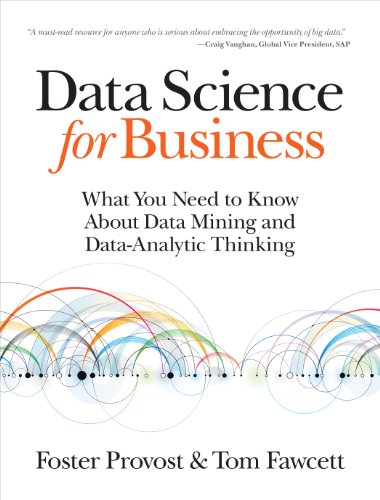
Kirk Borne, Principal Data Scientist at Booz Allen and a top influencer in data science, highlights this book as a key resource for building analytic thinking in business analytics. His deep expertise in astrophysics and big data informs his endorsement, emphasizing how the book bridges business and data science effectively. He calls it a "great book for Business Analytics and for building analytic thinking," reflecting its practical insights into data mining and machine learning. Alongside him, Adam Gabriel, an AI expert and machine learning engineer, also recommends it for enhancing data literacy, underscoring its value in understanding data-analytic thinking within modern AI-driven contexts.
“Great book for Business Analytics and for building analytic thinking in data science for business, covering data mining and data-analytic thinking with insights into big data and machine learning.” (from X)
Foster Provost is Professor and NEC Faculty Fellow at the NYU Stern School of Business where he teaches in the MBA, Business Analytics, and Data Science programs. His award-winning research is read and cited broadly. Prof. Provost has co-founded several successful companies focusing on data science for marketing.
The breakthrough moment came when Foster Provost, an NYU Stern professor deeply involved in MBA and business analytics education, collaborated with Tom Fawcett to demystify data science for business professionals. You learn to think data-analytically, grasp the key principles behind data mining, and apply these insights to real business challenges, enhancing communication between data scientists and stakeholders. For instance, the book walks through how to treat data as a valuable business asset, and offers frameworks for data-driven decision-making. If you’re aiming to participate intelligently in data science projects or improve your strategic use of data, this book lays a solid foundation without overwhelming technical jargon.
This AI-created book on data science is crafted based on your experience level, interests, and goals. It focuses on delivering a personalized learning path that guides you through essential topics with daily, manageable steps. By tailoring the content to your needs, it streamlines your study process, helping you build skills efficiently without the distraction of unrelated information. This custom approach makes mastering complex concepts feel achievable and relevant, providing a clear roadmap to accelerate your data science proficiency.
TailoredRead AI creates personalized nonfiction books that adapt to your unique background, goals, and interests. Instead of reading generic content, you get a custom book written specifically for your profession, experience level, and learning objectives. Whether you're a beginner looking for fundamentals or an expert seeking advanced insights, TailoredRead crafts a book that speaks directly to you. Learn more.
2026·50-300 pages·Data Science, Machine Learning, Data Manipulation, Statistical Analysis, Model Evaluation
This tailored AI-generated book provides a focused, step-by-step journey through data science, crafted to match your background and specific learning goals. It explores core concepts such as data manipulation, machine learning, and statistical analysis, all structured around daily actionable steps that build your skills progressively. By synthesizing broad expert knowledge into a personalized pathway, it helps you navigate complex topics without overwhelm, making each concept relevant and accessible. This approach encourages consistent practice and reflection, accelerating your proficiency in data science while addressing your unique interests and challenges. The book’s tailored content ensures you gain confidence and competence through a learning experience designed just for you.
Jacqueline Nolis is a data science consultant and co-founder of Nolis, LLC, holding a PhD in Industrial Engineering. With years mentoring junior data scientists, she brings deep expertise in career growth within organizations. Emily Robinson, senior data scientist at Warby Parker, complements this with her background in management and leadership studies, focusing on experiences of underrepresented groups in STEM. Together, their combined insights shape this guide to not only mastering data science skills but also navigating the complex career paths in this evolving field.
Jacqueline Nolis is a data science consultant and co-founder of Nolis, LLC, with a PhD in Industrial Engineering. Jacqueline has spent years mentoring junior data scientists on how to work within organizations and grow their careers. Emily Robinson is a senior data scientist at Warby Parker, and holds a Master's in Management. Emily's academic background includes the study of leadership, negotiation, and experiences of underrepresented groups in STEM.
When Jacqueline Nolis and Emily Robinson teamed up, they brought a rare blend of technical mastery and real-world career savvy to this guide. You won’t just learn how to code or build models; instead, you’ll get a practical roadmap for landing your first data science job, navigating workplace challenges, and advancing to leadership roles. The book walks you through everything from crafting resumes and acing interviews to handling stakeholder dynamics and recovering from project failures. Chapters like "Deploying a model into production" and "Moving up the ladder" are especially useful for understanding the full career lifecycle. If you're serious about growing beyond the technical grind and building a sustainable career in data science, this book has insights tailored for you.
Erico Andrei, a Python Software Foundation Fellow and Plone Core Developer, endorses this book for its thorough approach to building reliable API backends for data science. He highlights how it equips both scientists and developers with essential tools covering security, data persistence, and deployment. After exploring the book, he found it invaluable for constructing scalable, maintainable machine learning applications with FastAPI, deepening his appreciation for Python's capabilities in this domain.
“Both scientists and software developers will benefit from this book, as François Voron presents the reader with a comprehensive approach to building robust API solutions for data science and machine learning projects using Python and FastAPI. By covering API security, data persistence, WebSockets, automated testing and deployment, the author provides the toolset needed by readers to build their own solutions, in a reliable and scalable way.”
François Voron graduated from the University of Saint-Étienne (France) and the University of Alicante (Spain) with a master's degree in machine learning and data mining. A full stack web developer and a data scientist, François has a proven track record working in the SaaS industry, with a special focus on Python backends and REST APIs. He is also the creator and maintainer of FastAPI Users, the #1 authentication library for FastAPI, and is one of the top experts in the FastAPI community.
2023·422 pages·Data Science, FastAPI, Machine Learning, API Development, Python Programming
Drawing from his background as a full stack web developer and machine learning expert, François Voron crafts a detailed guide to building data science applications using FastAPI. You’ll learn how to navigate FastAPI’s asynchronous programming features, implement secure authentication, and integrate complex AI models like object detection and Stable Diffusion-based text-to-image generation. Chapters on testing, deployment, and monitoring equip you to maintain scalable, high-quality APIs. This book suits data scientists and developers familiar with Python who want hands-on experience creating robust, production-ready data science backends.
Kirk Borne, a principal data scientist at Booz Allen with a PhD in astrophysics and a leading voice in data science, recommends this book highly. His expertise spans big data and AI, making his endorsement particularly meaningful for those navigating these complex fields. He praises it with a simple yet powerful endorsement: "Great book! 'Becoming a Data Head: How to Think, Speak, and Understand Data Science, Statistics, and Machine Learning' by Alex Gutman and Jordan Goldmeier." This recommendation comes from someone deeply immersed in data science, highlighting the book's clarity and practical value in helping professionals think and communicate more effectively about data.
“Great book! "Becoming a Data Head: How to Think, Speak, and Understand Data Science, Statistics, and Machine Learning" by Alex Gutman and Jordan Goldmeier.” (from X)
Alex J. Gutman, PhD, is a data scientist, corporate trainer, and Accredited Professional Statistician® who enjoys teaching a wide variety of data science topics to technical and non-technical audiences. He's a Director of Data Science at The Procter & Gamble Company and an Adjunct Professor at the University of Cincinnati. Additionally, as a Fulbright Specialist grantee, he has taught data science and machine learning in Kyrgyzstan.
When Alex J. Gutman and Jordan Goldmeier wrote this book, they drew from years entrenched in data science and corporate training to demystify the jargon and mechanics behind statistics and machine learning. You'll gain concrete skills like thinking statistically, interpreting variation's impact on decisions, and critically analyzing machine learning claims—skills often glossed over in typical introductions. The book walks you through practical topics such as the math behind algorithms and how to engage with data professionals effectively, making the content approachable for anyone from business leaders to aspiring data scientists. If you want to speak the language of data confidently and avoid common misinterpretations, this book offers a straightforward path without oversimplifying.
Kirk Borne, Principal Data Scientist at Booz Allen and a leading voice in data science, highlights this resource as part of a collection of free SQL courses crucial for mastering data fluency. His endorsement underscores the book’s practical value in building strong foundations for big data and machine learning workflows. Borne’s recommendation reflects how this guide supports data scientists in enhancing their dataset construction and querying skills, helping you move from theory to application with confidence.
Renée M. P. Teate is the Director of Data Science at HelioCampus, leading a team that builds predictive models for colleges and universities. She has worked with data professionally since 2004, in roles including relational database design, data-driven website development, data analysis and reporting, and data science. With degrees in Integrated Science and Technology from James Madison University and Systems Engineering from the University of Virginia, along with a varied career working with data at every stage in a number of systems, she considers herself to be a “data generalist”. Renée regularly speaks at technology and higher ed conferences and meetups, and writes in industry publications about her data science work and about navigating data science career paths. She also created the “Becoming a Data Scientist” podcast and @BecomingDataSci twitter account, where she’s known to her over 60k followers as “Data Science Renee”. She always tells aspiring data scientists to learn SQL, since it has been one of the most valuable and enduring skills needed throughout her career.
Drawing from her 15-year career spanning database development to data science leadership, Renée M. P. Teate focuses this guide specifically on the subset of SQL skills that data scientists actually use. You’ll learn how to design datasets tailored for exploration, analysis, and machine learning, rather than just generic database queries. For example, the book breaks down query design strategies and explains how to avoid common pitfalls when building datasets for interactive reports and predictive models. If you’re transitioning into data science from other fields or moving beyond spreadsheet analysis, this book offers a clear path to mastering the SQL techniques that matter most for your work.
Kirk Borne, Principal Data Scientist at Booz Allen Hamilton and a recognized leader in big data, highlights this book as a must-read for anyone shaping data science strategy. His endorsement carries weight given his extensive experience guiding organizations through analytics transformations. He shares "Must see this >> 'Data Science Strategy For Dummies' Book by Ulrika Jägare Reviewed by Strategy Gal," emphasizing the book’s practical approach to aligning data science with business goals. Alongside him, Adam Gabriel, an AI and machine learning engineer at IBM Watson, echoes the recommendation, underlining the book’s relevance for those navigating the complexities of data-driven decision-making.
“Must see this >> "Data Science Strategy For Dummies" Book by Ulrika Jägare Reviewed by Strategy Gal #DataScience #BigData #DataStrategy #AnalyticsStrategy #AI #MachineLearning #DigitalTransformation” (from X)
Ulrika Jägare is an M.Sc. Director at Ericsson AB. With a decade of experience in analytics and machine intelligence and 19 years in telecommunications, she has held leadership positions in R&D and product management. Ulrika was key to Ericsson’s Machine Intelligence strategy and the recent Ericsson Operations Engine launch – a new data and AI driven operational model for Network Operations in telecommunications.
2019·352 pages·Data Science, Big Data, Strategy, Analytics Strategy, Team Building
While working as a director at Ericsson, Ulrika Jägare noticed a gap in practical guidance for integrating data science into business strategy. This book walks you through building a data science capability from the ground up, covering everything from adopting a data-driven mindset to leading a skilled team. You’ll learn how to align data science projects with real business value, recognize common roadblocks, and foster collaboration between analytics and leadership. The chapter on nurturing top talent stands out, illustrating how people skills are as crucial as technical expertise. If you want a straightforward, non-technical guide to making data science work in your organization, this book offers a clear roadmap.
Rafael A. Irizarry is professor of data sciences at the Dana-Farber Cancer Institute and biostatistics at Harvard, a fellow of the American Statistical Association. His two decades of applied statistics work across genomics, public health, and sound engineering underpin this book, designed to equip you with essential data science skills. Dr. Irizarry’s engagement in developing widely used open source tools and teaching at Harvard lends this book a level of practical insight and authority that few introductory texts achieve.
Rafael A. Irizarry is professor of data sciences at the Dana-Farber Cancer Institute, professor of biostatistics at Harvard, and a fellow of the American Statistical Association. Dr. Irizarry is an applied statistician and during the last 20 years has worked in diverse areas, including genomics, sound engineering, and public health. He disseminates solutions to data analysis challenges as open source software, tools that are widely downloaded and used. Prof. Irizarry has also developed and taught several data science courses at Harvard as well as popular online courses.
Rafael A. Irizarry's deep expertise in biostatistics and data science shines throughout this book, crafted to introduce you to the practical tools and techniques essential for real-world data analysis. You’ll learn not just theory but how to wield R programming for data wrangling, visualization, and predictive modeling, guided by case studies ranging from election forecasting to health trends. The book’s structure, covering everything from statistical inference to machine learning and productivity tools like Git, equips you with a broad yet applied skill set. While it assumes some programming familiarity, its stepwise approach makes it accessible to those new to R, making it a solid foundation if you're aiming to build competence in data science workflows and analytics.
Avrim Blum, Chief Academic Officer at Toyota Technical Institute at Chicago and former Carnegie Mellon professor, brings over 25,000 citations worth of expertise in algorithms and machine learning to this work. His distinguished career, marked by awards like the AI Journal Classic Paper Award and ACM Fellowship, underpins the book’s authoritative approach, offering readers a deep dive into data science’s core mathematical and algorithmic principles.
Avrim Blum, John Hopcroft, Ravindran Kannan(you?)·
About the Author
Avrim Blum is Chief Academic Officer at Toyota Technical Institute at Chicago and formerly Professor at Carnegie Mellon University, Pennsylvania. He has over 25,000 citations for his work in algorithms and machine learning. He has received the AI Journal Classic Paper Award, ICML/COLT 10-Year Best Paper Award, Sloan Fellowship, NSF NYI award, and Herb Simon Teaching Award, and is a Fellow of the Association for Computing Machinery (ACM).
2020·432 pages·Data Science, Machine Learning, Algorithms, Linear Algebra, Probability
Avrim Blum, alongside John Hopcroft and Ravindran Kannan, draws from decades of academic rigor and pioneering research to dissect the mathematical and algorithmic underpinnings of data science. You’ll explore topics ranging from high-dimensional geometry's quirks to singular value decomposition and Markov chains, gaining a solid grasp of machine learning algorithms and clustering techniques. The book delves into probabilistic models and representation learning methods like topic modeling, making it an indispensable text if you aim to understand data science's theoretical foundations. Whether you're an undergraduate or graduate student, this text challenges you to think deeply about algorithm design and data analysis complexities.
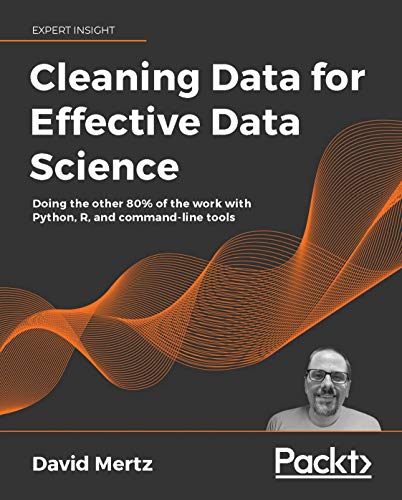
Kirk Borne, Principal Data Scientist at Booz Allen Hamilton and a leading voice in big data and machine learning, highlights this book as a key resource for mastering data cleansing. His extensive experience as a PhD astrophysicist and top data science influencer gives weight to his endorsement. He emphasizes the book's practical approach to addressing the crucial 80% of work often spent on data preparation. "Best Practices in Data Cleansing," he notes, underscores the importance of rigorous data hygiene for successful analysis and machine learning, reflecting how this book sharpened his data strategy perspectives.
Principal Data Scientist at BoozAllen, PhD Astrophysicist
“Best Practices in Data Cleansing:
——————
#BigData #DataScience #DataScientists #MachineLearning #DataWrangling #DataPrep #DataLiteracy #DataCleaning #DataStrategy #Python #abdsc
———
+ See this great new book:” (from X)
David Mertz, Ph.D. is the founder of KDM Training, a partnership dedicated to educating developers and data scientists in machine learning and scientific computing. He created a data science training program for Anaconda Inc. and was a senior trainer for them. With the advent of deep neural networks, he has turned to training our robot overlords as well. He previously worked for 8 years with D. E. Shaw Research and was also a Director of the Python Software Foundation for 6 years. David remains co-chair of its Trademarks Committee and Scientific Python Working Group. His columns, Charming Python and XML Matters, were once the most widely read articles in the Python world.
David Mertz brings decades of experience in Python and scientific computing to illuminate the often overlooked but critical task of data cleaning. You’ll learn to handle diverse data formats, detect anomalies, and impute missing values using practical examples in Python, R, and command-line tools. The book demystifies data ingestion and feature engineering, guiding you through the essential steps that form the backbone of any data science project. If you work with data and want to improve your preprocessing rigor, this book offers a clear path to mastering those foundational skills necessary for effective analysis and machine learning.
Ryen White, a leading researcher at Microsoft Research AI, appreciates this book for its broad accessibility and depth. Having seen the challenges newcomers face in grasping data science, he highlights how Dr. Shah balances core principles with engaging exercises. "Dr. Shah has written a fabulous introduction to data science for a broad audience. His book offers many learning opportunities, including explanations of core principles, thought-provoking conceptual questions, and hands-on examples and exercises." This approach helped him recognize the book’s value in quickly building practical skills and insight extraction abilities.
“Dr. Shah has written a fabulous introduction to data science for a broad audience. His book offers many learning opportunities, including explanations of core principles, thought-provoking conceptual questions, and hands-on examples and exercises. It will help readers gain proficiency in this important area and quickly start deriving insights from data.”
Chirag Shah is an Associate Professor of Information and Computer Science at Rutgers University, New Jersey. He investigates issues of search and recommendations using data mining and machine learning. Dr. Shah received his M.S. in Computer Science from the University of Massachusetts, Amherst, and his Ph.D. in Information Science from the University of North Carolina, Chapel Hill. He directs the InfoSeeking Lab, supported by awards from the National Science Foundation, the National Institute of Health, the Institute of Museum and Library Services, as well as Amazon, Google, and Yahoo. He was a Visiting Research Scientist at Spotify and has served as a consultant to the United Nations Data Analytics on various data science projects. He is currently working on large-scale e-commerce data and machine learning problems as Amazon Scholar.
When Chirag Shah recognized the gap in accessible data science education, he crafted this book to demystify the field for those without a heavy technical background. You’ll explore foundational concepts alongside practical tools like Python and R, gaining hands-on experience with real datasets that range from small to large scale. The book’s structure, including conceptual questions and exercises, guides you to not just understand but apply data science principles effectively. Ideal if you want a grounded introduction that remains relevant despite evolving technologies, especially useful for learners from diverse disciplines.
Data Science Dojo, a leader in data science education, recommends this book for anyone preparing to enter competitive data science fields. Their endorsement highlights how author Nick Singh's insider experience at Facebook has shaped a resource packed with real interview questions and solutions. They emphasize its value for mastering SQL, probability, machine learning, coding, and case interviews, reflecting the actual challenges candidates face. As they put it, "Want to ace your upcoming Data Science job interview? Join Nick Singh, author of the best-selling book, Ace the Data Science Interview..." This recommendation underscores the book's role in turning interview anxiety into confidence.
“Want to ace your upcoming Data Science job interview? Join Nick Singh, author of the best-selling book, Ace the Data Science Interview to learn how to solve SQL, probability, ML, coding, and case interview questions asked by FAANG + Wall Street.” (from X)
Nick Singh previously worked on Facebook’s Growth Team and at SafeGraph, a geospatial analytics startup. Currently, he runs SQL interview platform DataLemur.com and shares career tips on LinkedIn to his 120,000+ followers. Nick holds a degree in System Engineering with a minor in Computer Science from the University of Virginia. In college, he interned at Microsoft and at Google’s Nest Labs on the Data Infrastructure Team.
When former Facebook data scientists Nick Singh and Kevin Huo compiled this book, they aimed to demystify the intense interview processes at FAANG companies and Wall Street firms. You gain direct exposure to 201 actual questions spanning probability, statistics, SQL, machine learning, and coding, with detailed solutions that sharpen your problem-solving and technical communication skills. The book also walks you through crafting standout resumes, portfolio projects, and behavioral storytelling, making it a solid guide for anyone targeting competitive data science roles. Whether you're a recent graduate or transitioning from another field, this resource equips you with the practical insights to navigate technical and case interviews confidently.
Kirk Borne, Principal Data Scientist at Booz Allen and a leading voice in big data, highlights this book as a standout resource in data preprocessing. Known for his deep expertise blending astrophysics with advanced analytics, Kirk points to this 2022 release as a practical guide that sharpens your ability to prepare data efficiently. His enthusiasm underscores how the book’s Python-based approach to data cleaning and transformation helped refine his perspective on handling complex datasets, making it a valuable addition for anyone serious about data science.
Roy Jafari, Ph.D. is an assistant professor of business analytics at the University of Redlands. Roy has taught and developed college-level courses that cover data cleaning, decision making, data science, machine learning, and optimization. Roy’s style of teaching is hands-on and he believes the best way to learn is to learn by doing. He uses active learning teaching philosophy and readers will get to experience active learning in this book. Roy believes that successful data preprocessing only happens when you are equipped with the most efficient tools, have an appropriate understanding of data analytic goals, are aware of data preprocessing steps, and can compare a variety of methods. This belief has shaped the structure of this book.
Roy Jafari, an assistant professor specializing in business analytics, wrote this book to bridge the gap between raw data and effective analytics. You’ll learn how to clean, integrate, reduce, and transform data using Python, with clear explanations of why each preprocessing step matters. For example, the book dives into handling missing values and outliers, and demonstrates pulling data via APIs, offering practical skills that go beyond theory. If you’re someone involved in data analytics or machine learning, especially early-career analysts or students, this book equips you with the concrete techniques needed to prepare data properly for insightful analysis.
Santiago, a machine learning writer and practitioner with deep practical experience, shares his enthusiasm for this book after immersing himself in its content. He highlights the detailed coverage of blending and stacking techniques as particularly impactful, praising how the authors synthesize complex modeling strategies into accessible explanations. Santiago's appreciation reflects how this book not only informs but also reshapes thinking about competitive data science, making it a valuable companion for anyone looking to advance their skills on Kaggle and beyond.
“@tng_konrad Oh you did! I’ve been reading a lot of the book and really appreciate the work you guys put together here! The chapter talking about Blending and Stacking is my favorite so far.” (from X)
Konrad Banachewicz, Luca Massaron, Anthony Goldbloom(you?)·
About the Author
Konrad Banachewicz holds a PhD in statistics from Vrije Universiteit Amsterdam. He is a lead data scientist at eBay and a Kaggle Grandmaster. He worked in a variety of financial institutions on a wide array of quantitative data analysis problems. In the process, he became an expert on the entire lifetime of a data product cycle.
Drawing from his extensive experience as a Kaggle Grandmaster and lead data scientist at eBay, Konrad Banachewicz co-authored this book to distill the nuanced tactics and strategies used by top competitors on Kaggle. You'll find detailed guidance on creating validation schemes, tuning models with ensembling and feature engineering, and navigating diverse data types like images and text. The book benefits anyone aiming to excel in data science competitions or sharpen their modeling skills with practical examples such as blending and stacking techniques in chapter six. Whether you're starting out or already competing, this book provides a clear path to deepen your understanding of competitive data science.
Kirk Borne, a principal data scientist at Booz Allen and a respected astrophysicist, highlights this book as a concise introduction to data science. His extensive experience as a top influencer in big data and machine learning lends weight to his endorsement. He recommends "Nuts About Data: A Story of How Data Science Is Changing Our Lives" as a great resource to understand data science fundamentals, reflecting how accessible storytelling can unlock complex topics. Borne’s endorsement signals this book’s value for anyone aiming to build a solid foundation in data science concepts.
“Great little book >> “Nuts About Data: A Story of How Data Science Is Changing Our Lives” >> Get it now: #BigData #Analytics #AI #Algorithms #MachineLearning #DataLovers #DataLiteracy #BeDataBrilliant #DataInnovation” (from X)
2019·127 pages·Data Science, Big Data, Machine Learning, Artificial Intelligence, Analytics
After analyzing numerous cases where data impacted critical decisions, Meor Amer developed a straightforward narrative to demystify data science. Instead of math-heavy texts, this book uses an engaging story of a squirrel clan struggling for survival to illustrate core concepts like big data, machine learning, and AI. You’ll gain clear insights into the five steps of a data science project and the three levels of analytics, enabling you to confidently discuss data’s role even if you’re not a technical expert. This is ideal if you want a solid grasp of data science fundamentals without getting bogged down in jargon or algorithms.
The best Data Science books and more, in your inbox each week. No account needed.
Conclusion
These 18 books reflect a spectrum of data science expertise—from foundational programming in Python and R to the strategic thinking required in business analytics. If you're just starting out, titles like "R for Data Science" and "Data Science from Scratch" offer accessible entry points. For those focused on career growth, "Build a Career in Data Science" provides invaluable guidance, while practitioners aiming to sharpen technical skills will benefit from "Python Data Science Handbook" and "Hands-On Data Preprocessing in Python."
For rapid application and competitive edge, "The Kaggle Book" and "Ace the Data Science Interview" prepare you to excel in real-world challenges and high-stakes interviews. And for leaders orchestrating data-driven strategies, "Data Science Strategy For Dummies" offers clear, actionable advice. Alternatively, you can create a personalized Data Science book to bridge the gap between general principles and your specific situation.
These carefully selected books can help you accelerate your learning journey and empower you to make confident decisions in the evolving field of data science.
Frequently Asked Questions
I'm overwhelmed by choice – which book should I start with?
Start with "Data Science from Scratch" for foundational understanding or "R for Data Science" if you prefer R programming. These offer clear introductions that build core skills before moving to specialized topics.
Are these books too advanced for someone new to Data Science?
Not at all. Books like "A Hands-On Introduction to Data Science" and "Becoming a Data Head" are designed for beginners, explaining concepts clearly without heavy jargon.
What’s the best order to read these books?
Begin with basics like "Data Science from Scratch," then move to practical guides such as "Python Data Science Handbook," followed by strategic titles like "Data Science for Business" to deepen your understanding.
Do I really need to read all of these, or can I just pick one?
You can pick based on your goals—technical skills, career advice, or strategy. Each book offers unique value; combining a few tailored to your needs will be most effective.
Are any of these books outdated given how fast Data Science changes?
These books have been recommended recently by top experts and cover enduring principles and practical methods that remain relevant despite rapid industry evolution.
How can I apply general data science principles to my specific industry or skill level?
While these expert books provide solid foundations, personalized books can tailor insights to your background and goals. Consider creating a personalized Data Science book to bridge theory with your unique context.
📚 Love this book list?
Help fellow book lovers discover great books, share this curated list with others!