"Introduction to Machine Learning with Python" by Andreas C. Müller, Sarah Guido made it to BookAuthority's Best Data Science Model Audiobooks of All Time!
10 Data Science Model Books That Separate Experts from Amateurs
Featuring insights from Kirk Borne, Sebastian Thrun, and Alex Martelli, these Data Science Model books offer proven strategies and practical guidance.
Updated on June 24, 2025·We may earn commissions for purchases made via this page
0 of 10 books have Audiobook versions
We're launchingLaunching on Product Hunt today 🎉We just launchedJust launched on Product Hunt 🎉
Modelpeers, from the BookAuthority teamFrom the BookAuthority team: Modelpeers, a free way to follow AI models and agents like you follow people. We'd love your support.
What if mastering data science modeling could feel less like a daunting climb and more like an achievable journey? Data science models underpin everything from product recommendations to fraud detection, making their understanding essential today. Yet, the path to mastering them is often tangled with complex theory and scattered resources.
Kirk Borne, Principal Data Scientist at Booz Allen Hamilton, has long championed accessible learning and highlights Sebastian Raschka's "Python Machine Learning" as a gateway to practical mastery. Meanwhile, Sebastian Thrun, CEO of Kitty Hawk and a pioneer in AI education, praises the clarity and hands-on approach that helps learners build real-world models. Alex Martelli, Fellow of the Python Software Foundation, also emphasizes the value of these resources for bridging theory and practice.
While these expert-curated books provide proven frameworks, readers seeking content tailored to their specific programming experience, domain focus, or learning pace might consider creating a personalized Data Science Model book to build on these insights and accelerate your learning journey.
Kirk Borne, Principal Data Scientist at Booz Allen Hamilton and a leading voice in data science, highlights this book as a key resource for rapidly learning machine learning using Python. After exploring numerous resources in his extensive career, he points to Sebastian Raschka's work as an accessible yet deep guide that breaks down complex concepts into practical coding steps. His enthusiasm is clear in recommending "Tips & Tutorials on How to Learn Machine Learning in 10 Days," emphasizing its comprehensive coverage of Python techniques essential for mastering the field. This endorsement, alongside Sebastian Thrun's praise for the book's practical blend of theory and application, establishes it as a trusted companion for aspiring machine learning developers.
“A brilliantly approachable introduction to machine learning with Python. Raschka and Mirjalili break difficult concepts down into language the layperson can easily understand while placing these examples within real-world contexts. A worthy addition to your machine learning library!”
Sebastian Raschka is an Assistant Professor of Statistics at the University of Wisconsin-Madison focusing on machine learning and deep learning research. Some of his recent research methods have been applied to solving problems in the field of biometrics for imparting privacy to face images. Other research focus areas include the development of methods related to model evaluation in machine learning, deep learning for ordinal targets, and applications of machine learning to computational biology. Vahid Mirjalili obtained his Ph.D. in mechanical engineering working on novel methods for large-scale, computational simulations of molecular structures. Currently, he is focusing his research efforts on applications of machine learning in various computer vision projects at the Department of Computer Science and Engineering at Michigan State University. He recently joined 3M Company as a research scientist, where he uses his expertise and applies state-of-the-art machine learning and deep learning techniques to solve real-world problems in various applications to make life better.
When Sebastian Raschka and Vahid Mirjalili dove into Python machine learning, they combined rigorous academic research with practical coding expertise to craft a resource that goes well beyond surface tutorials. This third edition updates readers on TensorFlow 2, GANs, and reinforcement learning, guiding you through constructing and tuning models across diverse applications like image classification and sentiment analysis. You’ll gain hands-on skills in scikit-learn and TensorFlow, learning both the theory behind algorithms and how to implement them effectively with Python. Whether you’re a developer new to machine learning or looking to deepen your technical mastery, this book provides clear explanations and examples that help you build your own intelligent systems.
Kirk Borne, Principal Data Scientist at Booz Allen and a leading voice in big data, highlights this handbook as a key resource for anyone serious about Python in data science. His enthusiasm for the book stems from its comprehensive coverage of core Python libraries crucial for data manipulation and machine learning, tools he relies on in his complex analytics work. He describes it as a "must see" for data scientists seeking practical coding guidance. Similarly, Adam Gabriel Top Influencer, an AI and machine learning engineer, echoes this praise, emphasizing its value in mastering Python for data-intensive tasks.
“✨🎉🌟Must see this >> Free Python DataScience coding book series for DataScientists ...via DataScienceCtrl Go to ——————— #abdsc #BigData #MachineLearning #AI #DeepLearning #BeDataBrilliant #DataLiteracy” (from X)
Jake VanderPlas is a software engineer at Google Research, working on tools that support data-intensive research. He creates and develops Python tools for use in data-intensive science, including packages like Scikit-Learn, SciPy, AstroPy, Altair, JAX, and many others. He participates in the broader data science community, developing and presenting talks and tutorials on scientific computing topics at various conferences in the data science world.
Jake VanderPlas brings his extensive experience at Google Research and deep involvement in developing Python tools to this handbook, designed specifically for scientists and data professionals who work with data daily. You’ll gain a thorough understanding of Python libraries like NumPy for data manipulation, Pandas for managing labeled datasets, Matplotlib for visualization, and Scikit-Learn for machine learning models. The book tackles practical challenges such as cleaning and transforming data, and it includes detailed examples like using DataFrames and ndarrays. If you’re comfortable with Python and want a solid reference to navigate the data science stack effectively, this book fits the bill, though beginners might find it dense.
This AI-created book on data science modeling is tailored to your unique experience and learning goals. You share your background, specific modeling interests, and what you aim to achieve, and the book focuses on exactly those areas. Personalizing the content ensures you engage deeply with the topics that matter most to you, avoiding generic explanations. This approach helps you grasp complex modeling concepts efficiently, making your learning journey both targeted and rewarding.
TailoredRead AI creates personalized nonfiction books that adapt to your unique background, goals, and interests. Instead of reading generic content, you get a custom book written specifically for your profession, experience level, and learning objectives. Whether you're a beginner looking for fundamentals or an expert seeking advanced insights, TailoredRead crafts a book that speaks directly to you. Learn more.
2026·50-300 pages·Data Science Model, Data Science Modeling, Algorithm Selection, Model Evaluation, Predictive Analytics
This tailored book offers an immersive journey through data science modeling, crafted specifically to match your background and learning objectives. It explores core concepts and advanced modeling techniques, examining a spectrum of algorithms and their real-world applications. The content is carefully structured to focus on your interests, enabling efficient mastery without wading through unrelated material. By synthesizing collective knowledge, this personalized guide reveals pathways that align with your skill level and goals, making complex topics accessible and relevant. Whether refining predictive models or delving into model evaluation, this book bridges expert insights with your unique learning needs, providing a clear, focused exploration of data science modeling.
Tim Realscientists, a staff scientist known for his clear science communication, highlights this book as an excellent resource for those diving into programming and data analysis with R. He points out that while many tutorials exist, this text stands out for guiding you through data analysis specifically, making complex tasks approachable. "For data analysis, R and the R 4 data science book is a great way to go," he says, emphasizing its practical utility. Similarly, Kareem Carr, a Harvard statistics PhD student, praises the book for enabling beginners to work hands-on with data without overwhelming theory, making it a perfect starting point for new data practitioners.
“If you are interested in learning programming, there are lots of great tutorials. For data analysis, R and the R 4 data science book is a great way to go and for general R syntax, there is the swirl learning package.” (from X)
Hadley Wickham is Chief Scientist at RStudio and a member of the R Foundation. He builds tools (both computational and cognitive) that make data science easier, faster, and more fun. His work includes packages for data science (ggplot2, dplyr, tidyr), data ingest (readr, readxl, haven), and principled software development (roxygen2, testthat, devtools). He is also a writer, educator, and frequent speaker promoting the use of R for data science. Learn more on his homepage, http://hadley.nz.
The breakthrough moment came when Hadley Wickham, Chief Scientist at RStudio, combined his extensive experience building R packages with a clear vision to simplify data science workflows. This book teaches you how to import, tidy, transform, visualize, and model data using R and the tidyverse collection, even if you’re new to programming. It covers practical skills like creating plots for data exploration, handling variable types, and integrating code with communication tools like Quarto. If you want to understand the full data science cycle with hands-on guidance, this book offers a solid foundation, especially for those aiming to work fluently in R without getting lost in heavy theory.
Thorsten Heller, CEO at Greenbird IT and expert in data-driven energy transformation, highlights this book as an ideal starting point for anyone beginning their data science journey. His endorsement, "The Best #book to Start your #DataScience Journey - Towards #DataScience by @benthecoder1," reflects how this resource helped clarify fundamental concepts and practical coding skills. Heller’s experience navigating complex data challenges gives weight to his recommendation, showing how this book bridges theoretical understanding with hands-on application.
Joel Grus is a research engineer at the Allen Institute for Artificial Intelligence. Previously he worked as a software engineer at Google and a data scientist at several startups. He lives in Seattle, where he regularly attends data science happy hours.
Joel Grus's background as a research engineer at the Allen Institute for Artificial Intelligence and his experience at Google and startups led him to write this book to bridge theory and practice in data science. You learn foundational concepts like linear algebra, statistics, and probability, paired with hands-on Python coding to implement algorithms such as k-nearest neighbors, decision trees, and neural networks from the ground up. This approach demystifies complex models by showing you how they work internally rather than relying solely on libraries. If you have some programming knowledge and want to grasp the math behind data science tools, this book equips you with both the understanding and practical skills necessary to start building your own models.
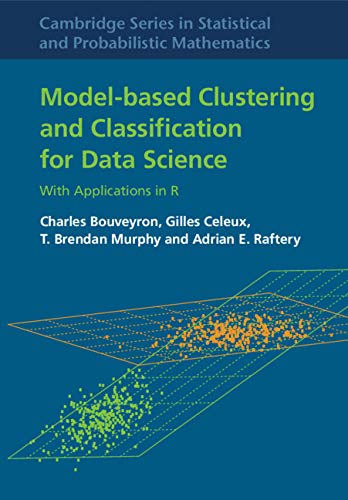
Charles Bouveyron, a full professor of statistics and Chair of Excellence in Data Science at INRIA, brings his deep expertise in model-based clustering to this work. His extensive research on networks and high-dimensional data informs the book’s rigorous yet accessible approach. This background ensures readers benefit from authoritative insights into cluster analysis, classification, and their applications using R, guided by one of the field’s leading statisticians.
Charles Bouveyron, Gilles Celeux, T. Brendan Murphy, Adrian E. Raftery(you?)·
About the Author
Charles Bouveyron is Full Professor of Statistics at Université Côte d'Azur and the Chair of Excellence in Data Science at Institut National de Recherche en Informatique et en Automatique (INRIA), Rocquencourt. He has published extensively on model-based clustering, particularly for networks and high-dimensional data.
After extensive research into statistical clustering methods, Charles Bouveyron and his co-authors developed a rigorous framework that tackles the core challenges of cluster analysis and classification in data science. You’ll gain a deep understanding of model-based approaches, including how to determine the number of clusters, handle outliers, and apply Bayesian regularization. The book also dives into modern techniques for high-dimensional data and networks, complete with practical R code to implement these methods. This is ideal for advanced students and practitioners seeking a principled and mathematically grounded perspective on clustering and classification.
This personalized AI book on building data science models is created after you share your background, skill level, and goals for rapid model development. It focuses on your specific interests, helping you navigate the complexities of model building and deployment effectively. By targeting what matters most to you, this custom AI book offers a clear, efficient learning path tailored to accelerate your progress in just 90 days.
TailoredRead AI creates personalized nonfiction books that adapt to your unique background, goals, and interests. Instead of reading generic content, you get a custom book written specifically for your profession, experience level, and learning objectives. Whether you're a beginner looking for fundamentals or an expert seeking advanced insights, TailoredRead crafts a book that speaks directly to you. Learn more.
2026·50-300 pages·Data Science Model, Data Science, Model Development, Algorithm Selection, Data Preparation
This tailored AI-created book explores a rapid transformation plan for building and deploying data science models within 90 days. It covers foundational concepts while focusing on your specific interests and background, offering a personalized pathway through complex modeling practices. The book examines essential model development phases, from data preparation and algorithm selection to evaluation and deployment, matching your skill level and goals. By blending expert knowledge with your unique learning needs, it reveals practical steps to accelerate your modeling capabilities effectively. This personalized approach fosters deeper understanding and more confident application of data science models, aligning closely with your desired outcomes and pace.
Nina Zumel and John Mount bring deep expertise to this book, both holding Ph.D.s from Carnegie Mellon and co-founding the San Francisco data science consulting firm Win-Vector. Their extensive background in robotics, computer science, and applied analytics informs a hands-on guide designed to bridge theory and application. Their contributions to the Win-Vector Blog on statistics and optimization further establish them as voices you can trust for practical data science insights.
Nina Zumel co-founded Win-Vector, a data science consulting firm in San Francisco. She holds a Ph.D. in robotics from Carnegie Mellon and was a content developer for EMC's Data Science and Big Data Analytics Training Course. Nina also contributes to the Win-Vector Blog, which covers topics in statistics, probability, computer science, mathematics and optimization. John Mount co-founded Win-Vector, a data science consulting firm in San Francisco. He has a Ph.D. in computer science from Carnegie Mellon and over 15 years of applied experience in biotech research, online advertising, price optimization and finance. He contributes to the Win-Vector Blog, which covers topics in statistics, probability, computer science, mathematics and optimization.
After shaping their expertise through rigorous academic research and real-world consulting, Nina Zumel and John Mount crafted this book to address a common challenge: applying data science principles effectively with R. You’ll work through practical examples drawn from marketing and business intelligence, gaining skills in statistical analysis, predictive modeling, and data visualization. The authors focus on helping you organize and present data clearly while interpreting complex models, making this highly relevant if you’re comfortable with basic statistics and some coding. It’s particularly suited for professionals aiming to integrate analytical rigor with practical programming to enhance decision-making processes.
Amita Kapoor is an accomplished AI consultant and educator with over 25 years of experience, recognized internationally with awards like the DAAD fellowship and Intel Developer Mesh AI Innovator Award. After decades teaching at the University of Delhi, she dedicated herself to making AI education more accessible, currently serving on the Board of Directors for Neuromatch Academy and teaching at the University of Oxford. Her deep expertise forms the backbone of this book, which explores how to design resilient, fair, and transparent machine learning models, reflecting her commitment to advancing ethical AI practices globally.
Amita Kapoor is an accomplished AI consultant and educator, with over 25 years of experience. She has received international recognition for her work, including the DAAD fellowship and the Intel Developer Mesh AI Innovator Award. She is a highly respected scholar in her field, with over 100 research papers and several best-selling books on deep learning and AI. After teaching for 25 years at the University of Delhi, Amita took early retirement and turned her focus to democratizing AI education. She currently serves as a member of the Board of Directors for the non-profit Neuromatch Academy, fostering greater accessibility to knowledge and resources in the field. Following her retirement, Amita also founded NePeur, a company that provides data analytics and AI consultancy services. In addition, she shares her expertise with a global audience by teaching online classes on data science and AI at the University of Oxford.
Amita Kapoor brings over 25 years of AI expertise to this thorough guide on building responsible machine learning models. This book teaches you how to design AI systems that prioritize privacy, fairness, and transparency, covering practical topics like risk assessment, data anonymization, and model explainability. By walking you through setting up secure, cloud-agnostic pipelines and managing model lifecycle with ethical considerations, it offers valuable insights for experienced machine learning professionals aiming to create trustworthy AI solutions. The detailed chapters on fairness notions and sustainable AI platforms highlight how to navigate complex challenges in deploying scalable, auditable models.
Francesco Marconi, R&D Chief at The Wall Street Journal, highlights the growing importance of Python in machine learning development, especially in journalism technology. He recommends this book as an excellent starting point for anyone new to machine learning, noting how it helped him appreciate Python's role in building practical tools. "Top programming languages ranked by its annual search engine popularity. Python has gained momentum because of its importance to machine learning development. At The Wall Street Journal we are using it to build tools for journalists. Tip: this is a great book for anyone who wants to get started!" This endorsement underscores the book's accessibility and relevance in real-world applications.
“Top programming languages ranked by its annual search engine popularity. Python has gained momentum because of its importance to machine learning development. At The Wall Street Journal we are using it to build tools for journalists. Tip: this is a great book for anyone who wants to get started!” (from X)
Andreas Müller received his PhD in machine learning from the University of Bonn. After working as a machine learning researcher on computer vision applications at Amazon for a year, he recently joined the Center for Data Science at New York University. In the last four years, he has been maintainer and one of the core contributors of scikit-learn, a machine learning toolkit widely used in industry and academia, and author and contributor to several other widely used machine learning packages. His mission is to create open tools to lower the barrier of entry for machine learning applications, promote reproducible science and democratize the access to high-quality machine learning algorithms.
Drawing from his extensive background as a machine learning researcher and key contributor to scikit-learn, Andreas Müller offers a grounded approach to applying machine learning with Python in this book. You’ll gain hands-on skills to create your own machine learning applications using practical techniques rather than complex theory, with chapters covering data representation, model evaluation, and pipeline construction. For example, the book’s guidance on text data processing equips you to handle specialized datasets effectively. If you're familiar with Python basics and eager to build functional machine learning models, this book provides a clear, focused path without overwhelming you with unnecessary math.
Valliappa Lakshmanan is the Global Head for Data Analytics and AI Solutions at Google Cloud, where he leads teams building advanced machine learning software for business problems. His deep experience, including founding Google's ML Immersion program and prior roles as Director of Data Science and NOAA Research Scientist, grounds this book’s guidance in real-world expertise. This background equips you to navigate common machine learning challenges with tested design patterns that reflect industry best practices.
Valliappa Lakshmanan, Sara Robinson, Michael Munn(you?)·
About the Author
Valliappa Lakshmanan is Global Head for Data Analytics and AI Solutions on Google Cloud. His team builds software solutions for business problems using Google Cloud's data analytics and machine learning products. He founded Google's Advanced Solutions Lab ML Immersion program. Before Google, Lak was a Director of Data Science at Climate Corporation and a Research Scientist at NOAA.
Drawing from extensive expertise at Google Cloud, Valliappa Lakshmanan and his co-authors present a detailed catalog of 30 machine learning design patterns that address recurring challenges from data preparation through model deployment. You’ll learn concrete methods for representing data effectively, selecting suitable model types, building resilient training loops, and deploying scalable, fair ML systems. The book breaks down complex issues like feature crosses, hyperparameter tuning, and explainability into approachable advice, supported by real-world considerations. It’s especially useful if you’re aiming to deepen your practical understanding of how to build and maintain robust machine learning workflows.
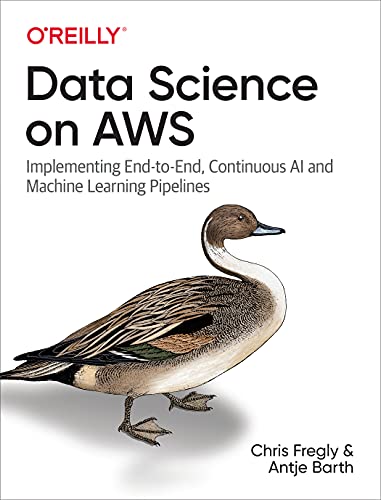
Chris Fregly, Principal Developer Advocate for AI and Machine Learning at Amazon Web Services and co-author, brings hands-on AWS expertise to this book. His background founding AI meetups and working with startups informs this guide's practical approach to continuous ML pipelines. His role at AWS uniquely qualifies him to explain complex integrations and deployment strategies for data science projects on the platform.
Chris Fregly is a Principal Developer Advocate for AI and Machine Learning at Amazon Web Services (AWS) based in San Francisco, California. He is co-author of the O'Reilly Book, 'Data Science on AWS.' Chris is also the Founder of many AI-focused global meetups including the global 'Data Science on AWS' Meetup. He regularly speaks at AI and Machine Learning conferences across the world including O'Reilly AI, Open Data Science Conference (ODSC), and Nvidia GPU Technology Conference (GTC). Previously, Chris was Founder at PipelineAI where he worked with many AI-first startups and enterprises to continuously deploy ML/AI Pipelines using Spark ML, Kubernetes, TensorFlow, Kubeflow, Amazon EKS, and Amazon SageMaker.
When Chris Fregly noticed how fragmented AI and machine learning workflows were, he co-authored this guide to unify those processes on AWS. You’ll learn to build scalable, continuous ML pipelines that streamline data ingestion, model training, and deployment, with deep dives into real use cases like BERT-based NLP and fraud detection. The book also covers integrating these pipelines into applications quickly, reducing costs, and applying security best practices such as identity and access management. If you manage or develop data science projects on AWS, this book offers concrete, platform-specific insights that go beyond general ML concepts.
The best Data Science Model books and more, in your inbox each week. No account needed.
Conclusion
The collection of books here collectively highlights three key themes: practical application of data science models, ethical and responsible AI design, and the importance of mastering both foundational theory and modern tools like Python and R. If you’re grappling with building your first model, starting with "Data Science from Scratch" or "Introduction to Machine Learning with Python" offers clarity and confidence. For those aiming to scale workflows or embed fairness in AI, "Machine Learning Design Patterns" and "Platform and Model Design for Responsible AI" provide actionable strategies.
Combining books focused on programming languages with those emphasizing model design creates a holistic learning arc. For rapid implementation, pairing "Python Machine Learning" with "Data Science on AWS" can help you translate theory into scalable cloud applications. Alternatively, you can create a personalized Data Science Model book to bridge the gap between general principles and your specific situation.
These books can help you accelerate your learning journey by connecting you with proven approaches that experts rely on every day. Whether you want to deepen your technical skills or lead ethical AI projects, this curated list offers a roadmap for your data science modeling success.
Frequently Asked Questions
I'm overwhelmed by choice – which book should I start with?
Start with "Data Science from Scratch" if you want to understand core concepts from the ground up, or "Introduction to Machine Learning with Python" for practical hands-on coding. Both offer approachable entry points without being overwhelming.
Are these books too advanced for someone new to Data Science Model?
Not at all. Books like "R for Data Science" and "Introduction to Machine Learning with Python" are designed for beginners, guiding you through fundamentals with clear examples and minimal jargon.
What's the best order to read these books?
Begin with foundational titles such as "Data Science from Scratch," then move to language-specific guides like "Python Machine Learning" or "Practical Data Science with R." Follow with specialized texts on design patterns and responsible AI as you advance.
Do I really need to read all of these, or can I just pick one?
You can definitely pick based on your goals. For example, choose "Data Science on AWS" if you work with cloud pipelines, or "Model-Based Clustering" for advanced statistical methods. Each book serves distinct needs.
Which books focus more on theory vs. practical application?
"Data Science from Scratch" emphasizes theory with hands-on code, while "Machine Learning Design Patterns" and "Platform and Model Design for Responsible AI" lean more toward practical implementation in real-world systems.
How can I get a book tailored to my specific Data Science Model needs?
Yes! While these expert books offer great frameworks, personalized books can bridge general principles with your unique background and goals. Consider creating a personalized Data Science Model book for focused insights that fit your situation perfectly.
📚 Love this book list?
Help fellow book lovers discover great books, share this curated list with others!