10 Design Books That Will Make You See the World Differently
Insights from Michael Bierut, Merlin Mann, and Emily Mcdowell highlight these Design Books to deepen your craft and vision.
Updated on June 23, 2025·We may earn commissions for purchases made via this page
We're launchingLaunching on Product Hunt today 🎉We just launchedJust launched on Product Hunt 🎉
Modelpeers, from the BookAuthority teamFrom the BookAuthority team: Modelpeers, a free way to follow AI models and agents like you follow people. We'd love your support.
What if the spaces and objects around you held stories you never noticed? Design shapes how you move, feel, and interact daily, yet much of its impact remains invisible. Today, design is more vital than ever—not just for aesthetics but for building meaningful human experiences and sustainable environments.
Michael Bierut, a partner at Pentagram and Yale educator, praises The 99% Invisible City for revealing how small urban details transform city life. Meanwhile, creative thinker Merlin Mann calls A Pattern Language a beloved guide that reshaped his understanding of architecture’s human side. Their discoveries illustrate how expert insights can turn design curiosity into deeper knowledge.
While these expert-curated books provide proven frameworks, readers seeking content tailored to their specific interests, skill levels, or goals might consider creating a personalized Design book that builds on these insights for a more customized learning journey.
Michael Bierut, partner at Pentagram and Yale School of Art teacher, highlights the book’s unique ability to shift perspective on urban life. During his work exploring design’s impact, Bierut found this book a revelation: "We usually define cities in terms of their bigness, so it’s easy to forget that our daily experience of any city is made up of countless tiny, intimate encounters. Just as Jane Jacobs did fifty years ago, Roman Mars and Kurt Kohlstedt provide a new way of seeing urban life." This fresh lens on the unnoticed details reshaped how he views every city street. Likewise, John Green, acclaimed author, praises how the book awakens a deeper awareness of place, noting it made him laugh and cry while urging readers to always read the plaque.
“We usually define cities in terms of their bigness, so it’s easy to forget that our daily experience of any city is made up of countless tiny, intimate encounters. Just as Jane Jacobs did fifty years ago, Roman Mars and Kurt Kohlstedt provide a new way of seeing urban life, finding secrets and surprises behind every sewer grate, storefront, and street sign.”
Roman Mars is creator and host of 99% Invisible, the wildly popular podcast exploring architecture and design, for which he produced the most successful crowdfunding campaigns for a podcast in Kickstarter history. Fast Company named Mars one of the 100 Most Creative People in 2013 and he was a TED main stage speaker in 2015. Kurt Kohlstedt is the digital director and producer of 99% Invisible. Before joining the show, he founded a series of successful online magazines on cities and design, starting with WebUrbanist in 2007. He holds a graduate degree in architecture from the University of Washington’s College of Built Environments.
2020·400 pages·Design, Architecture, Urban Planning, City Infrastructure, Public Spaces
What if everything you knew about urban design was wrong? Roman Mars, creator of the 99% Invisible podcast, and Kurt Kohlstedt bring to light the unnoticed elements shaping our cities—from fire escapes to street signs—revealing how these small details influence daily life. You’ll gain a fresh perspective on urban environments through storytelling and detailed line drawings, uncovering design choices that blend function and history. This book suits anyone curious about how cities work beneath the surface, especially those interested in architecture, urban planning, or design's subtle impacts.
Merlin Mann, a creative thinker known for his sharp insights, discovered this book during a period of rethinking design fundamentals. His enthusiasm is clear: "My God, I love this book." This reaction highlights how the book challenges conventional architectural norms by giving you tools to design your own spaces thoughtfully. The pattern language approach reshaped his understanding of how buildings and communities can be shaped from the ground up, emphasizing human needs over abstract aesthetics.
Christopher Alexander, Sara Ishikawa, Murray Silverstein, Max Jacobson, Ingrid Fiksdahl-King, Shlomo Angel(you?)·
About the Author
Christopher Alexander, winner of the first medal for research ever awarded by the American Institute of Architects, is an architect and builder who has built in many countries. He is also Professor of Architecture at the University of California, Berkeley, and Director of the Center for Environmental Structure. For nearly 50+ years, he has challenged the architectural establishment to pay more attention to the human beings at the center of design. His groundbreaking works include A Pattern Language and The Timeless Way of Building.
When Christopher Alexander and his colleagues developed this book, they tackled the challenge of empowering individuals to shape their own living environments rather than relying solely on professional architects. You learn a unique "pattern language" consisting of over 250 design patterns that address practical questions like window sill heights, building stories, and neighborhood green space. This language supports creating homes, offices, and communities that prioritize human needs and interaction. If you want to understand architecture from the ground up or improve your neighborhood's design, this book offers a tangible framework rooted in human-centered principles.
This AI-created book on design mastery is crafted based on your background and specific design goals. You share which design areas you want to focus on and your current skill level, and the book is written to cover exactly what you need. Personalization matters here because design skills vary widely depending on your experience and objectives. This tailored approach helps you concentrate on relevant concepts and practical steps, saving time and maximizing your learning.
TailoredRead AI creates personalized nonfiction books that adapt to your unique background, goals, and interests. Instead of reading generic content, you get a custom book written specifically for your profession, experience level, and learning objectives. Whether you're a beginner looking for fundamentals or an expert seeking advanced insights, TailoredRead crafts a book that speaks directly to you. Learn more.
2026·50-300 pages·Design, Design Principles, Color Theory, Typography, Composition
This personalized book offers a comprehensive exploration of core design principles, carefully tailored to your specific goals and experience. It provides a structured approach to fundamental concepts such as composition, color theory, typography, and user-centered design, while also addressing advanced topics like design thinking and sustainable practices. By focusing on your particular context, the book cuts through irrelevant advice and delivers a targeted, personalized framework that enhances your creative processes and problem-solving skills. It bridges the gap between expert theories and your unique needs, equipping you to implement design strategies effectively and confidently in your projects.
Best for logo designers balancing craft and clients
Emily Mcdowell, Creative Director of Em & Friends, values this book for how James Martin not only excels in design but also articulates the strategic thinking behind his choices. She found that during her work refining creative teams, this guide helped clarify how to communicate design decisions and build foundational skills. As she puts it, "James Martin is a rare breed – not only is he an incredibly talented designer, he’s also equally skilled at explaining the how and the why behind his decisions..." This perspective is echoed by Michael Janda, who highlights James’s elite eye for detail and unique creative spark, calling him one of the most talented creatives he's encountered in decades in the industry.
“James Martin is a rare breed – not only is he an incredibly talented designer, he’s also equally skilled at explaining the how and the why behind his decisions, and teaching beginning designers how to think strategically as a foundational aspect of their work. James’ work is a valuable resource for any designer looking to develop their skills, hone their craft, and communicate more effectively with clients.”
Over the last decade, award-winning graphic designer James Martin has built a successful creative agency, Baby Giant Design Co., with his business partner, creating logos and building brand design for a varied list of clients. Those clients include music heavy hitters The Chainsmokers, Michael Ray, and Carter McLean; and brands such as Bishop Slayer Oyster Stout and Plastic Freedom. His willingness to share his creative process, offer honest advice, and engage with fans and followers on social media has earned him a reputation as a generous and wise mentor and inspiration, especially to junior designers and those just getting started in the field. James lives in Southampton, England.
When James Martin recognized that many designers struggle not just with creativity but with the business and client relationship sides of logo design, he wrote this guide to bridge that gap. You learn how to develop logos from initial sketches to polished concepts, with detailed case studies illustrating techniques like word mapping and rapid prototyping. Beyond artistry, the book teaches how to cultivate discipline, handle failure constructively, and sustain your passion to avoid burnout. If you're aiming to grow as a confident, consistent graphic designer who understands both craft and client dynamics, this book offers grounded insights without pretension.
Joanna Gaines, known for her influential role in home design and author of The Magnolia Table, appreciates Emily Henderson's fearless and personal approach to decorating. She shares, "I’ve always been drawn to Emily’s approach to design. She’s not afraid to take risks and she has the ability to design beautiful spaces that are full of both personality and function." This book helped Joanna embrace bold choices while ensuring homes feel authentic and livable. Similarly, Bobby Berk, a design expert and host of Netflix’s Queer Eye, finds it a clear and empowering guide: "The New Design Rules empowers you to become a designer with confidence," encouraging disruptive yet effective design decisions.
“I’ve always been drawn to Emily’s approach to design. She’s not afraid to take risks and she has the ability to design beautiful spaces that are full of both personality and function. This book serves as an approachable guide for anyone who is looking for tools and resources to create a home that speaks to who they are and what they love.”
Emily Henderson, Jessica Cumberbatch Anderson, Sara Ligorria-Tramp, Velinda Hellen(you?)·
About the Author
Emily Henderson is a stylist, interior designer, TV host, and founder of Emily Henderson Design. She has always had a strong commitment to vintage-inspired and approachable home style that works for every single person. A Target Home Style Expert, Emily’s work has been featured widely, including in The New York Times, People, InStyle, House Beautiful, and domino. She lives on a mini farm outside of Portland, Oregon, with her husband, son, and daughter.
When Emily Henderson first realized how intimidating home design could feel to many, she set out to demystify the process through this book. Drawing from her extensive experience as a stylist and interior designer, she walks you through every choice—from paint colors to furniture arrangement and lighting selection—helping you understand not just what to do, but why. Alongside her co-authors, she includes practical guidance on when to hire professionals and which materials to favor or avoid, offering a nuanced perspective rarely seen in typical design guides. If you want to develop your design intuition and avoid common renovation pitfalls, this book offers solid tools without overwhelming jargon.
The Wall Street Journal, a leading global financial newspaper respected for its cultural coverage, highlighted this book’s visual impact. They noted, 'The hundreds of eye-popping illustrations provoke both delight and nostalgia.' This endorsement reflects how the book rekindled appreciation for mid-century design's dynamic energy and timeless appeal, offering a vivid visual immersion that resonates beyond mere historical study.
Theo Inglis is a design writer and graphic designer who specializes in postwar design. He writes regularly for online design magazines Creative Review, Grafik, and Eye, and for Monotype, the world's leading font company. Additionally, he holds an MA in Critical Writing in Art and Design from the Royal College of Art. He also runs the Tumblr account Midcenturymoderndesign, which has more than 30,000 followers.
Theo Inglis, a graphic designer and design writer with a master's in Critical Writing in Art and Design from the Royal College of Art, brings deep expertise to this exploration of mid-century graphic design. You gain a vivid understanding of this era’s visual language through hundreds of color illustrations spanning record covers, posters, typography, and advertising. The book highlights works by influential figures like Charles and Ray Eames, Paul Rand, and Saul Bass, showing the style’s global evolution. If you’re passionate about design history or seeking inspiration from mid-century aesthetics, this book offers a focused, richly visual journey into that transformative period.
This AI-created book on design mastery is crafted based on your background, current skill level, and your interest in fast, daily design growth. You tell us which areas you want to focus on and your specific goals, and the book is then written to provide a step-by-step plan packed with exercises tailored to your needs. Personalization matters here because design learning isn’t one-size-fits-all, and targeted daily actions help you build skills efficiently without overwhelming you.
TailoredRead AI creates personalized nonfiction books that adapt to your unique background, goals, and interests. Instead of reading generic content, you get a custom book written specifically for your profession, experience level, and learning objectives. Whether you're a beginner looking for fundamentals or an expert seeking advanced insights, TailoredRead crafts a book that speaks directly to you. Learn more.
2026·50-300 pages·Design, Design Fundamentals, Daily Exercises, Visual Communication, User Experience
This personalized book provides a tailored approach to accelerating design skills through daily, actionable exercises over 30 days. It focuses on practical growth by breaking down complex design principles into manageable steps that fit your specific situation and goals. By emphasizing rapid improvement, the book cuts through generic advice and offers a customized framework that prioritizes hands-on practice in areas like visual communication, user experience, and creative problem solving. It addresses foundational design concepts while guiding you through targeted daily challenges crafted to elevate your expertise efficiently within a month.
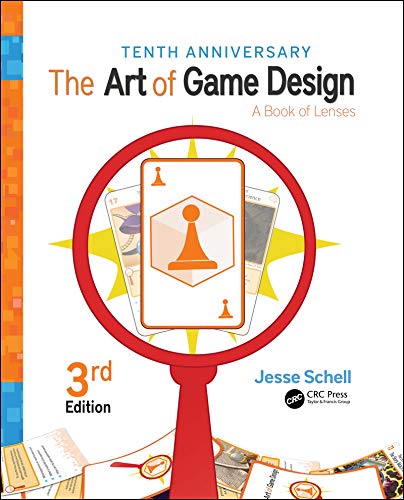
Jesse Schell boasts an impressive resume as a professor at Carnegie Mellon University’s Entertainment Technology Center and CEO of Schell Games, with a background including leadership roles at Disney Imagineering and the International Game Developers Association. His firsthand experience in designing immersive virtual reality and theme park attractions informs this book’s rich perspective. Driven by his passion to elevate game design education, Schell compiles over 100 lenses—thought-provoking questions—that invite you to scrutinize every facet of your game’s design. This approach reflects his commitment to helping designers create games that aren’t just played but remembered.
Jesse Schell is professor of entertainment technology for Carnegie Mellon University's Entertainment Technology Center (ETC), a joint master's program between Carnegie Mellon's College of Fine Arts and School of Computer Science, where he teaches game design and leads several research projects. He is also CEO of Schell Games, LLC, an independent game studio in Pittsburgh. Formerly he was creative director of the Walt Disney Imagineering Virtual Reality Studio and chairman of the International Game Developers Association (IGDA). Schell worked as a designer, programmer, and manager on several projects for Disney theme parks and DisneyQuest. He received his undergraduate degree from Rensselaer Polytechnic Institute and master's degree in information networking from Carnegie Mellon. In 2004, he was named as one of the World's 100 Top Young Innovators by MIT's Technology Review.
Unlike most design books that focus solely on aesthetics, Jesse Schell's deep dive into game design reveals how viewing a project through multiple lenses transforms the creative process. You learn to ask over 100 critical questions that challenge you to rethink gameplay, user experience, and emotional impact—whether you’re working on board games, VR, or digital platforms. The book illustrates its principles with modern examples from titles like Uncharted 4 and The Last of Us, making it especially valuable if you’re involved in video game development or interactive design. If you want to sharpen your ability to evaluate and iterate your design from every angle, this book offers a well-structured approach without overwhelming you with jargon.
Best for furniture design historians and collectors
Mateo Kries is a prominent figure in the field of design, serving as the editor of the Vitra Design Museum. His expertise in furniture design and history is reflected in his contributions to various publications and exhibitions, making him a respected authority in the design community. This book emerged from his deep engagement with one of the world's largest collections of furniture, offering readers a detailed and richly illustrated exploration of design history through over 1,700 objects and numerous essays authored by a team of experts.
Mateo Kries, Jochen Eisenbrand, Alberto Bassi, Fulvio Ferrari, Otakar Máčel, Jane Pavitt, Ingeborg de Roode, Catharine Rossi, Arthur Rüegg, Penny Sparke, Deyan Sudjic, Wolf Tegethoff, Carsten Thau, Kjeld Vindum, Gerald W.R. Ward(you?)·
About the Author
Mateo Kries is a prominent figure in the field of design, serving as the editor of the Vitra Design Museum. His expertise in furniture design and history is reflected in his contributions to various publications and exhibitions, making him a respected authority in the design community.
When Mateo Kries first realized how vast and interconnected the story of furniture design truly is, he set out to create a resource that captures this complexity in stunning detail. Drawing from his role as editor at the Vitra Design Museum, Kries and his team present a thorough chronicle of 1,740 objects spanning over two centuries, revealing shifts in style, technology, and cultural context. You’ll gain deep insights into the evolution of design movements through rich essays and detailed object analysis, from early industrial bentwood pieces to postmodern icons by Starck and Grcic. This book suits collectors, scholars, and anyone eager to understand furniture design’s layered history, not just its aesthetics.
Susan Weinschenk, a behavioral scientist with over 30 years of experience and a Ph.D. in Psychology, brings a unique perspective to design by merging science with practice. As a consultant to Fortune 1000 companies and an adjunct professor, she crafted this book to help you understand the psychological triggers behind user behavior. Her expertise shines through as she explains how design elements influence decisions and emotions, making this a valuable resource for anyone looking to design with people's minds in mind.
Susan Weinschenk has a Ph.D. in Psychology and over 30 years of experience as a behavioral scientist. She is a consultant to Fortune 1000 companies, start-ups, governments, and non-profits. Dr. Weinschenk is also an Adjunct Professor at the University of Wisconsin. She lives in Wisconsin, USA.
2020·256 pages·Design, User Behavior, Behavioral Science, Psychology, UX Design
Unlike most design books that focus solely on aesthetics or technical skills, Susan Weinschenk's work draws deeply from psychology and behavioral science to reveal how people think, decide, and act. You’ll learn why certain fonts influence emotions, how attention is captured and retained, and what drives motivation behind user decisions, with practical examples ranging from ideal line length to the emotional impact of music in design. This book suits designers aiming to craft experiences that truly connect with users on a cognitive level rather than just visual appeal. If you want your designs to guide behavior effectively, this book offers insights grounded in research rather than guesswork.
Renée Stevens is an interactive and immersive designer, educator, and speaker. Her creative work focuses on innovative ways design can help overcome learning disabilities and create more accessible and inclusive learning environments. For over a decade she has run her own interactive design studio. You can find her teaching at the S.I. Newhouse School of Public Communications at Syracuse University, where she is the Associate Chair of the Visual Communications Department, overseeing the undergraduate and graduate design programs. In 2017, she was named an Educator to Watch by GDUSA. As a speaker, she has been invited to speak around the world. She lives in New York with her husband and two children who keep her creating every day. You can learn more at reneestevens.design.
2020·240 pages·Design, Graphic Design, Typography, Visual Hierarchy, Color Theory
Renée Stevens, an interactive designer and educator at Syracuse University, draws on her decade-long experience running an interactive studio and her focus on accessibility to craft this introduction to graphic design. You’ll gain practical insights into choosing typefaces, visual hierarchy, color theory, and user testing, all framed within a modern context that embraces empathy and social impact. Chapters on design systems, immersive experiences, and critique processes provide you with concrete skills to approach projects thoughtfully and inclusively. This book suits students, novice designers, or anyone wanting to collaborate more effectively with design professionals.
Best for brand identity and luxury design aficionados
Austen Allred, a tech entrepreneur and educator, expresses a straightforward curiosity about this book, saying, "Tbh I’d love to read the Tom Ford book, too." His interest highlights the book’s appeal beyond just fashion insiders, suggesting its relevance for those intrigued by design’s impact on culture and business. The book captures Ford’s decade at Gucci and Yves Saint Laurent, illustrating how he reshaped luxury fashion with a bold vision. As Publisher's Weekly notes, the volume serves as a vivid time capsule of Ford’s brand-building years, offering a wealth of images and insights into the creation of a new archetype—the businessman designer—making it a compelling read for anyone invested in the intersection of design and commerce.
Tom Ford, Bridget Foley, Graydon Carter, Anna Wintour(you?)·
About the Author
Tom Ford has been showered with design awards in recent years, including 3 awards from the Council of Fashion Designers of America, 5 VH1/Vogue Fashion Awards, British GQ International Man of the Year, and Designer of the Year by GQ America. He is known for his transformative work at Gucci and Yves Saint Laurent, and has successfully launched his own brand. In addition to fashion, Ford has ventured into film directing, showcasing his versatility as an artist.
When Tom Ford first realized the power of cohesive brand design, he transformed Gucci and Yves Saint Laurent into symbols of 21st-century glamour. This book offers you a decade-long chronicle of his work, from provocative clothing to architectural store designs and high-impact advertising. You'll explore how Ford’s vision extended beyond fashion into crafting an entire lifestyle aura, backed by over 375 striking photographs from top photographers. If you're interested in brand identity and luxury fashion design, this book delivers detailed insights into blending creativity with business acumen.
The best Design books and more, in your inbox each week. No account needed.
Conclusion
This collection highlights design’s multifaceted nature—from the subtle urban elements that shape daily life to the psychology behind user experience, and from the history of mid-century aesthetics to hands-on logo creation and luxury branding. These books offer a solid foundation whether you're starting out or refining your expertise.
If you’re grappling with client communication and creative discipline, begin with Made by James and Powered by Design. For immersive inspiration steeped in history and culture, dive into Mid-Century Modern Graphic Design and Atlas of Furniture Design. To bridge theory and practice quickly, pairing 100 Things Every Designer Needs to Know About People with The Art of Game Design offers actionable perspectives.
Once you've absorbed these expert insights, create a personalized Design book to bridge the gap between general principles and your specific situation. This tailored approach sharpens your learning and accelerates your creative growth.
Frequently Asked Questions
I'm overwhelmed by choice – which book should I start with?
Start with a book that matches your current focus. For practical design basics, Powered by Design offers accessible guidance. If you're drawn to urban spaces, The 99% Invisible City opens your eyes to everyday design in cities.
Are these books too advanced for someone new to Design?
Not at all. Several books like The New Design Rules and Powered by Design are beginner-friendly, while others offer deeper insights for growing skills—so you can pick what fits your experience level.
What's the best order to read these books?
Consider your goals: begin with foundational concepts in A Pattern Language or Powered by Design, then explore specialized topics like logo design with Made by James or game design with The Art of Game Design.
Do these books assume I already have experience in Design?
Many are accessible to newcomers, but some, like Mid-Century Modern Graphic Design, delve into historical context best appreciated with some background. The collection balances beginner and advanced perspectives.
Which book gives the most actionable advice I can use right away?
Made by James offers practical strategies for logo creation and client work, while Powered by Design provides hands-on techniques for graphic design projects, making them great for immediate application.
Can personalized Design books really complement these expert recommendations?
Yes! While these expert books provide rich insights, personalized Design books tailor advice to your unique goals, experience, and interests, helping you apply principles faster and more effectively. Learn more here.
📚 Love this book list?
Help fellow book lovers discover great books, share this curated list with others!