7 Ecuador History Books That Illuminate the Nation’s Past
Discover Ecuador History Books authored by leading experts Carlos de la Torre, Steve Striffler, Thea Riofrancos, and others, providing deep, authoritative perspectives.
Updated on June 27, 2025·We may earn commissions for purchases made via this page
0 of 7 books have Audiobook versions
We're launchingLaunching on Product Hunt today 🎉We just launchedJust launched on Product Hunt 🎉
Modelpeers, from the BookAuthority teamFrom the BookAuthority team: Modelpeers, a free way to follow AI models and agents like you follow people. We'd love your support.
What if the story of Ecuador isn’t just about dates and battles, but a living tapestry woven from indigenous struggles, political upheaval, and cultural resilience? Ecuador’s history challenges conventional narratives, revealing layers of identity shaped by geography, faith, and social movements. Understanding this complex past is more urgent than ever as the country navigates modern challenges rooted in its heritage.
The books featured here are penned by scholars deeply engaged with Ecuador’s history—from sociologists like Carlos de la Torre, who curate diverse voices in *The Ecuador Reader*, to political scientists like Thea Riofrancos, who dissect resource conflicts in *Resource Radicals*. These works don’t just recount events; they offer nuanced interpretations grounded in decades of research and fieldwork.
While these expert-curated volumes provide you with proven frameworks and rich narratives, those wanting a tailored journey through Ecuador’s history—considering your background, interests, and goals—might explore creating a personalized Ecuador History book right here to deepen your understanding on your terms.
Carlos de la Torre brings his extensive sociological expertise and deep ties to Ecuadorian academia to this anthology, drawing on decades of research and fellowship experiences. His background as a professor at the University of Kentucky and FLACSO-Ecuador, alongside his scholarship on populism and Latin American politics, uniquely positions him to curate this rich collection. This work reflects his commitment to presenting Ecuador’s history and culture through diverse, authentic voices, offering you a comprehensive lens on the nation’s complex identity.
Carlos de la Torre is a Professor of Sociology at the University of Kentucky and Emeritus Professor at FLACSO-Ecuador. He earned his PhD at the New School for Social Research, and was granted fellowships at the John Simon Guggenheim Memorial Foundation and the Woodrow Wilson International Center for Scholars. De la Torre has published a dozen books and more than one hundred articles and chapters in academic publications. Among his top books are his edited volumes The Routledge Handbook of Global Populism (2019), The Promise and Perils of Populism: Global Perspectives (The University Press of Kentucky, 2015), and Latin American Populism in the Twenty-First Century, co-edited with Cynthia J. Arnson (the Johns Hopkins University Press and the Woodrow Wilson Center Press, 2013). The second edition of his Populist Seduction in Latin America (Ohio University Press) was published in 2010.
2009·480 pages·Ecuador History, Latin America, Political Science, Cultural Studies, Indigenous Studies
Carlos de la Torre and Steve Striffler offer a nuanced exploration of Ecuador's multifaceted identity through an anthology that spans centuries and perspectives. You gain insight into Ecuador's complex history, from pre-Columbian times through colonialism and into its evolving political landscape, enriched by voices ranging from politicians like José María Velasco Ibarra to indigenous artists and contemporary activists. The inclusion of cultural artifacts—poetry, music, recipes—and critical essays on topics like migration and environmental challenges deepens your understanding beyond traditional historical narratives. This book suits you if you seek a layered, interdisciplinary grasp of Ecuador’s social fabric rather than a straightforward chronology.
C Reginald Enock (1868-1970) was a noted historian and author, recognized for his contributions to the understanding of South American history and culture. His works often focus on the intricate relationship between geography, natural resources, and social development, providing valuable insights into the historical context of various regions. This background makes his deep dive into Ecuador’s history, topography, and industries a significant resource for understanding the country’s past and present.
C Reginald Enock (1868-1970) was a noted historian and author, recognized for his contributions to the understanding of South American history and culture. His works often focus on the intricate relationship between geography, natural resources, and social development, providing valuable insights into the historical context of various regions.
2023·450 pages·Ecuador History, History, Geography, Economy, Social Development
The methods C Reginald Enock developed while studying South America's evolving landscapes shape this detailed account of Ecuador's past and present. Enock, a respected historian, connects the dots between the country's geography, natural resources, and social changes, offering you a layered understanding of Ecuador’s development from ancient times through modernity. You’ll gain insights into how industries and cultural shifts intertwine with the environment, especially through his examination of topography and economic resources. This book suits anyone curious about South American history with a focus on Ecuador’s unique blend of natural and societal evolution, though it demands patience for its thorough, sometimes dense narrative.
This personalized AI book about Ecuador history is created based on your background, interests, and specific goals. You share the aspects of Ecuador's past you want to explore, your current knowledge level, and what you hope to achieve. Then this AI-crafted book focuses on your unique learning path, providing a custom narrative that makes complex history approachable and relevant. It’s designed to give you a focused and enriching experience, far beyond generic overviews.
TailoredRead AI creates personalized nonfiction books that adapt to your unique background, goals, and interests. Instead of reading generic content, you get a custom book written specifically for your profession, experience level, and learning objectives. Whether you're a beginner looking for fundamentals or an expert seeking advanced insights, TailoredRead crafts a book that speaks directly to you. Learn more.
2026·50-300 pages·Ecuador History, Indigenous Heritage, Colonial Era, Political Movements, Social Change
This tailored book explores Ecuador's rich history through a lens finely tuned to your unique background and interests. It covers major historical periods, key cultural shifts, and political developments, revealing the threads connecting indigenous heritage, colonial influences, and modern social movements. By focusing on your specific goals, this personalized guide navigates complex historical narratives with clarity and depth, making the vast and intricate story of Ecuador accessible and engaging. The content adapts to your experience level and chosen sub-topics, offering a customized pathway that enriches your understanding and appreciation of Ecuador's historical landscape.
Through a thoughtful synthesis of expert knowledge, the book examines pivotal events and figures, illuminating the nation's evolving identity. This personalized approach ensures you gain meaningful insights aligned with your curiosity and learning objectives, transforming historical study into a deeply relevant and rewarding experience.
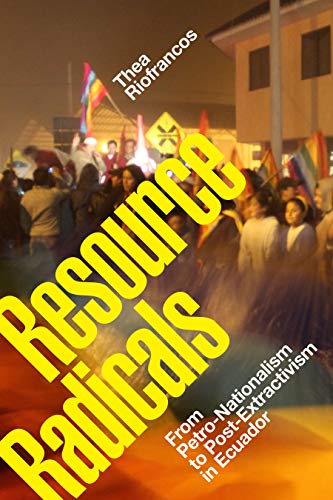
Thea Riofrancos is Associate Professor of Political Science at Providence College and coauthor of A Planet to Win: Why We Need a Green New Deal. Her expertise in political science informs her detailed examination of Ecuador's resource conflicts. Driven by a commitment to understanding environmental justice and socioeconomic equity, Riofrancos explores the clash between government policies and grassroots activism, offering readers a nuanced perspective on Ecuador's turbulent political landscape.
Thea Riofrancos is Associate Professor of Political Science at Providence College and coauthor of A Planet to Win: Why We Need a Green New Deal.
2020·264 pages·Ecuador History, Political Science, Resource Politics, Environmentalism, Social Movements
What if everything you knew about Ecuador's resource politics was challenged? Thea Riofrancos, an Associate Professor of Political Science, digs into the tension between Ecuador's government-led resource nationalism and grassroots anti-extractivist movements. Through archival research and ethnographic study, you gain insight into how competing visions around natural resource extraction shape development, democracy, and ecological concerns in Ecuador. The book unpacks complex debates over socioeconomic equality and indigenous rights, making it invaluable if you want to understand the political struggles behind a commodity-dependent economy. This is a thoughtful read for those interested in the intersection of leftist politics and environmental activism in Latin America.
Michael Anderson is a renowned numismatic historian with a deep understanding of Ecuador's monetary history. His expertise provides a unique lens into the story of the Ecuadorian National Mint in Quito, combining scholarly rigor with a passion for currency evolution. This background enables readers to explore Ecuador history not just through events but through the tangible artifacts of its coins and minting practices, enriching your grasp of the nation's economic and cultural development.
Unlike most Ecuador history books that focus broadly on political events, Michael Anderson's work zeroes in on the evolution of Ecuador's currency and the pivotal role of the National Mint in Quito. You gain a detailed look at monetary design, production techniques, and economic impacts, illustrated through 394 pages enriched with extensive indexing and images. This book suits historians and collectors who want to understand how Ecuador’s money reflects its national identity and historical shifts. For example, Anderson explores how coinage changes mirror political regimes, making the economic narrative tangible and accessible.
Rev. Severo Gomezjurado S.J. is a noted Catholic historian and author, recognized for his works on the history of Ecuador and its religious significance. His expertise in ecclesiastical history provides a deep understanding of the intersection between faith and national identity in Ecuador. This background uniquely positions him to explore Ecuador's solemn consecration to the Sacred Heart of Jesus and its lasting influence on the nation's trajectory.
Rev. Severo Gomezjurado S.J. is a noted Catholic historian and author, recognized for his works on the history of Ecuador and its religious significance. His expertise in ecclesiastical history provides a deep understanding of the intersection between faith and national identity in Ecuador.
2013·388 pages·Ecuador History, Religious History, Political History, Catholicism, National Identity
This book takes a distinctive look at Ecuador's history by focusing on its unique religious consecration to the Sacred Heart of Jesus, a national act that shaped the country's identity in the late 19th and 20th centuries. Rev. Severo Gomezjurado S.J., a historian deeply versed in Catholic and Ecuadorian history, unpacks the consequences of this consecration, especially through the figure of President Gabriel Garcia Moreno and the ongoing religious-political struggles that followed. You’ll gain insight into how this spiritual dedication influenced Ecuador’s national narrative and the enduring battle over Christ's symbolic kingship. This work is particularly suited for those interested in how faith and politics intertwine in shaping a nation’s history.
This AI-created book on Ecuador history is crafted based on your background and learning goals. You share which historical periods and topics interest you most, along with your current knowledge, and the book is created to fit exactly what you want to explore. This personalized approach makes it easy to focus on the aspects of Ecuador's past that matter to you, helping you build a clear, meaningful understanding without unnecessary detours.
TailoredRead AI creates personalized nonfiction books that adapt to your unique background, goals, and interests. Instead of reading generic content, you get a custom book written specifically for your profession, experience level, and learning objectives. Whether you're a beginner looking for fundamentals or an expert seeking advanced insights, TailoredRead crafts a book that speaks directly to you. Learn more.
2026·50-300 pages·Ecuador History, Indigenous Cultures, Colonial Period, Political Movements, Social Change
This tailored book explores Ecuador's rich and complex history through a step-by-step, 30-day learning journey designed to match your background and goals. It covers key periods, influential figures, and transformative events with clarity and focus, making the nation's past accessible and engaging. This personalized guide delves into indigenous cultures, colonial legacies, political upheavals, and social movements, ensuring you gain a nuanced understanding that aligns with your interests. By concentrating on your specific learning objectives, it reveals connections and themes that illuminate Ecuador’s evolving identity, helping you master the subject efficiently without wading through unrelated material.
Marc Becker, Associate Professor of History at Truman State University, brings authoritative expertise to this study of Ecuador's Indigenous movements. His background, including authorship on Latin American Marxist theory and co-editing works on Ecuadorian highland Indians, equips him uniquely to trace decades of activism leading to the landmark 1990 uprising. His scholarly rigor offers you a rich, well-documented narrative that connects rural and urban struggles for social justice, making this book a vital resource for understanding Ecuador's political history.
Marc Becker is Associate Professor of History at Truman State University in Kirksville, Missouri. He is the author of Mariátegui and Latin American Marxist Theory and a co-editor of Highland Indians and the State in Modern Ecuador.
Marc Becker’s detailed exploration sheds light on the long, intertwined struggles of Indigenous peoples and leftist activists in Ecuador, revealing the roots of the 1990 uprising that reshaped the nation’s social landscape. Drawing from decades of historical activism, Becker highlights the strategic collaborations between rural Indigenous laborers and urban intellectuals, emphasizing the pivotal role of women and the fusion of ethnic and class struggles. You’ll gain insights into how Indigenous movements evolved from local agricultural syndicates to nationally organized federations, alongside leftist influences that introduced new forms of protest and advocacy. This book suits anyone seeking a nuanced understanding of Ecuador’s Indigenous political history and its link to broader social justice movements.
Norman E. Whitten Jr., professor emeritus of anthropology at the University of Illinois at Urbana-Champaign and editor of the university press's Interpretations of Culture series, brings profound expertise to this examination of Ecuador’s recent history. Alongside Dorothea Scott Whitten, a research associate and museum curator, their collaboration reflects deep engagement with Latin American cultural studies. Their combined background informs a nuanced look at the 1990 Indigenous Uprising and its enduring effects on power and identity in Ecuador, making this book a valuable resource for anyone aiming to understand the intersections of people and power in the region.
Norman E. Whitten Jr., a professor emeritus of anthropology at the University of Illinois at Urbana-Champaign, is the editor of the University of Illinois Press's series Interpretations of Culture in the New Millennium. Dorothea Scott Whitten was a research associate at the Center for Latin American and Caribbean Studies and a Curator of the Spurlock Museum at the University of Illinois at Urbana-Champaign. They collaborated on many projects, including Puyo Runa: Imagery and Power in Modern Amazonia.
2011·280 pages·Ecuador History, Indigenous Movements, Political Power, Ethnography, Anthropology
Norman E. Whitten Jr.'s decades of anthropological research at the University of Illinois shine through in this book, co-authored with Dorothea Scott Whitten, whose curatorial and research expertise enriches the narrative. They explore how Ecuador's Indigenous Uprising of 1990 reshaped power dynamics, weaving together ethnographic detail and theory to reveal the evolving relationships between indigenous and Afro-Ecuadorian communities and the state. You gain insight into the social transformations that challenge traditional nation-state structures, particularly through chapters analyzing political mobilization and cultural identity shifts. This book suits those interested in Latin American social movements and the complexities of power in contemporary Ecuador.
The best Ecuador History books and more, in your inbox each week. No account needed.
Conclusion
These seven books collectively highlight Ecuador’s multifaceted history—from its indigenous movements and political power struggles to its religious identity and economic transformations. They reveal the entanglement of culture, politics, and geography that shapes the nation.
If you’re drawn to the grassroots activism and indigenous narratives, start with Marc Becker’s *Indians and Leftists* and Norman Whitten’s *Histories of the Present*. For those intrigued by political ecology and resource debates, *Resource Radicals* offers critical insights. Exploring Ecuador’s monetary past? Michael Anderson’s numismatic history is your go-to.
Alternatively, you can create a personalized Ecuador History book to bridge general principles with your specific interests. These books will help accelerate your knowledge and deepen your grasp of Ecuador’s rich past.
Frequently Asked Questions
I'm overwhelmed by choice – which book should I start with?
Start with *The Ecuador Reader* for a broad, interdisciplinary view. It covers history, culture, and politics, giving you a solid foundation before diving into specialized topics.
Are these books too advanced for someone new to Ecuador History?
Not at all. While some books dive deep, titles like *Ecuador* by C Reginald Enock provide accessible narratives on geography and social development, perfect for newcomers.
What’s the best order to read these books?
Begin with broad overviews like *The Ecuador Reader* and *Ecuador*, then explore focused studies such as *Resource Radicals* or *Indians and Leftists* to deepen your understanding.
Do I really need to read all of these, or can I just pick one?
You can pick based on interest. For political history, choose *Resource Radicals*; for religious influence, *Consecration of Ecuador* is ideal. Each offers unique perspectives.
Which books focus more on theory vs. practical application?
*Resource Radicals* and *Indians and Leftists* engage more with theory and political analysis, while *A numismatic history of Ecuador* and *Consecration of Ecuador* focus on historical narratives.
Can I get a tailored reading list for my specific interests in Ecuador History?
Yes! While these books offer expert insights, a personalized Ecuador History book can tailor content to your learning goals and background. Explore options here.
📚 Love this book list?
Help fellow book lovers discover great books, share this curated list with others!