10 Environmental Engineering Books That Experts Trust to Drive Change
Discover insights from Alwaleed Talal, Richard Branson, and Luis Von Ahn through these Environmental Engineering books shaping the future
Updated on June 22, 2025·We may earn commissions for purchases made via this page
We're launchingLaunching on Product Hunt today 🎉We just launchedJust launched on Product Hunt 🎉
Modelpeers, from the BookAuthority teamFrom the BookAuthority team: Modelpeers, a free way to follow AI models and agents like you follow people. We'd love your support.
What if the key to tackling climate change and water crises lay in the pages of a few carefully chosen books? Environmental engineering stands at the crossroads of science, technology, and policy, shaping how societies protect the planet's delicate balance. The urgency of climate challenges demands solutions that blend innovation with practical action.
Leaders like Alwaleed Talal, chairman of Kingdom Holding Company, and Richard Branson, Virgin Group founder, have turned to expert-recommended works to inform their sustainability efforts. Meanwhile, tech innovator Luis Von Ahn praises Bill Gates’s pragmatic approach to climate solutions, underscoring the need for data-driven strategies.
While these expert-curated books provide proven frameworks, readers seeking content tailored to their specific professional background, education level, or environmental focus might consider creating a personalized Environmental Engineering book that builds on these insights—offering a unique roadmap for your journey.
Luis Von Ahn, CEO of Duolingo and MacArthur Fellow, praised this book after reading it amid growing concerns about climate change. He remarked, "I started reading @BillGates’s new book on climate change. What an amazing individual." His endorsement carries weight given his background in technology and innovation, highlighting how Gates’s exploration of climate solutions resonates with leaders shaping the future. Following him, Charles Mok, former Hong Kong IT legislator, noted Gates’s methodical approach, emphasizing the engineer’s precision in addressing complex environmental challenges.
Bill Gates is cochair of the Bill & Melinda Gates Foundation and founder of Breakthrough Energy. He founded Microsoft in 1975 with Paul Allen and led the company to become the worldwide leader in business and personal software and services. In 2008, Bill transitioned to focus full-time on his foundation’s work to expand opportunity to the world’s most disadvantaged people. As cochair, he leads the foundation’s development of strategies and sets the overall direction of the organization. Through his private office, Gates Ventures, he pursues his work on innovation in clean energy, Alzheimer’s disease and other healthcare issues, interdisciplinary education, and technology. At Breakthrough Energy, he’s putting his experience as an innovator and problem-solver to work to address climate change by supporting the next generation of entrepreneurs, big thinkers, and clean technologies. In 2010, Bill, Melinda French Gates, and Warren Buffett founded the Giving Pledge, an effort to encourage the wealthiest families and individuals to publicly commit more than half of their wealth to philanthropic causes and charitable organizations during their lifetime or in their will.
When Bill Gates first realized the urgent need to confront climate change, he drew on his extensive experience in technology and philanthropy to craft a practical roadmap toward zero greenhouse gas emissions. This book breaks down complex challenges across energy production, manufacturing, agriculture, and transportation, showing you which existing technologies can be scaled and where breakthroughs are essential. Gates also explores the role of policy and individual action, giving you a clear framework for understanding and engaging with the multifaceted solutions necessary to avoid environmental catastrophe. If you're seeking a grounded, data-driven perspective on climate action, this book offers valuable insights without oversimplifying the immense task ahead.
David Roberts, a climate policy writer and energy analyst, highlights a crucial gap this book fills: ordinary people rarely get a clear picture of what actions matter and their impact. He notes, "There’s been no real way for ordinary people to get an understanding of what they can do and what impact it can have... The public is hungry for this kind of practical wisdom." This perspective reshaped his view on climate communication, providing a grounded sense of what collective action can achieve. Similarly, Jacquelyn Gill, a climate change ecologist and professor, points to the book as a key resource alongside other solutions-focused media, underscoring its role in empowering climate action.
“There’s been no real way for ordinary people to get an understanding of what they can do and what impact it can have. There remains no single, comprehensive, reliable compendium of carbon-reduction solutions across sectors. At least until now. . . . The public is hungry for this kind of practical wisdom.”
Paul Hawken is an environmentalist, entrepreneur, author, and activist known for his work in sustainability and social justice. He has written several influential books on environmental issues and founded multiple organizations focused on ecological restoration and climate change solutions.
What if everything you knew about reversing global warming was wrong? Paul Hawken, an environmentalist and entrepreneur deeply engaged in sustainability, challenges the prevailing doom narratives by presenting 100 researched solutions that are already making a difference worldwide. You learn not only about cutting-edge technologies but also about social and economic practices, like educating girls in lower-income countries, that pull carbon from the atmosphere. This book suits anyone wanting a detailed, science-backed playbook for climate action rather than abstract theory or fear-driven rhetoric.
This AI-powered book on climate engineering develops a systematic approach with frameworks that adapt to your specific environmental engineering context. The content is tailored based on your professional background and sustainability objectives, addressing concrete challenges faced in implementing climate action. It bridges theoretical concepts with actionable methods, providing a personalized roadmap for sustainable solutions that resonate with your unique industry focus.
TailoredRead AI creates personalized nonfiction books that adapt to your unique background, goals, and interests. Instead of reading generic content, you get a custom book written specifically for your profession, experience level, and learning objectives. Whether you're a beginner looking for fundamentals or an expert seeking advanced insights, TailoredRead crafts a book that speaks directly to you. Learn more.
This personalized book provides a systematic exploration of practical strategies to reduce environmental impact within the field of environmental engineering. It presents a tailored framework that aligns climate action methodologies with your specific industry challenges, geographic considerations, and sustainability goals. The book covers implementation of sustainable design principles, resource optimization, and regulatory compliance while addressing carbon footprint assessment and risk mitigation. By focusing on contextualized solutions, it cuts through generic advice to deliver actionable insights that fit your professional environment. The integration of adaptive methodologies ensures relevance whether you work in urban infrastructure, water management, or pollution control.
Chris Hayes, host of MSNBC's All In with Chris Hayes, brings a media perspective deeply informed by environmental issues, making his recommendation particularly relevant for those interested in climate policy and public discourse. After following the unfolding climate crisis on air, he found "The Water Will Come" essential for understanding the tangible realities of rising sea levels and their implications, stating, "For people who want to learn more about climate change, rising sea levels and what it means for our future, read The Water Will Come." This book reshaped his grasp of how environmental engineering intersects with urban survival. Similarly, John Green, acclaimed author and educator, highlights the book’s ability to turn complex science into a gripping narrative, emphasizing its urgent message about our collective future.
Jeff Goodell is a contributing editor at Rolling Stone and the author of five books, including How to Cool the Planet: Geoengineering and the Audacious Quest to Fix Earth's Climate, which won the 2011 Grantham Prize Award of Special Merit. Goodell's previous books include Sunnyvale, a memoir about growing up in Silicon Valley, which was a New York Times Notable Book, and Big Coal: The Dirty Secret Behind America's Energy Future.
When Jeff Goodell first realized the irreversible impact of rising sea levels on human civilization, he set out to document this looming crisis with a journalist’s rigor and on-the-ground perspective. You’ll gain a clear understanding of how climate change translates into flooding risks for iconic cities and vulnerable island nations, backed by detailed reports from twelve countries. Chapters exploring engineering attempts to hold back the water reveal both human ingenuity and the limits we face. This book suits anyone grappling with environmental futures—from engineers to policy advocates—providing a vivid picture of the challenges ahead without sensationalism.
Richard Branson, founder and CEO of Virgin Group, highlights the urgency of this book amid the escalating climate crisis. His experience leading global business ventures gives weight to his endorsement: "There could not be a more important book." Branson points to how this book reshaped his understanding of the tangible impact policies and individual choices have on our planet's future. Following him, Naomi Klein, an acclaimed author and academic, emphasizes the authors’ challenge to create a fairer world through deliberate response, underscoring the book's blend of hope and responsibility.
Christiana Figueres is an internationally recognized leader on climate change. She was Executive Secretary of the United Nations Framework Convention on Climate Change (UNFCCC) from 2010 to 2016, successfully directing the international negotiations that culminated in the historic Paris Agreement of 2015. Together with Tom Rivett-Carnac, she is a founding partner of Global Optimism, an organization focused on social and environmental change, and co-host of the podcast Outrage & Optimism.
When Christiana Figueres and Tom Rivett-Carnac first realized the urgent stakes of the climate crisis during their work on the Paris Agreement, they crafted this book to outline two divergent futures. You gain clear insights into the tangible consequences of inaction versus the hopeful possibilities of a regenerative, net-zero world by 2050. The book breaks down complex climate policies and personal responsibilities, making it accessible if you want to understand how global and individual actions intertwine. It's particularly useful if you're engaged in environmental policy, corporate sustainability, or simply seeking a grounded perspective on climate change's crossroads.
Andy D. Ward, Ph.D, a professor at The Ohio State University with decades of expertise in agricultural and civil engineering, brings a unique blend of academic rigor and practical insight to this book. His extensive research and award-winning work in remote sensing underpin a text that goes beyond theory to address real-world environmental hydrology challenges. This book emerged from his commitment to educate both students and professionals, offering a robust resource on topics from soil erosion to harmful algal blooms, supported by contributions from international experts.
Andy D. Ward, Stanley W. Trimble, Suzette R. Burckhard, John G. Lyon(you?)·
About the Author
Andy D. Ward, Ph.D, is a professor in the Department of Food, Agricultural and Biological Engineering, The Ohio State University and has been a member of the faculty since 1986. In 1971, he obtained a B.Sc. in civil engineering from Imperial College, London, England. In 1977 and 1981, Dr. Ward obtained an M.S. and Ph.D. respectively in agricultural engineering from the University of Kentucky. He has authored more than 100 manuscripts and co-authored a paper that received the 1994 Autometric Award from the American Society of Photogrammetry and Remote Sensing for the best interpretation of remote sensing data.
When Andy D. Ward first reconsidered traditional hydrology texts, he sought to blend practical fieldwork guidance with theoretical insight, creating a resource that serves both newcomers and seasoned professionals. This book delivers detailed coverage on evapotranspiration, soil erosion, and stream processes, while also addressing emerging concerns like hypoxia and harmful algal blooms, supported by over 370 figures and 260 equations. You’ll find it particularly useful if you’re involved in environmental or agricultural engineering, needing a resource that bridges textbook theory with application and personal expert perspectives. However, it demands a serious commitment; casual readers might find its depth and technical scope challenging.
This AI-tailored book on urban water management develops a systematic approach with frameworks that adapt to your specific engineering projects and environmental conditions. The content adjusts based on your professional background and goals to address the nuanced challenges of drainage and wastewater systems in cities. Created after you specify your areas of interest, it blends foundational knowledge with practical strategies to help navigate complex urban water infrastructure scenarios. This personalized AI book bridges the gap between theory and actionable solutions tailored to your unique urban water context.
TailoredRead AI creates personalized nonfiction books that adapt to your unique background, goals, and interests. Instead of reading generic content, you get a custom book written specifically for your profession, experience level, and learning objectives. Whether you're a beginner looking for fundamentals or an expert seeking advanced insights, TailoredRead crafts a book that speaks directly to you. Learn more.
This personalized book on urban water management provides a tailored framework that addresses the complex challenges of drainage and wastewater infrastructure in metropolitan environments. It explores systematic approaches to hydrological modeling, stormwater control, and wastewater treatment technologies, adjusting content based on your specific environmental engineering context and project goals. The book focuses on integrated urban water systems design and sustainable management practices, cutting through generic advice to deliver targeted methodologies suited to your city's infrastructure needs. By weaving together foundational principles with advanced implementation strategies, it offers a refined, actionable roadmap for managing urban water resources effectively within varied regulatory and climatic conditions.
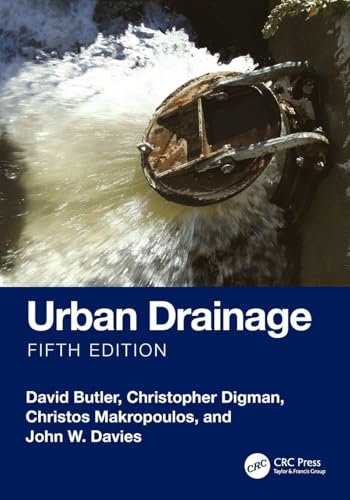
David Butler is a leading expert in water engineering and environmental management, with extensive experience in urban drainage systems. He has authored several influential texts in the field and has contributed significantly to research and practice in water management. His expertise shapes this book, providing you with insights grounded in both academic research and real-world application, making it a reliable guide for those tackling complex drainage challenges in urban environments.
David Butler, Christopher Digman, Christos Makropoulos, John W. Davies(you?)·
About the Author
David Butler is a leading expert in water engineering and environmental management, with extensive experience in urban drainage systems. He has authored several influential texts in the field and has contributed significantly to research and practice in water management.
Unlike most environmental engineering books that focus narrowly on theory, this text integrates engineering principles with real-world urban drainage challenges, drawing on the authors' extensive practical expertise. You’ll explore the design and upgrade of drainage systems, with detailed discussions on modelling, resilience, and smart technologies, supported by numerous applied examples. Chapters cover everything from managing rainwater to wastewater infrastructure in urban settings, making complex issues approachable whether you’re a student or a practicing engineer. If your work involves improving urban water management or you’re studying environmental engineering, this book offers the kind of depth and context that bridges academic and applied knowledge.
Ryujiro Tsuchihashi is a prominent figure in wastewater engineering whose contributions have shaped how treatment technologies are taught and practiced. His expertise, reflected in this book, offers you a deep dive into the evolving field of wastewater engineering, particularly its technological advances and sustainability challenges. His background ensures that you’re learning from someone who has influenced both academic curricula and practical applications in environmental engineering.
Inc. Metcalf & Eddy, George Tchobanoglous, H. David Stensel, Ryujiro Tsuchihashi, Franklin L. Burton(you?)·
About the Author
Ryujiro Tsuchihashi is a prominent figure in the field of wastewater engineering, contributing significantly to the understanding and advancement of treatment technologies. His work, alongside other experts, has shaped the curriculum and practices in environmental engineering, making him a respected author and educator.
When Ryujiro Tsuchihashi and his co-authors updated this volume, they redefined how wastewater is perceived—not just as waste but as a valuable resource for energy, nutrients, and potable water. You’ll gain insights into advanced treatment technologies, the microbiology behind nutrient removal, and strategies for managing biosolids with a nod to sustainability and carbon footprint reduction. The chapters on stringent nitrogen and phosphorus discharge standards and energy-neutral plant designs provide you with a nuanced understanding of both regulatory and technological landscapes. If your work or study involves environmental or civil engineering, this book offers detailed technical knowledge that bridges theory with evolving real-world practices.
Joanne E. Drinan, a retired U.S. Navy chief petty officer with two decades of active duty and experience managing wastewater treatment operations, brings practical insight to this book. Her extensive background in environmental science and public sanitation informs a guide designed for those without engineering training. This book reflects her commitment to making complex water and wastewater treatment concepts accessible and relevant for professionals seeking clear understanding of treatment processes and regulations.
Joanne E. Drinan is a retired U.S. Navy chief petty officer with 20 years of active duty. She also was an administrative coordinator for a large wastewater treatment sanitation district. She currently works for a nonprofit organization and has authored/coauthored more than 12 environmental science books.
Drawing from her extensive background as a U.S. Navy chief petty officer and hands-on experience coordinating wastewater treatment operations, Joanne E. Drinan offers a clear and accessible introduction to water and wastewater treatment processes. The book walks you through each treatment unit, explaining their functions and equipment without relying on complex math or science jargon, making it approachable for nonengineers. You’ll find detailed chapters on drinking water purification and wastewater management, alongside updated regulatory insights and technological advances. If you’re involved in environmental services, public utilities, or just want a solid grasp of how water treatment works in practice, this book lays a practical foundation without overwhelming technical detail.
Dr. Jacob Petro PE brings over 20 years of multidisciplinary engineering experience, including leadership roles in transportation and water sectors, to this focused exam guide. His background as a licensed Professional Engineer and Chartered Engineer shapes the book's comprehensive question-based approach that aligns with current industry standards. Driven by a desire to offer an affordable, effective study tool, Dr. Petro crafted this guide to help candidates navigate the complexities of the Transportation Civil PE exam through detailed questions, explanations, and visual aids.
Dr. Jacob Petro PE is a professional engineer and business leader with over 20 years of experience in leading and growing engineering companies. Renowned for his innovative projects, he is a licensed Professional Engineer (PE) and a Chartered Engineer (CEng). Dr. Petro has a multidisciplinary engineering background, managing high-impact operations in the water sector, transportation, and structural engineering. His diverse expertise allows him to approach problems from multiple perspectives, leading to numerous publications across various disciplines.
When Dr. Jacob Petro PE first reconsidered common preparation methods for the Transportation Civil PE exam, he realized many candidates lacked a question-driven study approach that mirrors the actual exam format. This book focuses on 160 carefully crafted CBT questions aligned with the 2024 NCEES specifications, covering a wide range of transportation engineering topics including highway capacity, geometric design, and pavement structures. You gain not only practice questions but detailed explanations, alternative solutions, and visual aids that deepen your understanding of complex concepts. If you're aiming to pass the Transportation Civil PE exam efficiently with a practical, up-to-date resource, this guide offers a structured path tailored specifically to your needs.
Rachel Carson (1907-1964) spent most of her professional life as a marine biologist with the U.S. Fish and Wildlife Service. By the late 1950s, she had written three lyrical, popular books about the sea, including the best-selling The Sea Around Us, and had become the most respected science writer in America. She completed Silent Spring against formidable personal odds, and with it shaped a powerful social movement that has altered the course of history.
Rachel Carson (1907-1964) spent most of her professional life as a marine biologist with the U.S. Fish and Wildlife Service. By the late 1950s, she had written three lyrical, popular books about the sea, including the best-selling The Sea Around Us, and had become the most respected science writer in America. She completed Silent Spring against formidable personal odds, and with it shaped a powerful social movement that has altered the course of history.
When Rachel Carson first discovered the devastating effects of pesticides like DDT on ecosystems, she transformed scientific knowledge into a powerful narrative that reshaped environmental policy worldwide. In Silent Spring, you delve into detailed investigations of chemical impacts on air, water, and wildlife, learning to critically assess how human interventions disrupt natural systems. This book suits anyone engaged with environmental science or engineering who seeks a foundational understanding of ecological risks and the origins of modern environmental regulation. Chapters examining pesticide bioaccumulation and regulatory failures offer concrete insights that remain relevant for today's environmental challenges.
The best Environmental Engineering books and more, in your inbox each week. No account needed.
Conclusion
Together, these Environmental Engineering books reveal core themes: the urgent need for climate action, the complexity of water management, and the power of informed policy combined with engineering expertise. If you're facing challenges in coastal resilience, start with The Water Will Come and Urban Drainage for practical insights.
For rapid implementation of carbon reduction strategies, combine Drawdown and How to Avoid a Climate Disaster to grasp both macro and micro approaches. Meanwhile, those preparing for professional certification will find focused guidance in The Essential Guide to Passing The Transportation Civil PE Exam.
Once you've absorbed these expert insights, create a personalized Environmental Engineering book to bridge the gap between general principles and your specific situation—empowering you to make a meaningful impact.
Frequently Asked Questions
I'm overwhelmed by choice – which book should I start with?
Start with How to Avoid a Climate Disaster for a clear, practical overview of climate solutions. It sets a solid foundation before diving into specialized topics like water management or policy.
Are these books too advanced for someone new to Environmental Engineering?
Not at all. Books like Water and Wastewater Treatment explain concepts in accessible language, while others offer detailed technical insight for advancing your knowledge gradually.
What's the best order to read these books?
Begin with broad climate-focused titles such as The Future We Choose and Drawdown, then explore specialized works like Environmental Hydrology and Wastewater Engineering tailored to your interests.
Do I really need to read all of these, or can I just pick one?
You can pick based on your goals. For policy and strategy, choose The Future We Choose. For technical expertise, Urban Drainage or Wastewater Engineering are ideal.
Which books focus more on theory vs. practical application?
Environmental Hydrology and Wastewater Engineering lean toward technical theory, while Drawdown and The Water Will Come emphasize real-world applications and case studies.
How can I get content tailored to my specific Environmental Engineering needs?
While these expert books provide valuable insights, personalized content can address your unique goals and experience. Consider creating a personalized Environmental Engineering book to get focused guidance that complements these foundational works.
📚 Love this book list?
Help fellow book lovers discover great books, share this curated list with others!