Congratulations! 🎉
"Environmental and Natural Resources Economics" by Steven Hackett, Sahan T. M. Dissanayake made it to BookAuthority's Best Environmental Science Books of All Time!
14 Environmental Science Books That Separate Experts from Amateurs
Recommended by Alwaleed Talal, Neil Degrasse Tyson, and leading voices for a deeper environmental grasp







What if everything you thought about environmental science could be challenged, reshaped, and renewed? The planet's future hinges on understanding complex, interconnected challenges—climate change, biodiversity loss, and sustainable development. Right now, the stakes have rarely been higher, and the urgency more palpable.
Experts like Alwaleed Talal, chairman of Kingdom Holding Company, who highlights Bill Gates's pragmatic approach in "How to Avoid a Climate Disaster," or Neil Degrasse Tyson, who endorses Bill Nye’s hopeful "Unstoppable," bring diverse but authoritative perspectives that cut through noise. Their insights reveal how these books reflect the frontlines of environmental science, blending data, policy, and human stories.
While these expert-curated books provide proven frameworks, readers seeking content tailored to their specific experience levels, learning goals, or areas of interest might consider creating a personalized Environmental Science book that builds on these insights and addresses your unique path.
1. Apocalypse Never
Recommended by Maxime Bernier in
Leader of the People's Party of Canada
“MUST READ - because the lying mainstream media won’t mention it. Veteran environmentalist apologizes in new book for unfounded climate change alarmism.” (from X)
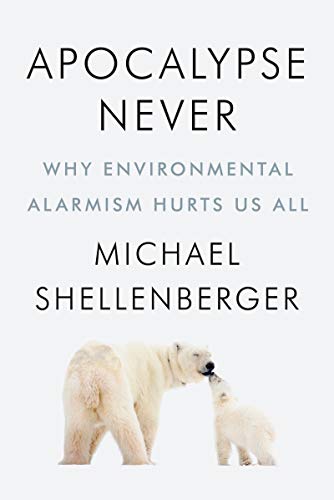
This book argues that climate change is real but not the end of the world, and that it is not the most serious environmental problem. It examines what lies behind apocalyptic environmentalism, pointing to financial interests, desires for status and power, and a spiritual impulse. The publisher description also notes the book's view that those most alarmed about environmental problems often oppose obvious solutions.
2. A Life on Our Planet
Recommended by Peter Egan in
UK Actor and Animal Ambassador
“Hi another quickie as they say in the trade. If you haven’t already..get a copy of David Attenborough’s remarkable book ‘A Life on Our Planet’ a vision for the future we must all share. It’s a path we must all follow.” (from X)

This account traces changes in nature over a lifetime, focusing on the loss of wild places and biodiversity. It is framed as a witness statement about how that decline happened. It closes with a hopeful vision of how the damage can still be put right if action is taken.
Environmental Science Mastery

This tailored book on environmental science offers a richly detailed exploration designed to match your background and specific goals. It examines core principles such as ecosystems, climate dynamics, and human impact, while diving into specialized topics you care about most. The personalized content guides you through complex environmental challenges, revealing interconnections between natural systems and societal responses. By focusing on your interests, this book makes it easier to grasp diverse concepts, from biodiversity conservation to sustainable resource management. Ultimately, it provides a clear, engaging pathway through the multifaceted world of environmental science, helping you develop deeper expertise with content crafted just for you.
3. Fresh Banana Leaves
Recommended by Chanda Prescod-Weinstein in
Associate Professor of Physics at University of New Hampshire
“So excited for this amazing new book, coming soon!! Preorder today!!” (from X)

This book explains why western conservation approaches are falling short and introduces Indigenous environmental knowledge as an alternative. Drawing on case studies, personal stories and family histories, it centers the voices of Indigenous Latin American women and land protectors. It proposes land stewardship that heals rather than displaces.
4. A Brief History of the Earth's Climate
Recommended by Andrew Weaver
Scientist, former BC Green Party leader, University of Victoria Professor
“An informative, succinct, and fascinating read ― Steven Earle offers a unique and detailed account of Earth's climate history. His innate story-telling ability, coupled with his remarkable talent for making complex scientific information accessible, makes this page-turner a must-read for anyone seeking to understand the Earth's climate system.” (from Amazon)

This accessible guide follows the natural evolution of Earth's climate and explains why human-caused warming is different and more dangerous. Illustrated chapters cover processes such as plate motions, volcanic eruptions, ocean currents and orbital variations. It also addresses tipping points, ways to limit damage and common myths spread by climate deniers.
5. How to Avoid a Climate Disaster
Recommended by Charles Mok in
Former Hong Kong IT legislator and entrepreneur
“Finishing #BillGates ‘s latest book on climate change and what the world — governments , industry, each of us — must do about it. Gates approached the problem with an engineer’s precision.” (from X)

This book sets out a practical plan for reaching zero greenhouse gas emissions to avoid a climate catastrophe. It describes where technology already reduces emissions, where current technology can work better and where breakthroughs are still needed. It also suggests policies for governments and actions individuals can take to keep institutions accountable.
30-Day Climate Action System

This personalized book explores a focused 30-day plan designed to accelerate your environmental contributions with clarity and purpose. It covers key climate action areas, examining practical steps tailored to your background and specific goals, so you gain targeted knowledge that aligns with your interests. The book reveals how individual actions connect with broader climate science and sustainability practices, offering a pathway through complex topics without overwhelming detail. By blending expert environmental insights with a tailored approach, this book ensures you engage with content that matches your experience level and desired impact. It creates a unique learning journey focused on actionable environmental engagement, making your efforts more effective and meaningful.
6. Drawdown
Recommended by David Roberts
Energy politics blogger, climate analyst
“There’s been no real way for ordinary people to get an understanding of what they can do and what impact it can have. There remains no single, comprehensive, reliable compendium of carbon-reduction solutions across sectors. At least until now.... The public is hungry for this kind of practical wisdom.” (from Amazon)

This book describes a set of realistic and bold solutions to climate change assembled by an international coalition of researchers, professionals and scientists. The techniques range from clean energy to educating girls in lower-income countries to land use practices that pull carbon out of the atmosphere. Some solutions are well known, while others may be unfamiliar.
7. Planetary Health
Recommended by Biodiversity and Conservation
“A comprehensive review...Planetary Health is highly interdisciplinary, predicated as it is on the basis that human health and the health of the planet are inextricably linked. I would recommend biodiversity and conservation scientists to read this book because it shows how our understanding of the complexities and interaction of the natural world have direct relevance to managing many existing and emerging human diseases….The editors have done an excellent job in drawing together some deep and critical thinkers about planetary health, and so this will be a useful introductory textbook in undergraduate classes in ecology or environmental sciences as well as the health sciences. I would also like to see Planetary Health used as a primer for those from industry or policy involved in the challenges of how we protect our planet to ensure that it meets the health aspirations of future generations.” (from Amazon)

This readable introduction to planetary health explains how degrading Earth's natural systems threatens human health. It covers impacts on food and nutrition, infectious and non-communicable disease, dislocation and conflict, and mental health. It also presents strategies such as controlling toxic exposures, investing in clean energy and improving urban design.
8. The Water Will Come
Recommended by Chris Hayes
Host of All In with Chris Hayes on MSNBC
“For people who want to learn more about climate change, rising sea levels and what it means for our future, read The Water Will Come.” (from Amazon)

This book examines rising seas and the threat they pose to coastal cities and villages around the world. It explores why and how sea level rise will happen and what it will mean. Through on-the-ground reporting across many countries, it shows scenes from a world already being reshaped by water.
9. Unstoppable
Recommended by Neil deGrasse Tyson
Astrophysicist and Director of the Hayden Planetarium

This book treats environmental problems as opportunities to build a cleaner, healthier and smarter world. It combines optimism with scientific curiosity to address energy use, emissions and transportation. It also debunks persistent myths and misunderstandings about global warming.
10. The Uninhabitable Earth

This book argues that the dangers of global warming go far beyond sea level rise, extending to food shortages, refugee emergencies, climate wars and economic devastation. It explores how warming could transform global politics, technology, capitalism and ideas of human progress. It also serves as a call to action for the current generation.
11. Environmental Policy and Politics

This textbook examines environmental, energy and natural resource problems in the United States and the policies used to address them. It draws on environmental science, policy analysis and political science. It helps readers think critically about public policy tools and strategies at all levels of government.
12. Environmental and Natural Resources Economics

This text offers an accessible yet rigorous treatment of environmental and natural resources economics, including climate change and sustainability. It integrates economics with science and public policy, with chapters on incentive regulation and global climate change. It suits students in economics, resource management, environmental studies and energy policy.
13. Under a White Sky
Recommended by James Valentine in
Guitarist for band Maroon 5
“This book goes into detail on such scenarios and was great…” (from X)

This book looks at the world humans are creating in an era of pervasive environmental impact. It explores efforts to change nature in order to save it, from preserving a rare desert fish to turning carbon emissions into stone and developing heat-tolerant coral. It also considers proposals to cool the earth by altering the stratosphere.
14. False Alarm

This book argues that climate change is real but not the apocalyptic threat often portrayed. It contends that panic has led to expensive, largely ineffective policies that hamper growth and crowd out investments such as immunization and education. It points toward an approach aimed at making the world better overall.
Enjoying these picks?
The best Environmental Science books and more, in your inbox each week. No account needed.
Conclusion
This collection of 14 Environmental Science books reveals a tapestry of themes—from pragmatic realism in climate discourse to hopeful innovation, and from Indigenous knowledge to the intricate dance of policy and economics. If you're wrestling with how to move from awareness to action, start with "Drawdown" for practical solutions paired with "Environmental Policy and Politics" to understand the governing forces.
For those seeking inspiration grounded in personal witness, "A Life on Our Planet" offers a compelling narrative arc. If your focus is health or urban resilience, "Planetary Health" and "The Water Will Come" provide in-depth analysis. You might also combine "Fresh Banana Leaves" with "False Alarm" to explore contrasting views on environmental justice and economics.
Alternatively, you can create a personalized Environmental Science book to bridge the gap between general principles and your specific situation. These books can help you accelerate your learning journey and deepen your impact in a world demanding fresh knowledge and bold action.
Frequently Asked Questions
I'm overwhelmed by choice – which book should I start with?
Start with "Drawdown" if you're looking for practical actions, or "A Life on Our Planet" for a powerful narrative overview. Both offer accessible entry points into environmental science's biggest challenges and solutions.
Are these books too advanced for someone new to Environmental Science?
Not at all. Many, like "How to Avoid a Climate Disaster" and "Unstoppable," present complex topics in clear, engaging ways suitable for newcomers and seasoned readers alike.
What’s the best order to read these books?
Consider beginning with broad overviews like "A Brief History of the Earth's Climate," then explore specialized topics such as policy with "Environmental Policy and Politics" or Indigenous perspectives in "Fresh Banana Leaves."
Do these books assume prior experience in Environmental Science?
Most provide foundational context, making them approachable. However, some like "Environmental and Natural Resources Economics" may be more suited to readers comfortable with economic concepts.
Are there any books here that contradict each other?
Yes, for example, "Apocalypse Never" and "False Alarm" offer critiques of alarmist climate narratives, contrasting with more urgent tones in "The Uninhabitable Earth." This reflects the field's healthy debate and complexity.
How can I apply these expert insights to my specific environmental interests or career?
While these books offer broad expertise, you can create a personalized Environmental Science book tailored to your background, skill level, and goals, blending expert knowledge with your unique needs.
Help fellow book lovers discover great books, share this curated list with others!
Related Articles You May Like
Explore more curated book recommendations