"Environmental and Natural Resources Economics" by Steven Hackett, Sahan T. M. Dissanayake made it to BookAuthority's Best Environmental Science eBooks of All Time!
14 Environmental Science Books That Separate Experts from Amateurs
Recommended by Alwaleed Talal, Neil Degrasse Tyson, and leading voices for a deeper environmental grasp
Updated on June 28, 2025·We may earn commissions for purchases made via this page
14 of 14 books have Kindle versions
We're launchingLaunching on Product Hunt today 🎉We just launchedJust launched on Product Hunt 🎉
Modelpeers, from the BookAuthority teamFrom the BookAuthority team: Modelpeers, a free way to follow AI models and agents like you follow people. We'd love your support.
What if everything you thought about environmental science could be challenged, reshaped, and renewed? The planet's future hinges on understanding complex, interconnected challenges—climate change, biodiversity loss, and sustainable development. Right now, the stakes have rarely been higher, and the urgency more palpable.
Experts like Alwaleed Talal, chairman of Kingdom Holding Company, who highlights Bill Gates's pragmatic approach in "How to Avoid a Climate Disaster," or Neil Degrasse Tyson, who endorses Bill Nye’s hopeful "Unstoppable," bring diverse but authoritative perspectives that cut through noise. Their insights reveal how these books reflect the frontlines of environmental science, blending data, policy, and human stories.
While these expert-curated books provide proven frameworks, readers seeking content tailored to their specific experience levels, learning goals, or areas of interest might consider creating a personalized Environmental Science book that builds on these insights and addresses your unique path.
Maxime Bernier, leader of the People's Party of Canada, brings a sharp perspective to environmental debates, having navigated complex political landscapes. He highlights "MUST READ - because the lying mainstream media won’t mention it. Veteran environmentalist apologizes in new book for unfounded climate change alarmism." His endorsement reflects how the book challenges prevailing media narratives and offers you a chance to reconsider widely accepted views. Alongside him, Joseph Kahn adds that the book tackles alarmism head-on with facts, making it a thoughtful read for anyone questioning the prevailing doom-and-gloom around climate change.
“MUST READ - because the lying mainstream media won’t mention it. Veteran environmentalist apologizes in new book for unfounded climate change alarmism.” (from X)
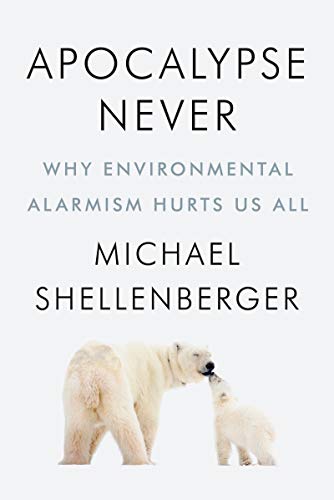
Michael Shellenberger is the nationally bestselling author of Apocalypse Never and San Fransicko, a Time Magazine “Hero of the Environment,” the winner of the 2008 Green Book Award from the Stevens Institute of Technology’s Center for Science Writings, and an invited expert reviewer of the next Assessment Report for the Intergovernmental Panel on Climate Change (IPCC). He has written on energy and the environment for the New York Times, the Washington Post, the Wall Street Journal, Nature Energy, and other publications for two decades. Michael has broken major stories, including on the Twitter Files, for which he won the 2023 Dao Award for Journalism. He is the founder and president of Environmental Progress, an independent, nonpartisan research organization based in Berkeley, California.
Michael Shellenberger challenges the conventional wisdom that environmental alarmism is the most urgent issue facing the planet. Drawing on decades of experience as an environmental activist and energy expert, he uncovers overlooked facts such as declining carbon emissions in developed countries and the reduced deaths from extreme weather events. You’ll gain a nuanced understanding of climate change, the role of nuclear energy, and the socio-political forces driving apocalyptic narratives. The book benefits those tired of polarized debates and looking for a fact-based, pragmatic perspective on environmental science and policy.
Peter Egan, a UK actor and ambassador for animal welfare, discovered this book as a compelling vision for our planet's future. He describes it as a path "we must all follow," highlighting its urgent message and hopeful outlook. His endorsement carries weight given his advocacy for wildlife and environmental causes. Meanwhile, Kirkus Reviews appreciates the blend of memoir and manifesto, noting Attenborough’s optimistic stance amid ecological challenges. Together, their perspectives underscore the book’s relevance for anyone deeply concerned with Earth's ecological trajectory.
“Hi another quickie as they say in the trade. If you haven’t already..get a copy of David Attenborough’s remarkable book ‘A Life on Our Planet’ a vision for the future we must all share. It’s a path we must all follow.” (from X)
Sir David Attenborough is a BAFTA and Emmy-Award winning broadcaster and natural historian. He is the internationally bestselling author of over 25 books, including Life on Earth. He also served as controller of BBC Two and director of programming for BBC Television in the 1960s and 1970s, and as the President of the Royal Society for Nature Conservation in the 90s.
Sir David Attenborough's decades as a broadcaster and natural historian culminate in this reflective account that chronicles the dramatic changes in Earth's biodiversity witnessed over his lifetime. You gain a clear understanding of how human activity has reshaped natural landscapes and the urgent need to address climate change, supported by vivid examples from his extensive field experiences. The book also offers a cautiously optimistic vision for restoring the planet, emphasizing practical shifts in energy, agriculture, and conservation. If you seek a grounded perspective on environmental decline paired with a forward-looking approach, this book offers insights that resonate with both concerned citizens and environmental professionals.
Goodreads Choice Award Winner for Best Science & Technology Book of the Year
This AI-created book on environmental science is tailored to your skill level and interests, crafted to help you focus on the topics that matter most to you. By sharing your background and goals, you receive a book that explores complex environmental issues with clarity and relevance. This personalized approach makes it easier to absorb detailed scientific content without wading through extraneous material. It’s a custom guide designed to deepen your understanding and support your unique learning journey in environmental science.
TailoredRead AI creates personalized nonfiction books that adapt to your unique background, goals, and interests. Instead of reading generic content, you get a custom book written specifically for your profession, experience level, and learning objectives. Whether you're a beginner looking for fundamentals or an expert seeking advanced insights, TailoredRead crafts a book that speaks directly to you. Learn more.
This tailored book on environmental science offers a richly detailed exploration designed to match your background and specific goals. It examines core principles such as ecosystems, climate dynamics, and human impact, while diving into specialized topics you care about most. The personalized content guides you through complex environmental challenges, revealing interconnections between natural systems and societal responses. By focusing on your interests, this book makes it easier to grasp diverse concepts, from biodiversity conservation to sustainable resource management. Ultimately, it provides a clear, engaging pathway through the multifaceted world of environmental science, helping you develop deeper expertise with content crafted just for you.
Chanda Prescodweinstein, a professor of physics and historian of science deeply engaged in environmental justice, encountered this book during her work on science and society. She shares her enthusiasm, stating "So excited for this amazing new book, coming soon!! Preorder today!!" Her endorsement reflects how the book’s fresh perspectives on Indigenous ecological science reshaped her understanding of environmental stewardship. This enthusiasm is echoed by Publisher's Weekly, which highlights how the author exposes the exclusion of Indigenous voices in environmental policy, underscoring the book’s importance for anyone wanting to grasp the deeper social dimensions of climate change.
Jessica Hernandez, Ph.D., is an Indigenous scholar, scientist, and community advocate based in the Pacific Northwest. She advocates for food, climate, and environmental justice through her scientific and community work.
2022·256 pages·Environmental Science, Conservation, Indigenous Knowledge, Climate Change, Land Management
Jessica Hernandez, an Indigenous environmental scientist and community advocate, challenges the prevailing ideas of conservation by centering Indigenous science and knowledge systems in this book. You’ll gain insights into how Western environmental policies often exclude Indigenous perspectives, despite their critical role in land stewardship and climate resilience. Hernandez draws on case studies from Latin America and the Pacific Northwest, including her family's own struggles and urban Indigenous restoration efforts in Seattle, to reveal alternatives that emphasize healing and harmony with the Earth. This book benefits anyone looking to expand their understanding of environmental science beyond conventional models, especially those interested in Indigenous approaches to sustainability and ecological justice.
2022 Los Angeles Times Book Prize Finalist in Science & Technology
Andrew Weaver, a scientist and former leader of the BC Green Party, discovered this book during his extensive work on climate science and policy. He describes it as "an informative, succinct, and fascinating read," praising how Steven Earle makes complex climate history accessible through engaging storytelling. Weaver’s endorsement reflects the book’s ability to clarify the Earth's climate system for those seeking deeper understanding. Additionally, James Hansen, director at Columbia University's Earth Institute, notes how Earle captures the "big climate picture" with exceptional clarity, reinforcing why this book deserves your attention if you want to grasp the forces shaping our planet's climate.
Scientist, former BC Green Party leader, University of Victoria Professor
“An informative, succinct, and fascinating read ― Steven Earle offers a unique and detailed account of Earth's climate history. His innate story-telling ability, coupled with his remarkable talent for making complex scientific information accessible, makes this page-turner a must-read for anyone seeking to understand the Earth's climate system.” (from Amazon)
Steven Earle, PhD, has taught university Earth Science for almost four decades and is author of the widely used textbook, Physical Geology. He participates in climate change research and community engagement with climate change solutions including low-carbon transport initiatives, energy systems, heating systems, and land stewardship. He lives with his family on a sustainable farm on Gabriola Island, Canada.
While teaching Earth Science for nearly 40 years, Steven Earle observed widespread confusion about climate change, which motivated this book. You’ll explore how natural forces like sun evolution, plate tectonics, and ocean currents have shaped Earth's climate over billions of years, contrasted with the unprecedented impact of human activities. The book breaks down complex processes such as orbital variations and volcanic effects, helping you understand why recent warming is uniquely dangerous. Chapters also tackle climate myths and discuss how events like the COVID pandemic relate to the climate crisis. If you want a clear grasp of climate science fundamentals and how to engage critically with climate debates, this book is for you.
Luis Von Ahn, CEO of Duolingo and MacArthur Fellow, brings a unique perspective to environmental science with his deep background in technology and education. He shared, "I started reading @BillGates’s new book on climate change. What an amazing individual." His appreciation reflects how the book’s clear-eyed approach reshaped his understanding of the challenges and innovations needed to tackle climate change. Alongside Charles Mok, a former Hong Kong legislator, who praises Gates’ engineer-like precision, these endorsements highlight why you should consider this book for a thorough grasp of environmental solutions.
Bill Gates is cochair of the Bill & Melinda Gates Foundation and founder of Breakthrough Energy. He founded Microsoft in 1975 with Paul Allen and led the company to become the worldwide leader in business and personal software and services. In 2008, Bill transitioned to focus full-time on his foundation’s work to expand opportunity to the world’s most disadvantaged people. As cochair, he leads the foundation’s development of strategies and sets the overall direction of the organization. Through his private office, Gates Ventures, he pursues his work on innovation in clean energy, Alzheimer’s disease and other healthcare issues, interdisciplinary education, and technology. At Breakthrough Energy, he’s putting his experience as an innovator and problem-solver to work to address climate change by supporting the next generation of entrepreneurs, big thinkers, and clean technologies. In 2010, Bill, Melinda French Gates, and Warren Buffett founded the Giving Pledge, an effort to encourage the wealthiest families and individuals to publicly commit more than half of their wealth to philanthropic causes and charitable organizations during their lifetime or in their will.
What happens when a tech innovator turns his focus to climate change? Bill Gates draws on his decades of experience driving technological breakthroughs and philanthropic leadership to map out a detailed approach for reaching net-zero emissions. You’ll encounter clear explanations of where current technologies fall short and where fresh innovations are essential, including chapters dedicated to energy, manufacturing, and policy shifts. This book suits those wanting a grounded understanding of both the scientific and economic challenges, as well as the specific solutions being pursued today. If you're looking for a straightforward, data-informed guide to what it takes to address climate change, this book delivers that perspective without oversimplifying the complexities.
This AI-created book on climate action is built specifically around your environmental interests and goals. By sharing your background and the climate topics you want to focus on, you receive a tailored 30-day plan that aligns with your experience and aspirations. Personalization makes a big difference here — it helps you cut through general advice and dive into actions that truly fit your life. With this focused guide, the path to making a meaningful impact becomes clearer and more achievable.
TailoredRead AI creates personalized nonfiction books that adapt to your unique background, goals, and interests. Instead of reading generic content, you get a custom book written specifically for your profession, experience level, and learning objectives. Whether you're a beginner looking for fundamentals or an expert seeking advanced insights, TailoredRead crafts a book that speaks directly to you. Learn more.
2026·50-300 pages·Environmental Science, Climate Action, Sustainability, Carbon Reduction, Renewable Energy
This personalized book explores a focused 30-day plan designed to accelerate your environmental contributions with clarity and purpose. It covers key climate action areas, examining practical steps tailored to your background and specific goals, so you gain targeted knowledge that aligns with your interests. The book reveals how individual actions connect with broader climate science and sustainability practices, offering a pathway through complex topics without overwhelming detail.
By blending expert environmental insights with a tailored approach, this book ensures you engage with content that matches your experience level and desired impact. It creates a unique learning journey focused on actionable environmental engagement, making your efforts more effective and meaningful.
David Roberts, a respected energy politics blogger, highlights the book’s unique role in bridging the gap between general understanding and practical climate action. He notes that there was previously no comprehensive guide showing ordinary people what they can do to reduce carbon emissions and how impactful those actions can be. "The public is hungry for this kind of practical wisdom," he says, underscoring the book’s ability to empower readers with clear, researched solutions. His perspective makes it clear why this book is a valuable tool for anyone serious about climate change. Environmental scientist Jacquelyn Gill also points to this book as a crucial resource for climate action, emphasizing its role in the broader conversation about solutions.
“There’s been no real way for ordinary people to get an understanding of what they can do and what impact it can have. There remains no single, comprehensive, reliable compendium of carbon-reduction solutions across sectors. At least until now. . . . The public is hungry for this kind of practical wisdom.” (from Amazon)
Paul Hawken is an environmentalist, entrepreneur, author, and activist known for his work in sustainability and social justice. He has written several influential books on environmental issues and founded multiple organizations focused on ecological restoration and climate change solutions.
Unlike most environmental science books that focus on problems, Paul Hawken’s Drawdown presents a meticulously researched set of 100 concrete solutions to reverse global warming. Drawing on expertise from scientists and policymakers worldwide, the book details practical strategies ranging from clean energy to land use practices that actively reduce atmospheric carbon. You’ll find clear explanations of how each solution works, its climate impact, and economic viability, making it useful for activists, policymakers, and anyone wanting an evidence-based roadmap to climate action. Chapters on educating girls and soil carbon sequestration reveal less obvious but powerful approaches beyond typical energy discussions. This book suits those ready to understand and engage with real-world climate solutions without hype or despair.
Biodiversity and Conservation, a respected authority in ecology and environmental sciences, highlights how this book interweaves the complexities of natural systems with human health challenges. Their recommendation emphasizes its interdisciplinary nature, noting it as an essential primer for both ecology and health sciences students. This perspective reveals how the book bridges gaps between environmental science and health policy, making it indispensable for those crafting future strategies. Similarly, The Lancet, a leading medical journal, praises the book's engaging format and authoritative contributors, underscoring its relevance for health professionals navigating planetary health's emerging field.
“A comprehensive review...Planetary Health is highly interdisciplinary, predicated as it is on the basis that human health and the health of the planet are inextricably linked. I would recommend biodiversity and conservation scientists to read this book because it shows how our understanding of the complexities and interaction of the natural world have direct relevance to managing many existing and emerging human diseases….The editors have done an excellent job in drawing together some deep and critical thinkers about planetary health, and so this will be a useful introductory textbook in undergraduate classes in ecology or environmental sciences as well as the health sciences. I would also like to see Planetary Health used as a primer for those from industry or policy involved in the challenges of how we protect our planet to ensure that it meets the health aspirations of future generations.” (from Amazon)
Howard Frumkin, MD, DrPH is Senior Vice President of the Trust for Public Land, and professor emeritus of Environmental and Occupational Health Sciences at the University of Washington School of Public Health, where he was Dean from 2010-2016. He was previously head of Our Planet, Our Health at the Wellcome Trust, director of the National Center for Environmental Health and Agency for Toxic Substances and Disease Registry (NCEH/ATSDR), and Special Assistant to the CDC Director for Climate Change and Health, and Professor and Chair of Environmental and Occupational Health at Emory University's Rollins School of Public Health and Professor of Medicine at Emory Medical School. Dr. Frumkin has served on the Boards of the Bullitt Foundation, the Seattle Parks Foundation, the American Public Health Association, the US Green Building Council, the Children and Nature Network, and Physicians for Social Responsibility, among others. He has served on the Steering Committee of the Planetary Health Alliance (Harvard University), as a faculty affiliate at UCLA’s Center for Healthy Climate Solutions, and on advisory committees to the Global Consortium on Climate and Health Education (Columbia University), the Medical Society Consortium on Climate & Health (George Mason University), EcoHealth International, and the Yale Center on Climate Change and Health. He is the author, co-author, or editor of over 300 scientific journal articles, chapters, and books, including the standard environmental health textbook, Environmental Health: From Global to Local, and four Island Press titles. Dr. Frumkin is a Fellow of the American College of Physicians, the American College of Occupational and Environmental Medicine, Collegium Ramazzini, and the Royal College of Physicians of Ireland, and an elected member of the Washington State Academy of Sciences and the National Academy of Medicine. He loves cycling, kayaking, and hiking. He is married to radio journalist Joanne Silberner, and has two children.
Drawing from their extensive backgrounds in public and environmental health, Samuel Myers and Howard Frumkin explore how Earth's natural systems—air, water, biodiversity, and climate—directly influence human health. You’ll learn about the diverse health challenges arising from environmental degradation, such as infectious diseases, nutrition deficiencies, and mental health impacts. The book offers strategies like clean energy investment and urban design improvements to mitigate these risks. It’s especially suited for public health professionals, environmental scientists, and policy makers seeking to grasp the interconnectedness of planetary and human health.
Chris Hayes, host of MSNBC's All In with Chris Hayes and editor at large at The Nation, brought this book into sharper focus for many interested in climate issues. After witnessing global climate debates intensify, he found in this book a clear explanation of how rising seas will affect your future and the planet's. He calls it, "For people who want to learn more about climate change, rising sea levels and what it means for our future, read The Water Will Come." His endorsement underscores the book's balance of scientific rigor and human stories that broaden understanding beyond data. Alongside John Green, who described it as a "thriller in which the hero in peril is us," these voices highlight why this book should be on your shelf if you want to grasp the real stakes of environmental science today.
Jeff Goodell is a contributing editor at Rolling Stone and the author of five books, including How to Cool the Planet: Geoengineering and the Audacious Quest to Fix Earth's Climate, which won the 2011 Grantham Prize Award of Special Merit. Goodell's previous books include Sunnyvale, a memoir about growing up in Silicon Valley, which was a New York Times Notable Book, and Big Coal: The Dirty Secret Behind America's Energy Future.
After analyzing detailed climate data and frontline reports, Jeff Goodell developed a vivid account of how rising sea levels will reshape our world. Drawing from his background as a contributing editor at Rolling Stone and author of titles on energy and climate, he combines scientific evidence with on-the-ground narratives from twelve countries. You’ll gain insight into the mechanics of sea level rise, the limits of human engineering efforts, and the social upheavals to expect as coasts vanish. Chapters detailing cities like Miami and island nations at risk reveal the tangible impacts, making it clear this is not distant speculation but an urgent reality. This book suits anyone serious about understanding the environmental science behind climate change and its profound effects on civilization.
Neil Degrasse Tyson, astrophysicist and renowned science communicator, lends his authority by endorsing this book. Given his expertise in explaining complex scientific concepts to broad audiences, his recommendation signals that this book effectively bridges environmental science with accessible, optimistic perspectives. Tyson's background suggests he values Nye's approach of combining scientific rigor with a hopeful message, making this an insightful read for those serious about understanding and addressing climate challenges.
Bill Nye is a renowned science communicator, mechanical engineer, and television presenter, best known for his role as the host of 'Bill Nye the Science Guy.' He has authored several bestselling books, including 'Undeniable: Evolution and the Science of Creation.' With a passion for science education, Nye has dedicated his career to making complex scientific concepts accessible and engaging for audiences of all ages.
When Bill Nye combines his mechanical engineering background with decades as a science communicator, the result is a book that treats environmental challenges as invitations to innovate rather than insurmountable problems. In "Unstoppable," he challenges the notion that energy inefficiency and emissions are inevitable, illustrating through clear examples why transportation wastes energy and how new technologies can reshape that reality. You’ll explore myths about global warming debunked with scientific curiosity and optimism, gaining insights into energy consumption and climate solutions. This book suits anyone eager to understand environmental science through a hopeful, solutions-oriented lens rather than despair.
Alan Eyre, a U.S. diplomat with deep insights into international affairs, shared a striking endorsement of this book, noting a "great interview, with plug for David Wallace-Wells' great/terrifying book 'The Uninhabitable Earth.'" His perspective, shaped by diplomatic experience and awareness of global crises, highlights how this book illuminates the frightening realities of climate change beyond common headlines. Eyre's recommendation suggests that this work deepened his understanding of environmental challenges in a way that resonates with policymakers and thought leaders alike. Alongside him, Mike Davis echoes this view, calling the book "a brilliant and unsparing analysis" of the dire present, reinforcing why you might turn to this book for a serious grasp of climate urgency.
David Wallace-Wells is a columnist and deputy editor at New York magazine. He has been a national fellow at the New America Foundation and was previously the deputy editor of The Paris Review. He lives in New York City.
David Wallace-Wells, a deputy editor at New York magazine, confronts you with a vivid exploration of the escalating climate crisis in this book. He goes beyond the usual focus on sea-level rise to reveal cascading threats like food shortages, climate-induced conflicts, and economic upheaval, challenging you to grasp the depth of the issue. Through chapters that blend scientific research with vivid narrative, you come to understand how climate change will reshape politics, technology, and capitalism itself. This book suits those ready to face uncomfortable truths and seek a broad, systemic understanding of humanity's environmental crossroads.
Michael E. Kraft is a renowned author and expert in environmental policy, with extensive experience in political science and public policy. He has dedicated over two decades to educating students about the complexities of environmental issues and the political landscape surrounding them. His work is widely recognized for its clarity and depth, making him a leading voice in the field.
Michael E. Kraft is a renowned author and expert in environmental policy, with extensive experience in political science and public policy. He has dedicated over two decades to educating students about the complexities of environmental issues and the political landscape surrounding them. His work is widely recognized for its clarity and depth, making him a leading voice in the field.
Michael E. Kraft brings his extensive expertise in political science and environmental policy to this updated edition, addressing the evolving challenges of U.S. environmental issues through 2020. You’ll gain a detailed understanding of how policy tools and government actions shape responses to climate change, energy regulation, and natural resource management. The book explores key political decisions, contrasting party approaches to environmental problems and highlighting shifts during recent administrations. If you want to grasp the interplay between science and politics in shaping environmental outcomes, this text offers thorough analysis suited for advanced students and policy enthusiasts.
Steven C. Hackett is a professor of economics at Humboldt State University with deep expertise in environmental and natural resources economics. His extensive teaching and research focus on weaving economic theory with sustainability and public policy, which informs this text. Driven by a commitment to clarify complex intersections between economics and environmental issues, Hackett offers readers a balanced, accessible perspective that goes beyond theory to include updated policy insights and scientific advances. This book reflects his authoritative voice in the field and dedication to educating future environmental economists.
Steven C. Hackett is a Professor in the Department of Economics at Humboldt State University, USA. He has extensive experience in teaching and research in the field of environmental and natural resources economics, focusing on the intersection of economics, sustainability, and public policy. His work emphasizes the importance of integrating economic principles with environmental considerations, making him a respected figure in the academic community.
Steven C. Hackett, a seasoned economics professor, crafted this book to bridge the gap between economic theory and environmental policy. By exploring topics like climate change economics, incentive regulation, and sustainability, you gain a nuanced understanding of how economic principles apply to natural resource management and environmental challenges. For instance, new chapters dissect global climate change policies and their economic impacts, offering concrete frameworks rather than abstract theory. If you seek to grasp how economics shapes sustainable environmental decision-making, this text is a solid choice, though it leans toward academic readers comfortable with economic concepts.
James Valentine, known for his work with Maroon 5, found this book particularly insightful for its detailed exploration of environmental scenarios. His comment, "This book goes into detail on such scenarios and was great…", highlights how the book deepened his understanding of humanity’s impact and the complex efforts to address it. His perspective as an artist attuned to cultural shifts underscores the book’s relevance beyond science, inviting you to rethink how we interact with the natural world and what the future might hold.
Elizabeth Kolbert is a staff writer at The New Yorker and the author of Field Notes from a Catastrophe: Man, Nature, and Climate Change. She won the Pulitzer Prize for her coverage of climate change and is recognized as one of the most important writers on environmental issues today. Kolbert lives in Williamstown, Massachusetts, with her husband and children.
Elizabeth Kolbert, a Pulitzer Prize-winning journalist for The New Yorker, explores humanity’s complex relationship with the environment in this thought-provoking work. She dives into cutting-edge scientific efforts like engineering super corals and carbon capture technologies, illustrating how our attempts to control nature have both caused harm and might be key to survival. You’ll gain insight into the paradox of environmental intervention, from preserving rare species in isolated pools to geoengineering solutions aimed at cooling the planet. This book suits anyone seeking a sober, nuanced understanding of environmental science’s frontiers and the ethical dilemmas involved.
Tim Soulo, CMO at Ahrefs and a respected voice in marketing strategy, highlights this book for its rigorous look at climate change beyond the headlines. He shared on Twitter, "Super interesting book about climate change and it's impact on the economy and the Earth," reflecting how the book reshaped his understanding of environmental economics. His endorsement draws attention to the book’s critical examination of how panic-driven policies may hinder rather than help progress, making it a thought-provoking read for anyone engaged with environmental science and policy.
Bjorn Lomborg is the bestselling author of The Skeptical Environmentalist and Cool It. He is president of the Copenhagen Consensus Center and a visiting fellow at Stanford University’s Hoover Institution. Time magazine named him one of the world’s one hundred most influential people, and his work appears regularly in top media across the world. He lives in Sweden.
Unlike most environmental science books that emphasize urgent catastrophe, Bjorn Lomborg's work challenges the prevailing narrative by dissecting the economic and social costs of climate change panic. Drawing on his experience leading the Copenhagen Consensus Center and his academic tenure at Stanford's Hoover Institution, Lomborg argues that alarmism has led to costly policies that detract from more effective investments in global welfare, such as education and immunization. You’ll gain a nuanced understanding of climate science projections alongside economic analysis, particularly in chapters that critique policy inefficiencies. This book suits readers willing to reconsider mainstream climate discourse and those interested in balancing environmental action with pragmatic human development.
The best Environmental Science books and more, in your inbox each week. No account needed.
Conclusion
This collection of 14 Environmental Science books reveals a tapestry of themes—from pragmatic realism in climate discourse to hopeful innovation, and from Indigenous knowledge to the intricate dance of policy and economics. If you're wrestling with how to move from awareness to action, start with "Drawdown" for practical solutions paired with "Environmental Policy and Politics" to understand the governing forces.
For those seeking inspiration grounded in personal witness, "A Life on Our Planet" offers a compelling narrative arc. If your focus is health or urban resilience, "Planetary Health" and "The Water Will Come" provide in-depth analysis. You might also combine "Fresh Banana Leaves" with "False Alarm" to explore contrasting views on environmental justice and economics.
Alternatively, you can create a personalized Environmental Science book to bridge the gap between general principles and your specific situation. These books can help you accelerate your learning journey and deepen your impact in a world demanding fresh knowledge and bold action.
Frequently Asked Questions
I'm overwhelmed by choice – which book should I start with?
Start with "Drawdown" if you're looking for practical actions, or "A Life on Our Planet" for a powerful narrative overview. Both offer accessible entry points into environmental science's biggest challenges and solutions.
Are these books too advanced for someone new to Environmental Science?
Not at all. Many, like "How to Avoid a Climate Disaster" and "Unstoppable," present complex topics in clear, engaging ways suitable for newcomers and seasoned readers alike.
What’s the best order to read these books?
Consider beginning with broad overviews like "A Brief History of the Earth's Climate," then explore specialized topics such as policy with "Environmental Policy and Politics" or Indigenous perspectives in "Fresh Banana Leaves."
Do these books assume prior experience in Environmental Science?
Most provide foundational context, making them approachable. However, some like "Environmental and Natural Resources Economics" may be more suited to readers comfortable with economic concepts.
Are there any books here that contradict each other?
Yes, for example, "Apocalypse Never" and "False Alarm" offer critiques of alarmist climate narratives, contrasting with more urgent tones in "The Uninhabitable Earth." This reflects the field's healthy debate and complexity.
How can I apply these expert insights to my specific environmental interests or career?
While these books offer broad expertise, you can create a personalized Environmental Science book tailored to your background, skill level, and goals, blending expert knowledge with your unique needs.
📚 Love this book list?
Help fellow book lovers discover great books, share this curated list with others!