7 Fire Science Books That Separate Experts from Amateurs
Explore Fire Science Books authored by renowned authorities shaping understanding and practice in firefighting, wildfire behavior, and fire investigation.
Updated on June 27, 2025·We may earn commissions for purchases made via this page
6 of 7 books have Kindle versions
We're launchingLaunching on Product Hunt today 🎉We just launchedJust launched on Product Hunt 🎉
Modelpeers, from the BookAuthority teamFrom the BookAuthority team: Modelpeers, a free way to follow AI models and agents like you follow people. We'd love your support.
What if understanding fire could save lives and reshape how we respond to emergencies? Fire Science is a complex field where chemistry, physics, and human resilience intersect, and the stakes couldn’t be higher. Whether battling wildfires or investigating fire scenes, mastering these realities demands the right knowledge.
These seven books stand out for their authoritative insights and practical relevance. From Richard G. Gann’s detailed exploration of fire behavior and combustion to John Vaillant’s gripping narrative linking wildfire trends to climate change, each offers a distinct lens grounded in deep expertise. Brendan McDonough’s personal story adds a poignant human dimension, while instructional guides and technical analyses fill essential gaps for practitioners.
While these expertly authored books provide proven frameworks, if you want content tailored precisely to your background, focus areas, and goals, you might consider creating a personalized Fire Science book that builds on these foundational insights and fits your unique learning path.
Richard G. Gann is a recognized authority in fire behavior and combustion, contributing extensively through research and publications. His expertise is widely acknowledged in fire science education, making this book a reliable foundation for understanding the chemical and physical principles governing fire. Gann’s background ensures that the content aligns closely with educational standards and practical needs, offering you a resource grounded in both theory and application.
Richard G. Gann is a recognized authority in fire behavior and combustion, contributing significantly to the field through his extensive research and publications. His work is widely used in educational settings, particularly in fire science and safety courses.
Fire Science, Combustion, Fire Behavior, Suppression Techniques, Flammable Materials
When Richard G. Gann first realized the gap in practical fire behavior knowledge, he aimed to create a text that goes beyond theory to explain the chemical and physical properties of fire with clarity. This book offers detailed insights into combustion processes, flammable materials, and fire suppression techniques, grounded in the National Fire Academy’s curriculum. You’ll find it especially useful if you’re a fire science student or an active firefighter seeking to understand fire dynamics deeply. Chapters methodically break down complex interactions in fire behavior, helping you make informed decisions in emergency situations. However, those outside fire science or firefighting may find its focus too specialized.
John Vaillant is an award-winning author and environmental journalist known for his compelling narratives that explore the intersection of nature and human experience. His previous works include 'The Tiger' and 'The Golden Spruce', both of which have received critical acclaim. Vaillant's writing is characterized by its deep research and engaging storytelling, making complex subjects accessible to a broad audience. He has been recognized with numerous awards, including the Baillie Gifford Prize for Non-Fiction, and his work often addresses pressing environmental issues, particularly the impacts of climate change.
John Vaillant is an award-winning author and environmental journalist known for his compelling narratives that explore the intersection of nature and human experience. His previous works include 'The Tiger' and 'The Golden Spruce', both of which have received critical acclaim. Vaillant's writing is characterized by its deep research and engaging storytelling, making complex subjects accessible to a broad audience. He has been recognized with numerous awards, including the Baillie Gifford Prize for Non-Fiction, and his work often addresses pressing environmental issues, particularly the impacts of climate change.
John Vaillant challenges the conventional wisdom that wildfires are merely natural disasters by weaving a detailed narrative around the 2016 Fort McMurray wildfire, revealing it as a harbinger of a hotter, more volatile future shaped by climate change. Through meticulous research and vivid storytelling, you gain insight into how fire has influenced human evolution, culture, and industry, while grappling with the modern complexities of managing an increasingly flammable world. The book explores the intricate ties between North America's oil economy and climate science, offering chapters that delve into the devastation caused by contemporary wildfires and the human stories intertwined with these events. If you seek to understand the evolving relationship between fire and society amid environmental shifts, this book provides a thoughtful, grounded perspective.
This AI-created book on fire science mastery is tailored specifically to your learning style and objectives. By sharing your background and focus areas, you receive a guide that concentrates on what matters most to you in understanding fire behavior and suppression. This personalized approach makes complex fire science topics more approachable and relevant, allowing you to build expertise efficiently and confidently.
TailoredRead AI creates personalized nonfiction books that adapt to your unique background, goals, and interests. Instead of reading generic content, you get a custom book written specifically for your profession, experience level, and learning objectives. Whether you're a beginner looking for fundamentals or an expert seeking advanced insights, TailoredRead crafts a book that speaks directly to you. Learn more.
This tailored Fire Science Mastery Blueprint explores the complex dynamics of fire behavior and suppression through a lens uniquely matched to your background and learning preferences. It carefully examines foundational principles such as combustion chemistry, flame spread, and fuel characteristics, while also delving into advanced topics like fire suppression techniques and incident command nuances. By aligning content with your specific goals, this personalized guide bridges the gap between broad expert knowledge and your practical needs, making the intricate science of fire accessible and actionable. Whether you're focused on wildfire management or structural fire dynamics, this tailored book fosters targeted understanding and skill development.
Brendan McDonough is uniquely qualified to tell this story as the sole survivor of the devastating 2013 Yarnell Hill Fire. His experience as a Granite Mountain Hotshot and his work supporting emergency responders infuse this memoir with authenticity and depth. This book not only chronicles a catastrophic event but also reveals the personal growth and resilience that fueled McDonough’s transformation and survival, offering readers an intimate perspective on wildfire firefighting and its human cost.
Brendan McDonough is the only survivor of the 2013 fire at Yarnell. Today he is a public speaker and works with numerous nonprofits for veterans, police officers, firefighters, and emergency medical services. He lives in Prescott, Arizona.
When Brendan McDonough recounts his journey from near addiction to becoming the lone survivor of the 2013 Yarnell Hill Fire, you gain insight into the human side of firefighting rarely captured in technical manuals. His memoir offers a raw, minute-by-minute account of that tragic day and the brotherhood forged among the Granite Mountain Hotshots. Beyond survival, you’ll understand the mindset, training challenges, and emotional resilience required to confront wildfires. This book suits those interested in the intersection of personal transformation, emergency response, and wildfire dynamics, providing a unique vantage point on fire science through lived experience rather than purely academic perspectives.
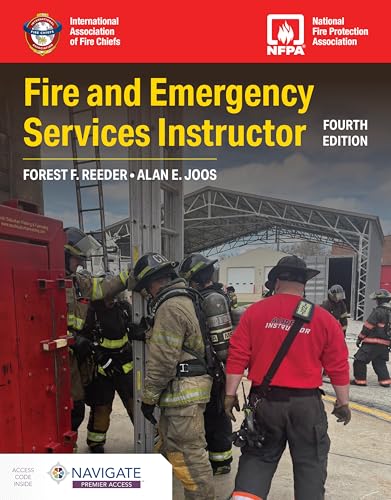
Forest Reeder brings a wealth of experience to this text, beginning his fire service career in 1978 and currently serving as Division Chief of Training & Safety in Des Plaines, IL. With leadership roles in key fire service instructor organizations and over a decade of teaching at FDIC, his expertise shapes this book’s practical and standards-aligned approach. Reeder’s background in fire science education and program management underscores the book’s value for instructors seeking to meet NFPA qualifications and improve their training effectiveness.
Forest Reeder began his fire service career in 1978. He serves as Division Chief / Training & Safety with the Des Plaines (IL) Fire Department. Forest is the Fire Officer 1 & 2 coordinator for the Illinois Fire Chiefs Association and also serves as the Eastern Regional Director of the International Society of Fire Service Instructors (ISFSI). Additionally, Forest is the author of the weekly drill feature at www.firefighterclosecalls.com and at www.fireengineering.com. He has instructed at FDIC for over 10 years and trains both locally and nationally on fire service training, safety and officer development related topics. Several articles on these programs have been published in major trade publications. Forest is a Director with the Illinois Society of Fire Service Instructors and has served as President. Forest served as the Fire Science Coordinator at Moraine Valley Community College for 10 years and continues to assist in course delivery and curriculum design projects at the college. Forest holds many Illinois fire service certifications including Fire Officer 3, Training Program Manager, and Fire Department Safety Officer. He has an Associates of Applied Science Degree in Fire Science Technology, a Bachelor’s Degree in Fire Department Administration from Southern Illinois University-Carbondale, and a Master’s Degree in Public Safety Administration from Lewis University. He was awarded the George D. Post Instructor of the Year by the International Society of Fire Service Instructors at FDIC in 2008.
Drawing from decades of frontline and instructional experience, Forest Reeder and Alan Joos provide a detailed guide to fire and emergency services instruction that aligns with the latest NFPA 1041 standards. You’ll find clear explanations of job performance requirements for various instructor levels, including live fire training, with chapters dedicated to learner-centered teaching and evidence-based learning techniques. Practical features like "Training Bulletins" and "Incident Reports" challenge your critical thinking, while sections on curriculum design and communication sharpen your instructional skills. This book suits fire service trainers aiming to elevate their teaching methods and meet professional qualifications, though those outside this field may find its specificity less relevant.
Glenn Corbett, P.E., is an assistant professor of fire science at John Jay College and technical editor of Fire Engineering magazine. His extensive background includes service as assistant fire chief and participation in investigations of major fire disasters like 9/11. Building on Francis Brannigan's decades of fire protection expertise, Corbett authored this book to equip fire officers and firefighters with comprehensive knowledge of building construction relevant to fireground operations, emphasizing safety and tactical awareness.
Glenn Corbett, P.E. is an Assistant Professor of Fire Science at John Jay College of Criminal Justice in New York City. He also serves as Technical Editor of Fire Engineering magazine, as an Assistant Chief of the Waldwick, New Jersey Fire Department, and a member of the New Jersey State Fire Code Council. He is a former president of the New Jersey Society of Fire Service Instructors. He was a member of the Federal Advisory Committee to the National Construction Safety Team that investigated the 9/11 World Trade Center disaster and the fire at the Station nightclub in Rhode Island. His past code enforcement experience includes serving as the Administrator of Engineering Services of the San Antonio, Texas Fire Department and as a Fire Protection Consultant in the City of Austin, Texas Fire Department. Francis L. Brannigan has decades of experience as a professional fire protection specialist. During World War II he directed a naval fire fighting school, commanded a sea going fire fighting unit, and was chief in the Army-Navy-Pancanal fire protection organization. He served for years as Public Safety Liaison for the U.S. Atomic Energy Commission. He developed programs for fire officers as well as a fire loss program. Mr. Brannigan has been honored by the Society of Fire Protection Engineers with full membership even though his degree was not taken in engineering. For various years he served on various committee on the National Fire Protection Association. In addition, the Chesapeake Chapter of International Society of Fire Instructors founded the Francis Brannigan Instructor of the Year Award in his honor.
After decades of experience in fire protection and firefighting education, Glenn P. Corbett expanded upon Francis L. Brannigan's foundational work to create a detailed reference on building construction relevant to fire service professionals. You gain a nuanced understanding of structural elements, non-fire building systems like HVAC and electrical, and emerging materials such as cross-laminated timber and green building products. The book offers scenario-based learning and tactical considerations that sharpen your critical thinking on fireground safety and strategy. It's geared toward fire officers, instructors, and aspiring firefighters who seek to deepen their technical knowledge and improve operational decision-making in complex building environments.
This AI-created book on wildfire tactics is crafted based on your experience and learning goals. You share what wildfire topics interest you most and your current skill level, so this book focuses exactly on what you need to build your wildfire response expertise. Tailoring the content this way helps you navigate the complexities of wildfire management more quickly and confidently, avoiding unnecessary information and honing in on what matters most to you.
TailoredRead AI creates personalized nonfiction books that adapt to your unique background, goals, and interests. Instead of reading generic content, you get a custom book written specifically for your profession, experience level, and learning objectives. Whether you're a beginner looking for fundamentals or an expert seeking advanced insights, TailoredRead crafts a book that speaks directly to you. Learn more.
This tailored book explores a focused, step-by-step approach to mastering wildfire tactics and management within a month. It covers essential principles of wildfire behavior, effective response techniques, and situational assessment, all matched to your background and specific goals. By concentrating on your interests, it provides a clear pathway through complex wildfire challenges, fostering practical understanding and skill development.
The book examines various firefighting methods, crew coordination, and risk mitigation strategies, revealing how to adapt expert knowledge to real-world scenarios. This personalized guide ensures you engage deeply with content relevant to your experience and ambitions, making your wildfire response learning both efficient and impactful.
John Lentini has been at the center of pivotal developments in fire investigation for over 35 years. Beginning his career at the Georgia Bureau of Investigation Crime Laboratory, he combined hands-on fire scene examination with leadership in forensic science standards. His extensive experience managing fire debris laboratories and authoring key certification examinations uniquely qualifies him to present a practical yet scientifically grounded approach in this book, making it a key resource for anyone involved in fire investigation and related legal or insurance work.
John Lentini has been at the center of most of the important developments in fire investigation for the past 35 years. He began his career at the Georgia Bureau of Investigation Crime Laboratory in 1974. There he learned criminalistics in general and fire debris analysis in particular and received an introduction to fire scene investigation. He went into private practice in 1977 and spent the next 10 years examining 100 to 150 fire scenes per year, mostly for insurance companies that had doubts about the legitimacy of their insureds’ fire losses. He later migrated to the field of subrogation and product liability related to accidental fires. At the same time, he managed a fire debris analysis laboratory with a nationwide clientele. He has been at the center of the standardization of both laboratory and field investigations of fires. As Co-chair of the International Association of Arson Investigators’ (IAAI) Forensic Science Committee, he was the principal author of the first laboratory standards published by the IAAI in 1988. He oversaw the acceptance of those standards by ASTM Committee E30 on Forensic Sciences, where he served for two terms as Chairman of the Criminalistics Subcommittee and for three terms as main committee Chairman. When the American Board of Criminalistics (ABC) was incorporated in 1993, he was the first civilian elected to the ABC Board of Directors. He served two terms on the board, was the principal organizer of the ABC Operations Manual, and served as the first editor of the ABC newsletter, Certification News. He was a coauthor of the first examination for the certification of fire debris analysts. He is a Fellow of the American Academy of Forensic Sciences (AAFS) and has served for many years in the leadership of the AAFS Criminalistics Section. Lentini has been a certified fire investigator since certification first became available in 1986, and was among the first group of individuals certified by the ABC as Fellows in fire debris analysis. He is one of the few individuals in the world who has held certifications for both laboratory and field work.
2018·608 pages·Fire Science, Fire Investigation, Forensic Science, Fire Behavior, Fire Debris Analysis
John J. Lentini's decades of experience in fire investigation inform this third edition, which bridges scientific theory and practical investigation techniques. You learn how to apply fundamental fire science principles to analyze fire scenes accurately, with chapters dedicated to understanding fire behavior, common investigative errors, and the evolving standards in expert testimony. This book suits new fire investigators aiming for certification, insurance professionals assessing investigation quality, and attorneys involved in fire litigation. Lentini's clear explanations make complex scientific concepts accessible, helping you discern credible investigations from flawed ones — critical for protecting against costly insurance disputes or legal challenges.
William F. Crapo began his fire service career as a volunteer firefighter in 1965, eventually serving as fire chief and Assistant Fire Chief in Virginia. With two decades in the District of Columbia Fire Department and academic credentials in Fire Science, he brings authoritative expertise to this book. His extensive field experience and teaching background shaped the book’s thorough approach to hydraulics and water supply, designed to equip you with practical knowledge essential for fireground effectiveness.
William F. Crapo began his career in the fire service as a volunteer firefighter in 1965. He served in various positions, including fire chief, and spent 20 years with the District of Columbia Fire Department. After retirement, he worked in the Fire Marshal’s office and later as Assistant Fire Chief in Harrisonburg, Virginia. He holds a BA in Fire Science from the University of Maryland and has taught Fire Science at the community college level.
While working as a fire chief and instructor, William F. Crapo noticed that many firefighters struggled to grasp the fundamental science behind hydraulics and water supply, crucial for effective fireground operations. This book breaks down complex hydraulic laws—like Pascal’s and Bernoulli’s principles—into digestible concepts, teaching you how to calculate flow rates, friction loss, and nozzle reaction with clarity. Chapters include real-world case studies and Fireground Fact boxes, making it clear how theory applies in practice. If your role involves pump operation or water supply logistics in firefighting, this text offers targeted insights that can sharpen your technical skills and improve operational decisions.
The best Fire Science books and more, in your inbox each week. No account needed.
Conclusion
Together, these seven books map a rich terrain—from the chemistry of combustion and the tactics of firefighting to the lived experience of wildfire survival and the science of fire investigation. They reveal fire science as both a technical discipline and a human challenge.
If you’re new to the field, starting with Gann’s and Crapo’s books will ground you in essential principles. Those drawn to wildfire dynamics and environmental impacts will find Vaillant’s narrative and McDonough’s memoir deeply illuminating. For instructors and investigators, Reeder’s and Lentini’s works offer practical guidance to elevate your expertise.
Alternatively, you can create a personalized Fire Science book to bridge the gap between general principles and your specific situation, accelerating your learning journey with targeted knowledge and actionable strategies.
Frequently Asked Questions
I'm overwhelmed by choice – which book should I start with?
Start with 'Principles Of Fire Behavior And Combustion' by Richard Gann to build a solid foundation in fire chemistry and behavior, essential before moving to specialized topics.
Are these books too advanced for someone new to Fire Science?
No, many books like Gann’s and Crapo’s break down complex topics clearly, making them accessible for beginners eager to build practical knowledge.
What’s the best order to read these books?
Begin with fire behavior and hydraulics texts, then explore wildfire perspectives and personal accounts, finishing with instruction and investigation guides for applied skills.
Do I really need to read all of these, or can I just pick one?
While one book can help, reading multiple titles offers a well-rounded understanding of different fire science aspects, from theory to human experience.
Which books focus more on theory vs. practical application?
Gann’s and Crapo’s books emphasize theory and science, whereas Reeder’s and Lentini’s focus on practical training and investigation methods you can apply in the field.
How can I get fire science knowledge tailored to my specific interests and experience level?
These expert books are valuable, but for personalized content aligned with your goals, consider creating a custom Fire Science book that integrates expert insights with your unique needs.
📚 Love this book list?
Help fellow book lovers discover great books, share this curated list with others!