Insights from Paul Bloom, Tyler Code Wildcat, Alfred Mele, and other top thinkers on Free Will Books
Updated on June 27, 2025·We may earn commissions for purchases made via this page
2 of 10 books have Audiobook versions
We're launchingLaunching on Product Hunt today 🎉We just launchedJust launched on Product Hunt 🎉
Modelpeers, from the BookAuthority teamFrom the BookAuthority team: Modelpeers, a free way to follow AI models and agents like you follow people. We'd love your support.
What if the choices you think are yours to make aren’t really free after all? This question isn’t just academic—it touches on how you understand responsibility, morality, and even your own identity. As neuroscience, philosophy, and theology collide, the concept of free will remains one of the most provocative puzzles of our time.
Experts like Robert Sapolsky, a Stanford neuroscientist and MacArthur fellow, have reshaped how we view free will by revealing the deep biological and environmental forces shaping our decisions. Meanwhile, philosopher Christian List challenges the skepticism around free will, grounding it in scientific and philosophical reasoning that respects human agency. And theologians such as John MacArthur explore how divine sovereignty intersects with meaningful human choice, adding spiritual depth to the debate.
While these expert-curated books provide proven frameworks, readers seeking content tailored to their specific background, interest in neuroscience, philosophy, or theology, and learning goals might consider creating a personalized Free Will book that builds on these insights. This approach can help you connect the dots in ways most relevant to your own journey.
The San Francisco Chronicle, a major newspaper, praises Robert Sapolsky’s unmatched understanding of the human brain in this profound exploration of free will. Their endorsement, "Few people understand the human brain as well as renowned neuroscientist Robert Sapolsky," highlights the author’s credentials as a Stanford professor and MacArthur fellow. This book challenged their view on human behavior and responsibility, revealing how biology and environment shape decisions beyond free will. Such insights offer a powerful reconsideration of morality and justice, making it essential reading for those curious about the mind's deepest workings.
Robert M. Sapolsky is the author of several works of nonfiction, including A Primate's Memoir, The Trouble with Testosterone, and Why Zebras Don't Get Ulcers. He is a professor of biology and neurology at Stanford University and the recipient of a MacArthur Foundation genius grant. He lives in San Francisco.
What if everything you knew about choice was wrong? Robert M. Sapolsky, a Stanford professor and MacArthur genius grant recipient, takes you through decades of neuroscience and behavioral science to challenge the idea of free will. You’ll explore how biology, environment, and complex systems shape every decision, with chapters unpacking chaos theory, quantum physics, and morality. Sapolsky’s lively style blends deep research with humor, making complex science accessible and forcing you to reconsider responsibility, punishment, and how we live together. This book suits anyone curious about human behavior beyond simple notions of control.
New Statesman, a respected political and cultural magazine, highlights this book's challenge to predestination by exploring how evolution equipped humans with imagination and prediction. They emphasize Kevin Mitchell's explanation of why this capacity matters for understanding free will. This perspective helped reshape their view of human agency beyond deterministic frameworks. Similarly, Philip Ball, science writer for the Times Literary Supplement, appreciates how the book reframes free will as a cognitive process fully integrated into mental deliberation, rather than a mystical force. Together, these expert voices underscore the book’s fresh approach that blends neuroscience with evolutionary theory to illuminate how free will arises.
“Humans are not, says Kevin Mitchell, the playthings of predestination. Millennia of evolution means that our nervous systems have given us the wherewithal both to imagine and to predict. Mitchell explains how this power came about and why it matters.”
Kevin J. Mitchell is associate professor of genetics and neuroscience at Trinity College Dublin. He is the author of Innate: How the Wiring of Our Brains Shapes Who We Are (Princeton) and runs a popular blog, Wiring the Brain. His work has appeared in publications such as Scientific American, the Guardian, and Psychology Today.
What if everything you knew about free will was wrong? Kevin J. Mitchell, a neuroscientist and geneticist at Trinity College Dublin, challenges the idea that free will is an illusion. He traces how evolution shaped nervous systems to enable animals—and especially humans—to model, predict, and choose among alternatives, giving rise to genuine agency. You’ll explore how this capacity emerged over billions of years, learn about the brain’s role in decision making, and consider implications for artificial intelligence and collective action. If you’re curious about how biology intersects with philosophy and want a fresh, evidence-based perspective on human freedom, this book offers illuminating insights without oversimplification.
This personalized AI book about free will is created based on your philosophical and neuroscientific interests. You share your background, skill level, and which aspects of free will fascinate you most. The book then focuses on your specific goals and knowledge gaps, providing a clear, tailored exploration of this complex subject. With AI crafting the content to match your learning journey, you get a uniquely relevant and engaging path through free will concepts, far beyond generic overviews.
TailoredRead AI creates personalized nonfiction books that adapt to your unique background, goals, and interests. Instead of reading generic content, you get a custom book written specifically for your profession, experience level, and learning objectives. Whether you're a beginner looking for fundamentals or an expert seeking advanced insights, TailoredRead crafts a book that speaks directly to you. Learn more.
This personalized book explores the intricate concepts of free will through the lenses of philosophy and neuroscience, tailored specifically to your background and interests. It examines how complex ideas about agency, determinism, and consciousness intersect, offering a focused pathway that matches your specific learning goals. By bridging expert knowledge with your personal inquiry, the book reveals nuanced perspectives on human choice, responsibility, and the biological influences shaping decision-making. Through this tailored approach, you engage deeply with advanced topics like compatibilism, emergent causation, and neural mechanisms underlying volition, all synthesized to illuminate your unique journey in understanding free will.
John MacArthur, president of The Master’s University and Seminary, brings extensive theological authority to this subject. He highlights how this book offers a clear, intelligent overview of the complex debate about divine sovereignty and human free will without drowning you in dense philosophy. "This concise little volume is a clear, intelligent, immensely helpful overview of one of the most confusing conundrums in all of theology," he says, praising Christensen’s biblical and coherent answers. His endorsement reflects how the book helped him engage deeply with challenging questions, offering a fresh lens on a perennial theological puzzle. Alongside John Frame, who appreciates the book’s clarity on key terms like libertarianism and compatibilism, this work stands out for both lay readers and scholars alike.
“This concise little volume is a clear, intelligent, immensely helpful overview of one of the most confusing conundrums in all of theology: the perennial debate over divine sovereignty and human free will. While avoiding the dense philosophical prose found in most works on this subject, Scott Christensen doesn't sidestep the hard questions. The answers he gives are thoughtful, biblical, satisfying, and refreshingly coherent. Lay readers and seasoned theologians alike will treasure this work.”
Scott Christensen (MDiv, The Master's Seminary) is the author of What about Free Will? He worked for nine years at the award-winning CCY Architects in Aspen, Colorado; several of his home designs were featured in Architectural Digest magazine. Called out of this work to the ministry, he graduated with honors from seminary and now serves as the associate pastor of Kerrville Bible Church in Kerrville, Texas.
When M. Scott Christensen, a seminary graduate turned associate pastor, examined the tension between divine sovereignty and human responsibility, he sought clarity beyond abstract philosophy. In this book, you explore two theological perspectives—compatibilism and libertarianism—with a focus on how God’s sovereignty coexists with meaningful human choices. Christensen walks you through topics like the problem of evil, prayer, and sanctification, offering biblical insights that challenge common assumptions. You'll find detailed discussion clarifying complex terms and practical implications, particularly in chapters addressing evangelism and suffering. This book suits those serious about theological nuances, especially within Christian frameworks, though it may be dense for casual readers.
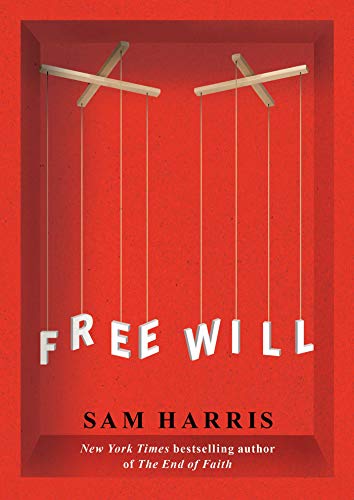
Paul Bloom, a psychologist known for his work on morality and human nature, highlights this book as a smart and engaging challenge to the belief in free will. He emphasizes how Harris invites you to reconsider your experience of agency in a way that is both readable and thought-provoking. Similarly, Tyler Code Wildcat, a content creator, reflects on the unsettling idea that we might merely be "robots walking around with the illusion of free will." Their reactions underscore how this concise book can shift your perspective on personal autonomy and responsibility.
“If you believe in free will, or know someone who does, here is the perfect antidote. In this smart, engaging, and extremely readable little book, Sam Harris argues that free will doesn’t exist, that we’re better off knowing that it doesn’t exist, and that—once we think about it in the right way—we can appreciate from our own experience that it doesn’t exist. This is a delightful discussion by one of the sharpest scholars around.”
Sam Harris is a New York Times bestselling author and neuroscientist known for his works on philosophy, religion, and neuroscience. He holds a degree in philosophy from Stanford University and a Ph.D. in neuroscience. Harris is recognized for his ability to articulate complex ideas in an accessible manner, making significant contributions to discussions on morality, free will, and human consciousness.
Drawing from his background in neuroscience and philosophy, Sam Harris explores the controversial claim that free will is an illusion. He argues that this perspective reshapes how you understand morality, responsibility, and social freedom without undermining their importance. Through concise chapters, Harris challenges deeply held beliefs, such as the idea that you are the ultimate source of your decisions, by presenting evidence from brain science and philosophy. This book suits anyone willing to reconsider fundamental assumptions about human agency and those interested in the intersections of mind, ethics, and society.
Publisher's Weekly, a respected book review publication, highlights this book’s fresh approach to the age-old free will debate. Their endorsement emphasizes how Barker’s model offers a useful and nuanced perspective on a complex ethical and philosophical issue. This recognition came as they explored works that challenge traditional views, finding Barker’s concept of “harmonic free will” insightful in bridging science and philosophy. "Barker’s model a useful way of thinking about free will that adds new perspective on a complicated ethical and philosophical quandary," they noted, reflecting how this book reshaped their understanding of human agency.
Dan Barker (1949-), a former preacher, is co-president of the Freedom From Religion Foundation, co-host of Freethought Radio, and co-founder of The Clergy Project. After 19 years as an evangelical minister, Dan 'saw the light' and announced his atheism in 1984. He travels extensively, lecturing and performing on college campuses, and has participated in more than 130 public debates. A former composer of Christian music, Dan is now a jazz pianist and writer of freethought music. He lives with his wife (and co-president) Annie Laurie Gaylor in Madison, Wisconsin.
2018·160 pages·Free Will, Philosophy, Ethics, Determinism, Moral Responsibility
When Dan Barker first realized the paradox at the heart of free will debates, he sought to reconcile science and philosophy beyond the usual deadlock. His book introduces the concept of “harmonic free will,” a fresh two-dimensional framework that accepts the validity of opposing views: free will is not a purely scientific fact but a socially useful illusion. You’ll explore how this approach addresses questions about moral responsibility in a cause-and-effect universe, challenging the binary of freedom versus determinism. Those wrestling with philosophical, ethical, or scientific perspectives on human agency will find Barker’s concise 160-page essay insightful and thought-provoking, especially chapters outlining the social implications of this illusion.
This AI-created book on free will is written based on your background, current knowledge, and specific interests within this complex subject. You share which aspects intrigue you most—from neuroscience to philosophy or theology—and your goals for understanding. The book then focuses on those precise areas, providing a clear and engaging path that makes navigating free will’s challenges more manageable and relevant to your personal journey. It’s designed to give you a meaningful, tailored learning experience rather than a generic overview.
TailoredRead AI creates personalized nonfiction books that adapt to your unique background, goals, and interests. Instead of reading generic content, you get a custom book written specifically for your profession, experience level, and learning objectives. Whether you're a beginner looking for fundamentals or an expert seeking advanced insights, TailoredRead crafts a book that speaks directly to you. Learn more.
This tailored book explores the nuanced landscape of free will through a lens crafted specifically for your background and interests. It examines key philosophical debates, neuroscientific discoveries, and theological perspectives while focusing on your particular goals. By tailoring content to your skill level and chosen sub-topics, this book offers a personalized pathway through complex ideas, helping you grasp challenging concepts efficiently. It reveals how free will intersects with determinism, agency, and moral responsibility, providing insights that resonate deeply with your intellectual journey. This approach enables a focused and engaging exploration of free will's many dimensions, making the learning experience both meaningful and relevant.
Alfred Mele, a respected philosophy professor at Florida State University, highlights this book’s unique contribution to the free will debate. He appreciates how Christian List advances a novel and thoughtful argument that free will — as traditionally understood — is real, calling it a pleasure to read. Mele’s endorsement carries weight given his extensive work on free will and agency. Supporting this view, Library Journal praises the book for its accessible defense that bridges scientific perspectives and philosophical inquiry, making it a strong recommendation for anyone curious about the subject.
“In Why Free Will Is Real, List does as advertised, advancing a novel, intriguing view of free will and making a thoughtful case for the thesis that free will, as he conceives of it, is real. This book is a pleasure to read.”
Christian List is Professor of Philosophy and Political Science at the London School of Economics and Political Science and a Fellow of the British Academy.
Drawing from his dual expertise in philosophy and political science at the London School of Economics, Christian List challenges the scientific skepticism surrounding free will by situating it as a higher-level psychological phenomenon. You’ll explore how free will, with its core aspects like intentional agency and alternative possibilities, emerges autonomously beyond fundamental physical laws, much like ecosystems or economies. The book offers a rigorous argument that preserves the traditional notion of free will requiring choice between alternatives, resisting the trend to dilute this idea. If you want to grasp free will through a scientific yet philosophically grounded lens, this book provides clear reasoning and fresh perspectives, especially useful if you’re interested in the intersection of science and human agency.
William Casebeer, author of Natural Ethical Facts, brings a deep understanding of neuroscience and ethics to his recommendation of this book. He describes it as "an intellectual hand-grenade," highlighting how it reshapes perspectives on morality by grounding it in contemporary brain science. Casebeer's endorsement reflects his own exploration of human nature’s complexities, noting how the book challenged his previous assumptions and connected classical philosophy with modern research. His insight underscores the book’s significance for anyone serious about the intersection of free will and ethics.
“An intellectual hand-grenade, The Self Beyond Itself is a magisterial survey of how contemporary neuroscience supports a vision of human morality which puts it squarely on the same plane as other natural phenomena. This book will spark fruitful debate and reminds us of the debt we owe Aristotle and Spinoza as we make sense of ourselves as part of the natural world.”
Heidi M. Ravven is a professor of religious studies at Hamilton College. A founding member of the Society for Empirical Ethics, she has published widely in interdisciplinary journals and is the co-editor of Jewish Themes in Spinoza's Philosophy. She lives in Cazenovia, New York.
2013·528 pages·Free Will, Ethics, Neuroscience, Philosophy, Group Psychology
Heidi M. Ravven, a professor of religious studies with a strong background in empirical ethics, challenges traditional views of free will by weaving philosophy with contemporary neuroscience. You’ll explore how cutting-edge research on brain functions like mirror neurons and self-mapping reshapes ethical responsibility beyond individual autonomy. The book draws on Spinoza’s philosophy and real-world examples, from classrooms to historical atrocities, to argue for a naturalistic ethics that holds individuals and groups accountable without relying on free will as commonly understood. If you’re interested in how science and ethics intersect, this book offers you a nuanced framework to rethink morality in light of new brain science.
The Times Literary Supplement, a leading literary publication, highlights this book as "an excellent summary of Wallace's thought and writing which shows how his philosophical interests were not purely cerebral, but arose from, and fed into, his emotional and ethical concerns." Their endorsement carries weight given their extensive coverage of philosophical literature. This early work by David Foster Wallace challenges the abstract dismissal of spirituality and emotion in free will debates, offering a perspective that reshaped how many engage with fatalism. The Australian Literary Review also finds the book "valuable and interesting," reinforcing its appeal to those invested in philosophical inquiry.
“an excellent summary of Wallace's thought and writing which shows how his philosophical interests were not purely cerebral, but arose from, and fed into, his emotional and ethical concerns.”
David Wallace, Steven Cahn, Maureen Eckert, James Ryerson, Jay L. Garfield(you?)·
About the Author
David Foster Wallace (1962-2008) wrote acclaimed novels and essays, including Infinite Jest and Consider the Lobster.
2010·264 pages·Free Will, Philosophy, Logic, Fatalism, Language
David Foster Wallace's early philosophical work dives into the tangled relationship between language, logic, and human freedom, challenging prevailing fatalistic arguments from 1960s philosopher Richard Taylor. This book unfolds Wallace's critique of abstract thinking that dismisses spiritual and emotional realities, grounding discussions of free will in more tangible human experience. You’ll explore the nuanced ways language shapes our understanding of fate and choice, with contributions from editors who connect Wallace’s early essays to his later literary themes. If you’re drawn to philosophy that bridges rigorous analysis with lived human concerns, especially in fatalism and free will, this book offers a thoughtful exploration rather than quick answers.
Timothy O'Connor, a philosophy professor at Indiana University, praises this work as "an excellent, well-conceived text." His extensive expertise in metaphysics makes his endorsement notable, especially given the book’s rigorous treatment of free will’s complexities. O'Connor found Ekstrom’s clear evaluation of incompatibilism and agent causation thought-provoking, reshaping how he views the interplay between determinism and freedom. Alongside him, Eleonore Stump of Saint Louis University recognizes the book as "a significant, much discussed book," underscoring its impact within philosophical circles.
Laura W. Ekstrom is Chancellor Professor in the Department of Philosophy at William & Mary in Williamsburg, Virginia. She is a graduate of Stanford University (BA, Philosophy) and the University of Arizona (PhD, Philosophy). She is the author of 3 books: Evil and Theodicy (Cambridge University Press, 2023); God, Suffering, and the Value of Free Will (Oxford University Press, 2021), and Free Will: A Philosophical Study (Westview Press, 2000). She is also the editor of Agency and Responsibility: Essays on the Metaphysics of Freedom (Westview Press, 2001). Her essays on autonomy, moral responsibility, causation, chance, free will, compassion, and suffering have been published in academic journals including Philosophy and Phenomenological Research, Australasian Journal of Philosophy, Synthese, American Philosophical Quarterly, Philosophical Studies, and Midwest Studies in Philosophy, as well as in edited collections published by Oxford University Press, Blackwell Press, and Cambridge University Press.
Laura Ekstrom, Chancellor Professor of Philosophy at William & Mary, anchors this study in a deep engagement with contemporary debates on free will, particularly incompatibilism and indeterminism. You’ll explore nuanced arguments about agent causation and the conditions that make free action possible, with Ekstrom carefully weighing various libertarian positions. Chapters dissect motivation, causation, and moral responsibility, making it clear how free will theories intersect with broader metaphysical concerns. This book suits anyone ready to grapple with complex philosophical frameworks rather than quick answers, especially those invested in metaphysics and action theory.
Alfred R. Mele is the William H. and Lucyle T. Werkmeister Professor of Philosophy at Florida State University, whose extensive Oxford-published work establishes him as a leading thinker on free will. His deep dive into the contested science around free will reflects years of scholarly rigor, making this book a valuable resource for anyone seeking to understand whether human decisions truly arise from conscious control or unconscious processes.
Alfred R. Mele is the William H. and Lucyle T. Werkmeister Professor of Philosophy at Florida State University. He is the author of eight previous Oxford books, including Free Will and Luck (2006), Effective Intentions (2009), Backsliding (2012), and A Dialogue on Free Will and Science (2013). He also is the editor or co-editor of five OUP books, including The Philosophy of Action (1997) and Free Will and Consciousness: How Might They Work? (2010).
2014·112 pages·Free Will, Philosophy, Neuroscience, Psychology, Moral Responsibility
When Alfred R. Mele, a seasoned philosopher with deep expertise in action theory, tackled the question of free will, he challenged prevailing scientific claims that deny its existence. In this concise work, he carefully dissects key experiments often cited against free will, revealing significant gaps and alternative interpretations that leave room for conscious agency. You’ll gain clarity on the nuanced definitions of free will, its connection to moral responsibility, and why embracing it matters socially and ethically. This book suits anyone curious about the science-philosophy intersection and those questioning whether human choices truly matter.
The best Free Will books and more, in your inbox each week. No account needed.
Conclusion
This collection of ten meticulously chosen works reveals how free will remains a complex interplay of biology, philosophy, and theology. Whether you wrestle with the scientific arguments that question its existence or the spiritual questions it raises, these books provide diverse lenses to deepen your understanding.
If you're confronting the challenge of reconciling scientific determinism with personal accountability, start with Robert Sapolsky's "Determined" and Sam Harris's "Free Will [Deckle Edge]" for compelling neuroscientific perspectives. For rapid philosophical grounding, Christian List's "Why Free Will Is Real" alongside Laura Ekstrom's "Free Will" offer clear, rigorous arguments.
Alternatively, you can create a personalized Free Will book to bridge the gap between general principles and your specific situation. These books can help you accelerate your learning journey and engage with free will in ways that truly resonate with your interests and needs.
Frequently Asked Questions
I'm overwhelmed by choice – which Free Will book should I start with?
Starting with "Determined" by Robert Sapolsky offers a broad, accessible introduction combining neuroscience and philosophy, perfect for grounding your understanding before diving deeper.
Are these books too advanced for someone new to Free Will?
Not at all. Many, like Sam Harris's "Free Will [Deckle Edge]," are concise and readable, while others provide thorough explanations suited for beginners eager to explore complex ideas.
What’s the best order to read these Free Will books?
Begin with approachable works like "Free Will [Deckle Edge]" or "Free Agents," then progress to more detailed philosophical and theological texts like "Free Will" by Laura Ekstrom or "What about Free Will?"
Should I start with the newest Free Will book or a classic?
Both offer value. Newer books like "Determined" reflect current science, while classics such as David Foster Wallace’s "Fate, Time, and Language" provide foundational philosophical context.
Do I really need to read all of these, or can I just pick one?
You can pick based on your interest: neuroscience, philosophy, or theology. Each book offers unique perspectives, but reading multiple enriches your understanding of free will’s complexity.
How can I get Free Will insights tailored to my background and goals?
While these expert books cover key ideas, a personalized Free Will book can connect concepts directly to your experience and learning objectives. Consider creating your custom Free Will book for targeted guidance.
📚 Love this book list?
Help fellow book lovers discover great books, share this curated list with others!