7 High Availability Books That Separate Experts from Amateurs
Discover 7 High Availability Books authored by leading experts like Jason Cannon and Michael Elder that deliver practical strategies and proven methods to build resilient, scalable systems.
Updated on June 25, 2025·We may earn commissions for purchases made via this page
6 of 7 books have Kindle versions
We're launchingLaunching on Product Hunt today 🎉We just launchedJust launched on Product Hunt 🎉
Modelpeers, from the BookAuthority teamFrom the BookAuthority team: Modelpeers, a free way to follow AI models and agents like you follow people. We'd love your support.
What if your critical systems could shrug off outages and keep running no matter what? High availability isn't just a buzzword; it's the backbone of modern infrastructure where downtime can mean lost revenue and damaged reputation. As digital services become indispensable, mastering how to design and maintain systems that stay up is more urgent than ever.
These seven books offer grounded, authoritative knowledge from seasoned professionals who have engineered high availability across diverse environments—from Linux-based web stacks to cloud-native Kubernetes platforms and robust SQL Server clusters. Each book distills years of hands-on experience into practical guidance, making complex concepts accessible without losing technical depth.
While these expert-written volumes provide solid frameworks and deep insights, your unique environment and goals might call for more tailored approaches. Consider creating a personalized High Availability book that adapts these strategies to your experience level, specific technologies, and operational challenges, helping you accelerate your learning and system resilience.
Jason Cannon started his career as a Unix and Linux System Engineer in 1999 and has worked with giants like Xerox, UPS, Hewlett-Packard, and Amazon.com. With deep expertise in multiple Linux distributions and proprietary Unix systems, he channels decades of experience into teaching how to build reliable, scalable LAMP stack infrastructures. His background as founder of the Linux Training Academy and author of several Linux books uniquely qualifies him to guide you through eliminating downtime and scaling web applications efficiently.
Jason Cannon started his career as a Unix and Linux System Engineer in 1999. Since that time he has utilized his Linux skills at companies such as Xerox, UPS, Hewlett-Packard, and Amazon.com. Additionally, he has acted as a technical consultant and independent contractor for small businesses as well as Fortune 500 companies. Jason has professional experience with CentOS, RedHat Enterprise Linux, SUSE Linux Enterprise Server, and Ubuntu. He has used several Linux distributions on personal projects including Debian, Slackware, CrunchBang, and others. In addition to Linux, Jason has experience supporting proprietary Unix operating systems including AIX, HP-UX, and Solaris. He enjoys teaching others how to use and exploit the power of the Linux operating system. Jason is the author of Command Line Kung Fu and Linux for Beginners. He is also the founder of the Linux Training Academy where he blogs and teaches online video training courses.
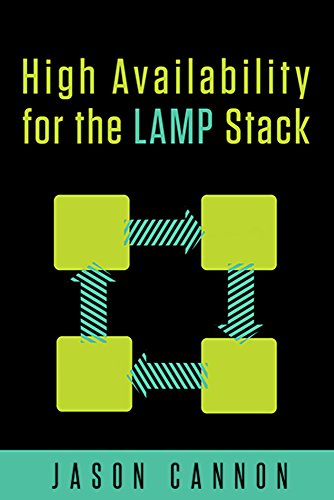
Jason Cannon draws on over two decades of Linux system engineering experience at major companies like Amazon and Hewlett-Packard to deliver a focused guide on building highly available LAMP stack environments. You'll learn how to identify and eliminate single points of failure across Linux, Apache, MySQL, and PHP components, with practical demonstrations primarily on Ubuntu but applicable to other Linux distributions. Cannon’s approach covers physical servers, virtual environments, and cloud platforms, addressing challenges such as load balancing, floating IPs, and database clustering with clear, stepwise configurations. This book suits sysadmins and developers who want reliable uptime without spending weeks piecing together solutions themselves.
Michael Elder is a recognized expert in cloud computing and application development with extensive experience managing hybrid cloud environments. Alongside co-authors Jake Kitchener and Dr. Brad Topol, who bring deep expertise in Kubernetes and OpenShift, they offer authoritative guidance for operating modern application platforms. Their combined knowledge directly addresses the complexities you face when deploying highly available, secure, and scalable applications using hybrid cloud technologies.
Michael Elder, Jake Kitchener, Brad Topol Dr.(you?)·
About the Author
Michael Elder is a recognized expert in cloud computing and application development. He has extensive experience in managing and deploying applications in hybrid cloud environments. Alongside him, Jake Kitchener and Dr. Brad Topol contribute their expertise in Kubernetes and OpenShift, making this team well-equipped to guide readers through the complexities of modern application deployment.
What makes this book especially useful is how Michael Elder and his co-authors Jake Kitchener and Dr. Brad Topol bring their deep practical experience to the table, guiding you beyond just theory. You’ll dive into concrete skills like managing Kubernetes clusters, implementing tenancy and capacity planning, and orchestrating continuous delivery pipelines that maintain service uptime. The chapters on hybrid cloud scenarios and disaster recovery strategies stand out for anyone aiming to build resilient applications. This book suits developers and operators who want to master running OpenShift and Kubernetes at scale, not just dabble, providing a solid foundation for enterprise-ready high availability.
This AI-created book on high availability is crafted based on your background, skills, and the specific systems you work with. You share what techniques interest you most and the challenges you face, and the book focuses on delivering relevant knowledge tailored to your context. Personalizing your learning journey this way helps you grasp complex high availability concepts more effectively, building confidence in designing systems that keep running no matter the disruptions.
TailoredRead AI creates personalized nonfiction books that adapt to your unique background, goals, and interests. Instead of reading generic content, you get a custom book written specifically for your profession, experience level, and learning objectives. Whether you're a beginner looking for fundamentals or an expert seeking advanced insights, TailoredRead crafts a book that speaks directly to you. Learn more.
This tailored book delves into high availability techniques with a focus that matches your specific environment and objectives. It explores core principles of designing fault-tolerant systems, examines various replication and failover methods, and reveals approaches to scaling infrastructure for resilience. By concentrating on your unique setup and goals, it presents content that bridges expert knowledge with your particular challenges, enhancing your understanding without overwhelming you with irrelevant details. The personalized approach ensures that you engage with material that truly matters to your role and projects, helping you build systems that maintain uptime and reliability in demanding conditions.
Lee Atchison is a software architect, author, and recognized thought leader on cloud computing and application modernization. His book, Architecting for Scale, draws on his deep expertise to help technical teams maintain high availability and manage risk in cloud environments. Widely quoted and a frequent speaker at global events, Atchison offers readers practical guidance grounded in real-world experience, making this an indispensable resource for anyone responsible for scaling modern applications.
Lee Atchison is a software architect, author, public speaker, and recognized thought leader on cloud computing and application modernization. His premier book, Architecting for Scale (O’Reilly Media), is an essential resource for technical teams looking to maintain high availability and manage risk in their cloud environments. Lee has been widely quoted in multiple technology publications and has been a featured speaker at events across the globe.
Drawing from his extensive experience as a software architect and thought leader in cloud computing, Lee Atchison addresses the intricate challenges of scaling critical applications in the cloud. You’ll gain a clear understanding of how to build resilient, scalable systems that maintain high availability despite growing traffic and complexity, with practical insights into microservices architecture and risk mitigation. The book offers detailed exploration of the Single Team Owned Service Architecture (STOSA) model, which aligns development organization scaling with application demands, making it particularly useful for engineers, managers, and directors navigating cloud environments. If your goal is to improve system reliability while managing operational risk, this book lays out foundational concepts and strategies without unnecessary jargon.
Peter A. Carter is a seasoned SQL Server expert whose Microsoft Certified Master credential and extensive certifications reflect his deep expertise. His passion for SQL Server fuels this book, which is designed to help you master AlwaysOn features for continuous uptime. Carter’s authoritative background ensures you get trustworthy, detailed guidance on configuring and maintaining high-availability environments tailored for SQL Server 2019 across multiple platforms.
Peter A. Carter is a SQL Server expert with over a decade of experience in developing, administering, and architecting SQL Server platforms and data-tier applications. Peter was awarded an MCC by Microsoft in 2011, and it sits alongside his array of MCTS, MCITP, MCSA and MCSE certifications in SQL Server from version 2005 onward. His passion for SQL Server shows through in everything he does, and his goal is that his passion for the technology will inspire others.
Peter A. Carter brings over a decade of hands-on experience with SQL Server to this detailed guide focused on high availability using AlwaysOn. You’ll gain a clear understanding of key concepts like Recovery Point Objectives and Recovery Time Objectives alongside practical instructions for deploying AlwaysOn Availability Groups across Windows, Linux, and Azure environments. The book dives into advanced configurations such as clusterless and distributed Availability Groups, giving you tools to design resilient systems tailored to your organization's uptime needs. If you manage SQL Server databases and want to master continuous availability, this book offers precise, experience-driven insights without fluff or jargon.
Uttam Parui, a Senior Premier Field Engineer at Microsoft with over 15 years of experience working closely with SQL Server, brings his deep expertise to this guide on Always On Availability Groups. His background supporting Fortune 500 clients and contributing to key SQL Server publications positions him uniquely to address the complexities of high availability and disaster recovery. This book distills his extensive knowledge into practical guidance for database administrators and IT professionals tasked with keeping critical systems running smoothly.
Uttam Parui is a Senior Premier Field Engineer at Microsoft based out of Charlotte, North Carolina. He has worked at Microsoft for more than 15 years and started working with the SQL Server product since SQL Server 6.5. As a Premier Field Engineer, he delivers SQL Server consulting and support for designated strategic Fortune 500 customers. Also, he has been developing content, speaking at events, as well as authoring books, white papers, and articles related to SQL Server administration, high availability, disaster recovery, and more. Uttam is the coauthor of Microsoft SQL Server 2008 Bible (Wiley Publishing) and technical editor for Pro SQL Server 2008 Failover Clustering (Apress). He has trained and mentored engineers from Microsoft’s Customer Support Services and Premier Field Engineering teams, and was one of the first to train and assist in the development of Microsoft's SQL Server support teams in Canada and India. He received his master's degree in Computer Science from the University of Florida at Gainesville.
Drawing from over 15 years of hands-on experience at Microsoft, Uttam Parui offers an in-depth exploration of Always On Availability Groups as a robust solution for enterprise high availability and disaster recovery. You’ll gain a clear understanding of planning, deploying, managing, and troubleshooting these groups, including how to optimize resource use and reduce downtime. The book walks you through practical techniques such as monitoring performance and integrating cloud services like Windows Azure, supported by real-world war stories and best practices. This resource is tailored for SQL Server professionals who need to ensure mission-critical applications remain accessible and resilient under pressure.
This AI-created book on high availability is crafted based on your background and specific goals for system uptime. By sharing your current setup and what you want to achieve, you receive a tailored guide focusing on practical steps that accelerate availability improvements. This personalization ensures you focus on what matters most for your environment, making complex concepts easy to apply and helping you gain faster results.
TailoredRead AI creates personalized nonfiction books that adapt to your unique background, goals, and interests. Instead of reading generic content, you get a custom book written specifically for your profession, experience level, and learning objectives. Whether you're a beginner looking for fundamentals or an expert seeking advanced insights, TailoredRead crafts a book that speaks directly to you. Learn more.
This tailored book explores fast-track actions to enhance your system's availability, focusing on practical steps tailored to your unique infrastructure and goals. It covers key principles of high availability, emphasizing how to diagnose vulnerabilities and implement quick, effective improvements that match your experience level and technical environment. The content reveals how to prioritize interventions for immediate impact while setting a foundation for sustained system resilience.
By concentrating on your specific needs, this personalized guide makes complex high availability concepts approachable and actionable. It bridges the gap between foundational theory and your real-world setup, offering a clear, custom pathway to boost uptime rapidly and confidently.
IAIN CAMPBELL is a principal at Sandon Associates, an IT consultancy specializing in Unix/Linux and Microsoft systems integration. With years spent teaching AIX and Linux system administration, plus hands-on experience at the Center for Advanced Technology Education, Campbell brings authoritative insights into building Linux systems that deliver uninterrupted service. His background uniquely qualifies him to guide you through mastering Linux 2.4's enterprise features to achieve high availability in demanding environments.
IAIN CAMPBELL is a principal in sandon associates, an IT consultancy and training company fluent in both Unix/Linux and Microsoft systems. The company is currently teaching AIX system administration, security and performance management, Linux system administration, Linux/Windows integration, and Linux e-commerce for IBM. Before joining sandon, Campbell worked as a staff engineer at the Center for Advanced Technology Education at Ryerson Polytechnic University in Toronto.
Drawing from his extensive experience at Sandon Associates and Ryerson Polytechnic University, Iain Campbell offers a detailed exploration of Linux systems tailored to uphold high availability for critical e-commerce and intranet applications. You gain practical knowledge on configuring Linux 2.4 servers, managing fault tolerance, and employing features like Logical Storage Management and high-availability clusters. The book goes beyond theory, providing real-world techniques for risk analysis, monitoring, backup, and recovery that you can apply directly to maintain near-zero downtime environments. If you're responsible for running or scaling Linux-based infrastructures where uptime is non-negotiable, this book will deepen your technical toolkit without unnecessary jargon.
Shaun Thomas has been experimenting with PostgreSQL since 2000 and brings decades of hands-on experience as a consultant and support engineer at 2ndQuadrant. His extensive presentations at conferences like Postgres Open reflect his mastery of high availability, failover techniques, and database architecture. Driven by a multi-disciplinary approach, Thomas wrote this book to help you build PostgreSQL clusters that withstand outages and scale smoothly, sharing practical insights into PostgreSQL 12’s newest features and real-world applications.
Shaun Thomas has been experimenting with PostgreSQL since late 2000 and serves as a database consultant, teacher, blogger, and support engineer with 2ndQuadrant. He has presented at conferences such as Postgres Open, 2Q PGCONF, and PgConf on topics such as handling extreme throughput, high availability, failover techniques, monitoring tools, database architecture, multi-master conflict avoidance, and high availability upgrade concepts. He believes in a multi-disciplinary approach when it comes to high availability. He believes that PostgreSQL has a stupendous future ahead, and he can't wait to see the advancements subsequent versions will bring.
The methods Shaun Thomas developed while deeply involved with PostgreSQL since 2000 shape this detailed guide to building resilient database clusters. You’ll learn how to plan hardware and architecture to reduce outages, use tools like repmgr and Patroni for automated failover, and implement multi-master replication to enhance availability. Detailed chapters walk you through monitoring with Nagios and the TIG stack, managing backups via proxies, and orchestrating zero-downtime upgrades, all tailored for PostgreSQL 12. This book suits you if you are a Postgres administrator or developer aiming to maintain a robust, scalable cluster without risking costly downtime or data loss.
The best High Availability books and more, in your inbox each week. No account needed.
Conclusion
Together, these seven books draw a clear map through the varied landscape of high availability—from foundational Linux server setups and SQL Server AlwaysOn architectures to the nuances of cloud scaling and Kubernetes orchestration. They emphasize three key themes: eliminating single points of failure, managing risk thoughtfully, and balancing operational complexity with reliability.
If you’re tackling Linux web infrastructure, Jason Cannon’s book offers practical starting points. For cloud-native projects, Michael Elder’s guide on OpenShift and Kubernetes pairs well with Lee Atchison’s insights on scaling risk. Database administrators will find invaluable depth in Peter Carter’s and Uttam Parui’s SQL Server treatments and Shaun Thomas’s PostgreSQL strategies.
Alternatively, you can create a personalized High Availability book to bridge general principles with your specific context and challenges. These books can help you accelerate your learning journey and build systems that truly stand the test of time.
Frequently Asked Questions
I'm overwhelmed by choice – which book should I start with?
Start with a book that matches your current environment. For Linux web stacks, Jason Cannon’s "High Availability for the LAMP Stack" is approachable. If you're focused on cloud platforms, "Hybrid Cloud Apps with OpenShift and Kubernetes" by Michael Elder offers targeted guidance. Choosing based on your stack ensures relevant, actionable knowledge from the get-go.
Are these books too advanced for someone new to High Availability?
Not at all. Several books, like Jason Cannon’s, are designed with clear, step-by-step explanations suited for those new to high availability concepts. Others, such as Lee Atchison’s "Architecting for Scale," provide foundational ideas that help beginners understand cloud scalability and risk management gradually.
What’s the best order to read these books?
Begin with general infrastructure-focused books like "Reliable Linux" or "High Availability for the LAMP Stack" to grasp core concepts. Then move toward specialized topics such as database availability with the SQL Server and PostgreSQL titles. Finally, explore cloud-native and scaling strategies with "Hybrid Cloud Apps with OpenShift and Kubernetes" and "Architecting for Scale."
Should I start with the newest book or a classic?
Focus on relevance to your technology stack and needs rather than just publication date. Newer books like Michael Elder’s cover recent cloud trends, while classics like Iain Campbell’s "Reliable Linux" provide timeless principles of fault tolerance that remain highly useful. Combining both offers a balanced perspective.
Can I skip around or do I need to read them cover to cover?
You can definitely skip around. These books are often structured into focused chapters or sections that address specific challenges. If you need to implement a particular high availability aspect, dive into the relevant chapter. However, reading cover to cover provides a fuller understanding of system design and interdependencies.
How can I apply these expert books to my unique High Availability challenges?
Great question! While these books offer expert-validated frameworks and strategies, tailoring them to your specific infrastructure, goals, and experience is key. Creating a personalized High Availability book can bridge general principles with your unique context, helping you apply expert insights effectively. Learn more here.
📚 Love this book list?
Help fellow book lovers discover great books, share this curated list with others!