21 Infectious Disease Books That Experts Trust and Recommend
Insights from Bill Gates, Christina Stage Break Warren, and Clara Jeffery spotlight these Infectious Disease books shaping global health understanding
Updated on June 25, 2025·We may earn commissions for purchases made via this page
9 of 20 books have Audiobook versions
We're launchingLaunching on Product Hunt today 🎉We just launchedJust launched on Product Hunt 🎉
Modelpeers, from the BookAuthority teamFrom the BookAuthority team: Modelpeers, a free way to follow AI models and agents like you follow people. We'd love your support.
What if the stories behind infectious diseases could reveal the hidden failures and triumphs of public health? Infectious diseases have shaped human history, disrupted societies, and challenged science in ways few other forces have. Today, understanding these diseases matters more than ever as experts grapple with pandemic risks and global health threats.
Figures like Bill Gates, whose decades of work in vaccine development and pandemic preparedness have saved millions of lives, and Christina Stage Break Warren, a senior cloud advocate who reflects on the AIDS crisis through powerful narratives, provide a lens into the critical value of infectious disease literature. Clara Jeffery, editor-in-chief of Mother Jones, underscores the importance of learning from past epidemics to inform future responses.
While these expert-curated books provide proven frameworks, readers seeking content tailored to their specific infectious disease interests, experience levels, and goals might consider creating a personalized Infectious Disease book that builds on these insights, offering customized learning paths and practical knowledge for today’s complex health landscape.
Christina Stage Break Warren, a senior cloud advocate at Microsoft with a deep interest in media and tech, recalls discovering this book as a child and holding both the physical and digital copies to this day. She highlights the HBO adaptation as one of the best films ever made on the subject. This early exposure impressed upon her the profound impact of the AIDS crisis and the complex interplay of politics and public health depicted in Shilts's narrative. Alongside her, Clara Jeffery, editor-in-chief of Mother Jones, acknowledges the book's relevance today, noting the disturbing parallels in politicized science failures. Together, their endorsements underscore the book’s enduring significance in understanding infectious disease history and institutional responses.
Sr Cloud Advocate, Microsoft, media and tech expert
“@jsnell @monkeydavid Also the HBO film is one of the best ever. I saw it as a child and then read the book. I think I was 9 or 10. It’s one of the rare books I have a physical and kindle copy of to this day.” (from X)
Randy Shilts was born in 1951, in Davenport, Iowa. One of the first openly gay journalists hired at a major newspaper, he worked for the San Francisco Chronicle for thirteen years. He died of AIDS in 1994 at his home in the Sonoma County redwoods in California. He was the author of The Mayor of Castro Street: The Life and Times of Harvey Milk (1982), And the Band Played On: Politics, People and the AIDS Epidemic (1987), and Conduct Unbecoming: Lesbians and Gays in the U.S. Military (1993). He also wrote extensively for many major newspapers and magazines, including The New York Times, Newsweek, Esquire, The Los Angeles Times, and The Advocate. And the Band Played On was made into a docudrama that was broadcast on HBO in 1993.
What happens when investigative journalism meets the early AIDS crisis? Randy Shilts, a pioneering openly gay reporter for the San Francisco Chronicle, chronicles the first five years of the epidemic with a sharp focus on how government agencies, public health officials, and scientists responded—or failed to respond. You’ll gain detailed insight into the political and social obstacles that hindered early containment efforts, alongside vivid personal stories and institutional critiques. The chapters dissect moments like the CDC’s initial hesitance and the media’s role in shaping public perception, making it essential for anyone interested in medical history, public policy, or health advocacy.
Rajeev Chandrasekhar, a tech investor and BJP MP deeply engaged with national security and public health, found this book particularly illuminating amidst the pandemic’s chaos. He described it as a compelling investigation into COVID-19’s origins during the past two years of global turmoil. His perspective highlights the book’s balanced approach to examining the virus’s mysterious emergence and the lab-leak hypothesis. Following him, Nick Gillespie, editor at Reason, praised the insightful documentary and interview with the authors, emphasizing the book's critical role in understanding the pandemic’s roots.
“Reading this very interesting book by Ayjchan and Matt Ridley that tries to investigate origins of COVID-19 that caused the last 24-25 months of nightmare for the world and all of us.” (from X)
Matt Ridley's books—including The Red Queen, Genome, The Rational Optimist, The Evolution of Everything, How Innovation Works, and most recently, Viral: the Search for the Origin of Covid-19 (with Alina Chan)—have sold over a million copies, been translated into 31 languages, and won several awards. He sat in the House of Lords from 2013 and 2021, and was founding chairman of the International Centre for Life in Newcastle. He created the “Mind and Matter” column in the Wall Street Journal in 2010, and was a columnist for the Times. He is a fellow of the Royal Society of Literature and of the Academy of Medical Sciences, and a foreign honorary member of the American Academy of Arts and Sciences. He lives in Northumberland.
Matt Ridley, a fellow of the Royal Society of Literature and Academy of Medical Sciences, teams up with scientist Alina Chan to probe one of the most perplexing questions of recent times: the origin of COVID-19. You gain an in-depth look at virology labs, the behaviors of bats, and the genetic detective work that unravels the virus's mysterious path to humans. The book meticulously examines gaps in the outbreak's timeline and explores both natural emergence and lab-leak theories, especially through detailed analysis of 2019 events and virus genetics. If you're determined to understand the complexities behind pandemics and infectious disease origins, this book offers a thoughtful, investigative narrative without oversimplifying the science.
This AI-created book on infectious disease is crafted based on your background, skill level, and specific interests. By sharing what you want to focus on and your learning goals, you receive a book that covers exactly the infectious disease topics relevant to you. This personalized approach makes navigating complex scientific and public health information clearer and more engaging, tailored to help you master your chosen areas effectively.
TailoredRead AI creates personalized nonfiction books that adapt to your unique background, goals, and interests. Instead of reading generic content, you get a custom book written specifically for your profession, experience level, and learning objectives. Whether you're a beginner looking for fundamentals or an expert seeking advanced insights, TailoredRead crafts a book that speaks directly to you. Learn more.
This personalized AI book on infectious disease delves into a wide range of topics tailored specifically to your background and objectives. It explores the science behind pathogens, epidemiology, immune responses, and public health interventions with a focus that matches your interests and goals. By integrating core principles with your specific learning needs, it offers a clear pathway through complex information, making challenging concepts accessible and relevant. This tailored approach helps you build a solid understanding of infectious diseases, from outbreak dynamics to prevention methods, all framed around your unique questions and priorities.
Laura McInerney, co-founder of TeacherTapp and former SchoolsWeek editor, brings a sharp perspective on public health with her deep engagement in real-world educational and societal data. She highlights a compelling figure in the book—a public health official who was repeatedly ignored despite her accurate warnings—showcasing the frustrating disconnect between expertise and policy. McInerney notes, "It’s a really good book. You’ll love one character: a little public health woman, around 40, who was completely correct about it all and kept being ignored." This narrative helped her better understand the human side of pandemic response. Similarly, Don Moynihan, professor at Georgetown University, appreciates the book as a case study in government learning failures, pointing out how past pandemic plans were overlooked despite clear evidence. Their insights underscore the book's value for anyone grappling with infectious disease and public policy.
Co-Founder of TeacherTapp, former SchoolsWeek editor
“@langtrygirl It’s a really good book. You’ll love one character: a little public health woman, around 40, who was completely correct about it all and kept being ignored. I almost want this as a tattoo:” (from X)
Michael Lewis is the best-selling author of Liar’s Poker, Moneyball, The Blind Side, The Big Short, The Undoing Project, and The Fifth Risk. He lives in Berkeley, California, with his family.
Michael Lewis draws from his extensive background in narrative nonfiction to explore the tangled responses to the COVID-19 pandemic in this sharp examination. You gain insight into how a small group of public health experts, including a local official who saw what the CDC missed and a secretive team dubbed the Wolverines, tried to confront denial and misinformation at the highest levels. The book offers a unique perspective on pandemic preparedness and governmental inertia, particularly through vivid profiles and case studies like a thirteen-year-old's model of airborne disease transmission. If you're interested in the intersection of science, public policy, and crisis management, this book offers an illuminating, if sobering, look.
New York Times Bestseller
American Scientist Science Book of 2021
One of Smithsonian's 10 Best Science Books of 2021
Ophelia Dahl, a global health advocate and co-founder of Partners in Health, highlights how this book captures the relentless effort to develop life-saving ventilation during a devastating polio epidemic. She calls it "a beautiful and absorbing book about the history of polio... a beautiful story of accompaniment and of doing whatever it takes to keep thousands of patients alive—one person at a time." This perspective underscores the human element and innovation driving modern intensive care. Similarly, Olivia Campbell, New York Times bestselling author, praises the book's deep research and emotional impact, noting how it made her profoundly aware of the simple act of breathing. Together, these endorsements emphasize the book's blend of rigorous history and compelling narrative.
Global Health Advocate and Co-founder of Partners in Health
“A beautiful and absorbing book about the history of polio. Wunsch tells the pressing story of the race to develop effective new technologies to ventilate patients amid a deathly global pandemic. It is also a beautiful story of accompaniment and of doing whatever it takes to keep thousands of patients alive—one person at a time.”
Hannah Wunsch is a critical care physician and researcher at Sunnybrook Health Science Centre. She is a professor of anesthesiology and critical care medicine at the University of Toronto and holds a Canada Research Chair. She lives in Toronto, Ontario and Woods Hole, Massachusetts. The Autumn Ghost is her first book.
After years as a critical care physician and researcher, Hannah Wunsch developed a detailed narrative tracing how the 1952 Copenhagen polio epidemic transformed medical care. You learn how mechanical ventilation and intensive care units emerged from desperate attempts to save patients with respiratory failure, with vivid accounts from those on the front lines. This book suits anyone interested in the history of medicine or the evolution of critical care, providing insight into the breakthroughs that underpin modern life support systems. For example, chapters recount how clinicians improvised ventilators and organized care teams in real time, a story that resonates amid recent global health crises.
Adar Poonawalla, CEO of the Serum Institute of India and a pivotal figure in vaccine manufacturing, highlights the impact of Bill Gates' work on global health. After decades supporting vaccine initiatives, Poonawalla finds Gates' latest book insightful and hopeful, noting it could influence world leaders to prevent future pandemics. His recommendation reflects deep practical experience in infectious disease control. Additionally, Publisher's Weekly praises Gates for his realistic and clear presentation of pandemic prevention strategies, emphasizing the creation of a global task force to coordinate efforts worldwide.
“He has saved millions of lives through his work at Gates Foundation supporting the vaccine industry including Serum Institute over decades. I enjoyed reading Bill Gates' latest book; extremely insightful and optimistic that if world leaders take note, we may prevent the next pandemic.” (from X)
Bill Gates is a technologist, business leader, and philanthropist. In 1975, he co-founded Microsoft with his childhood friend Paul Allen and today he is chair of the Gates Foundation. Bill is the founder of Breakthrough Energy, an effort to commercialize clean energy and other climate-related technologies, and TerraPower, a company investing in developing groundbreaking nuclear technologies. He has three children.
Drawing from decades of philanthropic leadership focusing on global health, Bill Gates examines how the world can prepare for and prevent future pandemics. You’ll gain insight into the science behind infectious diseases, including respiratory viruses, and understand the importance of coordinated global response systems. Gates outlines practical steps governments and private sectors can take, such as investing in vaccine innovation and establishing international task forces, illustrated by examples from the COVID-19 pandemic. This book suits anyone interested in public health policy, pandemic preparedness, or the intersection of science and global cooperation.
This personalized AI book on infectious disease is created based on your interests, background, and goals in this complex field. Using AI, it crafts a tailored pathway through essential topics, helping you focus on the aspects most relevant to you. Instead of a one-size-fits-all overview, this book delivers content that matches your skill level and learning objectives, making your journey to expertise more efficient and engaging.
TailoredRead AI creates personalized nonfiction books that adapt to your unique background, goals, and interests. Instead of reading generic content, you get a custom book written specifically for your profession, experience level, and learning objectives. Whether you're a beginner looking for fundamentals or an expert seeking advanced insights, TailoredRead crafts a book that speaks directly to you. Learn more.
This tailored book explores the complex world of infectious diseases with a focus on accelerating your understanding through focused, actionable steps. It covers essential concepts such as pathogen biology, transmission dynamics, and public health responses, all aligned to your specific background and goals. By concentrating on your unique interests, it reveals how to navigate scientific literature, interpret epidemiological data, and apply practical knowledge in real-world scenarios. This personalized approach brings clarity to challenging topics while fostering critical thinking and informed decision-making in infectious disease mastery.
Kaleigh Rogers, a science and technology reporter with bylines in The New York Times and Wired, highlights this book as "a fantastic read" alongside other pandemic literature, underscoring its relevance for understanding infectious threats. Her endorsement carries weight for anyone following epidemiology or public health developments. The Seattle Times praises Quammen as one of the best science writers, comparing the book's page-turning quality to Richard Preston’s The Hot Zone, signaling its accessibility despite complex subject matter. Together, these perspectives frame Spillover as a critical exploration of disease emergence that reshaped how many view pandemic risks.
David Quammen is the author of a dozen fiction and nonfiction books, including Blood Line and The Song of the Dodo. He has been honored with the John Burroughs Medal for nature writing, an Academy Award in Literature from the American Academy of Arts and Letters, an award in the art of the essay from PEN, and (three times) the National Magazine Award. Quammen is also a contributing writer for National Geographic. He lives in Bozeman, Montana.
After analyzing multiple zoonotic outbreaks around the world, David Quammen developed a compelling narrative that connects the dots between wild animal reservoirs and emerging human diseases. You gain detailed insights into the process of spillover, learning from vivid field accounts of tracking viruses in bats, monkeys, and gorillas across continents. Quammen's exploration goes beyond biology to probe ecological and human factors fueling pandemics, making it especially relevant if you're interested in the origins and future risks of infectious diseases. This book suits those seeking a deep understanding of how animal pathogens cross into humans and the global implications thereof.
The Wall Street Journal, a leading publication with extensive expertise in historical and societal events, highlights how Catharine Arnold "is good at looking at civilians as well as troops and their nurses and doctors and at teasing out the human side of the catastrophe… powerful stories of ordinary people." This perspective helped them appreciate the book’s ability to humanize a vast medical crisis often reduced to statistics. Similarly, Publisher's Weekly praises the book for its thorough research and cautions readers about the ongoing relevance of pandemic flu threats. Together, their insights underscore the book’s value in deepening understanding of infectious disease history through compelling storytelling.
“[Catharine Arnold] is good at looking at civilians as well as troops and their nurses and doctors and at teasing out the human side of the catastrophe… powerful stories of ordinary people.”
Catharine Arnold studied English at Girton College, Cambridge and holds a further degree in psychology. A journalist, academic, and popular historian, her previous books include The Sexual History of London, Necropolis, and Bedlam. Arnold's latest work, Pandemic 1918, provides a comprehensive account of the Spanish Flu, drawing on primary and archival sources to present a global perspective on the epidemic's impact.
What happens when a historian with a background in psychology and journalism turns her attention to one of modern history's deadliest pandemics? Catharine Arnold dives into the 1918 Spanish Flu by weaving together vivid eyewitness accounts from soldiers, nurses, and civilians, revealing the human toll behind the staggering death counts. You learn not just about the virus itself, but about the social and political responses, from wartime censorship to overwhelmed medical services, giving you a layered understanding of pandemic dynamics. If you want to grasp how infectious diseases ripple through societies and shape history, this book offers a meticulously researched, narrative-driven perspective that’s especially suited for those interested in the intersection of medicine, history, and human experience.
Jeff Dean, Senior Fellow and SVP at Google AI Research and Health, who has shaped major software systems like TensorFlow, found this book timely during the social distancing period. He shared, "Thanks for the pointer, @joetimmons79! Also, looks like John Barry, the speaker in the video, is an author, & has an interesting looking book about the 1918 flu (if flu pandemic books while social distancing is your cup of tea: I've added to my queue):" His recognition of Barry’s thorough account reflects the book’s relevance for understanding pandemics today. Also, Indra Nooyi, former CEO of PepsiCo, praised it as an "incredible walk through the history of the 1918 Spanish flu," highlighting how it offered perspective while she worked on reopening strategies during COVID-19.
Senior Fellow & SVP, Google AI Research and Health
“Thanks for the pointer, @joetimmons79! Also, looks like John Barry, the speaker in the video, is an author, & has an interesting looking book about the 1918 flu (if flu pandemic books while social distancing is your cup of tea: I've added to my queue):” (from X)
John M. Barry is a prize-winning and New York Times best-selling author whose books have won several dozen awards. In 2005 the National Academies of Science named The Great Influenza: The story of the deadliest pandemic in history, a study of the 1918 pandemic, the year’s outstanding book on science or medicine. In 1998 Rising Tide: The Great Mississippi Flood of 1927 and How It Changed America, won the Francis Parkman Prize of the Society of American Historians for the year’s best book of American history. His latest book is Roger Williams and The Creation of the American Soul: Church, State, and the Birth of Liberty, which has been named a finalist for the Los Angeles Times Book Prize, to be awarded late spring 2013. His writing has received not only formal awards but less formal recognition as well. In 2004 GQ named Rising Tide one of nine pieces of writing essential to understanding America; that list also included Abraham Lincoln’s Second Inaugural Address and Martin Luther King’s “Letter from Birmingham Jail.” His first book, The Ambition and the Power: A true story of Washington, was cited by The New York Times as one of the eleven best books ever written about Washington and the Congress. His second book The Transformed Cell: Unlocking the Mysteries of Cancer, coauthored with Dr. Steven Rosenberg, was published in twelve languages. He has had considerable influence on both pandemic policy and flood protection. Both the Bush and Obama administrations sought his advice on influenza preparedness and response, and he was a member of the original team which developed plans for non-pharmaceutical interventions to mitigate a pandemic. The National Academies of Science asked him to give the keynote speech at its first international scientific meeting on pandemic influenza, and he was the only non-scientist on a federal government Infectious Disease Board of Experts. In the area of water resources, he has been equally active. In 2006 he became the only non-scientist ever to give the National Academies annual Abel Wolman Distinguished Lecture, a lecture which focuses on some aspect of water. After Hurricane Katrina, the Louisiana congressional delegation asked him to chair a bipartisan working group on flood protection, and he now serves on the board overseeing levee districts in metropolitan New Orleans and on the Louisiana Coastal Protection and Restoration Authority, which is responsible for the state's hurricane protection. Barry has worked with state, federal, United Nations, and World Health Organization officials on influenza, water-related disasters, and risk communication. Barry sits on advisory boards at M.I.T’s Center for Engineering Systems Fundamentals and the Johns Hopkins Bloomberg School of Public Health as well as on the board of the Society of American Historians and American Heritage Rivers. He has also been keynote speaker at such varied events as a White House Conference on the Mississippi Delta and an International Congress on Respiratory Viruses, and he has given talks in such venues as the National War College, the Council on Foreign Relations, Harvard Business School, and elsewhere. He is co-originator of Riversphere, a $100 million center being developed by Tulane University; it will be the first facility in the world dedicated to comprehensive river research. His articles have appeared in such scientific journals as Nature and Journal of Infectious Disease as well as in lay publications ranging from Sports Illustrated to The New York Times, The Washington Post, Fortune, Time, Newsweek, and Esquire. A frequent guest on every broadcast network in the US, he has appeared on such shows as NBC's Meet the Press, ABC's World News, and NPR's All Things Considered, and on such foreign media as the BBC and Al Jazeera. He has also served as a consultant for Sony Pictures and contributed to award-winning television documentaries. Before becoming a writer, Barry coached football at the high school, small college, and major college levels. Currently Distinguished Scholar at the Center for Bioenvironmental Research of Tulane and Xavier Universities, he lives in New Orleans.
What started as a deep dive into the 1918 influenza pandemic became a detailed exploration of how science, politics, and society collide during a health crisis. John M. Barry, with his extensive background advising federal pandemic responses and his award-winning historical storytelling, guides you through the devastating flu outbreak that killed millions worldwide. You'll gain insight into the interplay of medical knowledge, public trust, and government decisions, especially through chapters detailing the military’s role and the public health communication challenges. This book suits anyone looking to understand the roots of pandemic response and how past lessons still resonate today.
New York Times Bestseller
National Academies of Science Outstanding Science Book
William H. Foege, Emeritus Presidential Distinguished Professor of International Health at Emory University and former CDC director, brings unmatched expertise to this narrative. Having led the Smallpox Eradication Program himself, Foege shares the story of a global health triumph driven by innovative vaccination strategies and international collaboration. His unique vantage point offers readers a detailed look at the complexities of eradicating a deadly disease and the relentless efforts behind this historic public health victory.
William H. Foege is Emeritus Presidential Distinguished Professor of International Health at Emory University and a Gates Fellow. He served as director of the CDC and was chief of its Smallpox Eradication Program. Foege is also the author of Global Health Leadership and Management.
The methods William H. Foege developed while leading the Smallpox Eradication Program reveal a compelling blend of bold strategy and grassroots public health work. Drawing from his firsthand experiences in some of the world's most challenging environments, Foege offers detailed insights into the vaccination tactics that ultimately ended smallpox. You’ll encounter vivid accounts of coordinating international efforts, navigating political obstacles, and innovating under pressure, especially during the containment campaigns in India. This book suits anyone interested in global health, epidemiology, or understanding how targeted public health initiatives can achieve monumental results.
Sue Desmondhellmann, former CEO of the Gates Foundation and a leading figure in infectious disease philanthropy, highlights this book as a standout for understanding malaria’s global impact. During her tenure, she sought comprehensive insights into diseases shaping human history, and here’s one for your summer reading list: The Fever by Sonia Shah is a terrific book that puts malaria work into historic context, one of my favorite genres of writing. This perspective helped deepen her appreciation of malaria’s complexity beyond immediate healthcare challenges.
“Here’s one for your summer reading list: The Fever by Sonia Shah is a terrific book that puts malaria work into historic context, one of my favorite genres of writing.” (from X)
Sonia Shah is a science journalist and prize-winning author. Her writing on science, politics, and human rights has appeared in the New York Times, the Wall Street Journal, Foreign Affairs, Scientific American and elsewhere. Her work has been featured on Fresh Air, RadioLab, and TED, where her talk, 'Three Reasons We Still Haven't Gotten Rid of Malaria' has been viewed by over 1,000,000 people around the world. Her 2010 book, The Fever, which was called a 'tour-de-force history of malaria' (New York Times), 'rollicking' (Time), and 'brilliant' (Wall Street Journal), was long-listed for the Royal Society's Winton Prize, the world's most prestigious prize for science writing.
Sonia Shah’s background as a science journalist with a deep interest in human rights drives her to explore malaria’s persistent grip on humanity across centuries. In this book, you’ll uncover how malaria has shaped history from the Panama Canal’s construction to colonial expansions, learning about the interplay of biology, politics, and global health efforts. Shah’s narrative invites you to understand why, despite longstanding knowledge and efforts, malaria continues to infect millions annually, illustrating this with vivid reporting from diverse regions like Malawi and India. If you want to grasp the complex forces behind one of the world’s deadliest diseases, this book offers a richly detailed, historical perspective that’s both sobering and enlightening.
Jon Najarian, a CNBC anchor and co-founder of Investitute, highlights this book's chilling relevance by connecting Ebola and coronavirus to bat origins, underscoring its urgency. He shares, "I believe both the corona virus and ebola have a bat connection. Scary, but great book on ebola: Hot Zone by Richard Preston." His perspective as a market expert watching global health crises adds weight to this recommendation. Additionally, Pierre Haski, a geopolitical commentator and RSF president, recalls how the book sustained him during Beijing's SARS outbreak, describing it as "a great book!" Their endorsements emphasize the book's impact on understanding viral threats and public health challenges.
Richard Preston is the bestselling author of The Hot Zone, The Demon in the Freezer, and the novel The Cobra Event. A writer for The New Yorker since 1985, Preston is the only nondoctor to have received the Centers for Disease Control's Champion of Prevention Award. He also holds an award from the American Institute of Physics. Preston lives outside of New York City.
Drawing from his extensive journalism career including decades at The New Yorker, Richard Preston delves into the terrifying emergence of the Ebola virus in this gripping account. You gain a vivid understanding of how a highly infectious pathogen can jump from remote African rainforests to urban centers, underscored by detailed narratives about a secret military response team. The book explores virology, epidemic containment, and the human stories behind outbreaks, making it suitable for those interested in infectious diseases and public health crises. While it reads like a thriller, it offers a sobering look at the real dangers of viral epidemics and the complexities of containment efforts.
Elizabeth Kolbert, Pulitzer Prize-winning author of The Sixth Extinction, recommends this book for its gripping yet factual narrative. She highlights how "Crisis in the Red Zone reads like a thriller. That the story it tells is all true makes it all more terrifying." Her respect for Preston’s storytelling stems from witnessing how the book captures the urgent reality of infectious diseases spreading globally, reshaping her understanding of epidemic threats.
Pulitzer Prize winner, author of The Sixth Extinction
“Crisis in the Red Zone reads like a thriller. That the story it tells is all true makes it all more terrifying, and there’s no one who could tell it better than Richard Preston.”
Richard Preston is the #1 New York Times bestselling author of ten books, including The Hot Zone, The Wild Trees, and The Demon in the Freezer. Preston has taught nonfiction writing at Princeton University and the University of Iowa, and he is the recipient of many prizes and honors, including the Champion of Prevention Award of the U.S. Centers for Disease Control. His books have been published in more than thirty languages.
During the harrowing 2013–2014 Ebola epidemic, Richard Preston offers a detailed chronicle of one of the deadliest viral outbreaks in history, blending scientific rigor with vivid storytelling. You’ll gain insight into the complex dynamics of virus transmission, the ethical dilemmas faced by medical teams, and the global response mechanisms, particularly through chapters illustrating the rapid mutation and spread of Ebola across continents. This book suits those seeking a deep understanding of epidemic management, public health challenges, and virology, emphasizing the human stories behind the statistics. Its nuanced portrayal of the outbreak’s scope and the ongoing threat of emerging viruses makes it a sobering study rather than sensationalism.
Science, a leading scientific publication, highlights how this book blends clear narrative with rich factual detail, calling it an easily approachable yet factually rich narrative. Oshinsky provides a very readable and enlightening history that also can be appreciated as good storytelling. Their recommendation underscores the book’s value both as history and compelling storytelling. Similarly, The Economist praises the uncovering of lesser-known stories within the polio fight, adding depth to the familiar narrative. This combination of expert insights shows why this book is essential for understanding the medical and social history of infectious diseases.
“An easily approachable yet factually rich narrative. Oshinsky provides a very readable and enlightening history that also can be appreciated as good storytelling.”
David M. Oshinsky is George Littlefield Professor of History at the University of Texas at Austin. A leading historian of modern American politics and society, he is the author of A Conspiracy So Immense: The World of Joe McCarthy and 'Worse Than Slavery': Parchman Farm and the Ordeal of Jim Crow Justice, both of which won major prizes and were New York Times Notable Books.
David M. Oshinsky, a distinguished historian at the University of Texas, draws from extensive research and newly available personal papers to tell the gripping story of America’s battle with polio in the 1950s. You’ll explore the fierce rivalry between vaccine pioneers Jonas Salk and Albert Sabin, alongside the role of the National Foundation for Infantile Paralysis in shaping public health fundraising and drug approval processes. The book offers detailed insights into the social fears of the era and how polio, although less widespread than feared, cast a shadow over daily life. This narrative suits anyone interested in medical history, vaccine development, or the intersection of science and society.
Raheel Khursheed, co-founder of Laminar Global and former Twitter alum, highlights this book as a labor of love that he eagerly anticipates exploring. His extensive background in technology and global initiatives lends weight to his enthusiasm for this detailed account of tuberculosis's impact across history and societies. The book reshaped his understanding of infectious disease dynamics. Alongside him, Madhu Pai, director at McGill Global Health and a TB specialist, shares her anticipation, underscoring its relevance in global health circles and making this narrative essential for anyone engaged in infectious disease control.
“It is here & it looks glorious - Vidya Krishnan’s labour of love The Phantom Plague! Can’t wait to dig into this important book. Order yours now.” (from X)
Vidya Krishnan is an award-winning journalist who has been reporting on medical science for the last twenty years. She has written for the Atlantic, the LA Times, and The Caravan. She was a 2020–2021 Neiman Fellow at Harvard University.
Vidya Krishnan’s extensive journalism career, including a Neiman Fellowship at Harvard, drives this deep exploration of tuberculosis's social and medical history. You’ll uncover how TB, once controlled in the West, resurged globally due to factors like government failures, philanthropy missteps, and drug resistance, with vivid accounts from 19th-century New York to modern Mumbai. The book offers granular insights into how science, politics, and society intertwine in combating infectious diseases, especially drug-resistant TB. If you want to understand the complexities behind infectious disease spread and control beyond biology, this book sharpens your awareness of systemic health challenges.
Harvard Public Health Magazine Best Public Health Books 2022
Paul Farmer’s extensive fieldwork treating HIV and tuberculosis in some of the world’s poorest communities informs this critical examination of infectious diseases. Infections and Inequalities stands out for its focus on how poverty and social injustice fuel epidemics like AIDS, TB, and cholera, providing a perspective rarely detailed in medical literature. The book challenges conventional epidemiology by spotlighting structural factors rather than individual blame, making it essential reading for anyone invested in global health and disease control. Its blend of rigorous research and frontline experience offers a unique window into the persistent challenges and potential remedies within infectious disease management.
Drawing from over fifteen years as a physician-anthropologist working with AIDS and tuberculosis in impoverished regions, Paul Farmer exposes how infectious diseases disproportionately afflict the poor. You’ll gain insight into the social and economic forces behind diseases like HIV, TB, and cholera, challenging common narratives that blame victims for their illness. The book explores how public health strategies often miss these broader contexts and offers perspectives on what healthcare providers can do amid overwhelming challenges. If you’re looking to understand infectious disease beyond biology and into the realm of social justice, this book provides a sobering yet hopeful lens.
Joe Pags Pagliarulo, a syndicated talk show host known for his critical perspective on current events, highlights Sharri Markson's investigative work into the origins of the Covid-19 pandemic. After witnessing widespread confusion and censorship around the virus's beginnings, he found Markson's detailed reporting illuminating, especially her exposure of classified research and government silencing. He urges audiences to engage with her book, describing it as a source of information you won’t hear elsewhere, reflecting on how it reshaped his understanding of the pandemic’s hidden story.
“Author and journalist Sharri Markson up next on her book "What Really Happened in Wuhan." You must see this interview. Information you'll hear nowhere else.” (from X)
Sharri Markson is the Investigations Writer at The Australian and host of 'Sharri' on Sky News Australia. She is a two-time Walkley Award winner, the recipient of the 2018 Sir Keith Murdoch Award for Excellence in Journalism, the winner of the 2020 News Award for Investigative Journalism, a winner of four Kennedy Awards - for Journalist of the Year, Political Journalist of the Year, Columnist of the Year and Scoop of the Year - and joint winner of the 2019 Press Gallery Political Journalist of the Year award. Sharri was previously The Daily Telegraph's National Political Editor, The Australian's Media Editor, CLEO magazine editor, News Editor at Seven News and Chief of Staff and political reporter at The Sunday Telegraph.
What if everything you thought you knew about the origins of Covid-19 was wrong? Sharri Markson, a Walkley Award-winning investigative journalist, digs deep into the mysteries surrounding the Wuhan virus outbreak, drawing on exclusive access to whistleblowers, classified documents, and firsthand accounts. You’ll learn about the hidden laboratory experiments, governmental cover-ups, and the intense political battles over the narrative. The book uncovers the complex web of science, politics, and misinformation, providing detailed insights into how the pandemic unfolded in Wuhan and its global consequences. This work is best suited for those seeking a rigorous, investigative perspective on pandemic origins rather than a purely scientific or medical analysis.
Walkley Award Winner
Recipient of Sir Keith Murdoch Award for Excellence in Journalism
Winner of 2020 News Award for Investigative Journalism
Shawna, a respected public health expert, highlights this book as a vital read among her extensive virus literature since 2014. She emphasizes its value as a historical timeline of epidemic responses, reflecting her deep engagement with infectious disease challenges. Her recommendation underscores how the book broadened her understanding of epidemic patterns and the complexities of managing outbreaks globally, making it an insightful resource for anyone serious about infectious disease knowledge.
“What I've been reading: This is the 6th book about viruses that I have read since 2014. Highly recommended. It's a great timeline of how epidemics have been handled in history.” (from X)
Laurie Garrett is a former senior fellow for global health at the Council on Foreign Relations. She was awarded the Pulitzer Prize for Explanatory Journalism in 1996 for a series of works published in Newsday, and has also been awarded the Polk and Peabody Prizes. She is the author of The Coming Plague, Betrayal of Trust, and Ebola: Story of an Outbreak.
Laurie Garrett's decades as a global health expert and Pulitzer Prize-winning journalist shaped this detailed account of how infectious diseases emerge and spread in a globally connected world. You’ll gain a chronological understanding of epidemics, from historical outbreaks to modern challenges, supported by insights from virology, molecular biology, and disease ecology. The book examines systemic imbalances contributing to new diseases and offers thoughtful analysis on prevention without resorting to alarmism. If you seek to grasp the complex interplay between human activity and microbial threats, this dense yet illuminating work will deepen your perspective, especially through chapters that dissect case studies of past epidemics.
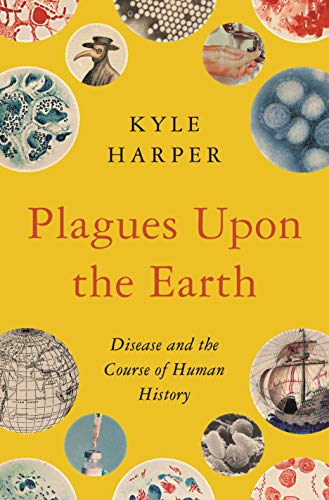
Tom Holland, a respected historian known for translating Herodotus and authoring acclaimed biographies, highlights this book as a key work in understanding disease history. His recommendation, "From his predictably brilliant new book on the history of disease, Plagues Upon The Earth," reflects how Kyle Harper's deep dive into humanity's tangled history with infectious disease reshaped Holland's perspective on global health and historical progress.
Kyle Harper is a historian of the classical world at the University of Oklahoma. His books include 'The Fate of Rome: Climate, Disease, and the End of an Empire' and 'From Shame to Sin: The Christian Transformation of Sexual Morality in Late Antiquity.'
Kyle Harper, a historian specializing in the classical world, offers a sweeping exploration of humanity's relationship with infectious disease, tracing its impact from our earliest origins through to modern pandemics. The book delves deep into how evolutionary forces and technological advances have shaped disease dynamics, linking plagues to major historical forces like slavery, colonialism, and capitalism. You'll gain an understanding of how disease influenced the rise of farming, urbanization, and global population growth, alongside the persistent tensions between human progress and microbial threats. This dense yet engaging narrative suits anyone curious about history, epidemiology, or the socio-economic patterns shaped by disease.
Nicholas A. Christakis is a physician and sociologist who directs the Human Nature Lab at Yale University and has held faculty positions at Harvard and the University of Chicago. His expertise spans medicine, sociology, and data science, giving him a unique perspective on how pandemics shape human society. His book explores the profound ways the coronavirus pandemic has altered social structures and behaviors, drawing from his extensive research on human nature and networks. This background makes his analysis both authoritative and deeply insightful.
Nicholas A. Christakis is a physician and sociologist who explores the ancient origins and modern implications of human nature. He directs the Human Nature Lab at Yale University, where he is the Sterling Professor of Social and Natural Science, in the Departments of Sociology, Medicine, Ecology and Evolutionary Biology, Statistics and Data Science, and Biomedical Engineering. He is the Co-Director of the Yale Institute for Network Science, the co-author of Connected, and the author of Blueprint. Previously, he conducted research and taught for many years at Harvard University and at the University of Chicago. He was on Time magazine’s list of the 100 most influential people in the world in 2009. He worked as a hospice physician in underserved communities in Chicago and Boston until 2011. Nowadays, he spends most of his time in the Human Nature Lab, where his team explores a broad set of ideas, including: understanding the evolutionary, genetic, and physiological bases of friendship; encouraging villages in the developing world to adopt new public health practices; mapping social networks in settings around the world; and developing artificial intelligence that helps humans address challenges in collective action. Christakis was elected a Fellow to the National Academy of Medicine of the National Academy of Sciences in 2006, to the American Association for the Advancement of Science in 2010, and to the American Academy of Arts and Sciences in 2017.
Nicholas A. Christakis challenges the conventional wisdom that pandemics are merely medical events by weaving together sociology, epidemiology, and history to reveal how the coronavirus reshaped society and human behavior. You gain insights into how infectious diseases interact with our social networks, influence public policy, and alter cultural norms, supported by compelling examples like historical epidemics and data-driven analyses from his Human Nature Lab. This book is especially suited for those interested in understanding the broad societal ripple effects of health crises, from policymakers to sociologists and health professionals.
An Taghrid Akthar, recognized authority on Twitter, highlighted this book with the simple yet powerful endorsement, "Great book." Their recommendation carries weight given the focus on infectious diseases and the urgency surrounding antibiotic resistance. This concise appraisal underscores how the book's blend of frontline medical experience and scientific exploration resonates with experts who value clarity and substance in addressing today's microbial threats.
Matt McCarthy is the author of two national bestsellers, The Real Doctor Will See You Shortly and Odd Man Out. He is an assistant professor of medicine at Weill Cornell and a staff physician at NewYork-Presbyterian Hospital, where he serves on the Ethics Committee. His work has appeared in Sports Illustrated, Slate, The New England Journal of Medicine, and Deadspin. He reviews nonfiction for USA Today and is editor-in-chief of Current Fungal Infection Reports.
Matt McCarthy, an assistant professor at Weill Cornell and frontline physician at NewYork-Presbyterian, draws from his direct experience in clinical trials to map the urgent fight against antibiotic-resistant bacteria. You’ll gain insight into the history of antibiotics, from Fleming’s penicillin discovery to modern CRISPR gene editing, alongside gripping patient stories illustrating the stakes of this race. This book is especially relevant if you want to understand how medical science confronts evolving microbial threats and the ethical challenges involved. The chapter on soil-based drug discovery and the profiles of patients like Remy and Donny provide concrete examples that ground the complex science in human reality.
The best Infectious Disease books and more, in your inbox each week. No account needed.
Conclusion
Together, these 21 books weave a rich tapestry of infectious disease history, science, and policy, highlighting the interplay of biology, society, and human resilience. They reveal how epidemics have shaped medical innovation, global cooperation, and social justice, offering lessons both cautionary and hopeful.
If you’re navigating pandemic preparedness or public health policy, starting with Bill Gates’ strategic insights in How to Prevent the Next Pandemic paired with Michael Lewis’s The Premonition offers a grounded understanding of crisis management. History buffs and medical professionals alike will find value in John M. Barry’s The Great Influenza and Kyle Harper’s sweeping Plagues Upon the Earth.
Alternatively, you can create a personalized Infectious Disease book to bridge the gap between general principles and your specific situation. These books can help you accelerate your learning journey and deepen your grasp of infectious disease challenges and opportunities.
Frequently Asked Questions
I'm overwhelmed by choice – which Infectious Disease book should I start with?
Start with How to Prevent the Next Pandemic by Bill Gates for a practical overview, or And the Band Played On to understand AIDS history. These provide foundational insights from different angles, preparing you for deeper exploration.
Are these books too advanced for someone new to Infectious Disease?
Not at all. Many titles like The Hot Zone and The Premonition use narrative storytelling to make complex topics accessible, while still offering expert-backed information suitable for newcomers.
What's the best order to read these Infectious Disease books?
Consider beginning with historical accounts like Pandemic 1918 and The Great Influenza, then move to contemporary analyses such as Viral and How to Prevent the Next Pandemic to see evolving challenges and responses.
Do these books assume I already have experience in Infectious Disease?
Most are written for a general audience interested in public health, history, and science, providing clear explanations without requiring prior expertise.
Can I skip around or do I need to read them cover to cover?
You can definitely skip around. Each book stands on its own with distinct focus areas, so pick those that best match your interests or current needs.
How can I apply these expert Infectious Disease books to my specific goals or industry?
While expert books offer broad perspectives, personalized Infectious Disease books can tailor insights to your background and objectives, bridging general knowledge with practical application. Explore creating your own tailored book to get targeted strategies that complement these expert recommendations.
📚 Love this book list?
Help fellow book lovers discover great books, share this curated list with others!