15 Learning Books That Experts Rely On to Accelerate Growth
Steven Pinker, Kevin Kelly, and 8 more top minds recommend these transformative Learning Books
Updated on June 28, 2025·We may earn commissions for purchases made via this page
We're launchingLaunching on Product Hunt today 🎉We just launchedJust launched on Product Hunt 🎉
Modelpeers, from the BookAuthority teamFrom the BookAuthority team: Modelpeers, a free way to follow AI models and agents like you follow people. We'd love your support.
What if the way you approach learning is missing crucial pieces? Many assume learning is just about discipline, but the latest insights reveal it’s a complex dance involving the brain, motivation, and environment. With a world that demands rapid adaptation, mastering how you learn has never been more urgent.
Experts like Steven Pinker, cognitive scientist and author, and Kevin Kelly, technology commentator, have turned to a select group of books that unpack the science and art of learning. Pinker praises Uncommon Sense Teaching for elevating education from guesswork to evidence-based practice. Kelly calls Make a "magnificent and rewarding" guide for hands-on skill-building. Their discoveries stem from real challenges and a desire to help others unlock potential efficiently.
While these expert-curated books provide proven frameworks, readers seeking content tailored to their specific background, skill level, and learning goals might consider creating a personalized Learning book that builds on these insights, blending science with your unique context for deeper impact.
This is a practical bridge between brain science and everyday teaching. It is written for teachers, parents and anyone interested in improving education.
Johnstone Family Professor of Psychology at Harvard University
“For too long, teaching has been treated as an inscrutable craft, with each practitioner fashioning idiosyncratic practices from intuition and experience. But like all professions, pedagogy can be improved through technology, research, and science. This trio of experts show how to elevate this dark art to an effective and enjoyable practice.” (from Amazon)
Barbara Oakley PhD, Beth Rogowsky EdD, Terrence J. Sejnowski(you?)·
About the Author
Barbara Oakley, PhD, is the bestselling author of A Mind for Numbers and a professor of engineering at Oakland University in Rochester, Michigan. Her research involves bioengineering with an emphasis on neuroscience and cognitive psychology. Dr. Oakley is an internationally recognized expert on learning and on creating high-quality online materials for massive open online courses (MOOCs). With Terrence Sejnowski, she teaches one of the world's most popular MOOCs, called Learning How to Learn. Dr. Oakley has received many awards for her teaching, including the American Society of Engineering Education's Chester F. Carlson Award for technical innovation in education, the National Science Foundation New Century Scholar Award, and the Harold W. McGraw, Jr. Prize in Education.
Uncommon Sense Teaching applies neuroscience and cognitive science research to the classroom. It covers keeping students motivated, including in online learning, helping them retain information long-term and teaching inclusively across a wide range of abilities. Steven Pinker recommends Uncommon Sense Teaching: Practical Insights in Brain Science to Help Students Learn.
Top 10 Pick for Learning Ladders’ Best Books for Educators Summer 2021
Author of Science Through History and the Discovering Design series
“Mrs. Hollenbeck helps parents identify their children’s multiple intelligence strengths and then gives practical suggestions for how each major subject can be adapted to those styles. As the author of many science courses for homeschooling, I really appreciated her discussion of the various ways science can be personalized to meet the needs of each child as well as her approach to lab reports. More importantly, she emphasizes over and over again that each child is a unique masterpiece made by God. Whether you are a new homeschooling parent or a veteran homeschooler, you will benefit from reading 8 Great Smarts for Homeschoolers.” (from Amazon)
Tina Hollenbeck is a Jesus-follower, wife, mother, and homeschool advocate. She and her husband educated each of their children at home from birth through high school graduation. Tina owns The Homeschool Resource Roadmap, a free database that describes thousands of homeschool-oriented learning options. She also mentors homeschooling parents, aiming to help them see that they are designed and equipped for the task.
2021·160 pages·Homeschooling, Learning, Multiple Intelligences, Curriculum Design, Child Development
8 Great Smarts for Homeschoolers applies eight kinds of smarts to home education: word, logic, picture, music, body, nature, people and self. It adapts them to subjects including math, language arts, science, social studies, religious education, fine arts and electives. It also looks at how understanding these strengths supports family relationships in a homeschool.
This AI-created book on learning mastery is tailored to your specific goals and background. It focuses on the aspects of learning that matter most to you, whether that's improving memory, boosting focus, or refining study habits. By marrying expert knowledge with your unique interests and skill level, this book creates a clear pathway through complex learning concepts. It's designed to help you master learning techniques efficiently and effectively, without sifting through unrelated material.
TailoredRead AI creates personalized nonfiction books that adapt to your unique background, goals, and interests. Instead of reading generic content, you get a custom book written specifically for your profession, experience level, and learning objectives. Whether you're a beginner looking for fundamentals or an expert seeking advanced insights, TailoredRead crafts a book that speaks directly to you. Learn more.
This tailored book explores effective learning techniques designed specifically to match your background and learning goals. It examines the science behind how you absorb and retain information, revealing methods that align with your unique cognitive style and interests. By focusing on your specific needs, this guide helps you navigate complex expert content and distills key principles into actionable knowledge. The personalized approach ensures you engage with material relevant to your objectives, enhancing your learning efficiency and mastery. Whether you're aiming to deepen understanding or accelerate skill acquisition, this tailored book covers essential concepts in a way that resonates with your personal journey.
“For teachers hoping to transform their teaching practice, Peter has written a definitive source. Peter’s conversational style makes this work both interesting to read and easy to follow. He describes a rich set of practices that will help mathematics teachers transform, in a positive way, everything about their classroom. Peter turns the daunting challenge into something manageable with advice that is both believable and practical.” (from Amazon)
Dr. Peter Liljedahl is a Professor of Mathematics Education in the Faculty of Education at Simon Fraser University and author of the best-selling book, Building Thinking Classrooms in Mathematics (Grades K-12): 14 Teaching Practices for Enhancing Learning. Peter is a former high school mathematics teacher who has kept his research interest and activities close to the classroom. With a passion for fostering deep mathematical thinking and problem-solving skills, Peter has dedicated his career to reshaping classroom environments. His work emphasizes thinking, collaborative learning, and problem solving, leading to more effective and meaningful mathematics education experiences for students of all ages. Through his research-based innovative teaching methods, Peter continues to inspire educators worldwide to create dynamic and thought-provoking learning spaces. He consults regularly with teachers, schools, school districts, and ministries and departments of education on issues of teaching and learning, problem solving, assessment, numeracy, and building thinking classrooms. Peter has authored or co-authored 13 books, 45 book chapters, and 45 research articles on a wide range of topics including creativity in mathematics, the role of beliefs in the teaching and learning mathematics, and building thinking classrooms. He is the recipient of the Cmolik Prize for the Enhancement of Public Education (2017), The Margaret Sinclair Memorial Award Recognizing Innovation and Excellence in Mathematics Education (2018), and the Læringsprisen for Changing the way we think about Education in Denmark (2022).
Building Thinking Classrooms in Mathematics, Grades K-12 is a practical guide to teaching practices that create a setting for deep mathematics thinking. It explains the what, why and how of each practice. It also offers firsthand accounts and rich tasks to help teachers get started.
Recipient of Cmolik Prize for Public Education
Margaret Sinclair Memorial Award in Mathematics Education
Læringsprisen for Educational Innovation in Denmark
“This is the book I'd use next time I want to learn a new language. It employs an intelligent mix of the latest methods for learning a language on your own using the web, apps, and voice training tips in an accelerated time frame.” (from Amazon)
Gabriel Wyner graduated summa cum laude at USC, where he won the school’s Renaissance Award. His essay on language learning for Lifehacker.com was one of the site’s most read in 2012. After not getting anywhere in 5 years of high school language classes, he reached fluency in German in 14 weeks with the help of the immersive Middlebury Language Schools. As a result, he fell in love with the process of language learning, going on to spend two months in intensive Italian courses in Perugia, Italy. Searching for ways to bring the immersion experience into the home, he began to develop a system that rapidly builds fluency in short, daily sessions. In 2010, his efforts paid off. He learned French to fluency in 5 months, and then Russian in 10 months. Currently learning Japanese, Gabe learned Hungarian and Spanish between 2013-2017. His book on language learning – Fluent Forever: How to learn a language fast and never forget it – was released in 2014 and became a WSJ and USA Today national bestseller. In 2017, he launched the most successful crowdfunding campaign for an app in history, raising more than $1.7 million dollars to create The Fluent Forever App.
Fluent Forever lays out a method for learning a foreign language. It begins with pronunciation, links words to imagery rather than translations, and uses spaced repetition to memorize vocabulary. Kevin Kelly recommends Fluent Forever: How to Learn Any Language Fast and Never Forget It.
Stanislas Dehaene is the director of the Cognitive Neuroimaging Unit in Saclay, France, and the professor of experimental cognitive psychology at the Collège de France. He is currently the president of the Scientific Council of the French Ministry of Education. Dehaene is recognized as one of Europe’s most prominent brain scientists, known for his pioneering studies of 'the number sense' and the function of the 'visual word form area'. His research has been featured in numerous publications, and he has authored five books and over 400 scientific publications. His works have received several awards for best science writing.
How We Learn draws on computer science, neurobiology and cognitive psychology to explain how learning works. It compares the brain's learning abilities with those of machines. It also considers how to use those principles in schools, in universities and in everyday life.
This AI-created book on skill acceleration is crafted based on your learning background, current capabilities, and personal goals. You specify the areas and techniques you want to focus on, and the book is tailored to present the most relevant and effective steps for rapid improvement. This personalized approach makes the complex science of learning approachable and directly applicable to your unique situation. Instead of generic advice, you get a clear, actionable path designed to boost your retention and skill mastery efficiently.
TailoredRead AI creates personalized nonfiction books that adapt to your unique background, goals, and interests. Instead of reading generic content, you get a custom book written specifically for your profession, experience level, and learning objectives. Whether you're a beginner looking for fundamentals or an expert seeking advanced insights, TailoredRead crafts a book that speaks directly to you. Learn more.
This tailored book explores effective, step-by-step actions designed to boost your learning speed and retention. It covers a personalized pathway through proven techniques, cognitive science, and practical exercises that match your background and specific goals. By focusing on your unique interests, it reveals how to accelerate skill acquisition and deepen memory retention in a way that fits your learning style. The content draws from a broad synthesis of expert knowledge, making complex concepts accessible and relevant to you. Whether you want to master new skills rapidly or improve your study habits, this book provides a focused learning experience tailored just for your needs.
“Imagine the ideal academic advisor, who knows all of the tricks of the trade and is happy to take the time to guide you. Now make that advisor not only deep and wise, but also very funny. If such an advisor exists, it is probably Dr. Penn. This book is a marvelous tutorial on how to succeed as a student and scholar. It is steeped in the author” (from Amazon)
Dr. Paul Penn has been a lecturer in Psychology since 2007. He is a Chartered Scientist, Psychologist and member of the British Psychological Society’s Division of Academics, Researchers and Teachers in Psychology. He is also a fellow of Advance HE (formerly the Higher Education Academy). In June 2021 Paul was named the Higher Education Psychology Teacher of the Year in recognition of his efforts to improve the communication of advice from psychology on effective studying to students in higher education and those who support them. He offers consultancy on using psychological research to improve learning and presentation skills. Paul has a YouTube channel that provides video guides on effective studying.
The Psychology of Effective Studying guides university students through time management, academic reading, note-taking, academic integrity, written assignments, teamwork and presentations. It uses evidence from psychology to explain common study errors and how to fix them. Robert Bjork recommends The Psychology of Effective Studying: How to Succeed in Your Degree.
Higher Education Psychology Teacher of the Year 2021
Astrophysicist, Data Science Thought Leader, and Founder of Data Leadership Group
“Another excellent book by Jo Boaler >> "Mathematical Mindsets: Unleashing Students' Potential through Creative Math, Inspiring Messages and Innovative Teaching" ... Mathematics DataLiteracy DataFluency Reminds me of my interview” (from X)
Jo Boaler is the Nominelli-Olivier Professor of Mathematics Education at Stanford University and the Co-Founder and Faculty Director of youcubed. She is a White House presenter on girls and STEM, was named one of eight people changing the face of education by the BBC, and she has authored eighteen books, including the series Mindset Mathematics for grades K-8.
Mathematical Mindsets offers a blueprint for overcoming math anxiety and building confidence through the mindset framework. This edition adds more recent research, ideas on equitable grouping in classrooms and initiatives for K-12 mathematics.
Anders Ericsson, PhD, is Conradi Eminent Scholar and Professor of Psychology at Florida State University. He studies expert performance in domains such as music, chess, medicine, and sports, and how expert performers attain their superior performance by acquiring complex cognitive mechanisms through extended deliberate practice. He has edited the 'Cambridge Handbook of Expertise and Expert Performance' (2006) and 'The Development of Professional Expertise' (2009). In the book 'Outliers', Malcolm Gladwell based his '10,000 hour rule' on Ericsson and colleagues’ research on musicians.
2016·336 pages·Skill Building, Learning, Deliberate Practice, Expert Performance, Cognitive Training
Peak argues that exceptional abilities are acquired through training rather than innate talent. It also contends that how practice hours are used matters as much as how many there are.
Daniel Coyle is a journalist and New York Times bestselling author known for his insightful exploration of talent development. His works, including 'The Talent Code', delve into the science of skill acquisition and the factors that contribute to greatness. Coyle has traveled extensively to talent hotbeds around the world, gathering firsthand research that informs his writing. His unique perspective combines cutting-edge neurology with practical advice for parents, teachers, and coaches, making his insights accessible to a broad audience.
The Talent Code draws on neurology and visits to talent hotbeds to explain how skill grows. It is organized around three elements: deep practice, ignition and master coaching.
“A magnificent and rewarding book. ... Every step of this structured instruction is expertly illustrated with photos and crisp diagrams.... This really is the best way to learn.” (from Amazon)
Charles Platt is a contributing editor and regular columnist for Make magazine, where he writes about electronics and tools. Platt was a senior writer for Wired magazine, has written various computer books, and has been fascinated by electronics since he put together a telephone answering machine from a tape recorder and military-surplus relays at age 15. He lives in a Northern Arizona wilderness area, where he has his own workshop for prototype fabrication and the projects that he writes about for Make magazine.
Make: Electronics explores the properties and uses of discrete components such as resistors, capacitors, transistors, inductors, diodes and integrated circuit chips. It also advises on the tools and supplies needed. Tom Igoe recommends Make: Electronics: Learning by Discovery: A hands-on primer for the new electronics enthusiast.
Former U.S. Senator; President Emeritus, The New School
“Every parent and student who were already online learners or who have been pushed by the pandemic into the online world should read this book. Professor Kosslyn has dedicated his academic life to the study of how human beings learn and has developed extremely valuable lessons in how to thrive in a virtual classroom.” (from Amazon)
Stephen M. Kosslyn is currently the Founder, President and Chief Academic Officer of Foundry College and is Founder and President of Active Learning Sciences. Prior to that, he was Founding Dean and Chief Academic Officer of the Minerva Schools at the Keck Graduate Institute. He previously served as Director of the Center for Advanced Study in the Behavioral Sciences at Stanford University after having been chair of the Department of Psychology, Dean of Social Science, and the John Lindsley Professor of Psychology at Harvard University. While at Harvard, he was also co-director of the Mind of the Market Lab at Harvard Business School and a member of the Department of Neurology at the Massachusetts General Hospital. He received a B.A. from UCLA and a Ph.D. from Stanford University, both in psychology. Kosslyn's research has focused on the nature of visual cognition, visual communication, and the science of learning; he has authored or coauthored 15 books and over 350 papers on these topics. Kosslyn has received numerous honors, including the National Academy of Sciences Initiatives in Research Award, a Guggenheim Fellowship, three honorary Doctorates (University of Caen, University of Paris Descartes, Bern University), and election to the American Academy of Arts and Sciences.
Active Learning Online presents five science-of-learning principles for online courses: deep processing, chunking, building associations, dual coding and deliberate practice. It provides ready-to-use active learning exercises and tools for designing new ones, for both live and asynchronous courses.
“Just finished the book Limitless by Jim Kwik. Absolute brilliant book. I’ve never had a book that actively changed me and my mindset as I was reading it. I cannot recommend this book enough.” (from X)
Jim Kwik is a widely recognized world expert in memory improvement, brain optimization, and accelerated learning. After a childhood brain injury left him with learning challenges, Kwik created strategies to dramatically enhance his mental performance. He has since dedicated his life to helping others unleash their brains’ true potential. For more than 30 years, he has served as the brain coach to a who’s who of Hollywood elite, professional athletes, political leaders, and business magnates, with corporate clients that include Google, Virgin, Nike, Zappos, SpaceX, GE, 20th Century Fox, Cleveland Clinic, WordPress, and such institutions as the United Nations, U.S. Air Force, Caltech, Harvard University, and Singularity University. Through keynote speeches, he reaches in-person live audiences totaling over 200,000 every year; his online videos have garnered hundreds of millions of views. Kwik is regularly featured in media, including Forbes, HuffPost, Fast Company, Inc., Good Morning America, Entertainment Tonight, CNBC, and the cover of Entrepreneur magazine. He is the host of the acclaimed Kwik Brain podcast. KwikLearning.com’s online courses are used by students in 195 countries. Kwik, an advocate for brain health and global education, is also a philanthropist funding projects ranging from Alzheimer’s research to the creation of schools from Guatemala to Kenya, providing health care, clean water, and learning for children in need. His mission: No brain left behind.
Limitless offers practices for self-learning, memory, focus, recall and speed reading, organized around mindset, motivation and methods. This expanded edition adds chapters on A.I., nootropics and nutrition, work settings, and a brain-type self-assessment.
“So excited for the release of "UDL and Blended Learning: Thriving in Flexible Learning Landscapes" by Katie Novak & Catlin Tucker! The book is full of great ideas & stories by these two incredible leaders!” (from X)
Katie Novak, Ed.D. is an internationally renowned education consultant as well as a practicing leader in education in Massachusetts. With over 20 years of experience in teaching and administration, an earned doctorate in curriculum and teaching, and 16 published books, Katie designs and presents workshops both nationally and internationally focusing on the implementation of Universal Design for Learning (UDL), inclusive practices, multi-tiered systems, and universally designed leadership. Dr. Novak is the author of the best-selling titles, UDL Now! A Teacher’s Guide to Applying Universal Design for Learning in Today’s Classrooms, Innovate Inside the Box, Equity by Design, UDL and Blended Learning, Unlearning, and The Shift to Student-Led. Novak’s work in UDL has impacted educators worldwide as her contributions and collaborations have built upon the foundation for an educational framework that is critical for student success. Partnering with her for professional development will ensure an engaging, motivating experience that will improve the practice of all educators in attendance.
UDL and Blended Learning combines Universal Design for Learning with blended learning to help educators create flexible learning pathways. It gives step-by-step strategies focused on community, equity and accessibility for all learners.
Past President of the National Council of Teachers of Mathematics
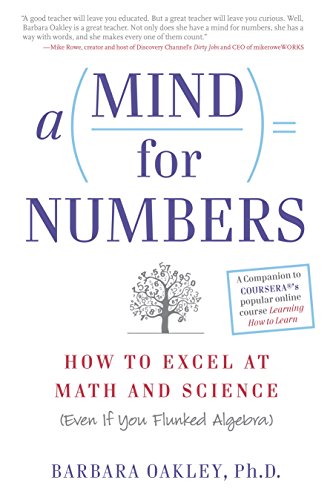
“A Mind for Numbers is an excellent book about how to approach mathematics, science, or any realm where problem solving plays a prominent role.” (from Amazon)
Barbara Oakley is a professor of engineering at Oakland University in Rochester, Michigan. Her research has been termed 'revolutionary' by the Wall Street Journal. She has received many national awards for her teaching, including the American Society of Engineering Education Chester F. Carlson Award for outstanding technical innovation in STEM pedagogy and the Theo L. Pilkington Award for exemplary work in bioengineering education. Her Coursera-UC San Diego course Learning How to Learn, created with her co-instructor Terrence Sejnowski, the Francis Crick Professor at the Salk Institute, is the most popular massive open online course in the world, with nearly 2 million students to date.
A Mind for Numbers offers tools for grasping math and science, with an emphasis on creative as well as analytical thinking. It is the companion book to the Coursera course Learning How to Learn. Adam Grant recommends A Mind for Numbers: How to Excel at Math and Science (Even If You Flunked Algebra).
Patrick Spain is an expert in foreign language education with a special passion for Spanish. With years of experience as a teacher and trainer, he has helped thousands of students achieve their language-learning goals in a practical and engaging way. Patrick Spain’s mission is to make learning Spanish accessible and enjoyable for everyone. He firmly believes that anyone can learn a new language, regardless of age or starting level. That’s why his books combine innovative methods, practical exercises, and cultural content to motivate and inspire learners.
Learn Spanish combines grammar, beginner material, common words and phrases, short stories with English versions, and exercises. Its lessons are designed to be short for learners with limited time.
The best Learning books and more, in your inbox each week. No account needed.
Conclusion
This collection of 15 Learning books converges on a few key themes: understanding the brain’s role in learning, applying deliberate and active practice, and embracing personalized approaches. If you’re new to learning strategies, starting with Uncommon Sense Teaching and How We Learn provides a solid foundation in brain science. Those looking to enhance specific skills should pair Peak with The Talent Code for practical practice methods.
Educators and parents will find Building Thinking Classrooms and 8 Great Smarts for Homeschoolers invaluable for transforming learning environments tailored to individual needs. For language learners, Fluent Forever and Learn Spanish offer scientifically informed paths to fluency.
Alternatively, you can create a personalized Learning book to bridge the gap between general principles and your specific situation. These books can help you accelerate your learning journey and unlock greater potential faster than you might expect.
Frequently Asked Questions
I'm overwhelmed by choice – which book should I start with?
Start with Uncommon Sense Teaching or How We Learn. Both offer foundational insights into brain science and practical strategies that apply across subjects, setting a strong base for all learners.
Are these books suitable for beginners in learning strategies?
Yes, many like The Psychology of Effective Studying and A Mind for Numbers are designed for newcomers, offering accessible advice without requiring prior expertise.
Do I need to read all of these books, or can I pick just one?
You can pick based on your goals—focus on books that align with your interests, whether it’s language learning, math, or teaching methods. Each book stands strong individually.
Which books offer the most actionable advice I can use right away?
Active Learning Online and Limitless Expanded Edition provide practical exercises and techniques you can implement immediately to boost engagement and brain performance.
Are there any conflicting ideas among these books?
While approaches vary, such as emphasis on neuroscience or hands-on practice, they complement rather than contradict each other, offering a richer understanding when combined.
Can I get tailored learning advice instead of general books?
Absolutely. While these expert books provide solid frameworks, you can also create a personalized Learning book tailored to your unique background and goals to maximize relevance and impact.
📚 Love this book list?
Help fellow book lovers discover great books, share this curated list with others!