15 Learning Books That Experts Rely On to Accelerate Growth
Steven Pinker, Kevin Kelly, and 8 more top minds recommend these transformative Learning Books
Updated on June 28, 2025·We may earn commissions for purchases made via this page
14 of 15 books have Kindle versions
We're launchingLaunching on Product Hunt today 🎉We just launchedJust launched on Product Hunt 🎉
Modelpeers, from the BookAuthority teamFrom the BookAuthority team: Modelpeers, a free way to follow AI models and agents like you follow people. We'd love your support.
What if the way you approach learning is missing crucial pieces? Many assume learning is just about discipline, but the latest insights reveal it’s a complex dance involving the brain, motivation, and environment. With a world that demands rapid adaptation, mastering how you learn has never been more urgent.
Experts like Steven Pinker, cognitive scientist and author, and Kevin Kelly, technology commentator, have turned to a select group of books that unpack the science and art of learning. Pinker praises Uncommon Sense Teaching for elevating education from guesswork to evidence-based practice. Kelly calls Make a "magnificent and rewarding" guide for hands-on skill-building. Their discoveries stem from real challenges and a desire to help others unlock potential efficiently.
While these expert-curated books provide proven frameworks, readers seeking content tailored to their specific background, skill level, and learning goals might consider creating a personalized Learning book that builds on these insights, blending science with your unique context for deeper impact.
Steven Pinker, a cognitive scientist and author, highlights the transformation this book brings to teaching by applying scientific rigor to what has long been treated as an art. He notes, "For too long, teaching has been treated as an inscrutable craft, with each practitioner fashioning idiosyncratic practices from intuition and experience." This perspective shift from intuition to evidence-based methods changed how he views education's potential. His endorsement signals that if you want to understand teaching through the lens of neuroscience and research, this book offers a compelling foundation. Similarly, Julie Bogart praises its inclusivity and practical insights for educators and parents alike.
“For too long, teaching has been treated as an inscrutable craft, with each practitioner fashioning idiosyncratic practices from intuition and experience. But like all professions, pedagogy can be improved through technology, research, and science. This trio of experts show how to elevate this dark art to an effective and enjoyable practice.” (from Amazon)
Barbara Oakley PhD, Beth Rogowsky EdD, Terrence J. Sejnowski(you?)·
About the Author
Barbara Oakley, PhD, is the bestselling author of A Mind for Numbers and a professor of engineering at Oakland University in Rochester, Michigan. Her research involves bioengineering with an emphasis on neuroscience and cognitive psychology. Dr. Oakley is an internationally recognized expert on learning and on creating high-quality online materials for massive open online courses (MOOCs). With Terrence Sejnowski, she teaches one of the world's most popular MOOCs, called Learning How to Learn. Dr. Oakley has received many awards for her teaching, including the American Society of Engineering Education's Chester F. Carlson Award for technical innovation in education, the National Science Foundation New Century Scholar Award, and the Harold W. McGraw, Jr. Prize in Education.
Drawing from decades of experience in neuroscience and engineering, Barbara Oakley and her co-authors provide a fresh lens on how brain science can enhance teaching methods. You learn practical strategies to keep students motivated, engage diverse learners, and improve long-term memory retention, with clear examples like techniques for online education and inclusive classrooms. The book benefits educators at any stage, as well as parents eager to support their children's learning effectively. Its chapters unpack cognitive principles behind learning processes, making complex science approachable and immediately relevant to everyday teaching challenges.
Top 10 Pick for Learning Ladders’ Best Books for Educators Summer 2021
Jay Wile, author of the Discovering Design science series, brings a seasoned perspective to homeschooling through his detailed review of this book. He highlights how Mrs. Hollenbeck helps parents pinpoint their children's multiple intelligence strengths and adapt subjects accordingly, praising her thoughtful approach to making science accessible and meaningful. His appreciation for the emphasis on each child as a "unique masterpiece made by God" reflects a heartfelt endorsement grounded in practical experience. This perspective encourages you to consider this guide as a valuable tool to deepen your homeschooling approach. Also, Ginger Hubbard remarks on the book's power to nurture confident, passionate learners, underscoring its impact on family education.
“Mrs. Hollenbeck helps parents identify their children’s multiple intelligence strengths and then gives practical suggestions for how each major subject can be adapted to those styles. As the author of many science courses for homeschooling, I really appreciated her discussion of the various ways science can be personalized to meet the needs of each child as well as her approach to lab reports. More importantly, she emphasizes over and over again that each child is a unique masterpiece made by God. Whether you are a new homeschooling parent or a veteran homeschooler, you will benefit from reading 8 Great Smarts for Homeschoolers.” (from Amazon)
Tina Hollenbeck is a Jesus-follower, wife, mother, and homeschool advocate. She and her husband educated each of their children at home from birth through high school graduation. Tina owns The Homeschool Resource Roadmap, a free database that describes thousands of homeschool-oriented learning options. She also mentors homeschooling parents, aiming to help them see that they are designed and equipped for the task.
2021·160 pages·Homeschooling, Learning, Multiple Intelligences, Curriculum Design, Child Development
Unlike most homeschooling books that offer generic advice, this guide zeroes in on how children learn differently through eight distinct intelligences identified by co-author Kathy Koch. Tina Hollenbeck, drawing from her extensive homeschooling experience and leadership in the community, connects these "smarts" directly to core subjects like math and science, showing you how to tailor lessons in concrete ways—such as adapting lab reports to fit different learning styles. You gain insights not only on curriculum design but also on nurturing family dynamics by understanding each child’s unique strengths. This book suits parents deeply invested in customizing education, rather than those seeking a one-size-fits-all approach.
This AI-created book on learning mastery is tailored to your specific goals and background. It focuses on the aspects of learning that matter most to you, whether that's improving memory, boosting focus, or refining study habits. By marrying expert knowledge with your unique interests and skill level, this book creates a clear pathway through complex learning concepts. It's designed to help you master learning techniques efficiently and effectively, without sifting through unrelated material.
TailoredRead AI creates personalized nonfiction books that adapt to your unique background, goals, and interests. Instead of reading generic content, you get a custom book written specifically for your profession, experience level, and learning objectives. Whether you're a beginner looking for fundamentals or an expert seeking advanced insights, TailoredRead crafts a book that speaks directly to you. Learn more.
This tailored book explores effective learning techniques designed specifically to match your background and learning goals. It examines the science behind how you absorb and retain information, revealing methods that align with your unique cognitive style and interests. By focusing on your specific needs, this guide helps you navigate complex expert content and distills key principles into actionable knowledge. The personalized approach ensures you engage with material relevant to your objectives, enhancing your learning efficiency and mastery. Whether you're aiming to deepen understanding or accelerate skill acquisition, this tailored book covers essential concepts in a way that resonates with your personal journey.
David Wees, a respected math educator and advocate for effective teaching, recommends this book as a transformative resource for teachers. He discovered it while seeking ways to revitalize his classroom, and found Peter Liljedahl’s conversational approach both engaging and approachable. "For teachers hoping to transform their teaching practice, Peter has written a definitive source," he says, highlighting how the book breaks down complex challenges into manageable practices. This endorsement underscores why you should consider this guide if you want to rethink how math learning happens in your classroom.
“For teachers hoping to transform their teaching practice, Peter has written a definitive source. Peter’s conversational style makes this work both interesting to read and easy to follow. He describes a rich set of practices that will help mathematics teachers transform, in a positive way, everything about their classroom. Peter turns the daunting challenge into something manageable with advice that is both believable and practical.” (from Amazon)
Dr. Peter Liljedahl is a Professor of Mathematics Education in the Faculty of Education at Simon Fraser University and author of the best-selling book, Building Thinking Classrooms in Mathematics (Grades K-12): 14 Teaching Practices for Enhancing Learning. Peter is a former high school mathematics teacher who has kept his research interest and activities close to the classroom. With a passion for fostering deep mathematical thinking and problem-solving skills, Peter has dedicated his career to reshaping classroom environments. His work emphasizes thinking, collaborative learning, and problem solving, leading to more effective and meaningful mathematics education experiences for students of all ages. Through his research-based innovative teaching methods, Peter continues to inspire educators worldwide to create dynamic and thought-provoking learning spaces. He consults regularly with teachers, schools, school districts, and ministries and departments of education on issues of teaching and learning, problem solving, assessment, numeracy, and building thinking classrooms. Peter has authored or co-authored 13 books, 45 book chapters, and 45 research articles on a wide range of topics including creativity in mathematics, the role of beliefs in the teaching and learning mathematics, and building thinking classrooms. He is the recipient of the Cmolik Prize for the Enhancement of Public Education (2017), The Margaret Sinclair Memorial Award Recognizing Innovation and Excellence in Mathematics Education (2018), and the Læringsprisen for Changing the way we think about Education in Denmark (2022).
After analyzing years of classroom observations and teacher struggles, Peter Liljedahl developed a clear framework for transforming math education through 14 specific teaching practices. You’ll learn how to create a classroom environment that naturally encourages deep thinking and collaboration, moving beyond rote procedures to genuine mathematical engagement. The book offers detailed descriptions and examples of these practices, including how to set up tasks and structure interactions to foster student thinking. If you teach math or design curriculum for K-12, this book provides concrete, research-based strategies to rethink how learning happens in your classroom.
Recipient of Cmolik Prize for Public Education
Margaret Sinclair Memorial Award in Mathematics Education
Læringsprisen for Educational Innovation in Denmark
Kevin Kelly, known for his deep insights into technology and learning, highlights this book as his go-to resource for language acquisition. He praises its "intelligent mix of the latest methods for learning a language on your own using the web, apps, and voice training tips in an accelerated time frame." His endorsement reflects his experience navigating global cultures and languages during extensive travel, making this approach practical for anyone seeking efficient self-study techniques. Complementing his view, Ilan Stavans admires how the book offers a playful yet serious toolbox for mastering languages, underscoring its broad appeal to learners ready to embrace new linguistic challenges.
“This is the book I'd use next time I want to learn a new language. It employs an intelligent mix of the latest methods for learning a language on your own using the web, apps, and voice training tips in an accelerated time frame.” (from Amazon)
Gabriel Wyner graduated summa cum laude at USC, where he won the school’s Renaissance Award. His essay on language learning for Lifehacker.com was one of the site’s most read in 2012. After not getting anywhere in 5 years of high school language classes, he reached fluency in German in 14 weeks with the help of the immersive Middlebury Language Schools. As a result, he fell in love with the process of language learning, going on to spend two months in intensive Italian courses in Perugia, Italy. Searching for ways to bring the immersion experience into the home, he began to develop a system that rapidly builds fluency in short, daily sessions. In 2010, his efforts paid off. He learned French to fluency in 5 months, and then Russian in 10 months. Currently learning Japanese, Gabe learned Hungarian and Spanish between 2013-2017. His book on language learning – Fluent Forever: How to learn a language fast and never forget it – was released in 2014 and became a WSJ and USA Today national bestseller. In 2017, he launched the most successful crowdfunding campaign for an app in history, raising more than $1.7 million dollars to create The Fluent Forever App.
Gabriel Wyner, a linguist who struggled through traditional language classes, crafted this method to transform how you learn languages. You’ll discover how to retrain your ear and tongue using techniques borrowed from opera singers, followed by memorization strategies that rely on connecting sounds to images rather than translations. For example, the book dives into pronunciation exercises in early chapters and introduces spaced repetition to cement vocabulary efficiently. If you’ve ever felt stuck or frustrated by language apps or classrooms, this book offers an alternative approach that emphasizes your brain’s natural learning processes, making it a strong fit for self-motivated learners aiming for lasting fluency.
Scientific American Mind, a respected neuroscience publication, highlights Stanislas Dehaene's mastery by calling him a "maestro of the unconscious." Their deep expertise in brain science lends weight to this endorsement. This book reshaped their understanding by revealing the hidden brain mechanisms behind learning, bridging neuroscience with cognitive psychology. Similarly, The New York Times Book Review praises it as an "illuminating dive into the latest science on our brain's remarkable learning abilities and the potential of the machines we program to imitate them," reinforcing why you should consider this book if you want a scientifically grounded perspective on how learning truly works.
Stanislas Dehaene is the director of the Cognitive Neuroimaging Unit in Saclay, France, and the professor of experimental cognitive psychology at the Collège de France. He is currently the president of the Scientific Council of the French Ministry of Education. Dehaene is recognized as one of Europe’s most prominent brain scientists, known for his pioneering studies of 'the number sense' and the function of the 'visual word form area'. His research has been featured in numerous publications, and he has authored five books and over 400 scientific publications. His works have received several awards for best science writing.
Unlike most learning books that focus on superficial tips, Stanislas Dehaene draws on decades of neuroscience to explain how our brains actually acquire and process knowledge. As director of a cognitive neuroimaging unit and professor at the Collège de France, he reveals the biological foundations of learning, detailing how brain circuits adapt and how this impacts education and daily life. For example, he explores the brain's 'visual word form area' to explain reading acquisition, blending cognitive psychology with cutting-edge brain imaging. If you want to understand the science behind learning mechanisms and improve your educational approach, this book offers solid insights without hype.
This AI-created book on skill acceleration is crafted based on your learning background, current capabilities, and personal goals. You specify the areas and techniques you want to focus on, and the book is tailored to present the most relevant and effective steps for rapid improvement. This personalized approach makes the complex science of learning approachable and directly applicable to your unique situation. Instead of generic advice, you get a clear, actionable path designed to boost your retention and skill mastery efficiently.
TailoredRead AI creates personalized nonfiction books that adapt to your unique background, goals, and interests. Instead of reading generic content, you get a custom book written specifically for your profession, experience level, and learning objectives. Whether you're a beginner looking for fundamentals or an expert seeking advanced insights, TailoredRead crafts a book that speaks directly to you. Learn more.
This tailored book explores effective, step-by-step actions designed to boost your learning speed and retention. It covers a personalized pathway through proven techniques, cognitive science, and practical exercises that match your background and specific goals. By focusing on your unique interests, it reveals how to accelerate skill acquisition and deepen memory retention in a way that fits your learning style. The content draws from a broad synthesis of expert knowledge, making complex concepts accessible and relevant to you. Whether you want to master new skills rapidly or improve your study habits, this book provides a focused learning experience tailored just for your needs.
Steven Pinker, a renowned cognitive psychologist, recognizes this book as "One of psychology's" insightful contributions to effective learning strategies. His endorsement carries weight, given his extensive work in understanding human cognition. Pinker's appreciation highlights how the book reshaped his perspective on study habits, emphasizing psychological evidence over intuition. This aligns with the experiences of Stephen Kosslyn, President and CEO of Foundry College, who describes Paul Penn as an ideal academic advisor combining wisdom with humor. Their perspectives suggest this book offers a grounded yet engaging approach to mastering academic success.
Dr. Paul Penn has been a lecturer in Psychology since 2007. He is a Chartered Scientist, Psychologist and member of the British Psychological Society’s Division of Academics, Researchers and Teachers in Psychology. He is also a fellow of Advance HE (formerly the Higher Education Academy). In June 2021 Paul was named the Higher Education Psychology Teacher of the Year in recognition of his efforts to improve the communication of advice from psychology on effective studying to students in higher education and those who support them. He offers consultancy on using psychological research to improve learning and presentation skills. Paul has a YouTube channel that provides video guides on effective studying.
Paul Penn's decades of experience as a psychology lecturer and Higher Education Psychology Teacher of the Year inform this guide to mastering essential study skills. You’ll learn practical insights into time management, academic reading, note-taking, and teamwork, all grounded in psychological research explaining common student errors. For example, the book breaks down how to avoid ineffective study habits by applying cognitive science principles, making it especially useful for undergraduates starting their degrees. Its engaging tone, with cultural references and humor, makes complex concepts accessible, though those seeking advanced or graduate-level strategies might find it basic. This is a straightforward, psychologically informed manual for anyone aiming to improve their academic performance.
Higher Education Psychology Teacher of the Year 2021
Kirk Borne, principal data scientist and astrophysicist, highlights the impact of Jo Boaler's book on his perspective of math education. He appreciates how this work reshapes the narrative around math ability, emphasizing potential and creativity over innate talent. His recommendation underscores the book's value for those seeking fresh insights into mathematics education, especially in developing data literacy and fluency. "Another excellent book by Jo Boaler >> 'Mathematical Mindsets: Unleashing Students' Potential through Creative Math, Inspiring Messages and Innovative Teaching'" reflects his endorsement, inviting you to reconsider how math learning unfolds.
“Another excellent book by Jo Boaler >> "Mathematical Mindsets: Unleashing Students' Potential through Creative Math, Inspiring Messages and Innovative Teaching" #Mathematics #DataLiteracy #DataFluency Reminds me of my interview:” (from X)
Jo Boaler is the Nominelli-Olivier Professor of Mathematics Education at Stanford University and the Co-Founder and Faculty Director of youcubed. She is a White House presenter on girls and STEM, was named one of eight people changing the face of education by the BBC, and she has authored eighteen books, including the series Mindset Mathematics for grades K-8.
Drawing from her extensive experience as a Stanford mathematics education professor, Jo Boaler challenges the traditional notion that math ability is innate. She presents a research-backed framework that transforms math anxiety into confidence by cultivating a growth mindset. The book offers educators and parents practical methods to foster creativity and resilience in students, including equitable classroom grouping and 21st-century math initiatives. Chapters reveal how to reshape students' beliefs about math through inspiring messages and innovative teaching strategies. This approach suits educators aiming to unlock every child's potential, as well as parents eager to support their children's mathematical journey.
James Altucher, founder and CEO known for his deep insight into business and personal development, recognizes the value of this book for anyone serious about mastering skills. His endorsement signals the book’s relevance to those who seek to push beyond conventional learning limits. Alongside him, Michael Sliwinski, founder of productivity platform Nozbe, also supports the book’s approach, underlining its practical application in high-performance settings. Together, their recommendations highlight why this book remains influential for those aiming to understand and achieve expert-level performance.
Anders Ericsson, PhD, is Conradi Eminent Scholar and Professor of Psychology at Florida State University. He studies expert performance in domains such as music, chess, medicine, and sports, and how expert performers attain their superior performance by acquiring complex cognitive mechanisms through extended deliberate practice. He has edited the 'Cambridge Handbook of Expertise and Expert Performance' (2006) and 'The Development of Professional Expertise' (2009). In the book 'Outliers', Malcolm Gladwell based his '10,000 hour rule' on Ericsson and colleagues’ research on musicians.
2016·336 pages·Skill Building, Learning, Deliberate Practice, Expert Performance, Cognitive Training
K. Anders Ericsson, a psychology professor with decades studying expert performance, challenges the myth of innate talent in this book. Through detailed research on musicians, athletes, and chess players, you learn how deliberate, focused practice—not just time spent—shapes extraordinary skill. The book dives into concepts like deliberate practice and mental representations, illustrating with examples such as Mozart’s training and the chess-playing Polgar sisters. If you're aiming to understand how to truly develop your abilities beyond natural gifts, this book offers a clear path. However, it’s less about quick hacks and more about long-term commitment to skill mastery.
Jason Fried, co-founder and president of Basecamp, brings a unique perspective to productivity and skill mastery. His endorsement signals that this book resonates beyond traditional education circles into business leadership and innovation. Fried’s experience running a successful tech company suggests he values the book’s insights on deliberate practice and motivation as essential for growth. Alongside him, Dan Pink, known for his work on motivation, also aligns with the book’s exploration of passion’s role in developing talent, reinforcing its credibility across learning and workplace performance.
Daniel Coyle is a journalist and New York Times bestselling author known for his insightful exploration of talent development. His works, including 'The Talent Code', delve into the science of skill acquisition and the factors that contribute to greatness. Coyle has traveled extensively to talent hotbeds around the world, gathering firsthand research that informs his writing. His unique perspective combines cutting-edge neurology with practical advice for parents, teachers, and coaches, making his insights accessible to a broad audience.
Daniel Coyle, a journalist with extensive research trips to global talent hubs, explores the surprising science behind skill development. You’ll learn how “deep practice” rewires your brain faster than conventional drills, while the concept of “ignition” reveals how primal motivations spark lasting commitment. The book also breaks down the traits of master coaches who drive excellence. Whether you're nurturing young talent or pushing your own limits, it offers concrete insights into growing ability rather than relying on innate gifts. It’s especially useful if you want to understand the neurological basis of talent and how to cultivate it deliberately.
Kevin Kelly, known for his insightful commentary on technology, praises this book as a "magnificent and rewarding" guide with expertly illustrated instructions that transform learning electronics into an accessible adventure. His experience highlights how this book’s structured approach helped him grasp complex concepts through clear photos and crisp diagrams, making it an ideal resource for anyone eager to delve into electronics. Following his lead, Hans Camenzind, inventor of the 555 timer, succinctly declares it "teaching at its best," reinforcing the book’s credibility. Meanwhile, Tom Igoe, author of Physical Computing, appreciates its engaging tone and humor, noting how it eases fears and makes the subject approachable. Together, their endorsements signal that this primer is more than just theory—it’s an invitation to discover electronics by doing.
“A magnificent and rewarding book. ... Every step of this structured instruction is expertly illustrated with photos and crisp diagrams. . . . This really is the best way to learn.” (from Amazon)
Charles Platt is a contributing editor and regular columnist for Make magazine, where he writes about electronics and tools. Platt was a senior writer for Wired magazine, has written various computer books, and has been fascinated by electronics since he put together a telephone answering machine from a tape recorder and military-surplus relays at age 15. He lives in a Northern Arizona wilderness area, where he has his own workshop for prototype fabrication and the projects that he writes about for Make magazine.
What started as Charles Platt's youthful fascination with building a telephone answering machine evolved into a hands-on guide that demystifies electronics for enthusiasts at any level. You’ll gain a clear understanding of core components like resistors, capacitors, and transistors, along with practical advice on essential tools and supplies. Each chapter takes you through experiments that reveal how circuits work, making abstract concepts tangible by discovery rather than rote instruction. If you want to build a solid foundation in electronics with a book that encourages learning by doing, this primer suits you well, especially if you’re drawn to tinkering and creating rather than just theory.
Bob Kerrey, former U.S. Senator and President Emeritus of The New School, brings a unique perspective to the challenges of online education, especially during the pandemic-driven shift to virtual classrooms. He highlights how Stephen M. Kosslyn, a lifelong researcher in human learning, offers lessons that help both parents and students succeed in online environments. As Kerrey notes, "Every parent and student who were already online learners or who have been pushed by the pandemic into the online world should read this book." This endorsement underscores the book’s practical relevance for navigating today's digital learning landscape. Alongside Kerrey, Aaron Rasmussen, Founder and CEO of Outlier.org, praises the book as his go-to recommendation, appreciating its precise blend of theory and application that equips educators to design effective active learning experiences.
Former U.S. Senator; President Emeritus, The New School
“Every parent and student who were already online learners or who have been pushed by the pandemic into the online world should read this book. Professor Kosslyn has dedicated his academic life to the study of how human beings learn and has developed extremely valuable lessons in how to thrive in a virtual classroom.” (from Amazon)
Stephen M. Kosslyn is currently the Founder, President and Chief Academic Officer of Foundry College and is Founder and President of Active Learning Sciences. Prior to that, he was Founding Dean and Chief Academic Officer of the Minerva Schools at the Keck Graduate Institute. He previously served as Director of the Center for Advanced Study in the Behavioral Sciences at Stanford University after having been chair of the Department of Psychology, Dean of Social Science, and the John Lindsley Professor of Psychology at Harvard University. While at Harvard, he was also co-director of the Mind of the Market Lab at Harvard Business School and a member of the Department of Neurology at the Massachusetts General Hospital. He received a B.A. from UCLA and a Ph.D. from Stanford University, both in psychology. Kosslyn's research has focused on the nature of visual cognition, visual communication, and the science of learning; he has authored or coauthored 15 books and over 350 papers on these topics. Kosslyn has received numerous honors, including the National Academy of Sciences Initiatives in Research Award, a Guggenheim Fellowship, three honorary Doctorates (University of Caen, University of Paris Descartes, Bern University), and election to the American Academy of Arts and Sciences.
Drawing from decades of experience in psychology and education, Stephen M. Kosslyn developed principles that reshape how you approach online courses. You’ll explore five scientifically grounded concepts—deep processing, chunking, building associations, dual coding, and deliberate practice—that increase student engagement and retention. The book offers concrete exercises and frameworks to transform both synchronous and asynchronous learning environments, making abstract content stick and encouraging active participation. Whether you design courses or teach online, you’ll find tools to create tailored, interactive lessons that move beyond passive viewing. This isn’t just theory; the chapters provide ways to immediately apply these principles, improving learning outcomes in practical settings.
Mike Bennett, a motivational speaker and pro wrestler, found this book transformative during a period when shifting his mindset was crucial for personal growth. He shared, "Just finished the book Limitless by @jimkwik. Absolute brilliant book. I’ve never had a book that actively changed me and my mindset as I was reading it. I cannot recommend this book enough." His experience highlights how Jim Kwik’s insights can profoundly reshape your approach to learning and mental performance.
“Just finished the book Limitless by @jimkwik. Absolute brilliant book. I’ve never had a book that actively changed me and my mindset as I was reading it. I cannot recommend this book enough.” (from X)
Jim Kwik is a widely recognized world expert in memory improvement, brain optimization, and accelerated learning. After a childhood brain injury left him with learning challenges, Kwik created strategies to dramatically enhance his mental performance. He has since dedicated his life to helping others unleash their brains’ true potential. For more than 30 years, he has served as the brain coach to a who’s who of Hollywood elite, professional athletes, political leaders, and business magnates, with corporate clients that include Google, Virgin, Nike, Zappos, SpaceX, GE, 20th Century Fox, Cleveland Clinic, WordPress, and such institutions as the United Nations, U.S. Air Force, Caltech, Harvard University, and Singularity University. Through keynote speeches, he reaches in-person live audiences totaling over 200,000 every year; his online videos have garnered hundreds of millions of views. Kwik is regularly featured in media, including Forbes, HuffPost, Fast Company, Inc., Good Morning America, Entertainment Tonight, CNBC, and the cover of Entrepreneur magazine. He is the host of the acclaimed Kwik Brain podcast. KwikLearning.com’s online courses are used by students in 195 countries. Kwik, an advocate for brain health and global education, is also a philanthropist funding projects ranging from Alzheimer’s research to the creation of schools from Guatemala to Kenya, providing health care, clean water, and learning for children in need. His mission: No brain left behind.
Jim Kwik challenges the conventional wisdom that traditional learning methods suffice in today’s fast-paced world by offering a fresh approach grounded in neuroscience and practical brain training. Drawing on his personal experience overcoming childhood learning difficulties and three decades coaching elite performers, he breaks down mindset shifts, motivation drivers, and learning techniques that help you triple your reading speed, enhance memory, and master new skills rapidly. The expanded edition introduces insights on harnessing AI, nootropics, and adapting to modern work environments, making it a solid pick if you're eager to upgrade your cognitive abilities systematically. However, if you’re looking for purely academic theory, this book leans more toward applied mental performance enhancement.
George Couros, a widely respected educator and author known for shaping educational practices, highlighted his enthusiasm upon the release of "UDL and Blended Learning: Thriving in Flexible Learning Landscapes." He shared "So excited for the release of 'UDL and Blended Learning: Thriving in Flexible Learning Landscapes' by Katie Novak & Catlin Tucker! The book is full of great ideas & stories by these two incredible leaders!" His endorsement reflects how the book's innovative approach to combining Universal Design for Learning with blended strategies can inspire educators to create more adaptable and inclusive classrooms. If you’re looking to evolve your teaching methods in flexible learning contexts, this book offers a thoughtful guide from leaders deeply embedded in the field.
“So excited for the release of "UDL and Blended Learning: Thriving in Flexible Learning Landscapes" by Katie Novak & Catlin Tucker! The book is full of great ideas & stories by these two incredible leaders!” (from X)
Katie Novak, Ed.D. is an internationally renowned education consultant as well as a practicing leader in education in Massachusetts. With over 20 years of experience in teaching and administration, an earned doctorate in curriculum and teaching, and 16 published books, Katie designs and presents workshops both nationally and internationally focusing on the implementation of Universal Design for Learning (UDL), inclusive practices, multi-tiered systems, and universally designed leadership. Dr. Novak is the author of the best-selling titles, UDL Now! A Teacher’s Guide to Applying Universal Design for Learning in Today’s Classrooms, Innovate Inside the Box, Equity by Design, UDL and Blended Learning, Unlearning, and The Shift to Student-Led. Novak’s work in UDL has impacted educators worldwide as her contributions and collaborations have built upon the foundation for an educational framework that is critical for student success. Partnering with her for professional development will ensure an engaging, motivating experience that will improve the practice of all educators in attendance.
Katie Novak, an education consultant with over 20 years of hands-on experience and a doctorate in curriculum and teaching, collaborates with educator Catlin Tucker to address the evolving challenges of modern classrooms. The book delves into combining Universal Design for Learning (UDL) principles with blended learning models, offering you practical strategies to tailor education for diverse learners regardless of setting or pace. You’ll encounter chapters focusing on building inclusive communities, enhancing accessibility, and fostering equity, all grounded in real classroom applications. If you're an educator seeking to navigate flexible learning environments with intentionality and care, this book provides clear frameworks to meet your students where they are without overwhelming complexity.
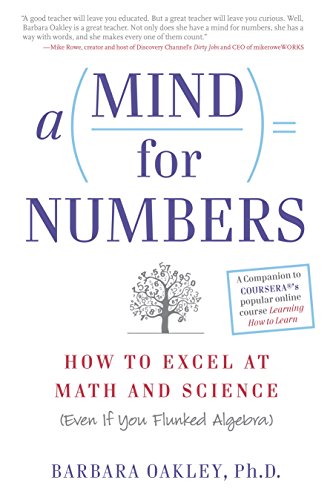
Michael Shaughnessy, past president of the National Council of Teachers of Mathematics, brings a wealth of expertise to his recommendation of this book, recognizing its value for anyone tackling mathematics or science. He praises it as an excellent guide for approaching problem solving, a skill that transcends disciplines. His endorsement reflects the book’s practical approach to learning, which helped reshape his own perspective on teaching these subjects. Alongside him, James Taranto, Op-Ed editor at The Wall Street Journal, highlights its accessible insights into human cognition and thinking improvement, making this book a solid choice for those ready to rethink how they learn.
Past President, National Council of Teachers of Mathematics
“A Mind for Numbers is an excellent book about how to approach mathematics, science, or any realm where problem solving plays a prominent role.” (from Amazon)
Barbara Oakley is a professor of engineering at Oakland University in Rochester, Michigan. Her research has been termed 'revolutionary' by the Wall Street Journal. She has received many national awards for her teaching, including the American Society of Engineering Education Chester F. Carlson Award for outstanding technical innovation in STEM pedagogy and the Theo L. Pilkington Award for exemplary work in bioengineering education. Her Coursera-UC San Diego course Learning How to Learn, created with her co-instructor Terrence Sejnowski, the Francis Crick Professor at the Salk Institute, is the most popular massive open online course in the world, with nearly 2 million students to date.
Barbara Oakley's journey from struggling student to engineering professor shapes this guide on mastering math and science. You learn to harness both focused and relaxed modes of thinking, discovering that creativity plays a vital role in solving problems, such as exploring multiple proofs of the Pythagorean Theorem. The book breaks down misconceptions about learning these subjects and offers tools that extend beyond STEM to any challenging topic. If you've ever felt stuck or overwhelmed by technical material, this book offers a fresh perspective on how to rewire your approach.
Patrick Spain is an expert in foreign language education with a special passion for Spanish. With years of experience as a teacher and trainer, he has helped thousands of students achieve their language-learning goals in a practical and engaging way. Patrick Spain’s mission is to make learning Spanish accessible and enjoyable for everyone. That’s why his books combine innovative methods, practical exercises, and cultural content to motivate and inspire learners.
Patrick Spain is an expert in foreign language education with a special passion for Spanish. With years of experience as a teacher and trainer, he has helped thousands of students achieve their language-learning goals in a practical and engaging way. Patrick Spain’s mission is to make learning Spanish accessible and enjoyable for everyone. He firmly believes that anyone can learn a new language, regardless of age or starting level. That’s why his books combine innovative methods, practical exercises, and cultural content to motivate and inspire learners.
When Patrick Spain realized how many struggle to find time and effective methods for learning Spanish, he crafted this book to break down barriers with accessible, bite-sized lessons. You’ll gain practical skills like essential grammar, over 2,000 common words, and conversational phrases, reinforced through 19 short stories paired with exercises to deepen retention. The book suits beginners and travelers eager to communicate confidently, as well as professionals seeking to expand language skills without costly courses. Chapters focus on real-world usage, making it easy to apply what you learn immediately, especially with the added audio and flashcard bonuses.
The best Learning books and more, in your inbox each week. No account needed.
Conclusion
This collection of 15 Learning books converges on a few key themes: understanding the brain’s role in learning, applying deliberate and active practice, and embracing personalized approaches. If you’re new to learning strategies, starting with Uncommon Sense Teaching and How We Learn provides a solid foundation in brain science. Those looking to enhance specific skills should pair Peak with The Talent Code for practical practice methods.
Educators and parents will find Building Thinking Classrooms and 8 Great Smarts for Homeschoolers invaluable for transforming learning environments tailored to individual needs. For language learners, Fluent Forever and Learn Spanish offer scientifically informed paths to fluency.
Alternatively, you can create a personalized Learning book to bridge the gap between general principles and your specific situation. These books can help you accelerate your learning journey and unlock greater potential faster than you might expect.
Frequently Asked Questions
I'm overwhelmed by choice – which book should I start with?
Start with Uncommon Sense Teaching or How We Learn. Both offer foundational insights into brain science and practical strategies that apply across subjects, setting a strong base for all learners.
Are these books suitable for beginners in learning strategies?
Yes, many like The Psychology of Effective Studying and A Mind for Numbers are designed for newcomers, offering accessible advice without requiring prior expertise.
Do I need to read all of these books, or can I pick just one?
You can pick based on your goals—focus on books that align with your interests, whether it’s language learning, math, or teaching methods. Each book stands strong individually.
Which books offer the most actionable advice I can use right away?
Active Learning Online and Limitless Expanded Edition provide practical exercises and techniques you can implement immediately to boost engagement and brain performance.
Are there any conflicting ideas among these books?
While approaches vary, such as emphasis on neuroscience or hands-on practice, they complement rather than contradict each other, offering a richer understanding when combined.
Can I get tailored learning advice instead of general books?
Absolutely. While these expert books provide solid frameworks, you can also create a personalized Learning book tailored to your unique background and goals to maximize relevance and impact.
📚 Love this book list?
Help fellow book lovers discover great books, share this curated list with others!