10 Linux and Unix Systems Programming Books That Define Mastery
Linux and Unix Systems Programming Books recommended by Julia Evans, Jason Cannon, and Robert Love for hands-on system expertise
Updated on June 23, 2025·We may earn commissions for purchases made via this page
9 of 10 books have Kindle versions
We're launchingLaunching on Product Hunt today 🎉We just launchedJust launched on Product Hunt 🎉
Modelpeers, from the BookAuthority teamFrom the BookAuthority team: Modelpeers, a free way to follow AI models and agents like you follow people. We'd love your support.
What if the very core of your Linux and Unix knowledge could be unlocked one chapter at a time? Linux and Unix systems programming isn't just a niche skill anymore — it's a gateway to understanding how your machine really works. From kernel internals to shell scripting, mastering these concepts powers everything from software development to system administration. The challenge? Finding resources that cut through technical complexity without drowning you in jargon.
Experts like Julia Evans, a programmer and zine author known for making Linux accessible, found their footing with books like The Linux Programming Interface. Jason Cannon, a seasoned Linux system engineer with experience at Amazon and Xerox, emphasizes practical shell scripting skills that simplify command line tasks. Meanwhile, Robert Love, a Google senior software engineer and kernel contributor, offers deep dives into kernel development that are invaluable for aspiring Linux developers.
While these expert-curated books provide proven frameworks and deep dives, if you want content tailored to your background, skill level, or specific goals in Linux and Unix systems programming, consider creating a personalized Linux and Unix Systems Programming book. This approach builds on expert insights while customizing your learning path for maximum impact.
Julia Evans, a well-known programmer and author, shared how this book became her favorite Linux reference. During her deep dives into Linux system programming, she found the concise chapters—typically under twenty pages—inviting and packed with fresh insights. As she put it, "I always learn something interesting by picking a chapter and reading it." This approachable format helped her explore complex topics without feeling overwhelmed, reshaping how she engages with system-level programming concepts.
“Hanging out with my favourite Linux book this morning. I love that the chapters are so short (usually less than 20 pages) and I always learn something interesting by picking a chapter and reading it.” (from X)
Michael Kerrisk has been using and programming UNIX systems for more than 20 years, and has taught many week-long courses on UNIX system programming. Since 2004, he has maintained the man-pages project, which produces the manual pages describing the Linux kernel and glibc programming APIs. He has written or co-written more than 250 of the manual pages and is actively involved in the testing and design review of new Linux kernel-userspace interfaces. Michael lives with his family in Munich, Germany.
Drawing from over two decades of UNIX system programming experience, Michael Kerrisk crafted this book as the go-to guide for mastering Linux and UNIX interfaces. You get detailed explanations of system calls and library functions essential for tasks like efficient file handling, process creation, interprocess communication, and multithreading with POSIX threads. With over 200 example programs and thorough coverage of Linux-specific features alongside POSIX standards, you’ll build a strong foundation in system programming. This book suits developers aiming to deepen their understanding of kernel interfaces and write robust, secure, and efficient system-level software.
W. Richard Stevens was the acclaimed author of UNIX® Network Programming and TCP/IP Illustrated, widely recognized as classics in UNIX networking. Stephen A. Rago, a Bell Labs developer who contributed to UNIX System V Release 4, updated this edition to reflect modern standards. Their combined expertise delivers unmatched depth on UNIX system programming, making it a definitive resource for programmers seeking to harness the power of UNIX and Linux kernels.
W. Richard Stevens was the acclaimed author of UNIX® Network Programming, Volumes 1 and 2, widely recognized as the classic texts in UNIX networking; TCP/IP Illustrated, Volumes 1-3; and the first edition of this book. Stephen A. Rago is the author of UNIX® System V Network Programming (Addison-Wesley, 1993). Rago was one of the Bell Laboratories developers who built UNIX System V Release 4. He served as a technical reviewer for the first edition of Advanced Programming in the UNIX® Environment. Rago currently works as a research staff member in the Storage Systems Group at NEC Laboratories America.
When W. Richard Stevens discovered the need for a thorough guide to UNIX system interfaces, he laid the foundation for what has become a cornerstone text. Building on Stevens' pioneering work, Stephen Rago updates this third edition with over seventy interfaces aligned with the Single UNIX Specification Version 4, including POSIX asynchronous I/O and thread programming. You’ll gain detailed insights into file systems, processes, signal handling, and socket-based IPC, supported by extensive examples and downloadable code. This book suits programmers aiming for deep mastery of UNIX/Linux system programming, but it demands commitment and prior knowledge to fully benefit.
This AI-created book on Linux and Unix systems programming is designed around your specific experience and goals. By sharing your current skill level and the programming topics you want to focus on, you receive a tailored guide that covers exactly what you need to develop deep systems programming expertise. Rather than a one-size-fits-all approach, this custom AI book hones in on the fundamentals most relevant to you, making the complexities of Linux and Unix systems more accessible and actionable.
TailoredRead AI creates personalized nonfiction books that adapt to your unique background, goals, and interests. Instead of reading generic content, you get a custom book written specifically for your profession, experience level, and learning objectives. Whether you're a beginner looking for fundamentals or an expert seeking advanced insights, TailoredRead crafts a book that speaks directly to you. Learn more.
This tailored book offers a comprehensive exploration of Linux and Unix systems programming fundamentals, providing a personalized framework that focuses on your specific background and goals. It presents core concepts such as system calls, process management, memory handling, and shell scripting, emphasizing practical strategies that fit your unique context. The book cuts through irrelevant advice by delivering content finely tuned to your current skill level and sub-topic interests, enabling efficient mastery of both foundational and advanced programming topics. Through a detailed yet accessible approach, it addresses kernel interfaces, multithreading, and interprocess communication, making complex systems programming principles more approachable and applicable to your individual learning path.
Robert Love is an open source programmer and senior software engineer at Google who has contributed extensively to the Linux kernel, including the Android kernel. His deep hands-on experience as Chief Architect of Linux Desktop at Novell and kernel engineer at MontaVista and Ximian uniquely qualifies him to guide you through the complexities of Linux kernel development. This book reflects his years of work on kernel features such as the preemptive kernel, process scheduling, and virtual memory, making it a valuable resource for anyone serious about Linux kernel programming.
Robert Love is an open source programmer, speaker, and author who has been using and contributing to Linux for more than 15 years. He is currently senior software engineer at Google, where he was a member of the team that developed the Android mobile platform’s kernel. Prior to Google, he was Chief Architect, Linux Desktop, at Novell. Before Novell, he was a kernel engineer at MontaVista Software and Ximian. Love’s kernel projects include the preemptive kernel, the process scheduler, the kernel events layer, inotify, VM enhancements, and several device drivers. He has given numerous talks on and has written multiple articles about the Linux kernel and is a contributing editor for Linux Journal. His other books include Linux System Programming and Linux in a Nutshell.
When Robert Love first realized how complex and nuanced the Linux kernel truly is, he set out to create a guide that demystifies its inner workings for programmers and developers alike. Drawing from his extensive experience as a core kernel developer and senior software engineer at Google, he systematically unpacks the major subsystems like process management, scheduling, memory handling, and synchronization. You’ll find detailed explanations on topics such as the CFS scheduler, preemptive kernel design, and debugging techniques, making the book especially useful if you write or maintain kernel code or want to deepen your understanding of Linux internals. The focus on the 2.6 Linux kernel and clear coverage of kernel data structures and patch submission processes means it’s best suited for developers committed to mastering kernel development rather than casual readers.
Robert Love has been a Linux user and hacker since the early days, actively contributing to the Linux kernel and GNOME communities. His work on kernel event layers and inotify, along with contributions to GNOME Volume Manager and NetworkManager, uniquely qualify him to author this guide. Currently working in Google's Open Source Program Office, Love channels his deep expertise into this book, offering you a direct line to understanding and programming Linux system internals.
Robert Love has been a Linux user and hacker since the early days. He is active in--and passionate about--the Linux kernel and GNOME desktop communities. His recent contributions to the Linux kernel include work on the kernel event layer and inotify. GNOME-related contributions include Beagle, GNOME Volume Manager, NetworkManager, and Project Utopia. Currently, Robert works in the Open Source Program Office at Google.
When Robert Love first realized the challenges developers face accessing Linux kernel services directly, he set out to bridge that gap with this book. Drawing from his extensive experience contributing to the Linux kernel and GNOME projects, Love provides clear explanations of Linux system calls, process management, multithreading, and memory optimization techniques. You’ll find detailed coverage on topics like advanced I/O interfaces and POSIX clock management, offering both theoretical background and practical insights. This book suits programmers aiming to deepen their understanding of Linux internals and write more efficient system-level code.
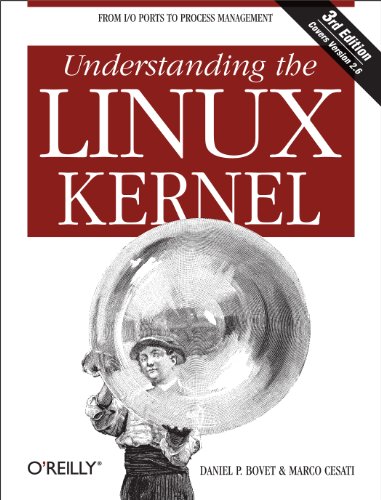
Daniel P. Bovet is a renowned computer scientist known for his deep contributions to operating systems and Linux kernel understanding. His collaboration with Marco Cesati has produced a text that guides you through Linux's intricate kernel architecture, offering insights that are valuable for both students and professionals eager to master system internals.
Daniel P. Bovet is a renowned computer scientist and co-author of several influential texts on operating systems and Linux. His work has significantly contributed to the understanding of kernel architecture and performance optimization. Alongside Marco Cesati, he has provided insights into the Linux kernel that are invaluable for both students and professionals in the field.
Unlike most Linux programming books that merely skim the surface, Daniel P. Bovet and Marco Cesati dive straight into the core of the kernel, revealing how Linux manages everything from CPU scheduling to memory allocation. You’ll gain a clear understanding of complex topics such as process creation, synchronization, and device driver interfaces, with code examples dissected line by line to solidify your grasp. This book suits you if you want to move beyond usage into the mechanics that make Linux efficient and responsive across diverse hardware. Chapters on memory management and the virtual filesystem provide concrete insights that help you optimize or troubleshoot real-world systems with confidence.
This AI-created book on Linux programming is designed around your current skills and objectives. You share your background, desired focus areas, and goals, and the book delivers a tailored daily plan to guide you through practical coding exercises and essential Linux concepts. Personalization makes sense here because Linux system programming involves complex, layered topics that benefit from targeted learning paths rather than one-size-fits-all guides.
TailoredRead AI creates personalized nonfiction books that adapt to your unique background, goals, and interests. Instead of reading generic content, you get a custom book written specifically for your profession, experience level, and learning objectives. Whether you're a beginner looking for fundamentals or an expert seeking advanced insights, TailoredRead crafts a book that speaks directly to you. Learn more.
This personalized book provides a structured, step-by-step daily action plan specifically designed to accelerate your Linux system programming skills within 30 days. It focuses on practical coding exercises, core system concepts, and real-world programming challenges that fit your unique background and goals. The tailored approach cuts through generic tutorials by concentrating on relevant Linux kernel interfaces, system calls, and shell scripting techniques. By integrating foundational knowledge with hands-on coding tasks, it fosters gradual mastery of Linux programming essentials, ensuring the content directly aligns with your specific learning objectives and skill level.
Best for beginners transitioning to Linux programming
Kindle version available
Neil Matthew, a mathematics graduate from the University of Nottingham with a programming background dating back to 1974, brings profound expertise to this book. Having worked with a broad range of Unix flavors and Linux since its early days, Neil wrote this guide out of a passion for exploring programming languages and solving computing problems. His extensive experience, including work on embedded systems and enterprise IT strategy, informs a resource that connects foundational Unix programming concepts with practical Linux application development.
Neil Matthew has been interested in and has programmed computers since 1974. A mathematics graduate from the University of Nottingham, Neil is just plain keen on programming languages and likes to explore new ways of solving computing problems. He’s written systems to program in BCPL, FP (Functional Programming), Lisp, Prolog, and a structured BASIC. He even wrote a 6502 microprocessor emulator to run BBC microcomputer programs on UNIX systems. In terms of UNIX experience, Neil has used almost every flavor since the late 1970s, including BSD UNIX, AT&T System V, Sun Solaris, IBM AIX, many others, and of course Linux. He can claim to have been using Linux since August 1993 when he acquired a floppy disk distribution of Soft Landing (SLS) from Canada, with kernel version 0.99.11. He’s used Linux-based computers for hacking C, C++, Icon, Prolog, Tcl, and Java at home and at work. All of Neil’s "home" projects are developed using Linux. He says Linux is much easier because it supports quite a lot of features from other systems, so that both BSD- and System V-targeted programs will generally compile with little or no change. Neil is currently working as an Enterprise Architect specializing in IT strategy at Celesio AG. He has a background in technical consultancy, software development techniques, and quality assurance. Neil has also programmed in C and C++ for real-time embedded systems.
What if everything you knew about learning Linux programming was incomplete? Neil Matthew and Richard Stones challenge typical introductions by offering a hands-on journey starting from writing basic Unix programs in C to mastering advanced topics like POSIX threads and Linux kernel programming. You’ll build practical skills in system calls, interprocess communication, and GUI development with GTK+, all through detailed examples that encourage active learning. Especially valuable if you want to transition from Linux novice to building real-world applications, this book covers both fundamentals and complex subjects like device drivers and socket programming with clarity. The authors draw from decades of Unix and Linux experience to guide you through the layers of Linux and Unix systems programming without assuming prior expertise.
Best for Linux shell scripting and command mastery
Kindle version available
Mark G. Sobell brings forty years of UNIX and Linux expertise to this extensive guide, having authored several best-selling titles on related topics. His deep familiarity with Linux environments drives the book’s thorough explanations and practical examples, making it a valuable reference for anyone looking to elevate their command-line knowledge and shell programming skills.
Mark G. Sobell has forty years of experience working with UNIX and Linux systems and is the author of many best-selling books, including A Practical Guide to Fedora™ and Red Hat® Enterprise Linux®, Seventh Edition, and A Practical Guide to Ubuntu Linux®, Fourth Edition.
Drawing from four decades of hands-on experience with UNIX and Linux systems, Mark Sobell offers an in-depth, example-driven resource that moves beyond basic command usage to uncover the true power of Linux. You’ll explore hundreds of practical commands, shell programming techniques, and utilities across popular distributions, including coverage of macOS command line tools. The book’s chapters on bash and tcsh shells delve into environment variables, process control, and scripting essentials, while the extensive reference section makes it a go-to manual for daily system administration tasks. If you’re aiming to deepen your Linux fluency with real-world applications and comprehensive command mastery, this guide provides the foundation and detail you need.
Jason Cannon started his career as a Unix and Linux System Engineer in 1999, applying his skills at companies like Xerox, UPS, Hewlett-Packard, and Amazon.com. His extensive experience with various Linux distributions and proprietary Unix systems fuels this book, which aims to help you harness the power of the Linux command line. By sharing his practical tips and real-world examples, Jason offers a guide that speaks directly to those wanting to elevate their command line skills beyond the basics.
Jason Cannon started his career as a Unix and Linux System Engineer in 1999. Since that time he has utilized his Linux skills at companies such as Xerox, UPS, Hewlett-Packard, and Amazon.com. Additionally, he has acted as a technical consultant and independent contractor for small businesses as well as Fortune 500 companies. Jason has professional experience with CentOS, RedHat Enterprise Linux, SUSE Linux Enterprise Server, and Ubuntu. He has used several Linux distributions on personal projects including Debian, Slackware, CrunchBang, and others. In addition to Linux, Jason has experience supporting proprietary Unix operating systems including AIX, HP-UX, and Solaris. He enjoys teaching others how to use and exploit the power of the Linux operating system. Jason is the author of Command Line Kung Fu and Linux for Beginners. He is also the founder of the Linux Training Academy where he blogs and teaches online video training courses.
When Jason Cannon first discovered how much time could be saved by sharing practical command line tips, he compiled this book to pass on those shortcuts and techniques to Linux users at all levels. You learn how to manipulate text streams, automate repetitive tasks, handle SSH connections, and even surf the web from the command line, with over 100 specific, real-world examples organized by topic such as text processing and shell scripting. This book is ideal if you want to move beyond basic commands and understand why and how these tricks work under the hood—perfect for sysadmins, developers, and power users aiming to deepen their Linux command line expertise.
Jason Cannon started his career as a Unix and Linux system engineer in 1999, working with companies like Xerox, UPS, Hewlett-Packard, and Amazon.com. His deep experience spans multiple Linux distributions and proprietary Unix systems, allowing him to bring practical insights to shell scripting. Motivated by a passion for teaching, he authored this book to help others harness the power of Linux through clear, real-world scripting techniques that simplify complex command-line tasks.
Jason Cannon started his career as a Unix and Linux System Engineer in 1999. Since that time he has utilized his Linux skills at companies such as Xerox, UPS, Hewlett-Packard, and Amazon.com. Additionally, he has acted as a technical consultant and independent contractor for small businesses as well as Fortune 500 companies. Jason has professional experience with CentOS, RedHat Enterprise Linux, SUSE Linux Enterprise Server, and Ubuntu. He has used several Linux distributions on personal projects including Debian, Slackware, CrunchBang, and others. In addition to Linux, Jason has experience supporting proprietary Unix operating systems including AIX, HP-UX, and Solaris. He enjoys teaching others how to use and exploit the power of the Linux operating system. Jason is the author of Command Line Kung Fu and Linux for Beginners. He is also the founder of the Linux Training Academy where he blogs and teaches online video training courses.
When Jason Cannon first reassessed his approach to shell scripting, he realized many practitioners overlook essential scripting fundamentals that can simplify complex tasks. Drawing from his extensive career as a Unix and Linux system engineer at companies like Xerox and Amazon, he offers a practical method to automate and troubleshoot command-line tasks with clarity and confidence. You'll learn how to handle user input, process command-line arguments, and create reusable script templates, all illustrated with real-world examples and exercises. This book suits IT professionals and sysadmins eager to streamline workflows on Linux, Unix, or Mac systems, though beginners with some command-line familiarity will find it accessible as well.
Brian W. Kernighan and Rob Pike are renowned computer scientists known for their contributions to the UNIX operating system and programming languages. Kernighan, a professor at Princeton and co-author of 'The C Programming Language,' teamed with Pike, a distinguished engineer at Google and author of several influential computer science works. Their deep expertise and pioneering work in UNIX inspired this book, which distills their knowledge into a clear guide for programmers seeking to understand and harness the UNIX environment effectively.
Brian W. Kernighan and Rob Pike are renowned computer scientists known for their contributions to the UNIX operating system and programming languages. Kernighan is a professor at Princeton University and co-author of 'The C Programming Language'. Pike is a distinguished engineer at Google and has authored several influential works in computer science.
When Brian W. Kernighan and Rob Pike first realized how fragmented UNIX programming resources were, they set out to create a single guide that introduces the UNIX environment with clarity and precision. Drawing from their deep involvement in the development of UNIX and programming languages, this book teaches you the core philosophies and practical skills needed to write effective UNIX programs, manage processes, and utilize the shell environment. You’ll find detailed explanations of tools, scripting, and system calls that go beyond mere commands, giving you a functional understanding of UNIX’s design principles. If you’re aiming to master the UNIX programming environment and appreciate the system’s elegant simplicity, this book will serve as a focused, insightful companion.
The best Linux and Unix Systems Programming books and more, in your inbox each week. No account needed.
Conclusion
The 10 books here reveal clear themes: a blend of foundational theory, practical shell scripting, and kernel-level mastery. If you're grappling with system calls and process management, start with The Linux Programming Interface and Advanced Programming in the UNIX Environment. For getting hands-on with shell scripting and automation, Shell Scripting and Command Line Kung Fu provide targeted skills.
Want to build or contribute to the Linux kernel itself? Linux Kernel Development and Understanding the Linux Kernel will deepen your understanding of complex internals. Beginners venturing into Linux programming will find Beginning Linux Programming a gentle yet thorough guide.
Once you've absorbed these expert insights, create a personalized Linux and Unix Systems Programming book to bridge the gap between general principles and your specific challenges. Tailored learning accelerates progress, saving you time and frustration as you advance toward system programming expertise.
Frequently Asked Questions
I'm overwhelmed by choice – which book should I start with?
Start with The Linux Programming Interface if you want a solid foundation in system calls and interfaces. If you're new and want hands-on scripting, try Shell Scripting or Command Line Kung Fu first—they're practical and approachable.
Are these books too advanced for someone new to Linux and Unix Systems Programming?
Some, like Beginning Linux Programming, are designed for newcomers. Others, such as Advanced Programming in the UNIX Environment, require prior knowledge. Choose based on your comfort level to build up gradually.
What's the best order to read these books?
Begin with foundational guides like Beginning Linux Programming or The UNIX Programming Environment. Then move to system calls and interfaces with The Linux Programming Interface. Finally, explore kernel-focused books like Linux Kernel Development.
Do I really need to read all of these, or can I just pick one?
You can pick based on your goals. For scripting, focus on Shell Scripting and Command Line Kung Fu. For kernel work, prioritize Linux Kernel Development and Understanding the Linux Kernel. Each book targets different skills.
Are any of these books outdated given how fast Linux and Unix Systems Programming changes?
While kernel internals evolve, many core concepts remain steady. Books like The Linux Programming Interface and Advanced Programming in the UNIX Environment cover fundamentals that continue to apply, making them valuable despite their publication date.
How can I get tailored Linux and Unix Systems Programming advice without reading multiple full books?
Great question! These expert books are invaluable, but personalized content can complement them by focusing on your unique goals and background. Try creating a personalized Linux and Unix Systems Programming book that distills key insights tailored just for you.
📚 Love this book list?
Help fellow book lovers discover great books, share this curated list with others!