"Hands-On Machine Learning with Scikit-Learn, Keras, and TensorFlow" by Aurélien Géron made it to BookAuthority's Best Machine Learning Books of All Time!
17 Machine Learning Books That Accelerate Your Expertise
Kirk Borne, Francois Chollet, Geoffrey Hinton and 14 others recommend these top Machine Learning books for practical and theoretical mastery.
Updated on June 28, 2025·We may earn commissions for purchases made via this page
We're launchingLaunching on Product Hunt today 🎉We just launchedJust launched on Product Hunt 🎉
Modelpeers, from the BookAuthority teamFrom the BookAuthority team: Modelpeers, a free way to follow AI models and agents like you follow people. We'd love your support.
What if you could distill years of machine learning breakthroughs into just a handful of books? Machine learning is reshaping industries from healthcare to finance, yet the sheer volume of resources can overwhelm anyone trying to keep pace. Experts like Kirk Borne, Principal Data Scientist at Booz Allen, and Francois Chollet, creator of Keras, have uncovered books that bridge theory and real-world application, helping learners navigate this rapidly evolving field.
Kirk Borne speaks to how Hands-On Machine Learning with Scikit-Learn, Keras, and TensorFlow sharpened his practical skills in Python-based ML frameworks, while Francois Chollet praises Deep Learning with TensorFlow and Keras for its balance between neural network theory and hands-on coding. These endorsements come from professionals who faced the same challenges you might: making sense of complex concepts and applying them effectively.
While these expert-curated books provide proven frameworks, readers seeking content tailored to their specific background, skill level, or goals might consider creating a personalized Machine Learning book that builds on these insights, streamlining your learning journey with a customized approach.
Kirk Borne, Principal Data Scientist at Booz Allen and noted astrophysicist, highlighted this book for its fundamental coverage of machine learning and deep learning using Jupyter Notebooks. He emphasizes its practical approach to core topics like TensorFlow and Keras, which helped solidify his understanding of these tools. His endorsement underscores the book’s value for data scientists eager to build strong foundational skills. Alongside him, Mark Tabladillo from Microsoft praises the book as a solid starting point, noting its evolution into a comprehensive resource for learning machine learning through hands-on practice.
Aurélien Géron is a Machine Learning consultant. A former Googler, he led YouTube's video classification team from 2013 to 2016. He was also a founder and CTO of Wifirst from 2002 to 2012, a leading Wireless ISP in France, and a founder and CTO of Polyconseil in 2001, a telecom consulting firm. Before this he worked as an engineer in a variety of domains: finance (JP Morgan and Société Générale), defense (Canada’s DOD), and healthcare (blood transfusion). He published a few technical books (on C++, WiFi, and Internet architectures), and was a Computer Science lecturer in a French engineering school. A few fun facts: he taught his 3 children to count in binary with their fingers (up to 1023), he studied microbiology and evolutionary genetics before going into software engineering, and his parachute didn’t open on the 2nd jump.
Drawing from his extensive experience at Google and as a machine learning consultant, Aurélien Géron crafted this book to bridge the gap between theory and practical implementation. You’ll gain hands-on understanding of key techniques, from linear regression to deep neural networks, using popular Python frameworks like Scikit-Learn, Keras, and TensorFlow. The book walks you through real coding examples and exercises that deepen your grasp of models such as support vector machines, convolutional nets, and transformers. Whether you’re a programmer new to machine learning or seeking to build production-ready intelligent systems, this book offers a clear path to mastering core concepts and tools without overwhelming theory.
Francois Chollet, creator of Keras, brings a unique perspective as someone deeply involved in the evolution of machine learning frameworks. He found this book "approachable, well-written, with a great balance between theory and practice," appreciating how it serves as an enjoyable introduction tailored for software developers. His endorsement signals the book’s value in bridging theoretical concepts with hands-on coding. Similarly, Alex Martelli, a respected Python Software Foundation Fellow, praises the practical focus on neural network variants and readable Python examples. Their combined insights make this book a worthwhile pick for those ready to deepen their understanding and application of deep learning.
“Approachable, well-written, with a great balance between theory and practice. A very enjoyable introduction to machine learning for software developers.” (from Amazon)
Amita Kapoor taught and supervised research in neural networks and artificial intelligence for 20+ years as Associate Professor in SRCASW, University of Delhi. She now provides her expertise in AI and EduTech to various organizations and companies. Antonio Gulli has a passion for establishing and managing global technological talent for innovation and execution. His core expertise is in cloud computing, deep learning, and search engines. Currently, Antonio works for Google in the Cloud Office of the CTO in Zurich, working on Search, Cloud Infra, Sovereignty, and Conversational AI. Sujit Pal is a Technology Research Director at Elsevier Labs, an advanced technology group within the Reed-Elsevier Group of companies. His interests include semantic search, natural language processing, machine learning, and deep learning. At Elsevier, he has worked on several initiatives involving search quality measurement and improvement, image classification and duplicate detection, and annotation and ontology development for medical and scientific corpora.
Unlike most machine learning texts that skim the surface, this book dives into TensorFlow and Keras with a clear focus on neural networks and their real-world applications. Amita Kapoor, with her two decades of AI research and teaching, teams up with Antonio Gulli and Sujit Pal to guide you through building models from the ground up, including graph neural networks, transformers, and reinforcement learning. You'll get hands-on Python code for everything from CNNs to AutoML, making complex subjects tangible. If you're looking to move beyond theory and actually deploy deep learning models in production or mobile environments, this book offers a solid foundation and practical insights tailored to your needs.
This personalized AI book about machine learning is created after you share your background, experience level, and specific goals within this vast field. Since machine learning covers diverse techniques and applications, having a custom guide that focuses on what you want and need to learn makes mastering the subject more approachable. This book is created to provide a clear, tailored roadmap through complex concepts, helping you build relevant skills efficiently without wading through generic material.
TailoredRead AI creates personalized nonfiction books that adapt to your unique background, goals, and interests. Instead of reading generic content, you get a custom book written specifically for your profession, experience level, and learning objectives. Whether you're a beginner looking for fundamentals or an expert seeking advanced insights, TailoredRead crafts a book that speaks directly to you. Learn more.
This personalized book explores the core principles and techniques of machine learning, carefully matched to your background and learning goals. It examines essential concepts like supervised and unsupervised learning, neural networks, and model evaluation, while offering a tailored path through complex topics based on your interests. By focusing on your specific skill level and desired outcomes, it guides you step-by-step through practical applications and foundational theory alike. The tailored content ensures you concentrate on what matters most for your mastery of machine learning, blending expert knowledge with your unique needs to deepen your understanding and enhance your skills in this dynamic field.
Kirk Borne, Principal Data Scientist at Booz Allen and PhD Astrophysicist, highlights this book as a brilliant resource that merges probabilistic machine learning with modern tools. His enthusiasm, expressed through his detailed Twitter recommendation, reflects how this updated edition reshaped his understanding by blending theory and practical Python implementations. Alongside him, Geoffrey Hinton, a pioneer in deep learning, praises the book’s clear explanation of foundational principles that connect classical techniques with contemporary neural network methods. Their endorsements signal that this text offers a valuable bridge for those serious about mastering machine learning’s probabilistic foundations.
Kevin P. Murphy is a renowned expert in machine learning and artificial intelligence, known for his contributions to probabilistic modeling. He authored the influential book 'Machine Learning: A Probabilistic Perspective' and has a strong academic background in computer science and statistics. His work has significantly impacted the field, particularly in the areas of Bayesian decision theory and deep learning.
Drawing from his deep expertise in probabilistic modeling and Bayesian decision theory, Kevin P. Murphy offers a thorough introduction to machine learning that integrates both classical and modern approaches, including deep learning. You’ll explore foundational mathematics like linear algebra and optimization, followed by supervised learning techniques such as linear and logistic regression, and then move into more complex topics like transfer learning and unsupervised methods. The book also includes hands-on Python code examples using libraries like PyTorch and TensorFlow, making it a practical resource if you want to bridge theory and implementation. This text suits anyone aiming to grasp machine learning through a probabilistic lens, from graduate students to professionals evolving their skill set.
Pratham Prasoon, a self-taught programmer deeply immersed in blockchain and machine learning, found this book indispensable during a research internship, praising its clear yet concise theory explanations for both classical and deep learning. His endorsement highlights how this resource suits those with some prior experience looking to deepen their machine learning expertise. Following him, Santiago, who writes extensively on machine learning, points to the book's substantial content and thorough coverage, reinforcing its value for serious learners. Their combined insights suggest this book is a reliable companion for developers eager to master PyTorch and scikit-learn.
Self-taught programmer, blockchain and ML enthusiast
“Last but not least, we have Machine Learning with PyTorch and Scikit-Learn. This book was a lifesaver during my research internship! You'll learn about deep and classical machine learning with great to-the-point theory explanations. Suitable for slightly more advanced readers.” (from X)
Sebastian Raschka, Yuxi (Hayden) Liu, Vahid Mirjalili(you?)·
About the Author
Sebastian Raschka is an Assistant Professor of Statistics at the University of Wisconsin-Madison focusing on machine learning and deep learning research. As Lead AI Educator at Grid AI, Sebastian plans to continue following his passion for helping people get into machine learning and artificial intelligence. Yuxi (Hayden) Liu is a Software Engineer, Machine Learning at Google. He is developing and improving machine learning models and systems for ads optimization on the largest search engine in the world. Vahid Mirjalili is a deep learning researcher focusing on CV applications. Vahid received a Ph.D. degree in both Mechanical Engineering and Computer Science from Michigan State University.
What started as a shared effort by Sebastian Raschka, Yuxi Liu, and Vahid Mirjalili to bridge practical coding with theoretical machine learning insights became a thorough exploration of Python-based ML using PyTorch and scikit-learn. You’ll gain hands-on knowledge of building and training classifiers, neural networks, and transformers, alongside mastering model evaluation and tuning techniques. The book’s deep dives into contemporary topics like graph neural networks and reinforcement learning set it apart, making it valuable for Python developers ready to elevate their AI skills. If you’re comfortable with calculus and linear algebra and want to understand not just how but why models work, this is a solid choice.
Kirk Borne, Principal Data Scientist at Booz Allen, highlights this book’s value with his tip-filled tutorial on mastering machine learning in just 10 days, praising Sebastian Raschka’s comprehensive Python coding approach. Borne’s experience navigating big data and AI challenges adds weight to his endorsement, illustrating how this resource helped him grasp complex ML concepts efficiently. Alongside him, Sebastian Thrun, CEO of Kitty Hawk and Udacity co-founder, calls the book "highly practical," underscoring its balanced coverage from fundamentals to hands-on applications. Their combined insights point to a book that’s as accessible as it is thorough—ideal if you want to build real machine learning expertise using Python.
Sebastian Raschka is an Assistant Professor of Statistics at the University of Wisconsin-Madison focusing on machine learning and deep learning research. Some of his recent research methods have been applied to solving problems in the field of biometrics for imparting privacy to face images. Other research focus areas include the development of methods related to model evaluation in machine learning, deep learning for ordinal targets, and applications of machine learning to computational biology. Vahid Mirjalili obtained his Ph.D. in mechanical engineering working on novel methods for large-scale, computational simulations of molecular structures. Currently, he is focusing his research efforts on applications of machine learning in various computer vision projects at the Department of Computer Science and Engineering at Michigan State University. He recently joined 3M Company as a research scientist, where he uses his expertise and applies state-of-the-art machine learning and deep learning techniques to solve real-world problems in various applications to make life better.
What happens when a university statistician and a computational engineer join forces on machine learning? Sebastian Raschka and Vahid Mirjalili bring together their academic and industry expertise to bridge theory and hands-on practice in this detailed guide. You’ll explore core algorithms, TensorFlow 2 updates, reinforcement learning, and GANs—all explained with clear examples and Python code. The book digs into practical tasks like image classification and sentiment analysis, making it suitable whether you're starting out or deepening your ML skills. If you want a thorough understanding of how machine learning models work and how to implement them yourself, this is a solid choice.
This AI-created book on machine learning is crafted based on your background, skill level, and specific goals. By focusing on the techniques and projects you want to master, it provides a clear, personalized path through complex concepts. Tailoring the learning experience to your interests helps you gain practical skills quickly without unnecessary detours or fluff.
TailoredRead AI creates personalized nonfiction books that adapt to your unique background, goals, and interests. Instead of reading generic content, you get a custom book written specifically for your profession, experience level, and learning objectives. Whether you're a beginner looking for fundamentals or an expert seeking advanced insights, TailoredRead crafts a book that speaks directly to you. Learn more.
2026·50-300 pages·Machine Learning, Algorithms, Data Preprocessing, Model Training, Evaluation Metrics
This tailored machine learning book offers a focused, step-by-step journey designed to accelerate your mastery of key ML techniques and project execution. It explores core concepts, practical coding applications, and project workflows, all aligned with your background and goals. The content examines essential algorithms, data handling, model evaluation, and deployment tactics, ensuring you engage deeply with the material that matters most to you. By concentrating on your unique interests, it reveals pathways to build skills efficiently without wading through extraneous information.
Through a personalized lens, this book bridges foundational theory with hands-on projects to help you gain tangible results quickly. The approach matches your experience level and desired outcomes, making advanced machine learning both accessible and actionable.
Dj Patil, former U.S. Chief Data Scientist, highlights this cookbook as an essential resource, emphasizing its practical value beyond theory. He points out that Chris Albon’s humility masks the depth of his expertise, making this book a hands-on guide for anyone serious about machine learning. Patil’s endorsement reflects how the book helped him solidify foundational concepts through its clear, code-driven approach. Complementing this, Kirk Borne, Principal Data Scientist at Booz Allen, shares enthusiasm for the accessible Python coding techniques it offers, underscoring its relevance for data science practitioners looking to deepen their skill set.
“Because @chrisalbon is too humble to promote his book, I'm going to step in and say you should really go out and get it. Built on top of his awesome flash cards ( It's a great way to get going on machine learning” (from X)
Chris Albon is a data scientist with a Ph.D. in quantitative political science and a decade of experience working in statistical learning, artificial intelligence, and software engineering. He founded New Knowledge, an artificial intelligence company, and previously worked for the crisis and humanitarian non-profit, Ushahidi. Chris also founded and co-hosts the data science podcast, Partially Derivative.
Chris Albon challenges the conventional wisdom that mastering machine learning requires endless theory by offering nearly 200 practical recipes you can apply immediately. Drawing on his decade of experience in AI and statistical learning, he breaks down complex tasks like data preprocessing, model selection, and dimensionality reduction into manageable code snippets with clear explanations. You'll find hands-on guidance for handling diverse data types—text, images, categorical variables—and implementing algorithms from regression to neural networks. This book is ideal if you're comfortable with Python and want to build effective machine learning solutions without getting lost in jargon or abstraction.
Vincent Vanhoucke, Principal Scientist at Google, brings a wealth of expertise in machine learning, making his endorsement particularly meaningful for those diving into deep reinforcement learning. He found this book to be an "excellent book to quickly develop expertise in the theory, language, and practical implementation of deep reinforcement learning algorithms," praising its clear explanations and concise code that avoid unnecessary detours. His experience highlights how this resource solidifies foundational knowledge while keeping pace with the latest techniques. Alongside him, Volodymyr Mnih, co-leader of Google DeepMind's Atari project, appreciates the book's accessible approach to both the math and implementation, suggesting it’s well-suited for practical application. Together, their perspectives invite you to explore this text as a bridge from theory to hands-on mastery.
“An excellent book to quickly develop expertise in the theory, language, and practical implementation of deep reinforcement learning algorithms. A limpid exposition which uses familiar notation; all the most recent techniques explained with concise, readable code, and not a page wasted in irrelevant detours: it is the perfect way to develop a solid foundation on the topic.” (from Amazon)
Laura Graesser is a research software engineer working in robotics at Google. She holds a master’s degree in computer science from New York University, where she specialized in machine learning. Wah Loon Keng is an AI engineer at Machine Zone, where he applies deep reinforcement learning to industrial problems. He has a background in both theoretical physics and computer science.
When Laura Graesser and Wah Loon Keng wrote this book, they brought together their hands-on experience in robotics at Google and deep reinforcement learning applications at Machine Zone. You’ll navigate from the intuition behind core concepts to the nuts and bolts of algorithms like REINFORCE, DQN, and PPO, with practical Python implementations using the SLM Lab library. The book dives into both policy- and value-based methods, parallelization techniques, and environment design, offering you a solid grasp of how to get deep RL to actually work in practice. It’s tailored for those comfortable with Python and basic ML concepts, so if you’re looking for a rigorous yet accessible way to deepen your understanding, this is a fitting choice.
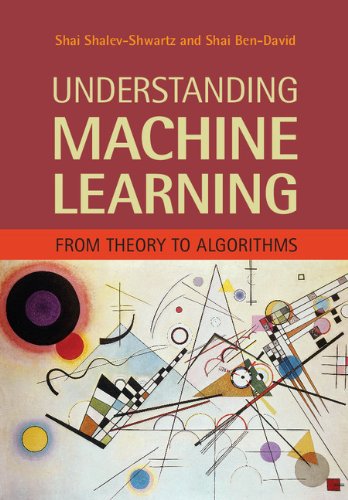
Bernhard Scholkopf, director at the Max Planck Institute for Intelligent Systems, found this book during his work on complex data structures and praised it as "an elegant book [covering] both rigorous theory and practical methods of machine learning." His expertise in intelligent systems underscores why this text offers a rare blend of theoretical depth and applicable insights. Scholkopf’s endorsement highlights how the book reshaped his approach to uncovering data patterns, making it essential for those seeking foundational clarity. Additionally, Avrim Blum, a professor at Carnegie Mellon University, emphasizes the book’s broad and deep treatment of machine learning’s mathematical basis, noting its value for grasping both classic and cutting-edge techniques.
Director at Max Planck Institute for Intelligent Systems
“This elegant book covers both rigorous theory and practical methods of machine learning. This makes it a rather unique resource, ideal for all those who want to understand how to find structure in data.” (from Amazon)
Shai Shalev-Shwartz is an Associate Professor at the School of Computer Science and Engineering at the Hebrew University of Jerusalem, Israel. He has made significant contributions to the field of machine learning, focusing on the theoretical foundations and algorithmic approaches that underpin this rapidly evolving discipline.
After extensive research in theoretical computer science, Shai Shalev-Shwartz and Shai Ben-David developed this textbook to clarify the mathematical foundations and algorithms driving machine learning. You gain a deep understanding of core concepts like computational complexity, convexity, stochastic gradient descent, and advanced topics including PAC-Bayes theory and structured output learning. Chapters methodically build from basics to emerging theories, making it accessible for advanced undergraduates or early graduate students in computer science, statistics, and engineering. This book suits you if you seek rigorous insight into machine learning’s algorithmic principles rather than surface-level applications.
Kirill Eremenko, CEO of SuperDataScience and a recognized authority in AI and data science education, found this book invaluable during his ongoing efforts to stay ahead in the fast-evolving AI landscape. He highlights it as "packed with hands-on cutting-edge AI technology and many real-world practical applications," reflecting how it broadened his practical toolkit. Kirill's endorsement signals this book’s strength in marrying theory with actionable skills, making it a worthy consideration if you want to deepen your expertise and build working AI models yourself.
“Packed with hands-on cutting-edge AI technology and many real-world practical applications, Hadelin's book is a must-have for AI and Data Science practitioners aiming to be on top of their game.” (from Amazon)
Hadelin de Ponteves is the co-founder and CEO at BlueLife AI, which leverages the power of cutting edge Artificial Intelligence to empower businesses to make massive profits by optimizing processes, maximizing efficiency and increasing profitability. Hadelin is also an online entrepreneur who has created 50+ top-rated educational e-courses to the world on topics such as Machine Learning, Deep Learning, Artificial Intelligence and Blockchain, which have reached over 700,000 subscribers in 204 countries.
Unlike most AI books that dive straight into theory, Hadelin de Ponteves offers a hands-on journey through machine learning, reinforcement learning, and deep learning using Python. Drawing on his experience as CEO of BlueLife AI and creator of popular online courses, he guides you through building projects like a self-driving car and a robot warehouse worker, making complex AI concepts accessible with plain English explanations. You'll pick up practical Python skills, explore reinforcement learning principles, and see how AI can solve business problems, all without needing a data science background. This book suits anyone eager to actively create AI applications rather than just read about them.
Lars Kai Hansen, a professor at DTU Compute in Denmark, brings authoritative insight into machine learning education with his recommendation of Sergios Theodoridis’s book. He emphasizes the book's broad yet detailed coverage, from classical methods to advanced topics like sparse modeling and deep learning, which reshaped his understanding by providing clarity where other texts often sacrifice it for elegance. "This makes the book indispensable for the active machine learner," Hansen notes. If you engage deeply with machine learning, his endorsement signals this book's value in both academic and professional settings.
“Machine Learning: A Bayesian and Optimization Perspective, Academic Press, 2105, by Sergios Theodoridis is a wonderful book, up to date and rich in detail. It covers a broad selection of topics ranging from classical regression and classification techniques to more recent ones including sparse modeling, convex optimization, Bayesian learning, graphical models and neural networks, giving it a very modern feel and making it highly relevant in the deep learning era. While other widely used machine learning textbooks tend to sacrifice clarity for elegance, Professor Theodoridis provides you with enough detail and insights to understand the "fine print". This makes the book indispensable for the active machine learner.” (from Amazon)
Sergios Theodoridis is a renowned author and expert in the field of machine learning, known for his comprehensive approach to the subject. He has contributed significantly to the academic community through his research and publications, particularly in Bayesian learning and optimization techniques. His work is widely recognized and used in various educational settings, making him a respected figure among students and professionals alike.
What happens when deep expertise in Bayesian learning meets comprehensive machine learning education? Sergios Theodoridis, with his solid academic background and decades of research, crafted this book to unify foundational concepts and cutting-edge techniques under one roof. You’ll navigate through classical regression, classification, and Bayesian decision theory before advancing to sparse modeling, probabilistic graphical models, and the latest deep learning architectures. The book’s strength lies in its balance—rigorous yet approachable—with chapters that include case studies like protein folding prediction and text authorship identification, practical exercises in MATLAB and Python, and detailed explanations of optimization algorithms. If you’re seeking a deep dive that bridges theory and application, this book serves you well, though it might be dense for casual learners.
Kirk Borne, Principal Data Scientist at BoozAllen and a well-known voice in data science, highlights this book as a must-see resource for generative deep learning. His expertise in big data and machine learning gives weight to his recommendation, especially as he points to the book’s focus on teaching machines to paint, write, compose, and play, reflecting the practical scope David Foster covers. Borne’s endorsement signals that this book offers valuable insights into generative AI techniques that can reshape how you approach machine learning projects.
“Must see this great book → “Generative #DeepLearning — Teaching Machines to Paint, Write, Compose, and Play”: by @davidADSP at @applied_data
——————
#BigData #DataScience #MachineLearning #AI #GANs #GenerativeAdversarialNetworks #Algorithms #DataScientists” (from X)
David Foster is a Founding Partner of ADSP, a consultancy delivering bespoke data science and AI solutions. He holds an MA in Mathematics from Trinity College, Cambridge and an MSc in Operational Research from the University of Warwick. Through ADSP, David leads the delivery of high-profile data science and AI projects across the public and private sectors. He has won several international machine-learning competitions and is a faculty member of the Machine Learning Institute. He has given talks internationally on topics related to the application of cutting-edge data science and AI within industry and academia.
David Foster, with his strong background in mathematics and operational research, wrote this book to address the rapidly evolving field of generative AI. You’ll gain hands-on experience building models like VAEs, GANs, and diffusion models, learning how to implement these with TensorFlow and Keras from the ground up. The chapters guide you from fundamental deep learning concepts to advanced architectures such as StyleGAN2 and MuseGAN, showing practical applications like altering facial expressions or composing music. This book suits machine learning engineers and data scientists eager to explore generative models and their creative potentials in AI development.
Kirk Borne, Principal Data Scientist at Booz Allen and a leading voice in data science, highlights this book among top recent works in AI and machine learning. His recognition speaks to his deep expertise in big data and predictive analytics, which adds weight to his recommendation. Kirk’s mention of this book alongside other influential titles underscores its standing as a concise yet insightful resource. His endorsement signals that if you're serious about mastering machine learning fundamentals and practical tools, this book deserves your attention.
Andriy Burkov holds a Ph.D. in Artificial Intelligence and is a recognized expert in machine learning and natural language processing. As a machine learning expert and leader, Andriy has successfully led dozens of production-grade AI projects in different business domains at Fujitsu and Gartner. His previous books have been translated into a dozen languages and are used as textbooks in many universities worldwide. His work has impacted millions of machine learning practitioners and researchers worldwide.
Unlike most machine learning books that shy away from math, Andriy Burkov’s concise volume embraces it to deliver a systematic yet approachable exploration of the field. Drawing from nearly two decades of industry experience and a Ph.D. in Artificial Intelligence, Burkov distills complex topics into a hundred pages that balance theory with practical relevance, helping you discern whether problems are "machine-learnable" and which techniques to apply. For example, the book’s wiki supplements chapters with code snippets and Q&A, extending learning beyond the text. Whether you're new to machine learning or a seasoned practitioner seeking a refresher and pointers for further growth, this book offers clear insights without oversimplification.
Kirk Borne, Principal Data Scientist at Booz Allen and a leading voice in data science, highlights this book as a key resource for understanding data science, statistics, and machine learning. His endorsement reflects his deep expertise and appreciation for clear explanations. He points to "Becoming a Data Head" as a guide that helps you think and speak about data with confidence, a skill he values highly in a world overwhelmed with information. This book helped him clarify complex topics and sharpen his communication, making it a smart choice if you want to strengthen your data literacy and analytical thinking.
“Great book! >>> "Becoming a Data Head: How to Think, Speak, and Understand #DataScience, #Statistics, and #MachineLearning" at by @GutmanDataHead and @Option_Explicit
—————
#BigData #Analytics #DataScientist #AI #DataLiteracy #DeepLearning #NeuralNetworks” (from X)
Alex J. Gutman, PhD, is a data scientist, corporate trainer, and Accredited Professional Statistician® who enjoys teaching a wide variety of data science topics to technical and non-technical audiences. He's a Director of Data Science at The Procter & Gamble Company and an Adjunct Professor at the University of Cincinnati. Additionally, as a Fulbright Specialist grantee, he has taught data science and machine learning in Kyrgyzstan.
What started as Alex Gutman and Jordan Goldmeier's effort to demystify data science has resulted in a straightforward guide that equips you with a practical language to engage with statistics and machine learning. You’ll learn to think statistically, recognize variation in decision-making, and ask pointed questions about data results, all without getting lost in jargon. The book covers the basics of algorithms and the workplace dynamics around data, making complex topics like deep learning approachable. Whether you’re a business professional trying to sharpen your data literacy or an aspiring data scientist seeking clarity, this book breaks down the essentials in a readable way that challenges common misconceptions.
Kirk Borne, Principal Data Scientist at Booz Allen and a leading voice in data science, highlights this book amid discussions on why machine learning engineering stands out in tech careers. His endorsement points to the book’s relevance for practitioners seeking to excel beyond traditional developer roles. Kirk’s focus on practical machine learning applications resonates with those wanting to build systems that learn and improve from user data. The book’s approach aligns well with experts like Adam Gabriel Top Influencer, who also recognizes its value in bridging AI theory and effective engineering practice. Together, their perspectives suggest this guide is a solid choice for anyone aiming to master intelligent system development.
“@AlisonDeNisco Why #MachineLearning Engineer is the best job in America, not developer or #DataScientist: by @macybayern
————
#BigData #DataScience #DeepLearning #AI #DataEngineering
————
⬇Get this 5-star review book at: ⬇” (from X)
Geoff Hulten is a Machine Learning Scientist with a PhD in machine learning. He has managed applied machine learning teams for over a decade, building Internet-scale Intelligent Systems with hundreds of millions of user interactions per day.
Drawing from over a decade managing applied machine learning teams, Geoff Hulten offers a grounded, experience-driven guide to creating Intelligent Systems that improve through user interaction data. You learn how to design, implement, and orchestrate systems that leverage machine learning effectively at Internet scale, including how to set up intelligent user experiences and measure impact over time. The book walks you through aligning software engineering, data science, and program management skills to produce practical, functioning systems. If you’re a software engineer, technical manager, or machine learning practitioner aiming to move beyond theory to real-world intelligent applications, this book clarifies what’s needed and when an Intelligent System is the right choice.
Kirk Borne, Principal Data Scientist at Booz Allen and a leading voice in data science and big data, highlights this book as a key resource for mastering Python in algorithmic trading. His endorsement reflects his deep engagement with machine learning applications in finance, framing the book as a crucial guide for data scientists eager to translate complex data into actionable trading insights. "A pathway to learning #Python for #AlgorithmicTrading," he notes, emphasizing how the book helped clarify sophisticated concepts and practical coding skills. If you want to elevate your trading strategies with machine learning, Kirk’s recommendation signals this book deserves your attention.
“A pathway to learning #Python for #AlgorithmicTrading:
—————
#BigData #DataScience #AI #MachineLearning #Coding #DataScientists #IoT #IoTPL #IIoT #TimeSeries #PredictiveAnalytics #Statistics
———
+ See this great book: by @ml4trading” (from X)
Stefan Jansen is the founder and CEO of Applied AI. He advises Fortune 500 companies, investment firms, and startups across industries on data & AI strategy, building data science teams, and developing end-to-end machine learning solutions for a broad range of business problems. Before his current venture, he was a partner and managing director at an international investment firm, where he built the predictive analytics and investment research practice. He was also a senior executive at a global fintech company with operations in 15 markets, advised Central Banks in emerging markets, and consulted for the World Bank. He holds Master's degrees in Computer Science from Georgia Tech and in Economics from Harvard and Free University Berlin, and a CFA Charter. He has worked in six languages across Europe, Asia, and the Americas and taught data science at Datacamp and General Assembly.
Drawing from his extensive background in data science and investment, Stefan Jansen crafted this book to bridge machine learning with practical trading strategy development. You’ll learn how to harness diverse data types—including market prices, financial news, and even satellite images—to engineer predictive features and build models that anticipate market movements. The book walks you through the full workflow, from data preparation and model training to strategy backtesting, using Python libraries like scikit-learn and TensorFlow. It's tailored for you if you’re a data scientist, Python developer, or investment professional eager to apply machine learning systematically in trading contexts, assuming you have some prior knowledge of ML and Python.
Thushan Ganegedara is a senior machine learning engineer at Canva with a PhD in machine learning from the University of Sydney. His extensive experience with TensorFlow, including nearly five years working hands-on and being a top contributor on StackOverflow, fuels this book's practical approach. He wrote it to help developers move beyond theory into building real-world deep learning applications, sharing insights from his work on NLP and computer vision that you'll find woven throughout the chapters.
Thushan Ganegedara is a senior ML engineer at Canva and TensorFlow expert. He holds a PhD in machine learning from the University of Sydney and has worked with TensorFlow for almost 5 years. Thushan is also one of the most active answer providers for TensorFlow and TensorFlow2.0 tags on Stackoverflow, a DataCamp instructor, and has authored a book and video course on NLP with TensorFlow.
After years of active involvement with TensorFlow and deep learning, Thushan Ganegedara developed this guide to unravel the practical aspects of TensorFlow 2. The book takes you through building and deploying sophisticated neural networks, covering topics like transformers, attention models, and pretrained NLP models, with concrete examples such as a French-to-English translator and image classifiers. You’ll gain hands-on skills in creating data pipelines and applying TensorFlow Extended for production workflows. This book suits Python programmers comfortable with deep learning basics who want to deepen their applied knowledge of TensorFlow’s latest features and modern architectures.
Francesco Marconi, R&D Chief at The Wall Street Journal, highlights Python's rise in machine learning and credits this book as a stellar starting point. He notes, "Top programming languages ranked by its annual search engine popularity. Python has gained momentum because of its importance to machine learning development." This endorsement reflects his experience using Python-based ML tools in journalism, underscoring the book's practical value for newcomers eager to harness machine learning with Python.
“Top programming languages ranked by its annual search engine popularity. Python has gained momentum because of its importance to machine learning development. At @WSJ we are using it to build tools for journalists. Tip: this is a great book for anyone who wants to get started!” (from X)
Andreas Müller received his PhD in machine learning from the University of Bonn. After working as a machine learning researcher on computer vision applications at Amazon for a year, he recently joined the Center for Data Science at New York University. In the last four years, he has been maintainer and one of the core contributors of scikit-learn, a machine learning toolkit widely used in industry and academia, and author and contributor to several other widely used machine learning packages. His mission is to create open tools to lower the barrier of entry for machine learning applications, promote reproducible science and democratize the access to high-quality machine learning algorithms.
Unlike most machine learning books that dive deep into theory, this one zeroes in on practical Python applications, guided by Andreas Müller's extensive experience developing scikit-learn. It walks you through building machine learning models step-by-step, from representing data to tuning parameters and chaining workflows using pipelines. Sarah Guido's accessible approach helps you grasp complex processes like text data handling without getting lost in math, making it ideal for Python users ready to apply machine learning concepts. Chapters on model evaluation and real-world examples equip you to build solutions beyond academic exercises, though those seeking heavy theoretical rigor might look elsewhere.
The best Machine Learning books and more, in your inbox each week. No account needed.
Conclusion
Across these 17 books, two clear themes emerge: the importance of balancing theory with practice, and the value of mastering foundational algorithms before diving into specialized applications. If you’re grappling with Python coding and want hands-on projects, start with Hands-On Machine Learning with Scikit-Learn, Keras, and TensorFlow or Python Machine Learning. For deeper theoretical understanding, Understanding Machine Learning offers rigorous insight.
For those aiming to build intelligent systems or apply ML in specific domains like finance, Building Intelligent Systems and Machine Learning for Algorithmic Trading provide targeted guidance. Combining these resources can accelerate your growth by layering conceptual depth with actionable skills.
Alternatively, you can create a personalized Machine Learning book to bridge the gap between general principles and your specific situation. These books can help you accelerate your learning journey and gain confidence in applying machine learning in your work or research.
Frequently Asked Questions
I'm overwhelmed by choice – which book should I start with?
Start with a hands-on guide like Hands-On Machine Learning with Scikit-Learn, Keras, and TensorFlow. It offers practical Python examples that introduce core concepts clearly, making it ideal for beginners wanting immediate application.
Are these books too advanced for someone new to Machine Learning?
Many books here, like AI Crash Course, are designed for beginners, with clear explanations and projects. Others, such as Understanding Machine Learning, cater to more advanced learners looking for theoretical depth.
What's the best order to read these books?
Begin with practical introductions, then move to theory-heavy texts. For example, start with Introduction to Machine Learning with Python, progress to Python Machine Learning, and then explore foundational theory in Understanding Machine Learning.
Do these books assume I already have experience in Machine Learning?
Not necessarily. Several books, including Becoming a Data Head and AI Crash Course, welcome newcomers by building foundational knowledge before advancing to complex topics.
Which book gives the most actionable advice I can use right away?
Machine Learning with Python Cookbook offers nearly 200 recipes for immediate application, making it excellent for those wanting practical solutions without wading through theory.
How can I tailor these expert recommendations to my specific learning goals or background?
Yes! While these books cover broad expertise, creating a personalized Machine Learning book lets you focus on your unique interests and skill level, complementing expert insights with custom strategies.
📚 Love this book list?
Help fellow book lovers discover great books, share this curated list with others!