8 Malware Books That Separate Experts from Amateurs
Trusted by Sebastian Porst, Patrick Engbretson, and Maria Markstedter, these Malware Books provide proven techniques and strategies for serious practitioners.
Updated on June 27, 2025·We may earn commissions for purchases made via this page
8 of 8 books have Kindle versions
We're launchingLaunching on Product Hunt today 🎉We just launchedJust launched on Product Hunt 🎉
Modelpeers, from the BookAuthority teamFrom the BookAuthority team: Modelpeers, a free way to follow AI models and agents like you follow people. We'd love your support.
What if I told you that malware’s complexity is growing faster than ever, silently infiltrating systems and evading detection? As cyber threats evolve, understanding the intricate ways malicious software operates is no longer optional but essential for anyone serious about cybersecurity.
Experts like Sebastian Porst, a Google software engineer, and Patrick Engbretson, an information assurance professor, have championed foundational works like Practical Malware Analysis, a book that blends detailed theory with hands-on labs. Meanwhile, Maria Markstedter, recognized by Forbes for her cybersecurity impact, endorses The Art of Mac Malware for its deep dive into Apple-specific threats. These voices represent a spectrum of front-line knowledge that shapes how malware is analyzed and countered today.
While these expert-curated books provide proven frameworks and detailed strategies, you might find it valuable to create a personalized Malware book that adapts these insights to your background, skill set, and specific areas of interest. Tailored learning can accelerate your mastery in this rapidly changing field.
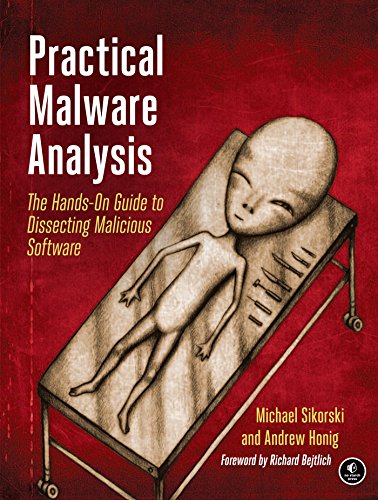
Sebastian Porst, a software engineer at Google, recommends Practical Malware Analysis as a thorough introduction to malware dissection. He highlights the detailed technical explanations and hands-on labs that provide immediate exposure to real malware, which helped him grasp the complexities of malware behavior under pressure. Porst’s endorsement carries weight given his role securing large-scale systems. Likewise, Patrick Engbretson, an IA professor and author, calls it the go-to book for anyone entering malware analysis, underscoring its foundational value. Together, their insights reflect the book’s balance of depth and accessibility for professionals at all stages.
“A great introduction to malware analysis. All chapters contain detailed technical explanations and hands-on lab exercises to get you immediate exposure to real malware.”
Michael Sikorski is a malware analyst, researcher, and security consultant at Mandiant. His previous employers include the National Security Agency and MIT Lincoln Laboratory. Mike frequently teaches malware analysis to a variety of audiences including the FBI and Black Hat. Andrew Honig is an Information Assurance Expert for the Department of Defense. He teaches courses on software analysis, reverse engineering, and Windows system programming. Andy is publicly credited with several zero-day exploits in VMware's virtualization products.
Drawing from decades of experience at the National Security Agency and Mandiant, Michael Sikorski, alongside Andrew Honig of the Department of Defense, delivers a detailed manual for understanding malware at a technical level. You learn how to set up safe environments for analysis, decode obfuscation techniques, and use tools like IDA Pro and WinDbg to dissect malicious code. The book’s hands-on labs and real malware case studies teach you how to identify network signatures and clean infected systems. This guide suits cybersecurity professionals who want to deepen their malware analysis skills or anyone charged with protecting networks from sophisticated threats.
Business Wire, a trusted newswire service with deep ties to cybersecurity experts, highlights this book as a critical resource in understanding hidden threats within system firmware. Their endorsement reflects the book’s thorough approach to dissecting complex malware like rootkits and bootkits that evade standard protections. They call it "[A] seminal book that explains how to understand and counter sophisticated, advanced threats buried deep in a machine’s boot process or UEFI firmware." Such recognition underscores how this work reshapes how professionals approach persistent malware analysis and defense.
“[A] seminal book that explains how to understand and counter sophisticated, advanced threats buried deep in a machine’s boot process or UEFI firmware.”
Alex Matrosov, Eugene Rodionov, Sergey Bratus(you?)·
About the Author
Alex Matrosov is a leading offensive security researcher at NVIDIA. He has more than two decades of experience with reverse engineering, advanced malware analysis, firmware security, and exploitation techniques. Before joining NVIDIA, Alex served as Principal Security Researcher at Intel Security Center of Excellence (SeCoE), spent more than six years in the Intel Advanced Threat Research team, and was Senior Security Researcher at ESET. Alex has authored and co-authored numerous research papers and is a frequent speaker at security conferences, including REcon, ZeroNights, Black Hat, DEFCON, and others. Alex received an award from Hex-Rays for his open source plug-in HexRaysCodeXplorer, supported since 2013 by the team at REhint.
Drawing from decades of experience in reverse engineering and malware research, Alex Matrosov and his co-authors provide a detailed examination of advanced threats hidden in a computer's boot process and UEFI firmware. You’ll uncover how Windows boots in various modes, dive into vulnerabilities, and explore security mechanisms like Secure Boot and Device Guard. The book walks you through forensic and reverse engineering techniques using real-world malware samples such as TDL3 and Rovnix, complete with case studies and tool usage like IDA Pro and Bochs. If you’re looking to deepen your malware analysis skills specifically around rootkits and bootkits, this book offers precise, expert-driven insights, though it’s best suited to those with foundational cybersecurity knowledge.
This AI-created book on malware analysis is tailored to your cybersecurity background and specific goals. By sharing your experience and focus areas, you receive a book that zeroes in on what matters most to you in mastering malware threats. This personalized approach helps you cut through the noise and concentrate on techniques and knowledge that truly enhance your skills in malware detection and defense.
TailoredRead AI creates personalized nonfiction books that adapt to your unique background, goals, and interests. Instead of reading generic content, you get a custom book written specifically for your profession, experience level, and learning objectives. Whether you're a beginner looking for fundamentals or an expert seeking advanced insights, TailoredRead crafts a book that speaks directly to you. Learn more.
This personalized book on malware analysis offers an engaging exploration tailored to your unique background and goals in cybersecurity. It examines core concepts like malware behavior, reverse engineering, and detection techniques, all curated to focus on your specific interests and skill level. By weaving together essential knowledge with real-world examples, it reveals how to dissect malicious software and understand evolving threats in a way that matches your learning style.
The tailored content guides you through advanced defensive measures and forensic approaches, addressing your precise objectives in mastering malware analysis and defense. This focused pathway enriches your expertise efficiently, making complex material accessible and directly relevant to your professional development.
James Aquilina, Managing Director and Deputy General Counsel at Stroz Friedberg, values this book for its pioneering approach to live malware forensics. He highlights it as the "first book to detail how to perform 'live forensic' techniques on malicious code," a method that transformed his understanding of malware investigation in active environments. Aquilina’s professional insight underscores the book’s practical relevance in complex cyber incident responses. Similarly, Cameron Malin, a behavioral profiler, praises the authors' real-world federal malware case experience, which provides readers with rare and deep expertise.
Eoghan Casey BS MA, Cameron H. Malin JD CISSP, James M. Aquilina(you?)·
About the Author
Eoghan Casey is an internationally recognized expert in data breach investigations and information security forensics. He is founding partner of CASEITE.com, and co-manages the Risk Prevention and Response business unit at DFLabs. Over the past decade, he has consulted with many attorneys, agencies, and police departments in the United States, South America, and Europe on a wide range of digital investigations, including fraud, violent crimes, identity theft, and on-line criminal activity. Eoghan has helped organizations investigate and manage security breaches, including network intrusions with international scope. He has delivered expert testimony in civil and criminal cases, and has submitted expert reports and prepared trial exhibits for computer forensic and cyber-crime cases. In addition to his casework and writing the foundational book Digital Evidence and Computer Crime, Eoghan has worked as R&D Team Lead in the Defense Cyber Crime Institute (DCCI) at the Department of Defense Cyber Crime Center (DC3) helping enhance their operational capabilities and develop new techniques and tools. He also teaches graduate students at Johns Hopkins University Information Security Institute and created the Mobile Device Forensics course taught worldwide through the SANS Institute. He has delivered keynotes and taught workshops around the globe on various topics related to data breach investigation, digital forensics and cyber security. Eoghan has performed thousands of forensic acquisitions and examinations, including Windows and UNIX systems, Enterprise servers, smart phones, cell phones, network logs, backup tapes, and database systems. He also has information security experience, as an Information Security Officer at Yale University and in subsequent consulting work. He has performed vulnerability assessments, deployed and maintained intrusion detection systems, firewalls and public key infrastructures, and developed policies, procedures, and educational programs for a variety of organizations. Eoghan has authored advanced technical books in his areas of expertise that are used by practitioners and universities around the world, and he is Editor-in-Chief of Elsevier's International Journal of Digital Investigation.
Drawing from Eoghan Casey's extensive experience investigating federal malware cases and prosecuting cybercrime, this book dives deep into live malware forensics across Windows and Linux systems. You gain a solid grasp of runtime behavioral analysis, such as monitoring files, registries, and network activity, alongside static code examination techniques like disassembly and debugging. The authors also cover over 150 forensic tools, blending technical mastery with legal insights on evidence handling and case law. Whether you're a system admin, forensic examiner, or attorney, this book equips you with the skills to methodically detect, analyze, and preserve malware evidence during active incidents.
Maria Markstedter, named Forbes Person Of The Year In Cybersecurity, brings a sharp lens to this book's value for macOS professionals. She highlights how Patrick Wardle’s deep knowledge and clear writing provide a solid foundation for staying ahead of evolving Apple threats. "[The Art of Mac Malware] serves as a valuable resource for anyone looking to level up their skills to stay on top of the latest macOS threats." Her endorsement underscores the book’s practical impact for analysts needing to master complex malware techniques on Mac platforms.
“[The Art of Mac Malware] serves as a valuable resource for anyone looking to level up their skills to stay on top of the latest macOS threats. Patrick's approachable, educating writing style and extensive knowledge in this field made him the ideal author to write this book.”
Patrick Wardle is the creator of the Mac security website and tool suite Objective-See. Having worked at NASA and the NSA, as well as presented at countless security conferences, he is intimately familiar with aliens, spies, and talking nerdy. Patrick is passionate about all things related to macOS security and thus spends his days finding Apple 0days, analyzing macOS malware, and writing free open-source security tools to protect Mac users.
What happens when a former NSA hacker turns his focus to macOS security? Patrick Wardle developed this guide to unravel the complex world of Mac malware using his extensive background in threat analysis. You learn to dissect malicious software with tools and techniques that reveal infection methods, persistence strategies, and advanced evasion tactics. Chapters walk you through reverse engineering, dynamic debugging, and real-world examples, culminating in a hands-on malware analysis exercise. If you're determined to understand and combat Apple-specific threats at a technical level, this book offers a deep dive that goes beyond surface-level defenses.
Abhijit Mohanta is an independent cybersecurity consultant with extensive experience in malware reverse engineering, anti-virus development, and sandbox creation, having worked for Symantec, McAfee, and Juniper Networks labs. His expertise, backed by several patents and frequent speaking engagements, drives this book’s deep dive into malware analysis and detection. Mohanta’s hands-on approach reflects a career dedicated to tackling malware’s evolving complexity, making this guide a solid choice for professionals needing practical skills and insights.
Abhijit Mohanta is an independent cybersecurity consultant and corporate trainer who has worked extensively in malware reverse engineering, vulnerability research, anti-virus engine development, anti-malware signature writing, and sandbox development. He has worked with the Symantec, McAfee, and Juniper Networks anti-malware labs. He holds several patents. He blogs regularly and has been a speaker at security conferences and workshops. His articles have been republished and quoted in a number of blogs and whitepapers, including eForensics magazine. He is also the author of the book Preventing Ransomware: Understand, Prevent, and Remediate Ransomware Attacks.
When Abhijit Mohanta shifted from working in high-profile anti-malware labs to consulting, he realized the gap in practical knowledge on dissecting modern malware. In this book, you’ll learn to analyze malware deeply—from setting up isolated labs to unpacking complex malware with custom packers. The authors demystify techniques like process hollowing and code injection, and guide you through writing Snort rules and using detection tools like Suricata IDS. If your role involves incident response, reverse engineering, or detection engineering, this book gives you the technical grounding to approach malware challenges confidently without skipping the gritty details.
This AI-created book on malware detection is tailored to your skill level, background, and specific goals. By sharing exactly what aspects of malware detection you want to focus on, you receive a book crafted to address those precise needs. This personalized approach helps you navigate complex detection concepts more efficiently, ensuring the content aligns closely with your experience and ambitions. It’s like having a guide that walks you step-by-step through building your malware detection skills with clear, focused direction.
TailoredRead AI creates personalized nonfiction books that adapt to your unique background, goals, and interests. Instead of reading generic content, you get a custom book written specifically for your profession, experience level, and learning objectives. Whether you're a beginner looking for fundamentals or an expert seeking advanced insights, TailoredRead crafts a book that speaks directly to you. Learn more.
2026·50-300 pages·Malware, Malware Basics, Detection Techniques, Behavior Analysis, Signature Development
This tailored book explores the essential techniques and knowledge crucial for enhancing malware detection capabilities, focusing specifically on your background and goals. It covers a personalized pathway through malware identification, behavior analysis, and detection technologies, allowing you to deepen your understanding efficiently. The content reveals how malware operates, how detection systems function, and how to interpret signals in real-world contexts. By concentrating on your areas of interest, this book offers a focused and engaging learning experience that matches your skill level and desired outcomes. It examines rapid skill development methods to help you build confidence and competence in malware detection, making complex concepts accessible and actionable.
Monnappa K A brings extensive credentials from Cisco Systems and a rich background in threat intelligence and cyber attack investigation to this book. His experience as a Black Hat review board member and creator of security tools like the Limon Linux sandbox informs his authoritative approach. This book reflects his commitment to sharing hands-on knowledge from leading cybersecurity conferences worldwide, making it a solid guide for professionals eager to deepen their malware analysis skills.
Monnappa K A works for Cisco Systems as an information security investigator focusing on threat intelligence and the investigation of advanced cyber attacks. He is a member of the Black Hat review board, the creator of Limon Linux sandbox, the winner of the Volatility plugin contest 2016, and the co-founder of the Cysinfo cybersecurity research community. He has presented and conducted training sessions at various security conferences including Black Hat, FIRST, OPCDE, and DSCI. He regularly conducts training at the Black Hat Security Conference in USA, Asia, and Europe.
Monnappa K A’s deep expertise as a Cisco information security investigator shines through in this detailed exploration of malware analysis and memory forensics. You’ll learn how to set up isolated lab environments, extract malware metadata, and dissect code using tools like IDA Pro and x64dbg. The book walks you from fundamental concepts to advanced reverse-engineering techniques, including decoding encryption and investigating malware behaviors via memory forensics, illustrated with real-world malware samples and infected memory images. If you’re involved in incident response, cybersecurity investigation, or system administration, this book equips you with practical skills to understand and combat sophisticated malware threats.
Joshua Saxe brings a formidable background as Chief Data Scientist at Sophos, leading teams that develop neural network-based malware detectors protecting millions. Alongside Hillary Sanders, who heads infrastructure data science at Sophos, their combined expertise shapes this book's practical insights. Their experience in government-funded security research and advanced machine learning models makes this work a reliable guide for anyone tackling modern malware challenges.
Joshua Saxe is Chief Data Scientist at major security vendor, Sophos, where he leads a security data science research team. He's also a principal inventor of Sophos' neural network-based malware detector, which defends tens of millions of Sophos customers from malware infections. Before joining Sophos, Joshua spent 5 years leading DARPA funded security data research projects for the US government. Hillary Sanders leads the infrastructure data science team at Sophos, which develops the frameworks used to build Sophos' deep learning models. Before joining Sophos, Hillary created a recipe web app and spent three years as a data scientist at Premise Data Corporation.
2018·272 pages·Cyber Security, Malware, Machine Learning, Data Visualization, Attack Detection
Drawing from Joshua Saxe's extensive experience as Chief Data Scientist at Sophos, this book delves into how machine learning and data visualization can transform malware detection. You learn to apply static and dynamic analysis techniques, build machine learning detectors for zero-day threats, and use social network analysis to attribute attacks to adversary groups. Chapters like malware behavior observation and campaign identification provide concrete frameworks that expand your analytical toolkit. If you're a malware analyst or data scientist eager to deepen your technical skills in threat intelligence, this book offers a grounded approach without overhyping its promise.
Tim Rains is an internationally recognized cybersecurity executive with leadership roles at T-Mobile, Amazon Web Services, and Microsoft. His extensive background in global cybersecurity strategy shapes this book, offering you authoritative insights into modern threat landscapes and effective defense tactics. His tenure managing high-stakes security challenges informs practical guidance on navigating malware trends, government influences, and cloud-based security solutions.
Tim Rains is an internationally recognized cybersecurity executive, advisor, and author. Currently, Tim is Vice President Trust & Cyber Risk at T-Mobile where he leads risk, strategy, assurance, compliance, and vulnerability management. Prior to this, Tim was the Global Security Lead for Worldwide Public Sector at Amazon Web Services. Tim also held the post of Executive Director Cybersecurity Strategy at the Las Vegas Sands Corporation, the world’s largest gaming company. Tim spent 17 years at Microsoft where he worked in numerous roles including Global Chief Security Advisor, Director of Trustworthy Computing, and Technical Lead of Microsoft’s customer-facing Security Incident Response Team.
Drawing from decades of frontline experience at Microsoft, Amazon Web Services, and T-Mobile, Tim Rains offers a nuanced exploration of cybersecurity threats and malware trends that shape today's organizational risk landscape. You’ll gain a clear understanding of how vulnerabilities evolve, how ransomware became so dominant, and the intricate roles governments play as both protectors and threat actors. Chapters on strategies like Zero Trust and the Intrusion Kill Chain provide you with frameworks to evaluate and improve your cybersecurity posture, while insights into cloud security push you to reconsider traditional defenses. This book suits CISOs and security professionals looking for deep, data-driven perspectives rather than surface-level guidance.
The best Malware books and more, in your inbox each week. No account needed.
Conclusion
The selected books reveal a few clear truths about malware: it demands rigorous analysis, embraces evolving tactics, and requires both technical skill and strategic thinking to manage effectively. Whether you're dissecting complex rootkits, investigating malware behavior live, or employing data science to detect elusive threats, these works offer a roadmap through malware’s challenging landscape.
If you’re just stepping into malware analysis, Practical Malware Analysis and Learning Malware Analysis provide accessible yet detailed starting points. For those in incident response or detection engineering roles, combining Malware Analysis and Detection Engineering with Malware Forensics can deepen your practical capabilities. Strategic leaders can benefit from Cybersecurity Threats, Malware Trends, and Strategies to understand the broader threat environment.
Alternatively, you can create a personalized Malware book to bridge the gap between general principles and your specific situation. These books can help you accelerate your learning journey and stay ahead in the ever-shifting battle against malware.
Frequently Asked Questions
I'm overwhelmed by choice – which book should I start with?
Start with Practical Malware Analysis. It balances theory and hands-on exercises, helping you build a strong foundation even if you’re new to malware work.
Are these books too advanced for someone new to Malware?
Not at all. Books like Learning Malware Analysis are designed to guide beginners through core concepts before advancing to complex topics.
What's the best order to read these books?
Begin with foundational texts like Practical Malware Analysis, then explore specialized areas such as rootkits or forensics depending on your interests or job role.
Do I really need to read all of these, or can I just pick one?
You can pick based on your focus. For example, incident responders might prioritize Malware Forensics, while detection engineers might choose Malware Analysis and Detection Engineering.
Are any of these books outdated given how fast Malware changes?
While malware evolves, these books provide lasting principles and techniques. Plus, newer editions and topics like data science keep you current with emerging trends.
Can personalized books complement these expert recommendations?
Yes! While these books offer expert insights, a personalized Malware book can tailor content to your specific skills, goals, and interests, bridging theory and your unique needs. Check out creating your own Malware book to get started.
📚 Love this book list?
Help fellow book lovers discover great books, share this curated list with others!