Congratulations! 🎉
"Into Thin Air" by Jon Krakauer, Randy Rackliff, Daniel Rembert made it to BookAuthority's Best Natural Disaster Books of All Time!
20 Natural Disaster Books That Separate Experts from Amateurs
Barry Petchesky, Chris Hayes, and Elizabeth Kolbert recommend these essential Natural Disaster books for urgent insights and understanding.







Disasters take many forms, and the books on this list approach them from different directions. Some trace rising seas, mass extinctions and the geology behind major earthquakes. Others reconstruct specific catastrophes, including a nuclear accident, an epidemic, a historic dust crisis, a deadly storm at sea and a tornado outbreak. A third group speaks to practitioners and households, with titles on crisis management, disaster policy and preparing a home for emergencies. creating a personalized Natural Disaster book
1. The Water Will Come
Recommended by Chris Hayes
Host of All In with Chris Hayes on MSNBC
“For people who want to learn more about climate change, rising sea levels and what it means for our future, read The Water Will Come.” (from Amazon)

This book examines rising sea levels and the threat they pose to coastal cities and villages around the globe. It combines science with on-the-ground reporting to show how flooding is already reshaping places where people live. It also considers engineering efforts to hold back the water and their limits.
2. The Ends of the World
Recommended by Barry Petchesky in
Deputy editor and co-owner of Defector
“Based off this I picked up Peter Brannen’s “The Ends of the World” and the rest of the book is as readable and as interesting as the excerpt.” (from X)

This book explores the five mass extinctions in the history of Earth, using clues left in the fossil record. It visits sites where those catastrophes left their marks and introduces researchers working to reconstruct what happened. It also considers what these ancient events may suggest about present climate shifts.
Natural Disaster Mastery Blueprint

This tailored book explores the science, preparation, and recovery aspects of natural disasters, crafted specifically to match your background and goals. It examines the complex mechanisms behind various disasters, from earthquakes to floods, while focusing on practical knowledge that addresses your unique interests. By synthesizing expert research with your chosen sub-topics, the book offers a personalized pathway to deepen your understanding and enhance your readiness. By tailoring content to your specific needs, this book reveals how diverse natural events unfold and what effective responses look like, empowering you to grasp the subject matter with clarity and enthusiasm. It is an engaging guide designed to help you navigate natural disaster knowledge in a way that resonates personally and meaningfully.
3. Midnight in Chernobyl
Recommended by Tomasz Tunguz
General Partner at Theory Ventures

This book reconstructs the Chernobyl nuclear power plant disaster and investigates how secrecy, propaganda and myth obscured the story. It draws on interviews, letters, unpublished memoirs and declassified documents. The narrative follows the people who witnessed the disaster firsthand.
4. Quakeland
Recommended by The New York Times
“[Miles] peppers her book with quick bits of information about scientists and the work they do in service of understanding our planet and its earthquakes. … Her book becomes, in part, a love letter to the tedium and wizardry that is scientific discovery.” (from Amazon)

This book travels across the United States to investigate earthquake risks well beyond the places most people associate with them. It covers human-induced earthquakes, levee engineering and the experts preparing for seismic threats. It also points toward preparations that can help communities through disasters.
5. Crisis in the Red Zone
Recommended by Elizabeth Kolbert
Pulitzer Prize–winning author of The Sixth Extinction: An Unnatural History
“Crisis in the Red Zone reads like a thriller. That the story it tells is all true makes it all more terrifying, and there’s no one who could tell it better than Richard Preston.” (from Amazon)

This book chronicles a deadly Ebola epidemic and the global effort to contain it. It follows doctors, nurses, scientists and administrators working against the spread of the virus. It also looks ahead to the threat of emerging viruses.
Disaster Readiness Code

This tailored book explores focused steps for creating effective natural disaster readiness plans that match your unique background and goals. It examines essential concepts such as risk assessment, emergency communication, and resource management, revealing how to build a resilient plan customized to your specific environment. By concentrating on your interests, it streamlines complex expert knowledge into a clear, actionable pathway that accelerates your preparedness skills. Through this personalized approach, you gain a comprehensive understanding of disaster types, mitigation techniques, and recovery processes that align with your situation. It offers a tailored synthesis of proven principles, enabling you to confidently design and implement readiness measures that fit your lifestyle and community context.
6. Managing Disasters through Public–Private Partnerships
Recommended by Charles Krulak
US Marine Corps (Ret.), 31st Commandant. President, Birmingham Southern College
“If ever there was a time for our Nation to focus on the critical importance of public-private partnerships and their role in national security, now is the time. Fortunately for us, Abou-bakr has put a laser-like focus on the capabilities of such partnerships and the impediments they face. She then proceeds to give solutions―something that, heretofore, has been missing from the discussion. This book is a must read for those who are serious about the security of our Homeland.” (from Amazon)

This book explores public-private partnerships as tools for disaster mitigation, preparedness, response and resilience in the United States. It examines why such partnerships have often fallen short and draws lessons from major past catastrophes. It also offers frameworks for comparing partnerships and improving collaboration.
7. Words Whispered in Water
Recommended by Russel L. Honore' in
Lt. Gen. U.S. Army Ret., Katrina Commander
“Great Book @LeveesOrg” (from X)

This book tells how one New Orleans resident challenged the description of the Hurricane Katrina flooding as a purely natural disaster. It follows her effort to push the news media and government toward the truth about why the levees failed. It also offers lessons on accountability and warnings about controlling water.
8. Cascadia's Fault
Recommended by Publisher's Weekly
“The recent seismic catastrophe in Japan is a foretaste of a similar cataclysm brewing in America, according to this alarming geological exposé. Thompson, a former Canadian Broadcasting Corporation reporter and documentarian, investigates the Cascadia Subduction Zone, an 800-mile-long fault where the ocean floor slowly grinds away underneath the North American continental plate. The fault has a millennia-long history of causing major quakes, including magnitude-9 monsters and 90-foot waves that could lay waste to Vancouver, Seattle, and dozens of coastal towns. But because no written records of this history exist and the fault has been quiescent since 1700, geologists were unaware of the danger. How they uncovered the violent history of this deceptively placid area, long a subject of academic controversy, is the fascinating scientific detective story at the heart of Thompson's account. He follows along as researchers piece together clues from ocean sediment core samples and tree rings, antique Japanese manuscripts, and laser gadgets and GPS devices that measure the inch-a-year movements of mountain chains; he blanches as their computer models illustrate the devastating impact of tsunamis and the fatal rhythms through which skyscrapers resonate to a temblor's shocks. The result is a lucid, engrossing look at the Earth's subtle dynamics—and a timely warning about their awesome power very close to home. (June)” (from Amazon)

This book examines the Cascadia Subduction Zone, an offshore fault capable of generating massive earthquakes. It explains the danger of a major quake and the tsunamis it could spawn across the Pacific. It frames this threat as an impending crisis for the region and beyond.
9. When the Dust Settles
Recommended by James O'brien in
Author and broadcaster
“Amazing book by an amazing woman. Also an amazing guest on tomorrow’s amazing Full Disclosure. Amazing.” (from X)

This memoir comes from a specialist in recovering from disaster. It goes behind the scenes of the aftermath of catastrophes, from scenes of destruction to government briefing rooms. It explores how people and communities rebuild after tragedy.
10. The Devil Never Sleeps

This book lays out a new approach to crisis management for an era of frequent disasters. It focuses on minimizing consequences rather than only preventing catastrophe, and addresses leadership shortcomings. Examples range from wildfires to technological failures.
11. What Stands in a Storm
Recommended by James Spann in
AMS Certified Broadcast Meteorologist. WeatherBrains host. Instagram/Snapchat: spannwx
“Kim did a remarkable job with that book.” (from X)

This book recounts the superstorm of April 2011 and the tornado outbreak that devastated Alabama. It weaves together the stories of several people, including students, a weatherman and rescuers. It highlights survival and the everyday heroes who emerged from the destruction.
12. Chernobyl 01

This book presents an accessible account of the Chernobyl nuclear disaster and the struggle to contain a burning reactor. It interweaves the history with a journey to the abandoned city of Pripyat and the wider exclusion zone. It includes photographs and technical diagrams of the power station.
13. The Worst Hard Time
Recommended by Jess Phoenix in
Volcanologist and science evangelist
“I highly recommend Timothy Egan's book The Worst Hard Time if you're interested in learning more. It's a fascinating look at catastrophe and resilience.” (from X)

This book tells the story of the dust storms that struck the High Plains during the Depression. It follows families and communities as they endured dust blizzards, crop failure and loss. It also serves as a reminder of the dangers of trifling with nature.
14. The Perfect Storm

This book recounts the storm that struck off the coast of Nova Scotia and the loss of a swordfishing boat and its crew. It depicts the courage and terror that surfaced during the gale. It also illuminates the dangerous world of offshore fishing.
15. The Earthquake America Forgot

This book looks at the New Madrid earthquakes and their place in American culture and history. It includes firsthand accounts of the Midwest quakes and aftershocks. It also covers earthquake prediction, modern seismology and how to protect yourself and your family.
16. Into Thin Air
Recommended by Katie Phang in
NBC & MSNBC Legal Contributor, Yale & Miami Law grad
“It’s an amazing book!” (from X)

This book is a personal account of a deadly storm on Mt. Everest. It explores the perils of high-altitude climbing and the decisions surrounding the catastrophe. It also gives credit to the Sherpas who supported the expedition.
17. The Disaster-Ready Home

This manual offers a step-by-step plan for sheltering in place during an emergency. It covers food, water, heat, light and sanitation needs. It includes lists, photographs and instructions to make the plan easy to follow.
18. The Johnstown Flood

19. Prepper's Long-Term Survival Guide
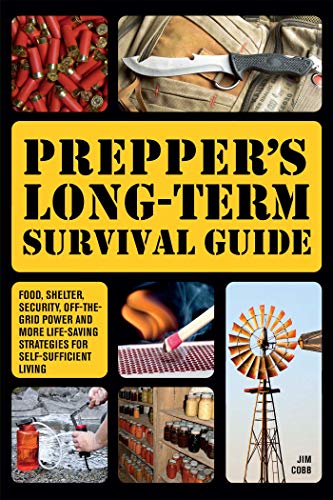
This guide focuses on surviving long-term crises when normal services do not return. It covers water collection, food storage and foraging, first aid and home defense. It also discusses community-building strategies.
Enjoying these picks?
The best Natural Disaster books and more, in your inbox each week. No account needed.
Conclusion
Readers drawn to climate and earth science can start with the books on sea level rise and past mass extinctions. Those who prefer gripping narrative history may begin with the accounts of nuclear catastrophe, the dust storms of the High Plains or a fishing boat lost in a historic storm. Anyone focused on practical readiness can turn to the guides on sheltering in place and long-term self-sufficiency, while policy-minded readers may prefer the studies of crisis management and public-private partnerships. create a personalized Natural Disaster book
Frequently Asked Questions
I'm overwhelmed by choice – which book should I start with?
Start with "The Water Will Come" for a clear grasp of climate-driven sea level rise or "Quakeland" to understand earthquake risks. Both offer accessible entry points into natural disaster topics with strong expert endorsements.
Are these books too advanced for someone new to Natural Disaster?
Not at all. Many, like "The Ends of the World" and "The Perfect Storm," balance detailed science with engaging storytelling, making them approachable for newcomers interested in understanding disasters deeply.
What's the best order to read these books?
Begin with broad-impact books such as "The Water Will Come," then explore specific disasters like "Midnight in Chernobyl" or "What Stands in a Storm." Finish with practical guides like "The Disaster-Ready Home" for preparedness.
Do I really need to read all of these, or can I just pick one?
You can pick based on your interest area, but reading multiple books offers richer perspectives. For example, pairing "Crisis in the Red Zone" with "The Devil Never Sleeps" gives both epidemic depth and crisis management insights.
Which books focus more on theory vs. practical application?
"Managing Disasters through Public–Private Partnerships" and "The Disaster-Ready Home" focus on practical strategies, while "The Ends of the World" and "Cascadia's Fault" delve into scientific theory and hazard analysis.
Can personalized Natural Disaster books complement these expert recommendations?
Yes! While these books offer valuable expert insights, personalized books tailor information to your specific needs, helping you apply knowledge effectively. Explore creating a personalized Natural Disaster book for focused guidance.
Help fellow book lovers discover great books, share this curated list with others!
Related Articles You May Like
Explore more curated book recommendations