The 20 Outer Space Books That Experts Recommend Most
Discover books endorsed by Piers Morgan, Satya Nadella, and Brian Greene that offer unparalleled perspectives on Outer Space.
Updated on June 26, 2025·We may earn commissions for purchases made via this page
9 of 20 books have Audiobook versions
We're launchingLaunching on Product Hunt today 🎉We just launchedJust launched on Product Hunt 🎉
Modelpeers, from the BookAuthority teamFrom the BookAuthority team: Modelpeers, a free way to follow AI models and agents like you follow people. We'd love your support.
What if the vastness of space could suddenly feel more intimate? Imagine stepping into the shoes of astronauts like Tim Peake, whose journey from a small town to the International Space Station reveals the human side of cosmic exploration. Outer Space isn’t just about distant stars and black holes; it’s about the stories, challenges, and discoveries that shape our understanding of the universe right now.
Experts like Piers Morgan, who praised Peake’s candid autobiography, Satya Nadella, who admires astronaut Chris Hadfield’s lessons on resilience, and Brian Greene, who lauds firsthand astronaut accounts like Mike Massimino’s, all point to the rich insights these books offer. Their endorsements highlight a blend of personal experience, scientific rigor, and visionary thinking that invites you to explore the cosmos with clarity and wonder.
While these expert-curated books provide proven frameworks and deep knowledge, readers seeking content tailored to their specific interests—whether astrophysics, astronautics, or cosmic philosophy—might consider creating a personalized Outer Space book that builds on these insights and fits your unique learning goals.
Piers Morgan, a well-known English broadcaster, praises this autobiography with the simple yet powerful endorsement: "Great to have you, Major - it’s a fantastic book." His recognition matters because of his broad cultural reach and critical eye on influential works. Morgan's appreciation reflects how Tim Peake’s vivid recounting of space life and personal journey offers readers an engaging and authentic perspective on astronautics, capturing both the technical challenges and emotional moments that define a mission beyond Earth.
Tim Peake is a European Space Agency astronaut. He finished his 186-day Principia mission working on the International Space Station for Expedition 46/47 when he landed back on Earth 18 June 2016. He is also a test pilot and served in the British Army Air Corps. Tim is a Fellow of a number of UK science, aviation and space-based organisations. He is also a STEM ambassador. He is married with two sons. Tim's extensive eighteen-year career in the Army included the command of a platoon of soldiers in Northern Ireland during the Troubles, deployment in Bosnia, and operations in Afghanistan. Following a year-long selection process, Tim was chosen from over 8000 applicants to be one of six new astronauts as part of the European Astronaut Corps. During astronaut training he spent seven days living in a cave and twelve days living underwater. Tim's six month mission 'Principia' to the ISS inspired a nation, engaging with more than 2 million students as part of a hugely successful outreach programme. Whilst in space, he conducted over 250 scientific experiments, oversaw an emergency spacewalk and also ran the 2016 London marathon. Tim’s autobiography Limitless, tells the often very amusing story of how a short, ginger lad with a passion for flight and all things outdoors went from Soldier, Pilot, Parent to Astronaut. Now back on Earth Tim continues to work to promote opportunities for young people as an ambassador for STEM education, The Prince’s Trust and The Scout Association.
When Tim Peake recounts his journey from a reserved boy in Chichester to a European Space Agency astronaut, you get more than a memoir—you get an intimate glimpse into the realities of life aboard the International Space Station. Drawing on exclusive diaries and mission recordings, Peake shares vivid sensory details—from the unique smells of space to the emotional weight of conducting scientific experiments far from Earth. His chapters candidly explore the challenges of astronaut training, including living underwater and in caves, as well as leading emergency spacewalks. If you're curious about the human side of space exploration, this book offers insights that go beyond technical jargon, making it a compelling read for those fascinated by astronautics and personal resilience.
The Philadelphia Inquirer, a major Philadelphia newspaper, highlights how Janna Levin’s writing captures the vastness and mystery of the universe with captivating prose and striking illustrations by Lia Halloran. Their review notes how Levin "makes space sound like a somewhat reasonable place," drawing you into the complex phenomena of black holes with clarity and wonder. This perspective resonates deeply for anyone seeking to grasp these cosmic enigmas without being overwhelmed by technical jargon. Complementing this, The Space Review praises the book for quickly bringing readers up to speed on black holes in an accessible way, making it a valuable companion for those new to astrophysics.
“In prose that revels in the immensity and dispassion of the barely known universe — and bolstered by Lia Halloran’s illustrations of strange celestial shapes and astronauts floating in inky voids — Levin makes space sound like a somewhat reasonable place.”
Janna Levin is a professor of physics and astronomy at Barnard College. She is also director of sciences at Pioneer Works, a center for arts and sciences in Brooklyn. Her previous books include Black Hole Blues and Other Songs from Outer Space, How the Universe Got Its Spots, and a novel, A Madman Dreams of Turing Machines, which won the PEN/Bingham Prize. She was recently named a Guggenheim Fellow. She lives in New York.
Janna Levin's decades of experience as a physics and astronomy professor at Barnard College shape this engaging exploration of black holes. You’ll gain a clear understanding of these enigmatic cosmic phenomena, from their role in shaping galaxies to their influence on the fabric of reality, illustrated vividly by Lia Halloran’s artwork. The book invites you to imagine encountering a black hole firsthand, blending scientific rigor with imaginative narrative. Whether you're fascinated by astrophysics or simply curious about the universe's mysteries, this book offers a thoughtful, accessible journey without heavy jargon or equations.
This AI-created book on outer space is written based on your unique background, current knowledge, and specific interests in the cosmos. You share your experience level and the space topics you want to focus on, and the book is crafted to match your curiosity and learning goals. Because space is such a vast and complex subject, this custom approach helps you navigate the universe in a way that fits your own journey, making the concepts more approachable and relevant.
TailoredRead AI creates personalized nonfiction books that adapt to your unique background, goals, and interests. Instead of reading generic content, you get a custom book written specifically for your profession, experience level, and learning objectives. Whether you're a beginner looking for fundamentals or an expert seeking advanced insights, TailoredRead crafts a book that speaks directly to you. Learn more.
2026·50-300 pages·Outer Space, Space Exploration, Astronautics, Planetary Science, Spacecraft Technology
This tailored book offers a comprehensive journey through outer space, carefully crafted to match your unique interests, experience level, and goals. It explores the vast expanse of the cosmos, from planetary science and astronautics to cosmic phenomena, weaving together expert knowledge with a focus on what captivates you most. By concentrating on your background and preferred subjects, this personalized guide reveals the wonders of space in a way that resonates deeply and enhances understanding. Whether you're fascinated by spacecraft technology, cosmic origins, or the future of humanity in space, this book adapts its focus to illuminate the topics you care about. Dive into a tailored exploration that bridges complex space science with your personal learning path, making the universe accessible and engaging at every page.
Brian Greene, a professor of physics and mathematics at Columbia University and author of The Elegant Universe, recommends this book for its vivid and candid portrayal of space missions. He describes Massimino's stories as filled with grit, courage, and suspense that made him feel as if he had "finally made it to space too." Greene’s endorsement carries weight given his deep expertise in physics and cosmology, highlighting how this astronaut’s firsthand accounts bring the mysteries of the cosmos closer to home. John Glenn, celebrated astronaut and senator, adds that Massimino combines an astronaut's perspective with engineering precision, offering insights into the future potential of space programs.
Professor, Columbia University; author of The Elegant Universe
“Massimino's incredible journeys, filled with grit, courage, suspense and thrills, are told with such candor and delight, that for a brief moment I felt I’d finally made it to space too. Read this book and be inspired to reach for the impossible.”
Mike Massimino served as a NASA Astronaut from 1996 until 2014 and flew in space twice: STS-109 on space shuttle Columbia in March 2002 and STS-125 on space shuttle Atlantis in May 2009 – the final two Hubble Space Telescope servicing missions. Mike became the first human to tweet from space, was the last human to work inside of Hubble, and set a team record with his crewmates for the most cumulative spacewalking time in a single space shuttle mission. He has a recurring role as himself on The Big Bang Theory; appears regularly on late night talk shows, news programs, and documentaries; and is a much sought after inspirational speaker. He received his BS from the Columbia University School of Engineering, and his two MS’s and Ph.D. from the Massachusetts Institute of Technology (MIT). He currently lives in New York City where he is an engineering professor at Columbia and an advisor at the Intrepid Sea, Air, and Space Museum.
Mike Massimino, a former NASA astronaut with two space shuttle missions under his belt, invites you into the rarefied world of space exploration with an insider's perspective grounded in engineering precision and human grit. You’ll learn what it’s truly like to live and work in microgravity, from the surreal experience of spacewalks to the technical challenges of repairing the Hubble Space Telescope. The book shares vivid stories of perseverance, such as Massimino’s journey through multiple NASA rejections and the emotional impact of the Columbia tragedy. It’s a compelling read if you want a personal yet technically rich account of astronautics and the realities behind the headlines.
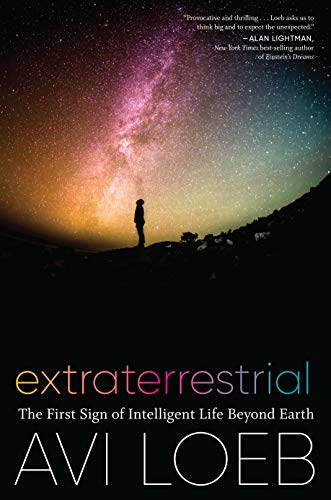
Sean Carroll, a physicist at Caltech and host of the Mindscape Podcast, highlights the importance of balancing skepticism with openness to bold ideas. After engaging deeply with this book, he notes, "It's good to be skeptical of audacious ideas. But it's also important to be open to audacious possibilities, and to think through their ramifications." His endorsement reflects a thoughtful grappling with the possibility of intelligent extraterrestrial life, an idea Avi Loeb explores with rigor. Also, Stephen Greenblatt, Pulitzer Prize–winning author, praises Loeb's call to reconsider humanity's place in the universe, underscoring the book's capacity to challenge prevailing assumptions.
“It's good to be skeptical of audacious ideas. But it's also important to be open to audacious possibilities, and to think through their ramifications. Avi Loeb's sumptuously written book will provoke you to think about the possibility of intelligent life elsewhere in the universe in new and stimulating ways.”
Abraham (Avi) Loeb is the Frank B. Baird, Jr., Professor of Science at Harvard University, chair of Harvard’s Department of Astronomy, founding director of Harvard’s Black Hole Initiative, and director of the Institute for Theory and Computation (ITC) within the Harvard-Smithsonian Center for Astrophysics. He also chairs the Advisory Committee for the Breakthrough Starshot Initiative, and serves as the science theory director for all Initiatives of the Breakthrough Prize Foundation, as well as chair of the Board on Physics and Astronomy of the National Academies. Author of four books and over 700 scientific papers, Loeb is an elected fellow of the American Academy of Arts & Sciences, the American Physical Society, and the International Academy of Astronautics. In 2012, Time selected Loeb as one of the twenty-five most influential people in space.
What if everything you knew about visitors to our solar system was wrong? Avi Loeb, a leading Harvard astronomer, argues that the 2017 discovery of 'Oumuamua, an object moving too fast and oddly to be mere space debris, could be evidence of alien technology. You’ll explore his detailed case, which challenges scientific assumptions and invites you to consider profound implications for science and humanity’s future. Chapters reveal how this theory reshapes our understanding of space phenomena and encourages critical thinking about the cosmos. This book suits those curious about extraterrestrial life and the intersection of science with philosophical questions.
Library Journal, known for its authoritative book reviews, praises this book as "detailed enough for serious readers yet accessible to all with an interest in rockets or space exploration." Their endorsement carries weight given their role in evaluating works for a knowledgeable audience. This recommendation highlights how the book bridges depth and accessibility, making it a valuable resource whether you’re deeply familiar with aerospace or newly curious. Complementing this, Booklist calls it "an effective hybrid of reference volume and coffee-table book," underscoring its visual appeal alongside scholarly content, making it a versatile addition to your collection.
Michael H. Gorn served formerly as deputy Air Force historian and as chief historian of the NASA Dryden Flight Research Center. He earned a doctorate in history from the University of Southern California. Gorn is the author of more than a dozen books, including NASA’s Forgotten Genius: Hugh L. Dryden and the Foundations of the American Space Program, and he has been featured in interviews on BBC, History, and the Discovery Channel. He is a recipient of the AIAA’s Gardner-Lasser Aerospace History Award for Expanding the Envelope: Flight Research at the NACA and NASA.
Drawing from Michael H. Gorn's extensive experience as a former deputy Air Force historian and NASA Dryden Flight Research Center chief historian, this book offers a richly detailed chronicle of humankind's ventures beyond Earth. You’ll explore over 100 spacecraft profiles, including iconic vehicles like Sputnik 1, the Hubble Space Telescope, and the Mars rovers, all accompanied by over 500 illustrations that reveal design nuances and historical context. The book’s era-based structure and inclusion of international programs provide a broad yet precise understanding of aerospace evolution. If you’re passionate about the technical and historical facets of spaceflight, this book gives you both the facts and the artistry behind these monumental achievements.
This AI-created book on space exploration is made just for you based on your existing knowledge and specific goals. By focusing on your interests, it provides a clear, tailored path through complex topics in astronomy and astronautics. Creating a custom book like this helps you skip irrelevant details and dive directly into what matters most for your learning journey. Whether you're curious about spacecraft or cosmic phenomena, this personalized guide is created to support your unique ambitions.
TailoredRead AI creates personalized nonfiction books that adapt to your unique background, goals, and interests. Instead of reading generic content, you get a custom book written specifically for your profession, experience level, and learning objectives. Whether you're a beginner looking for fundamentals or an expert seeking advanced insights, TailoredRead crafts a book that speaks directly to you. Learn more.
2026·50-300 pages·Outer Space, Space Exploration, Astronautics, Spacecraft Technology, Cosmic Phenomena
This personalized book explores the vast and fascinating realm of outer space with an approach tailored to your background and specific learning goals. It focuses on delivering a step-by-step pathway that rapidly advances your understanding of space exploration, from fundamental concepts to nuanced topics like astronautics, cosmic phenomena, and spacecraft technology. By concentrating on your particular interests, it synthesizes the collective knowledge of the field into a clear, engaging narrative that matches your expertise level. This tailored guide invites you to delve into the mysteries of the cosmos efficiently, building your knowledge through targeted exploration that respects your unique objectives and curiosity.
Chris Lintott, professor of astrophysics at Oxford University and well-known for his work in science communication, praises this book as "a dispatch from the frontiers of science, from a brain fizzing with ideas and energy." His endorsement carries weight given his expertise in bringing complex cosmic phenomena to wider audiences. The book helped him appreciate how the earliest stars shaped the cosmos, shifting his perspective on the dark ages of the universe. The Washington Post echoes this sentiment, highlighting Emma Chapman's infectious enthusiasm and clear guidance through the mysteries of the cosmos, which makes the ancient epoch accessible and captivating.
Emma Chapman is a Royal Society research fellow and fellow of the Royal Astronomical Society, based at the University of Nottingham. She is among the world's leading researchers in search of the first stars to exist in our Universe, 13 billion years ago, and she is involved in both the Low Frequency Array (LOFAR) in the Netherlands and the forthcoming Square Kilometre Array (SKA) in Australia, a telescope that will eventually consist of a million antennas pointing skywards in the desert. Emma has been the recipient of multiple commendations and prizes, the most recent of which was both the 2018 Royal Society Dorothy Hodgkin Research Fellowship and STFC Ernest Rutherford Fellowship, two of the most prestigious science fellowships in the UK. She won the Institute of Physics Jocelyn Bell Burnell Prize in 2014, and was runner-up for the UK L'Oreal Women in Science award in 2017. In 2018 she was also the recipient of the Royal Society Athena Medal. Emma is a respected public commentator on astrophysical matters, contributing to the Guardian, appearing on BBC radio and regularly speaking at public events.
What happens when a leading astrophysicist turns the spotlight on the universe's earliest stars? Emma Chapman, a Royal Society research fellow deeply involved with cutting-edge radio telescopes like LOFAR and the Square Kilometre Array, explores the mysterious Epoch of Reionisation—the era when the first stars ignited after a billion years of cosmic darkness. You learn about these colossal, short-lived stellar giants and their explosive deaths that seeded the cosmos with elements fundamental to life. The book also previews upcoming telescopes designed to capture this ancient light, blending current astrophysical research with accessible explanations, making it ideal if you want an insider’s grasp on how the cosmos evolved from chaos to order.
Brian Schmidt, Nobel Laureate in Physics and astrophysics authority, praises this book as "a very personal account of the incredible journey Falcke and colleagues took to achieve the seemingly impossible task of taking an image of a black hole." His experience underscores the book's unique insight into the monumental scientific and collaborative effort behind this breakthrough. The story offers more than just astrophysics; it reveals the human drive to understand our universe. Similarly, Martin Rees, from the University of Cambridge, highlights Falcke's memoir as a blend of technical mastery and philosophical reflection, making it accessible and thought-provoking for a wide audience.
2011 Nobel Laureate in Physics, Australian National University
“A very personal account of the incredible journey Falcke and colleagues took to achieve the seemingly impossible task of taking an image of a black hole.”
Heino Falcke is a German professor of radio astronomy and astroparticle physics at the Radboud University Nijmegen. He was a winner of the 2011 Spinoza Prize. His main field of study is black holes. He lives in Berlin.
Drawing from his pioneering work as a German professor of radio astronomy and astroparticle physics, Heino Falcke offers a firsthand account of capturing the first-ever image of a black hole—a feat that reshaped modern astronomy. You’ll learn not just about the technical marvels behind this global scientific collaboration but also about the deeper questions black holes pose about the universe and our place within it. Chapter 7’s exploration of the global telescope network reveals the complexity of this achievement, while later sections wrestle with the philosophical implications of scientific discovery. This book suits anyone curious about the intersection of astrophysics, technology, and existential inquiry.
The Wall Street Journal, a leading publication with a broad science perspective, highlights this book as "A reminder that the finest telescope in space might also be the greatest camera ever created." Their appreciation speaks to the book's ability to showcase Hubble's capabilities not just in scientific discovery but in stunning astrophotography. This perspective changed how they view space imagery, seeing it as both art and science. Additionally, Publisher's Weekly praises it as "A treasure map to the majesty of our universe," emphasizing its role in guiding readers through celestial wonders with clarity and awe.
Terence Dickinson, one of Canada's best-loved amateur-astronomy writers, gained renown for unraveling the mysteries of the cosmos. His down-to-earth style made him the award-winning best-selling author of 14 astronomy books, including NightWatch, The Backyard Astronomer's Guide, The Universe and Beyond and Hubble's Universe. The cofounder and former editor of SkyNews, Canada's national astronomy magazine, Dickinson was a recipient of the Order of Canada and two honorary doctorates.
Terence Dickinson, a celebrated figure in amateur astronomy and author of 14 books, brings his deep familiarity with the Hubble Space Telescope and its discoveries to this richly illustrated volume. You’ll discover detailed narratives behind over 300 stunning images captured by Hubble’s Wide Field Camera 3, alongside insights from leading Hubble scientists that you won’t find elsewhere. This is a book that invites you to explore cosmic phenomena with clarity, from galaxies to nebulae, making complex astronomical concepts accessible without oversimplifying. Whether you’re an avid astronomy enthusiast or simply curious about the universe, Dickinson’s blend of vivid imagery and authoritative commentary offers a rewarding experience.
Ali S. Raja, emergency physician and Harvard professor with military experience, highlights how this book captures the critical role of the Capsule Communicator (CapCom) in space missions, a role he now fills himself. He praises Hadfield’s vivid storytelling and insight into teamwork under pressure, sharing how it deepened his understanding of space mission dynamics. Simon Carley, a professor of emergency medicine, appreciates the book’s concept of "being a zero," reflecting on how it resonates with frontline medical care. Their endorsements reveal the book’s practical wisdom beyond astronautics, touching leadership and crisis management skills relevant to high-stakes professions.
“Awesome! Cmdr Hadfield described the importance of the CapCom role so well in his book - I’m so glad you’re filling it for this mission! Congrats to you and the rest of the team, and Godspeed to Astro Raja, Astro Marshburn, Astro Matthias and Astronaut Barron!” (from X)
Chris Hadfield, one of the world's most seasoned and accomplished astronauts, is the author of the #1 international bestseller An Astronaut's Guide to Life on Earth. The top graduate of the U.S. Air Force Test Pilot School in 1988 and the U.S. Navy Test Pilot of the Year in 1991, Hadfield was selected to be an astronaut in 1992. He was Chief CAPCOM at NASA for twenty-five shuttle missions and served as Director of Operations for NASA in Star City, Russia, from 2001 to 2003; Chief of Robotics for the NASA Astronaut Office in Houston from 2003 to 2006; and Chief of International Space Station Operations for the NASA Astronaut Office from 2006 to 2008. Hadfield most recently served as Commander of the International Space Station, where, while conducting a record-setting number of scientific experiments and overseeing an emergency spacewalk, he gained worldwide acclaim for his breathtaking photographs and educational videos about life in space. His online videos, including a zero-gravity version of David Bowie's 'Space Oddity,' have collectively received more than fifty million views.
After decades immersed in astronautics and space missions, Chris Hadfield developed a distinctive perspective on preparedness and resilience that he shares with you in this book. You’ll find vivid accounts of his near-misses in orbit and learn how NASA’s philosophy of anticipating worst-case scenarios can help you tackle challenges on Earth. Chapters like "Sweat the Small Stuff" reveal how meticulous attention to detail can prevent disaster, while stories of spacewalks illustrate staying calm under pressure. This book suits anyone curious about space and those seeking methods to enhance focus and adaptability in high-stakes environments.
Bbc Sky At Night, a respected authority in astronomy publishing, highlights this book as a visually stunning tribute to Hubble’s 25 years in orbit. Their recommendation underscores TASCHEN’s reputation for exquisite photography volumes, noting how this collection captures the telescope’s scientific and artistic achievements. This expert’s endorsement reveals how the book deepens appreciation for space exploration through vivid imagery and expert commentary, enriching your understanding of the universe’s vast mysteries.
“German publisher TASCHEN, best known for luxurious art and photography books, has produced its own celebration of Hubble’s 25th year anniversary since its launch into space – and it’s a stunner. As a visual celebration of Hubble’s 25 years in space, this one is hard to beat.”
This book draws on the expertise of veteran space photographer Owen Edwards and imaging specialist Zoltan Levay to showcase the Hubble Space Telescope’s profound impact on our understanding of the cosmos. You’ll explore breathtaking, ultra-high-resolution images that reveal phenomena from black holes to exoplanets, paired with detailed explanations of how these images are composed and what they reveal about the universe’s accelerating expansion. The inclusion of insights from astronauts Charles F. Bolden Jr. and John Mace Grunsfeld adds authoritative perspectives on Hubble’s scientific legacy and future missions. If you’re fascinated by the intersection of astrophotography and space science, this book offers a vivid window into the evolving story of our universe.
Ray Jayawardhana, author of Neutrino Hunters and a respected voice in astrophysics, highlights "Black Hole" as a captivating and authoritative chronicle that traces the evolution of an idea once considered bizarre to an undeniable reality. His appreciation for the book stems from its vivid storytelling filled with quirky turns and intellectual debates, reflecting the real human drama behind scientific discovery. This perspective enriches your understanding of black holes far beyond equations. Complementing this, Walter Isaacson praises Bartusiak’s narrative for revealing the beauty and mystery that captivated legends like Einstein and Hawking, making the complex history accessible and engaging.
“Captivating and authoritative, "Black Hole" traces a truly weird concept from its tentative conjecture to inescapable reality. Bartusiak recounts a compelling tale with quirky turns, curious revelations, intellectual rumbles and personal gambles.”
Marcia Bartusiak is Professor of the Practice, Graduate Program in Science Writing, Massachusetts Institute of Technology, and the award-winning author of five previous books. She lives in Sudbury, MA.
Marcia Bartusiak, a seasoned science writer and MIT professor, unpacks the turbulent history of black holes, an idea once dismissed by Newtonians and Einstein alike. You’ll gain insight into how key figures like Hawking and Einstein shaped our understanding of these cosmic enigmas and how black holes revitalized general relativity. The book traces debates and discoveries, such as the identification of neutron stars, with vivid anecdotes and scientific milestones. If you’re fascinated by the evolution of astrophysical thought and how radical ideas gain acceptance, this book offers a clear window into that process, though it’s less about technical detail and more about the story behind the science.
Publisher's Weekly, a respected authority on book reviews, highlights this volume as an illustrated history rich in detail and imagery. Their expertise in evaluating science and exploration literature lends weight to their assessment, underscoring the book's comprehensive portrayal of spaceflight's milestones and innovations. This recommendation invites you to explore the multifaceted story of human ingenuity in outer space, as captured through vivid visuals and thorough narrative.
Giles Sparrow has degrees in astronomy and science communication and is an avid follower of the unfolding story of space exploration. He has written on space technology and the history of spaceflight for a wide range of books, including DK's monumental Universe project (2005).
Drawing from his background in astronomy and science communication, Giles Sparrow offers a detailed chronicle of human space exploration from Sputnik's launch to future Mars missions. The narrative explores not just the milestones like Apollo Moon landings and the International Space Station but also illustrates the technological and scientific advances that reshaped Earth and our understanding of the cosmos. You'll find chapters that delve into pioneers like Wernher von Braun and Neil Armstrong, alongside stories of how satellites revolutionized communication and environmental monitoring. This book suits anyone eager to understand the technical and human stories behind spaceflight’s evolution, though those seeking speculative or purely futuristic visions might look elsewhere.
Dallas Campbell, a respected science TV presenter and author, highlights this book for its sweeping scope covering the cosmos' past, present, and future. His endorsement comes from a deep engagement with astronomy and cosmology, where he found the book's synthesis of complex ideas both captivating and illuminating. Campbell remarks, "Prepare to have your mind blown! A brilliantly written overview of the past, present and future of modern cosmology," capturing how the book expanded his appreciation for the universe's mysteries and evolving scientific narratives.
Paul Parsons is a former editor of the BBC science and technology magazine Focus and managing editor of BBC Sky At Night magazine. He has been a science writer and journalist for more than 20 years, contributing to New Scientist, the Guardian, Daily Telegraph, Men’s Health, and National Geographic, and is the author of several books including The Science of Doctor Who, Science 1001, and The Periodic Table. He is also a consultant to Guinness World Records.
When Paul Parsons explores the origins and fate of the universe, he brings decades of science journalism expertise into play, offering a narrative that moves beyond typical astronomy texts. You gain a clear grasp of the Big Bang's inception, the expanding cosmos, and the theories underpinning our understanding of time and space, such as Einstein's contributions. Parsons doesn't just recount facts; he examines complex ideas like the multiverse and cosmic rebirth in accessible terms, especially in chapters detailing universe expansion and potential endings. If you seek a thoughtful journey through cosmic history and future possibilities, this book meets that need without oversimplifying.
Michio Kaku is a professor of physics at the City University of New York, cofounder of string field theory, and author of several acclaimed science books, including Hyperspace and Physics of the Future. His deep expertise and role as a science correspondent for CBS’s This Morning underpin this exploration of humanity’s path beyond Earth. Driven by cutting-edge research in astrophysics and technology, Kaku offers a thoughtful vision of how we might settle Mars, achieve interstellar travel, and even transcend our physical bodies. This background makes the book a compelling guide for those fascinated by the scientific possibilities of our cosmic future.
Michio Kaku is a professor of physics at the City University of New York, cofounder of string field theory, and the author of several widely acclaimed science books, including Hyperspace, Beyond Einstein, Physics of the Impossible, and Physics of the Future. He is the science correspondent for CBS’s This Morning and host of the radio programs Science Fantastic and Explorations in Science.
Michio Kaku, a physics professor and cofounder of string field theory, explores humanity's potential future beyond Earth with a focus on scientific rigor and imaginative foresight. You’ll gain insights into the technologies that could make Mars habitable, like robotics and nanotech, and delve into concepts like fusion rockets and warp drives that might enable interstellar travel. The book also examines bold ideas about immortality through technological advances, including leaving our bodies behind and laser porting to other worlds. If you're curious about where astrophysics and futurism intersect with human destiny, this book offers a well-grounded yet visionary perspective, though it’s best suited for those comfortable with complex scientific ideas rather than casual space enthusiasts.
Richard Signorelli, a former federal prosecutor and activist known for his thoughtful insights, highlighted how Carl Sagan's wisdom resonated deeply with him. During moments reflecting on humanity's future, Signorelli found "Pale Blue Dot" offered clarity and profound perspective. He said, "He was brilliant and wise. I recommend his book 'Pale Blue Dot'." This endorsement underscores the book's ability to shift views on space and our place in the universe, making it a meaningful read for those seeking thoughtful guidance.
Carl Sagan was Professor of Astronomy and Space Sciences and Director of the Laboratory for Planetary Studies at Cornell University. He played a leading role in the Mariner, Viking, and Voyager spacecraft expeditions to the planets, for which he received the NASA medals for Exceptional Scientific Achievement. Dr. Sagan received the Pulitzer Prize and the highest awards of both the National Academy of Sciences and the National Science Foundation, and many other awards, for his contributions to science, literature, education, and the preservation of the environment. His book Cosmos was the bestselling science book ever published in the English language, and his bestselling novel, Contact, was turned into a major motion picture.
What happens when a distinguished astronomer with hands-on space mission experience reflects on humanity's place in the cosmos? Carl Sagan, drawing on his work with Mariner, Viking, and Voyager spacecraft, explores our journey beyond Earth and the imperative of space colonization. You gain a broad understanding of space exploration history, philosophical insights on our fragile existence, and a compelling look at humanity's future among the stars, especially in chapters detailing the solar system's prospects. This book suits anyone curious about why venturing into space matters, blending scientific rigor with a clear-eyed vision rather than mere speculation.
Pulitzer Prize Winner
Author of Cosmos, bestselling science book
NASA Exceptional Scientific Achievement Medal recipient
What sets this book apart in the realm of outer space literature is its creative approach to scientific storytelling. It turns dense space facts into engaging, stylish infographics that make the vastness and complexity of outer space more accessible. The collaboration between The Guardian’s data expert Simon Rogers and New York Times designer Jennifer Daniel results in a unique blend of research and design that appeals to anyone intrigued by space. This book offers a fresh way to understand space phenomena, making it a solid pick for those who want to learn through visuals and design rather than traditional text-heavy explanations.
2015·80 pages·Space, Outer Space, Data Visualization, Infographics, Astronomy
What makes this book different from others is its ability to transform dense, complex information about outer space into clear, stylish infographics that both inform and entertain. Simon Rogers, an expert from The Guardian’s Datablog, collaborated with Jennifer Daniel, a New York Times designer, to distill scientific data into visual stories that captivate. You’ll find chapters that reinterpret topics like cosmic distances, space missions, and astronomical phenomena with humor and precision, making it easier to grasp intricate concepts. This book benefits anyone curious about space who prefers learning through visuals rather than dense text, offering a fresh perspective on scientific communication.
Neil deGrasse Tyson is a legendary astrophysicist and the host of the acclaimed podcast StarTalk Radio. He earned his BA in physics from Harvard and his Ph.D. in astrophysics from Columbia. Tyson is the first Frederick P. Rose Director of the Hayden Planetarium and has authored more than a dozen books. This depth of expertise powers the book's insightful explanations of the universe, from the Big Bang to black holes, offering you a uniquely authoritative perspective on cosmic discovery.
Neil deGrasse Tyson is a legendary astrophysicist and the host of the acclaimed podcast StarTalk Radio. He earned his BA in physics from Harvard and his Ph.D. in astrophysics from Columbia. Tyson is the first Frederick P. Rose Director of the Hayden Planetarium and has authored more than a dozen books. He lives in New York City with his wife and two children.
Neil deGrasse Tyson, renowned astrophysicist and Hayden Planetarium director, teams up with Lindsey Nyx Walker to take you on an engaging journey through the cosmos. This book unpacks complex concepts like black holes, time travel, and the nature of light with a mix of humor and scientific rigor, making astrophysics accessible without dumbing it down. You'll learn about the solar system, cosmic history from the Big Bang onward, and even the quirks of space phenomena, all while exploring how science intersects with culture and film. If you’re curious about the universe and want a guide who balances wit with authority, this book offers clear explanations and vivid illustrations to deepen your cosmic understanding.
Tod Olson is a seasoned author with 25 years in children's publishing and a rich background in storytelling. His experience writing on complex and sensitive topics like major social events enables him to bring depth and clarity to the incredible Apollo 13 story. His authoritative narrative walks you through the mission's peril and perseverance, making the story accessible and engaging for a broad audience interested in space and history.
Tod Olson is the author of the Lost series, the How to Get Rich historical fiction series, and numerous books for the school/library and classroom markets. He has written for national magazines on the Columbine school shooting, homeless teens, the murder of Matthew Shepard, and many other stories of interest to children and young adults. During his 25 years in children's publishing, he has edited and developed several collections of books for both school/library and the classroom. Tod holds an MFA from Vermont College.
2017·224 pages·Outer Space, Space Exploration, Astronautics, NASA Missions, Apollo Program
Tod Olson's extensive experience in children's publishing and storytelling shapes this gripping recount of the Apollo 13 mission’s near catastrophe. In this book, you explore the harrowing moments after an explosion damages the spacecraft, following astronaut Jim Lovell and his crew as they fight to survive and return home. You’ll gain a detailed understanding of the mission’s technical challenges and human drama, from the tense communications at Mission Control to the crew’s resourcefulness under pressure. This narrative suits anyone fascinated by space exploration, history, or crisis management, offering a vivid glimpse into one of NASA’s most extraordinary missions.
Simon Abbott has been writing and illustrating children's books for over 15 years, bringing complex ideas to life with simplicity and charm. His knack for communicating science in an engaging, accessible way shines through in this book, making it a perfect starting point for young readers fascinated by space. Living in a small village in Suffolk, England, Simon combines his artistic talent with a passion for education, delivering a book that makes outer space approachable and fun for curious minds.
Simon Abbott has been writing and illustrating children's books for more than 15 years. His easy style has instant appeal and he works hard to communicate complex ideas and concepts in a flash. Whether drawing dangerous dinosaurs, historic heroes, or amazing astronauts, his books are guaranteed to make children smile. Simon lives and works in Debenham, a small village in Suffolk, England.
2018·48 pages·Outer Space, Astronomy, Space Exploration, Solar System, Cosmology
Unlike most books on space that dive straight into dense scientific jargon, Simon Abbott's 100 Questions About Outer Space invites you into a playful journey through the cosmos tailored for younger readers and curious minds. You’ll explore intriguing questions from the Big Bang to the quirks of our solar system, such as whether Saturn would float in a bathtub or how astronauts manage everyday tasks like using the toilet. The book balances engaging facts with kid-friendly illustrations and humor, making complex astronomical concepts accessible without oversimplifying. If you're looking to ignite a passion for space in yourself or a young learner, this book offers a clear, enjoyable introduction that builds foundational understanding while sparking curiosity.
Tim Peake is a European Space Agency astronaut who spent 186 days aboard the International Space Station, conducting over 250 scientific experiments and completing a historic spacewalk. His unique background as a British Army officer and pilot enriches this account, offering you a firsthand view of space life through vivid photographs and personal stories. The book grew from his mission, capturing both the majesty of Earth from orbit and the intimate moments of an astronaut’s journey.
Tim Peake is a European Space Agency astronaut. He finished his 186-day mission on the International Space Station in June 2016. In addition to his illustrious career as an astronaut, Tim served as an officer in the British Army, and has logged more than 3,000 flight hours on over 30 different types of aircraft. He enjoys skiing, scuba diving, cross-country running, climbing, mountaineering, and completed the London Marathon in 2006 (before he completed it again while in space). He has two sons. Following a year-long selection process, Tim was chosen from over 8000 applicants to be one of six new astronauts as part of the European Astronaut Corps. During astronaut training he spent seven days living in a cave and twelve days living underwater. Tim's six month mission 'Principia' to the ISS inspired a nation, engaging with more than 2 million students as part of a hugely successful outreach programme. Whilst in space, he conducted over 250 scientific experiments, oversaw an emergency spacewalk and also ran the 2016 London marathon. Tim’s autobiography Limitless tells the often very amusing story of how a short, ginger lad with a passion for flight and all things outdoors went from Soldier, Pilot, Parent to Astronaut.
Tim Peake's extensive experience as a European Space Agency astronaut shapes this vivid account of life aboard the International Space Station. You’ll find not just breathtaking photographs but insights into the daily realities of space travel—from conducting over 250 experiments to the challenges of running a marathon in zero gravity. Chapters blend stunning visuals with personal stories, like his accidental call asking, “Hello, is this planet Earth?” This book suits anyone fascinated by astronaut life or seeking a unique perspective on Earth from orbit. While not a technical manual, it immerses you in the human side and visual grandeur of space exploration.
The best Outer Space books and more, in your inbox each week. No account needed.
Conclusion
This collection of 20 Outer Space books reveals three clear themes: the resilience and human spirit behind astronautics, the breathtaking beauty and mystery of cosmic phenomena, and the forward-looking visions of humanity’s place among the stars. If you’re fascinated by personal stories from space missions, start with "Limitless" and "Spaceman" for immersive astronaut experiences. For rapid scientific insights, pairing "Black Hole Survival Guide" with "First Light" offers a robust foundation.
For those aiming to connect cosmic theory with practical exploration, combining "Spacecraft" and "The Future of Humanity" provides a vivid view of past achievements and future possibilities. Alternatively, you can create a personalized Outer Space book to bridge the gap between general principles and your specific situation.
These books can help you accelerate your journey through the cosmos, enriching your understanding and inspiring your curiosity about the universe beyond our world.
Frequently Asked Questions
I'm overwhelmed by choice – which book should I start with?
Start with "Limitless" by Tim Peake for an engaging, personal view of space life. It offers a relatable entry point before diving into more technical or theoretical works.
Are these books too advanced for someone new to Outer Space?
Not at all. Books like "100 Questions About Outer Space" and "Information Graphics" provide accessible introductions, while others gradually build complexity for deeper exploration.
What's the best order to read these books?
Begin with astronaut memoirs for context, then explore thematic books on black holes, spacecraft, and cosmic origins. Finally, tackle future visions and astrophysics.
Should I start with the newest book or a classic?
A mix works best. Recent books like "To Infinity and Beyond" offer fresh perspectives, while classics like "Pale Blue Dot" provide timeless insights.
Do I really need to read all of these, or can I just pick one?
You can pick based on interest. For example, choose "Spaceman" for astronaut narratives or "Black Hole Survival Guide" for cosmic phenomena. Each stands strong alone.
How can I get space knowledge tailored to my goals?
These expert books are valuable, but personalized books can complement them by focusing on your unique interests and experience. Consider creating a personalized Outer Space book for targeted insights.
📚 Love this book list?
Help fellow book lovers discover great books, share this curated list with others!