Discover expert-recommended Pattern Recognition Books by Simon Haykin, James Rehg, and more, guiding your mastery of algorithms, theory, and applications
Updated on June 23, 2025·We may earn commissions for purchases made via this page
3 of 9 books have Kindle versions
We're launchingLaunching on Product Hunt today 🎉We just launchedJust launched on Product Hunt 🎉
Modelpeers, from the BookAuthority teamFrom the BookAuthority team: Modelpeers, a free way to follow AI models and agents like you follow people. We'd love your support.
What if the secret to unlocking smarter AI systems lies not just in data but in recognizing the subtle patterns hidden within it? Pattern recognition powers everything from voice assistants to medical diagnostics, yet mastering its concepts can feel daunting. Right now, as AI reshapes industries, understanding these patterns is more crucial than ever.
Simon Haykin, a professor at McMaster University known for his work in signal processing, regards the book Pattern Recognition by Theodoridis and Koutroumbas as foundational. His endorsement stems from years applying these algorithms to real-world challenges. Meanwhile, James Rehg, a Georgia Tech professor, praises Jianxin Wu’s Essentials of Pattern Recognition for bridging the gap between theory and practical application in the modern AI landscape.
While these expert-curated books provide proven frameworks, readers seeking content tailored to their specific background, skill level, and learning goals might consider creating a personalized Pattern Recognition book that builds on these insights, honing in on exactly what matters most to you.
Best for engineering professionals mastering algorithms
Kindle version available
Simon Haykin, professor at McMaster University and a respected authority in signal processing, highlights this book as foundational in pattern recognition. His endorsement came from extensive experience in the field, where he found this fourth edition indispensable. "I consider the fourth edition of the book Pattern Recognition, by S. Theodoridis and K. Koutroumbas as the Bible of Pattern Recognition," he states, reflecting how the book influenced his perspective on learning and applying pattern recognition techniques effectively.
Konstantinos Koutroumbas acquired a degree from the University of Patras, Greece in Computer Engineering and Informatics in 1989, a MSc in Computer Science from the University of London, UK in 1990, and a Ph.D. degree from the University of Athens in 1995. Since 2001 he has been with the Institute for Space Applications and Remote Sensing of the National Observatory of Athens. Sergios Theodoridis is professor emeritus of machine learning and data processing with the National and Kapodistrian University of Athens, Athens, Greece. He has also served as distinguished professor with the Aalborg University Denmark and as professor with the Chinese University of Hong Kong, Shenzhen, China. In 2023, he received an honorary doctorate degree (D.Sc) from the University of Edinburgh, U.K. He has also received a number of prestigious awards, including the 2014 IEEE Signal Processing Magazine Best Paper Award, the 2009 IEEE Computational Intelligence Society Transactions on Neural Networks Outstanding Paper Award, the 2017 European Association for Signal Processing (EURASIP) Athanasios Papoulis Award, the 2014 IEEE Signal Processing Society Carl Friedrich Gauss Education Award, and the 2014 EURASIP Meritorious Service Award. He has served as president of EURASIP and vice president for the IEEE Signal Processing Society. He is a Fellow of EURASIP and a Life Fellow of IEEE. He is the coauthor of the book Pattern Recognition, 4th edition, Academic Press, 2009 and of the book Introduction to Pattern Recognition: A MATLAB Approach, Academic Press, 2010.
When Konstantinos Koutroumbas and Sergios Theodoridis first developed this edition, they aimed to tackle the challenge of mastering both classical and emerging methods in pattern recognition. You gain detailed insight into supervised, unsupervised, and semi-supervised techniques, including recent advances like spectral clustering and nonlinear dimensionality reduction. The book goes beyond theory by providing ample worked examples, two-color diagrams, and Matlab code, making complex topics more tangible. If you are an engineering professional or student diving deep into pattern recognition algorithms and their real-world applications, this volume offers a thorough grounding without fluff or oversimplification.
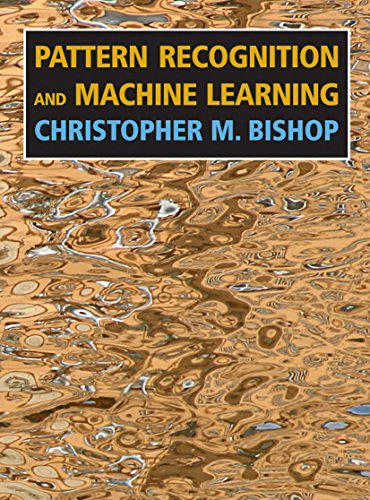
Christopher M. Bishop is a Microsoft Distinguished Scientist and Laboratory Director at Microsoft Research Cambridge, also serving as Professor of Computer Science at the University of Edinburgh. His deep expertise in neural computing and theoretical physics, including work on quantum field theory and magnetic confinement fusion, uniquely qualifies him to bridge complex scientific concepts with practical machine learning applications. This book reflects his commitment to making Bayesian pattern recognition accessible, drawing on decades of research and teaching to guide you through this challenging yet rewarding field.
Professor of Neural Computing Christopher M Bishop(you?)·
About the Author
Christopher M. Bishop is a Microsoft Distinguished Scientist and the Laboratory Director at Microsoft Research Cambridge. He is also Professor of Computer Science at the University of Edinburgh, and a Fellow of Darwin College, Cambridge. In 2004, he was elected Fellow of the Royal Academy of Engineering, and in 2007 he was elected Fellow of the Royal Society of Edinburgh. Chris obtained a BA in Physics from Oxford, and a PhD in Theoretical Physics from the University of Edinburgh, with a thesis on quantum field theory. He then joined Culham Laboratory where he worked on the theory of magnetically confined plasmas as part of the European controlled fusion programme.
When Christopher M. Bishop first realized the potential of Bayesian methods in pattern recognition, he set out to create a textbook that would demystify this approach for students and practitioners alike. Drawing from his extensive background in neural computing and theoretical physics, Bishop presents a thorough introduction to machine learning grounded in probabilistic models, including detailed chapters on graphical models and approximate inference algorithms. You’ll gain a clear understanding of how to handle uncertainty in complex data without requiring prior expertise in the field, supported by a self-contained introduction to probability theory. This book suits those comfortable with multivariate calculus and linear algebra who want to build foundational skills in pattern recognition from a modern, statistical perspective.
This AI-created book on pattern recognition is tailored to your skill level and specific interests. By sharing your background and goals, you receive a book focused on the core concepts that matter most to you, without unnecessary complexity. This personalized approach makes it easier to grasp foundational ideas and apply them directly to your projects or studies. It’s a practical way to build your pattern recognition knowledge efficiently and effectively.
TailoredRead AI creates personalized nonfiction books that adapt to your unique background, goals, and interests. Instead of reading generic content, you get a custom book written specifically for your profession, experience level, and learning objectives. Whether you're a beginner looking for fundamentals or an expert seeking advanced insights, TailoredRead crafts a book that speaks directly to you. Learn more.
This personalized book offers a tailored framework for mastering fundamental pattern recognition concepts essential to your unique background and objectives. It provides clear explanations of core principles such as feature extraction, classification techniques, and pattern matching, structured to fit your specific domain and skill level. Readers gain targeted strategies for applying these concepts to real-world problems, ensuring relevance without overwhelming with unrelated material. The book emphasizes practical implementation and analytical understanding, helping you build a solid foundation while addressing your particular goals and challenges within pattern recognition.
Best for undergraduates building foundational skills
Kindle version available
James Rehg, a professor at Georgia Institute of Technology, highlights the importance of nuanced expertise in pattern recognition as machine learning tools become widely available. After observing the surge of accessible but often superficial resources online, he found Jianxin Wu's book to be a crucial bridge that balances accessibility with depth. "Dr. Wu has written a valuable book that could not be more timely," he says, praising its self-contained approach that equips users to properly apply and interpret machine learning tools. This recommendation reflects how the book reshaped his view on training the next generation of AI practitioners.
“Dr. Wu has written a valuable book that could not be more timely: the commoditization of machine learning is putting increasingly powerful tools for working with data in the hands of an increasingly broad population of users and practitioners. However, using these tools correctly and interpreting their outputs properly still require significant expertise. This book fills the gap between the classic pattern-recognition texts that assume a substantial amount of background knowledge and preparation and the innumerable internet blog posts which are highly accessible but often superficial. I am sure this self-contained and useful book will enjoy widespread adoption, and I recommend it highly.”
Jianxin Wu is a professor in the Department of Computer Science and Technology and the School of Artificial Intelligence at Nanjing University, China. He received his B.S. and M.S. degrees in computer science from Nanjing University and his Ph.D. degree in computer science from the Georgia Institute of Technology. Professor Wu has served as an area chair for the conference on Computer Vision and Pattern Recognition (CVPR), the International Conference on Computer Vision (ICCV), and the AAAI Conference on Artificial Intelligence, and he is an associate editor for the Pattern Recognition journal. His research interests are computer vision and machine learning.
Unlike most pattern recognition books that dive deep into advanced theory, Jianxin Wu's text zeroes in on core concepts, using abundant illustrations and hands-on exercises to make complex ideas approachable. Drawing from his extensive academic background and editorial roles in major AI conferences, Wu structures the book for undergraduates with a grasp of math fundamentals, guiding you through common pitfalls and practical problem-solving strategies. For instance, early chapters frame new algorithms within real-world contexts, helping you not just memorize but apply pattern recognition techniques effectively. If you're aiming to build a solid foundation without getting overwhelmed by excessive detail, this book aligns well with your needs.
Ulisses Braga-Neto, Ph.D., a Texas A&M University professor specializing in pattern recognition and machine learning, brings over 13 years of teaching experience to this book. His research in error estimation and contributions to mathematical morphology underpin the book’s unique focus and rigor. Drawing from his extensive academic background and NSF CAREER award, Braga-Neto designed this text to bridge theory and application, making it a valuable resource for those diving into advanced pattern recognition studies.
Ulisses Braga-Neto, Ph.D. is a Professor in the Department of Electrical and Computer Engineering at Texas A&M University. His main research areas are pattern recognition, machine learning, statistical signal processing, and applications in bioinformatics and materials informatics. He has worked extensively in the field of error estimation for pattern recognition and machine learning, having received an NSF CAREER award for research in this area, and co-authored a monograph with Edward R. Dougherty on the topic. He has also made contributions to the field of Mathematical morphology in signal and image processing.
When Ulisses Braga-Neto first realized the need for a balanced approach to teaching pattern recognition, he crafted this book from over a decade of classroom experience at Texas A&M University. You’ll learn a rigorous yet practical treatment of key concepts like classification, regression, clustering, and dimensionality reduction, with fresh insights into error estimation and Bayesian methods that are rarely covered in other texts. The integration of real-world datasets from bioinformatics and materials informatics, along with Python coding assignments, lets you directly apply theory to practice. This book is best suited for graduate students or practitioners aiming to deepen their mathematical understanding while gaining hands-on skills in pattern recognition and machine learning.
Aston Zhang is a research scientist on the Llama team at Meta Generative AI and a core contributor to Llama 3. Previously, he worked as a scientist and manager at AWS AI Research, earning accolades like the ICLR Outstanding Paper Award and ACM Distinguished Paper Awards. His deep expertise in AI and pattern recognition informs this book, which aims to make deep learning accessible by explaining concepts from scratch and providing runnable code, helping you bridge theory and practice effectively.
Aston Zhang, Zachary C. Lipton, Mu Li, Alexander J. Smola(you?)·
About the Author
Aston Zhang is a research scientist on the Llama team at Meta Generative AI and a core contributor to Llama 3. Previously, he served as a scientist and manager at AWS AI Research. His accolades include the ICLR Outstanding Paper Award, the ACM Ubicomp Distinguished Paper Award, and an ACM SenSys Best Paper Award nomination. He holds a Ph.D. in Computer Science from the University of Illinois Urbana-Champaign.
When Aston Zhang first realized the transformative power of deep learning in pattern recognition, he set out to create a guide that demystifies this complex field. Drawing on his extensive experience at Meta Generative AI and AWS AI Research, he and his co-authors present a resource that teaches you not only the foundational mathematics and algorithms but also the engineering skills necessary to implement these models. For example, the book includes runnable code that helps you develop intuition by putting theory into practice, while the appendix refreshes your math knowledge. This book suits engineers, scientists, and students eager to apply deep learning practically, even if you're starting without prior machine learning experience.
This AI-created book on pattern recognition is crafted based on your background, skill level, and the specific areas you want to improve. You share which pattern recognition challenges interest you and your goals, and the book is created to provide daily exercises that build your skills step by step. Personalization matters here because pattern recognition develops best through targeted practice matched to your abilities and objectives. This tailored approach helps you focus on what truly advances your pattern mastery without getting bogged down by irrelevant information.
TailoredRead AI creates personalized nonfiction books that adapt to your unique background, goals, and interests. Instead of reading generic content, you get a custom book written specifically for your profession, experience level, and learning objectives. Whether you're a beginner looking for fundamentals or an expert seeking advanced insights, TailoredRead crafts a book that speaks directly to you. Learn more.
This personalized book offers a focused, step-by-step approach to enhancing pattern recognition skills through daily exercises designed to build your ability progressively. It provides a tailored framework that targets your current skill level and learning objectives, cutting through generic advice to deliver actionable tasks aligned with your goals. The book emphasizes practical engagement with patterns, fostering skills such as feature detection, anomaly identification, and contextual analysis. By concentrating on daily, manageable challenges, it facilitates steady improvement and skill consolidation, fitting your unique context whether you are a beginner or seeking advanced practice in pattern recognition.
George S Sebestyen is a renowned expert in pattern recognition and decision-making processes, whose influential work within the ACM monograph series has shaped understanding of complex system decisions. His extensive research, particularly in voice recognition, underpins this book, which offers a focused look at how decisions are made when identifying patterns. With this foundation, the book provides valuable perspectives for anyone interested in the theoretical aspects of pattern recognition and system design.
George S Sebestyen is a renowned expert in the field of pattern recognition and decision-making processes. With a significant contribution to the ACM monograph series, Sebestyen's work has been influential in advancing the understanding of how decisions are made in complex systems. His research has been widely cited, particularly in the context of voice recognition technologies.
When George S Sebestyen first recognized the complexities behind decision-making in pattern recognition, he aimed to untangle the cognitive processes that drive accurate identification in noisy environments. Drawing from his extensive research and contributions to the ACM monograph series, this book dives into how systems interpret patterns amidst uncertainty, with particular attention to voice recognition technologies. You’ll gain insight into the mechanisms of choosing among competing patterns and the factors influencing these decisions, making it especially valuable if you work on AI models or complex system design. If you’re seeking practical algorithms, this book leans more toward foundational understanding than direct implementation guides.
Best for computer scientists exploring structural methods
Kindle version not available
K.S. Fu is a prominent figure in the field of pattern recognition and has contributed significantly to the development of syntactic methods. His work has influenced various applications in computer science and cybernetics, making him a respected authority in the domain. This book reflects his deep expertise and offers readers a detailed examination of syntactic approaches, connecting theoretical foundations with practical applications in computing and pattern analysis.
K.S. Fu is a prominent figure in the field of pattern recognition and has contributed significantly to the development of syntactic methods. His work has influenced various applications in computer science and cybernetics, making him a respected authority in the domain.
When K.S. Fu shifted his perspective on pattern recognition, he emphasized the structural approach that syntactic methods offer, moving beyond traditional statistical techniques. Drawing from his extensive background, Fu guides you through the formal languages and grammars that underpin pattern recognition, showing how to model complex patterns as hierarchical structures. You learn to decode applications ranging from computer vision to cybernetics with detailed frameworks and algorithmic insights. This book is suited for computer scientists, engineers, and researchers eager to deepen their understanding of syntactic approaches within pattern recognition, particularly those interested in the theory as well as practical modeling techniques.
Best for theorists focused on probabilistic models
Kindle version not available
Devroye L. is a renowned expert in the fields of pattern recognition and machine learning, with extensive contributions to the theoretical aspects of these domains. His deep understanding of mathematical foundations drove him to write this book, aiming to provide readers with a rigorous probabilistic perspective on pattern recognition. This background equips you to grasp complex theories and apply them to challenging classification problems, benefiting those with an appetite for mathematical precision in AI and machine learning.
Devroye L. is a renowned expert in the fields of pattern recognition and machine learning, with extensive contributions to the theoretical aspects of these domains.
Pattern Recognition, Machine Learning, Statistical Models, Classifier Design, Probability Theory
When Devroye L. first realized the limitations in traditional pattern recognition methods, he drew on decades of theoretical expertise to develop a probabilistic framework that challenges conventional approaches. This book dives into the mathematical foundations of pattern recognition, offering rigorous insights into probability-based models and their applications. You’ll gain a deeper understanding of statistical decision theory, error bounds, and classifier design principles, making it ideal if you’re tackling complex data classification problems or want to strengthen your theoretical grounding. It’s especially suited for advanced students and researchers who prefer a mathematically precise treatment rather than purely heuristic techniques.
Christopher Michael Bishop, Laboratory Director at Microsoft Research Cambridge and professor of Computer Science at the University of Edinburgh, brings a rich background in physics and theoretical quantum field theory to this work. His expertise underpins a methodical approach to neural networks, emphasizing statistical theory essential for robust pattern recognition. Bishop's academic and research credentials uniquely position him to guide you through complex concepts with clarity, making this book a solid choice for advancing your understanding of neural network applications.
Christopher Michael Bishop (born 7 April 1959) FREng, FRSE, is the Laboratory Director at Microsoft Research Cambridge and professor of Computer Science at the University of Edinburgh and a Fellow of Darwin College, Cambridge. Chris obtained a Bachelor of Arts degree in Physics from St Catherine's College, Oxford, and a PhD in Theoretical Physics from the University of Edinburgh, with a thesis on quantum field theory.
When Christopher M. Bishop first realized that mastering the statistical underpinnings was essential for neural networks, he crafted this textbook to fill a crucial gap. You dive deep into the mathematical foundations before applying them to key neural network types like multi-layer perceptrons and radial basis function networks. The chapters on density estimation, parameter optimization algorithms, and Bayesian methods offer concrete tools for anyone working with pattern recognition. This book is tailored for graduate students or practitioners who already have a solid math background and want to understand the rigorous theory behind practical neural network applications.
The best Pattern Recognition books and more, in your inbox each week. No account needed.
Conclusion
These nine books collectively reveal that pattern recognition is both a mathematical science and a practical craft. They emphasize rigorous theory, from Bayesian inference to probabilistic models, while also embracing hands-on coding and real-world datasets.
If you’re just starting out, Jianxin Wu’s Essentials of Pattern Recognition offers an accessible entry point. For rapid skill-building in machine learning applications, combining Christopher Bishop’s Pattern Recognition and Machine Learning with Aston Zhang’s Dive into Deep Learning provides a powerful toolkit.
Once you’ve absorbed these expert insights, create a personalized Pattern Recognition book to bridge the gap between general principles and your specific situation. Tailoring your learning path ensures you focus on the algorithms, theories, and applications most relevant to your goals.
Frequently Asked Questions
I'm overwhelmed by choice – which book should I start with?
Start with Essentials of Pattern Recognition by Jianxin Wu. It builds core concepts with clear examples, making it perfect for newcomers before diving into advanced texts like Bishop's work.
Are these books too advanced for someone new to Pattern Recognition?
Some books, like Bishop's, assume strong math skills. But others, such as Wu's, are designed to ease you in. Choose based on your background to avoid feeling overwhelmed.
What's the best order to read these books?
Begin with accessible introductions like Wu's, then explore algorithm-heavy texts like Pattern Recognition by Theodoridis and Pattern Recognition and Machine Learning by Bishop to deepen your understanding.
Should I start with the newest book or a classic?
Balance both. Classics like Theodoridis's book provide foundational knowledge, while newer works like Dive into Deep Learning cover cutting-edge techniques in AI.
Can I skip around or do I need to read them cover to cover?
You can skip to chapters matching your interests or project needs, but reading foundational chapters first often helps build the necessary context for complex topics.
How can I tailor these expert insights to my specific goals in Pattern Recognition?
Yes, these books offer solid foundations, but personalizing content helps focus on your unique background and objectives. Consider creating a personalized Pattern Recognition book to complement these expert texts with targeted learning.
📚 Love this book list?
Help fellow book lovers discover great books, share this curated list with others!