"McKenzie's An Introduction to Community & Public Health with Navigate Advantage Access" by Denise Seabert, James F. McKenzie, Robert R. Pinger made it to BookAuthority's Best Public Health eBooks of All Time!
20 Public Health Books That Shape Expert Understanding
Curated by Bill Gates, Prashant Bhushan, and Siddhartha Mukherjee, these Public Health Books offer insight and impact
Updated on June 26, 2025·We may earn commissions for purchases made via this page
16 of 19 books have Kindle versions
We're launchingLaunching on Product Hunt today 🎉We just launchedJust launched on Product Hunt 🎉
Modelpeers, from the BookAuthority teamFrom the BookAuthority team: Modelpeers, a free way to follow AI models and agents like you follow people. We'd love your support.
What if I told you that the trajectory of global health hinges on the insights contained in a handful of pivotal books? Public health, a field often hidden behind the scenes, shapes everything from pandemic responses to policies combating chronic diseases. With ongoing challenges like climate change, health inequities, and emerging infections, understanding these forces has never been more urgent.
Leaders like Bill Gates, whose philanthropy has reshaped global health initiatives, and scholars like Prashant Bhushan, a public interest lawyer, have turned to certain books for understanding the complex interplay of policy, science, and society. Pulitzer winner Siddhartha Mukherjee praises works that illuminate the systemic flaws and human stories behind public health crises, underscoring why these readings matter.
While these expert-curated books provide proven frameworks and deep analyses, if you want content tailored to your experience level, interests in epidemiology, health policy, or community health, consider creating a personalized Public Health book that builds on these insights and suits your unique goals.
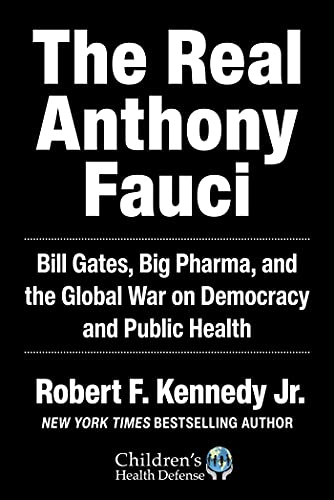
Prashant Bhushan, a public interest lawyer and activist, stands out among experts recommending this book, highlighting its crucial take on public health policy and pharmaceutical influence. He emphasizes its importance for anyone concerned about health and democracy, stating, "Absolute must watch: Public interest lawyer and children's health advocate Robert Kennedy Jr talks about his new book: 'The Real Dr Fauci'... if you value your health and want to understand what has happened." This perspective sheds light on complex power dynamics that shape public health decisions. Actor and voice artist John Bowe echoes this sentiment, praising the book's insightful discussion on treatments like Ivermectin, while vaccine inventor Robert W Malone finds the book's revelations about Fauci's strategies during the HIV crisis particularly eye-opening.
“Absolute must watch: Public interest lawyer and children's health advocate Robert Kennedy Jr talks about his new book: "The Real Dr Fauci: Bill Gates, big Pharma & the global war on public health"; if you value your health and want to understand what has happened” (from X)
Robert F. Kennedy Jr. is the chairman of the board and chief legal counsel for Children’s Health Defense. He is also counsel to Morgan and Morgan, a nationwide personal injury practice, and the founder of Waterkeeper Alliance. Kennedy is an esteemed author, with a long list of published books including the New York Times bestseller, Crimes Against Nature, as well as American Values: Lessons I Learned from My Family and Thimerosal: Let the Science Speak. Mr. Kennedy was named one of Time magazine’s 'Heroes for the Planet' for his success helping Riverkeeper lead the fight to restore the Hudson River. His reputation as a resolute defender of the environment and children’s health stems from a litany of successful legal actions. He received recognition for his role in the landmark victory against Monsanto, as well as in the DuPont case that inspired the movie Dark Waters (2019).
2021·492 pages·Public Health, SARS-CoV-2, Pharmaceutical Industry, Health Policy, Scientific Research
Robert F. Kennedy Jr.'s deep legal and environmental advocacy experience shapes this investigation into the intersection of public health and power. The book scrutinizes Dr. Anthony Fauci's role in shaping health policy, revealing financial and political influences behind major health decisions. You gain insight into how pharmaceutical funding and institutional control can affect research outcomes, with detailed examinations of AIDS treatments and vaccine industry partnerships. This book challenges prevailing narratives, making it suited for readers willing to explore controversial perspectives on public health governance and media influence.
Biodiversity And Conservation, an authority in environmental science, highlights how this book bridges the complexities of natural ecosystems with human health challenges, recommending it for those managing emerging diseases and environmental policy. They praise the editors for uniting deep thinkers to create a resource valuable across ecology and health sciences. Similarly, The Lancet underscores the book's engaging format and broad expert authorship, calling it an essential primer for health professionals and university courses alike. Together, these expert voices affirm the book's role in shaping planetary health understanding and action.
“A comprehensive review...Planetary Health is highly interdisciplinary, predicated as it is on the basis that human health and the health of the planet are inextricably linked. I would recommend biodiversity and conservation scientists to read this book because it shows how our understanding of the complexities and interaction of the natural world have direct relevance to managing many existing and emerging human diseases….The editors have done an excellent job in drawing together some deep and critical thinkers about planetary health, and so this will be a useful introductory textbook in undergraduate classes in ecology or environmental sciences as well as the health sciences. I would also like to see Planetary Health used as a primer for those from industry or policy involved in the challenges of how we protect our planet to ensure that it meets the health aspirations of future generations.”
Howard Frumkin, MD, DrPH is Senior Vice President of the Trust for Public Land, and professor emeritus of Environmental and Occupational Health Sciences at the University of Washington School of Public Health, where he was Dean from 2010-2016. He was previously head of Our Planet, Our Health at the Wellcome Trust, director of the National Center for Environmental Health and Agency for Toxic Substances and Disease Registry (NCEH/ATSDR), and Special Assistant to the CDC Director for Climate Change and Health, and Professor and Chair of Environmental and Occupational Health at Emory University's Rollins School of Public Health and Professor of Medicine at Emory Medical School. Dr. Frumkin has served on the Boards of the Bullitt Foundation, the Seattle Parks Foundation, the American Public Health Association, the US Green Building Council, the Children and Nature Network, and Physicians for Social Responsibility, among others. He has served on the Steering Committee of the Planetary Health Alliance (Harvard University), as a faculty affiliate at UCLA’s Center for Healthy Climate Solutions, and on advisory committees to the Global Consortium on Climate and Health Education (Columbia University), the Medical Society Consortium on Climate & Health (George Mason University), EcoHealth International, and the Yale Center on Climate Change and Health. He is the author, co-author, or editor of over 300 scientific journal articles, chapters, and books, including the standard environmental health textbook, Environmental Health: From Global to Local, and four Island Press titles. Dr. Frumkin is a Fellow of the American College of Physicians, the American College of Occupational and Environmental Medicine, Collegium Ramazzini, and the Royal College of Physicians of Ireland, and an elected member of the Washington State Academy of Sciences and the National Academy of Medicine. He loves cycling, kayaking, and hiking. He is married to radio journalist Joanne Silberner, and has two children.
The expertise behind this book comes from Howard Frumkin, a leading figure in environmental and occupational health with decades at institutions like Emory University and the CDC. You’ll find a deep dive into how Earth's natural systems—air, water, biodiversity—are intimately tied to human health, with chapters covering issues from infectious diseases to mental health impacts driven by environmental change. The book doesn’t just diagnose problems; it explores practical strategies such as urban design improvements and clean energy investments. If you’re involved in public health, environmental science, or policy, this book equips you with a clear understanding of the emerging planetary health paradigm and its implications for your work.
This AI-created book on public health is tailored to your specific goals and background in the field. It focuses on the areas you want to explore, whether it's epidemiology, policy, or community outreach, offering a clear pathway through complex topics. By customizing content to your interests, it helps you grasp and apply public health concepts more effectively. This personalized approach makes learning engaging and relevant, ensuring you get the most out of your study and can make a lasting impact.
TailoredRead AI creates personalized nonfiction books that adapt to your unique background, goals, and interests. Instead of reading generic content, you get a custom book written specifically for your profession, experience level, and learning objectives. Whether you're a beginner looking for fundamentals or an expert seeking advanced insights, TailoredRead crafts a book that speaks directly to you. Learn more.
2026·50-300 pages·Public Health, Epidemiology, Health Policy, Community Health, Disease Prevention
This tailored book delves into public health through a personalized lens, focusing on your unique background and objectives. It explores the multifaceted challenges of public health, from epidemiology to community interventions, while examining how tailored approaches can address complex real-world problems effectively. By matching your interests and goals, it navigates foundational concepts and specialized topics, fostering a deeper understanding of health promotion, disease prevention, and policy impact. The book reveals how individual contexts influence public health outcomes and highlights methods to design interventions that resonate with specific populations, empowering you to engage with the field in a meaningful, informed way.
Libby Watson, a respected public health journalist, shared her enthusiasm for this book with a simple yet powerful endorsement: "@Metathea11 love that book!" Her recommendation carries weight given her deep engagement with health policy issues. The book's incisive look at the financial exploitation within American healthcare reshaped her understanding of the system's challenges. Likewise, Ro Khanna, U.S. Congressman and advocate for economic reform, highlighted Rosenthal's sharp critique of excessive hospital fees and executive pay, affirming it as essential reading for those wanting to grasp and tackle healthcare's complex economics.
Dr. Elisabeth Rosenthal was for twenty-two years a reporter, correspondent, and senior writer at The New York Times before becoming the editor in chief of Kaiser Health News, an independent journalism newsroom focusing on health and health policy. She holds an MD from Harvard Medical School, trained in internal medicine, and has worked as an ER physician. She lives in New York City and Washington, DC.
2017·416 pages·Public Health, Healthcare, Medical Economics, Health Policy, Insurance Systems
After two decades reporting on health and medicine, Dr. Elisabeth Rosenthal developed a sharp critique of the American healthcare system that goes beyond blaming politicians or providers. You’ll learn how hospitals, insurers, and pharmaceutical companies have turned care into a profit-driven industry, often at the expense of patients. Rosenthal breaks down complex billing practices, exposes conflicts of interest, and reveals how market forces have warped the system's original mission. If you're navigating healthcare costs or interested in systemic reform, this book offers both eye-opening insights and practical ways to advocate for yourself and others.
Agnes Binagwaho, Vice Chancellor at the University of Global Health Equity and Senior Advisor to the WHO Director General, brings deep expertise in global health leadership. She highlights how this book "learns from our great thinkers in the Global South" and decolonizes public health, emphasizing its importance amid the COVID-19 pandemic to recognize enduring colonial inequities. This perspective reshaped her understanding of pandemic response and global health justice. Similarly, Cornel West, a prominent public intellectual, praises the book’s timely exploration of race, science, and health, underscoring its urgency in today's crises.
Vice Chancellor at University of Global Health Equity
“A great book that learns from our great thinkers in the Global South. "Epidemic Illusions" decolonizes global public health Important work at a time when we fight a pandemic, to remember the global inequities built & perpetuated by colonialism which is still very much alive” (from X)
Eugene T. Richardson, MD, PhD, is Assistant Professor of Global Health and Social Medicine at Harvard Medical School, Visiting Faculty at the University of Global Health Equity in Butaro, Rwanda, and Chair of the Lancet Commission on Reparations and Redistributive Justice.
Eugene T. Richardson’s dual expertise as a physician and anthropologist informs a critical examination of how public health practices often reinforce global inequities rooted in colonial history. You’ll encounter a rigorous unpacking of epidemiological methods, such as outbreak modeling and causal inference, through the lens of postcolonial theory and medical anthropology. Chapters detail Richardson’s frontline experience with epidemics like Ebola in West Africa and SARS-CoV-2 in the United States, illustrating how these practices perpetuate systemic disparities. This book challenges you to rethink standard public health narratives, making it essential for those engaged in global health policy and social justice.
William H. Foege, former CDC director and chief architect of the Smallpox Eradication Program, brings unparalleled expertise to this vivid account of conquering one of history’s deadliest diseases. His deep involvement in the global campaign lends authentic authority, making this not just a history book but a firsthand guide to public health innovation. Foege’s unique perspective shows what it took to rally diverse countries around a common health goal and reveals the human stories behind the scientific triumph.
William H. Foege is Emeritus Presidential Distinguished Professor of International Health at Emory University and a Gates Fellow. He served as director of the CDC and was chief of its Smallpox Eradication Program. Foege is also the author of Global Health Leadership and Management.
William H. Foege's decades of experience as director of the CDC and chief of the Smallpox Eradication Program shaped this compelling narrative of one of public health’s greatest achievements. You’ll gain insight into the innovative vaccination strategies that halted smallpox in its tracks, particularly the targeted campaign in India that became a blueprint for disease eradication. The book weaves personal anecdotes with global health lessons, offering a vivid look at the challenges and successes encountered on the front lines in impoverished regions. If you want to understand how coordinated international efforts can overcome devastating diseases, this book delivers a grounded, honest perspective.
This AI-created book on public health planning is tailored to your background and goals, focusing on crafting short-term action plans that drive rapid improvements. You share your experience level and interests, and the book matches that with targeted interventions and practical steps you need to succeed. It’s designed to help you navigate complex public health challenges with a clear, personalized pathway toward effective outcomes.
TailoredRead AI creates personalized nonfiction books that adapt to your unique background, goals, and interests. Instead of reading generic content, you get a custom book written specifically for your profession, experience level, and learning objectives. Whether you're a beginner looking for fundamentals or an expert seeking advanced insights, TailoredRead crafts a book that speaks directly to you. Learn more.
2026·50-300 pages·Public Health, Health Interventions, Program Planning, Community Assessment, Resource Allocation
This tailored book explores how to create impactful short-term public health plans that efficiently target urgent community needs. It examines key interventions that can be implemented rapidly to improve health outcomes while aligning with your background and goals. By focusing on your specific interests, it synthesizes expert knowledge into a clear, actionable pathway, highlighting evidence-based approaches that adapt to local contexts and resource constraints.
The book reveals how to prioritize interventions, measure progress, and address challenges in public health action plans. Its personalized content ensures you engage deeply with material relevant to your skill level and objectives, fostering a deeper understanding of effective public health response in compressed timeframes.
Elizabeth Stuart, a professor at Johns Hopkins Bloomberg School of Public Health, points out that epidemiology fundamentally revolves around estimating causal effects—understanding how exposures influence disease and health outcomes. She recommends this book for its clear introduction to epidemiology through a causal lens, highlighting its emphasis on framing precise research questions and designing rigorous studies. This approach has helped her guide students who want to impact public health meaningfully. Similarly, Sandro Galea from the University of Boston praises the book for introducing causal inference at the core of epidemiology, offering a fresh perspective that prepares readers for deeper exploration of population health interventions.
Professor, Johns Hopkins Bloomberg School of Public Health
“Much of epidemiology is about estimating causal effects: how risk factors or exposures relate to disease, or the effects of interventions or other factors on health outcomes. This introductory text by Westreich introduces students to the basics of epidemiology through this lens of intervention and impact. Its focus on how to articulate clear research questions, and design rigorous studies to answer them, will be particularly useful to students looking to make a difference in the public's health.”
Daniel Westreich received his B.S. in computer science from Yale University, and after a short stint as a software engineer at Microsoft, a Ph.D. in epidemiology from the University of North Carolina, Chapel Hill. He is currently an associate professor of epidemiology at UNC, where his work focuses substantively at the intersection of HIV and women's reproductive health. He has served as a member-at-large of the executive board of the Society for Epidemiologic Research and in editorial capacities at the American Journal of Epidemiology and Epidemiology. In 2014 Dr. Westreich was awarded an NIH DP2 New Innovator Award to develop epidemiologic methods for implementation science.
While working as an epidemiology professor at UNC, Daniel Westreich developed this textbook to address a notable gap: teaching epidemiology through the lens of causal inference. You’ll learn how to frame precise research questions and design studies using concepts like potential outcomes and counterfactuals, which are central to understanding disease risk and intervention effects. The book covers key study designs—randomized trials, cohort, and case-control studies—while emphasizing internal and external validity. If you’re diving into epidemiology or public health, this book offers a focused foundation on causal thinking, though it’s best suited for those comfortable with rigorous scientific methods rather than casual learners.
Science, a leading voice in scientific publishing, highlights this book as "an easily approachable yet factually rich narrative," praising Oshinsky's skillful blend of history and storytelling that deepens understanding of polio's impact on public health. Their recommendation reflects the book's value in illuminating the scientific and social dynamics of disease control. Similarly, The Economist notes how Oshinsky uncovers forgotten stories from the war on polio, adding layers to the cultural history. This strong endorsement from respected publications underscores the book’s importance for anyone examining public health's evolution.
“An easily approachable yet factually rich narrative. Oshinsky provides a very readable and enlightening history that also can be appreciated as good storytelling.”
David M. Oshinsky is George Littlefield Professor of History at the University of Texas at Austin. A leading historian of modern American politics and society, he is the author of A Conspiracy So Immense: The World of Joe McCarthy and 'Worse Than Slavery': Parchman Farm and the Ordeal of Jim Crow Justice, both of which won major prizes and were New York Times Notable Books.
David M. Oshinsky, a respected historian at the University of Texas at Austin, explores the intense American fight against polio in the mid-20th century. You’ll gain a nuanced understanding of the scientific race between Jonas Salk and Albert Sabin, and how public fear shaped national health policies and societal behaviors. The book details the pivotal role of the National Foundation for Infantile Paralysis in funding research and transforming public engagement with disease. If you’re interested in the intersection of medical innovation, public health infrastructure, and cultural response, this narrative offers a richly detailed portrait of America’s complex relationship with one of its most feared diseases.
This book offers a rare look into how infectious diseases disproportionately impact the poor, framed by Paul Farmer’s extensive experience battling AIDS and tuberculosis in challenging settings like Haiti and Peru. It exposes the limitations of traditional public health approaches that often blame victims, instead emphasizing the broader social inequalities that shape health outcomes. If you're invested in understanding the intersection of poverty and disease, this work provides a thoughtful, evidence-based perspective on tackling these modern plagues and the systemic issues underlying them.
Paul Farmer challenges the conventional wisdom that infectious diseases affect all populations equally by highlighting how poverty shapes vulnerability to illnesses like AIDS, tuberculosis, and malaria. Drawing on over fifteen years of fieldwork as a physician-anthropologist in Haiti and Peru, Farmer reveals the social and economic forces behind disease distribution, moving beyond simplistic explanations like patient noncompliance. You’ll gain a nuanced understanding of how global and local inequalities perpetuate health disparities and what committed healthcare workers can do to address them. This book suits anyone seeking a critical perspective on epidemiology and public health policy, especially those interested in social determinants of health.
William G. Weissert, a seasoned political science professor at Florida State University and emeritus at the University of Michigan School of Public Health, co-authored this book with Carol S. Weissert, the Collins Eminent Scholar and chair of Civic Education and Political Science at Florida State University. Their combined expertise drives a rigorous exploration of how government and private interests interact to shape health policy. Their academic standing ensures this book offers a detailed lens on the political dynamics underlying major health reforms, making it a vital resource for understanding contemporary policy debates.
William G. Weissert is a professor of political science at Florida State University and a professor emeritus at the University of Michigan School of Public Health. Carol S. Weissert is Collins Eminent Scholar and chair of Civic Education and Political Science at Florida State University.
The authoritative expertise behind this book shines through the detailed examination of how government and private sectors shape health policy in the United States. William and Carol Weissert leverage their academic backgrounds in political science and public health to dissect the complexities of health policy shifts from the Obama to Trump administrations, including impacts on the Affordable Care Act. You gain insights into the roles of party polarization, social media influence, and Supreme Court decisions, with chapters dedicated to topics like Medicare payment reforms and insurance industry regulations. This book suits anyone seeking a nuanced understanding of modern American health policy, though those looking for broad public health fundamentals might find it narrowly focused on policy politics.
Alfons López Tena Fbpe, a jurist and journalist writing for outlets like Business Insider and Jerusalem Post, points to this book as a critical examination of how non-medical forces fuel deadly outbreaks. He highlights how Peter Hotez’s work reveals the necessity of combining biomedical advances with efforts addressing war, political instability, and climate change. "Advances in biomedicine must be accompanied by concerted action in non-medical drivers of deadly outbreaks," Alfons notes, underscoring how this book reshaped his view on tackling global health threats beyond just science.
“.@PeterHotez's book: Advances in biomedicine must be accompanied by concerted action in non-medical drivers of deadly outbreaks—war, political instability, human migration, poverty, urbanization, anti-science and nationalist sentiment, climate change” (from X)
Peter J. Hotez, MD, PhD, is the founding dean of The National School of Tropical Medicine at Baylor College of Medicine in Houston, Texas, as well as director of the Texas Children’s Hospital Center for Vaccine Development. He is an elected member of the Institute of Medicine of National Academies as well as the American Academy of Arts and Sciences. A pediatrician and an expert in vaccinology and tropical disease, Hotez has authored hundreds of peer-reviewed articles and editorials as well dozens of textbook chapters.
Drawing from his extensive background as a pediatrician and vaccinologist, Peter J. Hotez explores the intertwined challenges of infectious diseases, vaccine diplomacy, and rising anti-science sentiment. You encounter detailed case studies ranging from tropical diseases to COVID-19, alongside firsthand accounts of his diplomatic efforts bridging geopolitical divides. The book equips you with a nuanced understanding of how war, climate change, and political instability fuel epidemics and why global cooperation on vaccines is crucial. It's particularly suited if you’re keen on the intersection of science, policy, and public health diplomacy.
Arianna Huffington, co-founder of The Huffington Post, praises this book for its vivid portrayal of healthcare workers' commitment during the pandemic. Her appreciation stems from witnessing the emotional toll and unyielding dedication of frontline staff combating COVID-19 in New York City. She calls it "a brilliant and moving new book" that captures the human side of a public health crisis, deepening understanding of the challenges faced by medical teams and changing how she views the resilience required in such emergencies.
“In her brilliant and moving new book “The Desperate Hours,” author and journalist Marie Brenner shares how healthcare workers came together in their devotion to duty, their families, each other, and the city they love. A real page-turner!” (from X)
Marie Brenner is the author of over half a dozen books and is a writer at large for Vanity Fair. She has been a staff writer at The New Yorker, a contributing editor at New York, and has won numerous awards for her reporting around the world. Her exposé of the tobacco industry was the basis for the 1999 movie The Insider, which was nominated for seven Academy Awards®, including Best Picture. She is also a producer of the 2019 documentary Where’s My Roy Cohn?
Marie Brenner, with her extensive background as an award-winning Vanity Fair writer and investigative journalist, offers a gripping narrative rooted in unprecedented access to New York-Presbyterian hospitals during the spring 2020 Covid crisis. You gain a detailed understanding of how frontline healthcare workers navigated overwhelming challenges, from makeshift clinics to secure ICU units, showcasing resilience under pressure. The book reveals intimate portraits of medical teams’ devotion beyond medicine—balancing duty with personal sacrifice. If you want an inside view of pandemic response and healthcare dynamics during a crisis, this book delivers a vivid, well-researched account that captures both the human and systemic aspects.
George Rosen was a prominent historian known for his extensive work in the field of public health. His contributions to medical history have been influential in understanding the evolution of health systems and public health policies. Rosen's scholarship has provided critical insights into the historical context of health practices and their impact on society, making this book a valuable resource for those seeking to understand the roots of contemporary public health.
George Rosen was a prominent historian known for his extensive work in the field of public health. His contributions to medical history have been influential in understanding the evolution of health systems and public health policies. Rosen's scholarship has provided critical insights into the historical context of health practices and their impact on society.
Drawing from his extensive expertise in medical history, George Rosen traces the evolution of public health through three major eras: the pre-capitalist, revolutionary, and modern periods. You’ll gain a deep understanding of how social complexities and capitalist development shaped public health policies and practices over time. Chapters detail the pluralization of health actions and the societal factors influencing health systems. This book suits those interested in the historical underpinnings of public health infrastructure and policy development rather than practical health interventions.
Donald Henderson, a respected authority affiliated with The Lancet, brings weight to his recommendation of this book, underscoring its importance for anyone involved in global health development. He highlights how Nancy Leys Stepan's work objectively traces eradication programs' origins and controversies over the past century, offering insights that challenge simplified views of these efforts. His endorsement reflects both the book's depth and its balanced treatment of complex public health debates, making it a valuable resource for professionals seeking a nuanced understanding of disease eradication's role in shaping health policy worldwide.
The Lancet contributor and public health authority
“In Eradication, noted medical historian Nancy Leys Stepan objectively explores the origin, development of, and controversy surrounding eradication programmes during the past century—warts and all . . . . This book should be required reading for all who are concerned with global health development; Stepan offers a uniquely knowledgeable insight into the evolution and controversies intrinsic to the important idea of eradication and its contributions to world health.”
Nancy Leys Stepan is Professor Emeritus of History at Columbia University. She is the author of Eradication, 'The Hour of Eugenics': Race, Gender, and Nation in Latin America and Picturing Tropical Nature, all from Cornell.
Drawing from her expertise as a historian at Columbia University, Nancy Leys Stepan offers a detailed account of disease eradication campaigns that have shaped public health efforts over the past century. You gain insight into the complexities behind ambitious programs like those for smallpox, malaria, and polio, understanding not only their successes but also the controversies and debates that surround such large-scale interventions. The book digs into the life of Dr. Fred Lowe Soper, a pivotal figure in eradication efforts, and explores the tension and possible complementarity between eradication and primary health care approaches. If you're interested in the intersection of history, policy, and global health challenges, this book offers a sober, well-researched perspective without glossing over the difficulties involved.
Charu Pragya, a lawyer and national media panelist with deep involvement in public discourse, brings valuable perspective to this book on India’s COVID-19 response. She highlights the book’s exploration of policy decisions and leadership during the crisis, inviting a candid discussion with author Priyam Gandhi Mody. This conversation sheds light on how India managed resources and technology to navigate the pandemic, offering insights that challenge common assumptions about the country's capabilities.
“Please join us for a candid discussion with Author @PriyamGM on her book about India’s fight against Covid19 as we talk about policies, leadership, technology & Atmanirbhar Bharat.” (from X)
Priyam Gandhi Mody’s background in public policy and administration shines through in this detailed account of India’s COVID-19 response, which challenges widespread skepticism about the country’s capacity to handle the crisis. You’ll gain insight into how leadership decisions, scientific guidance, and resource management combined to create one of the world’s most effective pandemic responses, with chapters outlining vaccine development, infrastructure mobilization, and international aid efforts. This book is particularly useful if you want to understand the intersection of governance and public health during a global emergency, especially in resource-constrained settings. It’s less about medical details and more about strategy and leadership in public health crises.
Johanna Wagstaffe, a meteorologist and geophysics expert, brings a thoughtful perspective to public health through her recommendation of this book. She highlights how it links historical accounts, like those in The Ghost Map, with modern tracking of Covid-19, underscoring the book’s relevance and depth. "Fascinating read—connecting history to tracing & tracking Covid-19," she says, reflecting on how Dr. Bonnie Henry’s grounded approach reshaped her understanding of infectious disease control.
“Fascinating read— connecting history (and one of my favourite books Ghost Map) to tracing & tracking Covid-19. Plus tie-in to Dr. Bonnie Henry’s book that I have just started Soap and Water & Common Sense.” (from X)
Dr. Bonnie Henry, a leading epidemiologist and public health doctor at the forefront of fighting worldwide outbreaks, offers expert advice on staying healthy in a germ-filled world.
When Dr. Bonnie Henry, a seasoned epidemiologist with decades of frontline experience from Ebola to COVID-19, wrote this book, she aimed to demystify how microbes impact our daily lives. You’ll learn not just about viruses and bacteria but also practical habits rooted in science, like her three core rules: wash your hands, cover your mouth when coughing, and stay home when sick. Chapters such as "Microbes Inc." take you inside the unseen world, offering clear explanations of how germs spread and how to protect yourself effectively. This book suits anyone hungry for grounded, no-frills insight into infectious diseases and personal health safety.
Dr. Leana Wen, an emergency physician and former Baltimore health commissioner, brings a unique insider perspective to public health through her extensive frontline experience. As a public health professor at George Washington University and a Brookings Institution fellow, Wen combines academic insight with practical leadership. Her journey from immigrant roots to national health leader informs the book’s depth, revealing how public health efforts save lives in ways most people never see. This background grounds the book’s exploration of critical issues like opioid addiction and pandemic response, making it essential for understanding modern health challenges.
Dr. Leana Wen is an emergency physician, public health professor at George Washington University, and nonresident senior fellow at the Brookings Institution. She is also a contributing columnist for the Washington Post and a CNN medical analyst. Previously, she served as Baltimore’s health commissioner, where she led the nation’s oldest continuously operating public health department. She is the author of the patient advocacy book, When Doctors Don’t Listen: How to Avoid Misdiagnoses and Unnecessary Tests and the new memoir, Lifelines: A Doctor's Journey in the Fight for Public Health. Dr. Wen lives with her husband and their two young children in Baltimore.
2021·352 pages·Public Health, Health Policy, Epidemiology, Addiction Treatment, Infectious Disease
What started as a personal journey for Dr. Leana Wen became a revealing exploration of public health's unseen impact on daily life. Drawing from her experience as an emergency physician and Baltimore’s health commissioner, Wen details how public health initiatives address issues like opioid addiction and pandemic response. You learn not just about medical facts but about innovative approaches such as treating gun violence as a contagious disease and confronting racism as a health threat. This book suits anyone interested in public health’s broader social context, especially those curious how policy and medicine intersect to save lives.
Frances Dunn Butterfoss, Ph.D., brings her extensive expertise as a professor and Division Director of Behavioral Research and Community Health at Eastern Virginia Medical School to this authoritative volume. Awarded the EVMS Foundation Chair in Pediatrics, she combines her academic and practical experience to provide a detailed guide on coalition-building in public health. Her background ensures this book is grounded in both research and real-world application, making it invaluable for professionals seeking to foster effective community partnerships.
Frances Dunn Butterfoss, Ph.D., is a well-known researcher, theorist, educator, speaker, and practitioner. She is a professor and Division Director of Behavioral Research and Community Health in the Department of Pediatrics at Eastern Virginia Medical School (EVMS). Dr. Butterfoss was recently awarded the EVMS Foundation Chair in Pediatrics.
Frances Dunn Butterfoss's extensive experience in behavioral research and community health led her to craft this thorough guide on developing and maintaining coalitions that bolster public health. Through detailed chapters, you learn about coalition frameworks, leadership cultivation, and strategic planning, including practical tools like communication methods and media advocacy. The book offers concrete examples from real coalition work, making it a solid resource for those involved in collaborative health initiatives. If you're aiming to build lasting partnerships within communities or improve public health outcomes through collective action, this book offers a clear, research-informed roadmap.
Max Bazerman, Straus Professor and Co-Director of the Center for Public Leadership at Harvard University, brings considerable weight to his endorsement of this work. With deep expertise in decision-making and leadership, Bazerman highlights how "Roberto and Kawachi have put together a collection of insights that health policy professionals will need to understand to create the largest impacts moving forward." His recognition underscores the book’s practical influence on shaping health policies that harness behavioral economics principles to improve public health outcomes.
“Roberto and Kawachi have put together a collection of insights that health policy professionals will need to understand to create the largest impacts moving forward.”
Ichiro Kawachi, MD, PhD, is the John L. Loeb and Frances Lehman Loeb Professor of Social Epidemiology and Chair of the Department of Social & Behavioral Sciences at Harvard T.H. Chan School of Public Health, where he has taught since 1992. He has previously coedited Social Epidemiology, Neighborhoods and Health, Globalization and Health, and the Oxford Handbook of Public Health Practice, all published by Oxford University Press. Kawachi lectures about social epidemiology through the Harvard University Massive Open Online Course (MOOC) platform, edX. His course, 'Health and Society' (PHx 201), is a version of the class that he has taught for twenty years at Harvard. In 2013-1014, 35,000 students from all over the world were enrolled in the MOOC course.
Ichiro Kawachi's extensive experience in social epidemiology at Harvard shapes this nuanced exploration of how behavioral economics can address persistent public health challenges. Together with Christina A. Roberto, he delves into how subtle shifts in decision-making environments influence behaviors like diet, smoking, and alcohol use. You’ll find clear explanations of key behavioral economics concepts alongside practical examples, such as modifying food labels to guide healthier choices. This book suits professionals and students aiming to integrate economic psychology into health policy or interventions, offering you a framework to rethink how public health problems can be tackled beyond traditional methods.
Denise Seabert is a public health educator and administrator with a PhD from the University of Florida and multiple leadership roles in health education associations. Her extensive experience informs this textbook, which she co-authored to guide students and professionals through the evolving landscape of community and public health. The book incorporates up-to-date CDC and WHO information, reflecting her commitment to preparing readers for practical challenges in health promotion and education.
Denise Seabert, James F. McKenzie, Robert R. Pinger(you?)·
About the Author
Denise Seabert is a public health educator and higher education administrator who has dedicated her career to improving the health of students and the community through her teaching, scholarship, service, and leadership roles. She earned her PhD from the University of Florida, a MS from Indiana University, and a BAEd from Western Washington University. She has served on the NCHEC Division Board, American School Health Association Board of Directors, and Eta Sigma Gamma National Health Education Honorary Executive Board. Denise is co-author of three textbooks: An Introduction to Community and Public Health (11th ed., Jones & Bartlett Learning), Principles and Foundations of Health Promotion and Education (8th ed., 2023, Jones & Bartlett Learning), and Health Education: Elementary and Middle School Applications (11th ed., 2025, McGraw Hill).
2021·550 pages·Public Health, Health Education, Epidemiology, Program Planning, Minority Health
Unlike most public health introductions that skim surface issues, this book dives into the skills and knowledge necessary for health education and promotion careers. Co-author Denise Seabert, an experienced public health educator and administrator, brings her extensive academic and leadership background to bear, updating this tenth edition with current CDC priorities, WHO goals, and COVID-related content. You'll explore topics ranging from epidemiology and program planning to minority and mental health, framed by real-world policy contexts. This book suits students and professionals aiming to build a solid foundation in community health and public health practice.
The best Public Health books and more, in your inbox each week. No account needed.
Conclusion
Across this collection, three clear themes emerge: the vital link between social factors and health outcomes, the power of coordinated global action, and the ongoing challenge of balancing science, policy, and public trust. These books map the terrain from frontline stories to high-level policy analysis, providing a rich foundation for understanding public health’s multifaceted nature.
If you’re grappling with healthcare system reform, start with An American Sickness and Governing Health for economic and policy insights. For those focused on infectious diseases and prevention, House on Fire and Preventing the Next Pandemic offer compelling lessons. Meanwhile, community health advocates will find Coalitions and Partnerships in Community Health invaluable.
Alternatively, you can create a personalized Public Health book to bridge the gap between general principles and your specific situation. These books can help you accelerate your learning journey and confidently engage with one of the most critical fields shaping our future.
Frequently Asked Questions
I'm overwhelmed by choice – which book should I start with?
Start with An American Sickness for a clear view of healthcare economics or Planetary Health if you're interested in environmental impacts. These provide accessible entry points and set a strong foundation.
Are these books too advanced for someone new to Public Health?
No, several books like McKenzie's Introduction to Community & Public Health and Soap and Water & Common Sense offer approachable content suitable for beginners.
What's the best order to read these books?
Begin with broad overviews like McKenzie's or Planetary Health, then explore focused topics such as Epidemiology by Design or Behavioral Economics and Public Health for deeper insight.
Should I start with the newest book or a classic?
A mix works best. Classics like Polio provide historical context, while recent books like The Desperate Hours address current challenges, giving a comprehensive view.
Do these books assume I already have experience in Public Health?
Not all. Some, like Epidemiology by Design, are more technical, but many, including Lifelines and Coalitions and Partnerships in Community Health, are written for a broad audience.
How can I get tailored Public Health knowledge without reading all these books?
Yes! While these books offer expert insights, personalized books can complement them by focusing on your unique interests and goals. Explore custom Public Health books to efficiently bridge expert knowledge with your needs.
📚 Love this book list?
Help fellow book lovers discover great books, share this curated list with others!