20 Saudi Arabia History Books That Shape Expert Understanding
Recommended by Karen Elliott House, Bernard Haykel, and Jack Pittbrooke for authoritative insights into Saudi Arabia history
Updated on June 25, 2025·We may earn commissions for purchases made via this page
18 of 20 books have Kindle versions
We're launchingLaunching on Product Hunt today 🎉We just launchedJust launched on Product Hunt 🎉
Modelpeers, from the BookAuthority teamFrom the BookAuthority team: Modelpeers, a free way to follow AI models and agents like you follow people. We'd love your support.
What if you could peer beyond headlines and uncover the rich tapestry of Saudi Arabia's history shaped by tribal legacies, religious movements, and geopolitical struggles? Saudi Arabia's past is not just a story of oil and monarchy but a complex narrative influencing global affairs today. The urgency to understand this kingdom grows as it navigates reform and regional power plays.
Experts like Karen Elliott House, author of On Saudi Arabia, and Bernard Haykel, professor at Princeton, have spent decades dissecting the kingdom’s evolving social and political fabric. Journalist Jack Pittbrooke recently highlighted Blood and Oil for its vivid portrayal of Mohammed bin Salman's ascent, demonstrating how these works illuminate the forces behind Saudi Arabia's transformations.
While these expert-curated books provide proven frameworks and perspectives, those seeking tailored insights—whether focused on tribal dynamics, religious history, or geopolitical strategy—might consider creating a personalized Saudi Arabia History book that builds on these foundational understandings to suit your unique interests and goals.
The New York Times Book Review, a leading voice in cultural and political analysis, highlights the depth and clarity David Rundell brings to Saudi Arabia’s complex story. Their recommendation reflects the book's capacity to illuminate political, economic, and social frameworks in ways that resonate especially with diplomats and policymakers. As they put it, "Rundell covers the kingdom from top to bottom with vast wisdom, depth and understanding … It provides a superb overview of the kingdom's political, economic and social landscape." This endorsement underscores how the book reshaped their understanding of Saudi Arabia’s unique dynamics. Complementing this, The Wall Street Journal also praises its wide-ranging and detailed exploration, reinforcing its stature as an authoritative source on the kingdom's crossroads.
“Rundell covers the kingdom from top to bottom with vast wisdom, depth and understanding … It provides a superb overview of the kingdom's political, economic and social landscape, but it goes well beyond that. Rundell explains, clearly and concisely, the special dynamics that drive the kingdom and render it so alien from our own society ... I wish that every United States diplomat, military officer and journalist would read this book before deploying there. I wish that every member of Congress would read it before voting on any measure related to Saudi Arabia. I wish every American pondering the frictions of our long relationship with the Saudis would read it simply to understand.”
David Rundell studied Arabic at Oxford and served as an American diplomat for thirty years in Washington, Bahrain, Saudi Arabia, Syria, Tunisia and the United Arab Emirates. Widely regarded as one America's leading experts on Saudi Arabia, he spent fifteen years in the country where he worked at the Embassy in Riyadh as well as the Consulates in Jeddah and Dhahran. His assignments in Saudi Arabia included the Chief of Mission, Charge d'Affaires, Deputy Chief of Mission, Political Counselor, Economic Counselor, Commercial Counselor, and Commercial Attaché. He has numerous awards for his analytical reporting and participated in Operation Desert Storm, Saudi accession to the World Trade Organization and the defeat of Al Qaida's terror campaign. After retiring from the Foreign Service he spent three years at the Boston-based consultancy Monitor Group before joining Arabia Analytica as a partner. He lives in Dubai and travels regularly to Saudi Arabia.
2020·336 pages·Saudi Arabia History, Middle East Politics, Economic Reform, Social Change, Political Stability
David Rundell's extensive diplomatic career in Saudi Arabia shapes this in-depth analysis of the kingdom's evolving landscape. You gain a nuanced understanding of how traditional tribal structures coexist with sweeping economic and social reforms, including anti-corruption efforts and shifts toward a more tolerant Islam under Crown Prince Mohammad bin Salman. The book unpacks complex political, economic, and social dynamics that are often misunderstood, offering concrete insights into Saudi Arabia's stability and challenges. Chapters detailing the crackdown on corruption and the role of foreign consultants reveal the mechanics behind recent changes, making it an insightful read if you want to grasp the kingdom’s current crossroads without oversimplification.
Karen Elliott House, author of On Saudi Arabia and a respected voice on Middle Eastern politics, found this book indispensable for understanding the kingdom's complex social realities during a time of rapid reform. She highlights how Koelbl’s intimate access to Saudi citizens provides a rare lens to measure the challenges faced by Crown Prince Mohammed bin Salman’s modernization efforts. "Through the close-up look at Saudi people she provides, Koelbl’s book will help readers gauge the depth and breadth of the challenge facing the kingdom’s attempt to reform." This perspective reshaped House’s own views on Saudi Arabia’s future. Also weighing in, Gerald Feierstein, former US Ambassador to Yemen, underscores the book’s relevance in grasping the broader geopolitical implications tied to Saudi Arabia's transformation.
“Through the close-up look at Saudi people she provides, Koelbl’s book will help readers gauge the depth and breadth of the challenge facing the kingdom’s attempt to reform.”
Susanne Koelbl is an award-winning journalist and a military and foreign correspondent for the German news magazine Der Spiegel. Her stories highlight the intricate dynamics in conflict areas and wars around the world, including the Balkans, Central Asia, the Middle East, and Africa. Koelbl is known for her probing reports from Syria, Afghanistan, and North Korea. Her highly acclaimed book Dark Beloved Country: People and Power in Afghanistan was published in 2009. For her in-depth and thorough reporting, she received several industry recognitions, including the Liberty Award and the Henry-Nannen-Price award. Koelbl has excellent contacts in all political camps in the Middle East and has been traveling to Saudi Arabia since 2011.
Susanne Koelbl, drawing on years as a foreign correspondent deeply embedded in Middle Eastern conflicts, developed this book through her extended time living in Riyadh amid transformative years for Saudi Arabia. You gain firsthand insights into the kingdom's complex social fabric, from intimate conversations with women exploring new freedoms to access inside royal circles and religious hardliners. The book offers a nuanced view of Crown Prince Mohammed bin Salman's ambitious reforms and the tension between tradition and change. If you want a grounded perspective that goes beyond headlines to reveal how Saudi society wrestles with modernization, this book will challenge and inform your understanding.
This AI-created book on Saudi history is crafted based on your unique background, experience, and learning goals. You share which historical aspects intrigue you most and your current knowledge level, so the book focuses on the topics you care about. This personalized approach makes navigating Saudi Arabia’s complex past clearer and more relevant, helping you grasp the kingdom’s political, social, and economic layers without unnecessary detours.
TailoredRead AI creates personalized nonfiction books that adapt to your unique background, goals, and interests. Instead of reading generic content, you get a custom book written specifically for your profession, experience level, and learning objectives. Whether you're a beginner looking for fundamentals or an expert seeking advanced insights, TailoredRead crafts a book that speaks directly to you. Learn more.
2026·50-300 pages·Saudi Arabia History, Saudi History, Political History, Economic Development, Social Change
This tailored book explores the rich tapestry of Saudi Arabia's political, social, and economic history with a focus matched to your background and interests. It examines key periods and themes—from tribal dynamics and religious movements to economic transformations—offering a personalized pathway through complex historical narratives. This approach reveals how Saudi Arabia’s unique past shapes its present, making the subject accessible and relevant to your specific goals. By focusing on your interests, the book delivers a custom synthesis of expert knowledge, enabling you to gain deeper understanding without wading through unrelated material.
Jack Pittbrooke, a journalist covering Tottenham Hotspur and England for The Athletic UK, highlights his recent engagement with 'Blood and Oil' alongside another key work on Mohammed bin Salman. His recommendation comes from a deep interest in understanding Saudi Arabia's complex political landscape. He shared, "Last week I read 'Blood and Oil' by Bradley Hope and Justin Scheck and 'MBS' by Ben Hubbard. Both fascinating books that I would totally recommend to anyone looking to educate themselves about the topic." Pittbrooke's perspective reflects the book's ability to educate and provoke thought on a topic often shrouded in opacity. Additionally, Seymour Hersh, a renowned investigative journalist, commends the book as a truthful and unflinching account of the Kingdom's darker realities, framing it as a narrative of greed and power struggles that few others capture so vividly.
“Last week I read 'Blood and Oil' by Bradley Hope and Justin Scheck and 'MBS' by Ben Hubbard. Both fascinating books that I would totally recommend to anyone looking to educate themselves about the topic. Would be interested in any other book recommendations on this though.” (from X)
Bradley Hope, based in London, is the New York Times bestselling coauthor of Billion Dollar Whale (2018) and Blood and Oil (2020) and author of the upcoming The Rebel and The Kingdom (Nov 1, 2022). He is the co-founder of journalism studio Project Brazen along with Tom Wright. Hope is a Pulitzer Prize finalist and Gerald Loeb Award winner.
2021·384 pages·Saudi Arabia History, Middle East Politics, Geopolitics, Royal Succession, Leadership
When Bradley Hope and Justin Scheck set out to expose the inner workings of Saudi Arabia's royal family, they uncovered not just power struggles but the complex persona of Crown Prince Mohammed bin Salman. You’ll gain insight into how MBS’s rise disrupted longstanding geopolitical bargains, blending reformist promises with ruthless tactics like the detainment of dissenters and the Khashoggi assassination. The book details interactions with global power players and the high-stakes implications for the Middle East’s future. If you want a nuanced understanding of modern Saudi politics and the forces shaping its trajectory, this book offers an unvarnished look at ambition and autocracy in action.
New York Times Bestseller
Longlisted for Financial Times & McKinsey Business Book of the Year Award
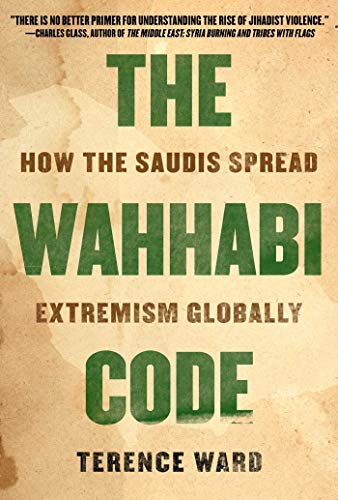
Lexi Alexander, a filmmaker and cultural commentator known for her insightful takes on Middle Eastern affairs, recommends this book as essential reading: "The Wahhabi Code: How Saudis Spread Extremism Globally is an excellent book people should read." Her appreciation stems from the book's clear-eyed analysis of how Saudi Arabia’s promotion of Wahhabism fuels global terrorism, a perspective that reshaped her understanding of regional dynamics. Seconding this, Markos Kounalakis, McClatchy foreign affairs columnist, praises it for unpacking the complex ties between religious extremism and Saudi politics, highlighting its importance for anyone studying the Middle East today.
“The Wahhabi Code: How Saudis Spread Extremism Globally is an excellent book people should read. Here is a great review of it by Jordan Elgrably.” (from X)
Terence Ward is a Colorado-born writer, documentarist, and cross-cultural consultant who grew up in Saudi Arabia, Iran, and Egypt. After graduating from UC Berkeley, he worked for a decade with Middle East Industrial Relations Counselors (MEIRC) consulting with clients across the Gulf. The author of Searching for Hassan and The Guardian of Mercy, he serves as international trustee for the World Conference of Religions for Peace (RfP). He is a member of the noted Middle Eastern Institute (ISMEO) in Rome and divides his time between Florence and New York.
Terence Ward draws on his unique upbringing across Saudi Arabia, Iran, and Egypt to expose the origins and global spread of Wahhabism, Saudi Arabia’s ultra-conservative religious doctrine fueling extremist groups like ISIS and al-Qaeda. You’ll explore how Saudi funding of mosques, schools, and charities has extended this ideology far beyond the Middle East, even into European cities, offering insight into the complex relationship between Saudi policies and international terrorism. Chapters detail the regime’s strategic expansion and the West’s overlooked role, providing a nuanced understanding of how ideology and geopolitics intertwine. This book suits you if you want a clear-eyed examination of Saudi influence on modern extremism, rather than broad generalizations or simplified narratives.
Publisher's Weekly, a respected voice in literary criticism, highlights this book's thorough narrative despite noting its heavy focus on military exploits. Their expertise in evaluating historical biographies provides a solid foundation for trusting their view on Ibn Saud's complex life story. They say, "All in all a successful narrative, though overlong on military exploits and personal vignettes and short on analysis of the massive changes in Arabian society." Such a review invites you to explore the detailed accounts of Ibn Saud's rise and challenges, enriching your grasp of Saudi Arabia’s origins. Also, Kirkus Reviews calls it "an entertainingly exhaustive, though imperfect, biography," underscoring the book’s depth and the enigmatic nature of its subject.
“All in all a successful narrative, though overlong on military exploits and personal vignettes and short on analysis of the massive changes in Arabian society.”
Barbara Bray has twice won the Scott Moncrief Prize for her translations, as well as the French-American Foundation Prize. She has collaborated with Harold Pinter and Joseph Losey on a film adaptation of Proust’s A la recherche du temps perdu. She passed away in 2010. Michael Darlow is a writer and award-winning TV producer and director. In the 1970s he made a documentary film for the Sultan of Oman and wrote a book with Richard Fawkes, The Last Corner of Arabia. His award-winning TV programs include The World at War—Genocide, Auschwitz: The Final Solution, Crime and Punishment, Little Eyolf, and The Winslow Boy. He is a fellow of the Royal Television Society and was awarded its Silver Medal in 2000. He lives in England.
Michael Darlow's decades of documentary filmmaking and Barbara Bray's acclaimed literary translation experience merge in this detailed portrait of Ibn Saud, the founder of modern Saudi Arabia. You gain insight into the complex blend of tribal warfare, diplomacy, and imperial pressures that shaped Ibn Saud's rise from desert nomad to king. The book navigates his military campaigns and political acumen, while also probing the paradoxes of Saudi Arabia's legacy, including its Western alliances and darker associations. If you seek a nuanced understanding of Middle Eastern leadership and nation-building, this extensive biography offers deep historical context and vivid narrative chapters such as Ibn Saud's adolescent years in Kuwait and global interactions with Churchill and Roosevelt.
This AI-created book on Saudi Arabia’s global influence is tailored to your background, interests, and goals. You share which aspects you want to focus on—whether politics, culture, or economics—and the book matches your current knowledge. It offers a personalized guide through complex international dynamics, helping you understand Saudi Arabia’s role in the world without wading through unrelated material. This focused approach makes your learning efficient and deeply relevant.
TailoredRead AI creates personalized nonfiction books that adapt to your unique background, goals, and interests. Instead of reading generic content, you get a custom book written specifically for your profession, experience level, and learning objectives. Whether you're a beginner looking for fundamentals or an expert seeking advanced insights, TailoredRead crafts a book that speaks directly to you. Learn more.
This tailored book explores Saudi Arabia's dynamic regional and international roles with a focus that matches your interests and knowledge level. It delves into the kingdom's geopolitical strategies, economic ambitions, and cultural influences, providing a personalized pathway through complex expert content. By synthesizing diverse perspectives on Saudi Arabia's power projection, the book uncovers how historical legacies and modern reforms interplay on the global stage. This personalized examination helps you grasp nuanced interactions between Saudi Arabia and key global actors, fostering a deeper understanding of its influence in the Middle East and beyond.
Ryan Crocker, former Deputy Assistant Secretary of State and ambassador to Afghanistan, Iraq, and Pakistan, highlights the critical importance of this book, noting that "No Arab ally of the United States is more important or less understood than Saudi Arabia." He points to Robert Jordan's unique position as ambassador just after 9/11, where his direct relationships and analysis clarified Saudi support for the U.S. Despite the tension, Jordan’s diplomacy helped steer a vital alliance during a turning point in history. The Washington Book Review echoes this, emphasizing the book's value for both students and experts in US-Middle East relations, particularly as the region evolves after the Iran-US nuclear deal.
“No Arab ally of the United States is more important or less understood than Saudi Arabia. Robert Jordan went to Riyadh as our ambassador just after the 9/11 attacks when America was asking which side they were on. His unique personal relationships and superb analyses made it clear that the Saudis stood with us, but we also had to understand them. Desert Diplomat tells the story of a critical relationship at a critical time, and how a great diplomat, Robert Jordan, can turn the hinge of history. We are at another turn—may we be as wise as he was in making it.”
Robert W. Jordan, Steve Fiffer, James A. Baker III(you?)·
About the Author
Robert W. Jordan is Diplomat in Residence and adjunct professor of political science in the John G. Tower Center for Political Studies at Southern Methodist University. He served as the U.S. ambassador to Saudi Arabia from 2001 to 2003 and as a partner in the international law firm Baker Botts L.L.P. for many years where he headed Middle East practice in Dubai. Steve Fiffer has written for the New York Times and is the author or coauthor of numerous books, including Three Quarters, Two Dimes, and a Nickel: A Memoir of Becoming Whole. James A. Baker III served as the sixty-first U.S. secretary of state.
2015·256 pages·Saudi Arabia History, Middle East History, Diplomacy, U.S. Foreign Policy, Counterterrorism
Unlike most accounts of Saudi Arabia that lean heavily on governmental analysis, this book offers a firsthand perspective from Robert W. Jordan, who stepped into the ambassador role immediately after 9/11 without prior diplomatic experience. You gain insight into the delicate balancing act of maintaining U.S.-Saudi relations during turbulent times, including Jordan's direct interactions with Crown Prince Abdullah and top U.S. officials like George W. Bush and Colin Powell. The narrative delves into how Jordan navigated terrorism, human rights, and war diplomacy, providing you with an understanding of the complex political and social shifts shaping the region. This book suits those wanting an insider view of diplomacy and Middle Eastern politics post-9/11 without the usual detachment of academic tomes.
Cole M. Bunzel is a Hoover Fellow at Stanford University's Hoover Institution and a scholar specializing in Arabian Peninsula history, Islamic theology, and modern Islamic radicalism. Earning his Ph.D. from Princeton and holding a fellowship at Yale Law School’s Kamel Center, Bunzel brings deep expertise to this study. His role as editor of jihadica.com highlights his engagement with contemporary Islamic militant thought, making his account of Wahhābism’s history an authoritative resource for understanding this movement’s enduring impact on Saudi Arabia and global jihādī ideologies.
Cole M. Bunzel is a Hoover Fellow at the Hoover Institution, Stanford University. A historian and scholar of the contemporary Middle East, he specializes in the history of the Arabian Peninsula, Islamic theology and law, and modern Islamic radicalism. He earned his Ph.D. in Near Eastern Studies from Princeton University and has been a fellow at Yale Law School's Abdallah S. Kamel Center for the Study of Islamic Law and Civilization. He edits the website jihadica.com.
Drawing from extensive research in Islamic theology and Middle Eastern history, Cole M. Bunzel unpacks the complex origins and evolution of Wahhābism, a movement that reshaped the Arabian Peninsula’s political and religious landscape. You gain insight into its founder's radical doctrines, particularly the opposition to saint veneration, and trace how these ideas influenced modern militant groups like al-Qāʿida and the Islamic State. The book delves into primary sources, including Wahhābī scholars' writings, and covers the movement’s transition from insurgency to state-supported ideology under Saudi Arabia’s founding dynasty. This detailed narrative suits anyone seeking to understand the ideological roots behind contemporary Islamic militancy and Saudi Arabia's historical trajectory.
Robert Vitalis, author of Oilcraft and a seasoned expert on U.S. energy policy, highlights how many misconceptions have surrounded U.S.-Saudi relations, stating, "A lot of nonsense has been written since 9/11 about the history of United States-Saudi relations. Oil Powers gets it right." His endorsement carries weight given his deep dive into the myths around energy security. Similarly, Vanessa Ogle, author of The Global Transformation of Time, praises McFarland’s research for revealing how the alliance reshaped American foreign policy and the global economy in the 1970s, underscoring the enduring impact on Middle East conflicts and finance. These perspectives underscore the book’s value for anyone examining modern geopolitics.
Victor McFarland (PhD, Yale) is assistant professor at the University of Missouri and a fellow at the Charles Warren Center for Studies in American History at Harvard University. This would be his first book.
2020·376 pages·Saudi Arabia History, Middle East History, U.S. Foreign Policy, Oil Politics, Political Alliances
Victor McFarland, a Yale-trained historian and University of Missouri professor, offers a nuanced analysis of the U.S.-Saudi alliance that goes beyond the usual energy-centric narrative. You gain insight into how political, economic, and social interests intertwined to strengthen royal and executive power while reshaping Middle Eastern geopolitics. For example, McFarland details the 1970s oil price surge and its role in shifting American foreign policy and global economic priorities. This book suits anyone seeking a deep understanding of how elite collaborations have influenced decades of U.S. involvement in the Middle East and the broader implications of this enduring partnership.
Madawi Alrasheed, a Fellow of the British Academy, highlights how Samin’s exploration of kinship nationalism in Saudi Arabia reveals the delicate balance tribes maintain, preventing upheaval while preserving identity. She reflects on her re-reading of a key passage that reshaped her understanding of tribal politics in the kingdom. Alongside her, Bernard Haykel, Princeton professor, praises the book’s depth, noting how Samin’s archival research and interviews offer a rare, nuanced view into Saudi Arabia's complex identity dynamics. Their insights underscore this book’s value for anyone seeking a serious, multifaceted look at Saudi genealogical culture.
“Re-read an interesting sentence in Samin's book Of Sand and Soil: when you are tribes and clans, you tend not to be revolutionary republicans. For KSA, kinship nationalism keeps the cauldron of tribe boiling, without bubbling over into mass insurrection” (from X)
What if everything you knew about tribal identity in Saudi Arabia was incomplete? Nadav Samin, a Dartmouth anthropologist, digs deep into the kingdom’s genealogical politics, revealing how tribal belonging shapes social status and state strategies today. By focusing on Ḥamad al-Jāsir, a key twentieth-century genealogist, Samin uncovers how nontribal Saudis seek validation through lineage, exposing intimate social anxieties entwined with national identity. You’ll gain insight into how oral histories and kinship ideologies influence modern Saudi society beyond religious or economic explanations, especially through detailed case studies and interviews in chapters like the exploration of petitioners’ stories. This book suits anyone fascinated by Middle Eastern identity, state formation, or cultural anthropology.
New Statesman, a respected UK political and cultural magazine, highlighted the book’s rare depth by noting how Weston "both talked and listened to Saudi women," offering a perspective often missing in discussions about the kingdom. Their recommendation underscores the book's intelligence and balanced approach, born from Weston's time living in Riyadh and his scholarly work at the King Faisal Center. This has helped many rethink simplistic views of Saudi Arabia, revealing a society quietly negotiating tradition and change.
Mark Weston, a former Visiting Scholar at the King Faisal Center for Research and Islamic Studies in Riyadh, has worked for ABC News and has written for the New York Times and the Washington Post. He is the author of The Land and People of Pakistan and Giants of Japan: The Lives of Japan's Greatest Men and Women. A graduate of Brown University and the University of Texas Law School, he lives north of Manhattan.
Mark Weston, who has spent time as a Visiting Scholar at Riyadh's King Faisal Center, draws on firsthand experience and interviews to present a nuanced portrait of Saudi Arabia that goes beyond common Western critiques. You’ll gain insight into the kingdom’s complex social fabric, including the surprising empowerment of women in education and the subtle political avenues citizens use to influence governance. The book balances Saudi Arabia’s challenges, such as its links to extremism and restrictions on freedoms, with its role as a key Middle Eastern ally and agent of cautious modernization. If you want a detailed, balanced understanding of Saudi Arabia’s past and present, this book offers both context and fresh perspectives without glossing over difficult truths.
The Economist, a globally respected news publication, highlights this book for its nuanced and rigorous approach to understanding Saudi jihadism. Their analysis praises Hegghammer’s ability to dissect the rise and fall of militant Islamist movements within the kingdom, revealing details that challenge common assumptions. This insight comes from their deep engagement with Middle East politics and security issues, where they found the book to be a necessary corrective to oversimplified narratives. Their endorsement underscores how the book reshaped their view on the complex local and ideological factors driving Saudi Arabia’s jihadist landscape.
“A rare combination of sympathetic nuance and critical rigour…[A] useful corrective to common misreadings of the kingdom and deserve a wide audience…Mr. Hegghammer’s analysis of the rise and fall of Saudi jihadism reveals some fascinating details…Yet what stands out most are his persuasive insights. The spread of jihadist ideas in Saudi Arabia, it seems, owed as much to temporary local factors as to outside influences or, for that matter, to Islamic scripture. The state erred, for instance, with policing methods that switched abruptly from being so hard as to provoke anger to so soft as to dispel fear. Hair-splitting ideological rivalries between Islamists, meanwhile, led to a polarisation of the different camps and to a radicalisation of no more than a few men.”
Thomas Hegghammer is a Norwegian academic specializing in the study of violent Islamism. Trained in Middle East Studies at Oxford University and Sciences-Po (Paris), he is currently senior research fellow at the Norwegian Defence Research Establishment (FFI) and adjunct professor of political science at the University of Oslo.
Thomas Hegghammer, a Norwegian scholar trained at Oxford and Sciences-Po, brings a rigorous academic lens to the complex history of Islamist militancy in Saudi Arabia. Drawing on extensive fieldwork and Arabic primary sources, this book unpacks why Saudi Arabia, despite its global jihadi reputation, saw a delayed internal campaign by figures like Osama bin Laden until 2003. You gain insight into the nuanced interplay between local factors, ideological rivalries, and shifting state policies that influenced jihadism’s rise and transformation. If you're seeking a grounded understanding of Saudi Arabia's internal dynamics related to radical Islam, this book offers detailed analysis rather than broad generalizations.
James Gelvin, author of key works on the modern Middle East, discovered this book’s value while seeking a clearer understanding of Saudi Arabia beyond prevailing clichés. He describes it as "an eye-opening account, clearly written, subtly argued," highlighting how it reshaped his perspective on the kingdom’s religious and political complexity. This endorsement gains further weight from the Canadian Journal Of History, which praises the book for treating Saudi society with analytical rigor instead of mystification, making it a vital resource for serious students of the region.
David Commins is Professor of History at Dickinson College. He is the author of The Wahhabi Mission and Saudi Arabia, The Gulf States: A Modern History, and Islamic Reform: Politics and Social Change in Late Ottoman Syria.
David Commins, a seasoned historian at Dickinson College with deep expertise in Islamic and Middle Eastern history, examines Saudi Arabia through a nuanced lens that moves beyond simplistic stereotypes. He explores how the kingdom's religious doctrine, Wahhabism, intertwines with its royal power and oil wealth, shaping both domestic life and international influence. You gain insight into the complex interplay between strict religious enforcement and the forces of urbanization, education, and globalization that challenge these norms. Chapters dissect the persistence of pre-Saudi religious diversity and the kingdom's adaptation to modern pressures, revealing a society more dynamic than often portrayed. This book suits anyone seeking a balanced understanding of Saudi Arabia's socio-political fabric and religious landscape.
Ellen R. Wald, Ph.D., a respected consultant on geopolitics and the global energy sector, offers a deeply informed perspective rooted in her academic background from Boston University and Princeton. Her expertise on oil pricing, energy policy, and Middle East history shapes this thorough exploration of Saudi Arabia's most powerful family and their control of Aramco. Wald’s nuanced understanding helps you navigate the kingdom’s complex political and economic landscape, providing clear context for today’s global energy discussions.
Ellen R. Wald, Ph.D. is a widely cited consultant on geopolitics and the global energy industry. A frequent commentator on oil pricing, energy policy, alternative energies, OPEC, and political economy, she earned her doctorate in history at Boston University and an AB in history, Near Eastern Studies, and creative writing at Princeton University. She teaches Middle East history and policy and has appeared on TV and radio on three continents.
2018·448 pages·Saudi Arabia History, Energy Policy, Political Economy, Oil Industry, Monarchy
Drawing from her extensive expertise in geopolitics and energy economics, Ellen R. Wald unpacks the complex interplay between Saudi Arabia's ruling family and the colossal enterprise of Saudi Aramco. You’ll discover how religious authority, political power, and vast oil wealth have intertwined to shape not only the kingdom's history but also its future ambitions, including the landmark Aramco IPO. The book delves into detailed accounts of key figures like Abdul Aziz and the strategic moves that transformed a fragile desert kingdom into a global powerhouse. If you're curious about the forces behind Saudi Arabia's political economy and its influence on global markets, this book offers sharp, nuanced insights.
Robert Lacey is a British historian known for his original research and close immersion with his subjects, currently living in Jeddah, Saudi Arabia. His experience living alongside people in the kingdom informs his deep understanding of its complexities, making him uniquely qualified to explore the paradoxes shaping Saudi Arabia today. This book draws on his extensive background and offers readers a detailed look at the forces behind the kingdom’s ongoing struggles between tradition and modernity.
Robert Lacey is a British historian noted for his original research, which gets him close to---and often living alongside---his subjects. He is the author of twenty books, including Majesty, The Year 1000, and the New York Times bestseller The Kingdom. He is currently living in Jeddah, Saudi Arabia.
2009·432 pages·Saudi Arabia History, Middle East Politics, Religious Influence, Modernization, Political Conflict
Robert Lacey challenges the notion that Saudi Arabia is a monolithic society by revealing its deep internal conflicts between modernity and tradition. Drawing on decades of immersive research, including living in Jeddah, he unpacks tensions among kings, clerics, and reformists that shape the kingdom’s political and religious landscape. You’ll gain insights into specific historical events and social dynamics fueling ongoing struggles, such as the clash between technological progress and entrenched religious authority. This book suits you if you want a nuanced understanding of Saudi Arabia beyond headlines, especially its complex power structures and cultural contradictions.
Dilip Hiro is a renowned author and expert on Middle Eastern politics, with numerous books and articles to his credit. His extensive research and analysis have made him a respected voice in understanding the complexities of the region's geopolitical landscape. This book draws on his deep expertise to unravel the intricate Cold War between Saudi Arabia and Iran, offering readers a comprehensive view of the historical and religious tensions fueling this rivalry.
Dilip Hiro is a renowned author and expert on Middle Eastern politics, with numerous books and articles to his credit. His extensive research and analysis have made him a respected voice in understanding the complexities of the region's geopolitical landscape.
The breakthrough moment came when Dilip Hiro, an expert on Middle Eastern politics with a rich background in regional analysis, developed a nuanced narrative explaining the ongoing rivalry between Saudi Arabia and Iran. You gain a detailed understanding of how the Sunni-Shia divide intertwines with political ambitions, shaping conflicts across Syria, Iraq, and Yemen. This book unpacks the motivations behind Saudi Arabia's assertive foreign policy under Muhammad bin Salman and Iran's expanding influence in the Muslim world. If you want a clear lens on this complex geopolitical struggle, this book offers a grounded exploration of its roots and implications.
Rosie Bsheer is Assistant Professor of History at Harvard University, whose expertise informs this deep dive into Saudi Arabia's historical politics. Her academic background lends authority to the book’s examination of how Saudi elites shaped national memory and urban space after the Gulf War, making it a valuable resource for anyone interested in the complex layers of history, power, and identity in the region.
Rosie Bsheer is Assistant Professor of History at Harvard University.
2020·416 pages·Saudi Arabia History, Middle East History, State Building, Political Power, Archival Studies
Rosie Bsheer's role as Assistant Professor of History at Harvard University grounds her exploration of Saudi Arabia's historical narrative in rigorous scholarship and deep regional insight. She reveals how post-1991 Gulf War political elites in Saudi Arabia selectively shaped history by controlling archives and urban spaces to reinforce their vision of state and nation, often sidelining religious influences. You’ll gain a nuanced understanding of the tensions between secular state-building efforts and cultural heritage, exemplified by contrasts between Riyadh’s curated national archive and Mecca’s architectural erasures. This book suits you if you seek a critical perspective on how history and politics intertwine in shaping Saudi Arabia’s modern identity.
Robert G. Hoyland has been a research fellow of St John’s College, Oxford since 1994 and has authored several significant works on Middle Eastern history. His extensive fieldwork and scholarship underpin this volume, which offers a broad yet detailed survey of Arabia’s peoples and cultures from ancient times to the emergence of Islam. His academic rigor and deep regional knowledge make this book an authoritative resource for anyone seeking a richer understanding of the Arabian Peninsula's historical landscape.
Robert G. Hoyland has been a research fellow of St John’s College, Oxford since 1994. He is the author of Seeing Islam As Others Saw It and several articles on the history of the Middle East. He regularly conducts fieldwork in the region.
2001·336 pages·Saudi Arabia History, Middle East History, Ancient Civilizations, Economy, Society
Robert G. Hoyland, a seasoned research fellow at St John's College, Oxford, brings a wealth of expertise to this exploration of Arabia's rich past. This book traces the region's development from the Bronze Age up to the dawn of Islam, drawing on a diverse array of sources including inscriptions, poetry, and archaeological findings. You'll gain insight into Arabia's economy, society, religion, language, and cultural identity, with detailed chapters on areas like ancient Sheba and the northern deserts. If your interest lies in understanding the deep historical roots of the Arabian Peninsula beyond the typical narratives, this book offers a thorough and nuanced perspective.
Madawi al-Rasheed, Professor of Anthropology of Religion at King's College London, brings her deep expertise in Saudi history, politics, and society to this book. Her academic background and previous works on Saudi state dynamics uniquely position her to unpack the country's challenges after 9/11. This book reflects her commitment to exploring how authoritarianism, social forces, and international pressures shape Saudi Arabia today, making it an essential read for those seeking a thorough understanding of the kingdom's evolving political landscape.
Madawi Al-Rasheed is Professor of Anthropology of Religion at King's College, London. She specialises in Saudi history, politics, religion and society. Her recent publications include Contesting the Saudi State (2007) and Kingdom without Borders (2008).
2010·342 pages·Saudi Arabia History, Political Reform, Islamist Movements, Royal Politics, Social Mobilization
Drawing from her expertise as a Professor of Anthropology of Religion at King's College London, Madawi al-Rasheed offers a nuanced examination of Saudi Arabia's complex political and social fabric. This updated edition highlights the country's struggles post-9/11, including royal family divisions, economic challenges, and rising Islamist dissent, especially in chapters addressing state reforms and societal mobilization. You gain insight into how repression and authoritarianism coexist with a growing appetite for institutional change. If you're looking to understand Saudi Arabia beyond headlines, especially its internal dynamics and future prospects, this book provides a balanced and detailed perspective.
Charles River Editors is a publishing company known for producing concise and informative historical narratives. They focus on delivering engaging content that educates readers about significant events and figures in history. Their expertise lends itself well to unpacking the complex process behind the formation of modern Saudi Arabia, making this compact volume a useful resource for anyone interested in the kingdom's early political and economic development.
Charles River Editors is a publishing company known for producing concise and informative historical narratives. They focus on delivering engaging content that educates readers about significant events and figures in history.
2016·52 pages·Saudi Arabia History, Middle East History, Political History, State Formation, Oil Industry
Charles River Editors crafts a focused narrative on the emergence of modern Saudi Arabia, tracing its roots from the 18th century alliances between the Saudi clan and religious reformers to the geopolitical shifts post-World War I. You gain insights into how the Saudi family strategically consolidated power by navigating the collapse of the Ottoman Empire and the decline of Hashemite influence, culminating in the pivotal discovery of oil that transformed the kingdom's trajectory. The book carefully details the socio-political and economic forces shaping the Arabian Peninsula, making it a solid choice if you want a concise yet informative exploration of Saudi state formation and its early challenges.
Roger Harrison is a writer and photographer who has spent many years living in Saudi Arabia. His experiences in the Kingdom have provided him with unique insights and perspectives, which he shares through his captivating narratives and stunning photography. Harrison's work often focuses on the beauty and complexity of the region, making him a respected voice in the field. Wings Over Arabia draws on this expertise to chronicle an unprecedented gliding expedition across Saudi Arabia, offering readers a rare glimpse into the Kingdom’s diverse landscapes and cultural richness.
Roger Harrison is a writer and photographer who has spent many years living in Saudi Arabia. His experiences in the Kingdom have provided him with unique insights and perspectives, which he shares through his captivating narratives and stunning photography. Harrison's work often focuses on the beauty and complexity of the region, making him a respected voice in the field.
Roger Harrison's deep connection to Saudi Arabia shines through in Wings Over Arabia, where his years living in the Kingdom fuel a vivid narrative combined with remarkable photography. You explore an extraordinary 2006 gliding expedition over Saudi Arabia’s challenging landscapes, gaining insight into the geography, culture, and daring spirit behind the journey. The book offers a rare aerial perspective, with images and commentary bringing to life areas seldom seen by outsiders, making it ideal if you want to understand the Kingdom’s vastness beyond typical historical texts. Whether you’re fascinated by aviation, photography, or Middle Eastern geography, this intimate account provides both visual wonder and thoughtful context without overstatement.
The best Saudi Arabia History books and more, in your inbox each week. No account needed.
Conclusion
These 20 books reveal recurring themes: the intricate balance between tradition and reform, the interplay of religious ideologies and political power, and the kingdom's pivotal role in regional and global geopolitics. If you're navigating the complexities of Saudi Arabia's modernization, start with Vision or Mirage for diplomatic context and Behind the Kingdom's Veil for social realities.
For those interested in ideological roots, combine The Wahhabi Code and Wahhābism to grasp religious influences shaping policy and society. Alternatively, you can create a personalized Saudi Arabia History book to bridge general principles and your specific questions.
These carefully selected works can accelerate your understanding, offering you clarity amid complexity and equipping you with knowledge that resonates beyond mere headlines.
Frequently Asked Questions
I'm overwhelmed by choice – which book should I start with?
Start with Vision or Mirage by David Rundell. It offers a broad diplomatic and political overview, laying a solid foundation before diving into more specialized topics like religion or tribal society.
Are these books too advanced for someone new to Saudi Arabia History?
Not at all. Many, like Behind the Kingdom's Veil, provide accessible narratives with rich context, suitable for newcomers wanting a clear yet nuanced introduction.
What’s the best order to read these books?
Begin with broad political histories like A History of Saudi Arabia, then explore thematic works on religion or society, and finish with current geopolitical analyses such as Cold War in the Islamic World.
Do I really need to read all of these, or can I just pick one?
You can start with one that matches your interest area, but these books complement each other. Together, they offer a fuller picture of Saudi Arabia’s multifaceted history.
Are there any books here that contradict each other?
Some books present differing perspectives, especially regarding Saudi reforms and religious influences. This diversity reflects genuine debate and enriches your understanding of complex issues.
Can I get insights tailored to my specific interests in Saudi Arabia History?
Yes! While these expert books provide solid foundations, you can also create a personalized Saudi Arabia History book that aligns expert knowledge with your unique learning goals and background.
📚 Love this book list?
Help fellow book lovers discover great books, share this curated list with others!