19 Best-Selling Internet Company History Books Millions Love
Recommended by Alexis Ohanian (Reddit Co-Founder), Sheryl Sandberg (Facebook COO), and Ron Conway (Angel Investor), these best-selling Internet Company History books offer expert insights and proven impact.
Updated on June 24, 2025·We may earn commissions for purchases made via this page
16 of 19 books have Kindle versions
We're launchingLaunching on Product Hunt today 🎉We just launchedJust launched on Product Hunt 🎉
Modelpeers, from the BookAuthority teamFrom the BookAuthority team: Modelpeers, a free way to follow AI models and agents like you follow people. We'd love your support.
There's something special about books that both critics and crowds love — and Internet Company History is no exception. Understanding the rise and evolution of tech giants offers invaluable lessons for entrepreneurs, innovators, and anyone fascinated by how the digital world reshapes our lives. These 19 best-selling books, celebrated for their proven insights, continue to captivate readers eager to grasp the forces behind some of the most transformative companies of our time.
Alexis Ohanian, co-founder of Reddit and Initialized Capital CEO, has championed titles like "Hatching Twitter" and "Founders at Work," highlighting their authentic portrayal of startup struggles and triumphs. Meanwhile, Sheryl Sandberg, former COO of Facebook, recommends "The Innovators" for its revealing accounts of collaboration and innovation that shaped the digital revolution. Angel investor Ron Conway also weighs in, supporting books that illuminate the venture capital world and the early days of tech startups.
While these popular books provide proven frameworks and deep dives into the history of influential internet companies, readers seeking content tailored to their specific Internet Company History interests might consider creating a personalized Internet Company History book that combines these validated approaches with your unique background and goals.
Nick Bilton, a columnist and reporter for The New York Times known for exploring technology's disruptive effects on business and society, brings his sharp eye to Twitter's origin story. His coverage spans future tech and social media impact, making him uniquely qualified to unpack the complicated relationships and power struggles among Twitter's founders. Bilton's firsthand experience and access offer you an informed glimpse into the startup's chaotic early days and Silicon Valley culture, providing context that enriches your understanding of this influential platform.
Nick Bilton is a columnist and reporter for The New York Times, where he explores the disruptive aspects of technology on business, culture and society. His columns span everything from the future of technology and privacy to the impact of social media on the Web. He is a regular guest on national TV and radio and is the author of I Live in the Future & Here’s How It Works. He lives in Los Angeles.
Nick Bilton, a seasoned columnist for The New York Times, draws on his deep experience covering technology's impact on society to narrate Twitter's tumultuous beginnings. You gain an insider's view of the clashes and alliances between the platform’s founders—Ev Williams, Jack Dorsey, Biz Stone, and Noah Glass—illuminated through internal emails and firsthand accounts. The book reveals the fragile dynamics behind Twitter’s rise, offering you insight into startup culture, venture capital pressures, and power struggles rarely exposed with this level of detail. If you want to understand how a tech giant can almost unravel before it gains traction, this book lays it out with sharp storytelling and concrete examples from early chapters detailing key conflicts.
Matthew Yglesias, a noted political commentator and journalist, recommends this book for its vivid account of Amazon’s near-collapse and subsequent rise, a story he found deeply insightful for understanding American tech companies. He praises Brad Stone's narrative as "well worth your time," highlighting how this aligns with the broad appreciation the book has received from readers and experts alike. This recommendation resonates with those eager to grasp the forces behind one of the most transformative internet companies. Additionally, Steven Levy, editor at WIRED, emphasizes the book's value for anyone involved in or affected by the digital economy, underscoring its impact beyond just the tech sector.
Brad Stone is senior executive editor of global technology at Bloomberg News and the author of the New York Times bestseller The Everything Store: Jeff Bezos and the Age of Amazon. He has covered Silicon Valley for more than 15 years and lives in San Francisco.
During his extensive coverage of Silicon Valley, Brad Stone uncovered the story behind Amazon's rise from a modest online bookstore to a sprawling global retail empire. You learn not only about Jeff Bezos's relentless drive and vision but also about the internal culture and strategic gambits that shaped Amazon's expansion into cloud computing and digital media. Stone offers detailed narratives from insiders, revealing how Bezos's management style fueled innovation and risk-taking. This book suits anyone curious about the intersection of technology, entrepreneurship, and retail disruption, providing a nuanced look at what it takes to build one of the world's most influential companies.
This AI-created book on startup lessons is built from your unique background and interests. You share which startup topics and pioneer stories matter most to you, and the book focuses on those areas, blending popular knowledge with your goals. It’s designed to give you a custom path through the lessons of internet company founders, so you get exactly the insights that fit your journey.
TailoredRead AI creates personalized nonfiction books that adapt to your unique background, goals, and interests. Instead of reading generic content, you get a custom book written specifically for your profession, experience level, and learning objectives. Whether you're a beginner looking for fundamentals or an expert seeking advanced insights, TailoredRead crafts a book that speaks directly to you. Learn more.
This personalized book explores essential startup strategies by drawing from the experiences of pioneering internet company founders. Tailored to your background and goals, it focuses on the lessons and insights that resonate most with your interests. The book examines key phases of startup journeys, leadership challenges, funding dynamics, growth tactics, and innovation lessons that have shaped successful internet ventures. By centering on your specific areas of curiosity, it reveals practical narratives and examples that bring these startup secrets to life. This tailored approach helps you grasp foundational concepts alongside nuanced perspectives that align with what you want to achieve in the startup world, making your learning both relevant and compelling.
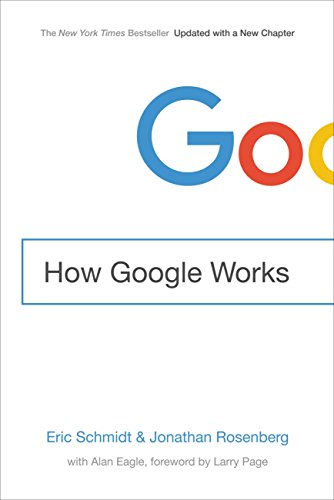
Gita Wirjawan, an Indonesian entrepreneur and leader, highlights this book as a key resource on how Google hires, manages, and helps their "smart creatives" thrive, reflecting its practical insights into tech management. Her recommendation aligns with many who admire the book's candid look at Google's culture and innovation strategies. Similarly, Russell Poldrack, psychology professor at Stanford, finds it valuable for anyone managing people and projects aiming to innovate. Together, their endorsements underscore how this book offers lessons that resonate beyond just Google, reaching anyone involved in leading dynamic teams in technology-driven fields.
Eric Schmidt is an accomplished technologist, entrepreneur and philanthropist, known for his pivotal role in the growth of Google as CEO and Chairman from 2001 to 2011, overseeing its transformation from a small startup to a global tech giant. Working alongside Sergey Brin and Larry Page, Google dramatically scaled its infrastructure and diversified its products, while maintaining a strong culture of innovation. Eric currently serves as Chair of the Board of Trustees for The Broad Institute and as a board member for the Mayo Clinic and the Advisory Board at UC Berkeley, among others. His philanthropic efforts through The Schmidt Family Foundation and the Schmidt Ocean Institute with his wife Wendy, focus on climate change, including the support of ocean and marine life studies at sea, as well as education and cutting-edge research and technology in natural sciences and engineering. Notably, in 2024 Eric was awarded an honorary Knight of the Most Excellent Order of the British Empire by His Majesty King Charles III for services to Philanthropy. Additionally, he co-founded Schmidt Futures with his wife Wendy, which supports projects at the intersection of talent and technology, centered on specific, finite challenges that are connected to other efforts in the Schmidt philanthropic network. Most recently, the couple co-founded Schmidt Sciences, a nonprofit organization working to advance science and technology that deepens human understanding of the natural world and develops solutions to global issues. In 2021, he founded the Special Competitive Studies Project, a non-profit initiative focused on strengthening America’s long-term AI and technological competitiveness in national security, the economy, and society. Eric is also a commissioner on the National Security Commission on Emerging Biotechnology (NSCEB). An accomplished author, Eric has co-authored three New York Times bestsellers, The New Digital Age, How Google Works, and Trillion Dollar Coach. In 2021, Eric co-authored the WSJ bestselling book The Age of AI: And Our Human Future with Dr. Henry Kissinger and Professor Daniel Huttenlocher. His most recent book, Genesis: Artificial Intelligence, Hope, and the Human Spirit (2024), was co-written with the late Dr. Henry Kissinger, and Craig Mundie, offering a guide to how AI will shape the modern era.
What happens when Silicon Valley veterans like Eric Schmidt and Jonathan Rosenberg rethink management in the face of rapid technological change? Their decade at Google reshaped their views on leadership, talent, and innovation, which they share candidly here. You’ll gain insights into fostering a culture that empowers "smart creatives," navigating disruption, and making bold strategic decisions like "Think 10X, not 10%." Chapters detail how Google’s unique approach to hiring and decision-making drives success, making it especially useful if you're leading or growing a tech-driven organization. This book suits those ready to challenge conventional wisdom about management and innovation, though its lessons resonate most in high-growth environments.
Christina Stage Break Warren, senior cloud advocate at Microsoft with deep ties to tech media, revisits "Losing the Signal" as a favorite recounting of BlackBerry's dramatic rise and fall, especially poignant as the company phases out its classic services. She shares, "Since it’s the last day of BlackBerry BIS/BB10/BBID, I’m re-listening to my favorite rise and fall book..." This personal connection highlights the book's enduring relevance and emotional impact in tech circles. Similarly, Tobi Lutke, CEO of Shopify, simply calls it a "Great book," signaling its strong endorsement from leading tech entrepreneurs.
“Since it’s the last day of BlackBerry BIS/BB10/BBID, I’m re-listening to my favorite rise and fall book, “Losing the Signal: The Rise and Fall of Research in Motion” — wishing I could listen to it on a BlackBerry but I can’t find one to do it for funsies.” (from X)
Jacquie McNish is a senior writer with the Globe and Mail and before that the Wall Street Journal. She has won seven National Newspaper Awards and is the author of three bestselling books. She lives in Toronto with her family.
Drawing from their extensive journalistic experience, Jacquie McNish and Sean Silcoff meticulously trace the rise and fall of BlackBerry, revealing the dynamics behind a tech giant's dramatic collapse. You gain insights into the internal conflicts and strategic missteps that plagued the company just as Apple and Google revolutionized smartphones. The book explores the complex partnership between Mike Lazaridis and Jim Balsillie, showing how innovation and rivalry coexisted in shaping BlackBerry's fate. If you're curious about leadership challenges in fast-moving tech sectors or want to understand how market dominance can unravel, this narrative offers detailed examples and candid reflections.
Wall Street Journal Best Business Book of 2015
Short-listed for Financial Times and McKinsey Business Book of the Year 2015
Best Narrative Business Book of 2015 by Strategy+Business
Sheryl Sandberg, former COO of Facebook and founder of LeanIn.Org, recommends this book for its revealing look at how collaboration fuels innovation. She highlights Isaacson’s focus on the often overlooked role women played in the digital revolution and praises the book’s lessons on teamwork. Her endorsement reflects how the book resonates with leaders aiming to understand creativity in technology. Alongside her, Sean Gardner, with experience at Apple and Microsoft, echoes this admiration, emphasizing the book’s engaging narrative and historic insights into the digital age.
“Walter Isaacson has written an inspiring book about genius, this time explaining how creativity and success come from collaboration. The Innovators is a fascinating history of the digital revolution, including the critical but often forgotten role women played from the beginning. It offers truly valuable lessons in how to work together to achieve great results.”
Walter Isaacson is writing a biography of Elon Musk. He is the author of The Code Breaker: Jennifer Doudna, Gene Editing, and the Future of the Human Race; Leonardo da Vinci; Steve Jobs; Einstein: His Life and Universe; Benjamin Franklin: An American Life; The Innovators: How a Group of Hackers, Geniuses, and Geeks Created the Digital Revolution; and Kissinger: A Biography. He is also the coauthor of The Wise Men: Six Friends and the World They Made. He is a Professor of History at Tulane, has been CEO of the Aspen Institute, chairman of CNN, and editor of Time magazine.
When Walter Isaacson first realized the intricate web of collaboration behind the digital revolution, he set out to tell the stories of the pioneers whose collective genius shaped modern computing. You’ll gain insights into the personalities and teamwork that powered breakthroughs from Ada Lovelace’s early programming to the creation of the Internet. Chapters delve into key figures like Alan Turing and Tim Berners-Lee, unpacking what made their innovations possible and why collaboration often trumped solo genius. This book suits anyone curious about the human side of technology’s evolution, especially those interested in how creativity and cooperation drive progress.
This AI-created book on innovation techniques is written based on your background and specific goals. By sharing your interests and experience level, you receive a book that matches your unique focus on how tech giants innovate. This tailored approach means you explore relevant methods and examples that resonate with your personal learning journey, making complex innovation concepts accessible and engaging.
TailoredRead AI creates personalized nonfiction books that adapt to your unique background, goals, and interests. Instead of reading generic content, you get a custom book written specifically for your profession, experience level, and learning objectives. Whether you're a beginner looking for fundamentals or an expert seeking advanced insights, TailoredRead crafts a book that speaks directly to you. Learn more.
2026·50-300 pages·Internet Company History, Innovation Techniques, Tech Giants, Idea Generation, Product Development
This tailored book explores the innovation techniques that powered some of the most successful internet companies. It covers key concepts behind breakthrough ideas and how tech giants have translated creative thinking into impactful products and services. By focusing on your interests and background, it examines the dynamics of innovation, from ideation to execution, revealing patterns that have driven transformative success in the digital age. The personalized content connects proven knowledge with your specific goals, offering a focused journey through the innovation principles that shaped leadership in technology. This approach helps you grasp complex concepts with clarity and relevance to your unique path.
Where Wizards Stay Up Late offers a well-researched narrative tracing the origins of the internet back to the 1960s Defense Department initiatives. This book has attracted widespread readership by revealing the human stories and technological breakthroughs behind the Internet’s creation. It unpacks how early scientists and engineers developed foundational technologies like packet switching and ARPANET, providing valuable context for anyone interested in internet history. Its approachable style benefits historians, technologists, and curious minds seeking a clear account of this pivotal era in technology.
Drawing from detailed research and interviews, Katie Hafner and Matthew Lyon chronicle the pivotal 1960s Defense Department project that sparked the creation of the Internet. You gain insight into the key scientists’ motivations and technological breakthroughs that transformed early networking concepts into the global Internet infrastructure. The book navigates through complex developments like packet switching and ARPANET with clarity, making it accessible if you want to understand the roots of today’s digital world. It suits anyone curious about the intersection of technology, government, and innovation history, though those seeking technical manuals may find it more narrative-driven than instructional.
Tim Berners-Lee’s firsthand account offers a rare glimpse into the creation and growth of the World Wide Web, a cornerstone of internet company history. His reflections reveal how the Web was designed not just as a technology but as a platform for social progress and creativity. This book captures the ongoing tension between commercial interests and social good, providing readers with a framework to understand the Web’s complex role today. Anyone intrigued by how a technical invention reshaped business, culture, and communication will find this narrative insightful and thought-provoking.
1999·240 pages·Internet Company History, Technology, Innovation, Web Development, Digital Culture
When Tim Berners-Lee first conceived the World Wide Web, he envisioned a tool that would extend far beyond simple information sharing. Drawing from his background as a computer scientist at CERN and later MIT, Berners-Lee chronicles the Web's origins and evolution, explaining key concepts like HTTP and URLs in accessible terms. You gain not only a historical perspective but also a nuanced understanding of the social impact and technical challenges behind the Web’s growth. Chapters discussing censorship and privacy offer insight into ongoing debates, making this book particularly valuable if you want to grasp both the Web’s technical foundations and its broader cultural significance.
Victor Asemota, creator and Africa partner at Alta Global Ventures, shares a personal connection that adds depth to his recommendation of this book. His reflection, "Reading this new book on Amazon and realizing Jeff Bezos is just my uncle. Brilliant but human. Very human with flaws. Still a legend," highlights how the book reveals the complex humanity behind one of the most influential figures in internet company history. This perspective aligns with widespread reader interest, offering you a vivid portrayal of Amazon’s vast impact and Bezos's multifaceted leadership.
Brad Stone is senior executive editor of global technology at Bloomberg News. He is the author of the New York Times bestseller The Everything Store: Jeff Bezos and the Age of Amazon, which has been translated into over thirty-five languages, and The Upstarts: Uber, Airbnb, and the Battle for the New Silicon Valley. He has covered Silicon Valley for more than twenty years and lives in the San Francisco Bay area.
The breakthrough moment came when Brad Stone, a seasoned Bloomberg journalist with over two decades covering Silicon Valley, revisited Amazon’s evolution nearly ten years after his previous bestseller. In this book, you gain an inside look at Jeff Bezos's transformation from a tech-focused entrepreneur to a billionaire with far-reaching ambitions, alongside the company’s explosive growth into areas like Alexa, AWS, and Whole Foods. Stone’s detailed portraits reveal not only business strategies but also the complex personality behind the empire, offering nuanced insights into leadership, innovation, and corporate culture. If you’re fascinated by how digital giants reshape industries and influence daily life, this book puts you in the middle of Amazon’s unprecedented rise.
Jeff Morris Jr., Director of Product at Tinder and a noted investor, highlights eBoys as the definitive venture capital book, praising its unprecedented access to Benchmark’s partner meetings and the detailed portrayal of eBay's growth. His experience leading a top-grossing app gives weight to his recommendation, especially as he values the candid insight into VC debates and recruitment processes. "Best book ever on VC," he says, reflecting how the book reshaped his understanding of venture capital's role in internet company history.
Director of Product at Tinder, Investor at ChapterOne
“I finished reading eBoys yesterday. Best book ever on VC: Benchmark allowed a journalist inside partner meetings & you see internal debates / eBay creation. Firsthand account of Bill Gurley being recruited to Benchmark. Wish more VCs gave this access.” (from X)
Randall E. Stross teaches business history at San Jose State University and is known for his insightful books on technology and business, including works on Microsoft and Steve Jobs.
Randall E. Stross, a business historian and professor at San Jose State University, developed this detailed narrative after gaining rare access to Benchmark Capital, a Silicon Valley venture capital firm. You get an inside look at how top venture capitalists think, debate, and decide which startups to back, illustrated through vivid accounts of companies like eBay, whose valuation skyrocketed dramatically after investment. The book offers insights into the personalities and high-stakes decisions shaping the tech economy, making it a revealing read for anyone interested in venture capital dynamics and startup growth. If you're curious about the intersection of finance and technology, this book lays out the mechanics without fluff, though it’s less suited for readers seeking a broad tech industry overview.
Dharmesh Shah, Co-Founder and CTO of HubSpot, found himself drawn to this book during his deep dive into the origins of tech giants. "Really enjoying the book 'That Will Never Work' from one of the founders of Netflix. Really insightful and interesting read on the life of an idea," he shared, highlighting how Marc Randolph’s story sheds light on the uncertain beginnings behind massive success. This candid account resonated with Shah’s own entrepreneurial journey, offering fresh perspectives on perseverance and innovation. Alongside him, Reed Hastings, Netflix’s co-founder and CEO, describes the book as "engaging and insightful," affirming its value as an authentic window into the company’s formative years.
“Really enjoying the book "That Will Never Work" from one of the founders of Netflix. Really insightful and interesting read on the life of an idea.” (from X)
Marc Randolph is a veteran Silicon Valley entrepreneur, advisor, and investor, whose career as an entrepreneur spans four decades. In addition to being the co-founder and first CEO of Netflix, Marc has founded or co-founded six other successful startups, mentored hundreds of early-stage entrepreneurs, and as an investor has helped seed dozens of successful tech ventures. He is host of the top-10 Apple podcast That Will Never Work, where he works directly with entrepreneurs to provide 1-on-1 mentoring. He lives in Santa Cruz, California.
After analyzing the early days of Netflix, Marc Randolph developed a candid narrative about turning a seemingly doomed idea into a pioneering internet company. You’ll gain insight into crafting a startup from scratch, navigating setbacks, and the gritty realities of innovation, illustrated through episodes like pitching his own mother for investment and handling server crashes on launch day. Randolph’s firsthand experience offers a nuanced view of entrepreneurship that goes beyond success myths, making it clear this story suits those ready to embrace the messiness of building something new. If you’re looking for unvarnished lessons on resilience and idea validation, this book delivers without sugarcoating.
Nina Munk's "Fools Rush In" stands out within internet company history for its unflinching examination of the AOL-Time Warner merger, once hailed as the deal of the century. The book traces the dramatic rise and fall of this ambitious union, revealing how internal rivalries and unrealistic expectations led to a collapse that wiped out billions in shareholder value. Its detailed narrative dissects the merger's anatomy, offering readers a rare glimpse into the personalities and strategies that shaped this corporate debacle. Anyone curious about the intersection of technology and media will find this account both instructive and illuminating.
2004·368 pages·Internet Company History, Corporate Strategy, Mergers Acquisitions, Leadership Conflict, Media Industry
Unlike most books on internet company history that often focus on success stories, Nina Munk's work digs into the unraveling of one of the most ambitious mergers in corporate America. You get a detailed look at the clash between Steve Case and Jerry Levin, from the initial hype of AOL's purchase of Time Warner to the catastrophic fallout. The book unpacks corporate power struggles and moral posturing, highlighting how inflated valuations and conflicting visions can derail even the most celebrated deals. If you're interested in understanding the human and strategic errors behind a major tech-media failure, this book offers clear insights without sugarcoating.
The New York Times, recognized for its discerning literary selections, highlights how the authors do a fine job of recounting Google’s rapid rise and explaining its search business. This perspective aligns with many readers’ fascination with the company’s unique blend of innovation and culture. The book offers you a detailed look into how Google transformed the information landscape, making it a must-read for anyone intrigued by technology’s impact on society. Following this, Harvard Business Review adds depth by calling it an intriguing insider view of the Google culture, emphasizing the human side behind the tech giant’s success.
David A. Vise, formerly a Pulitzer Prize–winning reporter for The Washington Post, is a senior advisor at New Mountain Capital, a leading New York–based private equity firm. He also serves as executive director of Modern States Education Alliance. Vise is the author of three previous books, including the New York Times bestseller The Bureau and The Mole. He lives in Bethesda, Maryland, with his wife and daughters.
After analyzing Google’s meteoric rise and unique culture, David A. Vise, a Pulitzer Prize–winning reporter, developed a detailed narrative that takes you inside the company’s early days and its rapid growth into a tech titan. You’ll learn about the innovative search algorithms, the founders’ vision to organize information universally, and the unconventional workplace environment, including the famous Silicon Valley campus culture. The book demystifies how Google challenged industry giants and navigated ethical dilemmas like their “Do No Evil” mantra. If you’re curious about the intersection of technology, business strategy, and company culture, this book offers a clear window into one of the most influential internet companies.
Jessica Livingston is a founding partner at Y Combinator, a seed-stage venture firm instrumental in launching numerous successful startups. With a background in marketing and a bachelor's degree in English, she leverages her insider perspective to reveal what startup life looks like from the ground up. By compiling interviews with founders of legendary tech companies like Apple and PayPal, Livingston offers you an unvarnished view of the challenges and breakthroughs these entrepreneurs experienced. This book pulls back the curtain on the early days of internet companies, making it an invaluable read for anyone intrigued by how startups really get started.
Jessica Livingston is a founding partner at Y Combinator, a seed-stage venture firm based in Cambridge, Massachusetts, and Mountain View, California. She was previously vice president of marketing at investment bank Adams Harkness. In addition to her work with startups at Y Combinator, she organizes Startup School (www.StartupSchool.org). She has a bachelor's degree in English from Bucknell University in Lewisburg, Pennsylvania.
Jessica Livingston draws on her deep involvement with startups as a founding partner at Y Combinator to compile firsthand interviews with tech pioneers like Steve Wozniak and Max Levchin. You get an insider’s look at the unpredictable early days of companies such as Apple and PayPal, learning how ideas sparked, how founders navigated investor skepticism, and how they recovered from setbacks. Chapters reveal candid stories about product pivots, fundraising struggles, and team dynamics that shaped these now-famous companies. This book suits anyone curious about the raw realities behind startup success, especially aspiring entrepreneurs and tech enthusiasts seeking authentic startup narratives without sugarcoating.
Dave Carmichael, a morning show host and lifelong tech enthusiast, highlights how "Netscape Time" gave him foundational insight into the internet's early browser development. He recalls it as the first book that shaped his understanding of this pivotal era, noting its relevance even years later. "Netscape Time" by Jim Clark was the first book I read on the development of the internet, browsers specifically. Would be an interesting re-read," he shared, underlining how the book captures the urgency and innovation behind Netscape's rise and its challenge to Microsoft.
““Netscape Time” by Jim Clark was the first book I read on the development of the internet, browsers specifically. Would be an interesting re-read” (from X)
What started as Jim Clark's ambition to outpace Microsoft transformed into a gripping account of technological innovation and entrepreneurial tenacity. You step into the high-stakes world of a fledgling Netscape, where relentless programming marathons and strategic secrecy shaped the early web browser revolution. Clark, having founded multiple multibillion-dollar startups, offers insights not just into technology but into the intense pressures and decisions behind game-changing products, such as the chapters detailing the browser's rapid development under time constraints. If you want to understand how vision and sheer grit combine to challenge industry giants, this book lays it out with directness and vivid narrative, especially suited for those curious about startup culture and tech history.
Liu Shiying, a seasoned journalist and CEO deeply embedded in China's business and media landscape, brings a well-informed perspective to this exploration of Alibaba's remarkable journey. His roles as chairman of GT-SUNSTONE and consultant for the CCTV program Winning in China position him to narrate not just a company story but the broader economic currents shaping modern China. This background enriches the book's appeal for anyone eager to understand how Alibaba defied conventional paths to build a global Internet powerhouse.
Liu Shiying is a journalist, CEO of Guangtian Xiangshi Culture Company, and chairman of the board of GT-SUNSTONE, a company that focuses on media consulting. He also serves as deputy secretary general of the Asian Capital Forum and is a consultant for the CCTV program Winning in China. Author of several business publications, he is working closely with CITIC Press and CCTV on a series of books and programs about major business personalities in China. He lives in Beijing.
Drawing from Liu Shiying's journalistic expertise and deep involvement in Chinese business media, this book offers a rare inside look at Alibaba's rise from a $60,000 startup to the world's largest B2B marketplace. You gain specific insights into Jack Ma's unique entrepreneurial mindset shaped by China's Cultural Revolution and martial arts training, which fueled Alibaba's innovative use of the Internet to transform commerce globally. The book breaks down key moments like Alibaba's 2007 IPO and its role in China's economic shift, making it particularly useful for understanding the intersection of tech, culture, and business strategy. If you want to grasp how a major Internet company emerged outside typical government channels, this book lays out the story clearly and thoughtfully.
Nerds 2.0.1 offers a rare lens into the Internet's formative decades, charting its path from a Cold War government experiment to a worldwide network. This companion to the PBS series goes beyond surface history, providing depth on key developments and the shifting purposes behind the technology. You'll find value in how it situates the Internet within broader technological and political contexts, making it a resource for anyone seeking to grasp the Internet's complex origins and its rise as a defining force in technology history.
1999·416 pages·Internet Company History, Technology, Innovation, Networking, Government Projects
What started as a PBS television companion evolved into Stephen Segaller's detailed narrative tracing the thirty-year journey of the Internet. Segaller takes you from the early days of Cold War government projects aimed at connecting computers cost-effectively through to the emergence of the Internet as a global force. Along the way, you gain insights into pivotal moments and technological breakthroughs that shaped today's digital landscape, including early network protocols and the transition from military to commercial use. This book suits anyone curious about the Internet's origins—whether you're a technology enthusiast, historian, or professional wanting to understand the foundational shifts behind modern connectivity.
Alok Kejriwal, a seasoned internet entrepreneur and CEO, turned to this book during his quest to understand the origins of key internet infrastructure. He highlights how Danny Lewin's innovations helped stabilize the web during critical moments, noting, "No better time - book review. Danny Lewin changed the Internet from crashing (hint : caching), founded Akamai & valiantly died on the same day the Internet had its 1st huge spike (9/11) while fighting the hijackers :(" This perspective offers you a unique blend of technical breakthrough and personal heroism that reshapes how you think about the internet’s history.
“No better time - book review. Danny Lewin changed the Internet from crashing (hint : caching), founded Akamai & valiantly died on the same day the Internet had its 1st huge spike (9/11) while fighting the hijackers :( An amazing read. See note for full review!” (from X)
Drawing from a detailed recounting of Danny Lewin's life, Molly Knight Raskin captures the profound intersection of technology innovation and human resilience. You’ll discover how Lewin's mathematical genius led to pioneering algorithms that reshaped Internet content delivery, detailed through vivid chapters on Akamai’s rise and the critical role it played during major events like 9/11. The book offers insights into the challenges of startup success, the personal sacrifices behind innovation, and the unexpected ways technology can impact global events. This narrative suits those intrigued by the human stories behind tech breakthroughs and the evolution of Internet infrastructure.
Making the Cisco Connection stands out in internet company history by tracing Cisco Systems' journey from a Silicon Valley startup to a dominant force in global networking. The book’s appeal lies in its detailed recounting of Cisco’s strategic acquisitions, innovative technology development, and unique corporate culture that fostered rapid growth. It addresses the evolution of internet infrastructure and Cisco’s ambition to revolutionize communications beyond traditional telephony. This narrative benefits anyone interested in the forces shaping major tech companies and how they influence the future of digital connectivity.
2000·218 pages·Internet Company History, Strategy, Technology, Business Growth, Corporate Culture
When David Bunnell and Adam Brate explore Cisco Systems' rise, they reveal much more than a typical tech success story; they unpack a corporate saga laced with strategic acquisitions, innovation, and leadership shifts. You learn how Cisco carved out dominance by focusing on router technology that underpins the Internet's backbone and how its culture of community and morale shaped its trajectory. Chapters detail its early days at Stanford, its battle with competitors like IBM, and its ambitious vision to unify communication networks globally. This book suits anyone curious about how tech giants grow beyond products into industry-defining forces.
Ken Auletta has authored the Annals of Communications column for The New Yorker since 1992 and written twelve books on media and business. Columbia Journalism Review praised him as unmatched in covering the communications revolution, underscoring his expertise. His extensive experience drove him to write this book, presenting a detailed account of Google's rise and its profound effects on media industries. This background uniquely positions Auletta to guide you through the complex interplay between technology innovation and traditional media.
Ken Auletta has written the Annals of Communications column for The New Yorker since 1992. He is the author of twelve books, including Three Blind Mice: How the TV Networks Lost Their Way; Greed and Glory on Wall Street: The Fall of The House of Lehman; and World War 3.0: Microsoft and Its Enemies. In naming him America's premier media critic, the Columbia Journalism Review said, 'no other reporter has covered the new communications revolution as thoroughly as has Auletta.' He lives in Manhattan with his wife.
Drawing from decades of media reporting, Ken Auletta developed an insightful narrative tracing Google's disruptive impact on traditional media industries. You’ll learn how Google’s founders and executives challenged established norms, transforming advertising and content distribution through innovative algorithms and strategic acquisitions like YouTube. The book delves into the tensions between new and old media, illustrating these shifts with detailed accounts of Google’s internal culture and external battles. If you’re interested in the evolution of media or the mechanics behind a tech giant reshaping communication, this book offers a grounded, nuanced perspective without hype.
The best Internet Company History books and more, in your inbox each week. No account needed.
Conclusion
The collection of 19 books on Internet Company History offers a rich tapestry of proven frameworks and widely validated insights. Together, they explore themes ranging from visionary leadership and innovation to the gritty realities of startup life and the ripple effects of major market disruptions.
If you prefer proven methods interwoven with compelling stories, start with classics like "The Everything Store" for Amazon’s growth or "How Google Works" for innovation management. For validated approaches that dig into startup struggles and successes, pair "Founders at Work" with "Hatching Twitter." These books complement each other, offering a nuanced understanding of the tech industry's evolution.
Alternatively, you can create a personalized Internet Company History book to combine these proven methods with your unique needs. These widely-adopted approaches have helped many readers succeed in grasping the complex history of internet giants and their lasting impact.
Frequently Asked Questions
I'm overwhelmed by choice – which book should I start with?
Start with "The Everything Store" for a compelling story of Amazon’s rise or "How Google Works" to understand innovation culture. Both offer accessible insights and are highly recommended by experts like Matthew Yglesias and Gita Wirjawan.
Are these books too advanced for someone new to Internet Company History?
Not at all. Many books such as "Founders at Work" and "That Will Never Work" share candid startup stories that are easy to follow and great for beginners wanting an insider view.
What's the best order to read these books?
Begin with broader company histories like "The Innovators" then dive into specific companies with "Hatching Twitter" or "Amazon Unbound." This approach builds a solid foundation before exploring detailed narratives.
Do I really need to read all of these, or can I just pick one?
You can definitely pick based on your interests. For example, if you're curious about venture capital, "eBoys" is a standout. These books complement each other but each provides valuable standalone insights.
Are any of these books outdated given how fast Internet Company History changes?
While tech evolves rapidly, the foundational stories and leadership lessons in these books remain relevant. They provide context and understanding that apply regardless of new developments.
Can I get a personalized book that focuses on my specific interests in Internet Company History?
Yes! While these expert-recommended books offer great insights, a personalized Internet Company History book can tailor proven content to your unique goals and background. Explore creating your own here.
📚 Love this book list?
Help fellow book lovers discover great books, share this curated list with others!