Explore Ionic Books written by leading experts. These best-selling guides offer proven approaches to hybrid mobile app development.
Updated on June 26, 2025·We may earn commissions for purchases made via this page
8 of 8 books have Kindle versions
We're launchingLaunching on Product Hunt today 🎉We just launchedJust launched on Product Hunt 🎉
Modelpeers, from the BookAuthority teamFrom the BookAuthority team: Modelpeers, a free way to follow AI models and agents like you follow people. We'd love your support.
There's something special about books that both critics and crowds love—especially in a fast-moving tech field like Ionic app development. Ionic continues to gain traction as a powerful framework for building cross-platform hybrid apps that run smoothly on iOS, Android, and web platforms. These best-selling Ionic books have stood the test of time, providing developers with proven methods to create performant, user-friendly mobile experiences without diving into native codebases.
These titles are penned by seasoned developers and educators such as Chris Griffith and Andreas Dormann, whose expertise shapes the way countless developers approach Ionic. Their works cover everything from integrating Angular and Firebase to mastering Ionic's UI components and deploying apps across multiple platforms, making them go-to resources for developers at various skill levels.
While these popular books provide proven frameworks, readers seeking content tailored to their specific Ionic needs might consider creating a personalized Ionic book that combines these validated approaches with your unique background and goals. This tailored approach can accelerate learning and application in ways generalized guides can't always match.
Chris Griffith is the User Experience Lead at a home automation and security company and an instructor at the University of California, San Diego Extension, specializing in mobile application development. His expertise with PhoneGap/Cordova and Ionic is recognized through frequent invitations to speak at Fluent, Adobe MAX, and ngConf conferences. This book reflects his practical experience developing multiple mobile apps and tools, making it a valuable guide for developers seeking to build hybrid apps using Ionic, Angular, and Cordova.
Chris Griffith is the User Experience Lead at a home automation and security company and is also an instructor at the University of California, San Diego Extension, teaching mobile application development. He is also an Adobe Community Professional specializing in PhoneGap/Cordova and Experience Design. Chris is regularly invited to speak at conferences such as Fluent, Adobe MAX and ngConf. He has developed several mobile applications, a variety of code-hinters and ConfiGAP for PhoneGap Build. In addition, he has served as a technical reviewer for several publications and written for uxmag.com. In his spare time, Chris spends time with his family, sea kayaking, hiking, and drinking craft beer with friends. You can follow him on Twitter @chrisgriffith or at chrisgriffith.wordpress.com.
What started as Chris Griffith's passion for improving user experience in mobile development became a detailed journey into cross-platform app creation. In this revised edition, you learn to harness Ionic's UI components alongside Angular and Cordova to build hybrid apps that work seamlessly across multiple platforms without native coding. The book guides you through building practical projects—a to-do app with Firebase synchronization, a National Park explorer with integrated Google Maps, and a weather app using Darksky and GeoCode APIs—providing concrete skills in debugging and deployment. If you want to move beyond platform-specific development and dive into hybrid apps that leverage web technologies effectively, this book offers clear, example-driven insights tailored for a range of developers.
Ionic in Action stands out as a practical guide to developing hybrid mobile applications by combining the Ionic framework with AngularJS. Its detailed approach addresses the challenges developers face when building apps that run smoothly across devices without native coding. The book's focus on integrating AngularJS's architecture with Ionic's UI components offers a valuable framework for developers looking to streamline mobile app creation. By breaking down essential topics such as UI design, navigation, and device feature integration, it serves those eager to harness the benefits of hybrid app development efficiently.
1800·Ionic, Mobile Development, Ionic Framework, AngularJS, Hybrid Apps
What happens when the power of AngularJS meets the flexibility of Ionic? This book walks you through building hybrid mobile apps using these technologies, giving you a hands-on understanding of how to leverage Ionic's components and AngularJS's architecture together. You'll learn practical techniques for crafting performant, cross-platform apps that feel native, including UI design, navigation patterns, and integration with device features. If you're a developer aiming to create mobile apps without diving into native codebases, this book offers focused insights tailored to your needs, especially chapters that detail the Ionic CLI and AngularJS services integration.
This AI-created book on Ionic development is tailored to your specific goals and background. By sharing what you want to focus on and your current skill level, you receive a book that dives into the Ionic techniques most relevant to you. This personalized approach helps you avoid generic tutorials and zeroes in on the development areas that matter for your projects and career growth.
TailoredRead AI creates personalized nonfiction books that adapt to your unique background, goals, and interests. Instead of reading generic content, you get a custom book written specifically for your profession, experience level, and learning objectives. Whether you're a beginner looking for fundamentals or an expert seeking advanced insights, TailoredRead crafts a book that speaks directly to you. Learn more.
2026·50-300 pages·Ionic, Ionic Framework, Hybrid Apps, Angular Integration, Mobile UI
This tailored book explores proven methods for mastering Ionic framework development, designed to match your background and specific goals. It covers core Ionic concepts, integrating Angular components, and deploying cross-platform hybrid apps with finesse. The content is carefully crafted to focus on your interests, blending widely validated knowledge with techniques that millions of developers have found effective. By addressing your unique skill level and objectives, it reveals practical ways to build performant, user-friendly mobile applications without wading through unrelated material. This personalized approach ensures you gain targeted expertise in Ionic development, unlocking insights that align precisely with what you want to achieve.
Ionic Cookbook stands out as a go-to resource for developers eager to harness Ionic 3.9's capabilities through practical recipes. This book’s stepwise approach helps you grasp core Ionic components, data sharing techniques, and backend integration via REST APIs. It also dives into essential native functionality support with Cordova, theming, and advanced topics like lazy loading and deep linking, making it a helpful guide for those ready to build polished, cross-platform hybrid apps with Angular integration.
What started as a practical challenge for JavaScript developers became a focused guide to mastering Ionic 3.9. Indermohan Singh and Hoc Phan take you through building real-time hybrid apps with Angular 5 components, showing how to efficiently share data across Ionic elements and leverage REST APIs for backend integration. You'll gain hands-on experience animating interfaces, implementing push notifications, and accessing native device features using Cordova for iOS and Android. The book also walks you through theming, lazy loading, deep linking, and deployment strategies, making it suitable if you want to move beyond basics and handle advanced Ionic features with confidence.
Fu Cheng is a full-stack developer in Auckland, New Zealand, known for his practical insights in software development and contributions to IBM developerWorks China and InfoQ China. His experience with Java modularization and deep technical expertise led him to write this book to help developers leverage their web skills into hybrid mobile apps using Ionic 4 and Firebase. This background ensures the book delivers clear, problem-focused guidance grounded in real product development challenges, making it a solid choice for developers transitioning to mobile app creation.
Fu Cheng is a full-stack software developer living in Auckland, New Zealand with rich experience in applying best practices in real product development and strong problem-solving skills. He is the author of the book Exploring Java 9: Build Modularized Applications in Java, which covers the new features of Java SE 9 and provides a deep dive of Java platform core features. He is also a regular contributor to IBM developerWorks China and InfoQ China, with more than 50 published technical articles covering various technical topics.
Unlike most Ionic development books that focus narrowly on theory, Fu Cheng leverages his full-stack expertise to guide you through building hybrid mobile apps using Ionic 4 and Firebase with practical clarity. You gain hands-on skills in creating content-driven apps, employing new Ionic components like gesture and keyboard controllers, and managing state with RxJS and Redux — all framed by a real Hacker News client project. This approach makes it easier for front-end developers to transition into mobile app development without wrestling with back-end infrastructure. If you're aiming to expand your development toolkit with modern hybrid app techniques, this book offers a detailed and approachable path, though those seeking purely native app development might look elsewhere.
Arvind Ravulavaru is a full-stack consultant with over six years of software development experience, specializing in JavaScript on both server and client sides. His background in big data analytics, cloud provisioning, and application architecture uniquely qualifies him to write this guide on hybrid mobile app development. Combining his expertise, he empowers you to rapidly prototype and deploy Ionic applications, blending web technologies with native device capabilities to speed your app's time to market.
Arvind Ravulavaru is a full-stack consultant with over 6 years of experience in software development. For the last 2 years, he has been working extensively on JavaScript, both on the server side and the client side. Prior to that, Arvind worked on big data analytics, cloud provisioning, and orchestration. He has good exposure to various databases and has also developed and architected an application that was built using Java and ASP.NET. He has written articles on various topics, such as DNA analysis, sentiment analysis with JavaScript, programming Raspberry Pi with JavaScript, and building a node-webkit and a WebRTC-based video chat client, to name a few. Apart from this, Arvind provides training, empowering companies with the latest and greatest technology available in the market. He also conducts start-up workshops, where he teaches rapid prototyping with today's amazing tool stack. Arvind also provides information on how to take ideas to the market in a very short span of time. He always looks for ways to contribute to the open-source community, making this world a better place for developers. As a consultant, Arvind always tries to power amazing business ideas with awesome technology solutions (language-agnostic), moving the human race up the evolution chain. Arvind recently started his own company in Hyderabad, where he is building products in the Internet of Things space. The aim of the company is to build IoT products for the world at an affordable price so that everyone can enjoy technology that powers lives.
What happens when a full-stack consultant with deep JavaScript and cloud experience tackles hybrid app development? Arvind Ravulavaru draws on his diverse background to guide you through building mobile applications using Ionic, Cordova, and AngularJS. You learn not just to assemble apps but to integrate device features like cameras and Bluetooth, manage theming with SCSS, and work with secure REST APIs for authentication. The book walks you through creating practical projects, including a messaging app with Firebase, making it ideal if you want hands-on skills in hybrid mobile frameworks rather than abstract theory. If you're aiming to quickly prototype and deploy cross-platform apps, this book delivers a focused path.
This AI-created book on Ionic development is tailored to your skill level and specific goals. You share your background and which aspects of app building you want to focus on, such as UI design, Angular integration, or deployment. The book then provides a custom roadmap to help you build and launch Ionic apps efficiently within a month. This personalized approach makes it easier to focus on what matters most to you and speeds up your learning journey.
TailoredRead AI creates personalized nonfiction books that adapt to your unique background, goals, and interests. Instead of reading generic content, you get a custom book written specifically for your profession, experience level, and learning objectives. Whether you're a beginner looking for fundamentals or an expert seeking advanced insights, TailoredRead crafts a book that speaks directly to you. Learn more.
This tailored book explores the step-by-step journey of building Ionic apps rapidly, designed to match your background and specific app development goals. It covers essential concepts, best practices, and practical techniques to help you launch functional hybrid apps using Ionic's core features. By focusing on your interests, it reveals how to integrate Angular, manage UI components, and deploy apps efficiently within a 30-day timeframe. This personalized guide balances foundational knowledge with hands-on application, ensuring you gain confidence and clarity as you progress. The approach helps you navigate common challenges and accelerates your path to building smooth, cross-platform mobile experiences tailored to your pace and needs.
Ionic Framework Cookbook stands out by offering a recipe-based approach to mastering Ionic’s extensive capabilities for mobile development. This book captures the essence of Ionic’s promise: enabling developers familiar with web technologies like HTML5 and AngularJS to create native-feeling apps across platforms. It guides you from understanding the CLI to implementing features like user authentication, Firebase data interactions, and native device access through ngCordova. Designed especially for front-end developers, it addresses the fragmentation in mobile development by providing clear, practical instructions to build, customize, and deploy Ionic apps efficiently.
2015·264 pages·Ionic Framework, Ionic, Mobile Development, Cross-Platform, AngularJS
The methods Hoc Phan developed while engaging deeply with Ionic app development offer a practical guide that demystifies cross-platform mobile app creation. You learn how to harness Ionic CLI’s robust capabilities, integrate backends like Firebase, and tap into native device features using ngCordova, all explained through over 35 focused recipes. For example, the book walks you through authenticating users via multiple social platforms and customizing Ionic themes to match your app’s identity. If you’re a front-end developer eager to translate web skills into mobile apps with AngularJS and Cordova, this book provides concrete techniques and customization strategies without unnecessary jargon.
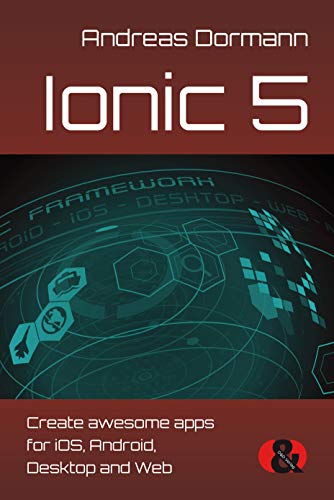
Andreas Dormann is a lecturer and head of the Center for IT and Media Didactics at the University of Applied Sciences for Law in North Rhine-Westphalia. With over 25 years of experience developing software, e-learning platforms, and mobile apps, he has authored several Ionic books that have become standards in the developer community. His extensive background in education and software development uniquely positions him to guide you through Ionic 5, making complex concepts accessible and showing you how to build apps across iOS, Android, desktop, and web environments.
Andreas Dormann is a lecturer and department head of the Center for IT and Media Didactics at the University of Applied Sciences for Law in North Rhine-Westphalia. With over 25 years of experience, he has been instrumental in developing cutting-edge software, e-learning platforms, and innovative mobile apps. His Ionic books have become the standard work on the popular framework for app development.
Andreas Dormann brings over 25 years of software development and teaching experience to this detailed guide on Ionic 5, designed for developers new to app programming or transitioning from other frameworks. You’ll explore the entire app lifecycle, from installing Ionic and building a tourism app called "BoB Tours" to publishing on Apple App Store, Google Play, desktop via Electron, and as a Progressive Web App. The book’s twelve chapters cover Angular essentials, UI components, theming, debugging, and multi-framework integration, giving you a hands-on understanding of Ionic’s capabilities. If you're aiming to grasp Ionic’s practical application and build cross-platform apps confidently, this book will serve you well, though those seeking a quick overview might find its depth more than needed.
Michael Callaghan is a highly experienced software developer with over 25 years of professional experience, known for delivering high-quality software solutions across industries. Starting programming in 1981 and writing professionally since 1995, he brings deep expertise to this guide. His extensive background informs this book, which aims to empower you to build your first mobile application using familiar web technologies like Ionic and React, making mobile development accessible and achievable.
Michael Callaghan is a highly experienced software developer with over 25 years of professional experience in the field. Throughout his career, he has developed a reputation as an expert in delivering high-quality software solutions for a wide range of clients and industries. Michael began learning to program computers in 1981 during high school and has been writing software professionally since 1995. He has written several books on software development communication.
Drawing from over 25 years of software development expertise, Michael Callaghan crafted this book to help web developers transition smoothly into mobile app creation using Ionic and React. You learn not just theory but practical skills like building your first Ionic app, structuring projects, and implementing key UI components such as student rosters and notification systems. The book targets developers eager to harness common web technologies for publishing apps on Apple and Google Play stores. It’s especially suited if you want a straightforward, hands-on guide that skips lengthy background details and dives right into development essentials.
The best Ionic books and more, in your inbox each week. No account needed.
Conclusion
This curated collection reveals several clear themes: the enduring value of practical, example-driven learning; the importance of mastering core Ionic components alongside complementary tools like Angular and Firebase; and the advantage of integrating real-world projects to solidify skills.
If you prefer proven methods, start with Chris Griffith's "Mobile App Development with Ionic, Revised Edition" for comprehensive cross-platform strategies. For validated approaches that dive deep into practical recipes, combine the "Ionic Cookbook" with Hoc Phan's "Ionic Framework Cookbook". Beginners will find "Learning Ionic" and "Developing a Mobile Application UI with Ionic and React" especially accessible.
Alternatively, you can create a personalized Ionic book to combine proven methods with your unique needs. These widely-adopted approaches have helped many developers succeed in building robust hybrid mobile applications.
Frequently Asked Questions
I'm overwhelmed by choice – which book should I start with?
Start with "Mobile App Development with Ionic, Revised Edition" by Chris Griffith. It offers clear, example-driven guidance on building hybrid apps and covers essential tools like Angular and Cordova, making it ideal for developers seeking a solid foundation.
Are these books too advanced for someone new to Ionic?
Not at all. Titles like "Learning Ionic" by Arvind Ravulavaru and "Developing a Mobile Application UI with Ionic and React" by Michael Callaghan provide approachable introductions, guiding you step-by-step through app creation with practical projects.
What’s the best order to read these books?
Begin with foundational books like "Learning Ionic" or "Mobile App Development with Ionic, Revised Edition." Then, explore recipe-based guides such as "Ionic Cookbook" and "Ionic Framework Cookbook" to deepen practical skills. Finally, tackle "Ionic 5" for comprehensive understanding of the latest framework features.
Do these books assume I already have experience in Ionic?
Some do, but several are designed for beginners. For example, "Learning Ionic" and "Developing a Mobile Application UI with Ionic and React" assume minimal prior Ionic knowledge and focus on practical app-building techniques.
Which book gives the most actionable advice I can use right away?
"Ionic Cookbook" and "Ionic Framework Cookbook" offer focused, recipe-style solutions that you can implement immediately, covering common challenges like UI theming, push notifications, and backend integration.
Can I get personalized Ionic learning tailored to my goals?
Yes! While these books provide excellent foundational knowledge, a personalized Ionic book can complement them by focusing on your specific experience level, interests, and project needs. Check out create a personalized Ionic book for a customized learning path.
📚 Love this book list?
Help fellow book lovers discover great books, share this curated list with others!