Recommended by experts including Ali S. Raja, Richard Signorelli, and Brian Greene, these top Outer Space books have captivated readers worldwide.
Updated on June 26, 2025·We may earn commissions for purchases made via this page
6 of 20 books have Audiobook versions
We're launchingLaunching on Product Hunt today 🎉We just launchedJust launched on Product Hunt 🎉
Modelpeers, from the BookAuthority teamFrom the BookAuthority team: Modelpeers, a free way to follow AI models and agents like you follow people. We'd love your support.
There's something special about books that both critics and crowds love—especially when it comes to Outer Space. As humanity's curiosity about the cosmos grows, these best-selling books capture the imagination and knowledge that have resonated with millions. Outer space isn't just distant stars; it's about understanding ourselves and our future in the vast universe.
Experts like Ali S. Raja, an emergency physician who draws parallels between astronaut crisis management and emergency medicine, and Richard Signorelli, a former Assistant U.S. Attorney inspired by Carl Sagan's cosmic insights, have highlighted these works for their deep impact. Brian Greene, a physics professor, praises vivid astronaut tales that make space exploration tangible and human.
While these popular books provide proven frameworks and inspiring narratives, readers seeking content tailored to their specific Outer Space interests might consider creating a personalized Outer Space book that combines these validated approaches into one unique reading experience.
Ali S. Raja, an emergency physician and Harvard professor, highlights how this book captures the critical role of CapCom in space missions with remarkable clarity. His recommendation reflects the book’s deep insight into teamwork and crisis management, traits essential both in outer space and emergency medicine. "Awesome! Cmdr Hadfield described the importance of the CapCom role so well in his book - I’m so glad you’re filling it for this mission!" This perspective, rooted in real-world high-stakes environments, shows why Hadfield’s lessons resonate beyond astronautics. Likewise, Simon Carley, a professor of emergency medicine, appreciates the concept of "being a zero," emphasizing its importance in critical care — a concept Hadfield unfolds thoughtfully in his narrative.
“Awesome! Cmdr Hadfield described the importance of the CapCom role so well in his book - I’m so glad you’re filling it for this mission! Congrats to you and the rest of the team, and Godspeed to Astro Raja, Astro Marshburn, Astro Matthias and Astronaut Barron!” (from X)
Chris Hadfield, one of the world's most seasoned and accomplished astronauts, is the author of the #1 international bestseller An Astronaut's Guide to Life on Earth. The top graduate of the U.S. Air Force Test Pilot School in 1988 and the U.S. Navy Test Pilot of the Year in 1991, Hadfield was selected to be an astronaut in 1992. He was Chief CAPCOM at NASA for twenty-five shuttle missions and served as Director of Operations for NASA in Star City, Russia, from 2001 to 2003; Chief of Robotics for the NASA Astronaut Office in Houston from 2003 to 2006; and Chief of International Space Station Operations for the NASA Astronaut Office from 2006 to 2008. Hadfield most recently served as Commander of the International Space Station, where, while conducting a record-setting number of scientific experiments and overseeing an emergency spacewalk, he gained worldwide acclaim for his breathtaking photographs and educational videos about life in space. His online videos, including a zero-gravity version of David Bowie's 'Space Oddity,' have collectively received more than fifty million views.
What started as Chris Hadfield's journey from test pilot to International Space Station commander became an insightful guide to thinking like an astronaut on Earth. Hadfield draws on decades of training and space missions to reveal how meticulous preparation and embracing discomfort lead to success and resilience. You'll learn why he advises against simply visualizing success, the value of sweating the small stuff, and how caring about others shapes outcomes — lessons packed with vivid stories like breaking into a Space Station with a Swiss army knife and managing crises in orbit. This book suits anyone curious about space or seeking practical ways to improve focus and adaptability in everyday challenges.
Packing for Mars offers a fascinating look into the peculiar world of space travel, exploring how humans survive and adapt in the absence of gravity and other Earthly comforts. This book’s appeal lies in its approachable yet insightful examination of space science, revealing the often overlooked practical and physiological hurdles astronauts face. It benefits anyone intrigued by what it truly takes to live and work in outer space, presenting a blend of scientific inquiry and human experience that enriches the broader discourse on space exploration.
Mary Roach brings her trademark curiosity and humor to the oddities of space travel, revealing how astronauts cope with the extreme challenges of life beyond Earth. You’ll learn about everything from the physiology of zero gravity to the practicalities of space toilets and emergency procedures, with vivid examples like NASA’s crash tests using cadavers. The book suits anyone fascinated by the human side of space exploration, especially those curious about the quirks and unexpected realities of living in orbit. Roach’s engaging style makes complex science accessible and entertaining, without sugarcoating the bizarre and sometimes uncomfortable truths.
This AI-created book on outer space mastery is crafted based on your specific interests, background, and goals. By sharing your experience level and the space topics you want to explore, you receive a book focused on what matters most to you. This tailored approach makes sense here because space exploration combines complex science with personal skill development, so a custom guide helps you learn efficiently and enjoyably.
TailoredRead AI creates personalized nonfiction books that adapt to your unique background, goals, and interests. Instead of reading generic content, you get a custom book written specifically for your profession, experience level, and learning objectives. Whether you're a beginner looking for fundamentals or an expert seeking advanced insights, TailoredRead crafts a book that speaks directly to you. Learn more.
2026·50-300 pages·Outer Space, Space Science, Astronaut Experience, Space Missions, Cosmic Exploration
This tailored book explores the fusion of astronaut experience and space science insights, focusing on proven approaches that have shaped successful cosmic exploration. It examines key principles of space missions, astronaut training, and scientific discoveries, blending collective human knowledge with your unique interests. By tailoring content to match your background and specific goals, it ensures you engage deeply with the most relevant aspects of outer space mastery. This personalized guide reveals how expert-approved methods intersect with practical considerations, helping you navigate the complexities of space exploration with clarity and enthusiasm.
Richard Signorelli, a former Assistant U.S. Attorney and activist, endorses this classic by Carl Sagan, highlighting the author's brilliance and wisdom. Signorelli's recommendation echoes the widespread admiration for this book among space enthusiasts and thinkers alike. He credits "Pale Blue Dot" for deepening his understanding of humanity's place in the cosmos and the imperative to embrace space exploration. "He was brilliant and wise. I recommend his book 'Pale Blue Dot'."
Carl Sagan was Professor of Astronomy and Space Sciences and Director of the Laboratory for Planetary Studies at Cornell University. He played a leading role in the Mariner, Viking, and Voyager spacecraft expeditions to the planets, for which he received the NASA medals for Exceptional Scientific Achievement. Dr. Sagan received the Pulitzer Prize and the highest awards of both the National Academy of Sciences and the National Science Foundation, and many other awards, for his contributions to science, literature, education, and the preservation of the environment. His book Cosmos was the bestselling science book ever published in the English language, and his bestselling novel, Contact, was turned into a major motion picture.
Carl Sagan, with decades as a Cornell astronomy professor and NASA advisor, offers a compelling look at humanity's future beyond Earth. You explore the historical milestones of space exploration and the urgent case for settling other worlds, grounded in science and human survival. Key chapters detail not only the technical challenges but the philosophical implications of becoming an interplanetary species. This book suits anyone curious about space policy, the human drive to explore, or the cosmic perspective on our fragile planet.
Pulitzer Prize Winner
NASA Medals for Exceptional Scientific Achievement
Bryan Suits, host at KFI Los Angeles and known for his deep dives into truth and history, praises this book as the definitive record on the Soviet space program's inner workings. His recommendation reflects how the book sheds light on complex political and mechanical facets, enriching his understanding of space competition during the Cold War. As he puts it, "Red Star In Orbit by James Oberg is still the Book Of Record on the machinations and mechanics of the Soviet program." This perspective aligns with many readers drawn to the human stories behind space exploration.
“@philewing Red Star In Orbit by James Oberg is still the Book Of Record on the machinations and mechanics of the Soviet program. Great read.” (from X)
Unlike most outer space books that focus on broad explorations or technical overviews, James E. Oberg takes you inside the Soviet space program with a candid narrative that reveals the people, politics, and engineering behind it all. You gain insight into the designers’ intentions, the cosmonauts’ experiences, and the triumphs and setbacks that shaped decades of space history. For instance, chapters detailing early launch failures and cosmonaut training offer a clearer understanding of Cold War space rivalry. This book suits anyone curious about the human and mechanical stories behind Soviet space achievements, rather than just the scientific milestones.
Brian Greene, a professor of physics and mathematics at Columbia University, highlights this book as a captivating way to experience space travel through Massimino's eyes. Greene was struck by the author's blend of grit and delight, sharing that reading the book felt like "finally made it to space too." This perspective aligns with many readers' enthusiasm for the book's authentic portrayal of astronaut life. Additionally, John Glenn, a former NASA astronaut, emphasizes Massimino's precise engineering insight and hopeful vision for the future of space programs. Their endorsements resonate with anyone eager to understand the human side of exploring outer space.
“Massimino's incredible journeys, filled with grit, courage, suspense and thrills, are told with such candor and delight, that for a brief moment I felt I’d finally made it to space too. Read this book and be inspired to reach for the impossible.”
Mike Massimino served as a NASA Astronaut from 1996 until 2014 and flew in space twice: STS-109 on space shuttle Columbia in March 2002 and STS-125 on space shuttle Atlantis in May 2009 – the final two Hubble Space Telescope servicing missions. Mike became the first human to tweet from space, was the last human to work inside of Hubble, and set a team record with his crewmates for the most cumulative spacewalking time in a single space shuttle mission. He has a recurring role as himself on The Big Bang Theory; appears regularly on late night talk shows, news programs, and documentaries; and is a much sought after inspirational speaker. He received his BS from the Columbia University School of Engineering, and his two MS’s and Ph.D. from the Massachusetts Institute of Technology (MIT). He currently lives in New York City where he is an engineering professor at Columbia and an advisor at the Intrepid Sea, Air, and Space Museum.
Unlike most space books that focus on abstract science, Mike Massimino brings you inside the astronaut suit with vivid details of microgravity life and high-stakes missions. His journey from a working-class Long Island upbringing through multiple NASA rejections to walking in space and repairing the Hubble Telescope reveals the grit and determination behind the glamour. You’ll learn not just about spacewalk mechanics but the emotional toll of loss, teamwork, and perseverance. Chapters like his final mission’s Hubble repair offer gripping narratives that ground cosmic wonder in human experience. This book suits anyone curious about what it really takes to explore outer space, beyond the headlines.
This AI-created book on space exploration is crafted based on your specific interests, background, and goals. You share what aspects of Outer Space fascinate you most and your current knowledge level, so the book focuses on what truly matters to you. Rather than a generic overview, this personalized guide zeroes in on topics you want to master, helping you make fast, meaningful progress. It’s designed to give you exactly the right knowledge and skills in a way that makes the vast cosmos accessible and engaging.
TailoredRead AI creates personalized nonfiction books that adapt to your unique background, goals, and interests. Instead of reading generic content, you get a custom book written specifically for your profession, experience level, and learning objectives. Whether you're a beginner looking for fundamentals or an expert seeking advanced insights, TailoredRead crafts a book that speaks directly to you. Learn more.
2026·50-300 pages·Outer Space, Space Exploration, Astronaut Training, Spacecraft Science, Orbital Mechanics
This tailored book explores the fundamentals of space exploration with a focus that matches your background and interests. It covers core concepts such as the history of space missions, the science behind spacecraft, and the challenges of human spaceflight. You’ll find a personalized journey that examines key topics like orbital mechanics, astronaut training, and cosmic phenomena, all designed to provide clear, actionable understanding. The approach reveals complex ideas in a way that aligns with your goals, offering a focused experience that combines popular knowledge with insights validated by millions of space enthusiasts. This personalized guide accelerates your learning curve in Outer Space through targeted content crafted specifically for you.
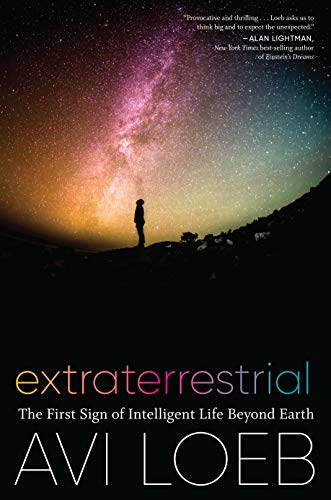
Sean Carroll, a physicist at Caltech and host of the Mindscape Podcast, draws attention to the value of balancing skepticism with openness when considering bold ideas. His recommendation reflects a thoughtful engagement with Avi Loeb's work, highlighting how the book challenges you to rethink the possibility of intelligent life beyond Earth in ways that stimulate the imagination and intellect. Carroll's perspective resonates with many readers curious about interstellar phenomena and the scientific quest to understand our place in the cosmos. Alongside him, Stephen Greenblatt, Pulitzer Prize-winning author, underscores the book's call to shed the presumption of humanity's uniqueness, emphasizing its visionary argument.
“It's good to be skeptical of audacious ideas. But it's also important to be open to audacious possibilities, and to think through their ramifications. Avi Loeb's sumptuously written book will provoke you to think about the possibility of intelligent life elsewhere in the universe in new and stimulating ways.”
Abraham (Avi) Loeb is the Frank B. Baird, Jr., Professor of Science at Harvard University, chair of Harvard’s Department of Astronomy, founding director of Harvard’s Black Hole Initiative, and director of the Institute for Theory and Computation (ITC) within the Harvard-Smithsonian Center for Astrophysics. He also chairs the Advisory Committee for the Breakthrough Starshot Initiative, and serves as the science theory director for all Initiatives of the Breakthrough Prize Foundation, as well as chair of the Board on Physics and Astronomy of the National Academies. Author of four books and over 700 scientific papers, Loeb is an elected fellow of the American Academy of Arts & Sciences, the American Physical Society, and the International Academy of Astronautics. In 2012, Time selected Loeb as one of the twenty-five most influential people in space.
Drawing from his role as Harvard's leading astronomer and chair of multiple space science initiatives, Avi Loeb challenges conventional views by proposing that the interstellar object 'Oumuamua' was not a mere asteroid but advanced alien technology. You explore detailed scientific observations, such as its unusual speed and trajectory, alongside Loeb's reflections on the implications for science and humanity's place in the cosmos. The book navigates between memoir and provocative inquiry, offering insights into the search for extraterrestrial intelligence and urging openness to unexpected possibilities. If you're curious about space science and ready to question mainstream assumptions, this book offers a stimulating, thoughtful perspective.
Ray Jayawardhana, author of Neutrino Hunters, brings a unique perspective to this book, having studied cosmic phenomena deeply. He praises "Black Hole" as a captivating and authoritative account, highlighting its quirky turns and the intellectual struggles behind the idea. His endorsement reflects the book's ability to engage those curious about the universe's mysteries. Similarly, Walter Isaacson appreciates how Bartusiak captures the beauty and intrigue surrounding black holes, tracing the concept from Einstein's era to modern science, making it a compelling read for anyone fascinated by outer space.
“Captivating and authoritative, "Black Hole" traces a truly weird concept from its tentative conjecture to inescapable reality. Bartusiak recounts a compelling tale with quirky turns, curious revelations, intellectual rumbles and personal gambles.”
Marcia Bartusiak is Professor of the Practice, Graduate Program in Science Writing, Massachusetts Institute of Technology, and the award-winning author of five previous books. She lives in Sudbury, MA.
Marcia Bartusiak, a seasoned science writer and MIT professor, takes you through the contentious journey of the black hole concept—from skeptical dismissal to scientific acceptance. You’ll gain insight into the scientific debates, the shifting views of giants like Einstein and Hawking, and how black holes reshaped our understanding of the universe. Notably, the book explores how the discovery of neutron stars and black holes revived relativity, making complex physics accessible without oversimplifying. If you’re fascinated by the history and science behind cosmic phenomena, this book offers a detailed narrative that’s both enlightening and engaging.
Tod Olson is an accomplished author with a 25-year career in children's publishing, known for crafting engaging narratives for young adults and school libraries. His background includes writing on significant social issues and editing multiple collections, which informs his skill in presenting complex stories accessibly. Olson's experience culminates in this detailed account of the Apollo 13 mission, where he combines storytelling with factual insights to bring this critical chapter of outer space history to life for readers.
Tod Olson is the author of the Lost series, the How to Get Rich historical fiction series, and numerous books for the school/library and classroom markets. He has written for national magazines on the Columbine school shooting, homeless teens, the murder of Matthew Shepard, and many other stories of interest to children and young adults. During his 25 years in children's publishing, he has edited and developed several collections of books for both school/library and the classroom. Tod holds an MFA from Vermont College.
2017·224 pages·Outer Space, Space Missions, Astronauts, NASA History, Spacecraft Engineering
What started as a deep dive into one of NASA's most perilous missions became a vivid narrative under Tod Olson's pen, drawing from his extensive experience in children's publishing and storytelling. You get more than just a chronological recount; this book reveals the tension inside Apollo 13’s spacecraft and at Mission Control, illustrating the technical challenges alongside the astronauts' human resilience. Olson’s inclusion of photographs and spacecraft diagrams enriches your understanding of the mission’s complexity. If you’re fascinated by real space history and want to grasp the stakes and split-second decisions behind the headlines, this book offers a gripping, accessible window into that extraordinary journey.
The Wall Street Journal, a leading publication with broad cultural insight, highlights how this book captures the Hubble telescope not just as a scientific instrument but as a remarkable camera revealing the universe's beauty. Their endorsement, "A reminder that the finest telescope in space might also be the greatest camera ever created," reflects the book’s ability to combine visual wonder with scientific narrative. This aligns with widespread reader admiration for Dickinson’s work. Similarly, Publisher's Weekly calls it "A treasure map to the majesty of our universe," underscoring the book’s role as a guide through cosmic discoveries that continue to captivate both experts and enthusiasts alike.
Terence Dickinson, one of Canada's best-loved amateur-astronomy writers, gained renown for unraveling the mysteries of the cosmos. His down-to-earth style made him the award-winning best-selling author of 14 astronomy books, including NightWatch, The Backyard Astronomer's Guide, The Universe and Beyond and Hubble's Universe. The cofounder and former editor of SkyNews, Canada's national astronomy magazine, Dickinson was a recipient of the Order of Canada and two honorary doctorates.
Drawing from decades of experience as one of Canada's most beloved amateur-astronomy writers, Terence Dickinson presents a vivid journey through the universe's grandeur with this collection of Hubble Space Telescope images and insights. You gain access to more than 300 breathtaking photographs paired with clear, concise explanations that reveal the cosmic phenomena behind each shot. Dickinson's unique vantage comes from his close relationships with Hubble scientists, allowing him to share facts and stories not found elsewhere. If you’re drawn to astronomy and want to immerse yourself in the latest discoveries and stunning visuals, this book serves as both a photographic feast and an enlightening guide.
Neil deGrasse Tyson, a renowned astrophysicist and the first Frederick P. Rose Director of the Hayden Planetarium, brings his expertise and engaging style to this exploration of the cosmos. Known for hosting the StarTalk podcast and authoring numerous books, Tyson combines scientific authority with approachable storytelling to guide you through the universe's wonders. His collaboration with Lindsey Nyx Walker enriches the journey, making complex outer space concepts accessible and entertaining for anyone intrigued by cosmic mysteries.
Neil deGrasse Tyson is a legendary astrophysicist and the host of the acclaimed podcast StarTalk Radio. He earned his BA in physics from Harvard and his Ph.D. in astrophysics from Columbia. Tyson is the first Frederick P. Rose Director of the Hayden Planetarium and has authored more than a dozen books. He lives in New York City with his wife and two children.
Unlike most outer space books that focus solely on scientific jargon, this narrative by Neil deGrasse Tyson and Lindsey Nyx Walker blends humor with deep astrophysical insights, making complex cosmic phenomena accessible. You’ll explore everything from the Big Bang and planetary atmospheres to the mysteries of black holes and time travel, enriched by vivid illustrations and thoughtful cultural references. For example, Tyson critiques Hollywood’s portrayal of space, adding a layer of pop culture savvy to the science. If you’re fascinated by the universe but want explanations that don’t require a degree, this book offers that perfect balance of wit and wisdom.
This collection by Alexei Arbatov and Vladimir Dvorkin offers a nuanced examination of outer space as a contested military domain. Drawing on essays from leading Russian experts, it sheds light on the development of space weapons and the global efforts to prevent their proliferation. The book’s detailed exploration of political, legal, and technical obstacles in space weaponization negotiations makes it essential for anyone interested in the evolving security challenges beyond Earth’s atmosphere. It addresses urgent global concerns by framing outer space security within broader international security debates, offering insights valuable to policymakers, scholars, and strategic analysts alike.
2010·144 pages·Outer Space, Strategy, Security, Military Technology, Diplomacy
What happens when seasoned Russian security analysts turn their focus skyward? Alexei Arbatov and Vladimir Dvorkin dig into the complex military dimension of outer space, unpacking how weaponization could reshape global security dynamics. You’ll explore detailed histories of space weapons programs and the fraught international negotiations aimed at preventing a catastrophic arms race beyond Earth. Their essays lay bare the tangled political, military, and legal challenges that shape efforts to keep space a zone of peace, making this a sharp read if you’re grappling with the future of global security and space diplomacy.
Dean Regas offers a captivating guided tour through the universe in Facts from Space!, a book that has resonated widely with sci-fi fans and amateur astronomers alike. Packed with fascinating trivia—from secret spacecraft missions to the oddities of planets and moons—this book breaks down the mysteries of outer space into digestible, surprising nuggets. Its approach invites you to explore the cosmos not through dense theory but through memorable facts that spark wonder and curiosity. Anyone looking to deepen their appreciation for the universe will find this book a compelling companion on their celestial journey.
2016·238 pages·Outer Space, Astronomy, Solar System, Planetary Science, Space Exploration
Dean Regas, an astronomer with a knack for making complex cosmic phenomena accessible, invites you on a fascinating journey through our solar system and beyond. His vivid descriptions, like how a day on Venus outlasts its year or astronauts returning taller from space, offer intriguing insights that go beyond typical astronomy books. You’ll pick up surprising space trivia alongside a clearer understanding of celestial mechanics, planetary science, and the quirks of human space travel. This book suits anyone curious about the universe’s mysteries, especially beginners and enthusiasts eager for engaging, fact-rich content without heavy jargon.
Tim Peake, a European Space Agency astronaut with a distinguished military and aviation background, shares his unique vantage point from 186 days orbiting Earth. His mission inspired millions and included groundbreaking moments like completing a marathon in space and conducting an emergency spacewalk. This book offers you an authentic glimpse into space life, enriched by Peake’s engaging stories and breathtaking photographs taken during his historic Principia mission.
Tim Peake is a European Space Agency astronaut. He finished his 186-day mission on the International Space Station in June 2016. In addition to his illustrious career as an astronaut, Tim served as an officer in the British Army, and has logged more than 3,000 flight hours on over 30 different types of aircraft. He enjoys skiing, scuba diving, cross-country running, climbing, mountaineering, and completed the London Marathon in 2006 (before he completed it again while in space). He has two sons. Following a year-long selection process, Tim was chosen from over 8000 applicants to be one of six new astronauts as part of the European Astronaut Corps. During astronaut training he spent seven days living in a cave and twelve days living underwater. Tim's six month mission 'Principia' to the ISS inspired a nation, engaging with more than 2 million students as part of a hugely successful outreach programme. Whilst in space, he conducted over 250 scientific experiments, oversaw an emergency spacewalk and also ran the 2016 London marathon. Tim’s autobiography Limitless tells the often very amusing story of how a short, ginger lad with a passion for flight and all things outdoors went from Soldier, Pilot, Parent to Astronaut.
Tim Peake's extensive experience as a European Space Agency astronaut and former British Army officer informs this vivid account of life aboard the International Space Station. You gain not only a visual feast through 150 stunning photographs but also an intimate understanding of daily challenges and triumphs in space, such as conducting over 250 scientific experiments and completing a marathon in zero gravity. Peake’s storytelling shines in chapters where he recounts his historic spacewalk and amusing moments like accidentally calling a stranger from space. This book suits anyone curious about human spaceflight, the Earth's beauty from orbit, or the personal side of astronaut life.
Universe: The Definitive Visual Guide stands out for merging expert knowledge with stunning, up-to-date space imagery, offering an expansive tour from our solar system’s heart to the cosmos’ farthest reaches. This revised edition by DK includes a comprehensive star atlas and monthly sky guide, making it a valuable tool for anyone fascinated by outer space. Its detailed coverage of cosmology, Earth’s motion, and astrophotography equips you with the tools to explore and understand the night sky visually and scientifically. Whether you're a student or an enthusiast, this guide addresses the need for accessible, richly illustrated astronomy resources.
Robert Dinwiddie, Philip Eales, David Hughes, Iain Nicolson, Ian Ridpath, Robin Scagell, Giles Sparrow, Pam Spence, Carole Stott, Kevin Tildsley, Martin Rees
Robert Dinwiddie, Philip Eales, David Hughes, Iain Nicolson, Ian Ridpath, Robin Scagell, Giles Sparrow, Pam Spence, Carole Stott, Kevin Tildsley, Martin Rees
2012·528 pages·Outer Space, Space, Astronomy, Cosmology, Star Atlas
Unlike most astronomy books that lean heavily on textual explanations, Universe: The Definitive Visual Guide combines authoritative insights from renowned experts like Martin Rees with breathtaking imagery to chart the cosmos from the Sun's core to the Milky Way's black hole. You’ll explore topics ranging from cosmology to astrophotography and benefit from a detailed star atlas covering all constellations, planetary positions, and a monthly sky guide. This volume suits anyone eager to deepen their understanding of space’s vastness through both scientific detail and visual context, especially students and amateur astronomers seeking a comprehensive reference.
Helmut Satz is Professor Emeritus of Theoretical Physics at the University of Bielefeld, Germany, with extensive experience at CERN and Brookhaven National Laboratory. His expertise in thermodynamics of strongly interacting matter underpins this book, which delves into the origins of our universe within the vast multiverse. Satz’s background equips him uniquely to unravel complex cosmological phenomena, offering you a clear window into the Big Bang and what came before time itself.
Helmut Satz is Professor Emeritus of Theoretical Physics at the University of Bielefeld in Germany, where his research focuses on thermodynamics of strongly interacting matter. He served on the staff of CERN in 1989-1995 and Brookhaven National Laboratory in 1985-1992.
Helmut Satz's decades of research in theoretical physics and thermodynamics shaped this book, which explores the universe's origins beyond the familiar cosmic landscape. You learn how the Big Bang emerged from a multiverse of countless bubbles and how order arose from the initial chaos of primordial plasma, tackling complex concepts like entropy and cosmic evolution with clarity. The book guides you through modern cosmology's insights into how our universe formed and where it might be headed, making it a solid choice if you're curious about foundational questions in astrophysics and the nature of reality. While it delves into deep physics, it remains accessible enough for anyone eager to understand the universe's earliest moments.
Michio Kaku is a professor of physics at the City University of New York and cofounder of string field theory, with a track record of widely acclaimed science books such as Hyperspace and Physics of the Future. His expertise in theoretical physics and futurism informs this exploration of humanity’s prospects in outer space, from Mars colonization to interstellar travel. Kaku’s role as a science correspondent for CBS and host of science radio programs underscores his ability to communicate complex ideas accessibly, making this book a valuable guide for anyone intrigued by the future of space exploration.
Michio Kaku is a professor of physics at the City University of New York, cofounder of string field theory, and the author of several widely acclaimed science books, including Hyperspace, Beyond Einstein, Physics of the Impossible, and Physics of the Future. He is the science correspondent for CBS’s This Morning and host of the radio programs Science Fantastic and Explorations in Science.
Michio Kaku’s decades as a theoretical physicist and futurist led him to explore humanity’s potential beyond Earth in this book. You’ll gain insight into the scientific and technological advances that could enable us to terraform Mars, build sustainable colonies, and even travel between stars using concepts like fusion rockets and laser sails. The book also ventures into speculative but scientifically grounded ideas such as warp drives, wormholes, and the possibility of immortality through future biotechnologies. If you’re curious about where space exploration might realistically head in the coming centuries and want a blend of current science with visionary possibilities, this book offers a thought-provoking roadmap.
Dallas Campbell, a science television presenter known for making complex subjects approachable, recommends this book for its clear and engaging take on cosmology. He highlights how it offers a sweeping overview of the universe's history and future, aligning with widespread reader enthusiasm for accessible science. "Prepare to have your mind blown! A brilliantly written overview of the past, present and future of modern cosmology," he says, reflecting how the book reshaped his understanding of cosmic evolution and the universe's ultimate fate.
Paul Parsons is a former editor of the BBC science and technology magazine Focus and managing editor of BBC Sky At Night magazine. He has been a science writer and journalist for more than 20 years, contributing to New Scientist, the Guardian, Daily Telegraph, Men’s Health, and National Geographic, and is the author of several books including The Science of Doctor Who, Science 1001, and The Periodic Table. He is also a consultant to Guinness World Records.
When Paul Parsons, a seasoned science journalist and former editor of BBC Sky At Night magazine, explores the origins and destiny of the universe, you get a narrative that’s both richly detailed and accessible. This book takes you from the chaos of the Big Bang through the vast expanse of cosmic evolution, unpacking complex physics and cosmology in ways that clarify rather than confuse. You’ll learn about key concepts like the expanding universe, Einstein’s theories, and the tantalizing possibility of a multiverse. If you’re curious about how billions of years of cosmic history weave into our understanding of existence and the universe’s potential fate, this book offers a thoughtful and engaging journey.
Marcus Chown is an award-winning writer and broadcaster with a background as a radio astronomer at Caltech. As cosmology consultant for New Scientist, he brings deep expertise to this book, distilling complex ideas about the universe's birth into approachable insights. His engaging style and scientific credentials combine to make this a compelling read for anyone seeking an introduction to the Big Bang and cosmology.
Marcus Chown is an award-winning writer and broadcaster. Formerly a radio astronomer at the California Institute of Technology in Pasadena, he is cosmology consultant of New Scientist. His books include The Ascent of Gravity, What A Wonderful World, Quantum Theory Cannot Hurt You, Felicity Frobisher and the Three-Headed Aldebaran Dust Devil, and We Need to Talk to Kelvin, which was short-listed for the 2010 Royal Society Book Prize. Marcus has also tried his hand at Apps and won The Bookseller Digital Innovation of the Year for Solar System for iPad. Marcus was a regular guest on the BBC4 comedy-science show, It's Only A Theory, with Andy Hamilton and Reginald D. Hunter, and often appears on Channel 4's Sunday Brunch. Marcus lives in London with his wife, a Macmillan nurse. Whereas she does a very socially useful job, Marcus writes about things that are of absolutely no use to man or beast! Can time run backwards? Are there an infinity of universes playing out all possible histories? Was our Universe made as a DIY experiment by extraterrestrials in another universe?
Millions have turned to this compact book to grasp the origins of everything around us. Marcus Chown, with his background as a radio astronomer and science communicator, unpacks the complexities of the Big Bang in accessible language that doesn’t shy away from the science. You’ll explore how all matter, energy, space, and even time began 13.82 billion years ago, learn about Einstein’s overlooked insights, and understand the evidence scattered across the universe supporting this cosmic event. The book’s blend of clear explanations and vintage-style illustrations makes it ideal if you want a focused introduction without getting lost in jargon. It suits anyone curious about how the universe came to be but isn’t looking for a dense textbook.
Library Journal, a respected authority in literature reviews, highlights this book for its dual appeal to serious readers and casual enthusiasts interested in rockets and space exploration. Their endorsement, "Detailed enough for serious readers yet accessible to all with an interest in rockets or space exploration," reflects how this book bridges expert knowledge with broad appeal. This aligns well with the widespread appreciation from readers who value depth and clarity. Booklist also praises it as a "high quality; an effective hybrid of reference volume and coffee-table book," emphasizing its visual richness alongside authoritative content.
Michael H. Gorn served formerly as deputy Air Force historian and as chief historian of the NASA Dryden Flight Research Center. He earned a doctorate in history from the University of Southern California. Gorn is the author of more than a dozen books, including NASA’s Forgotten Genius: Hugh L. Dryden and the Foundations of the American Space Program, and he has been featured in interviews on BBC, History, and the Discovery Channel. He is a recipient of the AIAA’s Gardner-Lasser Aerospace History Award for Expanding the Envelope: Flight Research at the NACA and NASA.
Michael H. Gorn’s decades of experience as an aerospace historian, combined with Giuseppe de Chiara’s illustrative expertise, gives this book a unique edge in chronicling human space exploration. You learn not only the technical details of iconic spacecraft like Sputnik 1 and the International Space Station but also gain insight into the historical context of their development, such as the Cold War’s influence on the space race. The book's division by era and inclusion of global programs—from the U.S. and Soviet Union to the European Space Agency and China—allows you to appreciate the broad scope of aerospace advances. If you’re fascinated by spacecraft design, history, and their roles in humanity’s push beyond Earth, this book offers a rich, visual, and narrative exploration.
The Penguin Book of Outer Space Exploration offers a unique window into the history of human spaceflight by weaving together original NASA documents with expert commentary from John Logsdon. Celebrating NASA's 60th anniversary, this book takes you through the milestones from early rocket visions to modern efforts like SpaceX's Mars plans. With a foreword by Bill Nye, it captures the drama and complexity of space exploration, providing valuable context for anyone fascinated by humanity's journey into outer space and the technological, political, and personal stories behind it.
What started as a detailed archival exploration became a vivid narrative under John Logsdon's expert hand, chronicling NASA's journey from Sputnik to SpaceX with historical documents that bring this saga to life. You gain insights into pivotal moments like Kennedy's moonshot directive, the Apollo missions, and the Challenger tragedy, all framed by firsthand accounts and original NASA materials. This book suits anyone curious about the human side of space exploration, whether you're a history buff, space enthusiast, or student of technology and policy. With Bill Nye's foreword adding a familiar voice, the book offers a layered understanding of the challenges and triumphs behind humanity's ventures beyond Earth.
The best Outer Space books and more, in your inbox each week. No account needed.
Conclusion
Together, these 20 books weave themes of human resilience, scientific inquiry, and the cosmic perspective that has fascinated readers and experts alike. If you prefer proven methods grounded in astronaut experience, start with "An Astronaut's Guide to Life on Earth" or "Spaceman." For validated approaches to space science and exploration, combine "Pale Blue Dot" with "The Future of Humanity" to grasp both history and future possibilities.
Alternatively, you can create a personalized Outer Space book to merge these proven methods with your unique interests and goals. These widely-adopted approaches have helped many readers succeed in expanding their knowledge of the cosmos and humanity's place within it.
Frequently Asked Questions
I'm overwhelmed by choice – which Outer Space book should I start with?
Start with "An Astronaut's Guide to Life on Earth" for practical astronaut mindset insights or "Pale Blue Dot" for a broad cosmic perspective. These books offer accessible entry points endorsed by experts and readers alike.
Are these books too advanced for someone new to Outer Space?
Not at all. Books like "Packing for Mars" and "Facts from Space!" are written to engage curious beginners with clear explanations and fascinating stories, making complex topics approachable.
Do I really need to read all of these books, or can I just pick one?
You can pick based on your interests. Each book covers different facets of Outer Space—from astronaut experiences to scientific theories—so choose what excites you most or combine a few for a fuller picture.
Which books focus more on theory versus practical application?
"The Future of Humanity" and "Before Time Began" delve into theoretical concepts like terraforming and cosmic origins, while "Spaceman" and "An Astronaut's Guide to Life on Earth" provide practical insights from astronaut experiences.
Are any of these books outdated given how fast Outer Space knowledge changes?
While Outer Space research evolves, many books here offer timeless perspectives on human experience, history, and foundational science that remain relevant and insightful today.
How can I get Outer Space content tailored to my specific goals and interests?
Expert books provide solid foundations, but you can also create a personalized Outer Space book that blends popular methods with your unique needs, delivering focused, relevant insights efficiently.
📚 Love this book list?
Help fellow book lovers discover great books, share this curated list with others!