Recommended by Mark Zuckerberg, Heidi N. Moore, and Jacquelyn Gill, these Science books offer expert-backed insights and proven impact.
Updated on June 28, 2025·We may earn commissions for purchases made via this page
We're launchingLaunching on Product Hunt today 🎉We just launchedJust launched on Product Hunt 🎉
Modelpeers, from the BookAuthority teamFrom the BookAuthority team: Modelpeers, a free way to follow AI models and agents like you follow people. We'd love your support.
There's something special about books that both critics and crowds love, especially in Science where understanding shapes our view of the world. When millions of readers and top experts agree on a title, it signals a proven value that goes beyond theory. Science matters now more than ever as we navigate misinformation and strive for clarity, making these widely-read books a beacon of knowledge and insight.
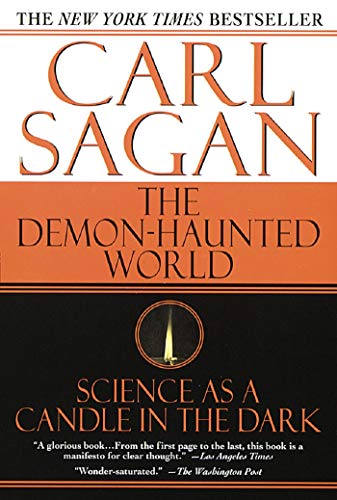
Experts like Mark Zuckerberg, who appreciates deep analyses on scientific progress, and Heidi N. Moore, who values accessible neuroscience insights, have championed these works. For example, Jacquelyn Gill found Carl Sagan's The Demon-Haunted World essential in cutting through today's misinformation fog. Their endorsements highlight how these books resonate with both professional and curious audiences alike.
While these popular books provide proven frameworks, readers seeking content tailored to their specific Science interests might consider creating a personalized Science book that combines these validated approaches with your unique learning goals and background.
Jacquelyn Gill, associate professor at the Climate Change Institute, discovered this book amid her work on Ice Age ecology and climate change. She sums it up simply: "@JacobaHollander It’s a great book!" Her recommendation reflects how Sagan’s insights into scientific thinking resonate beyond just science circles, helping readers cut through misinformation in today’s complex world. This endorsement aligns with widespread acclaim, including from Raghu Ram, who praises Sagan's guidance on spotting pseudoscience and conspiracy theories, underscoring its continued relevance for anyone seeking clarity in an age of information overload.
Carl Sagan was a renowned astronomer and author, known for his contributions to science, literature, and education. He played a leading role in various space expeditions and received numerous awards for his work. Sagan's bestselling book, Cosmos, accompanied by an Emmy- and Peabody Award-winning television series, remains one of the most popular science books ever published.
Carl Sagan challenges the conventional wisdom that science is just a collection of facts by revealing it as a vital way of thinking that protects society from superstition and misinformation. Through vivid examples, like his analysis of pseudoscience and critical thinking tools such as the "baloney detection kit," you learn to question assumptions and recognize flawed reasoning in everyday life. The book suits anyone curious about how science underpins democratic societies and why skepticism matters today, especially amid widespread misinformation. Chapters covering the history of scientific thought and the dangers of abandoning it provide concrete insights that sharpen your analytical mindset.
Mark Suster, a seasoned American entrepreneur and venture capitalist, brings a unique perspective to science recommendations. His endorsement of this book, widely praised by readers, highlights its blend of engaging storytelling with solid scientific content. Given his experience investing in innovative fields, his choice signals the book's broad appeal and credibility. Alongside him, Chris Oliver, a retired surgeon, notes how the book's clear explanations could nearly prepare one for surgical exams, underscoring its educational value for medical professionals and enthusiasts alike.
Bill Bryson was born in Des Moines, Iowa, in 1951. Settled in England for many years, he moved to America with his wife and four children for a few years, but has since returned to live in the UK. His bestselling travel books include A Walk in the Woods, The Life and Times of the Thunderbolt Kid, and A Short History of Nearly Everything (which won the Aventis Prize in Britain and the Descartes Prize, the European Union's highest literary award). He was chancellor of Durham University, England's third oldest university, from 2005 to 2011, and is an honorary fellow of Britain's Royal Society.
2019·464 pages·Science, Biology, Human Anatomy, Physiology, Health
What if everything you thought about the human body was only the surface? Bill Bryson, known for his engaging travel and science narratives, takes you on a detailed journey inside your own anatomy, exploring how it functions, heals, and sometimes falters. You gain insights into complex biological processes explained through memorable anecdotes and fascinating facts, like how your body constantly renews itself. This book suits anyone curious about biology or seeking a readable, fact-rich guide to their own physiology without wading through dense textbooks.
New York Times Bestseller
Best Book of the Year by The Washington Post
Longlisted for PEN E.O. Wilson Literary Science Writing Award
This AI-created book on science mastery is crafted based on your background, skill level, and specific interests within science. By sharing your goals and preferred topics, you receive a book that focuses on what you want to learn and achieve. Personalizing this content means you get an efficient, engaging guide that explores the scientific ideas and practical skills most relevant to you, rather than generic information.
TailoredRead AI creates personalized nonfiction books that adapt to your unique background, goals, and interests. Instead of reading generic content, you get a custom book written specifically for your profession, experience level, and learning objectives. Whether you're a beginner looking for fundamentals or an expert seeking advanced insights, TailoredRead crafts a book that speaks directly to you. Learn more.
2026·50-300 pages·Science, Scientific Concepts, Critical Thinking, Research Methods, Data Interpretation
This personalized book explores a tailored journey through science mastery, combining widely validated knowledge with your unique challenges and interests. It covers essential scientific concepts, practical applications, and critical thinking techniques that millions of readers have found valuable. By focusing on your individual background and goals, this book reveals approaches and insights that align specifically with your learning path, making complex ideas accessible and relevant. It examines how scientific principles can be applied effectively to your pursuits, encouraging an engaging and focused learning experience. The tailored content helps you dive deeply into topics that matter most to you, ensuring a meaningful and efficient exploration of science.
Tomasz Tunguz, General Partner at Theory Ventures, brings a discerning eye to science books shaping our understanding of the mind. His endorsement of this title signals its significance in neuroscience circles and its resonance beyond academic walls. Aligning with widespread reader acclaim, this book dives into how emotions aren't fixed but made, a concept that challenges many traditional views Tomasz likely values for its innovative approach to cognition. Joining him, Kirk Borne, Principal Data Scientist at Booz Allen, highlights the book's relevance to AI and neural networks, emphasizing its importance for those exploring emotion in technology and human-computer interaction. Together, their recommendations underscore the book’s authority and appeal across disciplines.
Lisa Feldman Barrett, PhD, is a University Distinguished Professor of Psychology at Northeastern University. She received a National Institutes of Health Director’s Pioneer Award for her groundbreaking research on emotion in the brain, and is an elected member of the Royal Society of Canada. Barrett is the author of How Emotions are Made and Seven and a Half Lessons About the Brain.
Lisa Feldman Barrett challenges the conventional wisdom that emotions are hardwired and universal, arguing instead that they are constructed by the brain through an interplay of body and culture. You’ll uncover how emotions emerge from predictions your brain makes, reshaping your understanding of psychology and neuroscience. The book explores implications for health care, law, and society, offering insights into the mechanics behind feelings rather than just their expressions. If you’re curious about how your mind crafts emotional experience and want to rethink common assumptions about emotions, this book provides a fresh perspective grounded in extensive research.
National Institutes of Health Director’s Pioneer Award
Kirk Borne, principal data scientist and astrophysicist, brings a sharp eye to the mysteries of quantum physics, highlighting the flaws in the Many-Worlds Interpretation. His recommendation stems from a deep engagement with the subject, where he calls the theory “incoherent” and “beyond weird,” echoing the book’s title. Borne’s perspective adds weight to why this book resonates with many readers intrigued by the universe's fundamental nature. As he points out, "Why the Many-Worlds Interpretation (the idea that the universe splits into multiple realities) Has Many Problems — it is essentially 'incoherent' and 'beyond weird'", a critique that Philip Ball explores thoroughly. Alongside Borne, Adam Gabriel Top Influencer, an AI expert at IBM Watson, amplifies this endorsement, showing how the book bridges complex physics with broader scientific curiosity.
“This is the clearest and most insightful description of quantum enigmas that I have ever read. I kept being astonished at how Ball seemed to make one mystery after another vanish. He makes quantum mysteries disappear without removing their uncanniness. Brilliant and innovative, Beyond Weird may alter how quantum mechanics is taught not only to the public but also to physicists. I suspect that teachers of introductory quantum mechanics will be paraphrasing or outright quoting this book for decades.” (from Amazon)
Philip Ball is a freelance writer and broadcaster, and was an editor at Nature for more than twenty years. He writes regularly in the scientific and popular media and has written many books on the interactions of the sciences, the arts, and wider culture, including H2O: A Biography of Water and The Music Instinct. His book Critical Mass won the 2005 Aventis Prize for Science Books. Ball is also the 2022 recipient of the Royal Society’s Wilkins-Bernal-Medawar Medal for contributions to the history, philosophy, or social roles of science. He trained as a chemist at the University of Oxford and as a physicist at the University of Bristol, and he was an editor at Nature for more than twenty years. He lives in London.
While working as an editor at Nature for over two decades, Philip Ball noticed how quantum physics often baffled both scientists and the public alike. In Beyond Weird, he unpacks why quantum mechanics defies everyday intuition by exploring its foundations as a theory about information and knowledge rather than just particles and waves. You’ll gain insights into why concepts like space, time, and causality are challenged at the quantum level, with clear explanations of competing interpretations, including the Many-Worlds theory. This book suits those curious about the nature of reality and eager to understand why quantum physics reshapes what we think we know about the world.
Xand Van Tulleken, a medical and public health expert known for his thoughtful commentary on science and health, highlights how "Entangled Life" resonates with anyone who loves being alive, praising its vivid exploration of mushrooms and their magic. His endorsement reflects the book’s widespread appeal among both experts and curious readers alike. Alongside him, Robert Macfarlane, a renowned nature writer and Cambridge fellow, calls the book "dazzling, vibrant, vision changing," underscoring its impact on perspectives about the natural world. This shared enthusiasm among respected voices suggests that this book offers profound insights into fungi’s hidden influence on our environment and ourselves.
“Lovely and very well-deserved review of Merlin Sheldrake’s amazing book Entangled Life — of mushrooms, magic and more via Financial Times; if you enjoy being alive you’ll love it” (from X)
Merlin Sheldrake is a biologist and author of Entangled Life: How Fungi Make Our Worlds, Change Our Minds & Shape Our Futures, a New York Times and Sunday Times bestseller and winner of the Royal Society Book Prize and the Wainwright Prize. Sheldrake is a research associate of the Vrije University Amsterdam and works with the Society for the Protection of Underground Networks and the Fungi Foundation. A keen brewer and fermenter, he is fascinated by the relationships that arise between humans and more-than-human organisms.
What if everything you knew about fungi was wrong? Merlin Sheldrake, a biologist deeply engaged with underground fungal networks and fermentation, invites you to see fungi not merely as mushrooms but as vital, intelligent connectors shaping ecosystems and human life. You’ll explore how fungi challenge notions of individuality and influence our minds, health, and environment, with vivid examples from mycorrhizal networks to fungal roles in healing and environmental remediation. This book suits anyone curious about natural science who wants to rethink life's complexity beyond traditional biology.
This AI-created book on science is designed around your unique interests and current knowledge level. By sharing what areas of science excite you most and your specific learning goals, the book focuses on exactly what you want to explore. This personalized approach makes complex scientific topics more approachable and relevant. Instead of sifting through countless sources, you get a concise, tailored 30-day guide that fits your background and helps deepen your understanding efficiently.
TailoredRead AI creates personalized nonfiction books that adapt to your unique background, goals, and interests. Instead of reading generic content, you get a custom book written specifically for your profession, experience level, and learning objectives. Whether you're a beginner looking for fundamentals or an expert seeking advanced insights, TailoredRead crafts a book that speaks directly to you. Learn more.
This personalized book offers a focused 30-day journey into science, designed specifically to match your background and unique interests. It explores key scientific concepts and discoveries across multiple disciplines, combining popular knowledge with your chosen areas of focus. By addressing your specific goals, the book reveals insights that millions of readers have found valuable, presenting them in a way that resonates with your curiosity and prior knowledge. This tailored approach ensures an efficient learning experience, helping you build a solid understanding of science within a month. It covers foundational topics as well as advanced ideas, making complex subjects accessible and engaging.
Mark Zuckerberg, co-founder and CEO of Facebook, appreciates this book for its deep examination of how scientific knowledge evolves through disruptive shifts. His experience leading a tech company grounded in innovation aligns with Kuhn’s analysis of paradigm changes shaping progress. Zuckerberg’s endorsement underscores the book’s influence not just among academics but also forward-thinking leaders who recognize that breakthroughs rarely follow a straight path. Alongside him, Tim O'Reilly, founder of O'Reilly Media, also highlights the book’s relevance for understanding science’s dynamic nature amid rapid technological advances.
Director, Medical Futurist Institute; Amazon Top 100 author
“In his brilliant book, The Structure of Scientific Revolutions, author Thomas S. Kuhn explained how scientific discoveries take place: scientific paradigm shifts always begin with disruption – and it’s never an easy process.” (from X)
Thomas S. Kuhn (1922–96) was the Laurance S. Rockefeller Professor of Philosophy at the Massachusetts Institute of Technology. His books include The Essential Tension; Black-Body Theory and the Quantum Discontinuity, 1894–1912; and The Copernican Revolution.
Thomas S. Kuhn, a philosopher of science at MIT, rethinks how scientific progress unfolds, arguing that breakthroughs happen through disruptive paradigm shifts rather than steady accumulation of data. You’ll explore concepts like "normal science," "paradigm," and "incommensurability," gaining insight into how scientific revolutions reorder our understanding of the world. Ian Hacking’s introduction updates Kuhn’s ideas for today’s biotech era, clarifying key terms and applying them to contemporary science. This book suits anyone curious about the forces that shape scientific knowledge, though it demands careful reading to appreciate its nuanced arguments.
Ann Swanson, MS, C-IAYT, LMT, E-RYT500, is a mind-body science educator with a Master of Science in yoga therapy from Maryland University of Integrative Health. Her deep expertise in anatomy and physiology, combined with her commitment to accessible teaching, drives the detailed scientific approach in this book. Translated into over 15 languages, Science of Yoga connects cutting-edge research with practical yoga practice, making complex physiology approachable for anyone wanting to perfect their poses with confidence.
Ann Swanson, MS, C-IAYT, LMT, E-RYT500, is a mind-body science educator with a Master of Science in yoga therapy from Maryland University of Integrative Health. She has extensive experience teaching anatomy and physiology in various educational settings and applies cutting-edge research to yoga practices. Ann's work emphasizes personalized modifications in yoga therapy, qigong, and mindfulness meditation, making these practices accessible to a wide audience. Her book, Science of Yoga, has been translated into over 15 languages, and she offers online courses to further educate others in yoga and wellness.
Unlike most yoga books that focus solely on practice, Ann Swanson brings her extensive background in yoga therapy and anatomy to reveal the scientific mechanics behind each pose. You’ll gain detailed insights into how your muscles, joints, and respiratory system function during 30 key asanas, supported by clear CGI visuals and up-to-date research on yoga’s effects on the body. This book demystifies common yoga myths, explaining the benefits of different styles and breathing techniques with precision. Whether you’re refining your practice or curious about the medical science of yoga, this guide offers a grounded understanding that empowers you to practice with confidence and awareness.
Ameer Rosic, a well-known entrepreneur and investor in blockchain technology, emphasizes how this book reshaped his understanding of decentralized systems by linking them to natural processes. He recommends it as essential reading for anyone designing token economies, highlighting how Janine Benyus's exploration of nature-inspired innovation opens new pathways for technology. His endorsement reflects how the book connects scientific discovery with practical applications, making it a compelling choice for those interested in sustainable innovation.
1997·288 pages·Science, Innovation, Biomimicry, Sustainable Design, Material Science
Janine M Benyus challenges the conventional wisdom that innovation must come solely from human invention by showing how nature’s 3.5 billion years of evolution offers a blueprint for solving modern problems. You’ll explore specific examples like how scientists mimic spider silk to develop new materials, or how studying leaf photosynthesis inspires cleaner energy technologies. The book takes you into labs and field sites where biomimicry pioneers translate biological strategies into practical solutions. If you’re curious about sustainable design or inspired by nature’s creativity, this book offers a grounded perspective on how biology informs science and technology today.
Hussain Nadim, Executive Director at IPRI and a leader in policy and innovation, found this book transformative early in 2022. His insight into how cells and the environment govern life more than DNA echoes the book's core message, reshaping his understanding of biology's role in personal change. He highlights how the internal belief system acts as a crucial foundation for life transformations, reflecting how this work challenges genetic determinism and empowers individuals to take control of their biology. This perspective aligns with many readers who seek a fresh scientific approach to mind and health.
Executive Director at IPRI, policy and innovation leader
“Started 2022 by finishing this remarkable book on how our cells & the environment rule our life instead of the DNA that is generally believed. The belief or our internal story then becomes the most important pillar of all our life changes. Basically you are the master of you” (from X)
Bruce H. Lipton, Ph.D., is an internationally recognized leader in bridging science and spirit. Bruce was on the faculty of the University of Wisconsin’s School of Medicine and later performed groundbreaking stem-cell research at Stanford University. He is the best-selling author of The Biology of Belief, The Honeymoon Effect, and Spontaneous Evolution. In 2009, Bruce received the prestigious Goi Peace Award (Japan) in honor of his scientific contribution to world harmony. Website: www.brucelipton.com
Drawing from his extensive background as a medical school professor and stem cell researcher at Stanford, Bruce Lipton challenges the deeply ingrained belief that DNA solely controls our biology. Instead, he presents evidence that signals from outside the cell, including thoughts and consciousness, play a decisive role in shaping our health and lives. You’ll explore how altering your conscious and subconscious mind can influence your biology, supported by experiments detailed in chapters on cell biology and quantum physics. This book suits those curious about the science behind mind-body connections and who want to reconsider the role of genetics in human potential.
Chris Messina, the inventor of the hashtag and a seasoned product designer, lends weight to this book's reputation—his curiosity for human behavior aligns with the science-backed insights offered here. His endorsement signals that this isn't just pop psychology but a thoughtful examination of how attachment shapes adult love. Alongside him, Heidi N. Moore, a business editor with a keen eye for human dynamics, shares a personal nudge toward the book’s value in overcoming relationship anxieties. Together, their perspectives underscore how this book bridges scientific research and everyday emotional challenges, making it a credible guide for anyone serious about understanding their romantic connections.
“Amir Levine and Rachel Heller have written a very smart book: It is clear, easy to read and insightful. It's a valuable tool whether you are just entering a relationship with a new partner or-as in my case--even after you've been married 21 years, and had thought you knew everything about your spouse.” (from Amazon)
Amir Levine, M.D. is an adult, child, and adolescent psychiatrist and neuroscientist. He graduated from the residency program at the New York Presbyterian Hospital/Columbia University and for the past few years Amir has been conducting neuroscience research at Columbia under the mentorship of Nobel Prize Laureate Eric Kandel. Amir also has a passion for working with patients and it is in this context, while working with mothers and children in a therapeutic nursery, that he first discovered the power of attachment theory. His clinical work together with his deep understanding of the brain from a neuroscientist’s perspective contribute to his appreciation of attachment theory and its remarkable effectiveness in helping to heal patients. Amir lives in New York City.
Drawing from his experience as a psychiatrist and neuroscientist at Columbia University, Amir Levine teams up with Rachel Heller to explore how adult romantic relationships are shaped by attachment theory. You learn to identify your attachment style—anxious, avoidant, or secure—and how these patterns influence your interactions and emotional needs. The book walks you through practical ways to navigate relationships more wisely based on this understanding, with detailed examples that illuminate how evolutionary and psychological factors play out in everyday love. If you want to deepen your self-awareness and improve how you connect with partners, this book offers a clear map grounded in scientific research.
Hyperspace offers an exhilarating journey through some of the most intriguing questions in modern physics, from parallel universes to the elusive tenth dimension. Michio Kaku lays out the scientific quest to unify the forces of nature with clarity and enthusiasm, making complex theories accessible to curious minds. This book has attracted a wide readership interested in the frontiers of science and the mysteries of the universe, providing a compelling exploration of topics that continue to inspire research and debate worldwide.
1994·384 pages·Science, Physics, Theoretical Physics, Hyperspace, Superstring Theory
What if everything you knew about space and time was wrong? Michio Kaku, a pioneering theoretical physicist, explores this by delving into the concept of hyperspace and superstring theory, offering a vivid explanation of how these ideas might unify the fundamental forces of nature. You’ll engage with complex topics such as the tenth dimension, time warps, and parallel universes, presented in a way that invites curiosity without overwhelming. This book suits anyone fascinated by the cutting edge of physics and the quest for a unified theory, especially those comfortable with challenging scientific concepts and eager to see where modern physics might lead next.
What makes this book unique in science is its ability to bridge the gap between music as an art and music as a biological phenomenon. Through an engaging narrative, it reveals how neuroscience and evolutionary psychology explain our powerful emotional connection to music. Its widespread appeal reflects readers’ fascination with why music matters so deeply to human nature. By exploring brain scans, cultural practices, and rare disorders, it illuminates the complex ways music shapes cognition and emotion, making it an insightful read for anyone interested in the science behind a universal human obsession.
Daniel J. Levitin challenges the conventional wisdom that music is merely entertainment, revealing how it deeply shapes brain function and human experience. Drawing on neuroscience and evolutionary psychology, he explains how musical preferences might begin before birth and how brain imaging uncovers our emotional responses to music. You’ll explore cases from cultures where singing is central to identity and rare disorders that disrupt musical perception, offering insights into nature and nurture’s role in our obsession with music. This book suits anyone curious about the intersection of art and science, though those seeking technical neuroscience may find its narrative approach more engaging than exhaustive.
Carl Sagan’s Cosmos invites you to journey through the universe’s vast history, revealing how matter transformed into life and consciousness. This widely recognized work, supported by Ann Druyan and Neil deGrasse Tyson, blends vivid illustrations with compelling narratives about space and science’s development. It’s crafted for those eager to grasp the scientific forces shaping our world and beyond, offering a richly layered perspective on cosmic evolution and humanity’s quest for knowledge.
Carl Sagan’s decades as an astronomer and science communicator shine through in this exploration of the universe’s vastness and our place within it. You’ll encounter detailed chapters on cosmic evolution—from the birth of galaxies to the emergence of life on Earth—and gain a richer understanding of scientific milestones and human curiosity. This book suits anyone fascinated by space, history, or the scientific method, offering insights into how we’ve come to comprehend the cosmos through observation and reason. Its blend of science, philosophy, and history invites you to reflect on human progress amid the immensity of the universe.
Brian Greene, a leading physicist, takes you on an expansive journey through the nature of space and time, reshaping how you see reality. His approach unites historical theories with modern physics, from Newton to string theory, making complex ideas accessible through compelling analogies and clear explanations. This book's widespread acclaim stems from its ability to engage both science enthusiasts and thoughtful readers, offering insights into the universe’s fabric that challenge and expand your understanding. If you’re drawn to the mysteries of the cosmos and the science behind it, this work stands as a significant contribution to the field.
Brian Greene’s decades as a physicist shine through in this exploration of space and time, inviting you to rethink reality itself. You’ll navigate from Newton’s fixed universe to Einstein’s dynamic spacetime and dive into quantum puzzles like entanglement and teleportation. The book unpacks why time seems to flow one way and how the Big Bang’s conditions shaped this arrow. Chapters detailing superstring and M-theory open doors to an eleven-dimensional multiverse concept, challenging everyday assumptions. If you’re curious about the universe’s deepest layers and enjoy physics explained with wit and relatable analogies, this book offers a detailed yet accessible journey, though it’s best suited for those ready to engage with complex scientific ideas.
The Source offers a unique perspective by linking ancient manifestation philosophies with contemporary brain science. This approach has resonated widely, making it a popular choice for those curious about how neuroscience validates and explains the Law of Attraction. Dr. Tara Swart, a neuroscientist and MIT Senior Lecturer, integrates scientific research with practical insights, guiding you through brain-based strategies for self-discovery and transformation. It’s a thoughtful resource for anyone aiming to access their authentic self and improve life outcomes through the power of the mind.
2019·288 pages·Science, Neuroscience, Psychology, Personal Development, Mindset
Drawing from her expertise as a neuroscientist and psychiatrist, Dr. Tara Swart explores the intersection of ancient manifestation techniques and modern brain science in this book. You discover how concepts like the Law of Attraction align with neuroscience principles such as neuroplasticity, emotional regulation, and behavioral psychology. For example, she discusses how hydration and relaxation influence brain function alongside visualization practices. This book suits anyone interested in understanding how mindset and brain health can influence personal growth and success, blending scientific insight with practical approaches to reshape thought patterns and unlock potential.
The best Science books and more, in your inbox each week. No account needed.
Conclusion
This collection reveals two clear themes: the power of critical thinking in science and the deep human curiosity about our bodies and universe. If you prefer proven methods, start with The Demon-Haunted World for sharpening skepticism or The Body for biological wonder. For validated approaches blending history, philosophy, and cutting-edge physics, The Structure of Scientific Revolutions and Beyond Weird offer rich perspectives.
Combining these books can deepen your understanding, but you can also create a personalized Science book to tailor these expert insights exactly to your needs. These widely-adopted approaches have helped many readers succeed in navigating the complexities of modern Science and its impact on daily life.
Frequently Asked Questions
I'm overwhelmed by choice – which book should I start with?
Start with The Demon-Haunted World by Carl Sagan; it offers a foundational understanding of scientific skepticism that sharpens your thinking for all other books.
Are these books too advanced for someone new to Science?
Not at all. Many books like The Body by Bill Bryson and Cosmos by Carl Sagan are written to engage curious beginners with clear, compelling narratives.
What's the best order to read these books?
Begin with accessible titles like The Body or Entangled Life, then explore more specialized topics like Beyond Weird or The Structure of Scientific Revolutions as your interest deepens.
Should I start with the newest book or a classic?
Both have value. Classics like The Structure of Scientific Revolutions provide timeless frameworks, while newer books like The Biology of Belief offer fresh perspectives on science's evolving frontiers.
Do I really need to read all of these, or can I just pick one?
You can certainly pick one that matches your interests, but these books complement each other well to build a richer understanding of Science from multiple angles.
How can I get Science knowledge tailored to my specific interests and level?
While these expert books offer broad insights, you might consider creating a personalized Science book that combines popular methods with your unique goals and background for a focused learning experience.
📚 Love this book list?
Help fellow book lovers discover great books, share this curated list with others!