Featuring recommendations from Bill Gates, Elon Musk, and Nils Nilsson on Singularity Books shaping futures
Updated on June 24, 2025·We may earn commissions for purchases made via this page
7 of 7 books have Kindle versions
We're launchingLaunching on Product Hunt today 🎉We just launchedJust launched on Product Hunt 🎉
Modelpeers, from the BookAuthority teamFrom the BookAuthority team: Modelpeers, a free way to follow AI models and agents like you follow people. We'd love your support.
There's something special about books that both critics and crowds love, especially when exploring a topic as profound and urgent as the technological singularity. As artificial intelligence races forward, understanding the potential paths and pitfalls isn't just academic—it's a practical necessity for anyone curious about humanity's future. These seven best-selling Singularity books have resonated broadly, blending expert insight with widespread reader validation, reflecting their proven value in navigating this complex field.
Among the voices elevating these works are Bill Gates, whose long-standing engagement with technology and philanthropy brings a grounded perspective on AI's risks and promises; Elon Musk, who has repeatedly highlighted the critical importance of understanding AI's trajectory; and Nils Nilsson, a pioneer from Stanford whose recommendation signals the depth of these books’ contributions. Their endorsements are more than celebrity—they represent thoughtful engagement from individuals directly shaping AI's development and dialogue.
While these popular books provide proven frameworks and diverse viewpoints, readers seeking content tailored to their specific Singularity interests might consider creating a personalized Singularity book that combines these validated approaches into a bespoke guide suited to your background, skill level, and learning goals. This way, you can explore the singularity on terms that matter most to you.
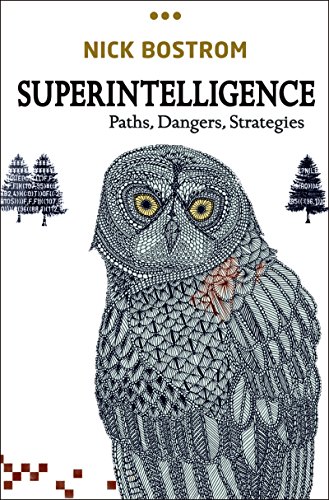
Bill Gates, co-founder and former CEO of Microsoft, brings a unique perspective to the discussion on superintelligence due to his long-standing interest in technology's impact on society. He has publicly stated, "I highly recommend this book," reflecting how Bostrom's work reshaped his understanding of AI's potential risks and rewards. Gates's endorsement aligns with widespread reader appreciation, marking this book as a pivotal read for anyone grappling with the future of intelligent machines. Additionally, Nils Nilsson, an AI pioneer from Stanford, emphasizes its importance by saying, "Every intelligent person should read it," underscoring the book's influence among experts shaping AI's trajectory.
Nick Bostrom is a Swedish-born philosopher and polymath with a background in theoretical physics, computational neuroscience, logic, and artificial intelligence, as well as philosophy. He is Professor at Oxford University, where he leads the Future of Humanity Institute as its founding director. Bostrom's widely influential work has illuminated the links between our present actions and long-term global outcomes, thereby casting a new light on the human condition. He is the author of over 200 publications, including 'Anthropic Bias' and 'Global Catastrophic Risks'. His writings have been translated into 28 languages, and he has been listed on Foreign Policy's Top 100 Global Thinkers list twice.
Nick Bostrom, a philosopher and polymath at Oxford University, tackles the profound question of what happens when machines surpass human intelligence. You gain insights into the nature of superintelligence, the potential risks it poses, and strategic options for controlling its development. The book explores scenarios of intelligence explosion and the ethical and existential dilemmas facing humanity, especially in chapters discussing AI control problems and future trajectories. If you’re curious about the intersection of technology, philosophy, and long-term human survival, this book offers a thoughtful foundation, though it demands careful attention rather than casual reading.
Bill Gates, co-founder and former CEO of Microsoft, stands out as a key voice endorsing this book, highlighting Ray Kurzweil as the foremost predictor of artificial intelligence's future. Gates’s perspective carries significant weight given his deep involvement in technology’s evolution and philanthropy focused on innovative solutions. His remark, "Ray Kurzweil is the best person I know at predicting the future of artificial intelligence," reflects a profound respect for Kurzweil’s insights. Alongside Gates, Nesnáím Faistické Kolaboranty notes the book’s compelling exploration of biotechnology’s potential to extend human life, particularly resonating with the baby boomer generation. This convergence of expert views underscores the book’s influence in shaping how we understand the approaching technological singularity.
Ray Kurzweil is a world class inventor, thinker, and futurist, with a thirty-five-year track record of accurate predictions. He has been a leading developer in artificial intelligence for 61 years – longer than any other living person. He was the principal inventor of the first CCD flat-bed scanner, omni-font optical character recognition, print-to-speech reading machine for the blind, text-to-speech synthesizer, music synthesizer capable of recreating the grand piano and other orchestral instruments, and commercially marketed large-vocabulary speech recognition software. Ray received a GRAMMY® Award for outstanding achievement in music technology; he is the recipient of the National Medal of Technology and was inducted into the National Inventors Hall of Fame. He has written five best-selling books including The Singularity Is Near and How to Create a Mind. He is a Principal Researcher and AI Visionary at Google.
Ray Kurzweil, a pioneer in artificial intelligence and technology innovation, builds on decades of research to explore the accelerating trajectory toward the Singularity. You’ll find detailed analysis of exponential growth in AI, biotechnology, and nanotechnology, including how these advances might extend human lifespan and augment intelligence by connecting brains to the cloud. The book delves into emerging technologies like nanobots rebuilding matter atom by atom and the ethical challenges posed by AI’s impact on jobs and society. If you’re fascinated by the intersection of humanity and technology, this book offers a grounded yet visionary look at what’s to come.
This AI-created book on singularity navigation is tailored to your background and specific goals. By sharing your knowledge level and interests, you receive a book that explores the singularity challenges most relevant to you. Focusing on your personal objectives, it offers a clear path through complex topics, making the future of AI more understandable and manageable. This personalized approach helps you engage deeply with the subject without wading through unrelated material.
TailoredRead AI creates personalized nonfiction books that adapt to your unique background, goals, and interests. Instead of reading generic content, you get a custom book written specifically for your profession, experience level, and learning objectives. Whether you're a beginner looking for fundamentals or an expert seeking advanced insights, TailoredRead crafts a book that speaks directly to you. Learn more.
2026·50-300 pages·Singularity, Singularity Concepts, AI Evolution, Risk Management, Future Societies
This tailored book explores battle-tested methods to navigate the challenges of the technological singularity effectively. Drawing from widely validated knowledge and matched to your unique background and goals, it offers a focused examination of key Singularity concepts and practical approaches. You’ll engage deeply with topics such as AI evolution, risk management, and future societal impacts, all presented through a lens that suits your specific interests. This personalized guide ensures that complex ideas are accessible and relevant, empowering you to understand and prepare for AI-driven futures with clarity and confidence.
Leilani Münter, an environmentalist and documentary filmmaker, highlights this book as one of the best on AI's dangers. She encountered it early in her journey, and it reshaped her understanding of technology's risks beyond environmental issues, stating, “Our Final Invention” is one of the best books ever written on the dangers of AI. This endorsement aligns with broad public interest, making it a pivotal read for anyone concerned with AI's trajectory. Similarly, Michael Vassar, former Singularity Institute President, calls it a silent spring for the twenty-first century, emphasizing the critical challenge humanity faces. Their perspectives underscore the book's importance in conversations about the future of intelligence and survival.
“@opineno @jrbarrat IMHO “Our Final Invention” is one of the best books ever written on the dangers of AI. I had the pleasure of meeting James for the first time back in 2015, just after I read his book. James is also an accomplished documentary filmmaker.” (from X)
James Barrat is a documentary filmmaker who’s written and produced films for National Geographic, Discovery, PBS, and many other broadcasters in the United States and Europe. He lives near Washington, DC with his wife and two children.
Drawing from his experience as a documentary filmmaker for outlets like National Geographic and PBS, James Barrat examines the rapidly advancing field of artificial intelligence and its potentially perilous future. You’ll gain insight into how AI systems are evolving toward human-level intelligence and the existential risks this poses, especially as these technologies begin to control critical infrastructure and financial systems. The book walks you through profiles of AI pioneers and skeptics alike, making complex technological and ethical issues accessible without oversimplifying. If you’re intrigued by technology’s impact on humanity’s fate and want to understand the stakes beyond the hype, this book offers a sobering perspective.
James D. Miller is an associate professor of economics at Smith College, a columnist for BetterInvesting Magazine, and a popular speaker on the Singularity. Holding a JD from Stanford and a PhD from the University of Chicago, Miller’s work has earned recognition from the Singularity Institute, positioning him uniquely to analyze how expanding intelligence will influence economic and social structures. His academic rigor and accessible style combine to offer readers thoughtful predictions and practical insights about navigating a rapidly evolving future.
James D. Miller is an associate professor of economics at Smith College, a columnist for BetterInvesting Magazine, and a popular speaker on the Singularity. He holds a JD from Stanford and a PhD from the University of Chicago. Miller's work has been deemed 'important' by the Singularity Institute.
James D. Miller, an economics professor with a JD from Stanford and a PhD from the University of Chicago, wrote this book to explore how rapid advances in intelligence—both human and artificial—will reshape our world. You’ll find detailed scenarios outlining potential futures, from a merger of man and machine to a labor market transformed by AI-driven creative destruction. Miller also dives into economic implications, like how cognitive-enhancing drugs could fuel growth, and what this means for your career and investments. If you want a grounded, economist’s perspective on the Singularity’s impact on society and your personal future, this book gives you a clear-eyed framework to think about those changes.
Calum Chace is a best-selling author known for his expertise on artificial intelligence, blending a 30-year career in journalism and business with philosophical insights from Oxford. His extensive background as a marketer, strategy consultant, CEO, and speaker informs this book, which examines how AI will disrupt employment and economic structures. Drawing on his experience coaching growing companies and authoring influential works like 'Surviving AI,' Chace provides a clear-eyed analysis of the challenges AI presents to capitalism and society, inviting you to consider the urgent need for new economic thinking.
Calum Chace is a best-selling author of fiction and non-fiction books and articles, focusing on the subject of artificial intelligence. His books include 'Surviving AI', a non-fiction book about the promise and the challenges of AI, and 'Pandora's Brain', a techno-thriller about the first superintelligence. He is a regular speaker on artificial intelligence and related technologies and runs a blog on the subject at www.pandoras-brain.com. He also serves as chairman and coach for growing companies. Before becoming a full-time writer, Calum had a 30-year career in journalism and business, in which he was a marketer, a strategy consultant and a CEO. He maintains his interest in business by serving as chairman and coach for a selection of growing companies. In 2000 he co-wrote The Internet Startup Bible, a business best-seller published by Random House. A long time ago, Calum studied philosophy at Oxford University, where he discovered that the science fiction he had been reading since boyhood was actually philosophy in fancy dress.
After decades in journalism and business, Calum Chace channels his deep understanding of AI's societal impact into this book. You’ll explore how artificial intelligence threatens to displace human labor across all sectors, from fast food to professional services, and why the traditional economic model may soon become obsolete. The book challenges you to think critically about emerging concepts like Universal Basic Income and the need for a new economic framework. With specific examples such as self-driving cars signaling the onset of change, this book suits anyone keen to grasp the economic and social upheavals AI could bring, especially policymakers and business leaders.
This AI-created book on singularity dynamics is crafted based on your background, interests, and learning goals. You share which concepts and trends you want to prioritize, and the book is written to focus exactly on those areas. Personalizing this complex subject helps you navigate the vast ideas and emerging technologies in a way that fits your curiosity and pace, making the study of singularity more accessible and relevant.
TailoredRead AI creates personalized nonfiction books that adapt to your unique background, goals, and interests. Instead of reading generic content, you get a custom book written specifically for your profession, experience level, and learning objectives. Whether you're a beginner looking for fundamentals or an expert seeking advanced insights, TailoredRead crafts a book that speaks directly to you. Learn more.
This tailored book explores the key concepts and emerging trends of the technological singularity, focusing on an accelerated learning plan that matches your interests and background. It examines foundational ideas in AI evolution, intelligence explosion, and future societal impacts, while also diving into nuanced topics like economic shifts and ethical considerations. By personalizing content to your specific goals, it offers a focused path through the complexities of singularity dynamics. This approach enhances understanding by concentrating on the areas most relevant to you, making the journey into singularity studies both engaging and efficient.
Singularity Hypotheses offers a distinctive contribution to singularity literature by assembling essays from leading thinkers across computer science, physics, philosophy, and biology. This book goes beyond typical futurist speculation, presenting a measured investigation into accelerating technological progress and its potential impacts. Its balanced approach appeals to those seeking a clear-eyed examination of concepts like intelligence explosion and whole brain emulation. If you want to understand the debates shaping how singularity is viewed in scientific and philosophical circles, this book provides a solid foundation and diverse perspectives to inform your thinking.
Unlike most books on technological singularity that indulge in speculative futurism, this one anchors itself in scientific and philosophical rigor. The authors, all scholars from various disciplines including computer science and philosophy, explore themes like intelligence explosion and transhumanism with careful scrutiny rather than hype. You’ll find essays that challenge popular assumptions and offer a more grounded, critical view of what singularity might entail, including debates on whole brain emulation and the limits of forecasting technological progress. This book suits those who want to deepen their understanding beyond buzzwords and hype, especially readers comfortable with thoughtful, sometimes dense academic discussions.
What makes "When Computers Can Think" unique is its blend of rigorous technical detail and thoughtful philosophical inquiry into artificial intelligence and the singularity. The book offers a grounded perspective on AI’s capabilities, covering existing technologies like Bayesian expert systems and computational neuroscience, while also examining the evolutionary roots of intelligence. This approach helps you appreciate the challenges and possibilities of AI development and its impact on society. For those fascinated by AI’s future, this book provides a solid foundation and fresh viewpoints to consider.
2015·484 pages·Singularity, Artificial Intelligence, Machine Learning, Computational Neuroscience, Bayesian Systems
Dr. Anthony Berglas's decades of expertise in artificial intelligence shine through in this deep exploration of whether computers can truly think. The book challenges you to reconsider what intelligence means by grounding philosophical debates in the realities of current AI technology, including symbolic logic, Bayesian systems, and computational neuroscience. You’ll gain insight into technical hurdles that have stalled AI progress, understand the role of natural selection in shaping intelligence, and explore predictions about future machine behavior. This work suits anyone curious about AI’s limits and potential, especially those wanting a nuanced understanding beyond hype or speculation.
The best Singularity books and more, in your inbox each week. No account needed.
Conclusion
These seven books collectively reveal key themes that have shaped understanding of the Singularity: strategic foresight in managing AI risks, deep dives into the economic and societal transformations ahead, and rigorous philosophical and scientific assessments that cut through hype. If you prefer proven methods grounded in expert consensus, starting with Superintelligence and The Singularity Is Nearer offers a solid foundation. For insights into economic shifts, Singularity Rising and The Economic Singularity provide invaluable frameworks.
If your interest lies in critical analysis and foundational theory, Singularity Hypotheses and When Computers Can Think challenge you to think deeply about AI's nature and limits. Meanwhile, Our Final Invention delivers a sobering look at the stakes involved. Alternatively, you can create a personalized Singularity book to combine these proven approaches with your unique perspective and objectives.
These widely-adopted approaches have helped many readers succeed in understanding the complex and evolving landscape of Singularity studies. By engaging with these expert-endorsed books, you equip yourself with knowledge that’s both validated and highly relevant to one of the most significant technological frontiers of our time.
Frequently Asked Questions
I'm overwhelmed by choice – which Singularity book should I start with?
Start with Superintelligence by Nick Bostrom. It's widely recommended by experts like Bill Gates and provides a strategic overview of AI risks and future scenarios, setting a solid foundation before exploring more specialized works.
Are these books too advanced for someone new to Singularity?
Not at all. While some books like Singularity Hypotheses lean into academic rigor, others such as Our Final Invention offer accessible introductions to key concepts. You can pick based on your comfort with technical detail.
Should I read these books in any particular order?
It's helpful to begin with broader strategic and future-focused books like The Singularity Is Nearer, then delve into economic or philosophical perspectives. This sequence builds from general understanding to specialized insights.
Do these books assume prior experience with AI or Singularity topics?
Most books provide background context, but some, like When Computers Can Think, involve technical and philosophical depth. Beginners might prefer starting with more narrative-driven or big-picture titles first.
How do I know if a Singularity book is worth my time?
Look for endorsements from recognized experts like Elon Musk and Bill Gates, and consider how widely the book has influenced both public and scholarly discussions. These signals point to valuable, well-regarded works.
Can personalized Singularity books complement these expert recommendations?
Yes! While these books offer expert insights, personalized Singularity books tailor content to your specific goals and knowledge level, blending proven methods with your unique needs. Discover more here.
📚 Love this book list?
Help fellow book lovers discover great books, share this curated list with others!