Congratulations! 🎉
Your book made it to BookAuthority's Best Software Design Books of All Time!
10 Software Design Books That Separate Experts from Amateurs
Discover Software Design Books endorsed by David Heinemeier Hansson, Steve Yegge, and leading developers to elevate your software architecture skills.
Software design covers several distinct concerns, and this list spans them. For programmers who maintain existing code, there are guides to refactoring and writing readable code. For object-oriented developers, there is a classic pattern catalog and a visual introduction to the same subject. Architects and team leads will find books on domain-driven design, microservices and high-level system structure. A short treatment of managing complexity, a pattern guide for interface designers, and a design guide for experienced C++ developers round out the selection. creating a personalized Software Design book
1. Refactoring
Recommended by David Heinemeier Hansson
Creator of Ruby on Rails and Co-Founder & CTO of 37signals
“What perfect time then to dive into Martin Fowler’s long anticipated 2nd edition, now using JavaScript rather than Java for the code examples.” (source)

This refactoring guide explains what refactoring is, why to do it, how to recognize code that needs it and how to carry it out in any language. It presents a catalog of refactorings, each with an explanation, motivation, mechanics and examples, along with guidance on building tests and weighing tradeoffs.
2. Learning Domain-Driven Design

Learning Domain-Driven Design covers patterns, principles and practices for analyzing business domains and aligning software design with business needs. Topics include decomposing systems into bounded contexts, coordinating multiple teams and gradually introducing domain-driven design to brownfield projects.
Domain-Driven Mastery

This tailored book offers a personalized framework for mastering domain-driven design by integrating software architecture with business strategy. It provides actionable methodologies that focus on aligning technical models with core business domains, ensuring that software solutions effectively reflect organizational goals. The content explores strategic domain modeling, context mapping, and collaboration techniques tailored to your specific industry and project scale, cutting through generic advice to fit your unique context. It also addresses implementation challenges such as team coordination and legacy system adaptation, providing a structured approach to bridge software design and business requirements with precision.
3. Clean Code

Clean Code: A Handbook of Agile Software Craftsmanship describes principles, patterns and practices for writing clean code. It then works through case studies that transform problematic code into sound code, and it closes with a list of heuristics and smells.
4. Design Patterns
Recommended by Steve Yegge
Software Engineer and Author, Head of Engineering at Sourcegraph

Design Patterns: Elements of Reusable Object-Oriented Software presents a catalog of solutions to commonly occurring problems in object-oriented design. Each pattern covers when it applies, its consequences and trade-offs, and example code in languages such as C++ or Smalltalk.
5. Building Microservices

Building Microservices: Designing Fine-Grained Systems covers modeling, integrating, testing, deploying and monitoring autonomous services. It also covers user interfaces, container orchestration, serverless approaches and security between users and services.
Microservices Deep Dive

This tailored book on microservices design and management provides a structured framework that aligns with your specific software architecture context. It systematically addresses the design of scalable distributed systems through modular service boundaries, communication protocols, and deployment strategies. The personalized framework emphasizes resilience, scalability, and maintainability, adjusting to your project scale and technology stack. It cuts through generic advice by focusing on service decomposition methods, inter-service communication patterns, and data consistency approaches suited to your development environment. By integrating best practices with your unique operational needs, this book offers a targeted approach to mastering microservices architecture nuances, deployment pipelines, and monitoring strategies that fit your specific scenario.
6. Head First Design Patterns

This visual introduction to design patterns shows which patterns matter, when and why to use them, and how to apply them. It also explains the object-oriented design principles behind the patterns in a visually rich format.
7. A Philosophy of Software Design, 2nd Edition

This book treats managing complexity as the fundamental problem in software design and discusses how to decompose systems into relatively independent modules. It presents design principles and a set of red flags that identify design problems.
8. Designing Interfaces
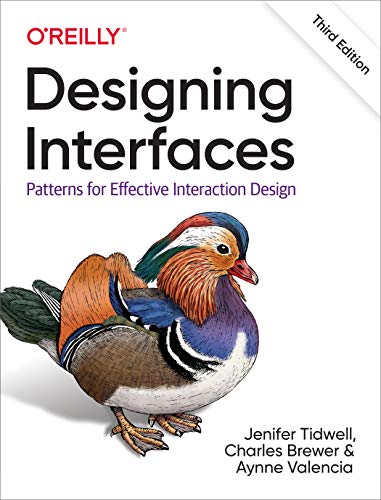
Designing Interfaces: Patterns for Effective Interaction Design captures interface best practices as patterns for mobile apps, web applications and desktop software. It covers understanding users, structuring software, wayfinding, layout, visual design and data visualization.
9. Clean Architecture

This architecture guide covers design principles for function, component separation and data management. It explains how to define boundaries and layers, organize components and services, and prevent or fix architectural failures.
10. C++ Software Design

C++ Software Design: Design Principles and Patterns for High-Quality Software addresses managing dependencies and abstractions and improving changeability and extensibility. It also covers evaluating code against design goals and choosing the right form of modern design patterns.
Enjoying these picks?
The best Software Design books and more, in your inbox each week. No account needed.
Conclusion
Programmers who want immediate improvements in daily coding can start with the refactoring guide or the clean code handbook. Newcomers to object-oriented patterns may prefer the visual introduction before moving to the classic catalog. Architects can begin with the domain-driven design book or the microservices guide. Interface designers should go straight to the interaction design patterns. create a personalized Software Design book
Frequently Asked Questions
I'm overwhelmed by choice – which book should I start with?
Start with Clean Code if you're new to software design; it teaches coding craftsmanship and lays a strong foundation. From there, Refactoring helps improve existing codebases effectively.
Are these books too advanced for someone new to Software Design?
Not at all. Books like Head First Design Patterns use approachable examples for beginners, while others like A Philosophy of Software Design offer deeper insights as you grow.
What's the best order to read these books?
Begin with foundational books like Clean Code and Refactoring. Next, explore design patterns with Design Patterns or Head First Design Patterns, then dive into architecture-focused titles like Clean Architecture and Building Microservices.
Do I really need to read all of these, or can I just pick one?
You can start with one that fits your immediate needs, but combining insights from several—like pairing Refactoring with Design Patterns—offers a broader and more practical perspective.
Which books focus more on theory vs. practical application?
A Philosophy of Software Design leans more on principles and theory, while Building Microservices and Clean Code provide hands-on guidance and real-world examples.
How can I get software design advice tailored to my specific projects or experience level?
While these expert books lay a solid foundation, personalized books can target your unique goals and skill level. You can create a custom Software Design book that complements these insights and fits your situation perfectly.
Help fellow book lovers discover great books, share this curated list with others!
Related Articles You May Like
Explore more curated book recommendations